
Mybatis分页插件: pageHelper的使用及其原理解析
在实际工作中,很进行列表查询的场景,我们往往都需要做两个步骤:1. 查询所需页数对应数据;2. 统计符合条件的数据总数;而这,又会导致我们必然至少要写2个sql进行操作。这无形中增加了我们的工作量,另外,当发生需要变动时,我们又需要同时改动这两个sql,否则必然导致结果的不一致。
因此,我们需要一个简单易用的分页工具来帮我们完成这个工作了,需求明确,至于如何实现则各有千秋。而我们要说的 pageHelper则是这其中实现比较好的一件的组件了,我们就一起来看看如何使用它进行提升工作效率吧!
1. pageHelper 的依赖引入
pom.xml 中引入pageHelper依赖:
1. 如果是springboot, 则可以直接引入 pagehelper-spring-boot-starter, 它会帮我们省去许多不必要的配置。
        <!-- https://mvnrepository.com/artifact/com.github.pagehelper/pagehelper-spring-boot-starter -->

        <dependency>

            <groupId>com.github.pagehelper</groupId>

            <artifactId>pagehelper-spring-boot-starter</artifactId>

            <version>1.2.12</version>

        </dependency>
2. 如果是普通的springmvc 类的项目,则引入 pageHelper 即可。
        <!-- pageHelper -->

        <dependency>

          <groupId>com.github.pagehelper</groupId>

          <artifactId>pagehelper</artifactId>

          <version>5.1.10</version>

        </dependency>
2. pagehelper插件配置
1. 如果是springboot,则直接配置几个配置项即可:
# mybatis 相关配置

mybatis:

  #... 其他配置信息

  configuration-properties:

    offsetAsPageNum: true

    rowBoundsWithCount: true

    reasonable: true

  mapper-locations: mybatis/mapper/*.xml
简单回顾看下db配置:
# db 配置

spring:

  datasource:

    driver-class-name: com.mysql.cj.jdbc.Driver

    username: root

    password:

    url: jdbc:mysql://localhost:3306/testdb?useUnicode=true&charactorEncoding=utf8&&serverTimezone=Asia/Shanghai
2. 普通springmvc项目配置:mybatis-config.xml
<?xml version="1.0" encoding="utf-8" ?>

<!DOCTYPE configuration

    PUBLIC "-//mybatis.org//DTD Config 3.0//EN"

    "http://mybatis.org/dtd/mybatis-3-config.dtd">

<configuration>

  <plugins>

    <plugin interceptor="com.github.pagehelper.PageInterceptor">

      <!-- 该参数默认为false -->

      <!-- 设置为true时,会将RowBounds第一个参数offset当成pageNum页码使用 -->

      <!-- 和startPage中的pageNum效果一样-->

      <property name="offsetAsPageNum" value="true"/>

      <!-- 该参数默认为false -->

      <!-- 设置为true时,使用RowBounds分页会进行count查询 -->

      <property name="rowBoundsWithCount" value="true"/>

      <!-- 设置为true时,如果pageSize=0或者RowBounds.limit = 0就会查询出全部的结果 -->

      <!-- (相当于没有执行分页查询,但是返回结果仍然是Page类型)-->

      <property name="pageSizeZero" value="true"/>

      <!-- 3.3.0版本可用 - 分页参数合理化,默认false禁用 -->

      <!-- 启用合理化时,如果pageNum<1会查询第一页,如果pageNum>pages会查询最后一页 -->

      <!-- 禁用合理化时,如果pageNum<1或pageNum>pages会返回空数据 -->

      <property name="reasonable" value="true"/>

      <!-- 3.5.0版本可用 - 为了支持startPage(Object params)方法 -->

      <!-- 增加了一个`params`参数来配置参数映射,用于从Map或ServletRequest中取值 -->

      <!-- 可以配置pageNum,pageSize,count,pageSizeZero,reasonable,orderBy,不配置映射的用默认值 -->

      <!-- 不理解该含义的前提下,不要随便复制该配置 -->

      <property name="params" value="pageNum=start;pageSize=limit;"/>

      <!-- 支持通过Mapper接口参数来传递分页参数 -->

      <property name="supportMethodsArguments" value="true"/>

      <!-- always总是返回PageInfo类型,check检查返回类型是否为PageInfo,none返回Page -->

      <property name="returnPageInfo" value="check"/>

    </plugin>

  </plugins>

</configuration>
并在配置数据源的时候,将mybatis配置文件指向以上文件。
3. pagehelper 的使用
使用的时候,只需在查询list前,调用 startPage 设置分页信息,即可使用分页功能。
    public Object getUsers(int pageNum, int pageSize) {

        PageHelper.startPage(pageNum, pageSize);

        // 不带分页的查询

        List<UserEntity> list = userMapper.selectAllWithPage(null);

        // 可以将结果转换为 Page , 然后获取 count 和其他结果值

        com.github.pagehelper.Page listWithPage = (com.github.pagehelper.Page) list;

        System.out.println("listCnt:" + listWithPage.getTotal());

        return list;

    }
即使用时, 只需提前声明要分页的信息, 得到的结果就是有分页信息的了. 如果不想进行count, 只要查分页数据, 则调用: PageHelper.startPage(pageNum, pageSize, false); 即可, 避免了不必要的count消耗.
4. pageHelper 实现原理1: interceptor
mybatis 有个插件机制,可以支持外部应用进行任意扩展。它在启动的时候会将 interceptor 添加到mybatis的上下文中。然后在进行查询时再触发实例化动作.
4.1 springboot 中接入interceptor
springboot 中接入pagehelper非常简单, 主要受益于初始化的方式, 它会自动加载配置.
    // com.github.pagehelper.autoconfigure.PageHelperAutoConfiguration#addPageInterceptor

    @PostConstruct

    public void addPageInterceptor() {

        // 初始化 com.github.pagehelper.PageInterceptor

        PageInterceptor interceptor = new PageInterceptor();

        Properties properties = new Properties();

        //先把一般方式配置的属性放进去

        properties.putAll(pageHelperProperties());

        //在把特殊配置放进去,由于close-conn 利用上面方式时,属性名就是 close-conn 而不是 closeConn,所以需要额外的一步

        properties.putAll(this.properties.getProperties());

        interceptor.setProperties(properties);

        for (SqlSessionFactory sqlSessionFactory : sqlSessionFactoryList) {

            // 添加inteceptor到 mybatis 中

            sqlSessionFactory.getConfiguration().addInterceptor(interceptor);

        }

    }

  // org.apache.ibatis.session.Configuration#addInterceptor

  public void addInterceptor(Interceptor interceptor) {

    interceptorChain.addInterceptor(interceptor);

  }

  // org.apache.ibatis.plugin.InterceptorChain#addInterceptor

  public void addInterceptor(Interceptor interceptor) {

    // 使用 ArrayList 保存intceptor

    interceptors.add(interceptor);

  }
借助springboot的自动配置, 获取mybatis的sqlSessionFactoryList, 依次将 pagehelper 接入其中。
4.2 interceptor的初始化
将 interceptor 添加到mybatis上下文后, 会在每次调用查询时进行拦截请求, 它的初始化也会在这时候触发.
  // org.apache.ibatis.session.Configuration#newExecutor

  public Executor newExecutor(Transaction transaction, ExecutorType executorType) {

    executorType = executorType == null ? defaultExecutorType : executorType;

    executorType = executorType == null ? ExecutorType.SIMPLE : executorType;

    Executor executor;

    if (ExecutorType.BATCH == executorType) {

      executor = new BatchExecutor(this, transaction);

    } else if (ExecutorType.REUSE == executorType) {

      executor = new ReuseExecutor(this, transaction);

    } else {

      executor = new SimpleExecutor(this, transaction);

    }

    if (cacheEnabled) {

      executor = new CachingExecutor(executor);

    }

    // 以interceptorChain包装 executor, 以便inteceptor发挥作用

    executor = (Executor) interceptorChain.pluginAll(executor);

    return executor;

  }

  // org.apache.ibatis.plugin.InterceptorChain#pluginAll

  public Object pluginAll(Object target) {

    for (Interceptor interceptor : interceptors) {

      // 使用plugin一层层包装 target, 具体实现为使用代理包装 target

      // 所以, interceptor 的使用顺序是按照添加的顺序来的, 并不能自行设置

      target = interceptor.plugin(target);

    }

    return target;

  }

    // com.github.pagehelper.PageInterceptor#plugin

    @Override

    public Object plugin(Object target) {

        return Plugin.wrap(target, this);

    }

  // org.apache.ibatis.plugin.Plugin#wrap

  public static Object wrap(Object target, Interceptor interceptor) {

    // 获取注解中说明的方式列表 @Intercepts -> @Signature, 下面我们看 pageInterceptor的注解

    Map<Class<?>, Set<Method>> signatureMap = getSignatureMap(interceptor);

    Class<?> type = target.getClass();

    // 过滤需要进行代理的接口, 而非全部代理

    Class<?>[] interfaces = getAllInterfaces(type, signatureMap);

    if (interfaces.length > 0) {

      // 使用jdk方式生成动态代理

      return Proxy.newProxyInstance(

          type.getClassLoader(),

          interfaces,

          // 使用 Plugin 包装代理实现

          new Plugin(target, interceptor, signatureMap));

    }

    return target;

  }

  // pageInterceptor的注解, 即定义要拦截的方法列表

@Intercepts(

        {

                @Signature(type = Executor.class, method = "query", args = {MappedStatement.class, Object.class, RowBounds.class, ResultHandler.class}),

                @Signature(type = Executor.class, method = "query", args = {MappedStatement.class, Object.class, RowBounds.class, ResultHandler.class, CacheKey.class, BoundSql.class}),

        }

)

  // 过滤代理的接口

  private static Class<?>[] getAllInterfaces(Class<?> type, Map<Class<?>, Set<Method>> signatureMap) {

    Set<Class<?>> interfaces = new HashSet<>();

    while (type != null) {

      for (Class<?> c : type.getInterfaces()) {

        // 只有设置了的接口才会被添加

        if (signatureMap.containsKey(c)) {

          interfaces.add(c);

        }

      }

      type = type.getSuperclass();

    }

    return interfaces.toArray(new Class<?>[interfaces.size()]);

  }
这样, interceptor 就和executor绑定了, 后续的查询将会看到interceptor 的作用.
4.3 interceptor的调用过程
在executor被代理后, 会继续执行查询动作, 这时就会被interceptor拦截了.
  // org.apache.ibatis.plugin.Plugin#invoke

  @Override

  public Object invoke(Object proxy, Method method, Object[] args) throws Throwable {

    try {

      Set<Method> methods = signatureMap.get(method.getDeclaringClass());

      if (methods != null && methods.contains(method)) {

        // 匹配的方法会被拦截, 即 query 方法

        return interceptor.intercept(new Invocation(target, method, args));

      }

      return method.invoke(target, args);

    } catch (Exception e) {

      throw ExceptionUtil.unwrapThrowable(e);

    }

  }

    // pageHelper 正式起作用的入口

    // com.github.pagehelper.PageInterceptor#intercept

    @Override

    public Object intercept(Invocation invocation) throws Throwable {

        try {

            Object[] args = invocation.getArgs();

            MappedStatement ms = (MappedStatement) args[0];

            Object parameter = args[1];

            RowBounds rowBounds = (RowBounds) args[2];

            ResultHandler resultHandler = (ResultHandler) args[3];

            Executor executor = (Executor) invocation.getTarget();

            CacheKey cacheKey;

            BoundSql boundSql;

            //由于逻辑关系,只会进入一次

            if (args.length == 4) {

                //4 个参数时

                boundSql = ms.getBoundSql(parameter);

                cacheKey = executor.createCacheKey(ms, parameter, rowBounds, boundSql);

            } else {

                //6 个参数时

                cacheKey = (CacheKey) args[4];

                boundSql = (BoundSql) args[5];

            }

            checkDialectExists();

            List resultList;

            //调用方法判断是否需要进行分页,如果不需要,直接返回结果

            if (!dialect.skip(ms, parameter, rowBounds)) {

                //判断是否需要进行 count 查询

                if (dialect.beforeCount(ms, parameter, rowBounds)) {

                    //查询总数

                    Long count = count(executor, ms, parameter, rowBounds, resultHandler, boundSql);

                    //处理查询总数,返回 true 时继续分页查询,false 时直接返回

                    if (!dialect.afterCount(count, parameter, rowBounds)) {

                        //当查询总数为 0 时,直接返回空的结果

                        return dialect.afterPage(new ArrayList(), parameter, rowBounds);

                    }

                }

                resultList = ExecutorUtil.pageQuery(dialect, executor,

                        ms, parameter, rowBounds, resultHandler, boundSql, cacheKey);

            } else {

                //rowBounds用参数值,不使用分页插件处理时,仍然支持默认的内存分页

                resultList = executor.query(ms, parameter, rowBounds, resultHandler, cacheKey, boundSql);

            }

            return dialect.afterPage(resultList, parameter, rowBounds);

        } finally {

            if(dialect != null){

                dialect.afterAll();

            }

        }

    }
以上就是 pageHelper 的大体执行框架了:
1. 先解析各位置参数;
2. 初始化 pageHelper 实例, 即 dialect;
3. 调用方法判断是否需要进行分页,如果不需要,直接返回结果;
4. 判断是否要进行count, 如果需要则实现一次count, ;
5. 查询分页结果;
6. 封装带分页的结果返回;
下面我们就每个细节依次看看实现吧.
4.4 是否跳过分页判定
首先会进行是否需要跳过分页逻辑,如果跳过, 则直接执行mybatis的核心逻辑继续查询. 而是否要跳过分页, 则是通过直接获取page分页参数来决定的,没有分页参数设置,则跳过, 否则执行分页查询. 这算是分页的一个入口判定呢。
    /**

     * 跳过 count 和 分页查询

     *

     * @param ms              MappedStatement

     * @param parameterObject 方法参数

     * @param rowBounds       分页参数

     * @return true 跳过,返回默认查询结果,false 执行分页查询

     */

     // com.github.pagehelper.PageHelper#skip

    @Override

    public boolean skip(MappedStatement ms, Object parameterObject, RowBounds rowBounds) {

        if (ms.getId().endsWith(MSUtils.COUNT)) {

            throw new RuntimeException("在系统中发现了多个分页插件,请检查系统配置!");

        }

        // 如果 page 返回null, 则不需要进行分页, 即是否调用  PageHelper.start(pageNo, pageSize) 方法

        Page page = pageParams.getPage(parameterObject, rowBounds);

        if (page == null) {

            return true;

        } else {

            //设置默认的 count 列

            if (StringUtil.isEmpty(page.getCountColumn())) {

                page.setCountColumn(pageParams.getCountColumn());

            }

            autoDialect.initDelegateDialect(ms);

            return false;

        }

    }

    // com.github.pagehelper.page.PageAutoDialect#initDelegateDialect

    //多数据动态获取时,每次需要初始化

    public void initDelegateDialect(MappedStatement ms) {

        if (delegate == null) {

            if (autoDialect) {

                // 比如 MySqlDialect

                this.delegate = getDialect(ms);

            } else {

                dialectThreadLocal.set(getDialect(ms));

            }

        }

    }

    /**

     * 获取分页参数

     */

    // com.github.pagehelper.page.PageParams#getPage

    public Page getPage(Object parameterObject, RowBounds rowBounds) {

        Page page = PageHelper.getLocalPage();

        if (page == null) {

            if (rowBounds != RowBounds.DEFAULT) {

                if (offsetAsPageNum) {

                    page = new Page(rowBounds.getOffset(), rowBounds.getLimit(), rowBoundsWithCount);

                } else {

                    page = new Page(new int[]{rowBounds.getOffset(), rowBounds.getLimit()}, rowBoundsWithCount);

                    //offsetAsPageNum=false的时候,由于PageNum问题,不能使用reasonable,这里会强制为false

                    page.setReasonable(false);

                }

                if(rowBounds instanceof PageRowBounds){

                    PageRowBounds pageRowBounds = (PageRowBounds)rowBounds;

                    page.setCount(pageRowBounds.getCount() == null || pageRowBounds.getCount());

                }

            } else if(parameterObject instanceof IPage || supportMethodsArguments){

                try {

                    page = PageObjectUtil.getPageFromObject(parameterObject, false);

                } catch (Exception e) {

                    return null;

                }

            }

            if(page == null){

                return null;

            }

            PageHelper.setLocalPage(page);

        }

        //分页合理化

        if (page.getReasonable() == null) {

            page.setReasonable(reasonable);

        }

        //当设置为true的时候,如果pagesize设置为0(或RowBounds的limit=0),就不执行分页,返回全部结果

        if (page.getPageSizeZero() == null) {

            page.setPageSizeZero(pageSizeZero);

        }

        return page;

    }
才上判定决定了后续的分页效果,主要是利用 ThreadLocal 来保存分页信息,从而与用户代码产生关联。
4.5 pageHelper 的 count 操作
判断是否是否需要count, 这些判定都会以 PageHelper 作为门面类进行接入, 而特殊地方则由具体方言实现.
    // com.github.pagehelper.PageHelper#beforeCount

    @Override

    public boolean beforeCount(MappedStatement ms, Object parameterObject, RowBounds rowBounds) {

        return autoDialect.getDelegate().beforeCount(ms, parameterObject, rowBounds);

    }

    // com.github.pagehelper.dialect.AbstractHelperDialect#beforeCount

    @Override

    public boolean beforeCount(MappedStatement ms, Object parameterObject, RowBounds rowBounds) {

        // 获取page参数信息, 该参数设置在 ThreadLocal 中

        Page page = getLocalPage();

        return !page.isOrderByOnly() && page.isCount();

    }

    // 如果需要进行count, 则需要自行组装count逻辑进行查询.

    // com.github.pagehelper.PageInterceptor#count

    private Long count(Executor executor, MappedStatement ms, Object parameter,

                       RowBounds rowBounds, ResultHandler resultHandler,

                       BoundSql boundSql) throws SQLException {

        // 在原有list 查询后添加  _COUNT 代表count查询id

        String countMsId = ms.getId() + countSuffix;

        Long count;

        //先判断是否存在手写的 count 查询

        MappedStatement countMs = ExecutorUtil.getExistedMappedStatement(ms.getConfiguration(), countMsId);

        if (countMs != null) {

            count = ExecutorUtil.executeManualCount(executor, countMs, parameter, boundSql, resultHandler);

        } else {

            countMs = msCountMap.get(countMsId);

            //自动创建

            if (countMs == null) {

                //根据当前的 ms 创建一个返回值为 Long 类型的 ms

                countMs = MSUtils.newCountMappedStatement(ms, countMsId);

                msCountMap.put(countMsId, countMs);

            }

            count = ExecutorUtil.executeAutoCount(dialect, executor, countMs, parameter, boundSql, rowBounds, resultHandler);

        }

        return count;

    }

    // 创建count ms

    // com.github.pagehelper.util.MSUtils#newCountMappedStatement(org.apache.ibatis.mapping.MappedStatement, java.lang.String)

    public static MappedStatement newCountMappedStatement(MappedStatement ms, String newMsId) {

        // 直接基于原有 sql 构建新的 MappedStatement

        MappedStatement.Builder builder = new MappedStatement.Builder(ms.getConfiguration(), newMsId, ms.getSqlSource(), ms.getSqlCommandType());

        builder.resource(ms.getResource());

        // 注意此处并未使用到用户设置的分页参数

        builder.fetchSize(ms.getFetchSize());

        builder.statementType(ms.getStatementType());

        builder.keyGenerator(ms.getKeyGenerator());

        if (ms.getKeyProperties() != null && ms.getKeyProperties().length != 0) {

            StringBuilder keyProperties = new StringBuilder();

            for (String keyProperty : ms.getKeyProperties()) {

                keyProperties.append(keyProperty).append(",");

            }

            keyProperties.delete(keyProperties.length() - 1, keyProperties.length());

            builder.keyProperty(keyProperties.toString());

        }

        builder.timeout(ms.getTimeout());

        builder.parameterMap(ms.getParameterMap());

        //count查询返回值int

        List<ResultMap> resultMaps = new ArrayList<ResultMap>();

        ResultMap resultMap = new ResultMap.Builder(ms.getConfiguration(), ms.getId(), Long.class, EMPTY_RESULTMAPPING).build();

        resultMaps.add(resultMap);

        builder.resultMaps(resultMaps);

        builder.resultSetType(ms.getResultSetType());

        builder.cache(ms.getCache());

        builder.flushCacheRequired(ms.isFlushCacheRequired());

        builder.useCache(ms.isUseCache());

        return builder.build();

    }

    /**

     * 执行自动生成的 count 查询

     */

     // com.github.pagehelper.util.ExecutorUtil#executeAutoCount

    public static Long executeAutoCount(Dialect dialect, Executor executor, MappedStatement countMs,

                                        Object parameter, BoundSql boundSql,

                                        RowBounds rowBounds, ResultHandler resultHandler) throws SQLException {

        Map<String, Object> additionalParameters = getAdditionalParameter(boundSql);

        //创建 count 查询的缓存 key

        CacheKey countKey = executor.createCacheKey(countMs, parameter, RowBounds.DEFAULT, boundSql);

        //调用方言获取 count sql

        String countSql = dialect.getCountSql(countMs, boundSql, parameter, rowBounds, countKey);

        //countKey.update(countSql);

        BoundSql countBoundSql = new BoundSql(countMs.getConfiguration(), countSql, boundSql.getParameterMappings(), parameter);

        //当使用动态 SQL 时,可能会产生临时的参数,这些参数需要手动设置到新的 BoundSql 中

        for (String key : additionalParameters.keySet()) {

            countBoundSql.setAdditionalParameter(key, additionalParameters.get(key));

        }

        //执行 count 查询

        Object countResultList = executor.query(countMs, parameter, RowBounds.DEFAULT, resultHandler, countKey, countBoundSql);

        Long count = (Long) ((List) countResultList).get(0);

        return count;

    }

    // com.github.pagehelper.PageHelper#getCountSql

    @Override

    public String getCountSql(MappedStatement ms, BoundSql boundSql, Object parameterObject, RowBounds rowBounds, CacheKey countKey) {

        // 委托给各方言实现 sql 组装

        return autoDialect.getDelegate().getCountSql(ms, boundSql, parameterObject, rowBounds, countKey);

    }

    // com.github.pagehelper.dialect.AbstractHelperDialect#getCountSql

    @Override

    public String getCountSql(MappedStatement ms, BoundSql boundSql, Object parameterObject, RowBounds rowBounds, CacheKey countKey) {

        Page<Object> page = getLocalPage();

        String countColumn = page.getCountColumn();

        if (StringUtil.isNotEmpty(countColumn)) {

            return countSqlParser.getSmartCountSql(boundSql.getSql(), countColumn);

        }

        return countSqlParser.getSmartCountSql(boundSql.getSql());

    }

    /**

     * 获取智能的countSql

     *

     * @param sql

     * @param name 列名,默认 0

     * @return

     */

     // com.github.pagehelper.parser.CountSqlParser#getSmartCountSql(java.lang.String, java.lang.String)

    public String getSmartCountSql(String sql, String name) {

        //解析SQL

        Statement stmt = null;

        //特殊sql不需要去掉order by时,使用注释前缀

        if(sql.indexOf(KEEP_ORDERBY) >= 0){

            return getSimpleCountSql(sql, name);

        }

        try {

            stmt = CCJSqlParserUtil.parse(sql);

        } catch (Throwable e) {

            //无法解析的用一般方法返回count语句

            return getSimpleCountSql(sql, name);

        }

        Select select = (Select) stmt;

        SelectBody selectBody = select.getSelectBody();

        try {

            //处理body-去order by

            processSelectBody(selectBody);

        } catch (Exception e) {

            //当 sql 包含 group by 时,不去除 order by

            return getSimpleCountSql(sql, name);

        }

        //处理with-去order by

        processWithItemsList(select.getWithItemsList());

        //处理为count查询

        sqlToCount(select, name);

        String result = select.toString();

        return result;

    }

    /**

     * 将sql转换为count查询

     *

     * @param select

     */

     // com.github.pagehelper.parser.CountSqlParser#sqlToCount

    public void sqlToCount(Select select, String name) {

        SelectBody selectBody = select.getSelectBody();

        // 是否能简化count查询

        List<SelectItem> COUNT_ITEM = new ArrayList<SelectItem>();

        // 如 select * from user 将会被转化为 select count(0) from user

        COUNT_ITEM.add(new SelectExpressionItem(new Column("count(" + name +")")));

        if (selectBody instanceof PlainSelect && isSimpleCount((PlainSelect) selectBody)) {

            // 简单sql直接转换select字段为 count(0) 即可, 而这个sql是否支持这种方式则得仔细验证

            ((PlainSelect) selectBody).setSelectItems(COUNT_ITEM);

        } else {

            // 如果对于复杂的sql查询, 则只能在现有sql外围加一个 select count(0) from (xxxxx) as table_count

            PlainSelect plainSelect = new PlainSelect();

            SubSelect subSelect = new SubSelect();

            subSelect.setSelectBody(selectBody);

            subSelect.setAlias(TABLE_ALIAS);

            // 将原sql作为临时表放入 plainSelect 中

            plainSelect.setFromItem(subSelect);

            plainSelect.setSelectItems(COUNT_ITEM);

            // 替换原有 select

            select.setSelectBody(plainSelect);

        }

    }

    /**

     * 是否可以用简单的count查询方式

     */

     // net.sf.jsqlparser.statement.select.PlainSelect

    public boolean isSimpleCount(PlainSelect select) {

        //包含group by的时候不可以

        if (select.getGroupBy() != null) {

            return false;

        }

        //包含distinct的时候不可以

        if (select.getDistinct() != null) {

            return false;

        }

        for (SelectItem item : select.getSelectItems()) {

            //select列中包含参数的时候不可以,否则会引起参数个数错误

            if (item.toString().contains("?")) {

                return false;

            }

            //如果查询列中包含函数,也不可以,函数可能会聚合列

            if (item instanceof SelectExpressionItem) {

                Expression expression = ((SelectExpressionItem) item).getExpression();

                if (expression instanceof Function) {

                    String name = ((Function) expression).getName();

                    if (name != null) {

                        String NAME = name.toUpperCase();

                        if(skipFunctions.contains(NAME)){

                            //go on

                        } else if(falseFunctions.contains(NAME)){

                            return false;

                        } else {

                            for (String aggregateFunction : AGGREGATE_FUNCTIONS) {

                                if(NAME.startsWith(aggregateFunction)){

                                    falseFunctions.add(NAME);

                                    return false;

                                }

                            }

                            skipFunctions.add(NAME);

                        }

                    }

                }

            }

        }

        return true;

    }
大体上讲就是分析sql, 如果是简单查询, 则直接将字段内容转换为 count(0) 即可, 这和我们普通认为的在select外部简单包一层还不太一样哦. 但是对于复杂查询咱们还是只能使用外包一层的实现方式了. 当然了,以上实现是针对mysql的,其他语言可能会有不一样的实现.
4.6 select list 的改装
在执行完count后, 分页的功能完成了一半. 我们可以给到用户这个计数值, 另外,我们可以根据该值得到后续分页还有多少数据, 如果没有自然不用再查了, 如果有则组装limit语句.
    // com.github.pagehelper.dialect.AbstractHelperDialect#afterCount

    @Override

    public boolean afterCount(long count, Object parameterObject, RowBounds rowBounds) {

        Page page = getLocalPage();

        page.setTotal(count);

        if (rowBounds instanceof PageRowBounds) {

            ((PageRowBounds) rowBounds).setTotal(count);

        }

        //pageSize < 0 的时候,不执行分页查询

        //pageSize = 0 的时候,还需要执行后续查询,但是不会分页

        if (page.getPageSize() < 0) {

            return false;

        }

        // 还没到最后一页, 则需要进行分页查询

        return count > ((page.getPageNum() - 1) * page.getPageSize());

    }

    /**

     * 分页查询

     */

    public static  <E> List<E> pageQuery(Dialect dialect, Executor executor, MappedStatement ms, Object parameter,

                                 RowBounds rowBounds, ResultHandler resultHandler,

                                 BoundSql boundSql, CacheKey cacheKey) throws SQLException {

        //判断是否需要进行分页查询

        if (dialect.beforePage(ms, parameter, rowBounds)) {

            //生成分页的缓存 key

            CacheKey pageKey = cacheKey;

            //处理参数对象, 将会加入 pageStart, pageSize 等参数

            parameter = dialect.processParameterObject(ms, parameter, boundSql, pageKey);

            //调用方言获取分页 sql

            String pageSql = dialect.getPageSql(ms, boundSql, parameter, rowBounds, pageKey);

            BoundSql pageBoundSql = new BoundSql(ms.getConfiguration(), pageSql, boundSql.getParameterMappings(), parameter);

            Map<String, Object> additionalParameters = getAdditionalParameter(boundSql);

            //设置动态参数

            for (String key : additionalParameters.keySet()) {

                pageBoundSql.setAdditionalParameter(key, additionalParameters.get(key));

            }

            //执行分页查询

            return executor.query(ms, parameter, RowBounds.DEFAULT, resultHandler, pageKey, pageBoundSql);

        } else {

            //不执行分页的情况下,也不执行内存分页

            return executor.query(ms, parameter, RowBounds.DEFAULT, resultHandler, cacheKey, boundSql);

        }

    }

    // com.github.pagehelper.dialect.AbstractHelperDialect#processParameterObject

    @Override

    public Object processParameterObject(MappedStatement ms, Object parameterObject, BoundSql boundSql, CacheKey pageKey) {

        //处理参数

        Page page = getLocalPage();

        //如果只是 order by 就不必处理参数

        if (page.isOrderByOnly()) {

            return parameterObject;

        }

        Map<String, Object> paramMap = null;

        if (parameterObject == null) {

            paramMap = new HashMap<String, Object>();

        } else if (parameterObject instanceof Map) {

            //解决不可变Map的情况

            paramMap = new HashMap<String, Object>();

            paramMap.putAll((Map) parameterObject);

        } else {

            paramMap = new HashMap<String, Object>();

            //动态sql时的判断条件不会出现在ParameterMapping中,但是必须有,所以这里需要收集所有的getter属性

            //TypeHandlerRegistry可以直接处理的会作为一个直接使用的对象进行处理

            boolean hasTypeHandler = ms.getConfiguration().getTypeHandlerRegistry().hasTypeHandler(parameterObject.getClass());

            MetaObject metaObject = MetaObjectUtil.forObject(parameterObject);

            //需要针对注解形式的MyProviderSqlSource保存原值

            if (!hasTypeHandler) {

                for (String name : metaObject.getGetterNames()) {

                    paramMap.put(name, metaObject.getValue(name));

                }

            }

            //下面这段方法,主要解决一个常见类型的参数时的问题

            if (boundSql.getParameterMappings() != null && boundSql.getParameterMappings().size() > 0) {

                for (ParameterMapping parameterMapping : boundSql.getParameterMappings()) {

                    String name = parameterMapping.getProperty();

                    if (!name.equals(PAGEPARAMETER_FIRST)

                            && !name.equals(PAGEPARAMETER_SECOND)

                            && paramMap.get(name) == null) {

                        if (hasTypeHandler

                                || parameterMapping.getJavaType().equals(parameterObject.getClass())) {

                            paramMap.put(name, parameterObject);

                            break;

                        }

                    }

                }

            }

        }

        return processPageParameter(ms, paramMap, page, boundSql, pageKey);

    }

    // 加入 page 参数

    // com.github.pagehelper.dialect.helper.MySqlDialect#processPageParameter

    @Override

    public Object processPageParameter(MappedStatement ms, Map<String, Object> paramMap, Page page, BoundSql boundSql, CacheKey pageKey) {

        // First_PageHelper, Second_PageHelper

        paramMap.put(PAGEPARAMETER_FIRST, page.getStartRow());

        paramMap.put(PAGEPARAMETER_SECOND, page.getPageSize());

        //处理pageKey

        pageKey.update(page.getStartRow());

        pageKey.update(page.getPageSize());

        //处理参数配置

        if (boundSql.getParameterMappings() != null) {

            List<ParameterMapping> newParameterMappings = new ArrayList<ParameterMapping>(boundSql.getParameterMappings());

            if (page.getStartRow() == 0) {

                newParameterMappings.add(new ParameterMapping.Builder(ms.getConfiguration(), PAGEPARAMETER_SECOND, Integer.class).build());

            } else {

                newParameterMappings.add(new ParameterMapping.Builder(ms.getConfiguration(), PAGEPARAMETER_FIRST, Integer.class).build());

                newParameterMappings.add(new ParameterMapping.Builder(ms.getConfiguration(), PAGEPARAMETER_SECOND, Integer.class).build());

            }

            MetaObject metaObject = MetaObjectUtil.forObject(boundSql);

            metaObject.setValue("parameterMappings", newParameterMappings);

        }

        return paramMap;

    }

    // 组装分页sql

    // com.github.pagehelper.dialect.AbstractHelperDialect#getPageSql

    @Override

    public String getPageSql(MappedStatement ms, BoundSql boundSql, Object parameterObject, RowBounds rowBounds, CacheKey pageKey) {

        String sql = boundSql.getSql();

        Page page = getLocalPage();

        //支持 order by

        String orderBy = page.getOrderBy();

        if (StringUtil.isNotEmpty(orderBy)) {

            pageKey.update(orderBy);

            sql = OrderByParser.converToOrderBySql(sql, orderBy);

        }

        if (page.isOrderByOnly()) {

            return sql;

        }

        return getPageSql(sql, page, pageKey);

    }

    // com.github.pagehelper.dialect.helper.MySqlDialect#getPageSql

    @Override

    public String getPageSql(String sql, Page page, CacheKey pageKey) {

        StringBuilder sqlBuilder = new StringBuilder(sql.length() + 14);

        sqlBuilder.append(sql);

        // 分页sql拼接, limit xxx

        if (page.getStartRow() == 0) {

            sqlBuilder.append(" LIMIT ? ");

        } else {

            sqlBuilder.append(" LIMIT ?, ? ");

        }

        return sqlBuilder.toString();

    }
经过上面的sql重组之后,就可以得到具体分页的list数据了, 返回的也是list数据. 那么, 用户如何获取其他的分页信息呢? 比如count值去了哪里? 实际上, 在list 返回之后, 还有一个 afterPage 的动作要做, 而它的作用就是封装list 为带page信息的list.
    // com.github.pagehelper.PageHelper#afterPage

    @Override

    public Object afterPage(List pageList, Object parameterObject, RowBounds rowBounds) {

        //这个方法即使不分页也会被执行,所以要判断 null

        AbstractHelperDialect delegate = autoDialect.getDelegate();

        if (delegate != null) {

            return delegate.afterPage(pageList, parameterObject, rowBounds);

        }

        return pageList;

    }

    // com.github.pagehelper.dialect.AbstractHelperDialect#afterPage

    @Override

    public Object afterPage(List pageList, Object parameterObject, RowBounds rowBounds) {

        // 取出本线程的page变量, 放入list

        Page page = getLocalPage();

        if (page == null) {

            return pageList;

        }

        page.addAll(pageList);

        // count 值临时变换, 用于应对没有进行count的场景, 使外部表现一致

        if (!page.isCount()) {

            page.setTotal(-1);

        } else if ((page.getPageSizeZero() != null && page.getPageSizeZero()) && page.getPageSize() == 0) {

            page.setTotal(pageList.size());

        } else if(page.isOrderByOnly()){

            page.setTotal(pageList.size());

        }

        return page;

    }
至此, 一个完整的分页功能就完成了. 核心逻辑最开始也已看到, 就是判断是否需要分页, 是否需要count, 然后添加分页sql取数的这么个过程. 其本身并无太多银弹, 但却是能让我们节省不少时间. 另外就是, 在应对数据库可能发生切换的场景, 我们也可以无需更改此部分代码, 从而减轻了历史负担. 用用又何乐而不为呢?
最后, 我们再来看下oracle的核心分页的时候, 以理解pagehelper 的良苦用心.
5. oracle sql 变换
前面我们以mysql为样例, 看了pagehelper的转换过程, 其核心自然是 对count和select sql 的变换. 下面我们看看oracle如何变换吧!
// com.github.pagehelper.dialect.helper.OracleDialect

public class OracleDialect extends AbstractHelperDialect {

    @Override

    public Object processPageParameter(MappedStatement ms, Map<String, Object> paramMap, Page page, BoundSql boundSql, CacheKey pageKey) {

        paramMap.put(PAGEPARAMETER_FIRST, page.getEndRow());

        paramMap.put(PAGEPARAMETER_SECOND, page.getStartRow());

        //处理pageKey

        pageKey.update(page.getEndRow());

        pageKey.update(page.getStartRow());

        //处理参数配置

        handleParameter(boundSql, ms);

        return paramMap;

    }

    // 获取带分页的sql

    @Override

    public String getPageSql(String sql, Page page, CacheKey pageKey) {

        StringBuilder sqlBuilder = new StringBuilder(sql.length() + 120);

        // 很明显, oracle 和 mysql 的分页实现是不一样的, oracle 使用 row_id 实现, 而 mysql 使用 limit 实现

        sqlBuilder.append("SELECT * FROM ( ");

        sqlBuilder.append(" SELECT TMP_PAGE.*, ROWNUM ROW_ID FROM ( ");

        sqlBuilder.append(sql);

        sqlBuilder.append(" ) TMP_PAGE)");

        sqlBuilder.append(" WHERE ROW_ID <= ? AND ROW_ID > ?");

        return sqlBuilder.toString();

    }

}
从OracleDialect的实现中,我们看到它与mysql的差异仅在参数设置和获取分页sql时的差别, count 操作都是一样的. 虽然是这样, 但假设我们没有使用分页插件, 那么你会发现, 各个同学实现的count和分页查询相差甚大, 这必将给以后的改造带来许多麻烦, 这就没必要了.
pagehelper 支持的几个方言如下:
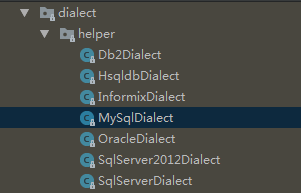
它们与oracle的实现方式都差不多,也就是说 count 都一样,只是分页的sql不一样而已。
Mybatis分页插件: pageHelper的使用及其原理解析的更多相关文章
- Java SSM框架之MyBatis3(三)Mybatis分页插件PageHelper
引言 对于使用Mybatis时,最头痛的就是写分页,需要先写一个查询count的select语句,然后再写一个真正分页查询的语句,当查询条件多了之后,会发现真不想花双倍的时间写count和select ...
- Mybatis分页插件PageHelper的配置和使用方法
Mybatis分页插件PageHelper的配置和使用方法 前言 在web开发过程中涉及到表格时,例如dataTable,就会产生分页的需求,通常我们将分页方式分为两种:前端分页和后端分页. 前端分 ...
- Mybatis分页插件PageHelper使用
一. Mybatis分页插件PageHelper使用 1.不使用插件如何分页: 使用mybatis实现: 1)接口: List<Student> selectStudent(Map< ...
- Mybatis学习---Mybatis分页插件 - PageHelper
1. Mybatis分页插件 - PageHelper说明 如果你也在用Mybatis,建议尝试该分页插件,这个一定是最方便使用的分页插件. 该插件目前支持Oracle,Mysql,MariaDB,S ...
- Mybatis分页插件PageHelper的实现
Mybatis分页插件PageHelper的实现 前言 分页这个概念在做web网站的时候很多都会碰到 说它简单吧 其实也简单 小型的网站,完全可以自己写一个,首先查出数据库总条数,然后按照分页大小分为 ...
- 基于Mybatis分页插件PageHelper
基于Mybatis分页插件PageHelper 1.分页插件使用 1.POM依赖 PageHelper的依赖如下.需要新的版本可以去maven上自行选择 <!-- PageHelper 插件分页 ...
- Mybatis分页插件-PageHelper的使用
转载:http://blog.csdn.net/u012728960/article/details/50791343 Mybatis分页插件-PageHelper的使用 怎样配置mybatis这里就 ...
- (转)淘淘商城系列——MyBatis分页插件(PageHelper)的使用以及商品列表展示
http://blog.csdn.net/yerenyuan_pku/article/details/72774381 上文我们实现了展示后台页面的功能,而本文我们实现的主要功能是展示商品列表,大家要 ...
- springmvc mybatis 分页插件 pagehelper
springmvc mybatis 分页插件 pagehelper 下载地址:pagehelper 4.2.1 , jsqlparser 0.9.5 https://github.com/pagehe ...
随机推荐
- JPA第二天
学于黑马和传智播客联合做的教学项目 感谢 黑马官网 传智播客官网 微信搜索"艺术行者",关注并回复关键词"springdata"获取视频和教程资料! b站在线视 ...
- 十进制转换为其他进制(不使用format)
base = [str(x) for x in range(10)] + [chr(x) for x in range(ord('A'), ord('A') + 6)] # ['0', '1', '2 ...
- PHP stat() 函数
定义和用法 stat() 函数返回关于文件的信息. 该函数将返回一个包含下列元素的数组: [0] 或 [dev] - 设备编号 [1] 或 [ino] - inode 编号 [2] 或 [mode] ...
- LeetCode刷题时引发的思考:Java中ArrayList存放的是值还是引用?
好好学习,天天向上 本文已收录至我的Github仓库DayDayUP:github.com/RobodLee/DayDayUP,欢迎Star,更多文章请前往:目录导航 前言 今天我在刷LeetCode ...
- 如何简单理解spring aop和事务
用比喻的方法理解吧: 初学者的理解,仅仅为了个人好记 aop:由三部分组成:工具箱,工人,为工人分配工具 tx事务:由四部分组成:管理者,制度,工人,向工人通知管理制度 为什么这样理解呢?个人觉得好 ...
- log4net用法实例
内容转载自:https://www.cnblogs.com/youring2/archive/2011/04/27/2030424.html 1.引用log4net.dll 2.在AssemblyIn ...
- 一文搞懂Linux系统开发
先列一下Linux系统开发要掌握的知识,以后有时间再一一介绍. 欢迎关注我的微信公众号:fensnote 文章目录 Linux系统开发会用到什么? C语言基础 shell脚本 学会使用Makefile ...
- Java项目中经常遇到的一些异常情况
一. 1. java.lang.nullpointerexception 这个异常大家肯定都经常遇到,异常的解释是"程序遇上了空指针",简单地说就是调用了未经初始化的对象或者是不存 ...
- 使用 Python 为女神挑选口红
口红对于女生来说永远不嫌多,而男生也搞不明白珊瑚红.番茄色.斩男色等等颜色有什么区别,不都是红色么?当送给女神的口红是她不适合的,那结果就是口红进入垃圾箱还算是轻的,重则拉黑处理.男生们也不用着急,我 ...
- cudnn加速计算
cudnn加速运算 torch.backends.cudnn.enabled = True torch.backends.cudnn.benchmark = True 第一句话是说,使用的是非确定性算 ...