
springmvc异常处理解析#ExceptionHandlerExceptionResolver
开头
试想一下我们一般怎么统一处理异常呢,答:切面。但抛开切面不讲,如果对每一个controller方法抛出的异常做专门处理,那么着实太费劲了,有没有更好的方法呢?当然有,就是本篇文章接下来要介绍的springmvc的异常处理机制,用到了ControllerAdvice和ExceptionHandler注解,有点切面的感觉哈哈。
1.ExceptionHandlerExceptionResolver
首先从springmvc的异常处理解析器开始讲,当执行完controller方法后,不管有没有异常产生都会调用DispatcherServlet#doDispatch()方法中的processDispatchResult(processedRequest, response, mappedHandler, mv, dispatchException); 方法,接着会判断是否有异常,若无异常则走正常流程,若有异常则需要进行处理 mv = processHandlerException(request, response, handler, exception); 再接着就是遍历spring已经注册的异常处理解析器直到有处理器返回mav
private void processDispatchResult(HttpServletRequest request, HttpServletResponse response,

			@Nullable HandlerExecutionChain mappedHandler, @Nullable ModelAndView mv,

			@Nullable Exception exception) throws Exception {

		if (exception != null) {

			if (exception instanceof ModelAndViewDefiningException) {

				logger.debug("ModelAndViewDefiningException encountered", exception);

				mv = ((ModelAndViewDefiningException) exception).getModelAndView();

			}

			else {

				Object handler = (mappedHandler != null ? mappedHandler.getHandler() : null);

				// 执行处理器产生的异常处理

				mv = processHandlerException(request, response, handler, exception);

				// 是否有异常视图返回

				errorView = (mv != null);

			}

		}

		// Did the handler return a view to render? 处理程序是否返回要渲染的视图

		if (mv != null && !mv.wasCleared()) {

			// 渲染视图

			render(mv, request, response);

			if (errorView) {

				WebUtils.clearErrorRequestAttributes(request);

			}

		}

		else {

			if (logger.isDebugEnabled()) {

				logger.debug("Null ModelAndView returned to DispatcherServlet with name '" + getServletName() +

						"': assuming HandlerAdapter completed request handling");

			}

		}

	}
@Nullable
protected ModelAndView processHandlerException(HttpServletRequest request, HttpServletResponse response,
@Nullable Object handler, Exception ex) throws Exception {
// Check registered HandlerExceptionResolvers...
ModelAndView exMv = null;
if (this.handlerExceptionResolvers != null) {
for (HandlerExceptionResolver handlerExceptionResolver : this.handlerExceptionResolvers) {
exMv = handlerExceptionResolver.resolveException(request, response, handler, ex);
if (exMv != null) {
break;
}
}
}
if (exMv != null) {
// 无视图view
if (exMv.isEmpty()) {
request.setAttribute(EXCEPTION_ATTRIBUTE, ex);
return null;
}
// We might still need view name translation for a plain error model...
if (!exMv.hasView()) {
String defaultViewName = getDefaultViewName(request);
if (defaultViewName != null) {
exMv.setViewName(defaultViewName);
}
}
WebUtils.exposeErrorRequestAttributes(request, ex, getServletName());
return exMv;
}
throw ex;
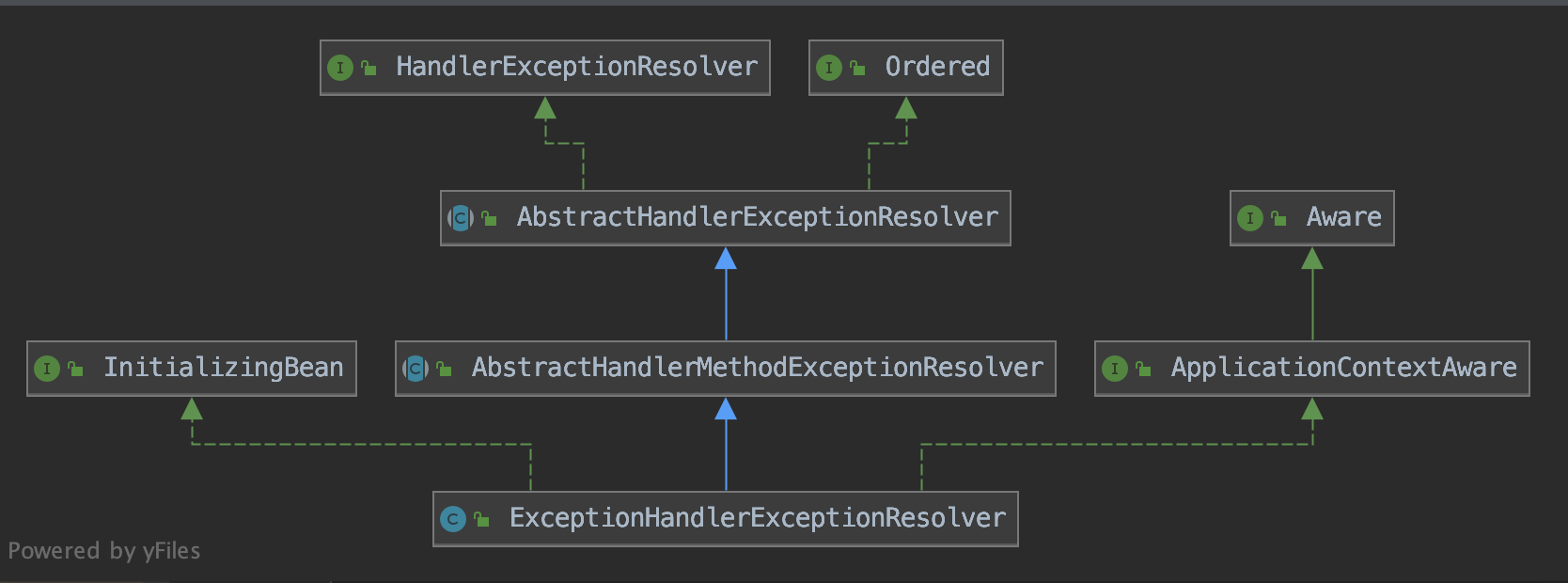
}其中最重要也是最常使用的一个处理器就是ExceptionHandlerExceptionResolver,下面将着重介绍它,先来看看这个类的继承结构图,实现了InitializingBean接口,在这个bean创建完成之前会调用生命周期初始化方法afterPropertiesSet(),这里面包含了对@ControllerAdvice注解的解析,初始化完后的信息供后续解析异常使用。
@Override

public void afterPropertiesSet() {

    // Do this first, it may add ResponseBodyAdvice beans

    // 初始化异常注解 @ControllerAdvice

    initExceptionHandlerAdviceCache();

}

private void initExceptionHandlerAdviceCache() {

    if (getApplicationContext() == null) {

        return;

    }

    if (logger.isDebugEnabled()) {

        logger.debug("Looking for exception mappings: " + getApplicationContext());

    }

    // 解析有@ControllerAdvice注解的bean,并将这个bean构建成ControllerAdviceBean对象

    List<ControllerAdviceBean> adviceBeans = ControllerAdviceBean.findAnnotatedBeans(getApplicationContext());

    // 将ControllerAdviceBean根据order排序

    AnnotationAwareOrderComparator.sort(adviceBeans);

    for (ControllerAdviceBean adviceBean : adviceBeans) {

        Class<?> beanType = adviceBean.getBeanType();

        if (beanType == null) {

            throw new IllegalStateException("Unresolvable type for ControllerAdviceBean: " + adviceBean);

        }

        ExceptionHandlerMethodResolver resolver = new ExceptionHandlerMethodResolver(beanType);

        // mappedMethods 映射不为空

        if (resolver.hasExceptionMappings()) {

            // 添加到缓存中

            this.exceptionHandlerAdviceCache.put(adviceBean, resolver);

            if (logger.isInfoEnabled()) {

                logger.info("Detected @ExceptionHandler methods in " + adviceBean);

            }

        }

        // 若实现了ResponseBodyAdvice接口(暂不介绍)

        if (ResponseBodyAdvice.class.isAssignableFrom(beanType)) {

            this.responseBodyAdvice.add(adviceBean);

            if (logger.isInfoEnabled()) {

                logger.info("Detected ResponseBodyAdvice implementation in " + adviceBean);

            }

        }

    }

}
ExceptionHandlerMethodResolver resolver = new ExceptionHandlerMethodResolver(beanType); 这行代码会解析拥有@ControllerAdvice 注解的class,并且会遍历class中带有 @ExceptionHandler 注解的方法,获取方法注解带有的异常类型,将异常类型和方法放入到mappedMethods中供后面获取,获取的时候若对应处理此异常类型的method有多个,则需要进行排序,选取一个异常类型与method ExceptionHandler注解异常类型最近的一个(深度最小的那个也即是继承关系最少的那个)具体代码如下:
ExceptionHandlerMethodResolver
public class ExceptionHandlerMethodResolver {

	/**

	 * A filter for selecting {@code @ExceptionHandler} methods.

	 */

	public static final MethodFilter EXCEPTION_HANDLER_METHODS = method ->

			(AnnotationUtils.findAnnotation(method, ExceptionHandler.class) != null);

	/**

	 * 异常类型与方法的映射map

	 */

	private final Map<Class<? extends Throwable>, Method> mappedMethods = new HashMap<>(16);

	/**

	 * 缓存,用来存储先前碰到过的异常类型与处理方法的映射

	 */

	private final Map<Class<? extends Throwable>, Method> exceptionLookupCache = new ConcurrentReferenceHashMap<>(16);

	/**

	 * A constructor that finds {@link ExceptionHandler} methods in the given type.

	 * @param handlerType the type to introspect

	 */

	public ExceptionHandlerMethodResolver(Class<?> handlerType) {

		// 获取并遍历@ExceptionHandler注解的方法

		for (Method method : MethodIntrospector.selectMethods(handlerType, EXCEPTION_HANDLER_METHODS)) {

			for (Class<? extends Throwable> exceptionType : detectExceptionMappings(method)) {

				addExceptionMapping(exceptionType, method);

			}

		}

	}

	/**

	 * Extract exception mappings from the {@code @ExceptionHandler} annotation first,

	 * and then as a fallback from the method signature itself.

	 */

	@SuppressWarnings("unchecked")

	private List<Class<? extends Throwable>> detectExceptionMappings(Method method) {

		List<Class<? extends Throwable>> result = new ArrayList<>();

		// 将注解ExceptionHandler value值异常添加到result中

		detectAnnotationExceptionMappings(method, result);

		// 注解值为空的话再去获取参数的异常类型

		if (result.isEmpty()) {

			for (Class<?> paramType : method.getParameterTypes()) {

				if (Throwable.class.isAssignableFrom(paramType)) {

					result.add((Class<? extends Throwable>) paramType);

				}

			}

		}

		if (result.isEmpty()) {

			throw new IllegalStateException("No exception types mapped to " + method);

		}

		return result;

	}

	protected void detectAnnotationExceptionMappings(Method method, List<Class<? extends Throwable>> result) {

		ExceptionHandler ann = AnnotationUtils.findAnnotation(method, ExceptionHandler.class);

		Assert.state(ann != null, "No ExceptionHandler annotation");

		result.addAll(Arrays.asList(ann.value()));

	}

	private void addExceptionMapping(Class<? extends Throwable> exceptionType, Method method) {

		// 将异常类型以及对应的method添加到map中,且异常类型不能有重复否则会报错

		Method oldMethod = this.mappedMethods.put(exceptionType, method);

		if (oldMethod != null && !oldMethod.equals(method)) {

			throw new IllegalStateException("Ambiguous @ExceptionHandler method mapped for [" +

					exceptionType + "]: {" + oldMethod + ", " + method + "}");

		}

	}

	/**

	 * Whether the contained type has any exception mappings.

	 */

	public boolean hasExceptionMappings() {

		return !this.mappedMethods.isEmpty();

	}

	/**

	 * Find a {@link Method} to handle the given exception.

	 * Use {@link ExceptionDepthComparator} if more than one match is found.

	 * @param exception the exception

	 * @return a Method to handle the exception, or {@code null} if none found

	 */

	@Nullable

	public Method resolveMethod(Exception exception) {

		return resolveMethodByThrowable(exception);

	}

	/**

	 * Find a {@link Method} to handle the given Throwable.

	 * Use {@link ExceptionDepthComparator} if more than one match is found.

	 * @param exception the exception

	 * @return a Method to handle the exception, or {@code null} if none found

	 * @since 5.0

	 */

	@Nullable

	public Method resolveMethodByThrowable(Throwable exception) {

		Method method = resolveMethodByExceptionType(exception.getClass());

		if (method == null) {

			Throwable cause = exception.getCause();

			if (cause != null) {

				method = resolveMethodByExceptionType(cause.getClass());

			}

		}

		return method;

	}

	/**

	 * Find a {@link Method} to handle the given exception type. This can be

	 * useful if an {@link Exception} instance is not available (e.g. for tools).

	 * @param exceptionType the exception type

	 * @return a Method to handle the exception, or {@code null} if none found

	 */

	@Nullable

	public Method resolveMethodByExceptionType(Class<? extends Throwable> exceptionType) {

		Method method = this.exceptionLookupCache.get(exceptionType);

		if (method == null) {

			method = getMappedMethod(exceptionType);

			this.exceptionLookupCache.put(exceptionType, method);

		}

		return method;

	}

	/**

	 * Return the {@link Method} mapped to the given exception type, or {@code null} if none.

	 */

	@Nullable

	private Method getMappedMethod(Class<? extends Throwable> exceptionType) {

		List<Class<? extends Throwable>> matches = new ArrayList<>();

		for (Class<? extends Throwable> mappedException : this.mappedMethods.keySet()) {

			if (mappedException.isAssignableFrom(exceptionType)) {

				matches.add(mappedException);

			}

		}

		if (!matches.isEmpty()) {

			// exceptionType 到matchs父类异常类型的深度

			matches.sort(new ExceptionDepthComparator(exceptionType));

			return this.mappedMethods.get(matches.get(0));

		}

		else {

			return null;

		}

	}

}
@Override
@Nullable
protected ModelAndView doResolveHandlerMethodException(HttpServletRequest request,
HttpServletResponse response, @Nullable HandlerMethod handlerMethod, Exception exception) {
// exception为controller方法抛出的异常
// 根据异常及其类型从上述的mappedMethods中获取对应的方法,再获取方法所在的对象 封装成ServletInvocableHandlerMethod
ServletInvocableHandlerMethod exceptionHandlerMethod = getExceptionHandlerMethod(handlerMethod, exception);
if (exceptionHandlerMethod == null) {
return null;
}
// 设置参数解析器,主要用来获取方法的参数值的,供后续反射调用方法
if (this.argumentResolvers != null) {
exceptionHandlerMethod.setHandlerMethodArgumentResolvers(this.argumentResolvers);
}
// 设置返回值解析器,当执行完方法后获取返回值,对返回值进行处理 或返回视图或将结果写入到response
if (this.returnValueHandlers != null) {
exceptionHandlerMethod.setHandlerMethodReturnValueHandlers(this.returnValueHandlers);
}
ServletWebRequest webRequest = new ServletWebRequest(request, response);
ModelAndViewContainer mavContainer = new ModelAndViewContainer();
try {
if (logger.isDebugEnabled()) {
logger.debug("Invoking @ExceptionHandler method: " + exceptionHandlerMethod);
}
Throwable cause = exception.getCause();
if (cause != null) {
// Expose cause as provided argument as well
// 执行异常处理方法,也就是我们的自定义的异常处理方法
exceptionHandlerMethod.invokeAndHandle(webRequest, mavContainer, exception, cause, handlerMethod);
}
else {
// Otherwise, just the given exception as-is
exceptionHandlerMethod.invokeAndHandle(webRequest, mavContainer, exception, handlerMethod);
}
}
catch (Throwable invocationEx) {
// Any other than the original exception is unintended here,
// probably an accident (e.g. failed assertion or the like).
if (invocationEx != exception && logger.isWarnEnabled()) {
logger.warn("Failed to invoke @ExceptionHandler method: " + exceptionHandlerMethod, invocationEx);
}
// Continue with default processing of the original exception...
return null;
}
// 根据后续的返回值解析器设置的,将返回值写入到response中了直接返回空的mav
if (mavContainer.isRequestHandled()) {
return new ModelAndView();
}
else {
ModelMap model = mavContainer.getModel();
HttpStatus status = mavContainer.getStatus();
ModelAndView mav = new ModelAndView(mavContainer.getViewName(), model, status);
mav.setViewName(mavContainer.getViewName());
// (this.view instanceof String)
if (!mavContainer.isViewReference()) {
mav.setView((View) mavContainer.getView());
}
if (model instanceof RedirectAttributes) {
Map<String, ?> flashAttributes = ((RedirectAttributes) model).getFlashAttributes();
RequestContextUtils.getOutputFlashMap(request).putAll(flashAttributes);
}
return mav;
}
}exceptionHandlerMethod.invokeAndHandle(webRequest, mavContainer, exception, cause, handlerMethod); 此方法执行完成后已经完成了异常处理方法的调用,若方法返回值为视图ModelAndView或其他视图类型,则还需要借助视图解析器如InternalResourceViewResolver对视图进行解析渲染,若为其他类型的值则将值写入到response响应中。
2. demo
Controller类方法:
@Controller

@RequestMapping(value = "test")

public class HelloWorldController{

  @Data

  public static class User {

    private String username;

    private Integer age;

    private String address;

  }

  @RequestMapping(value = "user/get", method = RequestMethod.POST)

  @ResponseBody

  public Object testObject(@RequestBody @Valid User user, @RequestParam String address) {

    user.setAddress(address);

    // 这里特意抛出RuntimeException异常

    throw new RuntimeException("this is a exception");

  }

}
ExceptionHandlerController异常处理类
@ControllerAdvice

@ResponseBody

public class ExceptionHandlerController {

  @ExceptionHandler(value = Exception.class)

  public Object handleException(Exception e) {

    return CommonResult.fail("Exception:" + e.getMessage());

  }

  @ExceptionHandler(value = RuntimeException.class)

  public Object handlerRuntimeException(Exception e) {

    return CommonResult.fail("handlerRuntimeException:" + e.getMessage());

  }

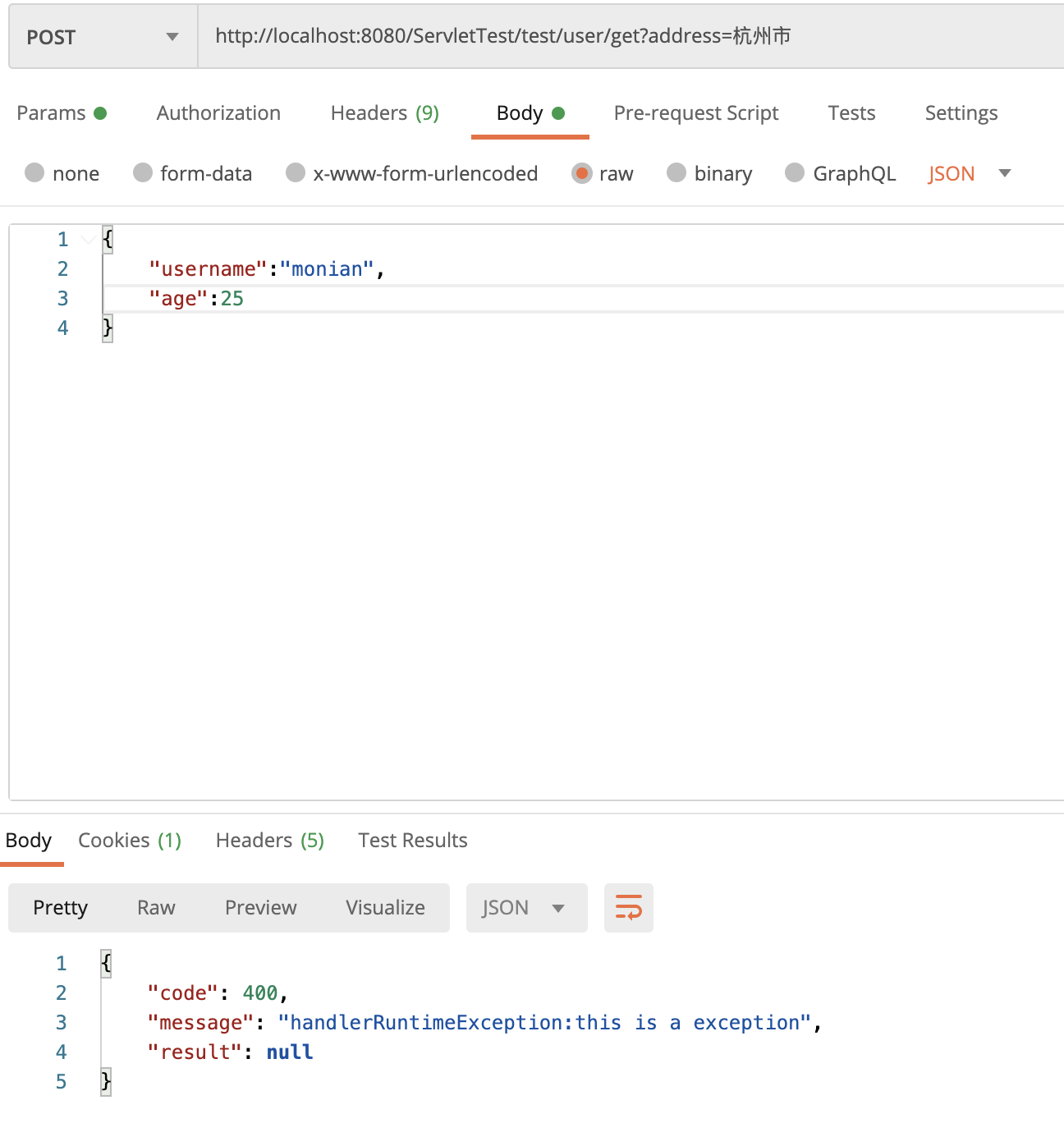
}ExceptionHandlerController类中定义了两个异常处理方法,一个处理Exception异常,一个处理RuntimeException异常,那个根据controller方法抛出的异常RuntimeException再结合上面的分析(RuntimeException到RuntimeException深度为0,RuntimeException到Exception中间继承了一次深度为1)可以得出抛出异常类型的处理方法为handlerRuntimeException 方法。 运行程序结果如下:
结语
初步解析ExceptionHandlerExceptionResolver源码,若写的有误或者有不理解的地方,欢迎指出讨论~
springmvc异常处理解析#ExceptionHandlerExceptionResolver的更多相关文章
- SpringMVC异常处理机制详解[附带源码分析]
目录 前言 重要接口和类介绍 HandlerExceptionResolver接口 AbstractHandlerExceptionResolver抽象类 AbstractHandlerMethodE ...
- SpringMVC异常处理机制
SpringMVC异常处理机制 springMVC会将所有在doDispatch方法中的异常捕获,然后处理.无法处理的异常会抛出给容器处理. 在doDispatch()中调用processDispat ...
- SpringMVC视图解析器
SpringMVC视图解析器 前言 在前一篇博客中讲了SpringMVC的Controller控制器,在这篇博客中将接着介绍一下SpringMVC视 图解析器.当我们对SpringMVC控制的资源发起 ...
- SpringMVC视图解析器(转)
前言 在前一篇博客中讲了SpringMVC的Controller控制器,在这篇博客中将接着介绍一下SpringMVC视图解析器.当我们对SpringMVC控制的资源发起请求时,这些请求都会被Sprin ...
- SpringMVC 视图解析器
SpringMVC 视图解析器 还记得SpringMVC 快速入门中,dispatcher-servlet.xml 配置的视图解析器么.它是SpringMVC 的核心知识点.本章节比较简单,明白视图解 ...
- SpringMvc CharacterEncodingFilter 解析 encoding 参数并初始化参数
SpringMvc CharacterEncodingFilter 解析 encoding 参数并初始化参数:
- Spring Boot实践——SpringMVC视图解析
一.注解说明 在spring-boot+spring mvc 的项目中,有些时候我们需要自己配置一些项目的设置,就会涉及到这三个,那么,他们之间有什么关系呢? 首先,@EnableWebMvc=Web ...
- springmvc视图解析
SpringMVC 视图解析的几种方式: 在视图解析的过程中,需要知道逻辑view的名字,model的名字以访问model和view. 使用jsp进行解析,InternalResourceViewRe ...
- 前台JSON对象传给springmvc,解析为map对象
前台JSON对象传给springmvc,解析为map对象 javascript: $.ajax({ url : url, method : 'post', contentType : 'applica ...
随机推荐
- S2-045远程命令执行漏洞的利用
Apache Struts2 远程命令执行 (S2-045) 漏洞介绍: 漏洞编号:S2-045CVE编号:CVE-2017-5638漏洞类型:远程代码执行漏洞级别:高危漏洞风险:黑客通过利用漏洞可以 ...
- 微服务生态组件之Spring Cloud LoadBalancer详解和源码分析
Spring Cloud LoadBalancer 概述 Spring Cloud LoadBalancer目前Spring官方是放在spring-cloud-commons里,Spring Clou ...
- 在字节跳动,一个更好的企业级SparkSQL Server这么做
SparkSQL是Spark生态系统中非常重要的组件.面向企业级服务时,SparkSQL存在易用性较差的问题,导致难满足日常的业务开发需求.本文将详细解读,如何通过构建SparkSQL服务器实现使用效 ...
- 关于Spring中的useSuffixPatternMatch
背景 spring-boot的版本是2.1.4.RELEASE,spring的版本是5.1.6.RELEASE 一个例子如下: @Configuration @Import(WebMvcAutoCon ...
- 用Repo管理自己的本地仓库
AOSP使用Repo工具管理项目源码.而Repo工具则依赖一个名叫manifest的git仓库来记录Android源码中都包含哪些子仓库. 进入Android源码根目录下的.repo目录,可以看到ma ...
- 图解MySQL逻辑备份的实现流程
1. 摘要 数据作为一家公司的重要资产,其重要程度不言而喻.数据库为数据提供存取服务,担任着重要的角色,如果因数据误删.服务器故障.病毒入侵等原因导致数据丢失或服务不可用,会对公司造成重大损失,所以数 ...
- CabloyJS实现了一款基于X6的工作流可视化编辑器
介绍 文档演示:CMS审批工作流演示了如何通过JSON来直接创建一个工作流定义,通常用于为具体的业务数据生成预定义或内置审批工作流的场景 CabloyJS 4.8.0采用X6 图编辑引擎实现了一款工作 ...
- .NET 处理[未能为 SSLTLS 安全通道建立信任关系]问题
更新记录 2022年4月16日本文迁移自Panda666原博客,原发布时间:2021年7月16日. 在.NET的开发过程中,发现[基础连接已经关闭: 未能为 SSL/TLS 安全通道建立信任关系]问题 ...
- 名校AI课推荐 | UC Berkeley《人工智能导论》
深度学习具备强感知能力但缺乏一定的决策能力,强化学习具备决策能力但对感知问题束手无策,因此将两者结合起来可以达到优势互补的效果,为复杂系统的感知决策问题提供了解决思路. 今天我们推荐这样一门课程--U ...
- 重学ES系列之模版字符串
<!DOCTYPE html> <html lang="en"> <head> <meta charset="UTF-8&quo ...