
优先队列(priorityqueue)
队列是先进先出的线性表,顾名思义,优先队列则是元素有优先级的队列,出列的顺序由元素的优先级决定。从优先队列中删除元素是根据优先权的高低次序,而不是元素进入队列的次序。优先队列的典型应用是机器调度等。
假设我们对机器服务进行收费。每个用户每次使用机器所付费用都是相同的,但每个用户所需要服务时间都不同。为获得最大利润,假设只要有用户机器就不会空闲,我们可以把等待使用该机器的用户组织成一个最小优先队列,优先权即为用户所需服务时间。当一个新的用户需要使用机器时,将他 /她的请求加入优先队列。一旦机器可用,则为需要最少服务时间(即具有最高优先权)的用户提供服务。如果每个用户所需时间相同,但用户愿意支付的费用不同,则可以用支付费用作为优先权,一旦机器可用,所交费用最多的用户可最先得到服务,这时就要选择最大优先队列。
1.概念
优先队列( priority queue)是0个或多个元素的集合,每个元素都有一个优先权或值,对优先队列执行的操作有 1) 查找; 2) 插入一个新元素; 3) 删除。在最小优先队列( min priority q u e u e)中,查找操作用来搜索优先权最小的元素,删除操作用来删除该元素;对于最大优先队列( max priority queue),查找操作用来搜索优先权最大的元素,删除操作用来删除该元素。优先权队列中的元素可以有相同的优先权,查找与删除操作可根据任意优先权进行。
描述优先队列最简单的方法是采用无序线性表。假设有一个具有n个元素的优先队列,如果采用公式化的线性表描述,那么插入操作可以十分方便的在表的右端末尾执行,插入操作的时间为O(1)。删除时必须查找优先权最大的元素,因此所需时间为O(n)。
若采用有序的线性表,则插入为O(n),删除为O(1)
2.实现
由上面描述可以知道,我们可以在线性表的基础上完成优先队列,只需要改变删除的操作,当删除时找到最大或最小的值即可。
我们可以直接继承线性表类线性表的2种实现方式:数组和链表
线性表的公式化实现:
 #ifndef LINEARLIST_H

 #define LINEARLIST_H

 #include<iostream>

 #include<cstdlib>

 #include<new>

 using std::cout;

 using std::endl;

 template<class T>

 class LinearList

 {

     public:

         LinearList(int MaxListSize=);//构造函数

         virtual ~LinearList();

         bool IsEmpty()const

         {

             return length==;

         }

         int Length()const {return length;}

         bool Find(int k,T& x)const;//返回第K个元素到中

         int Search(T& x)const;//返回x的位置

         LinearList<T>& Delete(int k,T& x);//删除位置k的元素,并将元素值存到x

         LinearList<T>& Insert(int k,const T& x);//将x插入到k位置之后

         void Output(std::ostream& out)const;//输出到流

     protected:

         int length;//线性表当前长度

         int MaxSize;//最大长度

         T *element;//线性表数组

 };

 class NoMem

 {

     public :

     NoMem(){

         cout<<"No Memory"<<endl;

     //std::exit(1);

     }

 };

 class OutofBounds

 {

 public :

     OutofBounds()

     {

         cout<<"Out of Bounds"<<endl;

     //std::exit(1);

     }

 };

 void my_new_handler()

 {

     throw NoMem();

 }

 template<class T>

 LinearList<T>::LinearList(int MaxListSize)

 {

     std::new_handler old_Handler=std::set_new_handler(my_new_handler);

     MaxSize=MaxListSize;

     element=new T[MaxSize];

     length=;

 }

 template<class T>

 LinearList<T>::~LinearList()

 {

     delete[]element;

     MaxSize=;

     length=;

 }

 template<class T>

 bool LinearList<T>::Find(int k,T&x)const

 {

     if(k<||k>length)

         return false;

      x=element[k-];

      return true;

 }

 template<class T>

 int LinearList<T>::Search(T &x)const

 {

     int i=;

     while(i<length&&element[i]!=x)

     {

         i++;

     }

     if(i==length) return ;

     else return i+;

 }

 template<class T>

 LinearList<T>& LinearList<T>::Delete(int k,T &x)

 {

     if(Find(k,x))//存在位置k

     {

         for(int i=k;i<length;++i)

         {

             element[i-]=element[i];//k之后元素向前移动一位

         }

         length--;

         return *this;

     }

     else

     {

        throw OutofBounds();

     }

 }

 template<class T>

 LinearList<T>& LinearList<T>::Insert(int k,const T &x)

 {

     if(k<||k>length)

     {

        throw OutofBounds();

     }

     else if(length==MaxSize)

     {

         throw NoMem();

     }

     else

         {

             for(int i=length;i>k;--i)

             {

                 element[i]=element[i-];//k之后元素向后移动一位

             }

             element[k]=x;

             length++;

             return *this;

         }

 }

 template<class T>

 void LinearList<T>::Output(std::ostream& out)const

 {

     for(int i=;i<length;i++)

     {

         out<<element[i]<<" ";

     }

 }

 template<class T>

 std::ostream& operator<<(std::ostream &out,const LinearList<T>& x)

 {

     x.Output(out);

     return out;

 }

 #endif // LINEARLIST_H
最大优先队列:
 #ifndef PRIORITYQUEUE_H

 #define PRIORITYQUEUE_H

 #include "LinearList.h"

 template<typename T>

 class PriorityQueue:public LinearList<T>

 {

 public:

     PriorityQueue(int MaxListSize=):LinearList<T>::LinearList(MaxListSize){};

     PriorityQueue<T>& Insert(const T& x);

     PriorityQueue<T>& Delete(T& x);

     T Max() const;

     ~PriorityQueue(){};

     //void Output(std::ostream& out)const;//输出到流

     friend ostream& operator<< <>(ostream& output, const PriorityQueue<T>& x);

 private:

     size_t MaxIndex() const;

 };

 //末端插入

 template<typename T>

 PriorityQueue<T>& PriorityQueue<T>::Insert(const T& x)

 {

     if (length>=MaxSize)

     {

         throw NoMem();

     }

     element[length++] = x;

     return *this;

 }

 //找到最大值的索引(下标)

 template<typename T>

 size_t PriorityQueue<T>::MaxIndex() const

 {

     if (length == )

     {

         throw OutofBounds();

     }

     size_t maxNum = ;

     for (size_t i = ; i < length; ++i)

     {

         if (element[i]>element[maxNum])

         {

             maxNum = i;

         }

     }

     return maxNum;

 }

 //返回最大值

 template<typename T>

 T PriorityQueue<T>::Max() const

 {

     if (length==)

     {

         throw OutofBounds();

     }

     size_t maxNum = MaxIndex();

     return element[maxNum];

 }

 //取出最大值

 template<typename T>

 PriorityQueue<T>& PriorityQueue<T>::Delete(T& x)

 {

     if (length==)

     {

         throw OutofBounds();

     }

     size_t maxindex = MaxIndex();

     x = element[maxindex];

     //元素前移

     for (size_t i = maxindex; i < length-;++i)

     {

         element[i] = element[i + ];

     }

     --length;

     return *this;

 }

 /*

 template<typename T>

 void PriorityQueue<T>::Output(std::ostream& out) const

 {

     if (length==0)

     {

         throw OutofBounds();

     }

     for (size_t i = 0; i < length;++i)

     {

         out << element[i]<<' ';

     }

     out << endl;

 }

 */

 template<typename T>

 ostream& operator<<(ostream& output,const PriorityQueue<T>& x)

 {

     x.Output(output);

     return output;

 }

 #endif
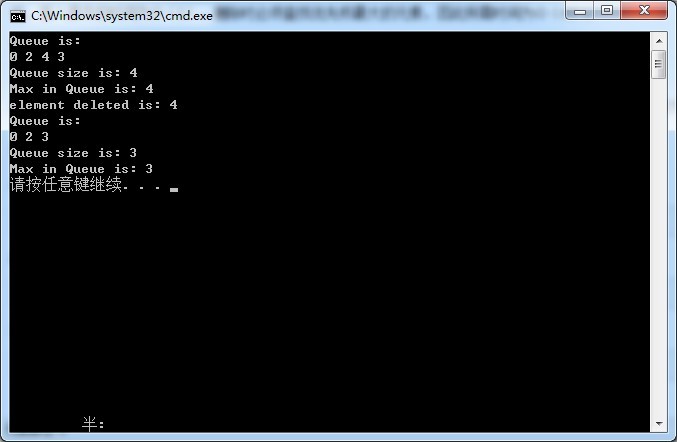
测试:
 #include<iostream>

 using namespace std;

 #include "PriorityQueue.h"

 int main()

 {

     PriorityQueue<int> testQ;

     testQ.Insert();

     testQ.Insert();

     testQ.Insert();

     testQ.Insert();

     cout << "Queue is: " << endl;

     cout << testQ << endl;

     cout << "Queue size is: " << testQ.Length();

     cout << endl;

     cout << "Max in Queue is: " << testQ.Max();

     cout << endl;

     int x;

     testQ.Delete(x);

     cout << "element deleted is: " << x<<endl;

     cout << "Queue is: " << endl;

     cout << testQ << endl;

     cout << "Queue size is: " << testQ.Length();

     cout << endl;

     cout << "Max in Queue is: " << testQ.Max();

     cout << endl;

     return ;

 }
优先队列(priorityqueue)的更多相关文章
- 【Java源码】集合类-优先队列PriorityQueue
一.类继承关系 public class PriorityQueue<E> extends AbstractQueue<E> implements java.io.Serial ...
- [Swift]实现优先队列PriorityQueue
★★★★★★★★★★★★★★★★★★★★★★★★★★★★★★★★★★★★★★★★➤微信公众号:山青咏芝(shanqingyongzhi)➤博客园地址:山青咏芝(https://www.cnblogs. ...
- Java的优先队列PriorityQueue详解
一.优先队列概述 优先队列PriorityQueue是Queue接口的实现,可以对其中元素进行排序, 可以放基本数据类型的包装类(如:Integer,Long等)或自定义的类 对于基本数据类型的包装器 ...
- Java优先队列PriorityQueue的各种打开方式以及一些你不知道的细节
目录 Java优先队列PriorityQueue的各种打开方式以及一些你不知道的细节 优先队列的默认用法-从小到大排序 对String类用优先队列从大到小排序 通过自定义比较器对自定义的类进行从小到大 ...
- .NET 6 优先队列 PriorityQueue 实现分析
在最近发布的 .NET 6 中,包含了一个新的数据结构,优先队列 PriorityQueue, 实际上这个数据结构在隔壁 Java中已经存在了很多年了, 那优先队列是怎么实现的呢? 让我们来一探究竟吧 ...
- [Swift]优先队列PriorityQueue(自定义数据结构)
优先队列[priority queue] 普通的队列是一种先进先出的数据结构,元素在队列尾追加,而从队列头删除. 优先队列特点:在优先队列中,元素被赋予优先级. 当访问元素时,具有最高优先级的元素最先 ...
- 优先队列PriorityQueue实现 大小根堆 解决top k 问题
转载:https://www.cnblogs.com/lifegoesonitself/p/3391741.html PriorityQueue是从JDK1.5开始提供的新的数据结构接口,它是一种基于 ...
- Python 标准库 —— 队列(Queue,优先队列 PriorityQueue)
优先队列,有别于普通队列的先入先出(虽然字面上还是队列,但其实无论从含义还是实现上,和普通队列都有很大的区别),也有别于栈的先入后出.在实现上,它一般通过堆这一数据结构,而堆其实是一种完全二叉树,它会 ...
- 优先队列PriorityQueue&Lambda&Comparator
今天翻阅<Labuladuo的算法小抄>时发现在使用优先队列的PriorityQueue解决一道hard题时(leetCode 23),出现了如下代码: ListNode mergeKLi ...
随机推荐
- windows查看端口占用情况及查杀进程
我们平时在做web开发运行web服务器或运行某个应用时会报错,提示该应用的端口号已被占用,我们可以用以下的方法解决. 解决方法一:重新为应用配置端口. 解决方法二:找到占用端口的应用并关闭该应用释放占 ...
- sde需要注意的几个常见问题
Desktop 10.4 是32位的,Server 10.4是64位的,因此位的Oracle客户端,位的Oracle客户端. 如果Desktop和Server安装在同一台机器上,那么Oracle客 ...
- 论文:network embedding
KDD2016: network embedding model: deep walk(kdd 2014): http://videolectures.net/kdd2014_perozzi_deep ...
- Ffmpeg和SDL如何同步视频(转)
ong> PTS和DTS 幸运的是,音频和视频流都有一些关于以多快速度和什么时间来播放它们的信息在里面.音频流有采样,视频流有每秒的帧率.然而,如果我们只是简单的通过数帧和乘以帧率的方式来同步视 ...
- weblogic8.1在myeclipse中启动正常,在单独的weblogic中无法正常启动的解决方案.
应用程序服务器weblogic8.1.5,项目在myeclipse中启动正常,在单独的服务器中启动就报错了.错误如下图: 经过观察,发现在myeclipse中设置了以下的jar包.估计是这个问题引起的 ...
- Struts2使用Interceptor实现权限控制的应用实例详解
Struts2使用Interceptor实现权限控制的应用实例详解 拦截器:是Struts2框架的核心,重点之重.因此,对于我们要向彻底学好Struts2.0.读源码和使用拦截器是必不可少的.少说了. ...
- 多线程中的lua同步问题
最近写paintsnow::start时出现了一个非常麻烦的BUG,程序的Release版本大约每运行十几次就会有一次启动时崩溃(Debug版本还没崩溃过),崩溃点也不固定.经过简单分析之后,确定是线 ...
- 具体解释EBS接口开发之物料导入API
create_item inv_item_grp.create_item(p_commit => fnd_api.g_true, -- p_item_rec => l_item_rec, ...
- 基于angularJS和requireJS的前端架构
1.概要描述 1.1.angularJS描述:angularJS是可以用来构建WEB应用的,WEB应用中的一种端对端的完整解决方案.通过开发者呈现一个更高层次的抽象来简化应用的开发.最适合的就是用它来 ...
- js 去掉空格
写成类的方法格式如下:(str.trim();)<script language="javascript"> String.prototype.trim=functio ...