
sql分组(orderBy、GroupBy)获取每组前一(几)条数据
sql数据库实现分组并取每组的前1(几)条数据
测试数据准备工作:
根据某一个字段分组取最大(小)值所在行的数据:
创建表并且插入数据
CREATE table Test_orderByOrGroupBy_tb(Name nvarchar(50),Val int,Describe nvarchar(50))

insert into Test_orderByOrGroupBy_tb values('a', 1, 'a1--a的第一个值')

insert into Test_orderByOrGroupBy_tb values('b', 2, 'b2b2b2b2b2b2b2b2b值')

insert into Test_orderByOrGroupBy_tb values('a', 2, 'a2(a的第二个值)')

insert into Test_orderByOrGroupBy_tb values('b', 1, 'b1--b的第一个值')

insert into Test_orderByOrGroupBy_tb values('a', 3, 'a3:a的第三个值')

insert into Test_orderByOrGroupBy_tb values('b', 3, 'b3:b的第三个值')

insert into Test_orderByOrGroupBy_tb values('c', 1, 'c1c1c1c1c1c1c1c1c1c1c值')

insert into Test_orderByOrGroupBy_tb values('b', 5, 'b5b5b5b5b5b5b5b5b5b5值')

insert into Test_orderByOrGroupBy_tb values('c', 2, 'c2c2c2c2c2c2c2c2c2c2值')

insert into Test_orderByOrGroupBy_tb values('b', 4, 'b4b4b4b4b4b4b4b4b值')

GO
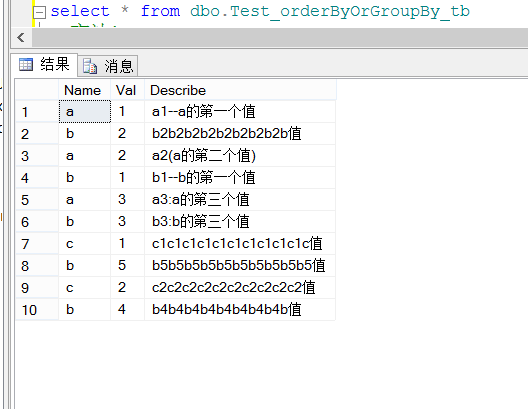
1、根据Name分组取Val最大的值所在行的数据。
Sql语句代码如下:
--方法1:

select a.* from Test_orderByOrGroupBy_tb a where Val = (select max(Val) from Test_orderByOrGroupBy_tb where Name = a.Name) order by a.Name

--方法2:

select a.* from Test_orderByOrGroupBy_tb a,(select Name,max(Val) Val from Test_orderByOrGroupBy_tb group by Name) b where a.Name = b.Name and a.Val = b.Val order by a.Name

--方法3:

select a.* from Test_orderByOrGroupBy_tb a inner join (select Name,max(Val) Val from Test_orderByOrGroupBy_tb group by Name) b on a.Name = b.Name and a.Val = b.Val order by a.Name

--方法4:

select a.* from Test_orderByOrGroupBy_tb a where 1 > (select count(*) from Test_orderByOrGroupBy_tb where Name = a.Name and Val > a.Val ) order by a.Name --其中1表示获取分组中前一条数据

--方法5:

select a.* from Test_orderByOrGroupBy_tb a where not exists(select 1 from Test_orderByOrGroupBy_tb where Name = a.Name and Val > a.Val)
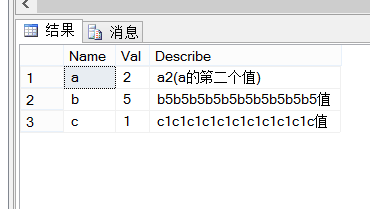
上面的5种方法的sql执行执行结果一样,结果如下图:

2、根据Name分组取Val最小的值所在行的数据。
--方法1:

select a.* from Test_orderByOrGroupBy_tb a where Val = (select min(Val) from Test_orderByOrGroupBy_tb where Name = a.Name) order by a.Name

--方法2:

select a.* from Test_orderByOrGroupBy_tb a,(select Name,min(Val) Val from Test_orderByOrGroupBy_tb group by Name) b where a.Name = b.Name and a.Val = b.Val order by a.Name

--方法3:

select a.* from Test_orderByOrGroupBy_tb a inner join (select Name,min(Val) Val from Test_orderByOrGroupBy_tb group by Name) b on a.Name = b.Name and a.Val = b.Val order by a.Name

--方法4:

select a.* from Test_orderByOrGroupBy_tb a where 1 > (select count(*) from Test_orderByOrGroupBy_tb where Name = a.Name and Val < a.Val ) order by a.Name --其中1表示获取分组中前一条数据

--方法5:

select a.* from Test_orderByOrGroupBy_tb a where not exists(select 1 from Test_orderByOrGroupBy_tb where Name = a.Name and Val < a.Val)
上面5种方法执行结果是一样的,如下图:

3、根据Name分组取第一次出现的行所在的数据。
select a.* from Test_orderByOrGroupBy_tb a where a.Val = (select top 1 val from Test_orderByOrGroupBy_tb where a.Name = a.Name) order by a.Name
执行结果如下图:

4、根据Name分组随机取一条数据
select a.* from Test_orderByOrGroupBy_tb a where a.Val = (select top 1 Val from Test_orderByOrGroupBy_tb where Name = a.Name order by newid()) order by a.Name
运行几次执行结果如下图:


5、根据Name分组取最大的两个(N个)Val
--方法一:

select a.* from Test_orderByOrGroupBy_tb a where 2 > (select count(*) from Test_orderByOrGroupBy_tb where Name = a.Name and Val > a.Val ) order by a.Name,a.Val

--方法二:

select a.* from Test_orderByOrGroupBy_tb a where val in (select top 2 val from Test_orderByOrGroupBy_tb where Name=a.Name order by Val desc) order by a.Name,a.Val

--方法三:

SELECT a.* from Test_orderByOrGroupBy_tb a where exists (select count(*) from Test_orderByOrGroupBy_tb where Name = a.Name and Val > a.Val having Count(*) < 2) order by a.Name
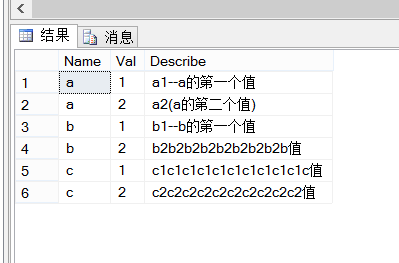
上面的三种方法执行结果是一致的如下图:

6、根据Name分组取最小的两个(N个)Val
--方法一:

select a.* from Test_orderByOrGroupBy_tb a where 2 > (select count(*) from Test_orderByOrGroupBy_tb where Name = a.Name and val < a.val ) order by a.name,a.val

--方法二:

select a.* from Test_orderByOrGroupBy_tb a where val in (select top 2 val from Test_orderByOrGroupBy_tb where name=a.name order by val) order by a.name,a.val

--方法三

SELECT a.* from Test_orderByOrGroupBy_tb a where exists (select count(*) from Test_orderByOrGroupBy_tb where Name = a.Name and val < a.val having Count(*) < 2) order by a.name
上面的三种方法执行的结果一致如下图:
sql分组(orderBy、GroupBy)获取每组前一(几)条数据的更多相关文章
- SQL 分组后只获取每组的一条数据
/****** Object: Table [dbo].[TEMP] Script Date: 2018-8-22 星期三 23:33:09 ******/ SET ANSI_NULLS ON GO ...
- Sqlserver 如何获取每组中的第一条记录
在日常生活方面,我们经常需要记录一些操作,类似于日志的操作,最后的记录才是有效数据,而且可能它们属于不同的方面.功能下面,从数据库的术语来说,就是查找出每组中的一条数据. 例子 我们要从上面获得的有效 ...
- python 获取当天和前几天时间数据
python 获取当天和前几天时间数据 import datetime from datetime import datetime, date, timedelta def dayDateRange( ...
- SQL分组查询GroupBy
一.分组查询1.使用group by进行分组查询在使用group by关键字时,在select列表中可以指定的项目是有限制的,select语句中仅许以下几项:〉被分组的列〉为每个分组返回一个值得表达式 ...
- SQL分组排序后取每组最新一条数据的另一种思路
在hibernate框架和mysql.oracle两种数据库兼容的项目中实现查询每个id最新更新的一条数据. 之前工作中一直用的mybatis+oracle数据库这种,一般写这类分组排序取每组最新一条 ...
- MYSQL 按某个字段分组,然后取每组前3条记录
先初始化一些数据,表名为 test ,字段及数据为: SQL执行结果为:每个 uid 都只有 3 条记录. SQL语句为: SELECT * FROM test main WHERE ...
- mysql在group by分组后查询第二条/第三条乃至每组中任意一条数据
昨天老板让我查询项目中(众筹),没人刚发起感召后,前三笔钱的入账时间和金额,这把大哥整懵逼了,group by在某些方面是好使,但这次不能为我所用了,获取第一笔进账是简单,可以用group by 直接 ...
- ajax的get方法获取豆瓣电影前10页的数据
# _*_ coding : utf-8 _*_ # @Time : 2021/11/2 11:45 # @Author : 秋泊酱 # 1页数据 电影条数20 # https://movie.dou ...
- 【sql进阶】查询每天、每个设备的第一条数据
需求如下 每个设备(不同DeviceID).每天会向数据库插入多条数据,求每天.每个设备插入的第一条数据. 下面SQL中的 ShareRecommendID 类比不同设备的DeviceID. ROW_ ...
随机推荐
- 【安装mysql数据库】
方法/步骤 请注意上图中选择Custom选项,这样才能修改安装目录. 请注意为了数据安全,不要把mysql安装在系统盘,如C:盘. 可以在其他盘符下,新建两个文件夹,一个存储mysql的文件, ...
- 无状态的web应用
无意间看到这个话题,随便看了下 觉得有点意思.比较零散,记录一下. 1. http协议无状态. 简单的理解:每一个http请求都是独立的.不会因为前一个请求的失败就影响到下一个请求.既不会影响前面的, ...
- sqlserver的IO性能检查
这一个月老被一个信息科科长纠缠,原因就是他们的sql server 2008 R2老是定期的写入性能低下.我是这样认为的,但身边的人似乎都不这么想.每每我对那个挂在一个交换机上的网络存储表达担忧时,这 ...
- Ubuntu 安装mysql和简单操作
http://www.cnblogs.com/zhuyp1015/p/3561470.html ubuntu上安装mysql非常简单只需要几条命令就可以完成. 1. sudo apt-get inst ...
- CCNA第四章第五章Cisco的IOS与SDM及其管理考试要点学习笔记
1. IOS的用户界面 Cisco互联网操作系统(IOS)是思科路由器和大多数交换机的核心,它是一个可以提供路由,交换,网络互联以及远程通信功能的专有内核. Cisco路由器的IOS软件 ...
- 关于css3媒体查询和响应式布局
响应式设计 响应式设计可根据所显示的屏幕大小而改变, 它呈现的每个屏幕看起来并不相同.按照可用的屏幕属性,响应式设计提供了 UI 的最佳效果. 例如,如果网站布局上有一个占据 25% 的屏幕宽度的侧边 ...
- (转)Silverlight控件关系理解
原文地址http://www.cnblogs.com/Joetao/articles/1899664.html 本篇学习了Silverlight中的控件继承关系,了解控件的继承关系对应我们操作控件,使 ...
- 用MOS管防止电源反接的原理
电源反接,会给电路造成损坏,不过,电源反接是不可避免的.所以,我么就需要给电路中加入保护电路,达到即使接反电源,也不会损坏的目的. 一般可以使用在电源的正极串入一个二极管解决,不过,由于二极管有压降, ...
- xampp开启php-debug
[XDebug]zend_extension = "C:\xampp\php\ext\php_xdebug.dll";xdebug.profiler_append = 0;xdeb ...
- C++混合编程之idlcpp教程Lua篇(6)
上一篇在这 C++混合编程之idlcpp教程Lua篇(5) 第一篇在这 C++混合编程之idlcpp教程(一) 工程LuaTutorial4中加入了四个文件:LuaTutorial4.cpp, Tut ...