
hyperledger fabric 1.0.5 分布式部署 (二)
环境:2台 ubuntu 16.04
角色列表
| 角色 | IP地址 | 宿主端口 | docker端口 |
| peer0.org1.example.com | 47.93.249.250 | 7051 | 7051 |
| peer1.org1.example.com | 47.93.249.250 | 7051 | 8051 |
| peer0.org2.example.com | 47.93.249.250 | 7051 | 9051 |
| peer1.org2.example.com | 47.93.249.250 | 7051 | 10051 |
| cli | 47.93.249.250 | NULL | NULL |
| orderer.example.com | 47.94.244.156 | 7050 | 7050 |
- 环境初始化
2台机器的fabric 环境初始化方法,读者参考作者之前写的一片文章:http://www.cnblogs.com/chenfool/p/8353425.html,并且确保两台机器都能够正常运行 e2e_cli 的测试程序。
在完成e2e_cli 程序的测试后,读者一定要清理环境。
./network_setup.sh down mychannel
- 分布式部署(1)
按照角色列表,首先在 47.94.244.156 机器上,目录切换到 /opt/gopath/src/github.com/hyperledger/fabric/examples/e2e_cli ,然后复制一份 docker-compose 的配置文件
cp docker-compose-cli.yaml docker-compose-test.yaml
对 docker-compose-test.yaml 配置进行修改,修改后的内容如下
# Copyright IBM Corp. All Rights Reserved.

#

# SPDX-License-Identifier: Apache-2.0

#

version: ''

services:

  orderer.example.com:

    extends:

      file:   base/docker-compose-base.yaml

      service: orderer.example.com

    container_name: orderer.example.com
执行以下命令,生成公私钥、证书、创世区块等,该命令执行后,会在本地生成 channel-artifacts 和 crypto-config 目录。
读者这里需要注意一下,在执行 generateArtifacets.sh 脚本时,需要确保 channel-artifacts 目录已经存在,否则可能会报错
chmod  generateArtifacts.sh

./generateArtifacts.sh mychannel
将channel-artifacts 和 crypto-config 目录文件拷贝到 47.93.249.250 机器的相同目录
scp -r crypto-config root@47.93.249.250:/opt/gopath/src/github.com/hyperledger/fabric/examples/e2e_cli

scp -r channel-artifacts root@47.93.249.250:/opt/gopath/src/github.com/hyperledger/fabric/examples/e2e_cli
启动docker 进程
docker-compose -f docker-compose-test.yaml up -d
docker 进程启动后,读者可以通过以下命令查看正在运行的进程
docker ps
- 分布式部署(2)
读者此时在 47.93.249.250 机器上切换目录到 /opt/gopath/src/github.com/hyperledger/fabric/examples/e2e_cli,同样的复制一份docker-compose 的配置文件
cp docker-compose-cli.yaml docker-compose-test.yaml
对 docker-compose-test.yaml 配置进行修改,修改后的内容如下
# Copyright IBM Corp. All Rights Reserved.

#

# SPDX-License-Identifier: Apache-2.0

#

version: ''

services:

  peer0.org1.example.com:

    container_name: peer0.org1.example.com

    extends:

      file:  base/docker-compose-base.yaml

      service: peer0.org1.example.com

    extra_hosts:

      - "orderer.example.com:47.94.244.156"

  peer1.org1.example.com:

    container_name: peer1.org1.example.com

    extends:

      file:  base/docker-compose-base.yaml

      service: peer1.org1.example.com

    extra_hosts:

      - "orderer.example.com:47.94.244.156"

      - "peer0.org1.example.com:47.93.249.250"

  peer0.org2.example.com:

    container_name: peer0.org2.example.com

    extends:

      file:  base/docker-compose-base.yaml

      service: peer0.org2.example.com

    extra_hosts:

      - "orderer.example.com:47.94.244.156"

  peer1.org2.example.com:

    container_name: peer1.org2.example.com

    extends:

      file:  base/docker-compose-base.yaml

      service: peer1.org2.example.com

    extra_hosts:

      - "orderer.example.com:47.94.244.156"

      - "peer0.org2.example.com:47.93.249.250"

  cli:

    container_name: cli

    image: hyperledger/fabric-tools

    tty: true

    environment:

      - GOPATH=/opt/gopath

      - CORE_VM_ENDPOINT=unix:///host/var/run/docker.sock

      - CORE_LOGGING_LEVEL=DEBUG

      - CORE_PEER_ID=cli

      - CORE_PEER_ADDRESS=peer0.org1.example.com:

      - CORE_PEER_LOCALMSPID=Org1MSP

      - CORE_PEER_TLS_ENABLED=true

      - CORE_PEER_TLS_CERT_FILE=/opt/gopath/src/github.com/hyperledger/fabric/peer/crypto/peerOrganizations/org1.example.com/peers/peer0.org1.example.com/tls/server.crt

      - CORE_PEER_TLS_KEY_FILE=/opt/gopath/src/github.com/hyperledger/fabric/peer/crypto/peerOrganizations/org1.example.com/peers/peer0.org1.example.com/tls/server.key

      - CORE_PEER_TLS_ROOTCERT_FILE=/opt/gopath/src/github.com/hyperledger/fabric/peer/crypto/peerOrganizations/org1.example.com/peers/peer0.org1.example.com/tls/ca.crt

      - CORE_PEER_MSPCONFIGPATH=/opt/gopath/src/github.com/hyperledger/fabric/peer/crypto/peerOrganizations/org1.example.com/users/Admin@org1.example.com/msp

    working_dir: /opt/gopath/src/github.com/hyperledger/fabric/peer

    #command: /bin/bash -c './scripts/script.sh ${CHANNEL_NAME}; sleep $TIMEOUT'

    volumes:

        - /var/run/:/host/var/run/

        - ../chaincode/go/:/opt/gopath/src/github.com/hyperledger/fabric/examples/chaincode/go

        - ./crypto-config:/opt/gopath/src/github.com/hyperledger/fabric/peer/crypto/

        - ./scripts:/opt/gopath/src/github.com/hyperledger/fabric/peer/scripts/

        - ./channel-artifacts:/opt/gopath/src/github.com/hyperledger/fabric/peer/channel-artifacts

    depends_on:

      - peer0.org1.example.com

      - peer1.org1.example.com

      - peer0.org2.example.com

      - peer1.org2.example.com

    extra_hosts:

      - "orderer.example.com:47.94.244.156"

      - "peer0.org1.example.com:47.93.249.250"

      - "peer1.org1.example.com:47.93.249.250"

      - "peer0.org2.example.com:47.93.249.250"

      - "peer1.org2.example.com:47.93.249.250"
启动该台机器的docker 相关服务
docker-compose -f docker-compose-test.yaml up -d
docker 进程启动后,读者可以通过以下命令查看正在运行的进程
docker ps
此时屏幕上将输出的类似如下信息

读者可以看到docker中的服务映射的端口号的区别,然后针对不同的docker 服务,继续修改 scripts/script.sh 脚本中的 setGlobals 函数(大约是32行)中,各个docker 服务的端口号
vi scripts/script.sh
setGlobals () {

        if [ $ -eq  -o $ -eq  ] ; then

                CORE_PEER_LOCALMSPID="Org1MSP"

                CORE_PEER_TLS_ROOTCERT_FILE=/opt/gopath/src/github.com/hyperledger/fabric/peer/crypto/peerOrganizations/org1.example.com/peers/peer0.org1.example.com/tls/ca.crt

                CORE_PEER_MSPCONFIGPATH=/opt/gopath/src/github.com/hyperledger/fabric/peer/crypto/peerOrganizations/org1.example.com/users/Admin@org1.example.com/msp

                if [ $ -eq  ]; then

                        CORE_PEER_ADDRESS=peer0.org1.example.com:

                else

                        CORE_PEER_ADDRESS=peer1.org1.example.com:

                fi

        else

                CORE_PEER_LOCALMSPID="Org2MSP"

                CORE_PEER_TLS_ROOTCERT_FILE=/opt/gopath/src/github.com/hyperledger/fabric/peer/crypto/peerOrganizations/org2.example.com/peers/peer0.org2.example.com/tls/ca.crt

                CORE_PEER_MSPCONFIGPATH=/opt/gopath/src/github.com/hyperledger/fabric/peer/crypto/peerOrganizations/org2.example.com/users/Admin@org2.example.com/msp

                if [ $ -eq  ]; then

                        CORE_PEER_ADDRESS=peer0.org2.example.com:

                else

                        CORE_PEER_ADDRESS=peer1.org2.example.com:

                fi

        fi

        env |grep CORE

}
将最新的 scripts/script.sh 脚本上传到docker 的cli 镜像中
注意:c05d72aef89b 是作者docker 的cli 容器编号,具体使用方法可以参考:http://blog.csdn.net/u011596455/article/details/76862271,并且将script.sh 脚本上传cli 容器后,该脚本将一直保存在cli 的容器中(包括重启容器服务)
docker cp scripts/script.sh c05d72aef89b:/opt/gopath/src/github.com/hyperledger/fabric/peer/scripts/
不需要从宿主机器拷贝script.sh 脚本到 cli 中,因为 docker-compose-test.yaml 配置文件中,已经将宿主的script.sh 脚本挂载到cli 中了
    volumes:

        - /var/run/:/host/var/run/

        - ../chaincode/go/:/opt/gopath/src/github.com/hyperledger/fabric/examples/chaincode/go

        - ./crypto-config:/opt/gopath/src/github.com/hyperledger/fabric/peer/crypto/

        - ./scripts:/opt/gopath/src/github.com/hyperledger/fabric/peer/scripts/

        - ./channel-artifacts:/opt/gopath/src/github.com/hyperledger/fabric/peer/channel-artifacts
- init fabric 集群环境
选择其中一台机器进入docker cli 镜像的shell 环境,作者选择了 47.93.249.250 进行操作
docker exec -it cli bash
再执行script.sh 脚本
./scripts/script.sh mychannel
然后集群就开始真正的初始化,等待所有的操作都结束后,将出现如下信息
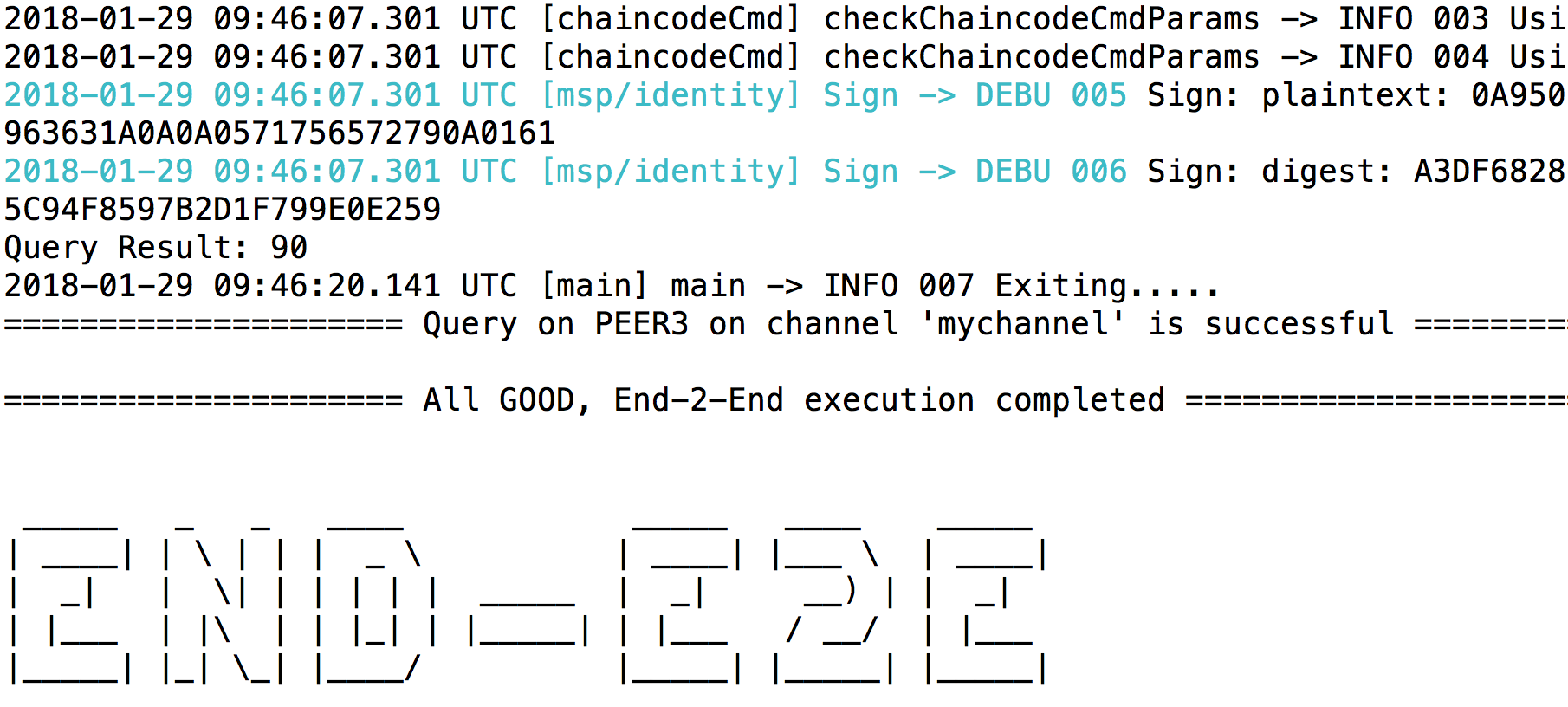
到这里,fabric 的集群环境就部署好了,如果读者想部署更多机器的fabric 环境,也可以照葫芦画瓢地进行配置和部署
参考博客:
http://www.cnblogs.com/aberic/p/7541470.html
http://www.cnblogs.com/aberic/p/7542167.html
http://blog.csdn.net/u011596455/article/details/76862271
hyperledger fabric 1.0.5 分布式部署 (二)的更多相关文章
- hyperledger fabric 1.0.5 分布式部署 (八)
gdb debug peer 程序 在开始我们从 github 上download 下来的源码包,实际上已经包含了可执行的 peer 程序,但是该程序是使用 release 方式编译的,并不支持gdb ...
- hyperledger fabric 1.0.5 分布式部署 (七)
fabric 使用 fabric-ca 服务 准备部分 首先需要用户从github上download fabric-ca 的工程代码 cd $GOPATH/src/github.com/hyperle ...
- hyperledger fabric 1.0.5 分布式部署 (六)
如何在相同的peer 节点上创建多个 channel 作者在hyperledger fabric 1.0.5 分布式部署 (五)已经向读者们介绍了一个简单的fabric 的部署流程,那么根据上一篇博客 ...
- hyperledger fabric 1.0.5 分布式部署 (五)
梳理fabric e2e_cli 测试程序的具体步骤 作者在 hyperledger fabric 1.0.5 分布式部署 (一)中给读者们介绍了如何从零开始部署一个测试的 demo 环境,如果细心的 ...
- hyperledger fabric 1.0.5 分布式部署 (四)
chaincode 的开发 作者在hyperledger fabric 1.0.5 分布式部署 (三)中向读者介绍了如何开发fabric 的chaincode,那么实际上chaincode 还有其他的 ...
- hyperledger fabric 1.0.5 分布式部署 (三)
本篇博客主要是向读者介绍 fabric 在部署时的一些细节,还有作者自己学习过程中的心得. 初始化相关密钥的程序,实际上是一个shell脚本,并且结构特别简单 generateArtifacts.sh ...
- hyperledger fabric 1.0.5 分布式部署 (一)
环境是个人虚拟机ubuntu 16.04 64 位版本 前期用户需要先安装好:gcc.g++.git 软件 安装 golang 首先给环境安装一个 go 语言环境,版本最好在1.8 以上 golang ...
- hyperledger fabric 1.0.5 分布式部署 (九)
linux 使用vim.ctags 配置fabric 源码阅读环境 首先需要安装 ctags,作者使用apt-get 来安装的,安装的版本是5.9 apt-get install ctags 5.9 ...
- Hyperledger Fabric 1.0 从零开始(十二)——fabric-sdk-java应用【补充】
在 Hyperledger Fabric 1.0 从零开始(十二)--fabric-sdk-java应用 中我已经把官方sdk具体改良办法,即使用办法发出来了,所有的类及文件都是完整的,在文章的结尾也 ...
随机推荐
- android打包签名,从生成keystore到完成签名
输入指令并获得结果:(对应自己的java安装目录) 首先,我们需要一个keystore,当然已经有了的话就不用这一步了:cmd下:进入到jdk的bin目录,这样的话,android.keystore文 ...
- PHP开发工作心得
一.扎实PHP自身的基础知识.函数.常量等,尽量用内置的方法解决这个问题(由于个人写的往往运行效率没有内置方法高): 二.代码尽量少的实现功能(由于PHP的运行事实上是,将咱们的代码先处理成底层语言进 ...
- 如何设置SVN提交时必须输入注释
在Windows环境 在SVN的Repositories路径,E:\Repositories\demo20170408\hooks: 创建pre-commit.bat批处理文件. 文件内容: @ech ...
- linux下配置yum源
备份原yum源 /etc/yum.repos.d/centos一base.repo 下载yum源 wagt 源网址/源名称/etc/yum.repos.d/原yum名
- JQuery的extend
jQuery.extend 函数详解 JQuery的extend扩展方法: Jquery的扩展方法extend是我们在写插件的过程中常用的方法,该方法有一些重载原型,在此,我们一起去了解了解 ...
- POJ 1088 滑雪 ( DFS+动态规划思想 )
滑雪 Time Limit: 1000MS Memory Limit: 65536K Total Submissions: 79519 Accepted: 29581 Description ...
- LightOJ1341 Aladdin and the Flying Carpet —— 唯一分解定理
题目链接:https://vjudge.net/problem/LightOJ-1341 1341 - Aladdin and the Flying Carpet PDF (English) S ...
- 实用jQuery代码片段
maco精选的一些jQuery代码,也许你从中可以举一反三[代码] [JavaScript]代码001<p>002 <h3><span >★ 使用jQuery ...
- @PathVariable @RequestParam @RequestHeader @CookieValue POJO Servlet API
- SVN 如何更换IP地址
一.进去项目空白处. 二.点击右键TortoiseSVN. 三.选中Relocate. 四.弹出框如下: 把原来的IP地址更换成新的IP地址,再点击OK就可以了.