
详解InitializingBean、initMethod和@PostConstruct
转载:https://blog.csdn.net/nrsc272420199/article/details/95033223
1. InitializingBean、initMethod和@PostConstruct的作用
实现了InitializingBean接口的类,可以在该类被注入到spring容器时达到 某些属性先装配完成后,再去装配另一些属性 的能力。而initMethod和@PostConstruct也可以达到相同的目的。
注意: 上文是一种用法,但思维不要局限。比如说我们的一个类里有一个属性,但是该属性不支持Spring注入,只能通过Build或者new的方式创建,而我们又想在spring装配Bean的时候一起将该属性注入进来,那使用InitializingBean、initMethod或@PostConstruct再合适不过了。
2. initMethod和InitializingBean
2.1 从initMethod说起
进行过spring配置开发的肯定对下面的配置非常熟悉
<?xml version="1.0" encoding="UTF-8"?>

<beans xmlns="http://www.springframework.org/schema/beans"

       xmlns:xsi="http://www.w3.org/2001/XMLSchema-instance"

       xsi:schemaLocation="http://www.springframework.org/schema/beans http://www.springframework.org/schema/beans/spring-beans.xsd">

    <bean id="person" class="com.nrsc.springstudy.c071_InitializingBean_initMethod_PostConstruct.beans.Cat"

          init-method="init">

        <property name="name" value="花花"></property>

    </bean>

</beans>
没错initMethod就是原来spring配置文件里bean标签上的init-method,而InitializingBean也是spring提供的接口,那它俩有什么关系呢?先看如下代码:
2.2 从一个栗子来看initMethod和InitializingBean
下面的类中包含了initMethod和InitializingBean它俩的用法
package com.nrsc.springstudy.c071_InitializingBean_initMethod_PostConstruct.beans;

import org.springframework.beans.factory.InitializingBean;

/**

 * Created By: Sun Chuan

 * Created Date: 2019/7/7 22:19

 */

public class Cat implements InitializingBean {

    private String name;

    //构造方法-----创建对象时调用

    public Cat() {

        System.out.println("Cat......constructor............");

    }

    //设置name属性时会调用

    public void setName(String name) {

        System.out.println("===cat=========setName========");

        this.name = name;

    }

    public String getName() {

        return name;

    }

    //在配置类中利用注解将initMethod指向下面的init方法----对应于initMethod的用法

    public void init() {

        System.out.println("Cat......init............");

    }

    //继承了InitializingBean接口,需要实现afterPropertiesSet方法---对应于InitializingBean的用法

    public void afterPropertiesSet() throws Exception {

        System.out.println("Cat......afterPropertiesSet............");

    }

}
配置类如下
package com.nrsc.springstudy.c071_InitializingBean_initMethod_PostConstruct.config;

import com.nrsc.springstudy.c071_InitializingBean_initMethod_PostConstruct.beans.Cat;

import org.springframework.context.annotation.Bean;

import org.springframework.context.annotation.Configuration;

@Configuration

public class C071Config {

    @Bean(initMethod = "init")

    public Cat buildCat() {

        Cat cat = new Cat();

        cat.setName("花花");

        return cat;

    }

}
启动类如下
import com.nrsc.springstudy.c071_InitializingBean_initMethod_PostConstruct.config.C071Config;

import org.junit.Test;

import org.springframework.context.annotation.AnnotationConfigApplicationContext;

/**

 * Created By: Sun Chuan

 * Created Date: 2019/7/7 22:14

 */

public class Test071_InitializingBean_initMethod_PostConstruct {

    @Test

    public void test01() {

        AnnotationConfigApplicationContext ac = new AnnotationConfigApplicationContext(C071Config.class);

        System.out.println("IOC容器创建完成........");

    }

}
运行结果

2.3 探秘initMethod和InitializingBean在spring创建bean过程中的执行流程
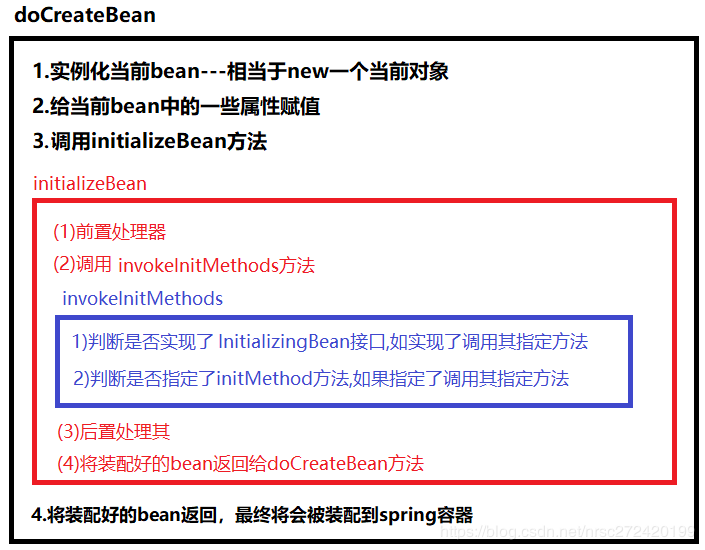
追踪spring装配bean的源码到AbstractAutowireCapableBeanFactory类,里面有一个方法doCreateBean为真正创建bean的方法,我把其关键代码摘出来并加上注释后,如下:
protected Object doCreateBean(final String beanName, final RootBeanDefinition mbd, final @Nullable Object[] args)

            throws BeanCreationException {

        // Instantiate the bean.----即初始化bean的意思,BeanWrapper为所有bean的包装类

        BeanWrapper instanceWrapper = null;

        if (mbd.isSingleton()) {

            instanceWrapper = this.factoryBeanInstanceCache.remove(beanName);

        }

        if (instanceWrapper == null) {

            //创建对象----利用反射机制(结合动态代理或CGLIB代理)创建对象---》相当于new一个对象

            instanceWrapper = createBeanInstance(beanName, mbd, args);

        }

        try {

            //给属性赋值---》可以简单的理解为调用各个属性的set方法为各个属性进行赋值

            populateBean(beanName, mbd, instanceWrapper);

            //配置bean,即在当前对象创建完成,并对某些属性赋完值之后在对该bean进行其他一些处理

            //就比如会调用我们利用initMethod和InitializingBean指定的方法

            //还比如前置增强---后置增强(之后的博客肯定会介绍到)

            exposedObject = initializeBean(beanName, exposedObject, mbd);

        }

        //将装配好的bean返回,最终将会被装配到spring容器

        return exposedObject;

    }
再跟一下initializeBean方法 — 所在类AbstractAutowireCapableBeanFactory
protected Object initializeBean(final String beanName, final Object bean, @Nullable RootBeanDefinition mbd) {

        if (System.getSecurityManager() != null) {

            AccessController.doPrivileged((PrivilegedAction<Object>) () -> {

                invokeAwareMethods(beanName, bean);

                return null;

            }, getAccessControlContext());

        }

        else {

            invokeAwareMethods(beanName, bean);

        }

        Object wrappedBean = bean;

        if (mbd == null || !mbd.isSynthetic()) {

            //前置增强处理----先有个概念,之后的博客肯定会介绍到

            wrappedBean = applyBeanPostProcessorsBeforeInitialization(wrappedBean, beanName);

        }

        try {

            //真正调用initMethod和InitializingBean指定的方法

            invokeInitMethods(beanName, wrappedBean, mbd);

        }

        catch (Throwable ex) {

            throw new BeanCreationException(

                    (mbd != null ? mbd.getResourceDescription() : null),

                    beanName, "Invocation of init method failed", ex);

        }

        if (mbd == null || !mbd.isSynthetic()) {

            //后置增强处理----先有个概念,之后的博客肯定会介绍到

            wrappedBean = applyBeanPostProcessorsAfterInitialization(wrappedBean, beanName);

        }

        return wrappedBean;

    }
继续跟踪invokeInitMethods方法 — 所在类AbstractAutowireCapableBeanFactory
看到下面的方法就很一目了然了:
protected void invokeInitMethods(String beanName, final Object bean, @Nullable RootBeanDefinition mbd)

            throws Throwable {

        //判断该bean是否实现了实现了InitializingBean接口

        boolean isInitializingBean = (bean instanceof InitializingBean);

        if (isInitializingBean && (mbd == null || !mbd.isExternallyManagedInitMethod("afterPropertiesSet"))) {

            if (logger.isTraceEnabled()) {

                logger.trace("Invoking afterPropertiesSet() on bean with name '" + beanName + "'");

            }

            if (System.getSecurityManager() != null) {

                try {

                    AccessController.doPrivileged((PrivilegedExceptionAction<Object>) () -> {

                        //不用管if-else是啥逻辑,反正就是如果实现了InitializingBean接口,则调用该bean的afterPropertiesSet方法

                        ((InitializingBean) bean).afterPropertiesSet();

                        return null;

                    }, getAccessControlContext());

                }

                catch (PrivilegedActionException pae) {

                    throw pae.getException();

                }

            }

            else {

                //不用管if-else是啥逻辑,反正就是如果实现了InitializingBean接口,则调用该bean的afterPropertiesSet方法

                ((InitializingBean) bean).afterPropertiesSet();

            }

        }

        //判断是否指定了initMethod方法,如果指定了,则再调用指定的initMethod方法

        if (mbd != null && bean.getClass() != NullBean.class) {

            String initMethodName = mbd.getInitMethodName();

            if (StringUtils.hasLength(initMethodName) &&

                    !(isInitializingBean && "afterPropertiesSet".equals(initMethodName)) &&

                    !mbd.isExternallyManagedInitMethod(initMethodName)) {

                //具体调用initMethod方法---用到了反射

                invokeCustomInitMethod(beanName, bean, mbd);

            }

        }

    }
2.4 总结
将上面的三个方法的逻辑抽离出来,大概就是下图的样子,initMethod和InitializingBean是spring提供的两种对类的属性进行装配的方式,initMethod和InitializingBean指定的方法运行顺序在普通属性装配之后,而initMethod指定的方法又在InitializingBean指定的方法之后。
3. 简单介绍@PostConstruct,并比较其与InitializingBean、initMethod的执行顺序
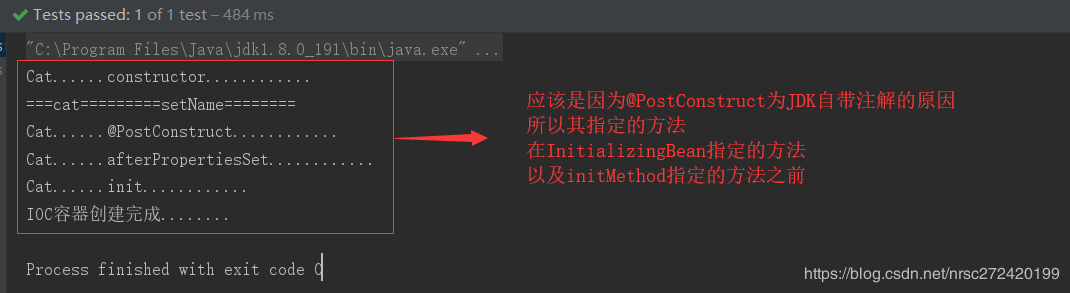
@PostConstruct不属于spring,它是JSR250定义的java规范,也就是说它是jdk的注解,但它也能完成和InitializingBean、initMethod一样的功能,更具体的就不再进行研究了,这里仅将其和InitializingBean、initMethod放在一起,进行一下简单测试,修改后的Cat类如下:
package com.nrsc.springstudy.c071_InitializingBean_initMethod_PostConstruct.beans;

import org.springframework.beans.factory.InitializingBean;

import javax.annotation.PostConstruct;

/**

 * Created By: Sun Chuan

 * Created Date: 2019/7/7 22:19

 */

public class Cat implements InitializingBean {

    private String name;

    //构造方法-----创建对象时调用

    public Cat() {

        System.out.println("Cat......constructor............");

    }

    //设置name属性时会调用

    public void setName(String name) {

        System.out.println("===cat=========setName========");

        this.name = name;

    }

    public String getName() {

        return name;

    }

    //在配置类中利用注解将initMethod指向下面的init方法----对应于initMethod的用法

    public void init() {

        System.out.println("Cat......init............");

    }

    //继承了InitializingBean接口,需要实现afterPropertiesSet方法---对应于InitializingBean的用法

    public void afterPropertiesSet() throws Exception {

        System.out.println("Cat......afterPropertiesSet............");

    }

    @PostConstruct

    public void  init2(){

        System.out.println("Cat......@PostConstruct............");

    }

}
运行结果
1、Spring为bean提供了两种初始化bean的方式,实现InitializingBean接口,实现afterPropertiesSet方法,或者在配置文件中通过init-method指定,两种方式可以同时使用。
2、实现InitializingBean接口是直接调用afterPropertiesSet方法,比通过反射调用init-method指定的方法效率要高一点,但是init-method方式消除了对spring的依赖。
3、如果调用afterPropertiesSet方法时出错,则不调用init-method指定的方法
运用:
有时候springboot自定义类@autowire注入为null的问题
解决方案:
@Component

public class AtoboPipeline implements Pipeline {

    @Autowired

    private UrllistRepository urllistRepository;

    private static AtoboPipeline atoboPipeline;

    @PostConstruct //通过@PostConstruct实现初始化bean之前进行的操作

    public void init() {

        atoboPipeline = this;

        atoboPipeline.urllistRepository = this.urllistRepository;

        // 初使化时将已静态化的testService实例化

    }

...

//使用的时候这样使用

 atoboPipeline.urllistRepository.save(urlList);

}
需要注意:注入类的调用方法是
atoboPipeline.urllistRepository.save(urlList);
这种调用方法看着很怪异,不过管用。注入这个功能在 controller 外面都不支持。
详解InitializingBean、initMethod和@PostConstruct的更多相关文章
- Spring生命周期 Constructor > @PostConstruct > InitializingBean > init-method
项目中用到了 afterPropertiesSet: 于是具体的查了一下到底afterPropertiesSet到底是什么时候执行的.为什么一定要实现 InitializingBean; **/ @C ...
- Spring InitializingBean init-method @PostConstruct 执行顺序
Spring 容器中的 Bean 是有生命周期的,Spring 允许在 Bean 在初始化完成后以及 Bean 销毁前执行特定的操作,常用的设定方式有以下三种: 通过实现 Initializing ...
- 003-Spring4 扩展分析-spring类初始化@PostConstruct > InitializingBean > init-method、ApplicationContext、BeanPostProcessor、BeanFactoryPostProcessor、BeanDefinitionRegistryPostProcessor
一.spring类初始化@PostConstruct > InitializingBean > init-method InitializingBean接口为bean提供了初始化方法的方式 ...
- Bean初始化操作initMethod、@PostConstruct和InitializingBean
我最新最全的文章都在南瓜慢说 www.pkslow.com,欢迎大家来喝茶! 1 简介 很多时间当一个Bean被创建出来后,我们希望做一些初始化操作,如初始化数据.缓存预热等.有以下三种方法: 初始化 ...
- Spring中的BeanPostProcessor详解
Spring中的BeanPostProcessor详解 概述 BeanPostProcessor也称为Bean后置处理器,它是Spring中定义的接口,在Spring容器的创建过程中(具体为Bean初 ...
- Spring IoC createBean 方法详解
前言 本篇文章主要分析 Spring IoC 的 createBean() 方法的流程,以及 bean 的生命周期. 下面是一个大致的流程图: 正文 AbstractAutowireCapableBe ...
- Spring源码分析之Bean的创建过程详解
前文传送门: Spring源码分析之预启动流程 Spring源码分析之BeanFactory体系结构 Spring源码分析之BeanFactoryPostProcessor调用过程详解 本文内容: 在 ...
- Spring框架系列(8) - Spring IOC实现原理详解之Bean实例化(生命周期,循环依赖等)
上文,我们看了IOC设计要点和设计结构:以及Spring如何实现将资源配置(以xml配置为例)通过加载,解析,生成BeanDefination并注册到IoC容器中的:容器中存放的是Bean的定义即Be ...
- Shiro的Filter机制详解---源码分析
Shiro的Filter机制详解 首先从spring-shiro.xml的filter配置说起,先回答两个问题: 1, 为什么相同url规则,后面定义的会覆盖前面定义的(执行的时候只执行最后一个). ...
随机推荐
- 如何将EDM数据分类工作做的更加真善美
众所周知,数据是互联网时代营销的决定性因素,数据的好坏关乎到营销能力的强弱,而细化到EDM行业中,数据细分变得极为重要,根据数据形态的不同,将会涉及到多种不同的细分方法,有效的利用这些方法,将会大大的 ...
- Vue创建全局组件
<!DOCTYPE html> <html lang="en"> <head> <meta charset="UTF-8&quo ...
- Openstack 实现技术分解 (3) 开发工具 — VIM & dotfiles
目录 目录 前文列表 扩展阅读 前言 插件管理 Vundle 主题 Solarized 浏览项目目录结构 Nerdtree Symbol 窗口 Tagbar 文件模糊查询 CtrlP 代码补全 You ...
- rename()函数(包含更改索引列列名的方法)
1 rename()可以更换列名和行名,必须写上columns或index,否则无效 import pandas as pd df = pd.DataFrame({'a':[1,2], 'b':[3, ...
- Vue模版编译
一 模版文件 <div> <header> <h1>I'm a template!</h1> </header> <p v-if=&q ...
- Pytorch迁移学习
环境: Pytorch1.1,Python3.6,win10/ubuntu18,GPU 正文 Pytorch构建ResNet18模型并训练,进行真实图片分类: 利用预训练的ResNet18模型进行Fi ...
- R-CNN, Fast R-CNN, Faster R-CNN, Mask R-CNN
最近在看 Mask R-CNN, 这个分割算法是基于 Faster R-CNN 的,决定看一下这个 R-CNN 系列论文,好好理一下 R-CNN 2014 1. 论文 Rich feature hie ...
- Go语言入门篇-基本数据类型
一.程序实体与关键字 任何Go语言源码文件都由若干个程序实体组成的.在Go语言中,变量.常量.函数.结构体和接口被统称为“程序实体”,而它们的名字被统称为“标识符”. 标识符可以是任何Unicode编 ...
- C++中的class和struct区别
1,经过不停的改进,结构体 struct 变得原来越不像它在 C 语言中的样子了: 1,struct 在 C 语言中仅为了定义一个变量的集合,仅此而已,不能定义函数: 2,struct 在 C++ 中 ...
- Maven快速安装配置
环境:windows7_x86 maven3.3.3 maven是管理项目的常用工具,不用安装,直接配置即可.在配置maven前,需要先安装JDK. 1,安装JDK(注意此版本的Maven要 ...