
java设计模式-----19、迭代模式
概念:
Iterator模式也叫迭代模式,是行为模式之一,它把对容器中包含的内部对象的访问委让给外部类,使用Iterator(遍历)按顺序进行遍历访问的设计模式。
迭代模式使用比较少,JDK集合也提供了Iterator的具体实现,可以直接拿来用,不必自己实现
在应用Iterator模式之前,首先应该明白Iterator模式用来解决什么问题。或者说,如果不使用Iterator模式,会存在什么问题。
1.由容器自己实现顺序遍历。直接在容器类里直接添加顺序遍历方法
2.让调用者自己实现遍历。直接暴露数据细节给外部
我们用代码实现一下
首先,新建一个Book类,这是容器中的内容
 public class Book {

     private String id;

     private String name;

     private double price;

     public Book(String id, String name, double price) {

         this.id = id;

         this.name = name;

         this.price = price;

     }

     public String getId() {

         return id;

     }

     public void setId(String id) {

         this.id = id;

     }

     public String getName() {

         return name;

     }

     public void setName(String name) {

         this.name = name;

     }

     public double getPrice() {

         return price;

     }

     public void setPrice(double price) {

         this.price = price;

     }

     public void display() {

         System.out.println("ID=" + id + ",\tname=" + name + ",\tprice" + price);

     }

 }
再新建一个容器
 public class BookList {

     //容器内部还是一个List,也可以用数组

     private List<Book> bookList = new ArrayList<Book>();

     private int index;

     //添加书籍

     public void addBook(Book book){

         bookList.add(book);

     }

     //删除书籍

     public void removeBook(Book book){

         int bookIndex = bookList.indexOf(book);

         bookList.remove(bookIndex);

     }

     //判断是否有下一本书

     public boolean hasNext(){

         if(index >= bookList.size()){

             return false;

         }

         return true;

     }

     //获得下一本书

     public Book getNext(){

         return bookList.get(index++);

     }

     //获取集合长度

     public int getSize(){

         return bookList.size();

     }

     //根据index获取Book

     public Book getByIndex(int index){

         return bookList.get(index);

     }

 }
接下来,就是迭代容器了,先采用第一种方式(由容器自己实现顺序遍历。直接在容器类里直接添加顺序遍历方法)
public class MainClass {

    public static void main(String[] args) {

        BookList bookList = new BookList();

        Book book1 = new Book("001","设计模式",200);

        Book book2 = new Book("002","Java核心编程",200);

        Book book3 = new Book("003","计算机组成原理",200);

        bookList.addBook(book1);

        bookList.addBook(book2);

        bookList.addBook(book3);

        while(bookList.hasNext()){

            Book book = bookList.getNext();

            book.display();

        }

    }

}
结果如下:
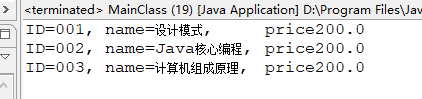
然后是第二种方式(让调用者自己实现遍历。直接暴露数据细节给外部)
 public class MainClass {

     public static void main(String[] args) {

         BookList bookList = new BookList();

         Book book1 = new Book("001","设计模式",200);

         Book book2 = new Book("002","Java核心编程",200);

         Book book3 = new Book("003","计算机组成原理",200);

         bookList.addBook(book1);

         bookList.addBook(book2);

         bookList.addBook(book3);

         for(int i = 0; i < bookList.getSize(); i++){

             Book book = bookList.getByIndex(i);

             book.display();

         }

     }

 }
结果同上
但这样,一定是有缺点的,不然就没有必要使用迭代模式了
不使用迭代模式的缺点
以上方法1与方法2都可以实现对遍历,但有这些问题
1,容器类承担了太多功能:一方面需要提供添加删除等本身应有的功能;一方面还需要提供遍历访问功能。
2,往往容器在实现遍历的过程中,需要保存遍历状态,当跟元素的添加删除等功能夹杂在一起,很容易引起混乱和程序运行错误等。
应用迭代模式的条件
Iterator模式就是为了有效地处理按顺序进行遍历访问的一种设计模式,简单地说,Iterator模式提供一种有效的方法,可以屏蔽聚集对象集合的容器类的实现细节,而能对容器内包含的对象元素按顺序进行有效的遍历访问。
所以,Iterator模式的应用场景可以归纳为满足以下几个条件:
1、访问容器中包含的内部对象
2、按顺序访问
迭代模式的结构

迭代模式的角色和职责
1、Iterator(迭代器接口):
该接口必须定义实现迭代功能的最小定义方法集
比如提供hasNext()和next()方法。
2、ConcreteIterator(迭代器实现类):
迭代器接口Iterator的实现类。可以根据具体情况加以实现。
3、Aggregate(容器接口):
定义基本功能以及提供类似Iterator iterator()的方法。
4、concreteAggregate(容器实现类):
容器接口的实现类。必须实现Iterator iterator()方法。
接下来,用代码实现一下迭代模式,只需修改BookList即可
 public class BookList {

     //容器内部还是一个List,也可以用数组

     private List<Book> bookList = new ArrayList<Book>();

     private int index;

     //添加书籍

     public void addBook(Book book){

         bookList.add(book);

     }

     //删除书籍

     public void removeBook(Book book){

         int bookIndex = bookList.indexOf(book);

         bookList.remove(bookIndex);

     }

     //判断是否有下一本书

 //    public boolean hasNext(){

 //        if(index >= bookList.size()){

 //            return false;

 //        }

 //        return true;

 //    }

     //获得下一本书

 //    public Book getNext(){

 //        return bookList.get(index++);

 //    }

     //获取集合长度

     public int getSize(){

         return bookList.size();

     }

     //根据index获取Book

     public Book getByIndex(int index){

         return bookList.get(index);

     }

     //得到Iterator实例

     public Iterator Iterator() {

         return new Itr();

     }

     //内部类,Iterator实例(因为要使用容器的内部信息,所以要写成内部类)

     private class Itr implements Iterator{

         //判断是否有下一本书,将刚才hasNext()中内容复制过来即可

         public boolean hasNext() {

             if(index >= bookList.size()){

                 return false;

             }

             return true;

         }

         //获得下一本书,将刚才getNext()中内容复制过来即可

         public Object next() {

             return bookList.get(index++);

         }

         public void remove() {

         }

     }

 }
再在客户端实现一下
 public class MainClass {

     public static void main(String[] args) {

         BookList bookList = new BookList();

         Book book1 = new Book("001","设计模式",200);

         Book book2 = new Book("002","Java核心编程",200);

         Book book3 = new Book("003","计算机组成原理",200);

         bookList.addBook(book1);

         bookList.addBook(book2);

         bookList.addBook(book3);

         Iterator iterator = bookList.Iterator();

         while(iterator.hasNext()){

             Book book = (Book) iterator.next();

             book.display();

         }

     }

 }
可以看到,这和使用JDK提供集合的Iterator方法就一模一样了。
迭代模式的优缺点
优点:
1,实现功能分离,简化容器接口。让容器只实现本身的基本功能,把迭代功能委让给外部类实现,符合类的设计原则。
2,隐藏容器的实现细节。
3,为容器或其子容器提供了一个统一接口,一方面方便调用;另一方面使得调用者不必关注迭代器的实现细节。
4,可以为容器或其子容器实现不同的迭代方法或多个迭代方法。
缺点:
由于迭代器模式将存储数据和遍历数据的职责分离,增加新的聚合类需要对应增加新的迭代器类,类的个数成对增加,这在一定程度上增加了系统的复杂性。
java设计模式-----19、迭代模式的更多相关文章
- Java设计模式——装饰者模式
JAVA 设计模式 装饰者模式 用途 装饰者模式 (Decorator) 动态地给一个对象添加一些额外的职责.就增加功能来说,Decorator 模式相比生成子类更为灵活. 装饰者模式是一种结构式模式 ...
- Java设计模式之代理模式(静态代理和JDK、CGLib动态代理)以及应用场景
我做了个例子 ,需要可以下载源码:代理模式 1.前言: Spring 的AOP 面向切面编程,是通过动态代理实现的, 由两部分组成:(a) 如果有接口的话 通过 JDK 接口级别的代理 (b) 如果没 ...
- 浅析JAVA设计模式之工厂模式(一)
1 工厂模式简单介绍 工厂模式的定义:简单地说,用来实例化对象,取代new操作. 工厂模式专门负责将大量有共同接口的类实例化.工作模式能够动态决定将哪一个类实例化.不用先知道每次要实例化哪一个类. 工 ...
- JAVA设计模式--装饰器模式
装饰器模式 装饰器模式(Decorator Pattern)允许向一个现有的对象添加新的功能,同时又不改变其结构.这种类型的设计模式属于结构型模式,它是作为现有的类的一个包装. 这种模式创建了一个装饰 ...
- 折腾Java设计模式之建造者模式
博文原址:折腾Java设计模式之建造者模式 建造者模式 Separate the construction of a complex object from its representation, a ...
- 折腾Java设计模式之备忘录模式
原文地址:折腾Java设计模式之备忘录模式 备忘录模式 Without violating encapsulation, capture and externalize an object's int ...
- 折腾Java设计模式之状态模式
原文地址 折腾Java设计模式之状态模式 状态模式 在状态模式(State Pattern)中,类的行为是基于它的状态改变的.这种类型的设计模式属于行为型模式.在状态模式中,我们创建表示各种状态的对象 ...
- 折腾Java设计模式之模板方法模式
博客原文地址:折腾Java设计模式之模板方法模式 模板方法模式 Define the skeleton of an algorithm in an operation, deferring some ...
- 折腾Java设计模式之访问者模式
博客原文地址:折腾Java设计模式之访问者模式 访问者模式 Represent an operation to be performed on the elements of an object st ...
- 折腾Java设计模式之命令模式
博客原文地址 折腾Java设计模式之命令模式 命令模式 wiki上的描述 Encapsulate a request as an object, thereby allowing for the pa ...
随机推荐
- zoj4016 Mergeable Stack
题意:对n个栈,有q次操作.每个操作可能为三种情况中的一种:1.将v插入到s栈的顶端:2.输出s栈的栈顶(若栈为空则输出empty):3.将栈t插入到栈s的栈顶. 开始考虑到指针可能会mle,用数组模 ...
- webpack快速入门——配置文件:服务和热更新
1.在终端安装 cnpm i webpack-dev-server --save-dev 2.配置好后执行 webpack-dev-server,这时候会报错 出现错误,只需要在pagejson里配置 ...
- Spring+Mybatis整合时 Failed to read candidate component class,Caused by:IllegalArgumentException
Spring+Mybatis整合时Caused by: java.lang.IllegalArgumentException错误 org.springframework.beans.factory.B ...
- iOS下载图片失败
一.具体问题 开发的过程中,发现某个界面部分图片的显示出现了问题只显示占位图片,取出图片的url在浏览器却是能打开的,各种尝试甚至找同行的朋友帮忙在他们项目里展示都会存在问题,最终发现通过第三方框架S ...
- 【xsy1611】 数位dp 数位dp
这题是显然的数位$dp$,然而我居然写了一个下午!!! 我们不难想到差分,令$solve(x,y)$表示从第一个数字在区间$[0,x]$,第二个数字在区间$[0,y]$的答案. 不难发现题目中给了你一 ...
- TestNG参数
dependsOnMethods可以使测试用例按某个特定的顺序执行 实例: @Test(dependsOnMethods=“s”) public void a() System.out.print ...
- POJ 1129
#include<iostream> #include<stdio.h> #include<string> #define MAXN 60 using namesp ...
- (转)使用 DB2 HADR 选择用于灾难恢复的 SUPERASYNC 模式
使用 DB2 HADR 选择用于灾难恢复的 SUPERASYNC 模式 Vishnu G 和 Hemant Singh2013 年 6 月 25 日发布 WeiboGoogle+用电子邮件发送本页面 ...
- (转)Mysql 索引原理及优化
本文内容主要来源于互联网上主流文章,只是按照个人理解稍作整合,后面附有参考链接. 一.摘要 本文以MySQL数据库为研究对象,讨论与数据库索引相关的一些话题.特别需要说明的是,MySQL支持诸多存储引 ...
- org.apache.hadoop.security.AccessControlException: org.apache.hadoop.security .AccessControlException: Permission denied: user=Administrator, access=WRITE, inode="hadoop": hadoop:supergroup:rwxr-xr-x
这时windows远程调试hadoop集群出现的这里 做个记录 我用改变系统变量的方法 修正了错误 网上搜索出来大概有三种: 1.在系统的环境变量或java JVM变量里面添加HADOOP_USE ...