
【NLP】Conditional Language Modeling with Attention
Review: Conditional LMs
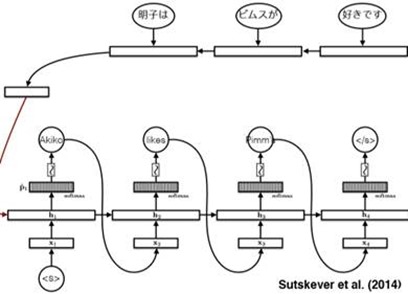
Note that, in the Encoder part, we reverse the input to the ‘RNN’ and it performs well.
And we use the Decoder network(also a RNN), and use the ‘beam search’ algorithm to generate the target statement word by word.
The above network is a translation model.But it still needs to optimizer.
A very essential part of the model is the [Attention mechanism].
Conditional LMs with Attention
First: talk about the [condition]
In last blog, we compress a lot of information in a finite-sized vector and use it as the condition. That is to say, in the ‘Decoder’, for each input we use this vector as the condition to predict the next word.
But is it really correct?
An obvious thing is that a finite-sized vector cannot contain all the information since the input sentence could have a very one length. And gradients have a long way to travl so even LSTMs could forget!
In Translation Question, we can solve the problem by this:
Represent a source sentence as a matrix whose size can be changeable.
Then Generate a target sentence from the matrix. (As the condition and the condition is transformed form that matrix)
So how does this do?
The very simpal way to fulfill that is [With Concatenation].
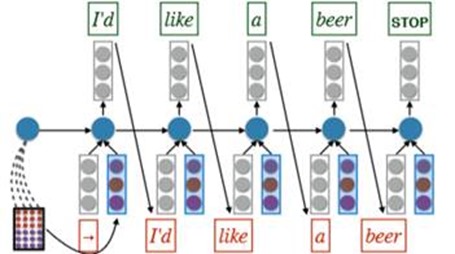
We have already known that the words can be represented by ‘embedding’ such as Word2Vec. And all the embeddings have the same size. For a sentence composed by n words, we can just put each word’s embedding together. So the matrix size is |vocabulary size|*n, which n is the length of sentence. That’s a really easy solution but it is useful. E.g.
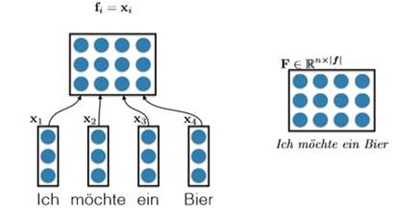
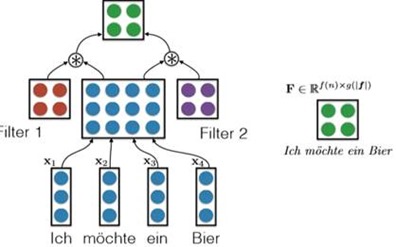
Another solution proposed by Gehring et al. (2016,FAIR) is [With Convolutional Nets].
It is to say, we use all embedding of the word from the sentence to form the concatenation matrix (just like the above method), and then we use a CNN to handle this matrix using some filters. And final we also generate a new matrix to represent the information. And in my opinion, this is a bit like extracting advanced features from image processing. E.g.
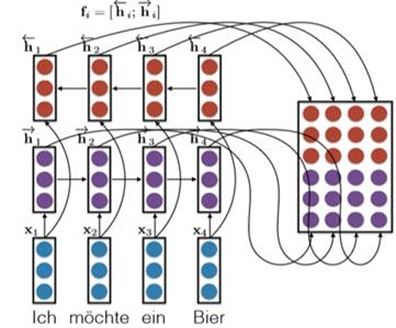
The most important method is [using the Bidirectional RNNs].
For one side, we use a RNN to handle the embedding, and we get n hidden layers which n is the length of the word.
For another side, we use another RNN to handle the embedding, but we reverse the input and finally we also get n hidden layers.
We put the 2n hidden layers together to generate the conditional matrix. E.g.
There are some other ways needed to be founded.
So next to the important part: how to use the ‘Attention model’ and use the attention to generate the condition vector form the condition matrix F.
Firstly, considering the decoder RNN:
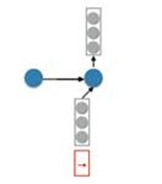
We have a ‘start hidden layer’ and then generate the next hidden layer using the input x and we still need a conditional vector.
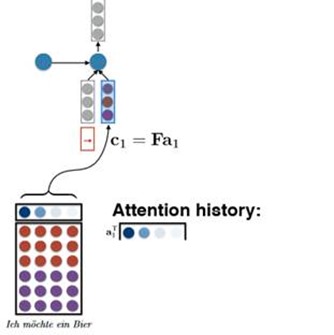
Suppose we also had an attention vector a. We can generate the condition vector by doing this:
c = Fa. Where F is the matrix and a is the attention vector. This can be understood as weighting the conditional matrix so that we can pay more attention to the contents of a certain sentence.
E.g.
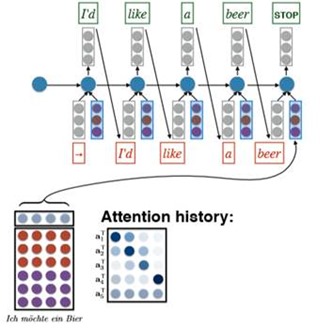
So How to generate the Attention Vector?
That is, how do we compute a.
We can do by the following method:
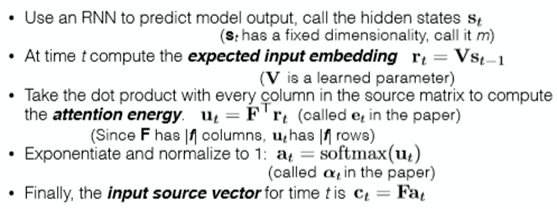
For the time t, we know the hidden layer Ht-1, and we do linear transformation to it to generate a vector r. ( r = VHt-1) V is the learned parameter. Then we take dot product with every column in the source matrix to compute the attention energy a. ( a = F.T*r). So we generate the attention vector a by using a softmax to Exponentiate and normalize it to 1.
That is a simplified version of Bahdanau et al.’s solution. Summary of it:
|
|
Another complex way to generate the attention vector is to use the [Nonlinear Attention-Energy Model].
Getting the r above, ( r = VHt-1) we generate a by: a = v.T * tanh(WF + r). Where v W and V is the learned parameter. How useful of the r is not to verify.
Summary
We put it all together and this is called the conditional LM with attention.
|
|
|
|
|
|
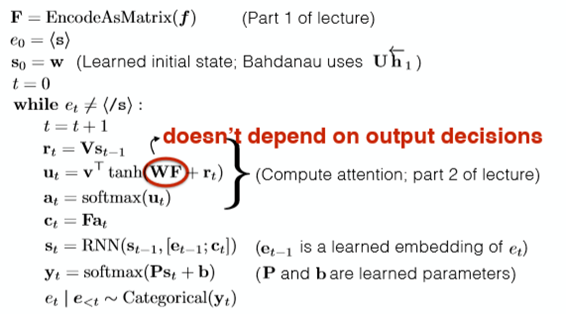
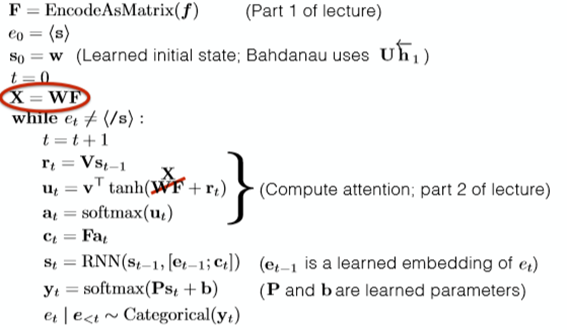
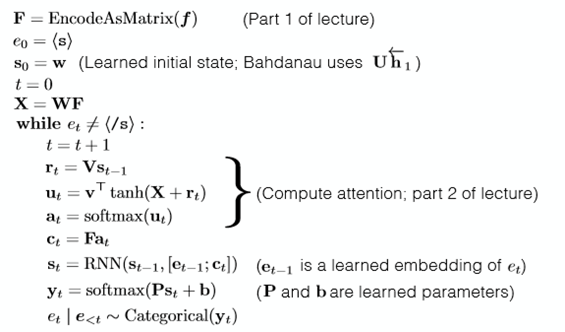
Attention in machine translation.
Add attention to seq2seq model translation: +11 BLEU.
An improvement in computing:
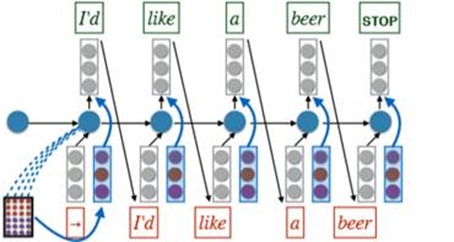
Note the difference form the above model. But whether it is useful is not sure.
About Gradients
We use the Gradient Descent.
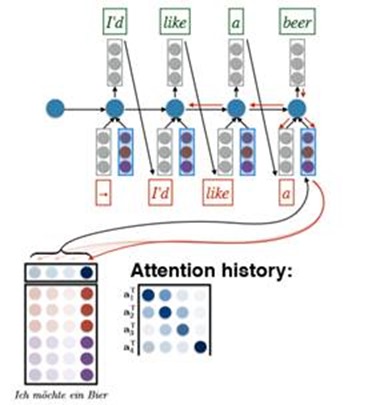
Comprehension
Cho’s question: does a translator read and memorize the input sentence/document and then generate the output?
• Compressing the entire input sentence into a vector basically says “memorize the sentence”
• Common sense experience says translators refer back and forth to the input. (also backed up by eyetracking studies)
Image caption generation with attention: brief introduction
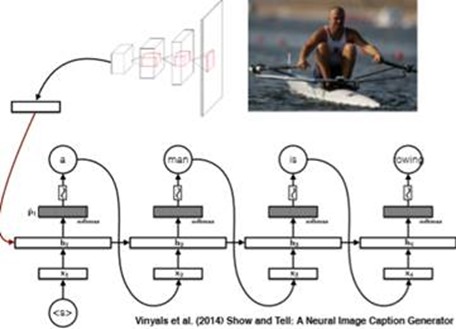
The main idea is that: we encode the picture to a matrix F and use it generate some attention and finally use the attention to generate the caption.
Generate matrix F:
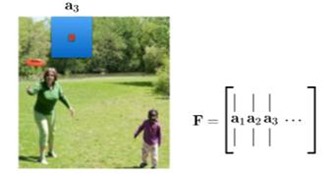
Attention “weights” (a) are computed using exactly the same technique as discussed above.
Other techinques: Stochastic hard attention(sampling matrix F idea and not like the weighting matrix F idea). Learning Hard Attention. To be honesty, I don't know much about this.
【NLP】Conditional Language Modeling with Attention的更多相关文章
- 【NLP】Conditional Language Models
Language Model estimates the probs that the sequences of words can be a sentence said by a human. Tr ...
- 【NLP】Tika 文本预处理:抽取各种格式文件内容
Tika常见格式文件抽取内容并做预处理 作者 白宁超 2016年3月30日18:57:08 摘要:本文主要针对自然语言处理(NLP)过程中,重要基础部分抽取文本内容的预处理.首先我们要意识到预处理的重 ...
- [转]【NLP】干货!Python NLTK结合stanford NLP工具包进行文本处理 阅读目录
[NLP]干货!Python NLTK结合stanford NLP工具包进行文本处理 原贴: https://www.cnblogs.com/baiboy/p/nltk1.html 阅读目录 目 ...
- 【NLP】前戏:一起走进条件随机场(一)
前戏:一起走进条件随机场 作者:白宁超 2016年8月2日13:59:46 [摘要]:条件随机场用于序列标注,数据分割等自然语言处理中,表现出很好的效果.在中文分词.中文人名识别和歧义消解等任务中都有 ...
- 【NLP】基于自然语言处理角度谈谈CRF(二)
基于自然语言处理角度谈谈CRF 作者:白宁超 2016年8月2日21:25:35 [摘要]:条件随机场用于序列标注,数据分割等自然语言处理中,表现出很好的效果.在中文分词.中文人名识别和歧义消解等任务 ...
- 【NLP】基于机器学习角度谈谈CRF(三)
基于机器学习角度谈谈CRF 作者:白宁超 2016年8月3日08:39:14 [摘要]:条件随机场用于序列标注,数据分割等自然语言处理中,表现出很好的效果.在中文分词.中文人名识别和歧义消解等任务中都 ...
- 【NLP】基于统计学习方法角度谈谈CRF(四)
基于统计学习方法角度谈谈CRF 作者:白宁超 2016年8月2日13:59:46 [摘要]:条件随机场用于序列标注,数据分割等自然语言处理中,表现出很好的效果.在中文分词.中文人名识别和歧义消解等任务 ...
- 【NLP】条件随机场知识扩展延伸(五)
条件随机场知识扩展延伸 作者:白宁超 2016年8月3日19:47:55 [摘要]:条件随机场用于序列标注,数据分割等自然语言处理中,表现出很好的效果.在中文分词.中文人名识别和歧义消解等任务中都有应 ...
- 【NLP】Attention Model(注意力模型)学习总结
最近一直在研究深度语义匹配算法,搭建了个模型,跑起来效果并不是很理想,在分析原因的过程中,发现注意力模型在解决这个问题上还是很有帮助的,所以花了两天研究了一下. 此文大部分参考深度学习中的注意力机制( ...
随机推荐
- echarts图表
<div id="main" style="width: 37.5rem;height: 25rem;"></div> <scri ...
- CentOS6.9升级autoconf版本,解决”Autoconf version 2.64 or higher is required“错误
安装软件时提示说需要Autoconf 2.64或更高的版本: # autoconf configure.ac:: error: Autoconf version 2.64 or higher is r ...
- 用webpack打包加密静态配置文件
webpack处理静态文件,如json.xml等配置文件,可以采用 copy-webpack-plugin 插件直接复制到打包后的文件夹下,但如果想采用一些手段隐藏一下这些配置文件的内容怎么办呢? 虽 ...
- android找不到aar包
转载请标明出处,维权必究:https://www.cnblogs.com/tangZH/p/9939663.html 在做项目的时候引入aar包,编译的时候却提示错误(这个错误大概说的是...... ...
- mac 安装protobuf,并编译为java,c++,python
1.下载地址:https://code.google.com/p/protobuf/downloads/list 另外,可以查看这个链接查看中文更多内容:http://www.cnblogs.com/ ...
- HTTP长连接--Keep-Alive
一.HTTP/1.0 HTTP1.0版本的Keep-alive并不像HTTP1.1那样是默认发送的,所以要想连接得到保持,必须手动配置发送connection:keep-alive字段.若想断开kee ...
- win10 anaconda+tensorflow+keras
最近想用python实现下lstm模型,然后看网上教程配置了下环境,中间出现了一些问题,记录下. 1.开始menu中anaconda文件夹下没有ipython的图标了. 我电脑里的anaconda是很 ...
- Hive的命名空间
Hive的命名空间分为:hiveconf , system, env 和 hivevar 1.hiveconf 的命名空间指的是hive-site.xml下面配置的环境变量 2.system的命名空间 ...
- vmware station-ubuntu18.04 共享剪贴板
辞职在家休息,买了台新电脑,装个虚拟机,安装visual studio, android studio, qt, everything, noptepad++,hbuilder,ditto,xx-ne ...
- Mac系统编译FFmpeg
转载请标明来源:我不是掌柜的博客 前言 维基百科解释:FFmpeg是一个开源软件,可以运行音频和视频多种格式的录影.转换.流功能,包含了libavcodec – 这是一个用于多个项目中音频和视频的解码 ...