
IfcDirection
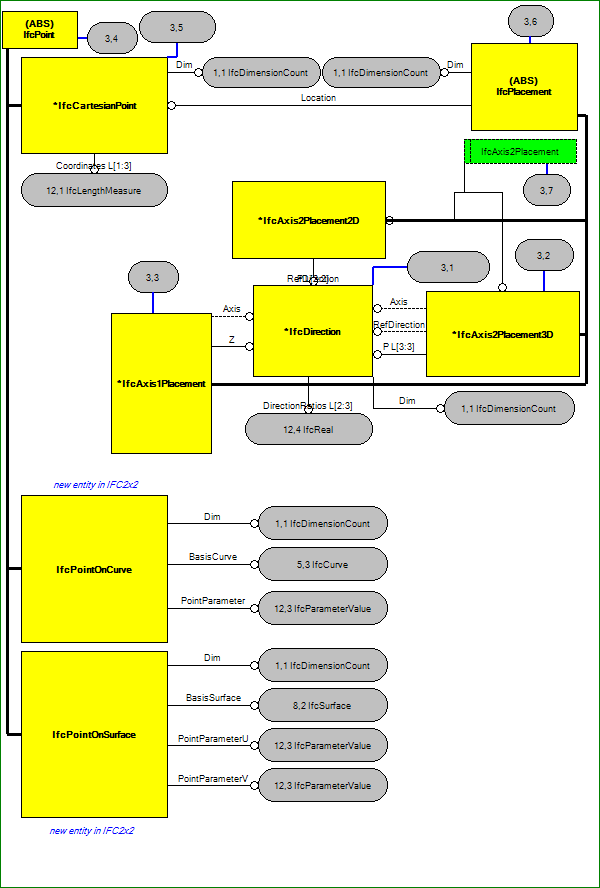
The IfcDirection provides a direction in two or three dimensional space depending on the number of DirectionRatio's provided. The IfcDirection does not imply a vector length, and the direction ratios does not have to be normalized.
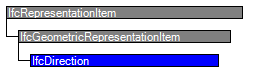
XSD Specification
<xs:element name="IfcDirection" type="ifc:IfcDirection" substitutionGroup="ifc:IfcGeometricRepresentationItem" nillable="true"/>

 <xs:complexType name="IfcDirection">

  <xs:complexContent>

   <xs:extension base="ifc:IfcGeometricRepresentationItem">

    <xs:attribute name="DirectionRatios" use="optional">

     <xs:simpleType>

      <xs:restriction>

       <xs:simpleType>

        <xs:list itemType="ifc:IfcReal"/>

       </xs:simpleType>

       <xs:minLength value="2"/>

       <xs:maxLength value="3"/>

      </xs:restriction>

     </xs:simpleType>

    </xs:attribute>

   </xs:extension>

  </xs:complexContent>

 </xs:complexType>
EXPRESS Specification
ENTITY IfcDirection

 SUBTYPE OF (IfcGeometricRepresentationItem);

  DirectionRatios : LIST [2:3] OF IfcReal;

 DERIVE

  Dim : IfcDimensionCount := HIINDEX(DirectionRatios);

 WHERE

  MagnitudeGreaterZero : SIZEOF(QUERY(Tmp <* DirectionRatios | Tmp <> 0.0)) > 0;

END_ENTITY;
/* Generated By: IFC Tools Project EXPRESS TO JAVA COMPILER: Do not edit this file!! */

package com.vfsd.ifc2x3tc1;

public class IfcDirection extends IfcGeometricRepresentationItem implements IfcVectorOrDirection, ClassInterface, IfcOrientationSelect

{

    private static final String[] nonInverseAttributes = new String[]{"LIST<DOUBLE>"};

    private java.util.ArrayList<CloneableObject> stepParameter = null;

    private java.util.HashSet<ObjectChangeListener> listenerList = null;

    protected int stepLineNumber;

    /** DirectionRatios is an DEMANDED attribute - may not be null**/

    protected LIST<DOUBLE> DirectionRatios;

    /**

    * The default constructor.

    **/

    public IfcDirection(){}

    /**

    * Constructs a new IfcDirection object using the given parameters.

    *

    * @param DirectionRatios DEMANDED parameter of type LIST<DOUBLE> - may not be null.

    **/

    public IfcDirection(LIST<DOUBLE> DirectionRatios)

    {

        this.DirectionRatios = DirectionRatios;

        resolveInverses();

    }

    /**

     * This method initializes the IfcDirection object using the given parameters.

    *

    * @param DirectionRatios DEMANDED parameter of type LIST<DOUBLE> - may not be null.

    **/

    public void setParameters(LIST<DOUBLE> DirectionRatios)

    {

        this.DirectionRatios = DirectionRatios;

        resolveInverses();

    }

    /**

     * This method is used internally and should NOT be used for own purposes.

    **/

    @SuppressWarnings("unchecked")

    void initialize(java.util.ArrayList<CloneableObject> parameters)

    {

        this.DirectionRatios = (LIST<DOUBLE>) parameters.get();

        resolveInverses();

    }

    /**

     * This method is used internally and should NOT be used for own purposes.

    **/

    void destruct()

    {

         super.destruct();

        listenerList = null;

    }

    private void resolveInverses()

    {

    }

    /**

     * This method is used internally and should NOT be used for own purposes.

    **/

    String[] getNonInverseAttributeTypes()

    {

        return IfcDirection.nonInverseAttributes;    }

    /**

     * This method is used internally and should NOT be used for own purposes.

    **/

    private java.util.HashSet<String> getRedefinedDerivedAttributeTypes()

    {

        java.util.HashSet<String> redefinedDerivedAttributes = new java.util.HashSet<String>();

        return redefinedDerivedAttributes;    }

    /**

 * This method returns the object IFC  STEP representation. This method is called by the IfcModel object to write IFC STEP files.

     *

     * @return the IFC STEP representation of this object

    **/

    public String getStepLine()

    {

        String stepString = new String("#"+this.stepLineNumber+"= ");

        stepString = stepString.concat("IFCDIRECTION(");

        if(getRedefinedDerivedAttributeTypes().contains("DirectionRatios")) stepString = stepString.concat("*);");

        else{

        if(this.DirectionRatios != null)        stepString = stepString.concat(((RootInterface)this.DirectionRatios).getStepParameter(DOUBLE.class.isInterface())+");");

        else        stepString = stepString.concat("$);");

        }

        return stepString;

    }

    /**

     * This method is used internally and should NOT be used for own purposes.

    **/

    public String getStepParameter(boolean isSelectType)

    {

        return "#" + this.stepLineNumber;

    }

    /**

     * This method returns the line number within a IFC  STEP representation. This method is called from other objects, where this one is referenced.

     *

     * @return the STEP line number

    **/

    public int getStepLineNumber()

    {

        return this.stepLineNumber;

    }

    /**

     * This method is used internally and should NOT be used for own purposes.

    **/

    void setStepLineNumber(int number)

    {

        this.stepLineNumber = number;

    }

    /**

    * This method sets the DirectionRatios attribute to the given value.

    *

    * @param DirectionRatios OPTIONAL value to set

    **/

    public void setDirectionRatios(LIST<DOUBLE> DirectionRatios)

    {

        this.DirectionRatios = DirectionRatios;

        fireChangeEvent();

    }

    /**

    * This method returns a copy of the list of the DirectionRatios attribute.

    *

    * @return a copy of the DirectionRatios list

    **/

    public LIST<DOUBLE> getDirectionRatios()

    {

        if(this.DirectionRatios != null)

            return new LIST<DOUBLE>(this.DirectionRatios);

        return null;

    }

    /**

    * This method adds an DOUBLE object to the DirectionRatios list.

    * @param DirectionRatios element to be appended to this list.

    **/

    public void addDirectionRatios(DOUBLE DirectionRatios)

    {

        if(this.DirectionRatios == null)

            this.DirectionRatios = new LIST<DOUBLE>();

        this.DirectionRatios.add(DirectionRatios);

        fireChangeEvent();

    }

    /**

    * This method adds a collection of DOUBLE objects to the DirectionRatios list.

    * @param DirectionRatios collection containing elements to be added to this list.

    **/

    public void addAllDirectionRatios(java.util.Collection<DOUBLE> DirectionRatios)

    {

        if(this.DirectionRatios == null)

            this.DirectionRatios = new LIST<DOUBLE>();

        this.DirectionRatios.addAll(DirectionRatios);

        fireChangeEvent();

    }

    /**

    * This method removes all elements from the DirectionRatios list.

    **/

    public void clearDirectionRatios()

    {

        if(this.DirectionRatios != null)

        {

            this.DirectionRatios.clear();

            fireChangeEvent();

        }

    }

    /**

    * This method removes an DOUBLE object from the DirectionRatios list.

    * @param DirectionRatios element to be removed from this list.

    **/

    public void removeDirectionRatios(DOUBLE DirectionRatios)

    {

        if(this.DirectionRatios != null)

        {

            this.DirectionRatios.remove(DirectionRatios);

            fireChangeEvent();

        }

    }

    /**

    * This method removes a collection of DOUBLE objects from the DirectionRatios list.

    * @param DirectionRatios collection containing elements to be removed from this list.

    **/

    public void removeAllDirectionRatios(java.util.Collection<DOUBLE> DirectionRatios)

    {

        if(this.DirectionRatios != null)

        {

            this.DirectionRatios.removeAll(DirectionRatios);

            fireChangeEvent();

        }

    }

    /**

     * This method is used internally and should NOT be used for own purposes.

    **/

    void setStepParameter(java.util.ArrayList<CloneableObject> parameter)

    {

        this.stepParameter = parameter;

    }

    /**

     * This method is used internally and should NOT be used for own purposes.

    **/

    java.util.ArrayList<CloneableObject> getStepParameter()

    {

        return this.stepParameter;

    }

    /**

     * This method registers an ObjectChangeListener to this object. An event is fired whenever one of its values was changed.

     *

     *@param listener the listener to register

    **/

    public void addObjectChangeListener(ObjectChangeListener listener)

    {

        if (listenerList == null)    listenerList = new java.util.HashSet<ObjectChangeListener>(,);

        listenerList.add(listener);

    }

    /**

     * This method unregisters an ObjectChangeListener from this object.

     *

     *@param listener the listener to unregister

    **/

    public void removeObjectChangeListener(ObjectChangeListener listener)

    {

        if (listenerList == null)    return;

        listenerList.remove(listener);

        if (listenerList.size()==) listenerList = null;

    }

    /**

     * This method removes all currently registered ObjectChangeListeners from this object.

    **/

    public void removeAllObjectChangeListeners()

    {

        listenerList = null;

    }

    protected void fireChangeEvent()

    {

        if(listenerList == null) return;

        for(ObjectChangeListener listener : listenerList)

            listener.ifcModelObjectChange(this);

    }

    /**

     * This method clones the object (deep cloning).

     *

     * @return the cloned object

    **/

    @SuppressWarnings("unchecked")

    public Object clone()

    {

        IfcDirection ifcDirection = new IfcDirection();

        if(this.DirectionRatios != null)

            ifcDirection.setDirectionRatios((LIST<DOUBLE>)this.DirectionRatios.clone());

        return ifcDirection;

    }

    /**

     * This method copys the object as shallow copy (all referenced objects are remaining).

     *

     * @return the cloned object

    **/

    public Object shallowCopy()

    {

        IfcDirection ifcDirection = new IfcDirection();

        if(this.DirectionRatios != null)

            ifcDirection.setDirectionRatios(this.DirectionRatios);

        return ifcDirection;

    }

    /**

    * This method returns the objects standard description.

    *

    * @return the standard description

    **/

    public String toString()

    {

        return "#"+ this.getStepLineNumber() + " " + this.getClass().getSimpleName();

    }

}
IfcDirection的更多相关文章
- IDL 的读写
read_ifc代码如下: Write_ifc代码分析如下: (1)将数字转换为字符串的函数. function ntoc,a return,string(a,format='(g0)') end ( ...
- xBIM IFC 墙壁案例
目录 xBIM 应用与学习 (一) xBIM 应用与学习 (二) xBIM 基本的模型操作 xBIM 日志操作 XBIM 3D 墙壁案例 xBIM 格式之间转换 xBIM 使用Linq 来优化查询 x ...
- 一堵墙IFC数据-wall.ifc
这是一面墙的IFC数据内容 =====================================文档内容======================================= ISO-1 ...
- xBIM 基础05 3D墙案例
系列目录 [已更新最新开发文章,点击查看详细] 使用编码的形式去生成一堵墙的模型需要做很多的工作. using System; using System.Collections.Generic ...
- xBIM之二:构建墙和门窗
研究了两天,终于实现了利用xBIM自动输出墙和门窗 比较粗糙的源码如下: private void Form1_Load(object sender, EventArgs e) { //first c ...
- IfcAxis2Placement3D
The IfcAxis2Placement3D provides location and orientations to place items in a three-dimensional spa ...
- IFC文件介绍
IFC是一个数据交换标准, 用于不同系统交换和共享数据. IFC是采用EXPRESS语言定义的实体关系模型,由几百个实体对象组成.实体对象包括建筑要素如IfcWall,几何元素如IfcExtruded ...
- IfcAxis2Placement3D IFC构件的位置和方向
IfcAxis2Placement3D定义了三维空间中物体的位置和方向,由三部分组成: The attribute Axis defines the Z direction, RefDirection ...
随机推荐
- 内核中dump_stack的实现原理(1) —— 栈回溯
环境 Aarch64 Qemu aarch64-linux-gnu-gcc linux-4.14 概述 栈回溯的目的是将函数的调用栈打印出来,对于分析函数调用和debug系统异常会很有帮助 ...
- Idea热部署插件JRebel
安装部署:https://blog.csdn.net/weixin_42831477/article/details/82229436 Jrebel不生效的原因和解决办法:https://www.cn ...
- 一款信息收集工具-theHarvester
用法: theHarvester -d 163.com -l 1000 -b baidutheHarvester -d 163.com -l 1000 -b google -d 后跟服务器域名 ...
- 使用salt-stack指定IP添加系统用户为root的权限
指定多台要授权的用户,指定root权限 salt -L '192.168.3.212' cmd.run 'useradd fengniao -u 2000' salt -L '192.168.3.21 ...
- asp.net中的参数传递:Context.Handler 的用法
网上天天有人问怎么在webform页面之间传值,基本上来说,大家熟悉的是 (1)url字符串传值 (2)session传值 (3)直接读取server.transfer过来的页 ...
- POJ 2762Going from u to v or from v to u?(强联通 + 缩点 + 拓扑排序)
[题意]: 有N个房间,M条有向边,问能否毫无顾虑的随机选两个点x, y,使从①x到达y,或者,②从y到达x,一定至少有一条成立.注意是或者,不是且. [思路]: 先考虑,x->y或者y-> ...
- log4j2 配置文件解读
1.日志相关介绍 日志接口(slf4j):slf4j是对所有日志框架制定的一种规范.标准.接口,并不是一个框架的具体的实现,因为接口并不能独立使用,需要和具体的日志框架实现配合使用,比如log4j.l ...
- LSTM的神经元个数
小书匠深度学习 目录: 1.LSTM简单介绍 2.简单假设样例 3.神经元分析 3.1忘记门层 3.2细胞状态 3.3输出层 3.4总结 4.测试 1.LSTM简单介绍 LSTM在时间上展开 红框从左 ...
- vue指令用法
vue指令 指令式带有 v- 前缀的特殊特性v-text和v-html都属于指令将数据和dom做关联,当表达式的值改变时,响应式地作用在视图 解决大胡子语法闪烁案例 [v-cloak] { dispa ...
- windows内核代码之进程操作
[toc] 一丶简介 整理一下windows内核中.常用的代码.这里只整理下进程的相关代码. 二丶 windows内核之遍历进程 内核中记录进程的结构体是EPROCESS结构.所以只需要遍历这个结构即 ...