
spring启动流程 (6完结) springmvc启动流程
SpringMVC的启动入口在SpringServletContainerInitializer类,它是ServletContainerInitializer实现类(Servlet3.0新特性)。在实现方法中使用WebApplicationInitializer创建ApplicationContext、创建注册DispatcherServlet、初始化ApplicationContext等。
SpringMVC已经将大部分的启动逻辑封装在了几个抽象WebApplicationInitializer中,开发者只要继承这些抽象类实现抽象方法即可。
本文将详细分析ServletContainerInitializer、SpringServletContainerInitializer和WebApplicationInitializer的工作流程。
Servlet3.0的ServletContainerInitializer
ServletContainerInitializer接口
ServletContainerInitializer是Servlet3.0的接口。
该接口在web应用程序启动阶段接收通知,注册servlet、filter、listener等。
该接口的实现类可以用HandlesTypes进行标注,并指定一个Class值,后续会将实现、扩展了这个Class的类集合作为参数传递给onStartup方法。
以tomcat为例,在容器配置初始化阶段,将使用SPI查找实现类,在ServletContext启动阶段,初始化并调用onStartup方法来进行ServletContext的初始化。
SpringServletContainerInitializer实现类
在onStartup方法创建所有的WebApplicationInitializer对并调用onStartup方法。
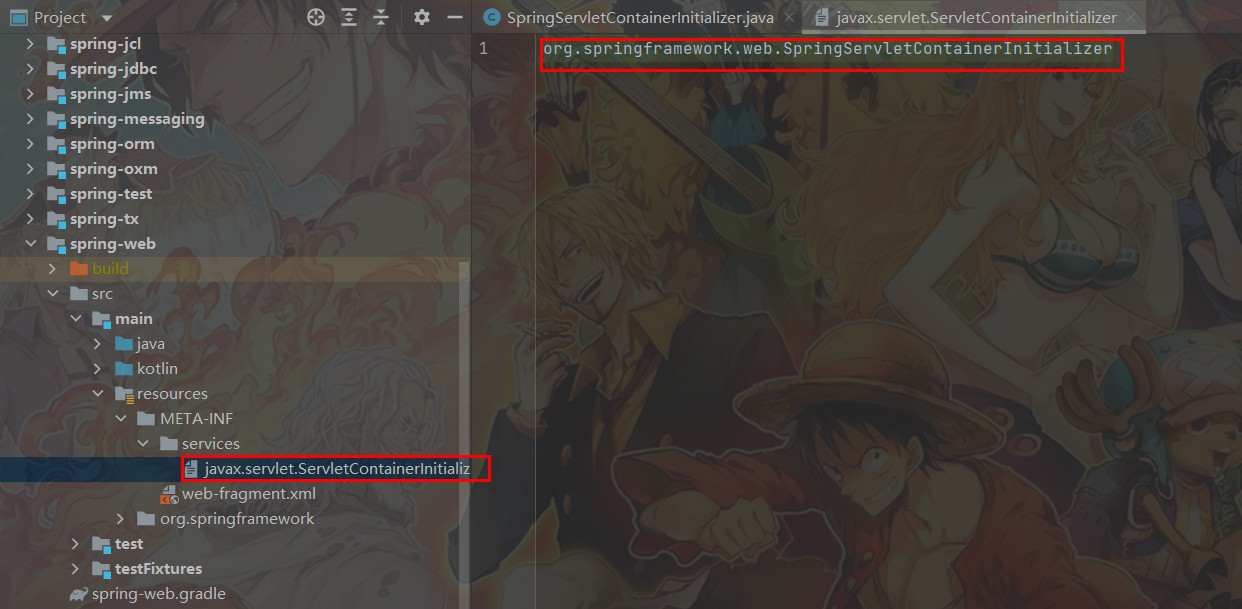
以下为SPI配置,在spring-web/src/main/resources/META-INF/services/javax.servlet.ServletContainerInitializer文件:
WebApplicationInitializer接口
WebApplicationInitializer接口概述
Interface to be implemented in Servlet 3.0+ environments in order to configure the ServletContext programmatically -- as opposed to (or possibly in conjunction with) the traditional web.xml-based approach.
Implementations of this SPI will be detected automatically by SpringServletContainerInitializer, which itself is bootstrapped automatically by any Servlet 3.0 container. See its Javadoc for details on this bootstrapping mechanism.
示例:
public class MyWebAppInitializer implements WebApplicationInitializer {

   @Override

   public void onStartup(ServletContext container) {

     // Create the 'root' Spring application context

     AnnotationConfigWebApplicationContext rootContext =

       new AnnotationConfigWebApplicationContext();

     rootContext.register(AppConfig.class);

     // Manage the lifecycle of the root application context

     container.addListener(new ContextLoaderListener(rootContext));

     // Create the dispatcher servlet's Spring application context

     AnnotationConfigWebApplicationContext dispatcherContext =

       new AnnotationConfigWebApplicationContext();

     dispatcherContext.register(DispatcherConfig.class);

     // Register and map the dispatcher servlet

     ServletRegistration.Dynamic dispatcher =

       container.addServlet("dispatcher", new DispatcherServlet(dispatcherContext));

     dispatcher.setLoadOnStartup(1);

     dispatcher.addMapping("/");

   }

}
开发者可以编写类继承AbstractAnnotationConfigDispatcherServletInitializer抽象类,这个抽象类已经将大部分的初始化逻辑进行了封装。
WebApplicationInitializer实现和继承关系

AbstractContextLoaderInitializer类:
Convenient base class for WebApplicationInitializer implementations that register a ContextLoaderListener in the servlet context. The only method required to be implemented by subclasses is createRootApplicationContext(), which gets invoked from registerContextLoaderListener(ServletContext).
AbstractDispatcherServletInitializer类:
Base class for WebApplicationInitializer implementations that register a DispatcherServlet in the servlet context. Most applications should consider extending the Spring Java config subclass AbstractAnnotationConfigDispatcherServletInitializer.
AbstractAnnotationConfigDispatcherServletInitializer类:
WebApplicationInitializer to register a DispatcherServlet and use Java-based Spring configuration.
Implementations are required to implement:
- getRootConfigClasses() -- for "root" application context (non-web infrastructure) configuration.
- getServletConfigClasses() -- for DispatcherServlet application context (Spring MVC infrastructure) configuration.
If an application context hierarchy is not required, applications may return all configuration via getRootConfigClasses() and return null from getServletConfigClasses().
开发者SpringMvcInitializer示例
开发者需要编写类继承AbstractAnnotationConfigDispatcherServletInitializer类,实现几个抽象方法:
public class SpringMvcInitializer extends AbstractAnnotationConfigDispatcherServletInitializer {

  /**

   * 指定创建root application context需要的@Configuration/@Component类

   */

  @Override

  protected Class<?>[] getRootConfigClasses() {

    return new Class[]{AppConfig.class};

  }

  /**

   * 指定创建Servlet application context需要的@Configuration/@Component类

   * 如果所有的配置类都使用root config classes就返回null

   */

  @Override

  protected Class<?>[] getServletConfigClasses() {

    return null;

  }

  /**

   * Specify the servlet mapping(s) for the DispatcherServlet — for example "/", "/app", etc.

   */

  @Override

  protected String[] getServletMappings() {

    return new String[]{"/"};

  }

}
SpringMVC启动流程
入口AbstractDispatcherServletInitializer.onStartup方法
public void onStartup(ServletContext servletContext) throws ServletException {

	super.onStartup(servletContext);

	registerDispatcherServlet(servletContext);

}
父类的onStartup方法创建RootApplicationContext、注册ContextLoaderListener监听器:
public void onStartup(ServletContext servletContext) throws ServletException {

	registerContextLoaderListener(servletContext);

}

protected void registerContextLoaderListener(ServletContext servletContext) {

	WebApplicationContext rootAppContext = createRootApplicationContext();

	if (rootAppContext != null) {

		// ContextLoaderListener是ServletContextListener

		// 会在contextInitialized阶段初始化RootApplicationContext

		ContextLoaderListener listener = new ContextLoaderListener(rootAppContext);

		listener.setContextInitializers(getRootApplicationContextInitializers());

		servletContext.addListener(listener);

	}

}
注册DispatcherServlet
registerDispatcherServlet方法用于创建ServletApplicationContext、注册DispatcherServlet:
protected void registerDispatcherServlet(ServletContext servletContext) {

	String servletName = getServletName();

	// 创建ServletApplicationContext

	WebApplicationContext servletAppContext = createServletApplicationContext();

	// 创建DispatcherServlet

	FrameworkServlet dispatcherServlet = createDispatcherServlet(servletAppContext);

	// 添加ApplicationContextInitializer集,会在初始化时调用

	dispatcherServlet.setContextInitializers(getServletApplicationContextInitializers());

	// 添加到ServletContext

	ServletRegistration.Dynamic registration = servletContext.addServlet(servletName, dispatcherServlet);

	registration.setLoadOnStartup(1);

	registration.addMapping(getServletMappings());

	registration.setAsyncSupported(isAsyncSupported());

	Filter[] filters = getServletFilters();

	if (!ObjectUtils.isEmpty(filters)) {

		for (Filter filter : filters) {

			registerServletFilter(servletContext, filter);

		}

	}

	customizeRegistration(registration);

}
触发ContextLoaderListener监听器contextInitialized事件
这个是Servlet的ServletContextListener机制,在ServletContext创建之后触发contextInitialized事件:
public void contextInitialized(ServletContextEvent event) {

	initWebApplicationContext(event.getServletContext());

}

public WebApplicationContext initWebApplicationContext(ServletContext servletContext) {

	// 判断是否已经在当前ServletContext绑定了WebApplicationContext

	// 如果已经绑定抛错

	if (servletContext.getAttribute(WebApplicationContext.ROOT_WEB_APPLICATION_CONTEXT_ATTRIBUTE) != null) {

		throw new IllegalStateException("已经初始化过了");

	}

	try {

		if (this.context == null) {

			this.context = createWebApplicationContext(servletContext);

		}

		if (this.context instanceof ConfigurableWebApplicationContext) {

			ConfigurableWebApplicationContext cwac = (ConfigurableWebApplicationContext) this.context;

			if (!cwac.isActive()) {

				if (cwac.getParent() == null) {

					ApplicationContext parent = loadParentContext(servletContext);

					cwac.setParent(parent);

				}

				// refresh

				configureAndRefreshWebApplicationContext(cwac, servletContext);

			}

		}

		servletContext

            .setAttribute(WebApplicationContext.ROOT_WEB_APPLICATION_CONTEXT_ATTRIBUTE, this.context);

		ClassLoader ccl = Thread.currentThread().getContextClassLoader();

		if (ccl == ContextLoader.class.getClassLoader()) {

			currentContext = this.context;

		} else if (ccl != null) {

			currentContextPerThread.put(ccl, this.context);

		}

		return this.context;

	} catch (RuntimeException | Error ex) {

		servletContext.setAttribute(WebApplicationContext.ROOT_WEB_APPLICATION_CONTEXT_ATTRIBUTE, ex);

		throw ex;

	}

}

protected void configureAndRefreshWebApplicationContext(

		ConfigurableWebApplicationContext wac, ServletContext sc) {

	// 给wac设置id

	wac.setServletContext(sc);

	// 设置spring主配置文件路径

	String configLocationParam = sc.getInitParameter(CONFIG_LOCATION_PARAM);

	if (configLocationParam != null) {

		wac.setConfigLocation(configLocationParam);

	}

	ConfigurableEnvironment env = wac.getEnvironment();

	if (env instanceof ConfigurableWebEnvironment) {

		((ConfigurableWebEnvironment) env).initPropertySources(sc, null);

	}

	customizeContext(sc, wac);

	// 刷新ApplicationContext

	wac.refresh();

}
触发DispatcherServlet的init事件
Servlet在接收请求之前会调用其init方法进行初始化,这个是Servlet的规范。
init方法在其父类HttpServletBean中:
public final void init() throws ServletException {

	// 从ServletConfig获取配置设置到Servlet

	PropertyValues pvs = new ServletConfigPropertyValues(getServletConfig(), this.requiredProperties);

	if (!pvs.isEmpty()) {

		try {

			BeanWrapper bw = PropertyAccessorFactory.forBeanPropertyAccess(this);

			ResourceLoader resourceLoader = new ServletContextResourceLoader(getServletContext());

			bw.registerCustomEditor(Resource.class, new ResourceEditor(resourceLoader, getEnvironment()));

			initBeanWrapper(bw);

			bw.setPropertyValues(pvs, true);

		} catch (BeansException ex) {

			throw ex;

		}

	}

	// 初始化

	initServletBean();

}

// FrameworkServlet

protected final void initServletBean() throws ServletException {

	try {

		// 初始化ServletApplicationContext

		this.webApplicationContext = initWebApplicationContext();

		initFrameworkServlet();

	} catch (ServletException | RuntimeException ex) {

		throw ex;

	}

}

protected WebApplicationContext initWebApplicationContext() {

	// 获取rootApplicationContext

	// 之前的ServletContext初始化阶段已经绑定

	WebApplicationContext rootContext =

			WebApplicationContextUtils.getWebApplicationContext(getServletContext());

	WebApplicationContext wac = null;

	if (this.webApplicationContext != null) {

		wac = this.webApplicationContext;

		if (wac instanceof ConfigurableWebApplicationContext) {

			ConfigurableWebApplicationContext cwac = (ConfigurableWebApplicationContext) wac;

			if (!cwac.isActive()) {

				// 将rootApplicationContext设置为Parent

				if (cwac.getParent() == null) {

					cwac.setParent(rootContext);

				}

				// 刷新ApplicationContext

				configureAndRefreshWebApplicationContext(cwac);

			}

		}

	}

	// 如果没有需要查找或创建

	if (wac == null) {

		wac = findWebApplicationContext();

	}

	if (wac == null) {

		wac = createWebApplicationContext(rootContext);

	}

	if (!this.refreshEventReceived) {

		synchronized (this.onRefreshMonitor) {

			// 子类实现

			onRefresh(wac);

		}

	}

	if (this.publishContext) {

		String attrName = getServletContextAttributeName();

		getServletContext().setAttribute(attrName, wac);

	}

	return wac;

}

// DispatcherServlet

protected void onRefresh(ApplicationContext context) {

	initStrategies(context);

}

// 初始化SpringMVC相关组件

protected void initStrategies(ApplicationContext context) {

	initMultipartResolver(context);

	initLocaleResolver(context);

	initThemeResolver(context);

	initHandlerMappings(context);

	initHandlerAdapters(context);

	initHandlerExceptionResolvers(context);

	initRequestToViewNameTranslator(context);

	initViewResolvers(context);

	initFlashMapManager(context);

}
SpringMVC启动流程总结
- 创建RootApplicationContext、注册ContextLoaderListener监听器
- 创建ServletApplicationContext、注册DispatcherServlet
- 触发ContextLoaderListener监听器contextInitialized事件,初始化RootApplicationContext
- 触发DispatcherServlet的init事件,初始化ServletApplicationContext
spring启动流程 (6完结) springmvc启动流程的更多相关文章
- Spring框架系列(5) - 深入浅出SpringMVC请求流程和案例
前文我们介绍了Spring框架和Spring框架中最为重要的两个技术点(IOC和AOP),那我们如何更好的构建上层的应用呢(比如web 应用),这便是SpringMVC:Spring MVC是Spri ...
- SpringMVC启动过程详解(li)
通过对SpringMVC启动过程的深入研究,期望掌握Java Web容器启动过程:掌握SpringMVC启动过程:了解SpringMVC的配置文件如何配置,为什么要这样配置:掌握SpringMVC是如 ...
- SpringMVC学习笔记一(请求流程和配置,启动项目)
springmvc请求流程: 1.用户发送请求至前端控制器DispatcherServlet 2.DispatcherServlet收到请求调用HandlerMapping处理器映射器. 3.处理器映 ...
- SpringMVC 启动流程
首先看一下Web应用部署初始化过程 (Web Application Deployement),官方文档说明: Web Application Deployment When a web applic ...
- SpringMVC启动和执行流程
Spring框架大家用得很多,相当熟悉,但是我对里面的运作比较好奇,例如bean的加载和使用,和我们定义的配置文件有什么联系;又例如aop在什么时候起作用,原理又是怎样.经过一个了解后,整理了启动和执 ...
- SpringMVC 运行流程以及与Spring 整合
1. 运行流程 2. Spring 和 SpringMVC 整合 // 1. 导入 jar 包 // 2. 配置 web.xml <!-- 配置 Spring 的核心监听器 --> < ...
- DM365视频处理流程/DM368 NAND Flash启动揭秘
出自http://blog.csdn.net/maopig/article/details/7029930 DM365的视频处理涉及到三个相关处理器,分别是视频采集芯片.ARM处理器和视频图像协处理器 ...
- 1.1(Spring MVC学习笔记)初识SpringMVC及SpringMVC流程
一.Spring MVC Spring MVC是Spring提供的一个实现了web MVC设计模式的轻量级Web框架. Spring优点:网上有,此处不复述. 二.第一个Spring MVC 2.1首 ...
- Unary模式下客户端创建 default-executor 和 resolver-executor 线程和从启动到执行grpc_connector_connect的主要流程
(原创)C/C/1.25.0-dev grpc-c/8.0.0, 使用的例子是自带的例子GreeterClient 创建 default-executor 和 resolver-executor 线程 ...
- SpringMVC 工作流程
版权声明:本文为博主原创文章,未经博主允许不得转载. https://blog.csdn.net/baidu_36697353/article/details/64444147 SpringMVC 工 ...
随机推荐
- django数据库事务操作celery任务注意事项
from django.db import transaction from django.http import HttpResponseRedirect @transaction.atomic d ...
- Linux云服务器购买,学习
购买云服务器的初衷 作为一名自动化测试工程师,不能仅限于掌握工作上的业务和代码,业余时间需要找点开源项目来练习性能.接口.UI自动化. 云服务器购买 https://www.aliyun.com/ 我 ...
- 假如这个地方可能为null,那他一定会为null
假如你的代码,在某个地方(比如controller层)提示你:这个方法调用可能会产生null,那么千万不要视而不见,在某一瞬间它一定会是null,势必报错. /** * 修改保存管理员 */ @Pos ...
- libGDX游戏开发之Sprite、Texture和TextureRegion绘制旋转、反转(九)
libGDX游戏开发之Sprite.Texture和TextureRegion绘制反转(九) libGDX系列,游戏开发有unity3D巴拉巴拉的,为啥还用java开发?因为我是Java程序员emm- ...
- PostgreSQL常用运维SQL
一.数据库连接 1.获取数据库实例连接数 select count(*) from pg_stat_activity; 2.获取数据库最大连接数 show max_connections 3.查询当前 ...
- 如何通过Python将JSON格式文件导入redis?
摘要:如果希望将 JSON 文件导入到 Redis 中,首先要做的就是连接到 redis 服务. 本文分享自华为云社区<Python将JSON格式文件导入 redis,多种方法>,作者: ...
- 划重点丨详解Java流程控制语句知识点
摘要:流程控制语句就是用来控制程序中各语句执行的顺序,下面将详细介绍java流程控制语句. 流程控制语句就是用来控制程序中各语句执行的顺序,下面将详细介绍java流程控制语句. Q: break后面加 ...
- Python 没有函数重载?如何用装饰器实现函数重载?
摘要:Python 不支持函数重载.当我们定义了多个同名的函数时,后面的函数总是会覆盖前面的函数,因此,在一个命名空间中,每个函数名仅会有一个登记项(entry). 本文分享自华为云社区<为什么 ...
- 云图说|每个成功的业务系统都离不开APIG的保驾护航
摘要:华为云API网关(APIG)是为企业开发者及合作伙伴提供的高性能.高可用.高安全的API托管服务, 帮助企业轻松构建.管理和部署不同规模的API. 本文分享自华为云社区<[云图说]第243 ...
- 熔断、限流、降级 —— SpringCloud Alibaba Sentinel
Sentinel 简介 Sentinel 是阿里中间件团队开源的,面向分布式服务架构的高可用流量防护组件,主要以流量为切入点,从限流.流量整形.熔断降级.系统负载保护.热点防护等多个维度来帮助开发者保 ...