
Leetcode——二叉树常考算法整理
二叉树常考算法整理
希望通过写下来自己学习历程的方式帮助自己加深对知识的理解,也帮助其他人更好地学习,少走弯路。也欢迎大家来给我的Github的Leetcode算法项目点star呀~~
前言
二叉树即子节点数目不超过两个的树,基于这个基本特性,许多算法都围绕这种树本身或其变体而展开。
二叉树的类型
此部分参考一句话弄懂常见二叉树类型
根据树的构成特性,树存在一些比较常见的类型,我们先来分别介绍一下:
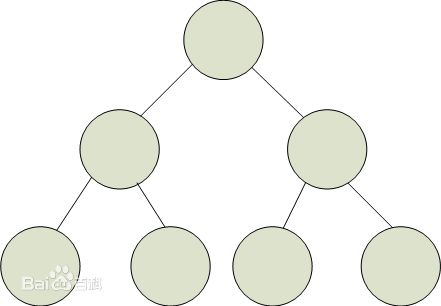
- 满二叉树
除最后一层无任何子节点外,每一层上的所有结点都有两个子结点二叉树。
- 完全二叉树
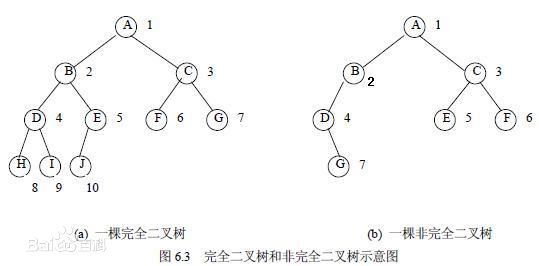
一棵二叉树至多只有最下面的一层上的结点的度数可以小于2,并且最下层上的结点都集中在该层最左边的若干位置上,则此二叉树成为完全二叉树。
- 平衡二叉树
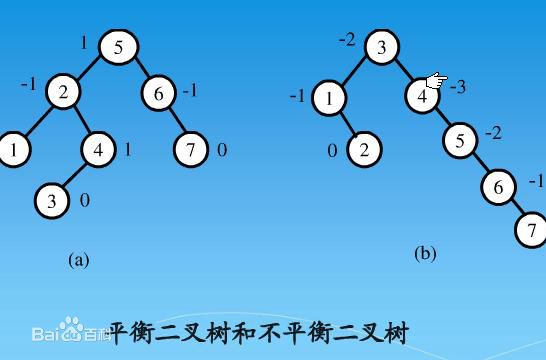
它是一棵空树或它的左右两个子树的高度差的绝对值不超过1,并且左右两个子树都是一棵平衡二叉树
- 二叉搜索/查找/排序树
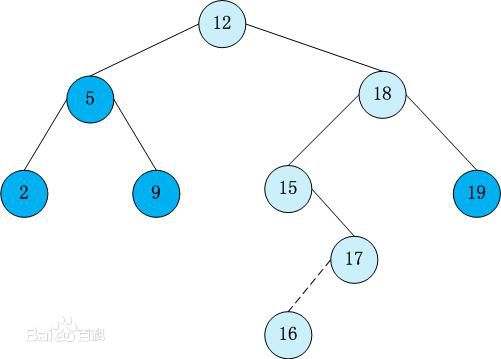
它或者是一棵空树,或者是具有下列性质的二叉树:
- 若它的左子树不空,则左子树上所有结点的值均小于它的根结点的值;
- 若它的右子树不空,则右子树上所有结点的值均大于它的根结点的值;
- 它的左、右子树也分别为二叉搜索树
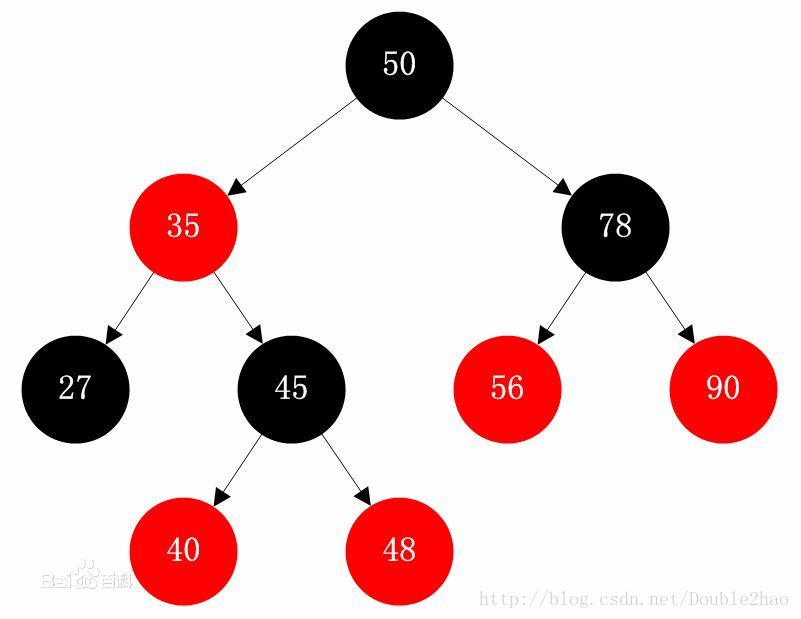
- 红黑树
属于AVL树(平衡二叉查找树)的一种,对树的高度的要求不如AVL树那么严格(不是严格控制左、右子树高度或节点数之差小于等于1),使得其插入结点的效率相对更高。
算法分类
遍历(Traversal)问题
先序、中序与后序遍历
对任一二叉树结点,若以其本身为根结点(Root Node),它的左右子节点(left/right child),那么遍历指的就是以某种固定顺序将整个二叉树的所有结点都过一遍。
按照根节点与子节点先后遍历关系,一共有以下三种常见的遍历顺序:
- 先序遍历(Preorder)
根结点-左子结点-右子结点
- 中序遍历(Inorder)
左子结点-根结点-右子结点
- 后序遍历(Postorder)
左子结点-右子结点-根结点
遍历,根据实现思路,可以分为递归(Recursive)和非递归两种方式。递归相对来说更为直观易理解,但是由于递归需要不断地多重地进行函数自身调用,会需要消耗更多的栈空间。而非递归方式就是用一般的循环(Iteration)来进行。(而其实由于二叉树的结构特性,许多相关的题目的解题思路都会存在递归和非递归两种方式,只要多做几道,就会自然体味到其中的规律。)
先给出递归实现的三种遍历:
        /*

         * 递归的主要思想就是:

         *   由于是重复调用自身,故根据遍历顺序调整根节点与左右子节点的处理语句之间的相对顺序即可。

         */

        //递归先序遍历

        public static void recurivePreorder(TreeNode root){

            if(root==null)

                return;

            System.out.println(root.val);

            if(root.left!=null)

                recurivePreorder(root.left);

            if(root.right!=null)

                recurivePreorder(root.right);

        }

        //递归中序遍历

        public static void recursiveInorder(TreeNode root){

            if(root==null)

                return;

            if(root.left!=null)

                recursiveInorder(root.left);

            System.out.println(root.val);

            if(root.right!=null)

                recursiveInorder(root.right);

        }

        //递归后序遍历

        public static void recursivePostorder(TreeNode root){

            if(root==null)

                return;

            if(root.left!=null)

                recursivePostorder(root.left);

            if(root.right!=null)

                recursivePostorder(root.right);

            System.out.println(root.val);

        }
非递归实现三种遍历:
        /*

     * 非递归的主要思想是:

     *   利用栈stack存下路过的结点,依照遍历顺序打印结点,利用stack回溯。

     */

        //非递归先序遍历

        public static void nonRecurPreorder(TreeNode root){

            ArrayDeque<TreeNode> stack=new ArrayDeque<TreeNode>();

            while(root!=null || stack.size()!=0){

                if (root != null) {

                    System.out.println(root.val); //访问结点并入栈

                    stack.push(root);

                    root = root.left;         //访问左子树

                } else {

                    root = stack.pop();            //回溯至父亲结点

                    root = root.right;        //访问右子树

                }

            }

        }

        //非递归中序遍历

        public static void nonRecurInorder(TreeNode root){

            ArrayDeque<TreeNode> stack=new ArrayDeque<TreeNode>();

            while(root!=null || stack.size()!=0){

                if(root!=null){

                    stack.push(root);

                    root=root.left;  //访问左子树

                }

                else{

                    root=stack.pop();               //回溯至父亲结点

                    System.out.println(root.val);  //输出父亲结点

                    root=root.right;  //访问右子树

                }

            }

        }

        //非递归后序遍历(相对来说,是二叉树遍历中最为复杂的一种)

        // 思路:如果当前结点没有左右子树,或者左右子树均已被访问过,那么就直接访问它;否则,将其右孩子和左孩子依次入栈。

        public static void nonRecurPostorder(TreeNode root){

            ArrayDeque<TreeNode> stack=new ArrayDeque<TreeNode>();

            TreeNode pre=null;

            TreeNode cur=null;

            stack.push(root);

            while(stack.size()!=0){

                cur=stack.peek();

                if((cur.left==null && cur.right==null) || (pre!=null && (pre==cur.left || pre==cur.right))){

                    System.out.println(cur.val);  //输出父亲结点

                    pre=cur;

                    stack.pop();

                }

                else{

                    if(cur.right!=null)

                        stack.push(cur.right);

                    if(cur.left!=null)

                        stack.push(cur.left);

                }

            }

        }
利用两种遍历结果构造二叉树
上面讲到,二叉树的遍历方式一般分为先序、中序和后序三种,其中先序和中序,或者中序和后续的遍历的结果就可以确定第三种的遍历结果,也即确定了一棵具体的二叉树。(此处默认二叉树无值相同的两个结点)
- 利用先序与中序构造二叉树
(此处,我们仅对这道题进行细致分析,另两道题目是一模一样的思路。)
先序代表了父亲-左孩子-右孩子的顺序,中序代表了左孩子-父亲-右孩子的顺序,因此,从遍历序列的整体来看,先序序列的第一个结点代表的就是整棵树的根结点,而我们在中序序列中定位到这个结点后,中序序列这个结点以左的结点就是根结点左子树上的所有结点,这个结点以右的结点就是根结点右子树上的所有结点。然后我们将先序序列按照由中序序列那里得知的划分,找到左右子树的划分边界。以此类推,我们就可以通过不断地交替从两个序列中获得构造二叉树所需要的所有信息。
原题:LC105 Construct Binary Tree from Preorder and Inorder Traversal
public TreeNode buildTree(int[] preorder, int[] inorder) {

        if(preorder.length==0)

            return null;

        TreeNode root=new TreeNode(preorder[0]);

        if(preorder.length==1)

            return root;

        int leftSubTreeNodeNums=-1;

        for(int i=0;i<inorder.length;i++)

            if(inorder[i]==root.val) {

                leftSubTreeNodeNums=i;

                break;

            }

        root.left=buildTree(Arrays.copyOfRange(preorder, 1, leftSubTreeNodeNums+1), Arrays.copyOfRange(inorder,0,leftSubTreeNodeNums));

        root.right=buildTree(Arrays.copyOfRange(preorder, leftSubTreeNodeNums+1, preorder.length), Arrays.copyOfRange(inorder,leftSubTreeNodeNums+1,inorder.length));

        return root;

}- 利用中序与后序构造二叉树
public TreeNode buildTree(int[] inorder, int[] postorder) {

        if(inorder.length==0)

            return null;

        if(inorder.length==1)

            return new TreeNode(inorder[0]);

        TreeNode root=new TreeNode(postorder[postorder.length-1]);

        int leftTreeNodeSum=0;

        for(int i=0;i<inorder.length;i++)

            if(inorder[i]==root.val){

                leftTreeNodeSum=i;

                break;

            }

        root.left=buildTree(Arrays.copyOfRange(inorder, 0, leftTreeNodeSum), Arrays.copyOfRange(postorder, 0, leftTreeNodeSum));

        root.right=buildTree(Arrays.copyOfRange(inorder, leftTreeNodeSum+1, inorder.length), Arrays.copyOfRange(postorder, leftTreeNodeSum, postorder.length-1));

        return root;

}
递归问题
递归解二叉树问题时,一般以一棵三结点或更多结点的小树作为思考解法的参照物,然后考虑一下递归的返回情况(一般是碰到空结点的时候)如何处理。
二叉树最大深度
原题:LC104 Maximum Depth of Binary Tree
Given a binary tree, find its maximum depth.
The maximum depth is the number of nodes along the longest path from the root node down to the farthest leaf node.
Note: A leaf is a node with no children.
Example:
Given binary tree [3,9,20,null,null,15,7],
    3

   / \

  9  20

    /  \

   15   7
return its depth = 3.
- My Answer
// 思路:典型的递归思路,整颗树的最大深度等于左右子树的最大深度+1。

public int maxDepth(TreeNode root) {

        if(root==null)

            return 0;

        else

            return 1+Math.max(maxDepth(root.left),maxDepth(root.right));

}
二叉树最小深度
原题:LC111 Minimum Depth of Binary Tree
Given a binary tree, find its minimum depth.
The minimum depth is the number of nodes along the shortest path from the root node down to the nearest leaf node.
Note: A leaf is a node with no children.
Example:
Given binary tree [3,9,20,null,null,15,7],
    3

   / \

  9  20

    /  \

   15   7
return its minimum depth = 2.
- My Answer
// 思路:根据左右孩子的不同情况分别返回不同的相应深度,在左右孩子均存在时,返回深度较小的那一边,以获得最小深度。

public int minDepth(TreeNode root) {

          if(root==null)

                return 0;

        else if(root.left==null && root.right==null)

                return 1;

        else if(root.left!=null && root.right!=null)

                return 1+Math.min(minDepth(root.left), minDepth(root.right));

        else

                if(root.left!=null)

                    return 1+minDepth(root.left);

                else

                    return 1+minDepth(root.right);

}
平衡二叉树判断
Given a binary tree, determine if it is height-balanced.
For this problem, a height-balanced binary tree is defined as:
a binary tree in which the depth of the two subtrees of every node never differ by more than 1.
Example 1:
Given the following tree [3,9,20,null,null,15,7]:
    3

   / \

  9  20

    /  \

   15   7
Return true.
Example 2:
Given the following tree [1,2,2,3,3,null,null,4,4]:
       1

      / \

     2   2

    / \

   3   3

  / \

 4   4
Return false.
- My Answer
//思路:判断整棵树是否为平衡二叉树,等价于判断根节点的左右子树的高度差是否小于等于1,且左右子树是否也都为平衡二叉树。

// 而判断高度差的方法可以利用前面求二叉树最大深度的方法,去分别算出左右子树的高度作差。

public static boolean isBalanced(TreeNode root) {

        if(root==null)

            return true;

        else {

            if(Math.abs(getMaxTreeDepth(root.left)-getMaxTreeDepth(root.right))<=1){

                return isBalanced(root.left) && isBalanced(root.right);

            }else {

                return false;

            }

        }

    }

    public static int getMaxTreeDepth(TreeNode root) {

        if(root==null)

            return 0;

        else

            return 1+Math.max(getMaxTreeDepth(root.left),getMaxTreeDepth(root.right));

    }
相同树
Given two binary trees, write a function to check if they are the same or not.
Two binary trees are considered the same if they are structurally identical and the nodes have the same value.
Example 1:
Input:     1         1

          / \       / \

         2   3     2   3

        [1,2,3],   [1,2,3]

Output: true
Example 2:
Input:     1         1

          /           \

         2             2

        [1,2],     [1,null,2]

Output: false
Example 3:
Input:     1         1

          / \       / \

         2   1     1   2

        [1,2,1],   [1,1,2]

Output: false- My Answer
// 思路:逐结点判断,若每个结点都相同,那么整棵树就相同。

public boolean isSameTree(TreeNode p, TreeNode q) {

        if(p==null && q==null) {

            return true;

        }

        else if(p!=null && q!=null){

            if(p.val==q.val)

                return isSameTree(p.left, q.left) && isSameTree(p.right, q.right);

            else

                return false;

        }

        else

            return false;

}
对称树
Given a binary tree, check whether it is a mirror of itself (ie, symmetric around its center).
For example, this binary tree [1,2,2,3,4,4,3] is symmetric:
    1

   / \

  2   2

 / \ / \

3  4 4  3
But the following [1,2,2,null,3,null,3] is not:
    1

   / \

  2   2

   \   \

   3    3
Note:
Bonus points if you could solve it both recursively and iteratively.
- My Answer
// 思路:判断对称树即判断左右子树镜面对称位置的结点是否均存在,且值相同。

public boolean isSymmetric(TreeNode root) {

        return isMirror(root,root);

}

public boolean isMirror(TreeNode t1, TreeNode t2) {

        if (t1 == null && t2 == null) return true;

        if (t1 == null || t2 == null) return false;

        return (t1.val == t2.val)

            && isMirror(t1.right, t2.left)

            && isMirror(t1.left, t2.right);

}
路径总和
Given a binary tree and a sum, determine if the tree has a root-to-leaf path such that adding up all the values along the path equals the given sum.
Note: A leaf is a node with no children.
Example:
Given the below binary tree and sum = 22,
      5

     / \

    4   8

   /   / \

  11  13  4

 /  \      \

7    2      1
return true, as there exist a root-to-leaf path 5->4->11->2 which sum is 22.
- My Answer
// 思路:注意题意是找一条“从根节点到叶子结点”的路径和,所以到每一个结点判断是否值对的同时,还要判断是否没有孩子结点,如果有,还需要继续往下找。

public boolean hasPathSum(TreeNode root, int sum) {

        if(root==null)

            return false;

        if(root.val==sum && root.left==null && root.right==null)

            return true;

        int goal=sum-root.val;

        return hasPathSum(root.left, goal) || hasPathSum(root.right, goal);

}
二叉搜索树/排序树问题
二叉排序树的特点前面提到过,即对于任一树中结点,其左子树的结点的值均小于它,而右子树的结点的值均大于它。根据这个特性,也存在一系列相关的算法题。
而由于依然是二叉树,故也常见用递归思路解决搜索树相关的题目。
验证二叉搜索树
LC98 Validate Binary Search Tree
Given a binary tree, determine if it is a valid binary search tree (BST).
Assume a BST is defined as follows:
- The left subtree of a node contains only nodes with keys less than the node’s key.
- The right subtree of a node contains only nodes with keys greater than the node’s key.
- Both the left and right subtrees must also be binary search trees.
Example 1:
Input:
    2

   / \

  1   3

Output: true
Example 2:
    5

   / \

  1   4

     / \

    3   6

Output: false
Explanation: The input is: [5,1,4,null,null,3,6]. The root node’s value
is 5 but its right child’s value is 4.
- My Answer
// 思路:要保证左子树的结点值均小于父结点值,右子树的结点值均大于父结点值,可以分别在左右子树中搜索最大最小值的结点,如果它们的值已经符合和父结点的大小关系,那么就只需再继续判断左右子树是否也都是二叉搜索树即可。

    public boolean isValidBST(TreeNode root) {

        if(root==null)

            return true;

        if(root.left==null && root.right==null)

            return true;

        int leftMax=findMaxValInBST(root.left, Integer.MIN_VALUE),rightMin=findMinValInBST(root.right, Integer.MAX_VALUE);

        if(root.val!=Integer.MIN_VALUE) {

            if(leftMax>=root.val)

                return false;

        }

        if(root.val!=Integer.MAX_VALUE) {

            if(rightMin<=root.val)

                return false;

        }

        if(root.left!=null && root.right==null)

            return root.left.val<root.val && isValidBST(root.left);

        if(root.left==null && root.right!=null)

            return root.right.val>root.val && isValidBST(root.right);

        return root.left.val<root.val && root.right.val>root.val && isValidBST(root.left)  && isValidBST(root.right);

    }

    public int findMaxValInBST(TreeNode root,int maxVal) {

        if(root==null)

            return maxVal;

        if(root.val>maxVal)

            maxVal=root.val;

        int leftMax=findMaxValInBST(root.left, maxVal),rightMax=findMaxValInBST(root.right, maxVal);

        return leftMax>rightMax?leftMax:rightMax;

    }

    public int findMinValInBST(TreeNode root,int minVal) {

        if(root==null)

            return minVal;

        if(root.val<minVal)

            minVal=root.val;

        int leftMin=findMinValInBST(root.left, minVal),rightMin=findMinValInBST(root.right, minVal);

        return leftMin<rightMin?leftMin:rightMin;

    }
唯一二叉搜索树
LC96 Unique Binary Search Trees
Given n, how many structurally unique BST’s (binary search trees) that store values 1 … n?
Example:
Input: 3

Output: 5

Explanation:

Given n = 3, there are a total of 5 unique BST's:

   1         3     3      2      1

    \       /     /      / \      \

     3     2     1      1   3      2

    /     /       \                 \

2 1 2 3- My Answer
// 思路:动态规划

// f(n)=sum(f(n-i)*f(i-1)) i=1,2,3...,n

// 对于从1到n的n个结点,构成二叉搜索树的所有情况可以以左右子树上结点的数目来进行划分。

// 例如左边0个结点+右边n-1个结点,左边1个结点+右边n-2个结点......,左边n-1个结点,右边0个结点。

// 一种情况的左右子树的构成情况相乘,不同情况的结果加总即得到最后的解。

    public int numTrees(int n) {

        int numTrees[]=new int[n+1];

        numTrees[0]=1;numTrees[1]=1;

        for(int i=2;i<=n;i++) {

            for(int j=1;j<=i;j++) {

                numTrees[i]+=numTrees[j-1]*numTrees[i-j];

            }

        }

        return numTrees[n];

    }
最低的二叉树共同祖先
LC235 Lowest Common Ancestor of a Binary Search Tree
Given a binary search tree (BST), find the lowest common ancestor (LCA) of two given nodes in the BST.
According to the definition of LCA on Wikipedia: “The lowest common ancestor is defined between two nodes v and w as the lowest node in T that has both v and w as descendants (where we allow a node to be a descendant of itself).”
Given binary search tree: root = [6,2,8,0,4,7,9,null,null,3,5]
        _______6______

       /              \

    ___2__          ___8__

   /      \        /      \

   0      _4       7       9

         /  \

         3   5
Example 1:
Input: root, p = 2, q = 8

Output: 6

Explanation: The LCA of nodes 2 and 8 is 6.
Example 2:
Input: root, p = 2, q = 4

Output: 2

Explanation: The LCA of nodes 2 and 4 is 2, since a node can be a descendant of itself according to the LCA definition.- My Answer
// 思路:根据结点p和q的值与父亲结点值的大小关系判断p与q是否位于同一子树下,如果是,那么递归调用方法,如果不是,那么当前父亲结点就是两者的最低共同祖先。

    public TreeNode lowestCommonAncestor(TreeNode root, TreeNode p, TreeNode q) {

        if(p==q || p.right==q || p.left==q)

            return p;

        else if(q.left==p || q.right==p)

            return q;

        // if two nodes p and q are in same sub tree, then we need to go into lower layer recursively.

        if(root.val>p.val && root.val>q.val) {

            return lowestCommonAncestor(root.left, p, q);

        }else if (root.val<p.val && root.val<q.val) {

            return lowestCommonAncestor(root.right, p, q);

        // if p and q not in same sub tree, then root is the lowest common ancestor.

        }else {

            return root;

        }

    }
Leetcode——二叉树常考算法整理的更多相关文章
- BFS与DFS常考算法整理
BFS与DFS常考算法整理 Preface BFS(Breath-First Search,广度优先搜索)与DFS(Depth-First Search,深度优先搜索)是两种针对树与图数据结构的遍历或 ...
- Leetcode——回溯法常考算法整理
Leetcode--回溯法常考算法整理 Preface Leetcode--回溯法常考算法整理 Definition Why & When to Use Backtrakcing How to ...
- [BinaryTree] 二叉树常考知识点
1.二叉树第i层至多有2^(i-1)个结点(i>=1). 2.深度为k的二叉树上,至多含2^k-1个结点(k>=1) 3.n0 = n2 + 1(度) 4.满二叉树:深度为k且含有2^k- ...
- C++常考算法
1 strcpy, char * strcpy(char* target, char* source){ // 不返回const char*, 因为如果用strlen(strcpy(xx,xxx)) ...
- c++常考算法知识点汇总
前言:写这篇博客完全是给自己当做笔记用的,考虑到自己的c++基础不是很踏实,只在大一学了一学期,c++的面向对象等更深的知识也一直没去学.就是想当遇到一些比较小的知识,切不值得用一整篇 博客去记述的时 ...
- .NET面试常考算法
1.求质数 质数也成为素数,质数就是这个数除了1和他本身两个因数以外,没有其他因数的数,叫做质数,和他相反的是合数, 就是除了1和他本身两个因数以外,还友其他因数的数叫做合数. 1 nam ...
- JS-常考算法题解析
常考算法题解析 这一章节依托于上一章节的内容,毕竟了解了数据结构我们才能写出更好的算法. 对于大部分公司的面试来说,排序的内容已经足以应付了,由此为了更好的符合大众需求,排序的内容是最多的.当然如果你 ...
- 面试常考的常用数据结构与算法(zz)
数据结构与算法,这个部分的内容其实是十分的庞大,要想都覆盖到不太容易.在校学习阶段我们可能需要对每种结构,每种算法都学习,但是找工作笔试或者面试的时候,要在很短的时间内考察一个人这方面的能力,把每种结 ...
- 近5年常考Java面试题及答案整理(三)
上一篇:近5年常考Java面试题及答案整理(二) 68.Java中如何实现序列化,有什么意义? 答:序列化就是一种用来处理对象流的机制,所谓对象流也就是将对象的内容进行流化.可以对流化后的对象进行读写 ...
随机推荐
- MySQL 的 RowNum 实现(排行榜计算用户排名)
1. 计算用户排名最高效的方法 例如:通过用户分享个数排名,那么自己的排名就是:比自己分享数多的用户个数 + 1 ' and `count` > '自己分享个数' 缺点:当多个用户分享个数相同的 ...
- jquery.form.js笔记
由于项目的原因,需要异步上传文件,网上找了找,很多都是用jquery.form插件的,于是乎找资料,调代码,做点小笔记. 官方资料:http://www.malsup.com/jquery/form/ ...
- 初识SpringAOP
概述 AOP(Aspect Oriented Programming),即面向切面编程 通过预编译方式和运行期动态代理实现程序功能的统一维护的一种技术.AOP是OOP的延伸,是软件系统开发中的一个 ...
- LeetCode---二叉树3-总结例题
二叉树-总结例题 1-从中序与后序遍历序列构造二叉树 给定二叉树的后序遍历和二叉树的中序遍历 想法: 先根据后序遍历的最后一个元素构造根节点 寻找根节点在中序遍历中的位置 递归构建根节点的左右子树 / ...
- Java程序员考研失败后的面试经历,oppo、VIVO、等面经
温馨提示:有些可能会遗漏个别问题,都是最近一周的面试,有点忘了. 浪潮(一面挂) 你是网络工程的?对网络很了解? 解释一下什么是广播域 怎么划分子网 说一下CSS的几种分类器 数据库中有哪些聚集函 ...
- Flex实现九宫格
写一个靠谱的flex布局 <!DOCTYPE html> <html> <style> .block { padding-top: 30%; margin-top: ...
- JS基础入门篇(三十五)—面向对象(二)
如果没有面向对象这种抽象概念的小伙伴,建议先看一下我写的JS基础入门篇(三十四)-面向对象(一)
- 前端每日实战:17# 视频演示如何用纯 CSS 创作炫酷的同心矩形旋转动画
效果预览 按下右侧的"点击预览"按钮可以在当前页面预览,点击链接可以全屏预览. https://codepen.io/comehope/pen/bMvbRp 可交互视频教程 此视频 ...
- Codeforces Round #620 (Div. 2)
Codeforces Round #620 (Div. 2) A. Two Rabbits 题意 两只兔子相向而跳,一只一次跳距离a,另一只一次跳距离b,每次同时跳,问是否可能到同一位置 题解 每次跳 ...
- Spring Cloud Gateway 实现Token校验
在我看来,在某些场景下,网关就像是一个公共方法,把项目中的都要用到的一些功能提出来,抽象成一个服务.比如,我们可以在业务网关上做日志收集.Token校验等等,当然这么理解很狭隘,因为网关的能力远不止如 ...