
Spring使用AspectJ开发AOP:基于Annotation
基于 Annotation 的声明式
在 Spring 中,尽管使用 XML 配置文件可以实现 AOP 开发,但是如果所有的相关的配置都集中在配置文件中,势必会导致 XML 配置文件过于臃肿,从而给维护和升级带来一定的困难。
为此,AspectJ 框架为 AOP 开发提供了另一种开发方式——基于 Annotation 的声明式。AspectJ 允许使用注解定义切面、切入点和增强处理,而 Spring 框架则可以识别并根据这些注解生成 AOP 代理。
关于 Annotation 注解的介绍如表 1 所示。
| 名称 | 说明 |
|---|---|
| @Aspect | 用于定义一个切面。 |
| @Before | 用于定义前置通知,相当于 BeforeAdvice。 |
| @AfterReturning | 用于定义后置通知,相当于 AfterReturningAdvice。 |
| @Around | 用于定义环绕通知,相当于MethodInterceptor。 |
| @AfterThrowing | 用于定义抛出通知,相当于ThrowAdvice。 |
| @After | 用于定义最终final通知,不管是否异常,该通知都会执行。 |
| @DeclareParents | 用于定义引介通知,相当于IntroductionInterceptor(不要求掌握)。 |
下面使用注解的方式重新实现《基于XML的声明式》部分的功能。
1. 创建切面类 MyAspect
在 src 目录下创建一个名为 com.mengma.aspectj.annotation 的包,在该包下创建一个切面类 MyAspect,如下所示。
package com.mengma.aspectj.annotation;

import org.aspectj.lang.JoinPoint;

import org.aspectj.lang.ProceedingJoinPoint;

import org.aspectj.lang.annotation.After;

import org.aspectj.lang.annotation.AfterReturning;

import org.aspectj.lang.annotation.AfterThrowing;

import org.aspectj.lang.annotation.Around;

import org.aspectj.lang.annotation.Aspect;

import org.aspectj.lang.annotation.Before;

import org.aspectj.lang.annotation.Pointcut;

import org.springframework.stereotype.Component;

//切面类

@Aspect

@Component

public class MyAspect {

// 用于取代:<aop:pointcut

// expression="execution(*com.mengma.dao..*.*(..))" id="myPointCut"/>

// 要求:方法必须是private,没有值,名称自定义,没有参数

@Pointcut("execution(*com.mengma.dao..*.*(..))")

private void myPointCut() {

}

// 前置通知

@Before("myPointCut()")

public void myBefore(JoinPoint joinPoint) {

System.out.print("前置通知,目标:");

System.out.print(joinPoint.getTarget() + "方法名称:");

System.out.println(joinPoint.getSignature().getName());

}

// 后置通知

@AfterReturning(value = "myPointCut()")

public void myAfterReturning(JoinPoint joinPoint) {

System.out.print("后置通知,方法名称:" + joinPoint.getSignature().getName());

}

// 环绕通知

@Around("myPointCut()")

public Object myAround(ProceedingJoinPoint proceedingJoinPoint)

throws Throwable {

System.out.println("环绕开始"); // 开始

Object obj = proceedingJoinPoint.proceed(); // 执行当前目标方法

System.out.println("环绕结束"); // 结束

return obj;

}

// 异常通知

@AfterThrowing(value = "myPointCut()", throwing = "e")

public void myAfterThrowing(JoinPoint joinPoint, Throwable e) {

System.out.println("异常通知" + "出错了" + e.getMessage());

}

// 最终通知

@After("myPointCut()")

public void myAfter() {

System.out.println("最终通知");

}

}
上述代码中,第 13 行 @Aspect 注解用于声明这是一个切面类,该类作为组件使用,所以要添加 @Component 注解才能生效。第 19 行中 @Poincut 注解用于配置切入点,取代 XML 文件中配置切入点的代码。
在每个通知相应的方法上都添加了注解声明,并且将切入点方法名“myPointCut”作为参数传递给要执行的方法,如需其他参数(如异常通知的异常参数),可以根据代码提示传递相应的属性值。
2. 为目标类添加注解
在 com.mengma.dao.CustomerDaoImpl 目标类中添加注解 @Repository("customerDao")。
import org.springframework.stereotype.Repository;

@Repository("customerDao")

public class CustomerDao {

    public void doSome(){

       // int i=1/0;

        System.out.println("正式业务");

    }

}
3. 创建Spring配置文件
在 com.mengma.aspectj.annotation 包下创建 applicationContext.xml 配置文件,如下所示。
<?xml version="1.0" encoding="UTF-8"?>

<beans xmlns="http://www.springframework.org/schema/beans"

xmlns:xsi="http://www.w3.org/2001/XMLSchema-instance"

xmlns:aop="http://www.springframework.org/schema/aop"

xmlns:context="http://www.springframework.org/schema/context"

xsi:schemaLocation="http://www.springframework.org/schema/beans

http://www.springframework.org/schema/beans/spring-beans-2.5.xsd

http://www.springframework.org/schema/aop

http://www.springframework.org/schema/aop/spring-aop-2.5.xsd

http://www.springframework.org/schema/context

http://www.springframework.org/schema/context/spring-context.xsd">

<!--扫描含com.mengma包下的所有注解-->

<context:component-scan base-package="com.mengma"/>

<!-- 使切面开启自动代理 -->

<aop:aspectj-autoproxy></aop:aspectj-autoproxy>

</beans>
上述代码中,首先导入了 AOP 命名空间及其配套的约束,使切面类中的 @AspectJ 注解能够正常工作;第 13 行代码添加了扫描包,使注解生效。需要注意的是,这里还包括目标类 com.mengma.dao.CustomerDaoImpl 的注解,所以 base-package 的值为 com.mengma;第 15 行代码的作用是切面开启自动代理。
4. 创建测试类
在 com.mengma.aspectj.annotation 包下创建一个名为 AnnotationTest 的测试类,如下所示。
package com.mengma.aspectj.annotation;

import org.junit.Test;

import org.springframework.context.ApplicationContext;

import org.springframework.context.support.ClassPathXmlApplicationContext;

import com.mengma.dao.CustomerDao;

public class AnnotationTest {

@Test

public void test() {

String xmlPath = "com/mengma/aspectj/xml/applicationContext.xml";

ApplicationContext applicationContext = new ClassPathXmlApplicationContext(

xmlPath);

// 从spring容器获取实例

CustomerDao customerDao = (CustomerDao) applicationContext

.getBean("customerDao");

// 执行方法

customerDao.add();

}

}
5. 运行项目并查看结果
使用 JUnit 测试运行 test() 方法,运行成功后,控制台的输出结果如图 3 所示。
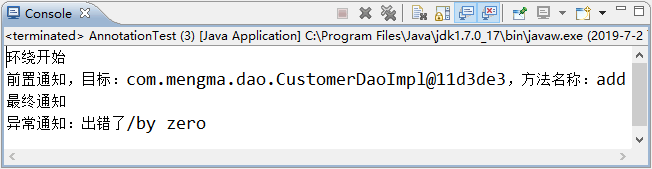
图 3 运行结果
删除 add() 方法中的“int i=1/0;”,重新运行 test() 方法,此时控制台的输出结果如图 4 所示。
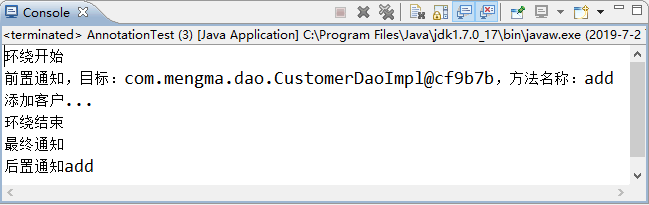
图 4 运行结果
从图 3 和图 4 的输出结果中可以看出,已成功使用 Annotation 的方式实现了 AOP 开发。与其他方式相比,基于 Annotation 方式实现 AOP 的效果是最方便的方式,所以实际开发中推荐使用注解的方式。
Spring使用AspectJ开发AOP:基于Annotation的更多相关文章
- 吴裕雄--天生自然JAVA SPRING框架开发学习笔记:Spring使用AspectJ开发AOP基于XML和基于Annotation
AspectJ 是一个基于 Java 语言的 AOP 框架,它扩展了 Java 语言.Spring 2.0 以后,新增了对 AspectJ 方式的支持,新版本的 Spring 框架,建议使用 Aspe ...
- Spring使用AspectJ开发AOP:基于XML
基于XML的声明式 基于 XML 的声明式是指通过 Spring 配置文件的方式定义切面.切入点及声明通知,而所有的切面和通知都必须定义在 <aop:config> 元素中. 下面通过案例 ...
- Spring使用@AspectJ开发AOP(零配置文件)
前言: AOP并不是Spring框架特有的.Spring只是支持AOP编程 (面向切面编程) 的框架之一. 概念: 1.切面(Aspect) 一系列Advice + Pointcut 的集合. 2.通 ...
- (转)Spring使用AspectJ进行AOP的开发:注解方式
http://blog.csdn.net/yerenyuan_pku/article/details/69790950 Spring使用AspectJ进行AOP的开发:注解方式 之前我已讲过Sprin ...
- Spring整合AspectJ的AOP
学而时习之,不亦说乎! --<论语> 看这一篇之前最好先看前面关于AOP的两篇. http://www.cnblogs.com/z ...
- 在Spring整合aspectj实现aop的两种方式
-----------------------------基于XML配置方案目标对象接口1 public interface IUserService { public void add(); pub ...
- spring与hibernate整合配置基于Annotation注解方式管理实务
1.配置数据源 数据库连接基本信息存放到properties文件中,因此先加载properties文件 <!-- jdbc连接信息 --> <context:property-pla ...
- 不依赖Spring使用AspectJ达到AOP面向切面编程
网上大多数介绍AspectJ的文章都是和Spring容器混用的,但有时我们想自己写框架就需要抛开Spring造轮子,类似使用原生AspectJ达到面向切面编程.步骤很简单,只需要两步. 1.导入依赖 ...
- Spring -- aop, 用Aspectj进行AOP开发
1. 概要 添加类库:aspectjrt.jar和aspectjweaver.jar 添加aop schema. 定义xml元素:<aop:aspectj-autoproxy> 编写jav ...
随机推荐
- 【linux】【NodeJs】Centos7安装node-v10.16.3环境
前言 Node.js 是一个基于 Chrome V8 引擎的 JavaScript 运行环境. Node.js 使用了一个事件驱动.非阻塞式 I/O 的模型,使其轻量又高效. https://node ...
- 将maven项目导入到eclipse中
一,前言 本文来演示一下如何将一个新的maven项目到入到eclipse中. 在文章使用命令行创建maven web项目中我们使用maven命令行,创建了web工程,接下来为了开发方便我要将新建的工程 ...
- 解决CentOS6.x或RedHat Linux 6.x版本不能通过System eth0以固定IP访问外网的问题
当你在VMware Workstation Pro中,打开从别人那里克隆来的系统,或者是开启迁移后的虚拟机系统时,VMware将会提示你:此虚拟机可能已被移动或 复制.为了配置特定的管理和网络功能.V ...
- hadoop之mapreduce详解(优化篇)
一.概述 优化前我们需要知道hadoop适合干什么活,适合什么场景,在工作中,我们要知道业务是怎样的,能才结合平台资源达到最有优化.除了这些我们当然还要知道mapreduce的执行过程,比如从文件的读 ...
- Maven 梳理 - maven新建web项目提示"javax.servlet.http.HttpServlet" was not found on the Java Build Path
方法一: <dependency> <groupId>javax.servlet</groupId> <artifactId>servlet-api&l ...
- Java中Synchronized的优化原理
我们知道,从 JDK1.6 开始,Java 对 Synchronized 同步锁做了充分的优化,甚至在某些场景下,它的性能已经超越了 Lock 同步锁.那么就让我们来看看,它究竟是如何优化的. 原本的 ...
- eclipse快捷键——纪念我突然失忆的脑子
常用快捷键 1.快速new出来一个对象 Alt+/ 2.快速格式化代码 Ctrl+I 3.快速导入包 Ctrl+Shift+O
- nginx 配置语法
一.语法规则: location [=|~|~*|^~] /uri/ { … } = 开头表示精确匹配 ^~ 开头表示uri以某个常规字符串开头,理解为匹配 url路径即可.nginx不对url做编码 ...
- zui框架配置日期控件只显示年月
zui框架配置日期控件datetimepicker只显示年月 <!DOCTYPE html> <head> <script src="~/Scripts/jqu ...
- B/S 端构建的基于 WebGL 3D 可视化档案馆管理系统
前言 档案管理系统是通过建立统一的标准以规范整个文件管理,包括规范各业务系统的文件管理的完整的档案资源信息共享服务平台,主要实现档案流水化采集功能.为企事业单位的档案现代化管理,提供完整的解决方案,档 ...