
2D游戏编程6—windows程序模板
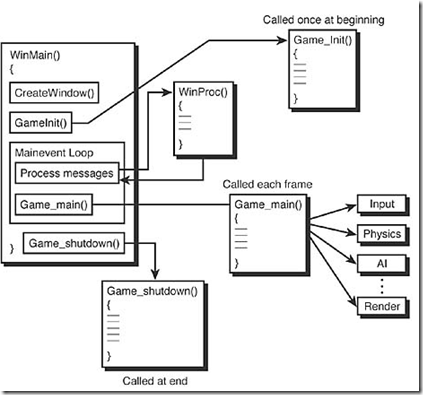
// INCLUDES ///////////////////////////////////////////////

#define WIN32_LEAN_AND_MEAN  // just say no to MFC

#include <windows.h>   // include important windows stuff

#include <windowsx.h>

#include <mmsystem.h>

#include <iostream.h> // include important C/C++ stuff

#include <conio.h>

#include <stdlib.h>

#include <malloc.h>

#include <memory.h>

#include <string.h>

#include <stdarg.h>

#include <stdio.h>

#include <math.h>

#include <io.h>

#include <fcntl.h>

// DEFINES ////////////////////////////////////////////////

// defines for windows

#define WINDOW_CLASS_NAME "WINCLASS1"

// MACROS /////////////////////////////////////////////////

#define KEYDOWN(vk_code) ((GetAsyncKeyState(vk_code) & 0x8000) ? 1 : 0)

#define KEYUP(vk_code)   ((GetAsyncKeyState(vk_code) & 0x8000) ? 0 : 1)

// GLOBALS ////////////////////////////////////////////////

HWND      main_window_handle = NULL; // globally track main window

HINSTANCE hinstance_app      = NULL; // globally track hinstance

char buffer[80];                     // general printing buffer

// FUNCTIONS //////////////////////////////////////////////

LRESULT CALLBACK WindowProc(HWND hwnd,

                            UINT msg,

                            WPARAM wparam,

                            LPARAM lparam)

{

// this is the main message handler of the system

PAINTSTRUCT        ps;        // used in WM_PAINT

HDC                hdc;    // handle to a device context

char buffer[80];        // used to print strings

// what is the message

switch(msg)

    {

    case WM_CREATE:

        {

        // do initialization stuff here

        // return success

        return(0);

        } break;

    case WM_PAINT:

        {

        // simply validate the window

           hdc = BeginPaint(hwnd,&ps);

        // end painting

        EndPaint(hwnd,&ps);

        // return success

        return(0);

           } break;

    case WM_DESTROY:

        {

        // kill the application, this sends a WM_QUIT message

        PostQuitMessage(0);

        // return success

        return(0);

        } break;

    default:break;

    } // end switch

// process any messages that we didn't take care of

return (DefWindowProc(hwnd, msg, wparam, lparam));

} // end WinProc

///////////////////////////////////////////////////////////

int Game_Main(void *parms = NULL, int num_parms = 0)

{

// this is the main loop of the game, do all your processing

// here

// for now test if user is hitting ESC and send WM_CLOSE

if (KEYDOWN(VK_ESCAPE))

   SendMessage(main_window_handle,WM_CLOSE,0,0);

// return success or failure or your own return code here

return(1);

} // end Game_Main

////////////////////////////////////////////////////////////

int Game_Init(void *parms = NULL, int num_parms = 0)

{

// this is called once after the initial window is created and

// before the main event loop is entered, do all your initialization

// here

// return success or failure or your own return code here

return(1);

} // end Game_Init

/////////////////////////////////////////////////////////////

int Game_Shutdown(void *parms = NULL, int num_parms = 0)

{

// this is called after the game is exited and the main event

// loop while is exited, do all you cleanup and shutdown here

// return success or failure or your own return code here

return(1);

} // end Game_Shutdown

// WINMAIN ////////////////////////////////////////////////

int WINAPI WinMain(    HINSTANCE hinstance,

                    HINSTANCE hprevinstance,

                    LPSTR lpcmdline,

                    int ncmdshow)

{

WNDCLASSEX winclass; // this will hold the class we create

HWND       hwnd;     // generic window handle

MSG           msg;         // generic message

HDC        hdc;      // graphics device context

// first fill in the window class stucture

winclass.cbSize         = sizeof(WNDCLASSEX);

winclass.style            = CS_DBLCLKS | CS_OWNDC |

                          CS_HREDRAW | CS_VREDRAW;

winclass.lpfnWndProc    = WindowProc;

winclass.cbClsExtra        = 0;

winclass.cbWndExtra        = 0;

winclass.hInstance        = hinstance;

winclass.hIcon            = LoadIcon(NULL, IDI_APPLICATION);

winclass.hCursor        = LoadCursor(NULL, IDC_ARROW);

winclass.hbrBackground    = (HBRUSH)GetStockObject(BLACK_BRUSH);

winclass.lpszMenuName    = NULL;

winclass.lpszClassName    = WINDOW_CLASS_NAME;

winclass.hIconSm        = LoadIcon(NULL, IDI_APPLICATION);

// save hinstance in global

hinstance_app = hinstance;

// register the window class

if (!RegisterClassEx(&winclass))

    return(0);

// create the window

if (!(hwnd = CreateWindowEx(NULL,                  // extended style

                            WINDOW_CLASS_NAME,     // class

                            "T3D Game Console Version 1.0", // title

                            WS_OVERLAPPEDWINDOW | WS_VISIBLE,

                             0,0,      // initial x,y

                            400,300,  // initial width, height

                            NULL,      // handle to parent

                            NULL,      // handle to menu

                            hinstance,// instance of this application

                            NULL)))    // extra creation parms

return(0);

// save main window handle

main_window_handle = hwnd;

// initialize game here

Game_Init();

// enter main event loop

while(TRUE)

    {

    // test if there is a message in queue, if so get it

    if (PeekMessage(&msg,NULL,0,0,PM_REMOVE))

       {

       // test if this is a quit

       if (msg.message == WM_QUIT)

           break;

       // translate any accelerator keys

       TranslateMessage(&msg);

       // send the message to the window proc

       DispatchMessage(&msg);

       } // end if

       // main game processing goes here

       Game_Main();

    } // end while

// closedown game here

Game_Shutdown();

// return to Windows like this

return(msg.wParam);

} // end WinMain
2D游戏编程6—windows程序模板的更多相关文章
- 2D游戏编程4—Windows事件
windows消息传来的参数分解: Message: WM_ACTIVATE Parameterization: fActive = LOWORD(wParam); // act ...
- 2D游戏编程1--windows编程模型
一.创建一个windows程序步骤 1.创建一个windows类 2.创建一个事件处理程序 3.注册windows类 4.用之前创建的windows类创建一个窗口 5.创建一个主事件循环 二.存储 ...
- 2D游戏编程5—锁定频率
核心利用win心跳函数GetTickCount利用差量锁定fps,如下代码锁定30fps,缺点为如果计算机不能以30fps运行,程序将低于30fps #define WIN32_LEAN_AND_ME ...
- 2D游戏编程3—GDI
WM_PAINT消息触发程序重新绘制界面,过程如下: PAINTSTRUCT ps; // used in WM_PAINT HDC hdc; // handle to ...
- 2D游戏编程2--windows高级编程
windows应用程序布局 编译流程 响应菜单事件消息 菜单消息处理实例: LRESULT CALLBACK WindowProc(HWND hwnd, UINT msg, WPARAM wpar ...
- 2D游戏编程7—星空案例
// INCLUDES /////////////////////////////////////////////// #define WIN32_LEAN_AND_MEAN // just say ...
- Windows游戏编程之从零开始d
Windows游戏编程之从零开始d I'm back~~恩,几个月不见,大家还好吗? 这段时间真的好多童鞋在博客里留言说或者发邮件说浅墨你回来继续更新博客吧. woxiangnifrr童鞋说每天都在来 ...
- 3D游戏编程大师技巧──2D引擎的编译问题
接上一篇文章,这里将介绍2D引擎的编译,从现在开始才真正进入<3D游戏编程大师技巧>的学习.本书的第一.二章只是简介了游戏编程和windows编程,从第三章开始才是介绍<window ...
- C++游戏编程(一开篇)
本系列文章由zhmxy555(毛星云)编写,转载请注明出处. http://blog.csdn.net/zhmxy555/article/details/7318264 作者:毛星云 邮箱: h ...
随机推荐
- 关于web开发的一点理解
对于web开发上的一点理解 1 宏观上的一点理解 网页从请求第地址 到获得页面的过程:从客户端(浏览器)通过地址 从soket把请求报文封装发往服务端 服务端通过解析报文并处理报文最后把处理的结果 ...
- x264_param_t结构
typedef struct x264_param_t { unsigned int cpu; // CPU 标志位 int i_threads; // 并行编码多帧; 线程数,为0则自动多线程编码 ...
- 认识linux权限
首先,我们来了解下linux系统的用户和用户组 场景:公司里有两个项目组:小组A和小组B:A.B.C是小组A的成员,甲.乙是小组B的成员.为了保密起见,小组内的进度.文档.程序都有小组内公开.比如小组 ...
- centos 忘记 root 密码
采用单用户维护模式可以重设置新密码 系统重启,按任意键进入如下所示的菜单: 选择“kernel /.....”根据提示,按下 "e" 就能进入grup 编辑模式,此时出现的画面类似 ...
- Spring Cloud Eureka Server 启停状态监控
目前发现如下的api: 当时没有找到文档 http://localhost:8761/eureka/apps 参考文章:(此文中api带有v2我自己试验不需要v2) http://blog.csdn. ...
- C#——System.Diagnostics.Process.Start的妙用
我们经常会遇到在Winform或是WPF中点击链接或按钮打开某个指定的网址, 或者是需要打开电脑中某个指定的硬盘分区及文件夹, 甚至是"控制面板"相关的东西, 那么如何做呢? 答案 ...
- Investigation of Different Nets and Layers
Investigation of Different Nets and Layers Overview of AlexNet (MIT Places | Flickr Finetuned | Oxfo ...
- 【POJ3169 】Layout (认真的做差分约束)
Layout Description Like everyone else, cows like to stand close to their friends when queuing for ...
- 【HDU4333】Revolving Digits(扩展KMP+KMP)
Revolving Digits Description One day Silence is interested in revolving the digits of a positive i ...
- <c:if>判断参数是否为空
EL表达式判断字符串是否为空: <c:if test="${empty str}"> str为空</c:if> <c:if test="${ ...