
bigworld源码分析(3)——dbMgr分析
dbMgr主要是玩家数据的读取和保存的,例如在bigworld源码分析(3)中,玩家在认证的时候,loginApp需要通过dbMgr来验证玩家数据是否合法,这就是针对玩家的账号数据进行查询。本篇中,我们主要针对以下几个问题来分析dbMgr工作原理。
(1) dbMgr如何验证玩家的账号合法性
(2) dbMgr是如何读取玩家的游戏数据的
(3) dbMgr如何通知baseAppMgr创建entity
(4) dbMgr是如何保存玩家的游戏数据的
1. dbMgr验证玩家账号
dbMgr验证玩家账号的调用关系,入下图所示。
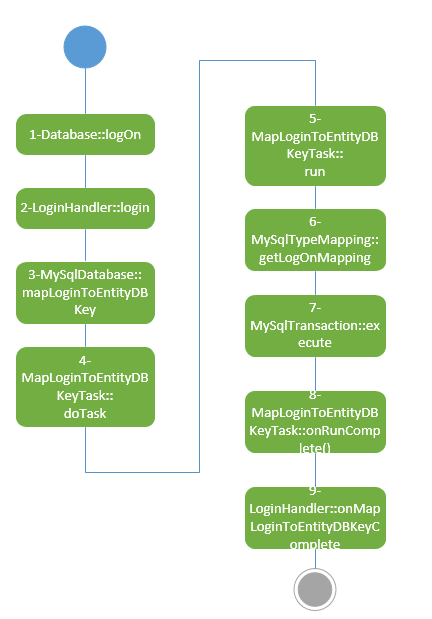
(1) DataBase在收到了logOn的消息之后,进行一些条件限制和判断之后,直接调用LoginHandler处理login
oid Database::logOn( const Mercury::Address & srcAddr,

        Mercury::ReplyID replyID,

        LogOnParamsPtr pParams,

        const Mercury::Address & addrForProxy,

        bool offChannel )

{

    // 判断能否进行认证

        // .......

    LoginHandler * pHandler =

        new LoginHandler( pParams, addrForProxy, srcAddr, offChannel, replyID );

    pHandler->login();

}
(2) LoginHandler的login方法如下:
void LoginHandler::login()

{

    // __glenc__ TODO: See if this needs to be converted to use params

    Database::instance().getIDatabase().mapLoginToEntityDBKey(

        pParams_->username(), pParams_->password(), *this );

    // When mapLoginToEntityDBKey() completes, onMapLoginToEntityDBKeyComplete()

    // will be called.

}
从代码中可以看出是通过getIDatabase方法返回的IDataBase接口,调用其mapLoginToEntityDBKey。 那么纠结是使用了哪个IDataBase实现类呢?在DataBase的init中我们可以看出来,主要可能是3中实现IDataBase接口的类。其类图关系如下。
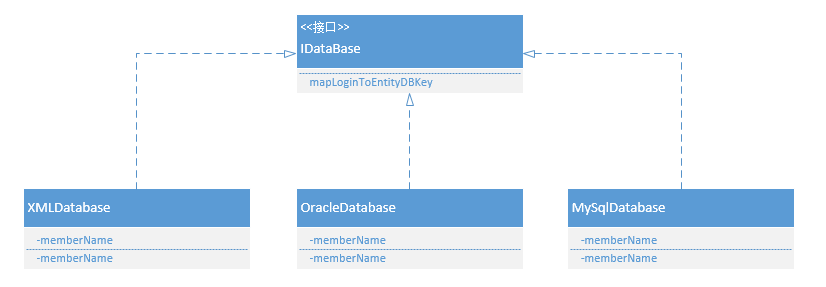
主要是XMLDataBase,OracleDatabase和MySqlDatabase,也就是说bigworld提供了这3种数据存取方式。其实只有2中,XML和Mysql。我们这里主要看Mysql方式。
(3) (4)(5)MapLoginToEntityDBKeyTask调用typeMapping.getLogOnMapping
void MapLoginToEntityDBKeyTask::run()

{

    bool retry;

    do

    {

        retry = false;

        MySqlThreadData& threadData = this->getThreadData();

        try

        {

            MySqlTransaction transaction( threadData.connection );

            std::string actualPassword;

            bool entryExists = threadData.typeMapping.getLogOnMapping( transaction,

                logOnName_, actualPassword, threadData.ekey.typeID,

                threadData.ekey.name );

            // .....

    } while (retry);

}
(6) MySqlTypeMapping::getLogOnMapping
bool MySqlTypeMapping::getLogOnMapping( MySqlTransaction& t, const std::string& logOnName,

        std::string& password, EntityTypeID& typeID, std::string& recordName )

{

    boundLogOnName_.setString( logOnName );

    t.execute( stmtGetLogOnMapping_ );

    // ......

}
可以看出来,这里的execute就是真正执行sql语句的地方,那么这个stmtGetLogOnMapping_ 是什么呢,其实就是一个简单的sql语句的封装,
MySqlTypeMapping::MySqlTypeMapping( MySql& con, const EntityDefs& entityDefs,

        const char * tableNamePrefix ) :

    mappings_(),

    // ....

    stmtGetLogOnMapping_( con, "SELECT m.password, t.bigworldID, m.recordName "

                "FROM bigworldLogOnMapping m, bigworldEntityTypes t "

                "WHERE m.logOnName=? and m.typeID=t.typeID" ),
在MySqlTypeMapping的构造函数中,我们可以看出stmtGetLogOnMapping_具体是一个什么样的sql语句。其实这里就是简单的将mysql业务,和sql语句直接简单做了一个映射关系,也就可以理解MySqlTypeMapping中TypeMapping的意思了,就是根据业务类型做了映射而已。
到这里,我们基本就知道dbMgr是如何对账号进行认证的了。
在MapLoginToEntityDBKeyTask::run执行完之后,会执行MapLoginToEntityDBKeyTask::onRunComplete(),那么就会在最后回调LoginHandler的onMapLoginToEntityDBKeyComplete,那么整个认证就结束了。
2. dbMgr获取玩家数据
在验证完玩家登陆login信息之后,如果成功,则需要从数据库中将玩家数据获取出来。在验证玩家登陆信息的时候,同时也从bigworldLogOnMapping 表中,将玩家的id获取到了,这个是后面读取玩家数据需要的key。具体的读取流程如下:

(1) (2)(3)(4)LoginHandler::onMapLoginToEntityDBKeyComplete中直接一层一层调用getEntity接口,没有复杂逻辑。
(5) (6)在GetEnitityTask中调用GetLogOnRecord,然后真正获取玩家数据,如果获取成功,最后再回调LoginHandler的onGetEntityCompleted
3. dbMgr通知baseAppMgr创建entity
LoginHandler::onMapLoginToEntityDBKeyComplete中,在getEntity之前,DataBase中的接口就开始通知BaseAppMgr去创建Entity了,甚至这个时候还不知道Entity能否创建成功。
void LoginHandler::onMapLoginToEntityDBKeyComplete( DatabaseLoginStatus status,

                                                   const EntityDBKey& ekey )

{

    bool shouldLoadEntity = false;

    bool shouldCreateEntity = false;

    if (status == DatabaseLoginStatus::LOGGED_ON)

    {

        ekey_ = ekey;

        shouldLoadEntity = true;

        state_ = StateWaitingForLoad;

    }

    .......


  // 可以load玩家数据

    if (shouldLoadEntity)

    {

        // Start "create new base" message even though we're not sure entity

        // exists. This is to take advantage of getEntity() streaming properties

        // into the bundle directly.
    // 这个接口里就直接通知BaseAppMgr去创建玩家的entity。

        pStrmDbID_ = Database::prepareCreateEntityBundle( ekey_.typeID,

            ekey_.dbID, clientAddr_, this, bundle_, pParams_ );

        // Get entity data

        pBaseRef_ = &baseRef_;

        outRec_.provideBaseMB( pBaseRef_ );        // Get entity mailbox

        outRec_.provideStrm( bundle_ );            // Get entity data into bundle

        Database::instance().getEntity( *this );

        // When getEntity() completes, onGetEntityCompleted() is called.

    }

   .......

}
Database::prepareCreateEntityBundle函数代码。
/*

 *    This method inserts the "header" info into the bundle for a

 *    BaseAppMgrInterface::createEntity message, up till the point

 *    where entity properties should begin.

 *

 *    @return    If dbID is 0, then this function returns the position in the

 *    bundle where you should put the DatabaseID.

 */

DatabaseID* Database::prepareCreateEntityBundle( EntityTypeID typeID,

        DatabaseID dbID, const Mercury::Address& addrForProxy,

        Mercury::ReplyMessageHandler* pHandler, Mercury::Bundle& bundle,

        LogOnParamsPtr pParams )

{

    bundle.startRequest( BaseAppMgrInterface::createEntity, pHandler, ,

        Mercury::DEFAULT_REQUEST_TIMEOUT +  ); // 1 second extra

    ......

}
从这个函数和其注释,我们可以看出来,这里并没有真正的向BaseAppMgr去请求createEntity,而只是准备让它创建,具体发送这个指令,需要entity的属性准备完毕。
最后LoginHandler::sendCreateEntityMsg调用DataBase的send接口,将createEntity的消息发送给BaseAppMgr。这个中间发生了哪些事情,最后调用了sendCreateEntityMsg呢?调用关系如下图:
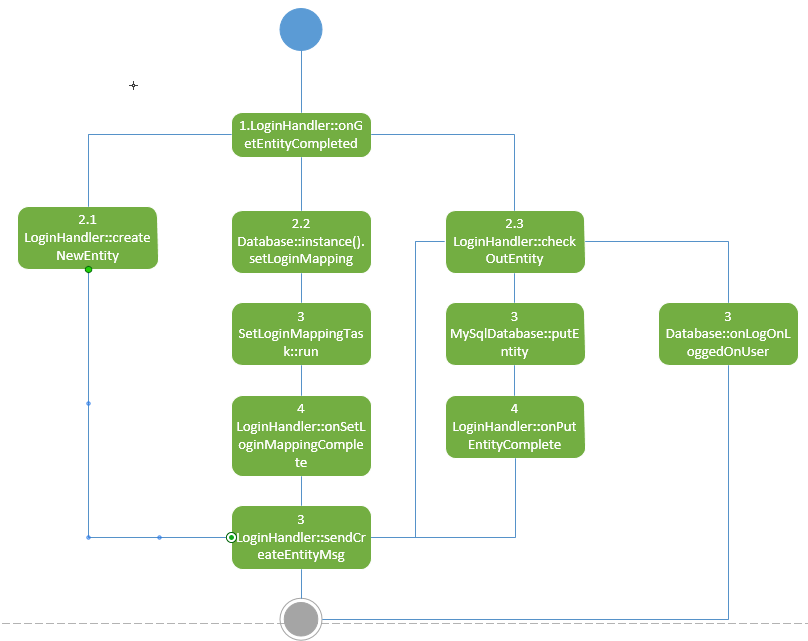
从上面的调用关系图可以看出,onGetEntityCompleted中可能会发生3中情况
(1) 在玩家数据不存在的情况下,需要创建新的玩家,也就是createNewEntity
(2) 需要对登陆数据进行映射,也就是setLoginMapping
(3) 需要校验玩家数据checkOutEntity
不过他们最终都是会回调到LoginHandler::sendCreateEntityMsg中!!
4. dbMgr是如何保存玩家的游戏数据的
dbMgr还有一个重要的功能就是保持玩家数据,相对于获取玩家数据,保存玩家数据流程相对更加简单,其流程如下:

DataBase中writeEntity调用WriteEntityHandler的writeEntity接口,然后后面还是调用MysqlDatabase的putEntity接口,最后回调WriteEntityHandler的finalise接口,在这个接口里面判断,是否需要返回保存结果。其代码如下:
void WriteEntityHandler::finalise( bool isOK )

{
  // 如果需要返回保存结果

    if (shouldReply_)

    {

        Mercury::ChannelSender sender( Database::getChannel( srcAddr_ ) );

        sender.bundle().startReply( replyID_ );

        sender.bundle() << isOK << ekey_.dbID;

    }

    if (isOK && (flags_ & WRITE_LOG_OFF))

    {
    // 如果是玩家下线保存

        Database::instance().onEntityLogOff( ekey_.typeID, ekey_.dbID );

    }

    delete this;

}
至此,dbMgr的登录验证,玩家数据获取,玩家数据保存,以及如何通知baseAppMgr创建entity这4个我们一开始列出来的点,都已经基本分析清楚了
bigworld源码分析(3)——dbMgr分析的更多相关文章
- bigworld源码分析(1)—— 研究bigworld的意义和目标
对于网络游戏服务器开发熟悉的人,基本都知道bigworld引擎,此引擎包括客户端部分和服务器部分,已经有很多知名的网络游戏通过bigworld来构建游戏.我主要关注bigworld的服务器部分,它是一 ...
- ArrayList源码和多线程安全问题分析
1.ArrayList源码和多线程安全问题分析 在分析ArrayList线程安全问题之前,我们线对此类的源码进行分析,找出可能出现线程安全问题的地方,然后代码进行验证和分析. 1.1 数据结构 Arr ...
- Okhttp3源码解析(3)-Call分析(整体流程)
### 前言 前面我们讲了 [Okhttp的基本用法](https://www.jianshu.com/p/8e404d9c160f) [Okhttp3源码解析(1)-OkHttpClient分析]( ...
- Okhttp3源码解析(2)-Request分析
### 前言 前面我们讲了 [Okhttp的基本用法](https://www.jianshu.com/p/8e404d9c160f) [Okhttp3源码解析(1)-OkHttpClient分析]( ...
- Spring mvc之源码 handlerMapping和handlerAdapter分析
Spring mvc之源码 handlerMapping和handlerAdapter分析 本篇并不是具体分析Spring mvc,所以好多细节都是一笔带过,主要是带大家梳理一下整个Spring mv ...
- HashMap的源码学习以及性能分析
HashMap的源码学习以及性能分析 一).Map接口的实现类 HashTable.HashMap.LinkedHashMap.TreeMap 二).HashMap和HashTable的区别 1).H ...
- ThreadLocal源码及相关问题分析
前言 在高并发的环境下,当我们使用一个公共的变量时如果不加锁会出现并发问题,例如SimpleDateFormat,但是加锁的话会影响性能,对于这种情况我们可以使用ThreadLocal.ThreadL ...
- 物联网防火墙himqtt源码之MQTT协议分析
物联网防火墙himqtt源码之MQTT协议分析 himqtt是首款完整源码的高性能MQTT物联网防火墙 - MQTT Application FireWall,C语言编写,采用epoll模式支持数十万 ...
- Netty 源码学习——客户端流程分析
Netty 源码学习--客户端流程分析 友情提醒: 需要观看者具备一些 NIO 的知识,否则看起来有的地方可能会不明白. 使用版本依赖 <dependency> <groupId&g ...
随机推荐
- MyEclipse 10.7 添加JBOSS 6应用服务器
首先,确保你的JAVA和JBOSS的环境变量配置正确然后,在myeclipse中,window->preferences->myeclipse->servers->JBOSS- ...
- (转)Could not create the view: An unexpected exception was thrown. 电脑突然断电,myeclipse非正常关闭,出现错误
问题:电脑突然断电,myeclipse非正常关闭,“Package Explorer”非正常显示,出现错误“Could not create the view: An unexpected excep ...
- 16-underscore库(上)
第16课 underscore库 一.介绍 Underscore 是一个 JavaScript 工具库,它提供了一整套函数式编程的实用功能,但是没有扩展任何 JavaScript 内置对象.他弥补了 ...
- centos jenkins
wget -O /etc/yum.repos.d/jenkins.repo http://pkg.jenkins-ci.org/redhat/jenkins.repo rpm --import htt ...
- SQL&&LINQ:左(外)连接,右(外)连接,内连接,完全连接,交叉连接,多对多连接
SQL: 外连接和内连接: 左连接或左外连接:包含左边的表的所有行,如果右边表中的某行没有匹配,该行内容为空(NULL) --outer jion:left join or left outer jo ...
- Mvc导入导出Excel
@{ ViewBag.Title = "Index"; Layout = "~/Views/Shared/_Layout.cshtml"; } <h2&g ...
- jqGrid表格控件
一. jqGrid的加载. 1.引用相关头文件 引入CSS: <link type="text/css" rel="stylesheet" href=&q ...
- CSS样式使用
<html> <head> <style type = "text/css"> .h{ ...
- 修改内联CSS(点击按钮连续改变文字大小、位置,.animate()方法)
$(document).ready(function(){ $('#swticher-large').click(function(){ var $ ...
- Android基础:Activity
Activity基本概念 Activity代表活动窗口,通过Context加载页面显示内容,每一个Activity都必须在manifest.xml中注册. 一个应用程序由多个界面构成,回退栈,活动窗口 ...