
【Spring源码分析】非懒加载的单例Bean初始化过程(下篇)
doCreateBean方法
上文【Spring源码分析】非懒加载的单例Bean初始化过程(上篇),分析了单例的Bean初始化流程,并跟踪代码进入了主流程,看到了Bean是如何被实例化出来的。先贴一下AbstractAutowireCapableBeanFactory的doCreateBean方法代码:
 protected Object doCreateBean(final String beanName, final RootBeanDefinition mbd, final Object[] args) {

     // Instantiate the bean.

     BeanWrapper instanceWrapper = null;

     if (mbd.isSingleton()) {

         instanceWrapper = this.factoryBeanInstanceCache.remove(beanName);

     }

     if (instanceWrapper == null) {

         instanceWrapper = createBeanInstance(beanName, mbd, args);

     }

     final Object bean = (instanceWrapper != null ? instanceWrapper.getWrappedInstance() : null);

     Class beanType = (instanceWrapper != null ? instanceWrapper.getWrappedClass() : null);

     // Allow post-processors to modify the merged bean definition.

     synchronized (mbd.postProcessingLock) {

         if (!mbd.postProcessed) {

             applyMergedBeanDefinitionPostProcessors(mbd, beanType, beanName);

             mbd.postProcessed = true;

         }

     }

     // Eagerly cache singletons to be able to resolve circular references

     // even when triggered by lifecycle interfaces like BeanFactoryAware.

     boolean earlySingletonExposure = (mbd.isSingleton() && this.allowCircularReferences &&

             isSingletonCurrentlyInCreation(beanName));

     if (earlySingletonExposure) {

         if (logger.isDebugEnabled()) {

             logger.debug("Eagerly caching bean '" + beanName +

                     "' to allow for resolving potential circular references");

         }

         addSingletonFactory(beanName, new ObjectFactory() {

             public Object getObject() throws BeansException {

                 return getEarlyBeanReference(beanName, mbd, bean);

             }

         });

     }

     // Initialize the bean instance.

     Object exposedObject = bean;

     try {

         populateBean(beanName, mbd, instanceWrapper);

         if (exposedObject != null) {

             exposedObject = initializeBean(beanName, exposedObject, mbd);

         }

     }

     catch (Throwable ex) {

         if (ex instanceof BeanCreationException && beanName.equals(((BeanCreationException) ex).getBeanName())) {

             throw (BeanCreationException) ex;

         }

         else {

             throw new BeanCreationException(mbd.getResourceDescription(), beanName, "Initialization of bean failed", ex);

         }

     }

     if (earlySingletonExposure) {

         Object earlySingletonReference = getSingleton(beanName, false);

         if (earlySingletonReference != null) {

             if (exposedObject == bean) {

                 exposedObject = earlySingletonReference;

             }

             else if (!this.allowRawInjectionDespiteWrapping && hasDependentBean(beanName)) {

                 String[] dependentBeans = getDependentBeans(beanName);

                 Set<String> actualDependentBeans = new LinkedHashSet<String>(dependentBeans.length);

                 for (String dependentBean : dependentBeans) {

                     if (!removeSingletonIfCreatedForTypeCheckOnly(dependentBean)) {

                         actualDependentBeans.add(dependentBean);

                     }

                 }

                 if (!actualDependentBeans.isEmpty()) {

                     throw new BeanCurrentlyInCreationException(beanName,

                             "Bean with name '" + beanName + "' has been injected into other beans [" +

                             StringUtils.collectionToCommaDelimitedString(actualDependentBeans) +

                             "] in its raw version as part of a circular reference, but has eventually been " +

                             "wrapped. This means that said other beans do not use the final version of the " +

                             "bean. This is often the result of over-eager type matching - consider using " +

                             "'getBeanNamesOfType' with the 'allowEagerInit' flag turned off, for example.");

                 }

             }

         }

     }

     // Register bean as disposable.

     try {

         registerDisposableBeanIfNecessary(beanName, bean, mbd);

     }

     catch (BeanDefinitionValidationException ex) {

         throw new BeanCreationException(mbd.getResourceDescription(), beanName, "Invalid destruction signature", ex);

     }

     return exposedObject;

 }
下面继续分析初始化一个Bean的流程,不太重要的流程就跳过了。
属性注入
属性注入的代码比较好找,可以看一下40行,取名为populateBean,即填充Bean的意思,看一下代码实现:
 protected void populateBean(String beanName, AbstractBeanDefinition mbd, BeanWrapper bw) {

     PropertyValues pvs = mbd.getPropertyValues();

     if (bw == null) {

         if (!pvs.isEmpty()) {

             throw new BeanCreationException(

                     mbd.getResourceDescription(), beanName, "Cannot apply property values to null instance");

         }

         else {

             // Skip property population phase for null instance.

             return;

         }

     }

     // Give any InstantiationAwareBeanPostProcessors the opportunity to modify the

     // state of the bean before properties are set. This can be used, for example,

     // to support styles of field injection.

     boolean continueWithPropertyPopulation = true;

     if (!mbd.isSynthetic() && hasInstantiationAwareBeanPostProcessors()) {

         for (BeanPostProcessor bp : getBeanPostProcessors()) {

             if (bp instanceof InstantiationAwareBeanPostProcessor) {

                 InstantiationAwareBeanPostProcessor ibp = (InstantiationAwareBeanPostProcessor) bp;

                 if (!ibp.postProcessAfterInstantiation(bw.getWrappedInstance(), beanName)) {

                     continueWithPropertyPopulation = false;

                     break;

                 }

             }

         }

     }

     if (!continueWithPropertyPopulation) {

         return;

     }

     if (mbd.getResolvedAutowireMode() == RootBeanDefinition.AUTOWIRE_BY_NAME ||

             mbd.getResolvedAutowireMode() == RootBeanDefinition.AUTOWIRE_BY_TYPE) {

         MutablePropertyValues newPvs = new MutablePropertyValues(pvs);

         // Add property values based on autowire by name if applicable.

         if (mbd.getResolvedAutowireMode() == RootBeanDefinition.AUTOWIRE_BY_NAME) {

             autowireByName(beanName, mbd, bw, newPvs);

         }

         // Add property values based on autowire by type if applicable.

         if (mbd.getResolvedAutowireMode() == RootBeanDefinition.AUTOWIRE_BY_TYPE) {

             autowireByType(beanName, mbd, bw, newPvs);

         }

         pvs = newPvs;

     }

     boolean hasInstAwareBpps = hasInstantiationAwareBeanPostProcessors();

     boolean needsDepCheck = (mbd.getDependencyCheck() != RootBeanDefinition.DEPENDENCY_CHECK_NONE);

     if (hasInstAwareBpps || needsDepCheck) {

         PropertyDescriptor[] filteredPds = filterPropertyDescriptorsForDependencyCheck(bw);

         if (hasInstAwareBpps) {

             for (BeanPostProcessor bp : getBeanPostProcessors()) {

                 if (bp instanceof InstantiationAwareBeanPostProcessor) {

                     InstantiationAwareBeanPostProcessor ibp = (InstantiationAwareBeanPostProcessor) bp;

                     pvs = ibp.postProcessPropertyValues(pvs, filteredPds, bw.getWrappedInstance(), beanName);

                     if (pvs == null) {

                         return;

                     }

                 }

             }

         }

         if (needsDepCheck) {

             checkDependencies(beanName, mbd, filteredPds, pvs);

         }

     }

     applyPropertyValues(beanName, mbd, bw, pvs);

 }
这段代码层次有点深,跟一下74行的applyPropertyValues方法,最后那个pvs的实现类为MutablePropertyValues,里面持有一个List<PropertyValue>,每一个PropertyValue包含了此Bean属性的属性名与属性值。74行的代码实现为:
 protected void applyPropertyValues(String beanName, BeanDefinition mbd, BeanWrapper bw, PropertyValues pvs) {

     if (pvs == null || pvs.isEmpty()) {

         return;

     }

     MutablePropertyValues mpvs = null;

     List<PropertyValue> original;

     if (System.getSecurityManager()!= null) {

         if (bw instanceof BeanWrapperImpl) {

             ((BeanWrapperImpl) bw).setSecurityContext(getAccessControlContext());

         }

     }

     if (pvs instanceof MutablePropertyValues) {

         mpvs = (MutablePropertyValues) pvs;

         if (mpvs.isConverted()) {

             // Shortcut: use the pre-converted values as-is.

             try {

                 bw.setPropertyValues(mpvs);

                 return;

             }

             catch (BeansException ex) {

                 throw new BeanCreationException(

                         mbd.getResourceDescription(), beanName, "Error setting property values", ex);

             }

         }

         original = mpvs.getPropertyValueList();

     }

     else {

         original = Arrays.asList(pvs.getPropertyValues());

     }

     TypeConverter converter = getCustomTypeConverter();

     if (converter == null) {

         converter = bw;

     }

     BeanDefinitionValueResolver valueResolver = new BeanDefinitionValueResolver(this, beanName, mbd, converter);

     // Create a deep copy, resolving any references for values.

     List<PropertyValue> deepCopy = new ArrayList<PropertyValue>(original.size());

     boolean resolveNecessary = false;

     for (PropertyValue pv : original) {

         if (pv.isConverted()) {

             deepCopy.add(pv);

         }

         else {

             String propertyName = pv.getName();

             Object originalValue = pv.getValue();

             Object resolvedValue = valueResolver.resolveValueIfNecessary(pv, originalValue);

             Object convertedValue = resolvedValue;

             boolean convertible = bw.isWritableProperty(propertyName) &&

                         !PropertyAccessorUtils.isNestedOrIndexedProperty(propertyName);

             if (convertible) {

                 convertedValue = convertForProperty(resolvedValue, propertyName, bw, converter);

             }

             // Possibly store converted value in merged bean definition,

             // in order to avoid re-conversion for every created bean instance.

             if (resolvedValue == originalValue) {

                 if (convertible) {

                     pv.setConvertedValue(convertedValue);

                 }

                 deepCopy.add(pv);

             }

             else if (convertible && originalValue instanceof TypedStringValue &&

                     !((TypedStringValue) originalValue).isDynamic() &&

                     !(convertedValue instanceof Collection || ObjectUtils.isArray(convertedValue))) {

                 pv.setConvertedValue(convertedValue);

                 deepCopy.add(pv);

             }

             else {

                 resolveNecessary = true;

                 deepCopy.add(new PropertyValue(pv, convertedValue));

             }

         }

     }

     if (mpvs != null && !resolveNecessary) {

         mpvs.setConverted();

     }

     // Set our (possibly massaged) deep copy.

     try {

         bw.setPropertyValues(new MutablePropertyValues(deepCopy));

     }

     catch (BeansException ex) {

         throw new BeanCreationException(

                 mbd.getResourceDescription(), beanName, "Error setting property values", ex);

     }

 }
之后在第41行~第76行做了一次深拷贝(只是名字叫做深拷贝而已,其实就是遍历PropertyValue然后一个一个赋值到一个新的List而不是Java语义上的Clone,这里使用深拷贝是为了解析Values值中的所有引用),将PropertyValue一个一个赋值到一个新的List里面去,起名为deepCopy。最后执行83行进行复制,bw即BeanWrapper,持有Bean实例的一个Bean包装类,看一下代码实现:
 public void setPropertyValues(PropertyValues pvs, boolean ignoreUnknown, boolean ignoreInvalid)

         throws BeansException {

     List<PropertyAccessException> propertyAccessExceptions = null;

     List<PropertyValue> propertyValues = (pvs instanceof MutablePropertyValues ?

             ((MutablePropertyValues) pvs).getPropertyValueList() : Arrays.asList(pvs.getPropertyValues()));

     for (PropertyValue pv : propertyValues) {

         try {

             // This method may throw any BeansException, which won't be caught

             // here, if there is a critical failure such as no matching field.

             // We can attempt to deal only with less serious exceptions.

             setPropertyValue(pv);

         }

         catch (NotWritablePropertyException ex) {

             if (!ignoreUnknown) {

                 throw ex;

             }

             // Otherwise, just ignore it and continue...

         }

         catch (NullValueInNestedPathException ex) {

             if (!ignoreInvalid) {

                 throw ex;

             }

             // Otherwise, just ignore it and continue...

         }

         catch (PropertyAccessException ex) {

             if (propertyAccessExceptions == null) {

                 propertyAccessExceptions = new LinkedList<PropertyAccessException>();

             }

             propertyAccessExceptions.add(ex);

         }

     }

     // If we encountered individual exceptions, throw the composite exception.

     if (propertyAccessExceptions != null) {

         PropertyAccessException[] paeArray =

                 propertyAccessExceptions.toArray(new PropertyAccessException[propertyAccessExceptions.size()]);

         throw new PropertyBatchUpdateException(paeArray);

     }

 }
这段代码没什么特别的,遍历前面的deepCopy,拿每一个PropertyValue,执行第12行的setPropertyValue:
 public void setPropertyValue(PropertyValue pv) throws BeansException {

     PropertyTokenHolder tokens = (PropertyTokenHolder) pv.resolvedTokens;

     if (tokens == null) {

         String propertyName = pv.getName();

         BeanWrapperImpl nestedBw;

         try {

             nestedBw = getBeanWrapperForPropertyPath(propertyName);

         }

         catch (NotReadablePropertyException ex) {

             throw new NotWritablePropertyException(getRootClass(), this.nestedPath + propertyName,

                     "Nested property in path '" + propertyName + "' does not exist", ex);

         }

         tokens = getPropertyNameTokens(getFinalPath(nestedBw, propertyName));

         if (nestedBw == this) {

             pv.getOriginalPropertyValue().resolvedTokens = tokens;

         }

         nestedBw.setPropertyValue(tokens, pv);

     }

     else {

         setPropertyValue(tokens, pv);

     }

 }
找一个合适的BeanWrapper,这里就是自身,然后执行17行的setPropertyValue方法进入最后一步,方法非常长,截取核心的一段:
 final Method writeMethod = (pd instanceof GenericTypeAwarePropertyDescriptor ?

     ((GenericTypeAwarePropertyDescriptor) pd).getWriteMethodForActualAccess() :

     pd.getWriteMethod());

     if (!Modifier.isPublic(writeMethod.getDeclaringClass().getModifiers()) && !writeMethod.isAccessible()) {

     if (System.getSecurityManager()!= null) {

         AccessController.doPrivileged(new PrivilegedAction<Object>() {

                 public Object run() {

                     writeMethod.setAccessible(true);

                     return null;

                 }

             });

         }

         else {

             writeMethod.setAccessible(true);

         }

     }

     final Object value = valueToApply;

     if (System.getSecurityManager() != null) {

     try {

         AccessController.doPrivileged(new PrivilegedExceptionAction<Object>() {

             public Object run() throws Exception {

                 writeMethod.invoke(object, value);

                 return null;

             }

         }, acc);

     }

     catch (PrivilegedActionException ex) {

         throw ex.getException();

     }

 }

 else {

     writeMethod.invoke(this.object, value);

 }
大致流程就是两步:
(1)拿到写方法并将方法的可见性设置为true
(2)拿到Value值,对Bean通过反射调用写方法
这样完成了对于Bean属性值的设置。
Aware注入
接下来是Aware注入。在使用Spring的时候我们将自己的Bean实现BeanNameAware接口、BeanFactoryAware接口等,依赖容器帮我们注入当前Bean的名称或者Bean工厂,其代码实现先追溯到上面doCreateBean方法的42行initializeBean方法:
 protected Object initializeBean(final String beanName, final Object bean, RootBeanDefinition mbd) {

     if (System.getSecurityManager() != null) {

         AccessController.doPrivileged(new PrivilegedAction<Object>() {

             public Object run() {

                 invokeAwareMethods(beanName, bean);

                 return null;

             }

         }, getAccessControlContext());

     }

     else {

         invokeAwareMethods(beanName, bean);

     }

     Object wrappedBean = bean;

     if (mbd == null || !mbd.isSynthetic()) {

         wrappedBean = applyBeanPostProcessorsBeforeInitialization(wrappedBean, beanName);

     }

     try {

         invokeInitMethods(beanName, wrappedBean, mbd);

     }

     catch (Throwable ex) {

         throw new BeanCreationException(

                 (mbd != null ? mbd.getResourceDescription() : null),

                 beanName, "Invocation of init method failed", ex);

     }

     if (mbd == null || !mbd.isSynthetic()) {

         wrappedBean = applyBeanPostProcessorsAfterInitialization(wrappedBean, beanName);

     }

     return wrappedBean;

 }
看一下上面第5行的实现:
 private void invokeAwareMethods(final String beanName, final Object bean) {

     if (bean instanceof BeanNameAware) {

         ((BeanNameAware) bean).setBeanName(beanName);

     }

     if (bean instanceof BeanClassLoaderAware) {

         ((BeanClassLoaderAware) bean).setBeanClassLoader(getBeanClassLoader());

     }

     if (bean instanceof BeanFactoryAware) {

         ((BeanFactoryAware) bean).setBeanFactory(AbstractAutowireCapableBeanFactory.this);

     }

 }
看到这里判断,如果bean是BeanNameAware接口的实现类会调用setBeanName方法、如果bean是BeanClassLoaderAware接口的实现类会调用setBeanClassLoader方法、如果是BeanFactoryAware接口的实现类会调用setBeanFactory方法,注入对应的属性值。
调用BeanPostProcessor的postProcessBeforeInitialization方法
上面initializeBean方法再看16行其实现:
 public Object applyBeanPostProcessorsBeforeInitialization(Object existingBean, String beanName)

         throws BeansException {

     Object result = existingBean;

     for (BeanPostProcessor beanProcessor : getBeanPostProcessors()) {

         result = beanProcessor.postProcessBeforeInitialization(result, beanName);

         if (result == null) {

             return result;

         }

     }

     return result;

 }
遍历每个BeanPostProcessor接口实现,调用postProcessBeforeInitialization方法,这个接口的调用时机之后会总结,这里就代码先简单提一下。
调用初始化方法
initializeBean方法的20行,调用Bean的初始化方法,看一下实现:
 protected void invokeInitMethods(String beanName, final Object bean, RootBeanDefinition mbd)

         throws Throwable {

     boolean isInitializingBean = (bean instanceof InitializingBean);

     if (isInitializingBean && (mbd == null || !mbd.isExternallyManagedInitMethod("afterPropertiesSet"))) {

         if (logger.isDebugEnabled()) {

             logger.debug("Invoking afterPropertiesSet() on bean with name '" + beanName + "'");

         }

         if (System.getSecurityManager() != null) {

             try {

                 AccessController.doPrivileged(new PrivilegedExceptionAction<Object>() {

                     public Object run() throws Exception {

                         ((InitializingBean) bean).afterPropertiesSet();

                         return null;

                     }

                 }, getAccessControlContext());

             }

             catch (PrivilegedActionException pae) {

                 throw pae.getException();

             }

         }

         else {

             ((InitializingBean) bean).afterPropertiesSet();

         }

     }

     if (mbd != null) {

         String initMethodName = mbd.getInitMethodName();

         if (initMethodName != null && !(isInitializingBean && "afterPropertiesSet".equals(initMethodName)) &&

                     !mbd.isExternallyManagedInitMethod(initMethodName)) {

             invokeCustomInitMethod(beanName, bean, mbd);

         }

     }

 }
看到,代码做了两件事情:
1、先判断Bean是否InitializingBean的实现类,是的话,将Bean强转为InitializingBean,直接调用afterPropertiesSet()方法
2、尝试去拿init-method,假如有的话,通过反射,调用initMethod
因此,两种方法各有优劣:使用实现InitializingBean接口的方式效率更高一点,因为init-method方法是通过反射进行调用的;从另外一个角度讲,使用init-method方法之后和Spring的耦合度会更低一点。具体使用哪种方式调用初始化方法,看个人喜好。
调用BeanPostProcessor的postProcessAfterInitialization方法
最后一步,initializeBean方法的29行:
 public Object applyBeanPostProcessorsAfterInitialization(Object existingBean, String beanName)

         throws BeansException {

     Object result = existingBean;

     for (BeanPostProcessor beanProcessor : getBeanPostProcessors()) {

         result = beanProcessor.postProcessAfterInitialization(result, beanName);

         if (result == null) {

             return result;

         }

     }

     return result;

 }
同样遍历BeanPostProcessor,调用postProcessAfterInitialization方法。因此对于BeanPostProcessor方法总结一下:
1、在初始化每一个Bean的时候都会调用每一个配置的BeanPostProcessor的方法
2、在Bean属性设置、Aware设置后调用postProcessBeforeInitialization方法
3、在初始化方法调用后调用postProcessAfterInitialization方法
注册需要执行销毁方法的Bean
接下来看一下最上面doCreateBean方法的第83行registerDisposableBeanIfNecessary(beanName, bean, mbd)这一句,完成了创建Bean的最后一件事情:注册需要执行销毁方法的Bean。
看一下方法的实现:
 protected void registerDisposableBeanIfNecessary(String beanName, Object bean, RootBeanDefinition mbd) {

     AccessControlContext acc = (System.getSecurityManager() != null ? getAccessControlContext() : null);

     if (!mbd.isPrototype() && requiresDestruction(bean, mbd)) {

         if (mbd.isSingleton()) {

             // Register a DisposableBean implementation that performs all destruction

             // work for the given bean: DestructionAwareBeanPostProcessors,

             // DisposableBean interface, custom destroy method.

             registerDisposableBean(beanName,

                     new DisposableBeanAdapter(bean, beanName, mbd, getBeanPostProcessors(), acc));

         }

         else {

             // A bean with a custom scope...

             Scope scope = this.scopes.get(mbd.getScope());

             if (scope == null) {

                 throw new IllegalStateException("No Scope registered for scope '" + mbd.getScope() + "'");

             }

             scope.registerDestructionCallback(beanName,

                     new DisposableBeanAdapter(bean, beanName, mbd, getBeanPostProcessors(), acc));

         }

     }

 }
其中第3行第一个判断为必须不是prototype(原型)的,第二个判断requiresDestruction方法的实现为:
 protected boolean requiresDestruction(Object bean, RootBeanDefinition mbd) {

     return (bean != null &&

             (bean instanceof DisposableBean || mbd.getDestroyMethodName() != null ||

                     hasDestructionAwareBeanPostProcessors()));

 }
要注册销毁方法,Bean需要至少满足以下三个条件之一:
(1)Bean是DisposableBean的实现类,此时执行DisposableBean的接口方法destroy()
(2)Bean标签中有配置destroy-method属性,此时执行destroy-method配置指定的方法
(3)当前Bean对应的BeanFactory中持有DestructionAwareBeanPostProcessor接口的实现类,此时执行DestructionAwareBeanPostProcessor的接口方法postProcessBeforeDestruction
在满足上面三个条件之一的情况下,容器便会注册销毁该Bean,注册Bean的方法很简单,见registerDisposableBean方法实现:
 public void registerDisposableBean(String beanName, DisposableBean bean) {

     synchronized (this.disposableBeans) {

         this.disposableBeans.put(beanName, bean);

     }

 }
容器销毁的时候,会遍历disposableBeans,逐一执行销毁方法。
流程总结
本文和上篇文章分析了Spring Bean初始化的步骤,最后用一幅图总结一下Spring Bean初始化的流程:
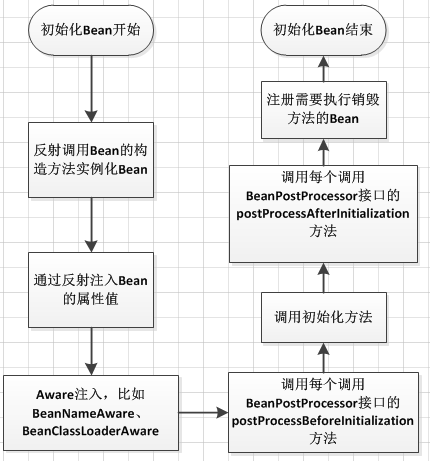
图只是起梳理流程作用,抛砖引玉,具体代码实现还需要网友朋友们照着代码自己去一步一步分析。
【Spring源码分析】非懒加载的单例Bean初始化过程(下篇)的更多相关文章
- Spring源码分析:非懒加载的单例Bean初始化过程(下)
上文Spring源码分析:非懒加载的单例Bean初始化过程(上),分析了单例的Bean初始化流程,并跟踪代码进入了主流程,看到了Bean是如何被实例化出来的.先贴一下AbstractAutowireC ...
- 【Spring源码分析】非懒加载的单例Bean初始化过程(上篇)
代码入口 上文[Spring源码分析]Bean加载流程概览,比较详细地分析了Spring上下文加载的代码入口,并且在AbstractApplicationContext的refresh方法中,点出了f ...
- Spring源码分析:非懒加载的单例Bean初始化过程(上)
上文[Spring源码分析]Bean加载流程概览,比较详细地分析了Spring上下文加载的代码入口,并且在AbstractApplicationContext的refresh方法中,点出了finish ...
- 【Spring源码分析】非懒加载的单例Bean初始化前后的一些操作
前言 之前两篇文章[Spring源码分析]非懒加载的单例Bean初始化过程(上篇)和[Spring源码分析]非懒加载的单例Bean初始化过程(下篇)比较详细地分析了非懒加载的单例Bean的初始化过程, ...
- Spring源码分析:非懒加载的单例Bean初始化前后的一些操作
之前两篇文章Spring源码分析:非懒加载的单例Bean初始化过程(上)和Spring源码分析:非懒加载的单例Bean初始化过程(下)比较详细地分析了非懒加载的单例Bean的初始化过程,整个流程始于A ...
- Spring源码分析(十五)获取单例
本文结合<Spring源码深度解析>来分析Spring 5.0.6版本的源代码.若有描述错误之处,欢迎指正. 之前我们讲解了从缓存中获取单例的过程,那么,如果缓存中不存在已经加载的单例be ...
- Spring源码剖析4:懒加载的单例Bean获取过程分析
本文转自五月的仓颉 https://www.cnblogs.com/xrq730 本系列文章将整理到我在GitHub上的<Java面试指南>仓库,更多精彩内容请到我的仓库里查看 https ...
- 【Spring源码分析系列】加载Bean
/** * Create a new XmlBeanFactory with the given input stream, * which must be parsable using DOM. * ...
- 从SpringBoot源码分析 配置文件的加载原理和优先级
本文从SpringBoot源码分析 配置文件的加载原理和配置文件的优先级 跟入源码之前,先提一个问题: SpringBoot 既可以加载指定目录下的配置文件获取配置项,也可以通过启动参数( ...
随机推荐
- PHPUnit-附录 A. 断言 (assert)
[http://www.phpunit.cn/manual/5.7/zh_cn/appendixes.assertions.html] 本附录列举可用的各种断言方法. assertArrayHasKe ...
- php 高并发下 秒杀处理思路
1.用额外的单进程处理一个队列,下单请求放到队列里,一个个处理,就不会有并发的问题了,但是要额外的后台进程以及延迟问题,不予考虑. 2.数据库乐观锁,大致的意思是先查询库存,然后立马将库存+1,然后订 ...
- php常用面试知识点
1.php基础 2.mysql基础 3.js基础 4.jq 5.正则 6.面向对象 7.分页类,购物车类,数据库类,上传类,图片处理类 8.smarty模板技术(以及自己写模板引擎) 9.ajax 1 ...
- 怎样才能收集到所有开发人员的blog(待续…)
第一个问题,如何找到尽可能多的博客地址? 1. 找到一个知名blog, 遍历这个博客的外链. 2. 遍历找到的外链,并以同样逻辑找到其他博客. 3. 如果遍历到的博客地址已经存在则停止遍历. 还有一种 ...
- CentOS7关闭/开启防火墙出现 Unit iptables.service failed to load
在vm中安装好tomcat,而且在liunx中使用nc命令可以返回成功,但是更换到window中访问不到tomcat的情况,是由于linux防火墙的问题造成的,传统的解决方式有2中 第一种解决方案: ...
- qt pro 设置编译参数,支持 xp
#兼容 XP VS2015 5.01 版本 win32 { QMAKE_LFLAGS_WINDOWS = /SUBSYSTEM:WINDOWS,5.01 QMAKE_LFLAGS_CONSOLE = ...
- PAT1119. Pre- and Post-order Traversals
思路:中序遍历–根结点,左子树,右子树:后序遍历–左子树,右子树,根结点. 那么在找到根结点之后就可以开始划分左右子树了.左子树的先序第一个节点是根,左子树的后序最后一个节点是根. 例如 1 2 3 ...
- 出行服务类API调用的代码示例合集:长途汽车查询、车型大全、火车票查询等
以下示例代码适用于 www.apishop.net 网站下的API,使用本文提及的接口调用代码示例前,您需要先申请相应的API服务. 长途汽车查询:全国主要城市的长途汽车时刻查询,汽车站查询 车型大全 ...
- 内置函数 -- filter 和 map
参考地址:http://www.cnblogs.com/sesshoumaru/p/6000788.html 英文文档: filter(function, iterable) Construct an ...
- openstack-ocata-环境准备1
Openstack环境准备1. 最少两台机器2. Controller:1核cpu 4G内存 5G硬盘3. Computer:1核cpu 2G内存 10G硬盘4. 至少两个网卡,本次采用四个网卡(1网 ...