
Sentinel 源码分析-限流原理
1. git clone senetinel 源码到本地,切换到release1.8分支
2. 找到FlowQpsDemo.java, 根据sentinel自带的案例来学习sentinel的原理
3. 先看main方法
    public static void main(String[] args) throws Exception {

        initFlowQpsRule();

        //tick();

        // first make the system run on a very low condition

        simulateTraffic();

        System.out.println("===== begin to do flow control");

        System.out.println("only 20 requests per second can pass");

    }
这里首先初始化了限流规则,然后是调用模拟流量,先看initFlowQpsRule
    private static void initFlowQpsRule() {

        List<FlowRule> rules = new ArrayList<FlowRule>();

        FlowRule rule1 = new FlowRule();

        rule1.setResource(KEY);

        // set limit qps to 20

        rule1.setCount(20);

        rule1.setGrade(RuleConstant.FLOW_GRADE_QPS);

        rule1.setLimitApp("default");

        rules.add(rule1);

        FlowRuleManager.loadRules(rules);

    }
这里通过设置 资源名称 和他对应的rule来绑定他们之间的映射关系,完成初始化,全局唯一
4. 再看simulateTraffic
private static void simulateTraffic() {

        for (int i = 0; i < threadCount; i++) {

            Thread t = new Thread(new RunTask());

            t.setName("simulate-traffic-Task");

            t.start();

        }

    }
这里启动了多条线程,来执行RunTask,runTask内部开始使用到了sentinel的API
static class RunTask implements Runnable {

        @Override

        public void run() {

            while (!stop) {

                Entry entry = null;

                try {

                    entry = SphU.entry(KEY);

                    // token acquired, means pass

                   ....

                } catch (BlockException e1) {

                    block.incrementAndGet();

                } catch (Exception e2) {

                    // biz exception

                } finally {

                    ...

                    if (entry != null) {

                        entry.exit();

                    }

                }

				....

            }

        }

    }
在调用SphU.entry(KEY)时,会调用sentinel的规则调用链,来计算是否可以允许执行后面的步骤,如果不允许,将直接抛出异常,如果是触发限流,将会抛出BlockException
通过debug 可以看到如下流程图:
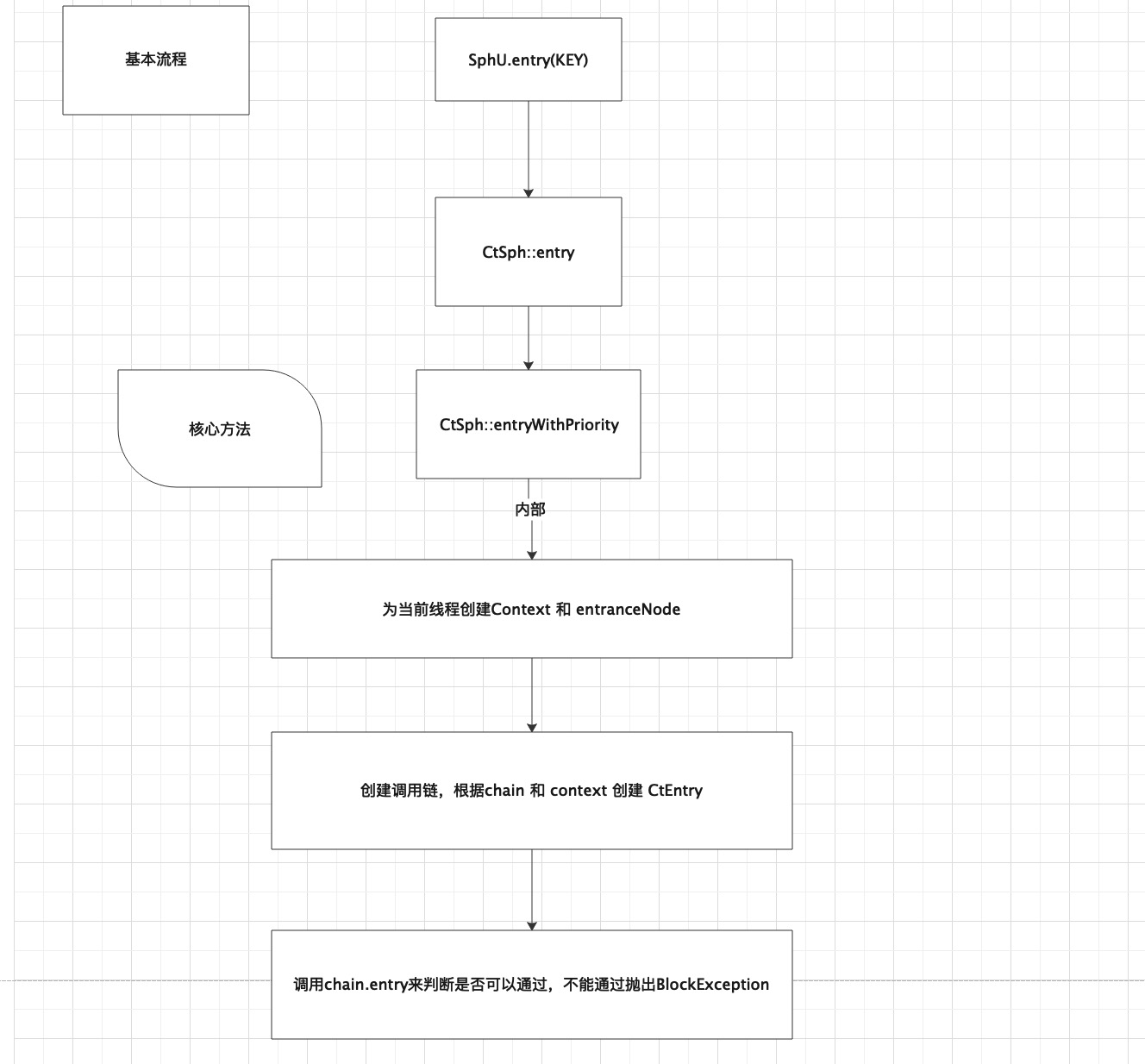
从流程图可以看出,核心是entryWithPriority
    private Entry entryWithPriority(ResourceWrapper resourceWrapper, int count, boolean prioritized, Object... args)

        throws BlockException {

        Context context = ContextUtil.getContext();

        if (context instanceof NullContext) {

            // The {@link NullContext} indicates that the amount of context has exceeded the threshold,

            // so here init the entry only. No rule checking will be done.

            return new CtEntry(resourceWrapper, null, context);

        }

        if (context == null) {

            // Using default context.

            context = InternalContextUtil.internalEnter(Constants.CONTEXT_DEFAULT_NAME);

        }

        // Global switch is close, no rule checking will do.

        if (!Constants.ON) {

            return new CtEntry(resourceWrapper, null, context);

        }

		// 创建调用链,一个资源名称绑定同一个调用链

        ProcessorSlot<Object> chain = lookProcessChain(resourceWrapper);

        /*

         * Means amount of resources (slot chain) exceeds {@link Constants.MAX_SLOT_CHAIN_SIZE},

         * so no rule checking will be done.

         */

        if (chain == null) {

            return new CtEntry(resourceWrapper, null, context);

        }

        Entry e = new CtEntry(resourceWrapper, chain, context);

        try {

			// 核心函数

            chain.entry(context, resourceWrapper, null, count, prioritized, args);

        } catch (BlockException e1) {

            e.exit(count, args);

            throw e1;

        } catch (Throwable e1) {

            // This should not happen, unless there are errors existing in Sentinel internal.

            RecordLog.info("Sentinel unexpected exception", e1);

        }

        return e;

    }
创建调用链就是去读取resource文件/resources/META-INF/services/com.alibaba.csp.sentinel.slotchain.ProcessorSlot,通过反射获得对象链
# Sentinel default ProcessorSlots

com.alibaba.csp.sentinel.slots.nodeselector.NodeSelectorSlot

com.alibaba.csp.sentinel.slots.clusterbuilder.ClusterBuilderSlot

com.alibaba.csp.sentinel.slots.logger.LogSlot

com.alibaba.csp.sentinel.slots.statistic.StatisticSlot

com.alibaba.csp.sentinel.slots.block.authority.AuthoritySlot

com.alibaba.csp.sentinel.slots.system.SystemSlot

com.alibaba.csp.sentinel.slots.block.flow.FlowSlot

com.alibaba.csp.sentinel.slots.block.degrade.DegradeSlot
其中限流我们主要关注 StatisticSlot 和 FlowSlot,StatisticSlot用于统计在单位统计时间内的流量情况,FlowSlot用于根据rule 和流量情况判断是否运行通行
先看FlowSlot的源码,调用链会调用到他的entry方法
    @Override

    public void entry(Context context, ResourceWrapper resourceWrapper, DefaultNode node, int count,

                      boolean prioritized, Object... args) throws Throwable {

		//这里检查是否可通行,不可将抛出异常,不往下走了

        checkFlow(resourceWrapper, context, node, count, prioritized);

        fireEntry(context, resourceWrapper, node, count, prioritized, args);

    }

    void checkFlow(ResourceWrapper resource, Context context, DefaultNode node, int count, boolean prioritized)

        throws BlockException {

        checker.checkFlow(ruleProvider, resource, context, node, count, prioritized);

    }
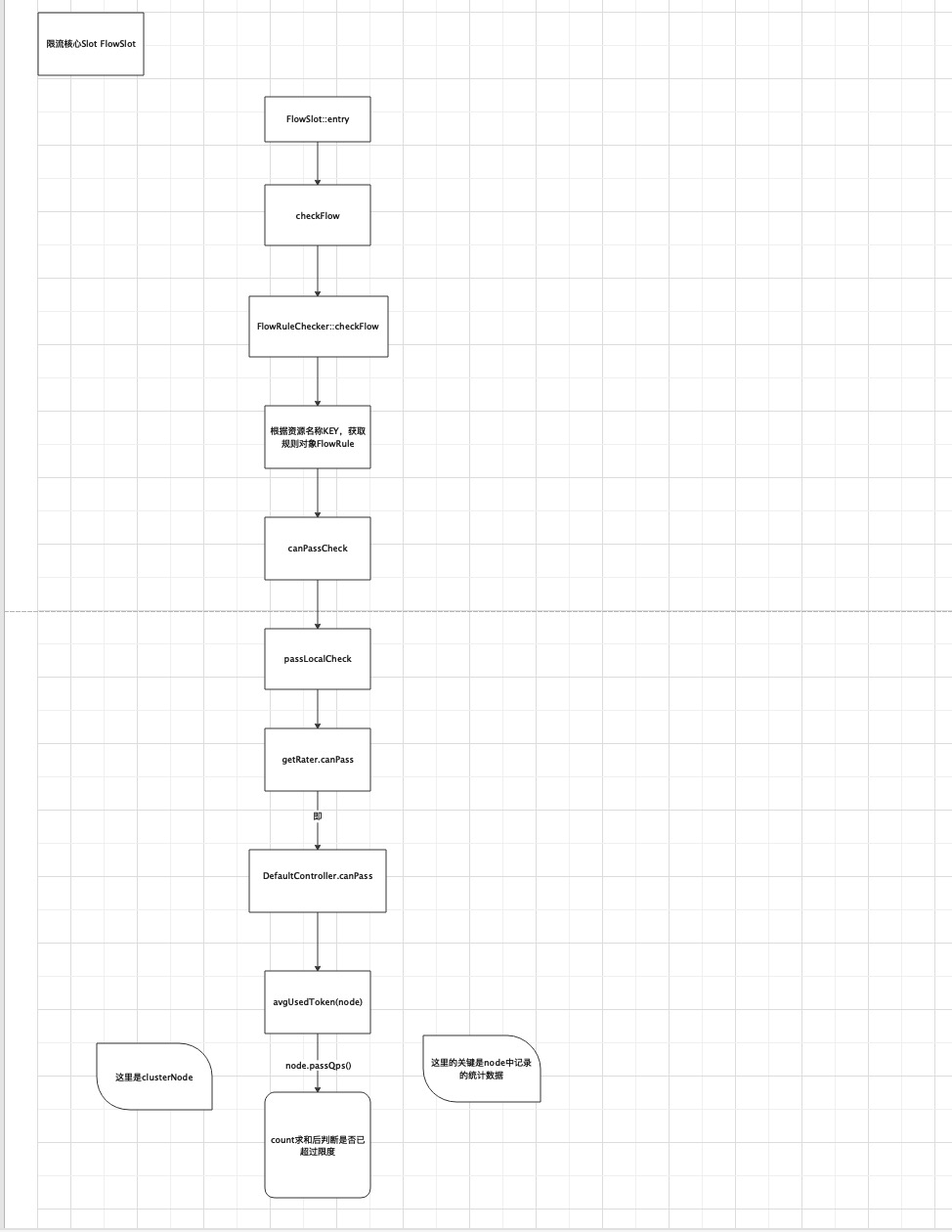
由流程图克制,最终是调用DefaultController.canPass来判断
    @Override

    public boolean canPass(Node node, int acquireCount, boolean prioritized) {

        int curCount = avgUsedTokens(node);

        if (curCount + acquireCount > count) {

            if (prioritized && grade == RuleConstant.FLOW_GRADE_QPS) {

                long currentTime;

                long waitInMs;

                currentTime = TimeUtil.currentTimeMillis();

                waitInMs = node.tryOccupyNext(currentTime, acquireCount, count);

                if (waitInMs < OccupyTimeoutProperty.getOccupyTimeout()) {

                    node.addWaitingRequest(currentTime + waitInMs, acquireCount);

                    node.addOccupiedPass(acquireCount);

                    sleep(waitInMs);

                    // PriorityWaitException indicates that the request will pass after waiting for {@link @waitInMs}.

                    throw new PriorityWaitException(waitInMs);

                }

            }

            return false;

        }

        return true;

    }

    private int avgUsedTokens(Node node) {

        if (node == null) {

            return DEFAULT_AVG_USED_TOKENS;

        }

        return grade == RuleConstant.FLOW_GRADE_THREAD ? node.curThreadNum() : (int)(node.passQps());

    }
通过avgUsedToken访问node(这里debug可知是ClusterNode,因为是default模式),去拿statisticsNode逻辑中缓存在node中的Qps数据,即单位时长内的流量值;这里面有一个重要的数据结构LeapArray<MetricBucket> , 是sentinel设计的一个 环形数组用于流量统计,将在下节讲解
到此FlowSlot的统计流程就讲解完毕,即每个请求进来,成功后都会缓存在对应的Node中进行计数,在FlowSlot中判断单位时间内是否已达到上限,达到则抛出异常,阻止继续向下,(或者调用配置好的handler执行)
Sentinel 源码分析-限流原理的更多相关文章
- Sentinel 源码分析- 熔断降级原理分析
直接从Sentinel 源码demo ExceptionRatioCircuitBreakerDemo看起 直接看他的main函数 public static void main(String[] a ...
- 5.Sentinel源码分析—Sentinel如何实现自适应限流?
Sentinel源码解析系列: 1.Sentinel源码分析-FlowRuleManager加载规则做了什么? 2. Sentinel源码分析-Sentinel是如何进行流量统计的? 3. Senti ...
- 6.Sentinel源码分析—Sentinel是如何动态加载配置限流的?
Sentinel源码解析系列: 1.Sentinel源码分析-FlowRuleManager加载规则做了什么? 2. Sentinel源码分析-Sentinel是如何进行流量统计的? 3. Senti ...
- 4.Sentinel源码分析— Sentinel是如何做到降级的?
各位中秋节快乐啊,我觉得在这个月圆之夜有必要写一篇源码解析,以表示我内心的高兴~ Sentinel源码解析系列: 1.Sentinel源码分析-FlowRuleManager加载规则做了什么? 2. ...
- 2. Sentinel源码分析—Sentinel是如何进行流量统计的?
这一篇我还是继续上一篇没有讲完的内容,先上一个例子: private static final int threadCount = 100; public static void main(Strin ...
- 3. Sentinel源码分析— QPS流量控制是如何实现的?
Sentinel源码解析系列: 1.Sentinel源码分析-FlowRuleManager加载规则做了什么? 2. Sentinel源码分析-Sentinel是如何进行流量统计的? 上回我们用基于并 ...
- 7.Sentinel源码分析—Sentinel是怎么和控制台通信的?
这里会介绍: Sentinel会使用多线程的方式实现一个类Reactor的IO模型 Sentinel会使用心跳检测来观察控制台是否正常 Sentinel源码解析系列: 1.Sentinel源码分析-F ...
- Guava 源码分析(Cache 原理 对象引用、事件回调)
前言 在上文「Guava 源码分析(Cache 原理)」中分析了 Guava Cache 的相关原理. 文末提到了回收机制.移除时间通知等内容,许多朋友也挺感兴趣,这次就这两个内容再来分析分析. 在开 ...
- 深入源码分析SpringMVC底层原理(二)
原文链接:深入源码分析SpringMVC底层原理(二) 文章目录 深入分析SpringMVC请求处理过程 1. DispatcherServlet处理请求 1.1 寻找Handler 1.2 没有找到 ...
随机推荐
- 【python基础】第02回 计算机基础2
上节内容回顾 1.绝对路径与相对路径 1.路径的概念 用来标识资源的位置 2.绝对路径 类似于全球GPS定位(给到任何人都可以顺利的找到相应的资源) eg: D:\aaa\a.txt 3.相对路径 需 ...
- Java开发问题:Column 'AAA' in where clause is ambiguous解决办法
当在java开发中遇到了Column 'AAA' in where clause is ambiguous问题时, 你需要去看看:多表查询的时候不同的表是否出现了相同名称相同的列, 如果存在,你需要在 ...
- SpringCloudAlibaba分布式流量控制组件Sentinel实战与源码分析-中
实战示例 控制台初体验 Sentinel的控制台启动后,控制台页面的内容数据都是空的,接下来我们来逐步操作演示结合控制台的使用,在上一节也已说明整合SpringCloud Alibaba第一步先加入s ...
- 通过memberlist库实现gossip管理集群以及集群数据交互
通过memberlist库实现gossip管理集群以及集群数据交互 概述 memberlist库的简单用法如下,注意下面使用for循环来执行list.Join,原因是一开始各节点都没有runing,直 ...
- 常用类-Java比较器
一.Comparable接口 Java中的对象,正常情况只能进行比较 == 或 !=不能使用 > 或 < 的,但是在实际开发中有需要进行对象的比较 comparable接口的使用举例: 1 ...
- 使用vs2022编译assimp,并基于OpenGL加载模型
Assimp :全称为Open Asset Import Library,这是一个模型加载库,可以导入几十种不同格式的模型文件(同样也可以导出部分模型格式).只要Assimp加载完了模型文件,我们就可 ...
- 005_面试题 Java_传递方式
面试题: 问:java是值传递还是引用传递? 答:java只有值传递,基本类型传递的是具体的数,引用类型传递的是具体的地址
- Solution -「CF645F」Cowslip Collections
设 \(f(i)\) 表示大小为 \(k\),\(\gcd\) 为 \(i\) 的方案数.\(F(i)\) 表示大小为 \(k\),\(\gcd\) 为 \(i\) 的倍数的方案数. 不难看出:\(F ...
- Solution -「CF520E」Pluses everywhere
Step 1. 转化一步题目:考虑有 \(n\) 个小球,每个小球有 \(a_i\) 的价值,\(m\) 个板子,把板子插进小球间的空隙,且不能插在第 \(1\) 个球之前与第 \(n\) 个球之后. ...
- Java---注解与反射
前言 近期在学习SSM框架的过程中发现在SSM框架中大量用到了反射与注解的知识,要想学好SSM框架,必须将注解与反射熟记于心,尤其是对Java反射机制的理解. 对于我这种记性不好的人来说"基 ...