
[LeetCode] 232. Implement Queue using Stacks_Easy tag: Design
Implement the following operations of a queue using stacks.
- push(x) -- Push element x to the back of queue.
- pop() -- Removes the element from in front of queue.
- peek() -- Get the front element.
- empty() -- Return whether the queue is empty.
Example:
MyQueue queue = new MyQueue();

queue.push(1);

queue.push(2);

queue.peek();  // returns 1

queue.pop();   // returns 1

queue.empty(); // returns false
Notes:
- You must use only standard operations of a stack -- which means only
push to top,peek/pop from top,size, andis emptyoperations are valid. - Depending on your language, stack may not be supported natively. You may simulate a stack by using a list or deque (double-ended queue), as long as you use only standard operations of a stack.
- You may assume that all operations are valid (for example, no pop or peek operations will be called on an empty queue).
这个题目可以用两个stack, 基本思路是如@elmirap提出来的Solution, 两种方式, 第一种是O(n) push, 其他都是O(1)
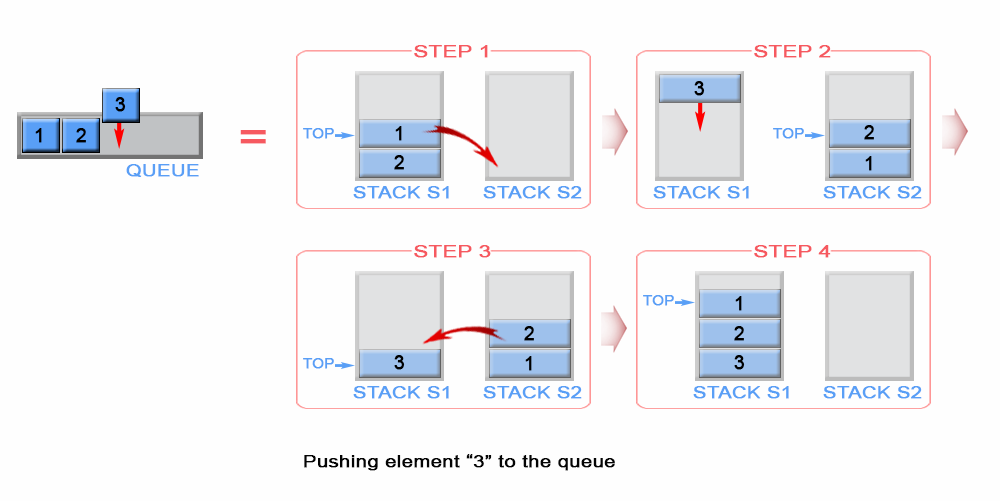
Code:
class MyQueue(object):

    ##Solution

    # two stacks, O(n) push operation

    def __init__(self):

        """

        Initialize your data structure here.

        """

        self.stack = []

        self.backup = []

    def push(self, x):

        """

        Push element x to the back of queue.

        :type x: int

        :rtype: void

        """

        while self.stack:

            self.backup.append(self.stack.pop())

        self.stack.append(x)

        while self.backup:

            self.stack.append(self.backup.pop())

    def pop(self):

        """

        Removes the element from in front of queue and returns that element.

        :rtype: int

        """

        return self.stack.pop()

    def peek(self):

        """

        Get the front element.

        :rtype: int

        """

        return self.stack[-1]

    def empty(self):

        """

        Returns whether the queue is empty.

        :rtype: bool

        """

        return not self.stack

# Your MyQueue object will be instantiated and called as such:

# obj = MyQueue()

# obj.push(x)

# param_2 = obj.pop()

# param_3 = obj.peek()

# param_4 = obj.empty()
第二种方式, 平均pop为O(1), 其他都为O(1), 思路实际上类似, 但是在Stack2不急着将其搬回stack1, 因为在stack1搬到stack2之后已经将最后的放在最下面了.所以节约了时间.
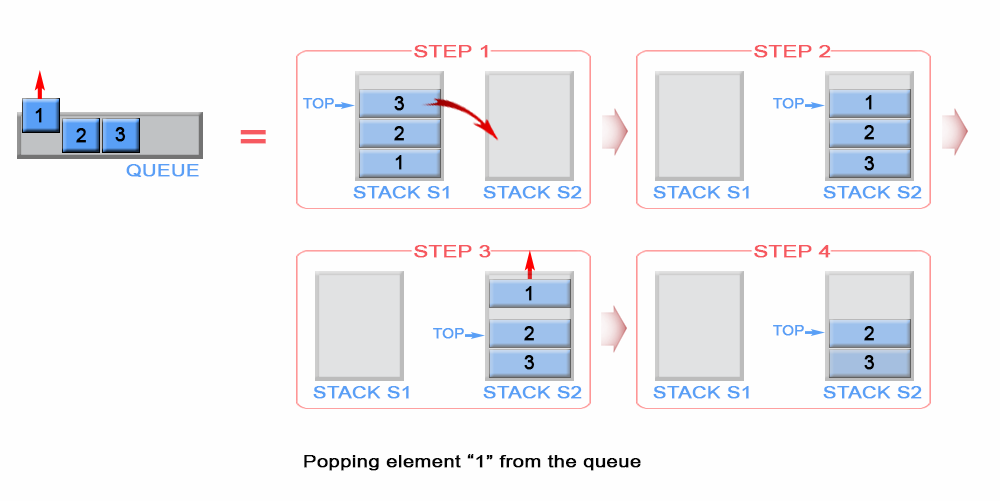
Code:
class MyQueue:

    def __init__(self):

        """

        Initialize your data structure here.

        """

        self.stack = []

        self.queue = []

    def push(self, x):

        """

        Push element x to the back of queue.

        :type x: int

        :rtype: void

        """

        self.stack.append(x)

    def pop(self):

        """

        Removes the element from in front of queue and returns that element.

        :rtype: int

        """

        if not self.queue:

            while self.stack:

                self.queue.append(self.stack.pop())

        return self.queue.pop()

    def peek(self):

        """

        Get the front element.

        :rtype: int

        """

        return self.queue[-1] if self.queue else self.stack[0]

    def empty(self):

        """

        Returns whether the queue is empty.

        :rtype: bool

        """

        return not self.stack and not self.queue

# Your MyQueue object will be instantiated and called as such:

# obj = MyQueue()

# obj.push(x)

# param_2 = obj.pop()

# param_3 = obj.peek()

# param_4 = obj.empty()
[LeetCode] 232. Implement Queue using Stacks_Easy tag: Design的更多相关文章
- Leetcode 232 Implement Queue using Stacks 和 231 Power of Two
1. 232 Implement Queue using Stacks 1.1 问题描写叙述 使用栈模拟实现队列.模拟实现例如以下操作: push(x). 将元素x放入队尾. pop(). 移除队首元 ...
- [LeetCode] 232. Implement Queue using Stacks 用栈来实现队列
Implement the following operations of a queue using stacks. push(x) -- Push element x to the back of ...
- (easy)LeetCode 232.Implement Queue using Stacks
Implement the following operations of a queue using stacks. push(x) -- Push element x to the back of ...
- Java [Leetcode 232]Implement Queue using Stacks
题目描述: Implement the following operations of a queue using stacks. push(x) -- Push element x to the b ...
- LeetCode 232 Implement Queue using Stacks
Implement the following operations of a queue using stacks. push(x) -- Push element x to the back of ...
- [LeetCode] 225. Implement Stack using Queues_Easy tag: Design
Implement the following operations of a stack using queues. push(x) -- Push element x onto stack. po ...
- Java for LeetCode 232 Implement Queue using Stacks
Stack<Integer> stack=new Stack<Integer>(); public void push(int x) { stack.push(x); } // ...
- Leetcode 232 Implement Queue using Stacks STL
本题用两个栈实现队列,用栈的基本操作去实现队列的所有基本操作push(),pop(),peek()以及empty() sa作为输入栈,sb作为输出栈,将sa输入元素的反转过来放到sb中 push与sa ...
- LeetCode 232 Implement Queue using Stacks 两个栈实现队列
class MyQueue { public: /** Initialize your data structure here. */ MyQueue() { } /** Push element x ...
随机推荐
- PV&UV&IP之间的区别和联系
PV PV是网站分析的一个术语,用于衡量网站用户访问的网页的数量.对于广告投入商来说,PV值可以预期它可以带来多少收入广告,一般来说,OV与来访者的数量成正比,但是PV并不直接决定页面的真实来访者数量 ...
- AD采样模块采集带模拟量真空表值的实验
实验采用带模拟量,分辨率为1-5V,量程为0--101kpa的真空表 数据采集模块采用DAM-8021, 16位模块 算法描述如下: 真空表读数范围: 0到-101kpa 模拟量输出: 1-5V 一 ...
- C# 给主程序签名及第三方dll强签名操作
1.给主程序添加签名 添加完成后会自动生成一个*.pfx文件. 2.给第三方程序添加强签名方法: 本文以WAPIWrapperCSharp.dll为例,使用vs Tools下的工具命令 ...
- [SCOI2011]飞镖[数学模拟]
2335: [SCOI2011]飞镖 Time Limit: 10 Sec Memory Limit: 128 MBSubmit: 482 Solved: 152[Submit][Status][ ...
- 打开指定目录路径的CMD命令行窗口
1.打开目录文件夹, Shift + 右键 2.会直接打开CMD所在的目录路径
- 用Android Studio导出jar给Unity3D用
1.新建一个Android Studio工程,选择空Activity 2.创建一个Module 3.将Unity的依赖jar包拷贝到工程的libs下 4.增加Java代码 内容修改如下 package ...
- 《代码大全》阅读笔记-33-个人性格(personal character)
很多好的编程做法都能减轻你的大脑灰质细胞(指脑力)的负担. 将系统"分解",是为了使之易于理解("设计的层次"). 进行审查.评审和测试正是为了减少人为失误.如 ...
- html to openxml
Html to OpenXml How to start ? Create a new console application. Add a reference to DocumentFormat.O ...
- iOS - WKWebView的使用和长按手势识别二维码并保存
WKWebView的图片二维码使用: .长按手势识别二维码并保存 .识别二维码跳转;不是链接显示内容点击网址跳转 .解决url包含中文不能编码的问题 .文字带链接网址,点击跳转 .纯文本-文字html ...
- Java 多线程 ---- 线程中this与 Thread.currentThread()线程的区别
总结起来一句话:在Thread中调用this其实就是调用Thread私有Runnable类型的target,target是Thread类的一个属性,而Thread.currentThread()是指新 ...