
分析轮子(一)-ArrayList.java
前言:之前也看过一些JDK源码,不过没有留下痕迹,经久年月就淡忘了,现在的时机也差不多了,想再看一次,并且记录下来自己的感想,于是从自己使用最多最熟悉的地方开始!并且看的过程中,我希望自己思考一下如下的问题:
1:如果让我设计,我怎么玩?
2:原作者为什么这样设计?
3:它的底层实现是什么玩意?有什么特点?
4:平时使用的时候,需要注意些什么东西?
5:原设计有什么特别好玩的点?
注:玩的是JDK1.7版本
一:先上类的继承结构图

细细看上图,其实就能透露出一些关键的信息,比如:
1:实现Serializable接口,表示ArrayList是可序列化的
2:实现RandomAccess接口,表示ArrayList是可快速随机访问的
3:实现Cloneable接口,表示ArrayList是可以调用Object.clone方法的
4:实现Iterable接口,表示允许ArrayList使用迭代遍历的方式循环
二:再看一下他的底层实现数据结构
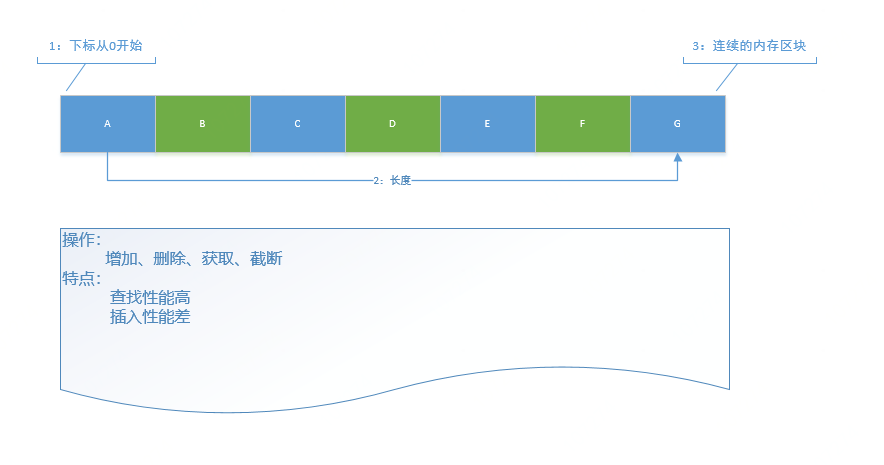
三:然后从源码中找点好玩的东西
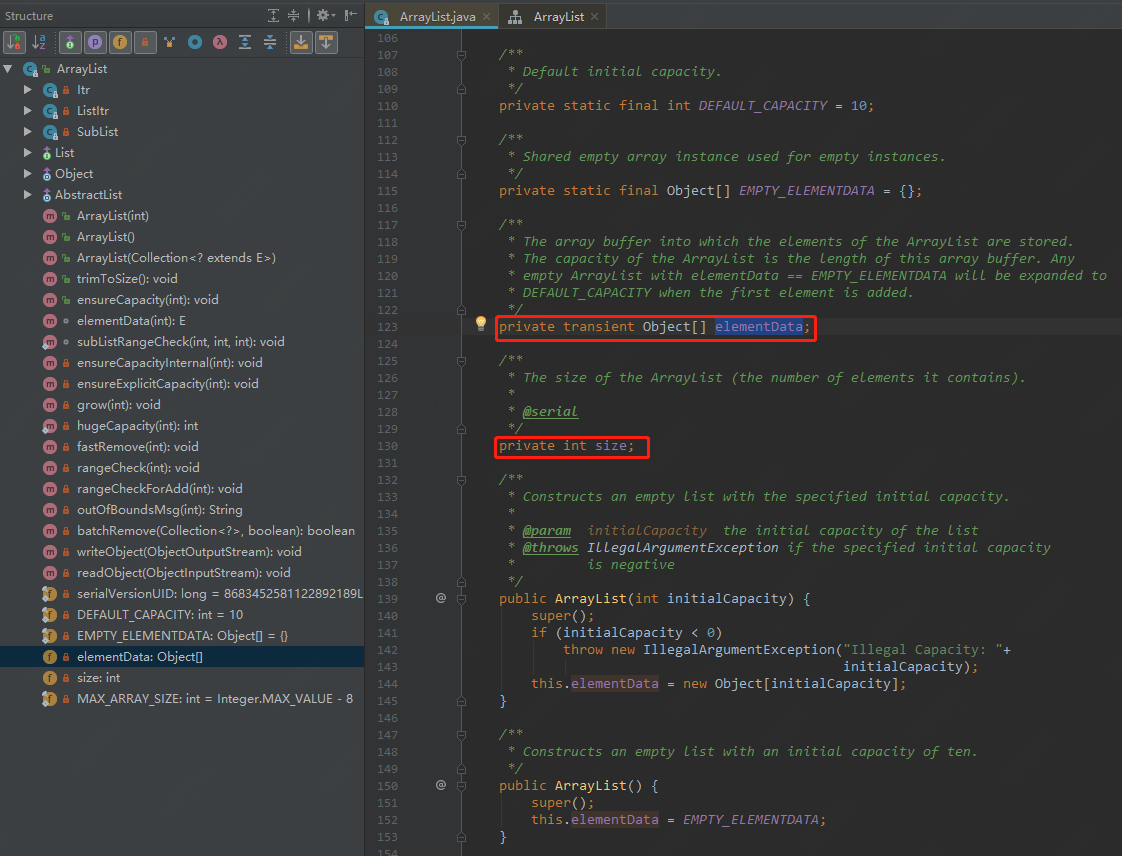
从源码中可以看出ArrayList的底层数据结构是一个数组,所以,它所有的操作都是围绕着数组来玩的。
1)观察如下代码,我们可以了解到如下信息
private 表示不能被类外操作
transient 表示通过实现Serializable接口的方式来序列化时,被其标识的类变量可以不被序列化
Object[] 表示ArrayList的通用性
    /**

     * The array buffer into which the elements of the ArrayList are stored.

     * The capacity of the ArrayList is the length of this array buffer. Any

     * empty ArrayList with elementData == EMPTY_ELEMENTDATA will be expanded to

     * DEFAULT_CAPACITY when the first element is added.

     */

    private transient Object[] elementData;
2)size表示数组中元素的个数,对于数组数据结构而言,数据长度相当重要
    /**

     * The size of the ArrayList (the number of elements it contains).

     *

     * @serial

     */

    private int size;
3)观察如下源码,我们可以看到如下信息
ArrayList的无参构造函数,初始化的数组对象是一个空数组
ArrayList的有参构造函数,初始化的对象是根据指定的空间大小来分配数组的空间的
ArrayList是一个动态扩展的数据集合从 grow 方法中可见一二,并且当它的空间不够的时候会扩展为(大概是这样他还有一些最大最小长度的判断逻辑): 原总长度+原总长度的一半
当然ArrayList的元素的值也是有限的最大是 Integer.MAX_VALUE
    /**

     * Shared empty array instance used for empty instances.

     */

    private static final Object[] EMPTY_ELEMENTDATA = {};
    /**

     * Constructs an empty list with an initial capacity of ten.

     */

    public ArrayList() {

        super();

        this.elementData = EMPTY_ELEMENTDATA;

    }
    /**

     * Constructs an empty list with the specified initial capacity.

     *

     * @param  initialCapacity  the initial capacity of the list

     * @throws IllegalArgumentException if the specified initial capacity

     *         is negative

     */

    public ArrayList(int initialCapacity) {

        super();

        if (initialCapacity < 0)

            throw new IllegalArgumentException("Illegal Capacity: "+

                                               initialCapacity);

        this.elementData = new Object[initialCapacity];

    }
    /**

     * Appends the specified element to the end of this list.

     *

     * @param e element to be appended to this list

     * @return <tt>true</tt> (as specified by {@link Collection#add})

     */

    public boolean add(E e) {

        ensureCapacityInternal(size + 1);  // Increments modCount!!

        elementData[size++] = e;

        return true;

    }
    private void ensureCapacityInternal(int minCapacity) {

        if (elementData == EMPTY_ELEMENTDATA) {

            minCapacity = Math.max(DEFAULT_CAPACITY, minCapacity);

        }

        ensureExplicitCapacity(minCapacity);

    }
    private void ensureExplicitCapacity(int minCapacity) {

        modCount++;

        // overflow-conscious code

        if (minCapacity - elementData.length > 0)

            grow(minCapacity);

    }
    /**

     * Increases the capacity to ensure that it can hold at least the

     * number of elements specified by the minimum capacity argument.

     *

     * @param minCapacity the desired minimum capacity

     */

    private void grow(int minCapacity) {

        // overflow-conscious code

        int oldCapacity = elementData.length;

        int newCapacity = oldCapacity + (oldCapacity >> 1);

        if (newCapacity - minCapacity < 0)

            newCapacity = minCapacity;

        if (newCapacity - MAX_ARRAY_SIZE > 0)

            newCapacity = hugeCapacity(minCapacity);

        // minCapacity is usually close to size, so this is a win:

        elementData = Arrays.copyOf(elementData, newCapacity);

    }

    private static int hugeCapacity(int minCapacity) {

        if (minCapacity < 0) // overflow

            throw new OutOfMemoryError();

        return (minCapacity > MAX_ARRAY_SIZE) ?

            Integer.MAX_VALUE :

            MAX_ARRAY_SIZE;

    }
    /**

     * The maximum size of array to allocate.

     * Some VMs reserve some header words in an array.

     * Attempts to allocate larger arrays may result in

     * OutOfMemoryError: Requested array size exceeds VM limit

     */

    private static final int MAX_ARRAY_SIZE = Integer.MAX_VALUE - 8;
4)观察如下源代码,可以看到ArrayList是可以放null的,并且删除元素涉及到数据的移位复制操作是比较耗费性能的
/**
* Removes the first occurrence of the specified element from this list,
* if it is present. If the list does not contain the element, it is
* unchanged. More formally, removes the element with the lowest index
* <tt>i</tt> such that
* <tt>(o==null ? get(i)==null : o.equals(get(i)))</tt>
* (if such an element exists). Returns <tt>true</tt> if this list
* contained the specified element (or equivalently, if this list
* changed as a result of the call).
*
* @param o element to be removed from this list, if present
* @return <tt>true</tt> if this list contained the specified element
*/
public boolean remove(Object o) {
if (o == null) {
for (int index = 0; index < size; index++)
if (elementData[index] == null) {
fastRemove(index);
return true;
}
} else {
for (int index = 0; index < size; index++)
if (o.equals(elementData[index])) {
fastRemove(index);
return true;
}
}
return false;
}
    /*

     * Private remove method that skips bounds checking and does not

     * return the value removed.

     */

    private void fastRemove(int index) {

        modCount++;

        int numMoved = size - index - 1;

        if (numMoved > 0)

            System.arraycopy(elementData, index+1, elementData, index,

                             numMoved);

        elementData[--size] = null; // clear to let GC do its work

    }
四:小结
通过观察ArrayList的源码,发现如下一些特点:
1:ArrayList的底层数据结构是数组,所有,数组这种数据结构的特点ArrayList应该也是具有的,这是他的本质
2:数组或者ArrayList这种数据结构的特点是,随机访问、循环遍历等性能好,指定位置插入或删除元素会涉及数组元素的复制,性能较差
3:ArrayList的底层数据是Object[],所以,具有很好的通用性,null也是可以存入ArrayList中的
4:ArrayList在添加元素的时候,首先会进行容量检测,如果不够会进行动态扩容
5:ArrayList使用的非常之多,使用起来也非常简单,不过看源码并不复杂,但是有些东西如果完全弄清楚也非易事,下面我会补充一些内容以供扫除阅读源码产生的一些障碍
分析轮子(一)-ArrayList.java的更多相关文章
- 分析轮子(五)- Vector.java
注:玩的是JDK1.7版本 一: 先上类图,从类图上看和 ArrayList.java 非常相像,可查看 分析轮子(一)-ArrayList.java 二:然后看源码,发现和 ArrayList.ja ...
- 分析轮子(四)- 我也玩一把 Serializable.java
前言:在写 分析轮子(一)-ArrayList.java 的时候曾经下过一个结论 “实现Serializable接口,表示ArrayList是可序列化的”,这个结论是以往学习的经验所得,并且平时在编程 ...
- 分析轮子(六)- LinkedList.java
注:玩的是JDK1.7版本 一:先上类的继承结构图 二:再看一下他的底层实现数据结构 三:然后从源码中找点好玩的东西 1)双向链表的结构构成元素,头指针.尾指针.节点信息(前向指针.后向指针.节点信息 ...
- 分析轮子(二)- << ,>>,>> (左移、右移、无符号右移)
前言:写 分析轮子(一)-ArrayList.java 的时候看到源码中有 int newCapacity = oldCapacity + (oldCapacity >> 1); 这样的代 ...
- 分析轮子(八)- List.java 各种遍历方式及遍历时移除元素的方法
注:玩的是JDK1.7版本 1:先尝栗子,再分析,代码简单,注释清晰,可自玩一下 /** * @description:测试集合遍历和移除元素的方式 * @author:godtrue * @crea ...
- 分析轮子(七)- RandomAccess.java
1:还是先上一个类的继承关系比较图吧! 2:看一下 RandomAccess.java 的源码,空空如也,什么都没有,那她有什么用处呢? /** * Marker interface used by ...
- 分析轮子(十)- HashMap.java 之概念梳理
注:玩的是JDK1.7版本 一:还是原来的风格,先上一下类的继承关系图,这样能够比较清楚的知道此类的相关特性 二:HashMap.java 的代码比较难看,所以,我看了几天,写的话也分开来写,这样能表 ...
- 分析轮子(九)- Cloneable.java
注:玩的是JDK1.7版本 一:Cloneable.java 接口也是标记接口,所以,它没有任何方法和属性,实现此接口表示的意思是:可以调用 Object.java 类的 clone() 方法,进行简 ...
- 学生管理系统开发代码分析笔记:jsp+java bean+servlet技术
1 序言 学习java web的时候很渴望有一份完整的项目给我阅读,而网上的大部分项目拿过来都无法直接用,好不容易找到了一个学生管理系统也是漏洞百出.在此,我将边修改边学习这份代码,并且加上完全的注释 ...
随机推荐
- POJ 2001 Shortest Prefixes 【Trie树】
<题目链接> 题目大意: 找出能唯一标示一个字符串的最短前缀,如果找不出,就输出该字符串. 解题分析: Trie树的简单应用,对于每个单词的插入,都在相应字符对应的节点 num 值+1 , ...
- Effective Java 第三版——59. 熟悉并使用Java类库
Tips 书中的源代码地址:https://github.com/jbloch/effective-java-3e-source-code 注意,书中的有些代码里方法是基于Java 9 API中的,所 ...
- 基于jest和puppeteer的前端自动化测试实战
前端测试现状 经常听到后端同学说“单元测试”,前端写过测试用例的有多少?答案是:并不多,为什么呢?两个主要原因 1.前端属于GUI软件,浏览器众多,兼容问题让人头大,用户量有一定规模的浏览器包括: I ...
- SpringBoot整合mongoDB
MongoDB 是一个介于关系数据库和非关系数据库之间的产品,是非关系数据库当中功能最丰富,最像关系数据库的. 这一片文章介绍一个springboot整合mongodb,如果你了解整合mysql之类的 ...
- 说说nginx,iis,apache,tomcat
一.nginx ngnix是反向代理服务器,它是代理,本身并不执行,是个传话筒,把用户提交的请求转发给web服务器,再把web服务器的结果转发给用户.为了提高性能,启用反向代理,实际的web服务器可以 ...
- 1038. Jewels And Stones
描述 给定字符串J代表是珠宝的石头类型,而S代表你拥有的石头.S中的每个字符都是你拥有的一个石头. 你想知道你的石头有多少是珠宝. J中的字母一定不同,J和S中的字符都是字母. 字母区分大小写,因此& ...
- 编辑datagridview单元格
以这3种为例,最简单的是第三种,直接让单元格处于可编辑状态,当完成编辑后触发CellEndEdit事件,最后对输入的数据进行处理. private DateTimePicker dtp = new D ...
- C#中form窗体之间的传递几个方法
- 英语口语练习系列-C34-儿童-谈论物品和人-武陵春
词汇-儿童 child a child favorite game toy regulation breadwinner dominant selfish ancestor custom belief ...
- AVL树的理解及自写AVL树
AVL树是最先发明的自平衡二叉查找树.在AVL树中任何节点的两个子树的高度最大差别为一,所以它也被称为高度平衡树.查找.插入和删除在平均和最坏情况下都是O(log n).增加和删除可能需要通过一次或多 ...