
视觉中的深度学习方法CVPR 2012 Tutorial Deep Learning Methods for Vision
| Deep Learning Methods for Vision
CVPR 2012 Tutorial 9:00am-5:30pm, Sunday June 17th, Ballroom D (Full day) Rob Fergus (NYU), |
| Overview
Hand-designed features such as SIFT and HOG underpin many successful object recognition approaches. However, these only capture low-level edge information and it has proven difficult to design features that effectively capture mid-level cues (e.g. edge intersections) or high-level representation (e.g. object parts). However, recent developments in machine learning, known as "Deep Learning", have shown how hierarchies of features can be learned in an unsupervised manner directly from data. This tutorial will describe these feature learning approaches, as applied to images and video. The tutorial will start by motivating the need to learn features, rather than hand-craft them. It will then introduce several basic architectures, explaining how they learn features, and showing how they can be "stacked" into hierarchies that can extract multiple layers of representation. Throughout, links will be drawn between these methods and existing approaches to recognition, particularly those involving hierarchical representations. The final part of the lecture will examine the current performances obtained by feature learning approaches on a range of standard vision benchmarks, highlighting their strengths and weaknesses. |
Schedule
| 9:00am | Introduction PPT | (Fergus) | [1h] |
| 10:00am | Coffee Break | [30m] | |
| 10:30am | Sparse Coding PPT | (Yu) | [1h] |
| 11:30am | Neural Networks PDF Code | (Ranzato) | [1h] |
| 12:30pm | Lunch | [1h] | |
| 1:30pm | Restricted Boltzmann Machines PDF | (Lee) | [1h] |
| 2:30pm | Deep Boltzmann Machines PDF | (Salakhutdinov) | [30m] |
| 3:00pm | Coffee Break | [30m] | |
| 3:30pm | Transfer Learning PDF | (Salakhutdinov) | [30m] |
| 4:00pm | Motion and Video PDF | (Taylor) | [1h] |
| 5:00pm | Summary / Q & A | [30m] |
Speaker Biographies
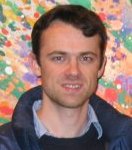 |
Rob Fergus
Rob Fergus is an Assistant Professor of Computer Science at the Courant Institute of Mathematical Sciences, New York University. He received a Masters in Electrical Engineering with Prof. Pietro Perona at Caltech, before completing a PhD with Prof. Andrew Zisserman at the University of Oxford in 2005. Before coming to NYU, he spent two years as a post-doc in the Computer Science and Artificial Intelligence Lab (CSAIL) at MIT, working with Prof. William Freeman. He has received several awards including a CVPR best paper prize (2003), a Sloan Fellowship (2011) and an NSF Career award (2012). |
|
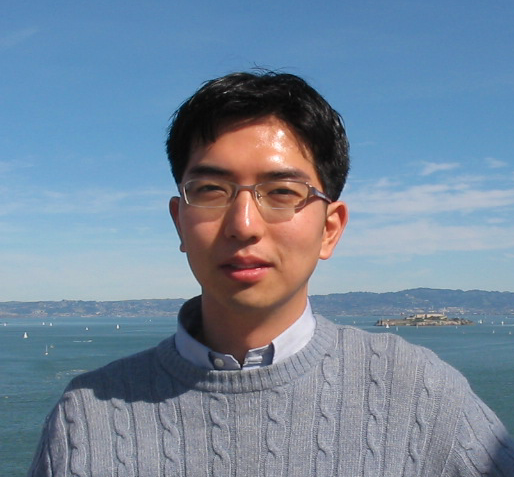 |
Honglak Lee
Honglak Lee is currently an Assistant Professor of Computer Science at the University of Michigan, Ann Arbor. He recevied his PhD from Stanford Unviersity, advised by Andrew Ng. His research interests lie in machine learning and its application to a range of perception problems in the fields of artificial intelligence, such as computer vision, robotics, audio recognition, and text processing. |
|
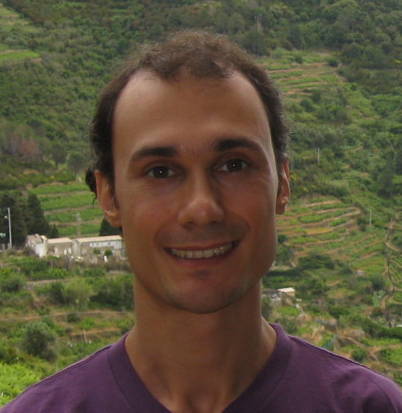 |
Marc'Aurelio Ranzato
Marc'Aurelio Ranzato is currently a Research Scientist at Google. Before joining Google in the fall 2011, he was a post-doctoral fellow in Machine Learning, University of Toronto, working with Geoffrey Hinton. He did his Ph.D. in Computer Science at New York University in Yann LeCun's group. His interestes include Machine Learning, Computer Vision and, more generally, Artificial Intelligence. He has worked on unsupervised learning algorithms, in particular, hierarchical models and deep networks. |
|
 |
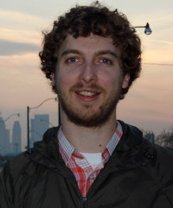
Ruslan Salakhutdinov
Ruslan Salakhutdinov received his PhD in machine learning from the University of Toronto in 2009. After spending two post-doctoral years at the Massachusetts Institute of Technology Artificial Intelligence Lab, he joined the University of Toronto as an Assistant Professor in the Departments of Statistics and Computer Science. Dr. Salakhutdinov's primary interests lie in statistical machine learning, Bayesian statistics, probabilistic graphical models, and large-scale optimization. He is the recipient of the NSERC Postdoctoral Fellowship, Canada Graduate Scholarship, and a Scholar of the Canadian Institute for Advanced Research. |
|
 |
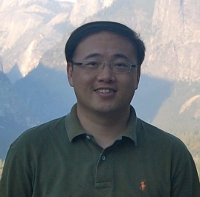
Graham Taylor
Graham Taylor recently joined University of Guelph as an Assistant Professor of Engineering. He was previously a postdoc at NYU, working with Chris Bregler, Rob Fergus, and Yann LeCun. He completed his PhD at the University of Toronto in 2009, co-advised by Geoffrey Hinton and Sam Roweis. His interests are in statistical machine learning and biologically-inspired computer vision, with an emphasis on unsupervised learning and time series analysis. Much of his work studies human movement. |
|
 |
Kai Yu
Kai Yu recently jointed Baidu as Director of Multimedia Department, in charge of search technologies and products involving video, speech and music. Previously, he was head of the Media Analytics Department of NEC Labs in Silicon Valley, California, leading the development of intelligent systems for machine learning, image recognition, multimedia search, video surveillance, recommendation, data mining, and human-computer interface. He obtained PhD in Computer Science at University of Munich, Germany. |
Acknowledgments
This work was partially supported by the National Science Foundation Career Award #1149633. Any opinions, findings, and conclusions or recommendations expressed in this material are those of the author(s) and do not necessarily reflect the views of the National Science Foundation.
from: http://cs.nyu.edu/~fergus/tutorials/deep_learning_cvpr12/
视觉中的深度学习方法CVPR 2012 Tutorial Deep Learning Methods for Vision的更多相关文章
- 论文阅读:Face Recognition: From Traditional to Deep Learning Methods 《人脸识别综述:从传统方法到深度学习》
论文阅读:Face Recognition: From Traditional to Deep Learning Methods <人脸识别综述:从传统方法到深度学习> 一.引 ...
- 深度学习编译与优化Deep Learning Compiler and Optimizer
深度学习编译与优化Deep Learning Compiler and Optimizer
- 深度学习国外课程资料(Deep Learning for Self-Driving Cars)+(Deep Reinforcement Learning and Control )
MIT(Deep Learning for Self-Driving Cars) CMU(Deep Reinforcement Learning and Control ) 参考网址: 1 Deep ...
- 用500行Julia代码开始深度学习之旅 Beginning deep learning with 500 lines of Julia
Click here for a newer version (Knet7) of this tutorial. The code used in this version (KUnet) has b ...
- 浅谈深度学习中的激活函数 - The Activation Function in Deep Learning
原文地址:http://www.cnblogs.com/rgvb178/p/6055213.html版权声明:本文为博主原创文章,未经博主允许不得转载. 激活函数的作用 首先,激活函数不是真的要去激活 ...
- 最佳实践:深度学习用于自然语言处理(Deep Learning for NLP Best Practices) - 阅读笔记
https://www.wxnmh.com/thread-1528249.htm https://www.wxnmh.com/thread-1528251.htm https://www.wxnmh. ...
- 15 cvpr An Improved Deep Learning Architecture for Person Re-Identification
http://www.umiacs.umd.edu/~ejaz/ * 也是同时学习feature和metric * 输入一对图片,输出是否是同一个人 * 包含了一个新的层: include a lay ...
- Deep learning for visual understanding: A review 视觉理解中的深度学习:回顾 之一
Deep learning for visual understanding: A review 视觉理解中的深度学习:回顾 ABSTRACT: Deep learning algorithms ar ...
- Deep Learning(深度学习)学习笔记整理
申明:本文非笔者原创,原文转载自:http://www.sigvc.org/bbs/thread-2187-1-3.html 4.2.初级(浅层)特征表示 既然像素级的特征表示方法没有作用,那怎样的表 ...
随机推荐
- C#操作XML文档---基础
增查改删代码如下 public void CreateXML() { XmlDocument xml = new XmlDocument(); xml.AppendChild(xml.CreateXm ...
- JS引用另外JS文件的顺序问题。
1.在a.js中可以引用b.js文件,这样就可以在网页中只引用a.js文件,从而可以使用a.js和b.js文件中的所有方法. 引用格式如下:document.write('<script typ ...
- LVS DR脚本 解析
vip.sh #!/bin/bash 192.168.2.240 broadcast 192.168.2.240 netmask 255.255.255.255 up route add -host ...
- 纪念逝去的岁月——C++实现一个队列(使用类模板)
1.代码 2.运行结果 1.代码 #include <stdio.h> #include <string.h> template <typename T> clas ...
- 如何在Linux中使用rz/sz工具进行文件传输
在Linux中,使用rz/sz工具能够进行Linux和windows之间的文件传输,那么要如何使用rz/sz工具工具呢?下面小编就给大家介绍下Linux下如何使用rz/sz工具进行文件传输,一起来学习 ...
- sencha 安装、学习
sencha touch 是Extjs 的手机版,Extjs是创建富客户端的AJAX应用中的重量级框架,sencha touch当然就是面向触摸设备的重量级js框架,在做基于桌面的网页时经常用的js ...
- select()函数 timval问题
如果select调用中设置了等待时间,那么每次调用时都需要重新对这个时间赋值.例如: struct timval tv; while(1) { ........; tv.tv_sec = 2; ...
- Android自定义UI模板
第一步:自定义xml属性 新建一个android项目,在values文件夹中新建一个atts.xml的文件,在这个xml文件中声明我们一会在使用自定义控件时候需要指明的属性.atts.xml < ...
- Introduction of Team Member
1. 姓名:xx 性别:男 出生日期:1993.04.16 班级:110616班 职务:小班长 爱好:唱歌.排球 2. 姓名:xxx 性别:男 出生日期:1993.4.20 3. 姓名:xxx 性别: ...
- SQL servcer 时间日期函数、数据类型转换
1.时间日期函数 2.数据类型转换 3.习题 建立两个表,一个部门表,一个人员表.部门:部门的编号,部门的名称,部门的职责.人员:人员的编号,姓名,年龄,性别,cid所属部门