
c++ what happens when a constructor throws an exception and leaves the object in an inconsistent state?
为什么会想到这个问题?因为我总是不自觉地将c++和java进行对比。java对这种情况的处理方式是constructor返回一个null,然后已经构造的objects交给Garbage Collector处理,那么c++没有Garbage Collector,会是怎么样的一种情况呢?
为了找到这个问题的答案,我做了个小实验,代码见main.cpp, Box.h, Box.cpp
运行之前,我的设想是box->b的值为"NULL",因此程序输出如下:
e.what() : a < 0
b == NULL
而事实是,在输出e.what() : a < 0之后,程序便崩溃了
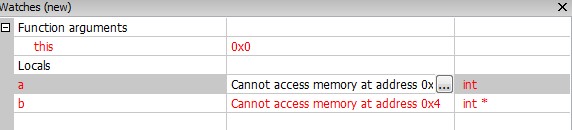
打上断点一瞧,执行到box->dostuff()里面的时候,这些主存地址都已经不可访问(也就是说已经被操作系统回收了,不再属于这个程序的可访问主存范围),截图如下:
根据c++ primer 4th edition section 17.1.2 "Exceptions and Constructors" 我引用如下:
If an exception occurs while constructing an object, then the object might be only partially constructed. Some of its members might have been initialized, and others might not have been initialized before the exception occurs. Even if the object is only partially constructed, we are guaranteed that the constructed members will be properly destroyed.
我最开始以为加粗的句子是说要让我们自己来guarantee that the constructed memebers will be properly destroyed,原来这个工作不需要我们做(?)。然后我又重新修改了程序来验证这一点——"we are guaranteed that the constructed members will be properly destroyed.",见main1.cpp,Box1.h,Box1.cpp
但是执行的结果如下:

也就是说,what和why所占用的主存空间泄漏了,memory leak
也就是说,c++ primer所说的“we are guaranteed that the constructed members will be properly destroyed.”不适用于new出来的object!
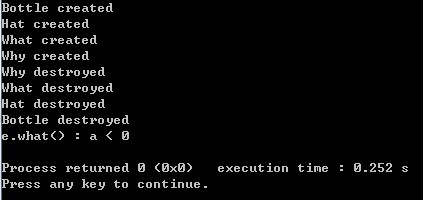
所以改写程序为:main2.cpp,Box2.h,Box2.cpp,运行结果如下(完美解决!):
至于auto_ptr的实现方法,之前我写过一篇随笔(http://www.cnblogs.com/qrlozte/p/4095618.html),其实就是c++ primer 4th edition section 13.5.1 "Defining Smart Pointer Classes"所陈述的内容,大概的思路都在c++ primer的这个章节里面了,值得一看!
main.cpp
 #include "Box.h"

 #include <iostream>

 #include <stdexcept>

 using namespace std;

 int main() {

     Box *box = NULL;

     try {

         box = new Box(-);

     } catch (invalid_argument &e) {

         cout << "e.what() : " << e.what() << endl;

         box->dostuff();

     }

     if (box != NULL) delete box;

     return ;

 }
Box.h
 #ifndef BOX_H

 #define BOX_H

 class Box

 {

     public:

         Box(const int &a);

         ~Box();

         void dostuff();

     private:

         int a;

         int *b;

 };

 #endif // BOX_H
Box.cpp
 #include "Box.h"

 #include <iostream>

 #include <stdexcept>

 using namespace std;

 Box::Box(const int &_a): a(_a), b(NULL)

 {

     if (a < )

         throw invalid_argument("a < 0");

     b = new int();

     cout << "Box created" << endl;

 }

 Box::~Box()

 {

     if (b != NULL) delete b;

     cout << "Box destroyed" << endl;

 }

 void Box::dostuff() {

     if (b == NULL) {

         cout << "b == NULL" << endl;

     }

     else {

         cout << "b = " << b << endl;

     }

 }
main1.cpp
 #include "Box.h"

 #include <iostream>

 #include <stdexcept>

 using namespace std;

 int main() {

     Box *box = NULL;

     try {

         box = new Box(-);

     } catch (invalid_argument &e) {

         cout << "e.what() : " << e.what() << endl;

         // box->dostuff();

     }

     if (box != NULL) delete box;

     return ;

 }
Box1.h
 #ifndef BOX_H

 #define BOX_H

 #include <memory>

 class Bottle {

     public:

         Bottle();

         ~Bottle();

 };

 class Hat {

     public:

         Hat();

         ~Hat();

 };

 class Box

 {

     public:

         Box(const int &a);

         ~Box();

         void dostuff();

     private:

         class What;

         class Why;

         int a;

         Bottle bottle;

         Hat hat;

         What *what;

         Why *why;

         int *b;

 };

 #endif // BOX_H
Box1.cpp
 #include "Box.h"

 #include <iostream>

 #include <stdexcept>

 using namespace std;

 class Box::What {

     public:

         What() { cout << "What created" << endl; }

         ~What() { cout << "What destroyed" << endl; }

 };

 class Box::Why {

     public:

         Why() { cout << "Why created" << endl; }

         ~Why() { cout << "Why destroyed" << endl; }

 };

 Bottle::Bottle() { cout << "Bottle created" << endl; }

 Bottle::~Bottle() { cout << "Bottle destroyed" << endl; }

 Hat::Hat() { cout << "Hat created" << endl; }

 Hat::~Hat() { cout << "Hat destroyed" << endl; }

 // Pay attention to the order of the initializer: the same as the declaration

 // order, otherwise the compiler will give warnings (there's a reason for that)

 // the reason is the compiler always initializes data members following the order

 // in which they're declared

 Box::Box(const int &_a): a(_a), what(new What()), why(new Why()), b(NULL)

 {

     if (a < )

         throw invalid_argument("a < 0");

     b = new int();

     cout << "Box created" << endl;

 }

 // Notice the order of deletes: It's BETTER be the reverse order as they're created

 // Without the right definition of destructor, when exception thrown from the constructor

 // members cannot be destroyed properly. (Of course, also the same in normal situation).

 Box::~Box()

 {

     if (b != NULL) delete b;

     if (why != NULL) delete why;

     if (what != NULL) delete what;

     cout << "Box destroyed" << endl;

 }

 void Box::dostuff() {

     if (b == NULL) {

         cout << "b == NULL" << endl;

     }

     else {

         cout << "b = " << b << endl;

     }

 }
main2.cpp
 #include "Box.h"

 #include <iostream>

 #include <stdexcept>

 using namespace std;

 int main() {

     Box *box = NULL;

     try {

         box = new Box(-);

     } catch (invalid_argument &e) {

         cout << "e.what() : " << e.what() << endl;

         // box->dostuff();

     }

     if (box != NULL) delete box;

     return ;

 }
Box2.h
 #ifndef BOX_H

 #define BOX_H

 #include <memory>

 class Bottle {

     public:

         Bottle();

         ~Bottle();

 };

 class Hat {

     public:

         Hat();

         ~Hat();

 };

 class Box

 {

     public:

         Box(const int &a);

         ~Box();

         void dostuff();

     private:

         class What;

         class Why;

         int a;

         Bottle bottle;

         Hat hat;

         std::auto_ptr<What> what;

         std::auto_ptr<Why> why;

         int *b;

 };

 #endif // BOX_H
Box2.cpp
 #include "Box.h"

 #include <iostream>

 #include <stdexcept>

 using namespace std;

 class Box::What {

     public:

         What() { cout << "What created" << endl; }

         ~What() { cout << "What destroyed" << endl; }

 };

 class Box::Why {

     public:

         Why() { cout << "Why created" << endl; }

         ~Why() { cout << "Why destroyed" << endl; }

 };

 Bottle::Bottle() { cout << "Bottle created" << endl; }

 Bottle::~Bottle() { cout << "Bottle destroyed" << endl; }

 Hat::Hat() { cout << "Hat created" << endl; }

 Hat::~Hat() { cout << "Hat destroyed" << endl; }

 // Pay attention to the order of the initializer: the same as the declaration

 // order, otherwise the compiler will give warnings (there's a reason for that)

 // the reason is the compiler always initializes data members following the order

 // in which they're declared

 Box::Box(const int &_a): a(_a), what(new What()), why(new Why()), b(NULL)

 {

     if (a < )

         throw invalid_argument("a < 0");

     b = new int();

     cout << "Box created" << endl;

 }

 // Notice the order of deletes: It's BETTER be the reverse order as they're created

 // Without the right definition of destructor, when exception thrown from the constructor

 // members cannot be destroyed properly. (Of course, also the same in normal situation).

 Box::~Box()

 {

     if (b != NULL) delete b;

     if (why.get() != NULL) why.reset(NULL); // might be unnecessary, see auto_ptr's documentation

     if (what.get() != NULL) what.reset(NULL);

     cout << "Box destroyed" << endl;

 }

 void Box::dostuff() {

     if (b == NULL) {

         cout << "b == NULL" << endl;

     }

     else {

         cout << "b = " << b << endl;

     }

 }
c++ what happens when a constructor throws an exception and leaves the object in an inconsistent state?的更多相关文章
- In p = new Fred(), does the Fred memory “leak” if the Fred constructor throws an exception?
No. If an exception occurs during the Fred constructor of p = new Fred(), the C++ language guarantee ...
- org.springframework.beans.BeanInstantiationException: Could not instantiate bean class [com.hs.model.StudentModel]: No default constructor found; nested exception is java.lang.NoSuchMethodException: c
root cause org.springframework.beans.BeanInstantiationException: Could not instantiate bean class [c ...
- throws/throw Exception 异常应用
throws通常用于方法的声明,当方法中发生异常的时候,却不想在方法中对异常进行处理的时候,就可以在声明方法时, 使用throws声明抛出的异常,然后再调用该方法的其他方法中对异常进行处理(如使用tr ...
- Nhibernate 4.0 教程入门
Nhibernate 4.0 教程 目录 1. 下载Nhibernate 4.04. 1 2. 入门教程... 2 3. 测试项目详解... 3 4. 总结.. ...
- spring源码分析(一)IoC、DI
创建日期:2016.08.06 修改日期:2016.08.07 - 2016.08.12 交流QQ:992591601 参考书籍:<spring源码深度解析>.<spring技术内幕 ...
- Static Constructors
A static constructor is used to initialize any static data, or to perform a particular action that n ...
- (C++) Interview in English. - Constructors/Destructors
Constructors/Destructors. 我们都知道,在C++中建立一个类,这个类中肯定会包括构造函数.析构函数.复制构造函数和重载赋值操作:即使在你没有明确定义的情况下,编译器也会给你生成 ...
- How a C++ compiler implements exception handling
Introduction One of the revolutionary features of C++ over traditional languages is its support for ...
- xmlhttp
File an issue about the selected textFile an issue about the selected text XMLHttpRequest Living Sta ...
随机推荐
- 【dfs】【哈希表】bzoj2783 [JLOI2012]树
因为所有点权都是正的,所以对每个结点u来说,每条从根到它的路径上只有最多一个结点v符合d(u,v)=S. 所以我们可以边dfs边把每个结点的前缀和pre[u]存到一个数据结构里面,同时查询pre[u] ...
- 8.3(java学习笔记)动态编译(DynamicCompiler)与动态运行(DynamicRun)
一.动态编译 简单的说就是在运行一个java程序的过程中,可以通过一些API来编译其他的Java文件. 下面主要说动态编译的实现: 1.获取java编译编译器 2.运行编译器(须指定编译文件) 获取编 ...
- RedisTemplate SerializationFailedException: Failed to deserialize payload 异常解决
问题描述: 使用RedisTemplate(spring-data-redis )进行redis操作的封装 , 现有一个incr的key , 当调用incr后返回值一切正常, 当对此key进行get调 ...
- Git -- 自己项目关联新建的git
- 简述es6各种简单方法
1.取代var的let和const 局部变量都可以使用let 固定变量都可以使用const 2.字符串的变化 反引号的使用 3.解构赋值 let [a, b, c] = [1, 2, 3]; let ...
- Sql-简单分页
create proc proc_searchuser( @username varchar(12), @page int=1, @pagesize int=3, @totalcount int ou ...
- shell用法 (cat << EOF)
下面的语句会创建不存在的secure.config,如果存在直接追加,然后把多行内容: [database] password = gerrit 写入文件secure.config ca ...
- C#之鼠标模拟技术
游戏程序的操作不外乎两种——键盘输入控制和鼠标输入控制,几乎所有游戏中都使用鼠标来改变角色的位置和方向,本文主要是讲述如何使用C#调用Windows API函数实现鼠标模拟操作的功能.首先通过结合Fi ...
- DevExpress.Build
using System.Collections.Generic; using Microsoft.Build.AppxPackage; using Microsoft.Build.Framework ...
- jquery 中attr和prop的区别
在jQuery API中也有专门解释: Attributes VS. Properties 在一些特殊的情况下,attributes和properties的区别非常大.在jQuery1.6之前,.at ...