
Netty4 initAndRegister 解析
我们从框架的应用层面来分析,NioEventLoopGroup在netty中的使用。
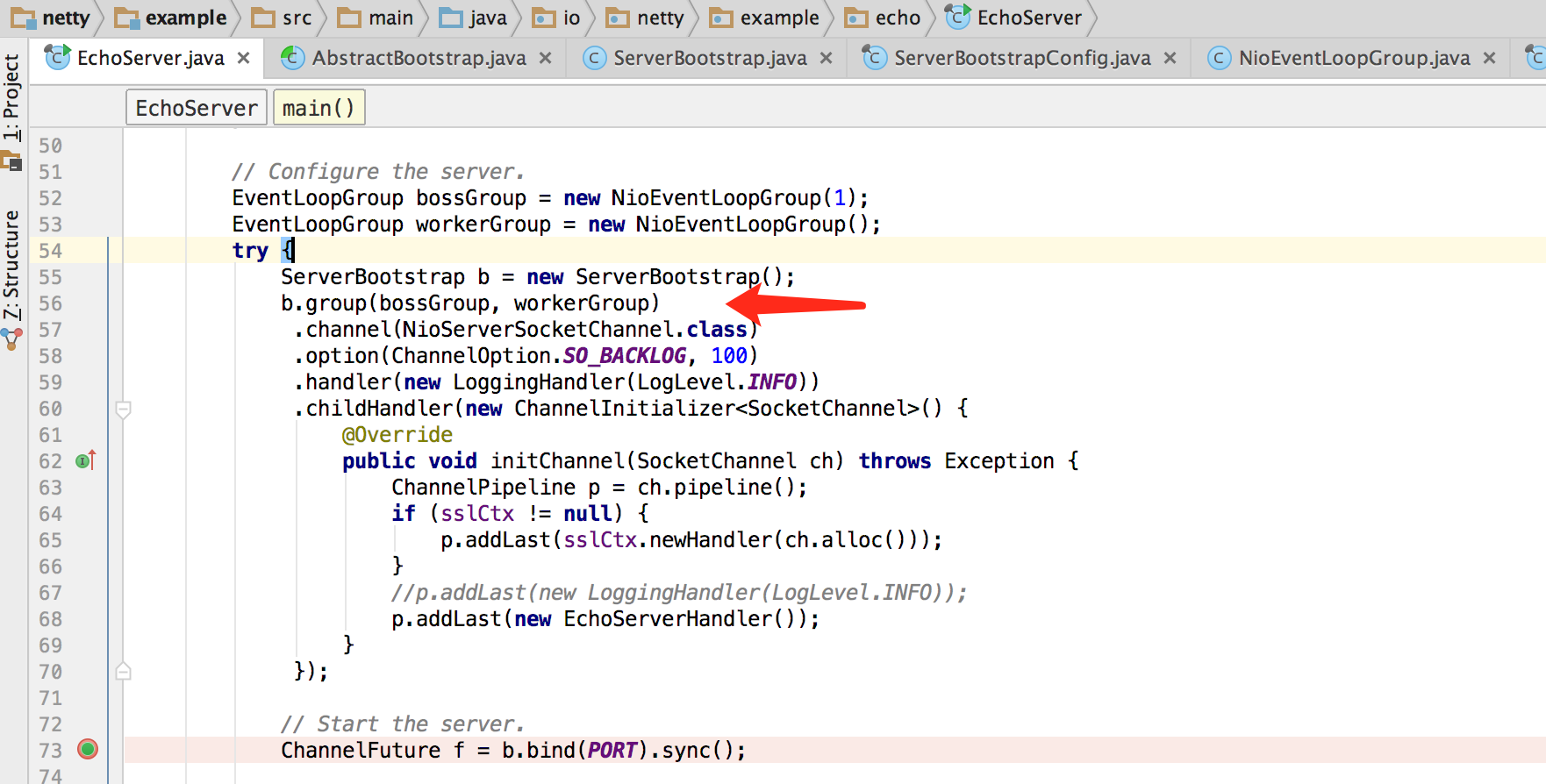
这是我们需要配置的地方。
紧接着我们进入netty的运行中。ServerBootstrap.bind(PORT);
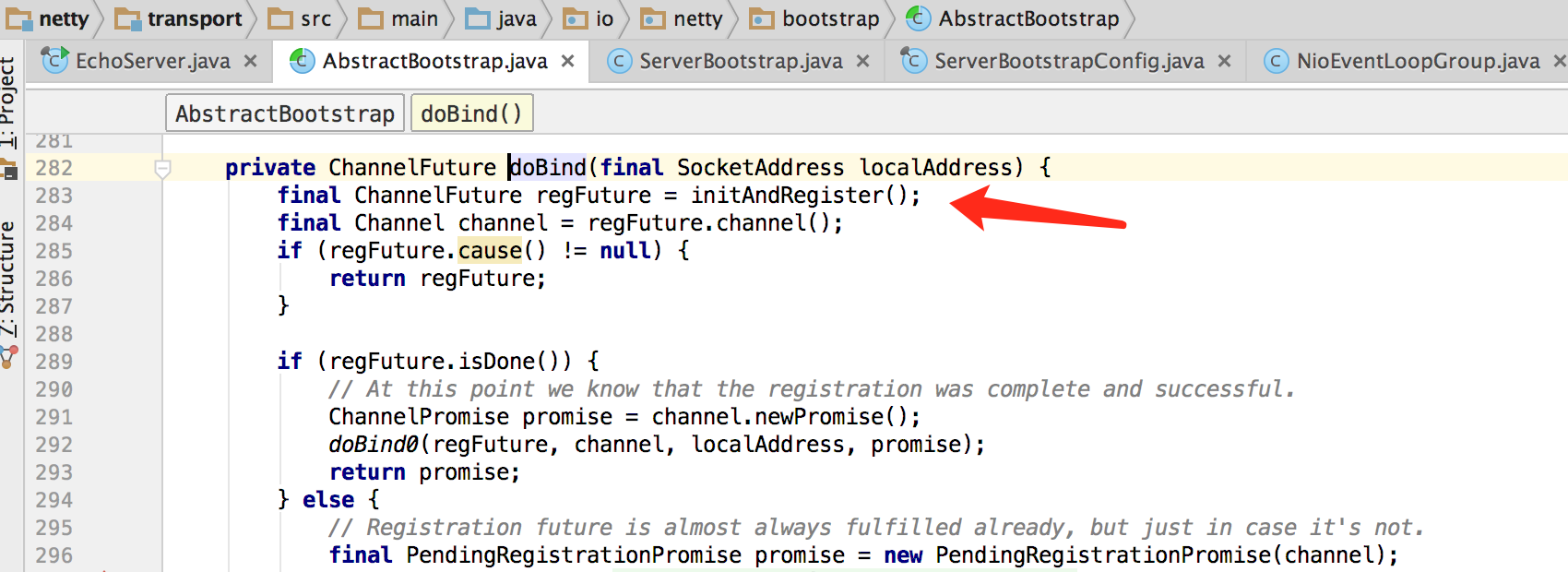
这是一个bind操作。我们来看一下NioEventLoopGroup在这个操作中的使用。
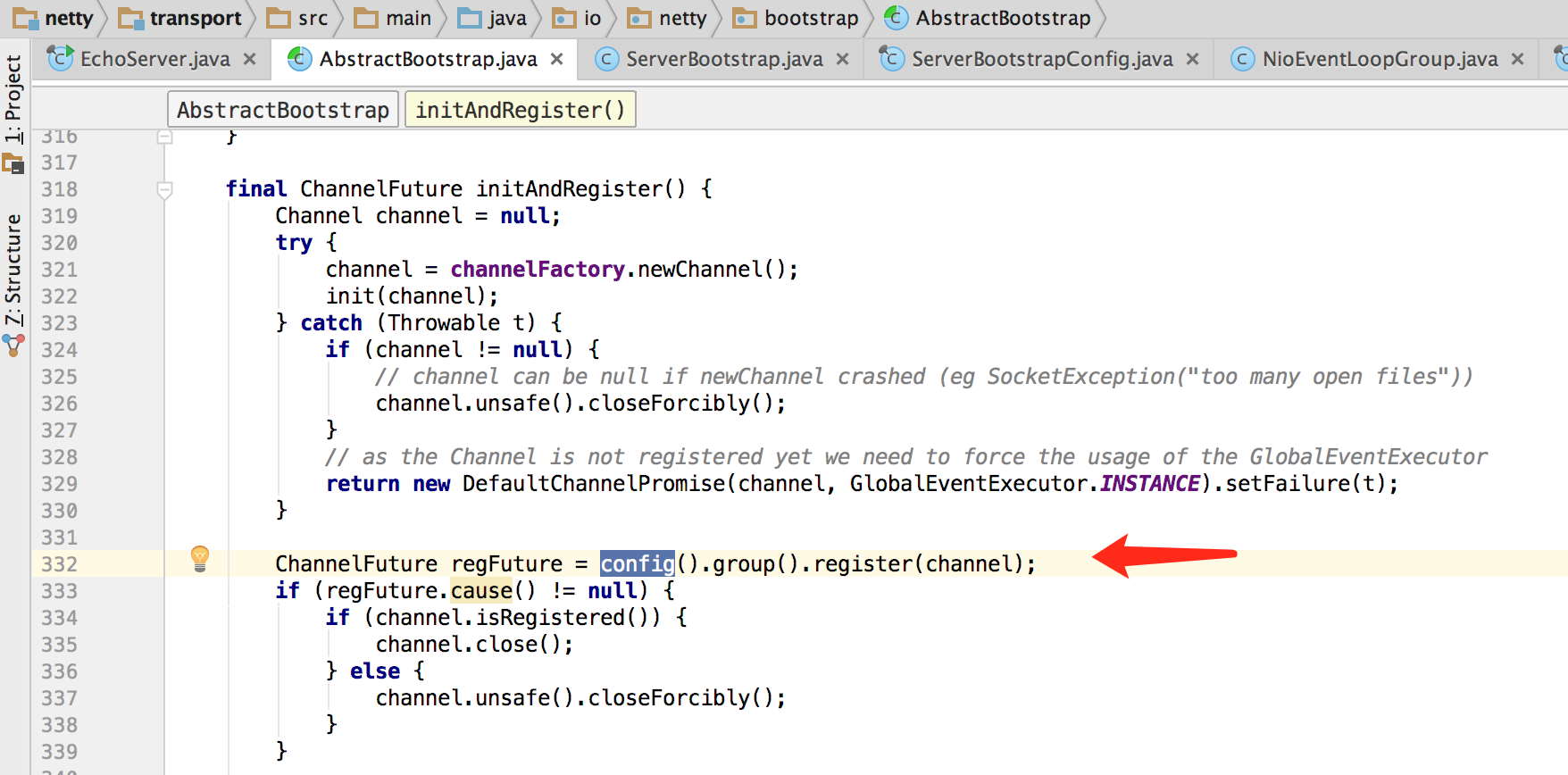
ChannelFuture regFuture = config().group().register(channel);
config()返回在ServerBootstrap中内部属性:private final ServerBootstrapConfig config = new ServerBootstrapConfig(this);
注意这里传入的是this即ServerBootstrap对象。 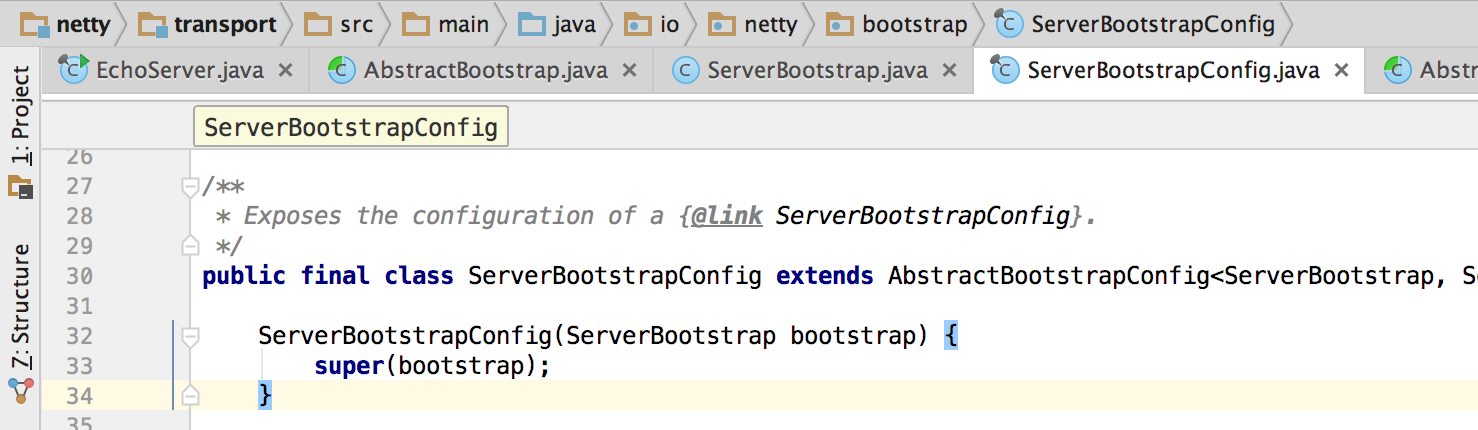
这个类主要是用来暴露我们的配置的,直接把我们配置的ServerBootstrap传递进来。
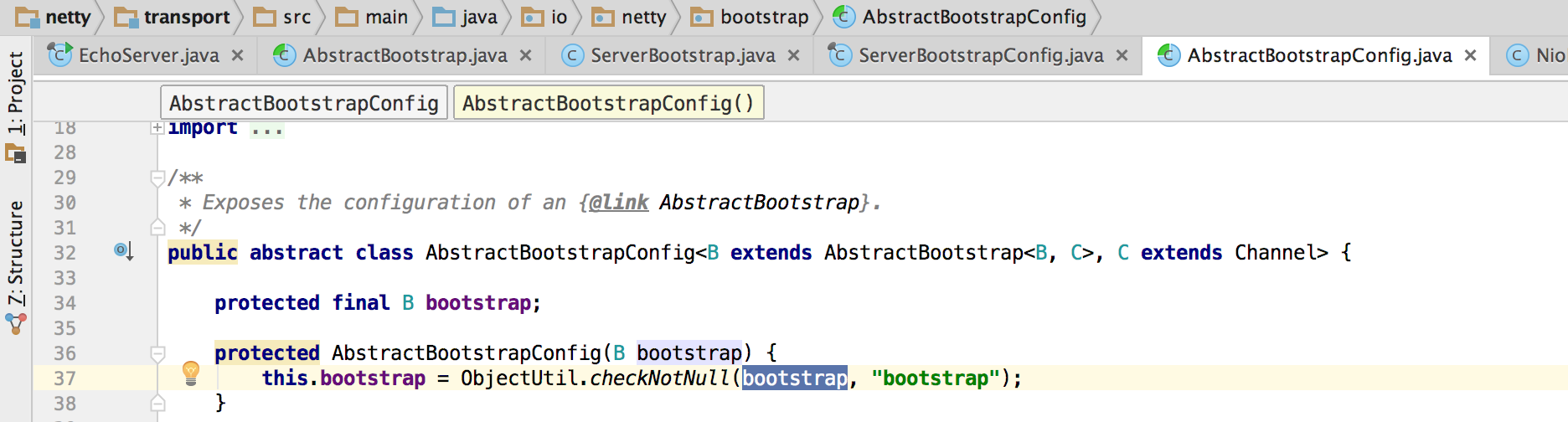
我们继续ChannelFuture regFuture = config().group().register(channel);
这里的config()返回一个ServerBootstrapConfig,然后调用他的group()。
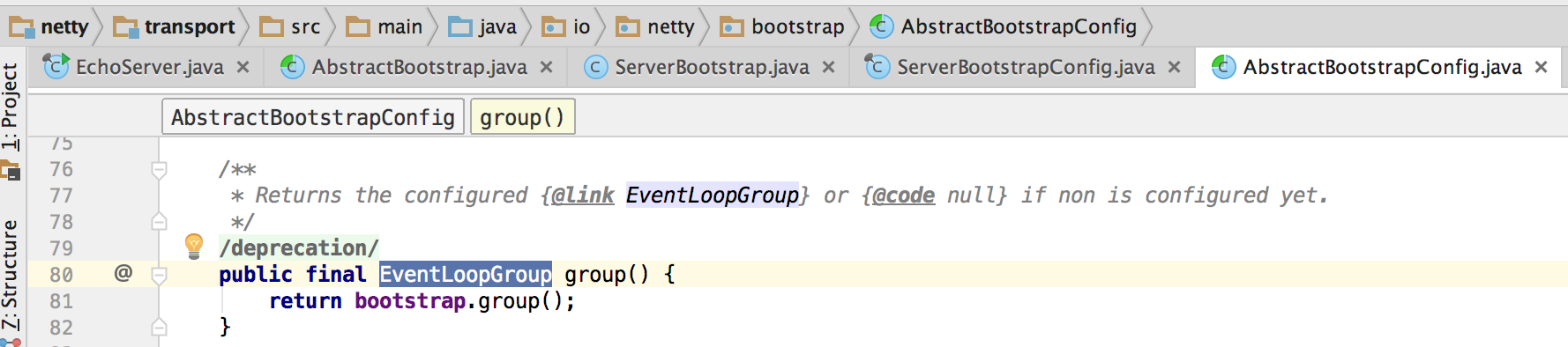
这个类是ServerBootstrapConfig的父类。调用了ServerBootstrap.group().方法。注意因为group方法是在弗雷AbstractBootstrap中定义的,所以这里进入父类的group()方法中来。
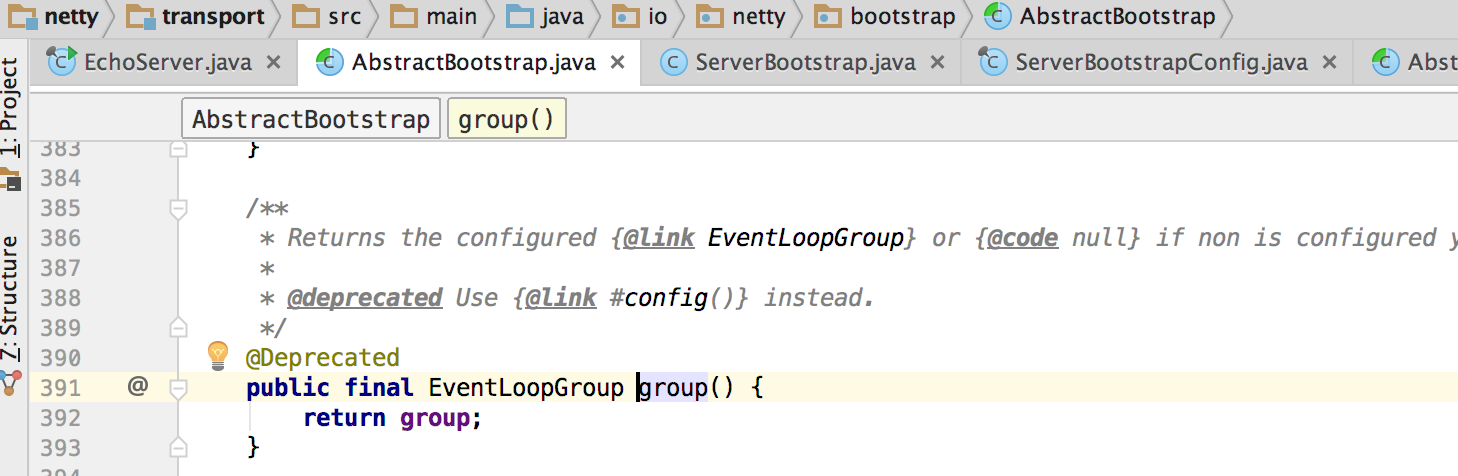
这个方法直接返回EventLoopGroup对象。
我们在回过头来看我们最初的配置,来发现这个group属性究竟是什么。
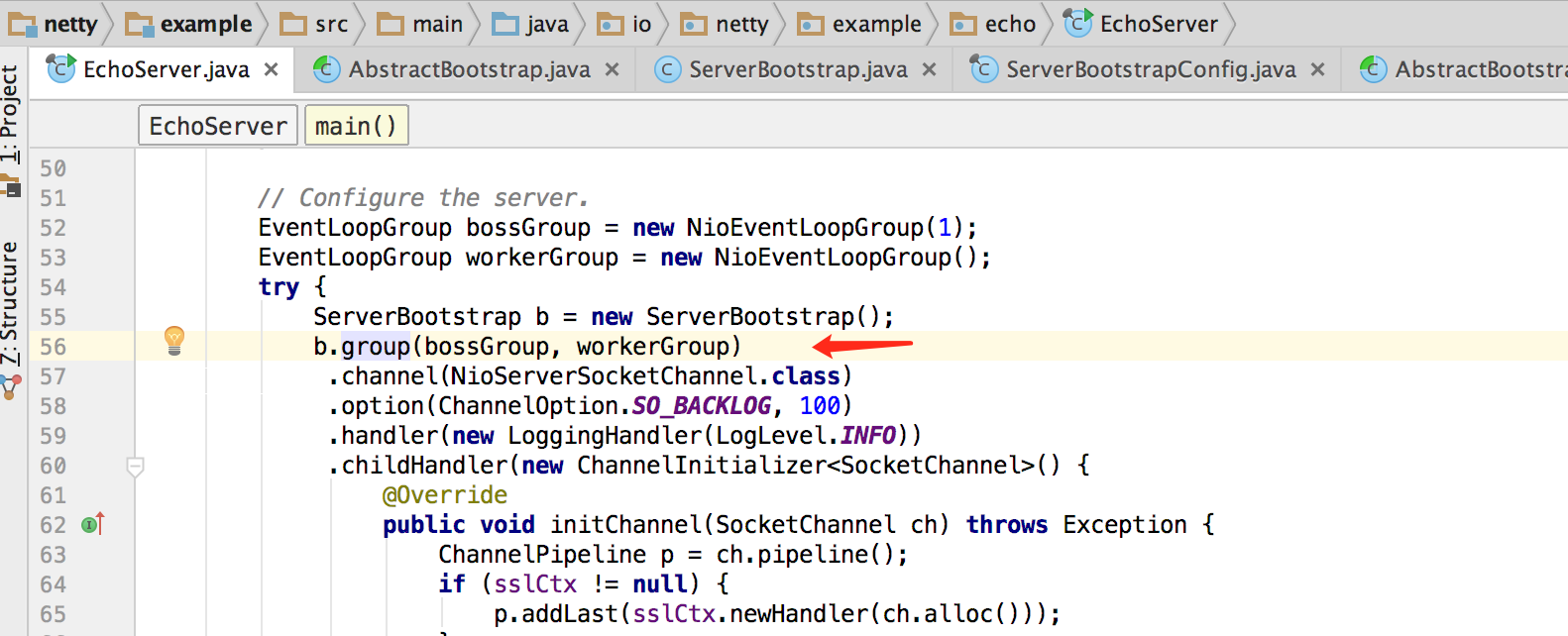

我们配置了两个NioEventLoopGroup,一个一个线程的传递给了父类AbstractBootstrap.一个初始化给当前的ServerBootstrap的内部属性childGroup.
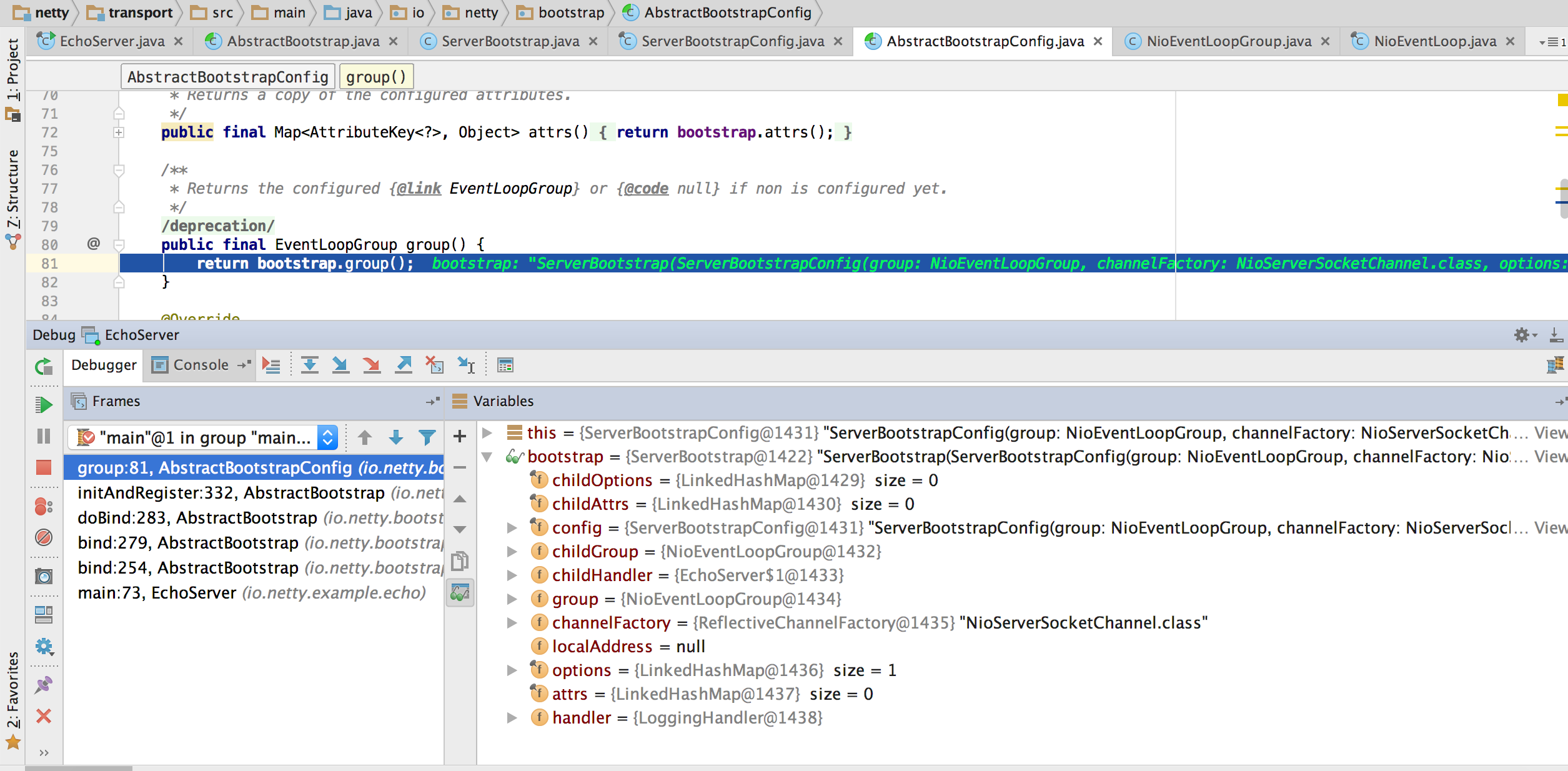

我们在回到这里ChannelFuture regFuture = config().group().register(channel);
现在通过AbstractBootstrap.group()方法返回了一个NioEventLoopGroup对象,即我们配置的第一个单线程的NioEventLoopGroup对象。
现在进入他的register(channel)方法。由于这个方法是在他的父类中定义的,所以我们进入他的父类MultithreadEventLoopGroup()中。
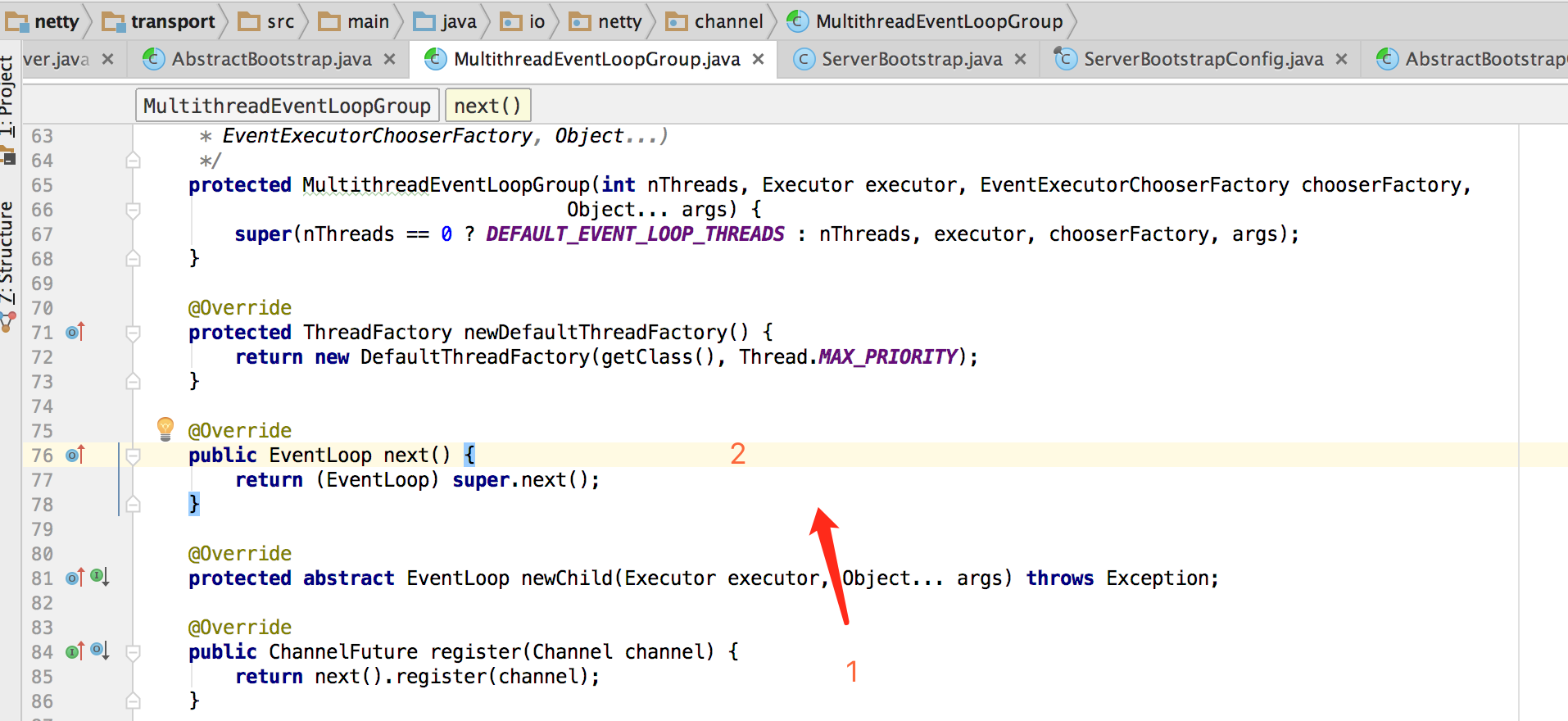
next()方法返回一个EventLoop对象。

下面重点分析这个chooser。(在=======以内,然后接着分析next()方法)
====================================================================
这个chooser是我们在初始化NioEventLoopGroup的时候初始化的。
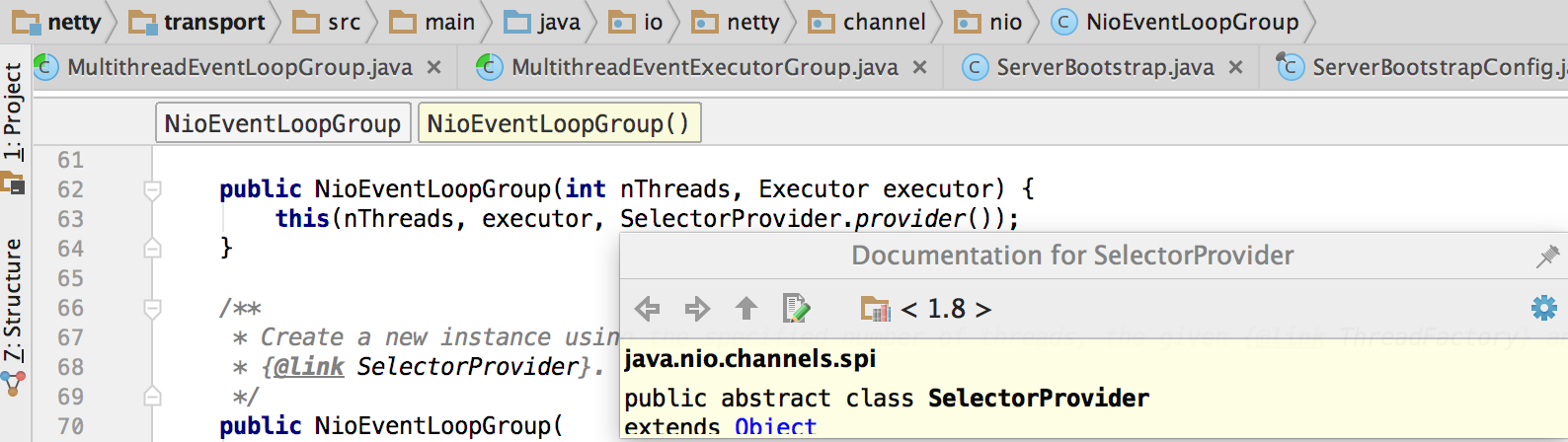
回到我们初始化NioEventLoopGroup的地方:
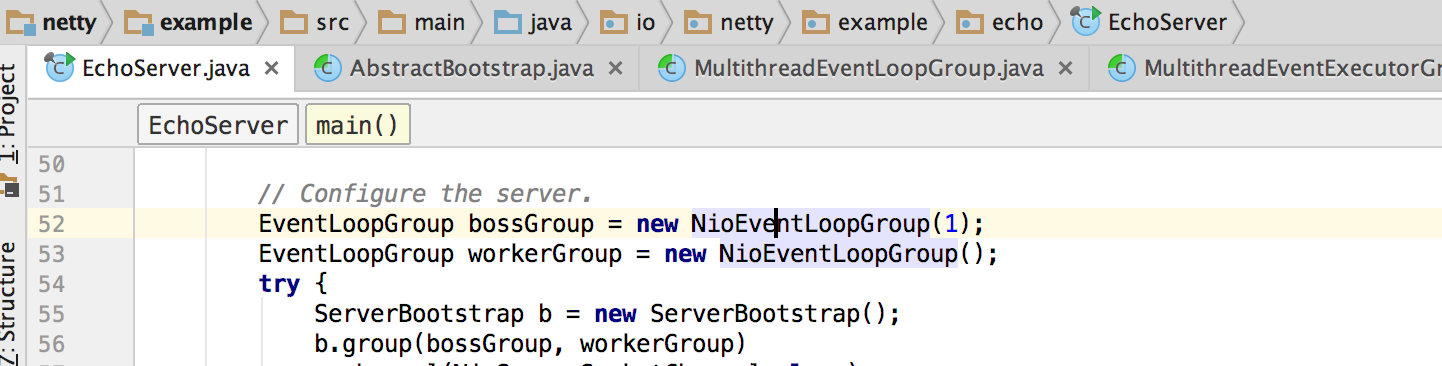
还是这里。
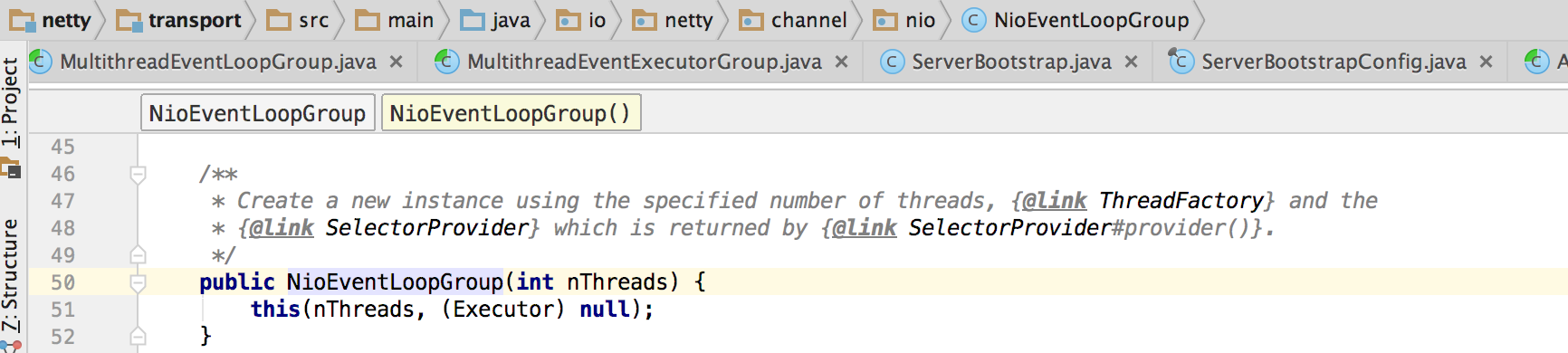
重点注意这下面的这个SelectorProvider.provider(),在后面的构造方法NioEventLoop(NioEventLoopGroup parent, Executor executor, SelectorProvider selectorProvider,
SelectStrategy strategy, RejectedExecutionHandler rejectedExecutionHandler)中会用到。
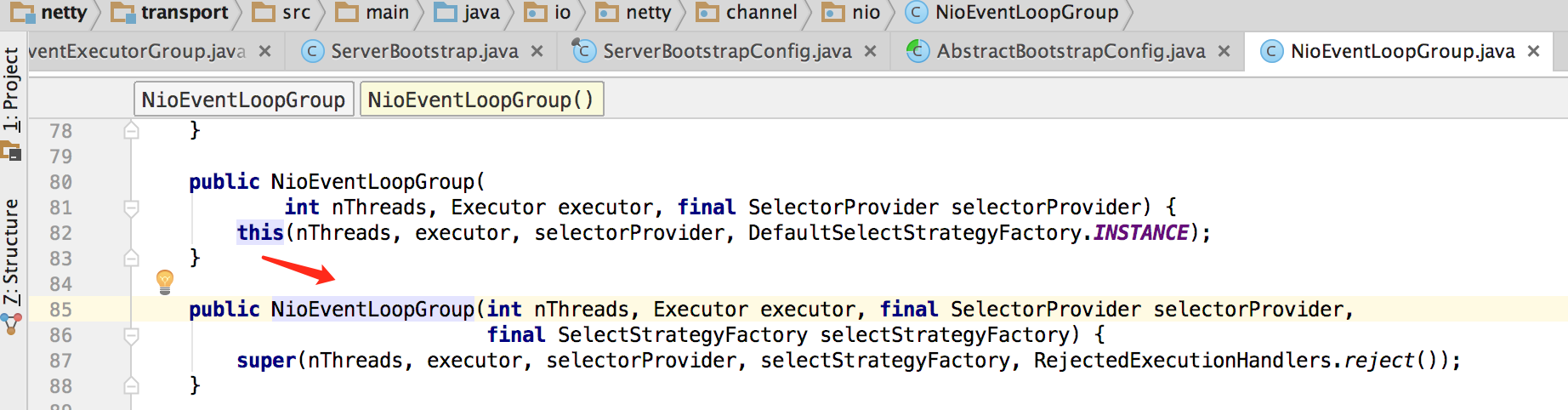
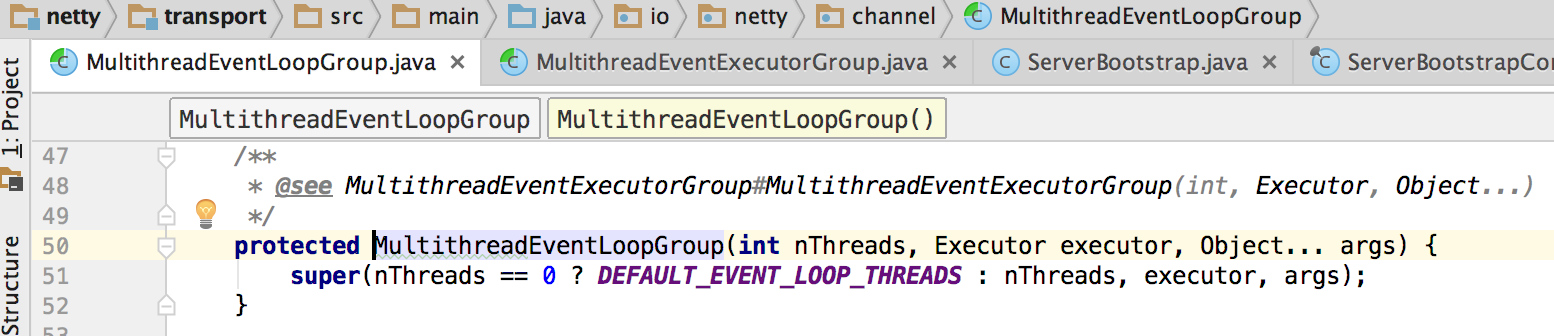

下面就到了初始化chooser的地方了:
/**

     * Create a new instance.

     *

     * @param nThreads          the number of threads that will be used by this instance.

     * @param executor          the Executor to use, or {@code null} if the default should be used.

     * @param chooserFactory    the {@link EventExecutorChooserFactory} to use.

     * @param args              arguments which will passed to each {@link #newChild(Executor, Object...)} call

     */

    protected MultithreadEventExecutorGroup(int nThreads, Executor executor,

                                            EventExecutorChooserFactory chooserFactory, Object... args) {

        if (nThreads <= 0) {

            throw new IllegalArgumentException(String.format("nThreads: %d (expected: > 0)", nThreads));

        }

        if (executor == null) {

            executor = new ThreadPerTaskExecutor(newDefaultThreadFactory());

        }

        children = new EventExecutor[nThreads];

        for (int i = 0; i < nThreads; i ++) {

            boolean success = false;

            try {

                children[i] = newChild(executor, args);

                success = true;

            } catch (Exception e) {

                // TODO: Think about if this is a good exception type

                throw new IllegalStateException("failed to create a child event loop", e);

            } finally {

                if (!success) {

                    for (int j = 0; j < i; j ++) {

                        children[j].shutdownGracefully();

                    }

                    for (int j = 0; j < i; j ++) {

                        EventExecutor e = children[j];

                        try {

                            while (!e.isTerminated()) {

                                e.awaitTermination(Integer.MAX_VALUE, TimeUnit.SECONDS);

                            }

                        } catch (InterruptedException interrupted) {

                            // Let the caller handle the interruption.

                            Thread.currentThread().interrupt();

                            break;

                        }

                    }

                }

            }

        }

        chooser = chooserFactory.newChooser(children);

        final FutureListener<Object> terminationListener = new FutureListener<Object>() {

            @Override

            public void operationComplete(Future<Object> future) throws Exception {

                if (terminatedChildren.incrementAndGet() == children.length) {

                    terminationFuture.setSuccess(null);

                }

            }

        };

        for (EventExecutor e: children) {

            e.terminationFuture().addListener(terminationListener);

        }

        Set<EventExecutor> childrenSet = new LinkedHashSet<EventExecutor>(children.length);

        Collections.addAll(childrenSet, children);

        readonlyChildren = Collections.unmodifiableSet(childrenSet);

    }
这个构造方法内容比较多。别的先不管,我们来看:chooser = chooserFactory.newChooser(children);
这个EventExecutorChooserFactory chooserFactory是我们上个构造方法中传过来的:
this(nThreads, executor, DefaultEventExecutorChooserFactory.INSTANCE, args);
是一个DefaultEventExecutorChooserFactory.INSTANCE。
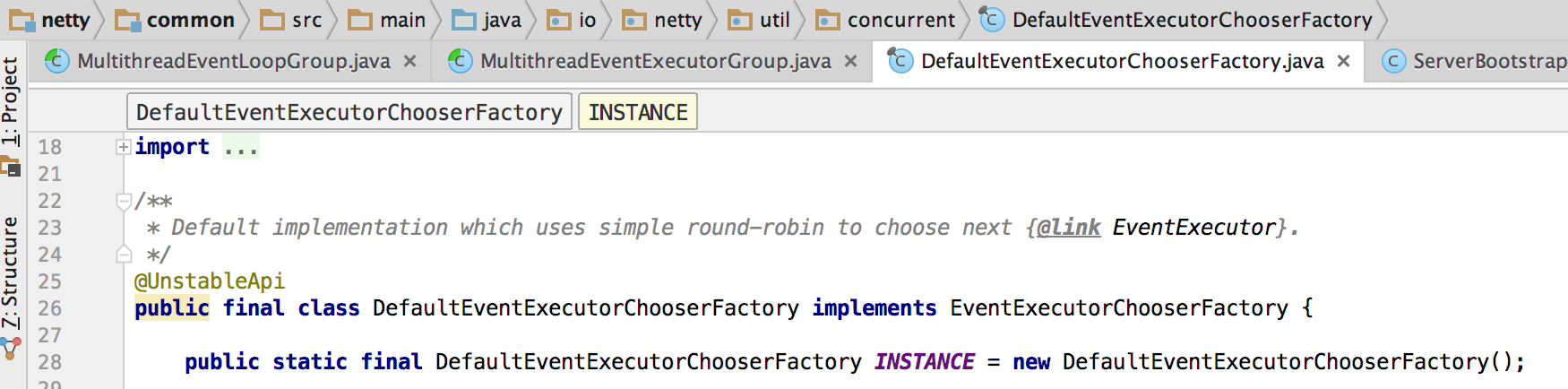
然后我们看他的newChooser(EventExecutor[] executors)方法。
  @SuppressWarnings("unchecked")

    @Override

    public EventExecutorChooser newChooser(EventExecutor[] executors) {

        if (isPowerOfTwo(executors.length)) {

            return new PowerOfTwoEventExecutorChooser(executors);

        } else {

            return new GenericEventExecutorChooser(executors);

        }

    }
这里有个判断就是:判断是否为2的次方。
private static boolean isPowerOfTwo(int val) {

        return (val & -val) == val;

}
然后根据是否为2的次方分别进行两个构造方法。分别实现了EventExecutorChooser的next()方法。
    private static final class PowerOfTwoEventExecutorChooser implements EventExecutorChooser {

        private final AtomicInteger idx = new AtomicInteger();

        private final EventExecutor[] executors;

        PowerOfTwoEventExecutorChooser(EventExecutor[] executors) {

            this.executors = executors;

        }

        @Override

        public EventExecutor next() {

            return executors[idx.getAndIncrement() & executors.length - 1];

        }

    }

    private static final class GenericEventExecutorChooser implements EventExecutorChooser {

        private final AtomicInteger idx = new AtomicInteger();

        private final EventExecutor[] executors;

        GenericEventExecutorChooser(EventExecutor[] executors) {

            this.executors = executors;

        }

        @Override

        public EventExecutor next() {

            return executors[Math.abs(idx.getAndIncrement() % executors.length)];

        }

    }
这两个实现类只是对于next的方法有不同的实现。但是都是遍历每一个executors。
为什么要这样呢?
原因是位操作& 比 % 操作要高效。netty为了提高效率也是拼了。
总的来说这个DefaultEventExecutorChooserFactory非常简单,就上面这些内容。现在我们也知道了chooser是什么了,就是一个时限了遍历所有EventExecutor的next()方法的对象。功能非常简单,只有一个方法next。遍历每一个EventExecutor。
=====================================================================
好了到此为止我们分析玩了chooser,现在进入主逻辑。
上面我们分析道了这里:
同时我们通过====中的内容我们也知道了EventLoopGroup是如何初始化内部属性EventExecutors的:
children[i] = newChild(executor, args);
但是这个newChild(executor,args)方法是在子类NioEventLoopGroup中实现的:
    @Override

    protected EventLoop newChild(Executor executor, Object... args) throws Exception {

        return new NioEventLoop(this, executor, (SelectorProvider) args[0],

            ((SelectStrategyFactory) args[1]).newSelectStrategy(), (RejectedExecutionHandler) args[2]);

    }
==============这里插入分析一下NioEventLoop构造方法=====================================
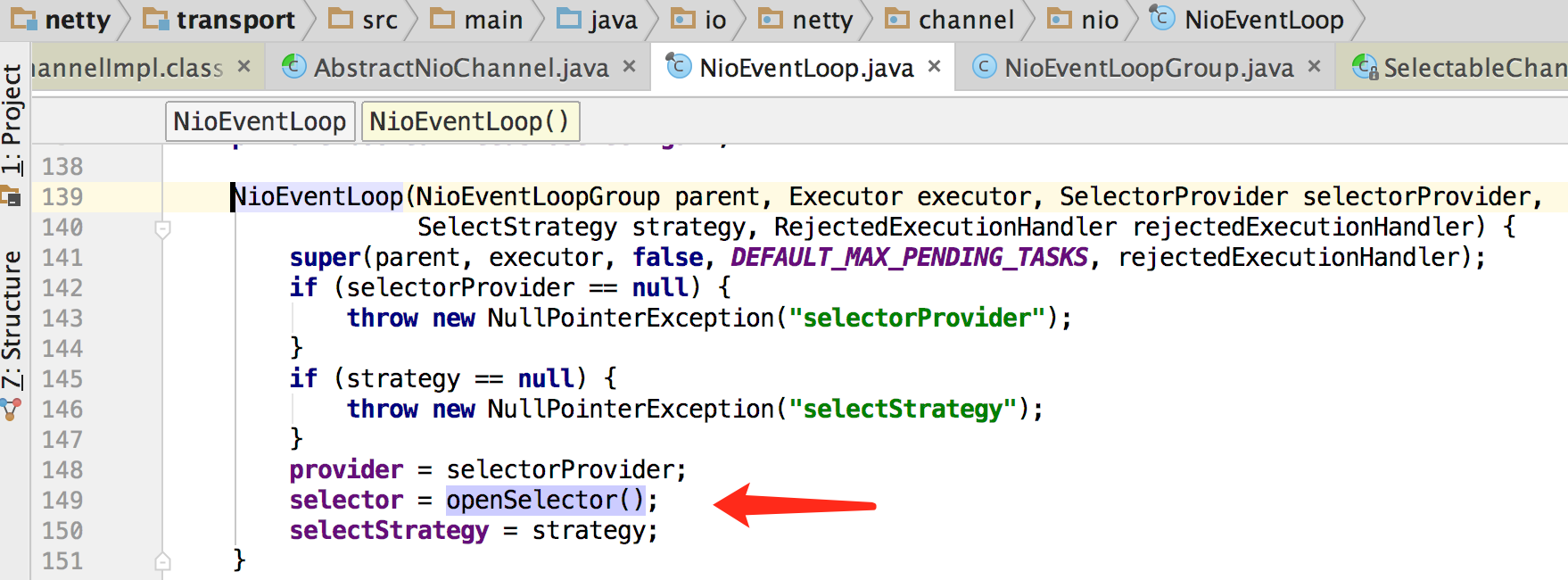
上面的selectorProvider就是在上面我们划了重点注意的地方:
上面紧接着初始化了内部属性private Selector selector;这是一个java.nio.channels.Selector类型的内部属性。
这个属性在后面注册channel到selector的时候将作为参数传入channel的注册方法中。
所以我们接着看下这个openSelector()方法:
    private Selector openSelector() {

        try {

            unwrappedSelector = provider.openSelector();

        } catch (IOException e) {

            throw new ChannelException("failed to open a new selector", e);

        }

        if (DISABLE_KEYSET_OPTIMIZATION) {

            return unwrappedSelector;

        }

        final SelectedSelectionKeySet selectedKeySet = new SelectedSelectionKeySet();

        Object maybeSelectorImplClass = AccessController.doPrivileged(new PrivilegedAction<Object>() {

            @Override

            public Object run() {

                try {
            //重点2-1。这里设置了SelectorImpl.

                    return Class.forName(

                            "sun.nio.ch.SelectorImpl",

                            false,

                            PlatformDependent.getSystemClassLoader());

                } catch (Throwable cause) {

                    return cause;

                }

            }

        });

        if (!(maybeSelectorImplClass instanceof Class) ||

                // ensure the current selector implementation is what we can instrument.

                !((Class<?>) maybeSelectorImplClass).isAssignableFrom(unwrappedSelector.getClass())) {

            if (maybeSelectorImplClass instanceof Throwable) {

                Throwable t = (Throwable) maybeSelectorImplClass;

                logger.trace("failed to instrument a special java.util.Set into: {}", unwrappedSelector, t);

            }

            return unwrappedSelector;

        }

        final Class<?> selectorImplClass = (Class<?>) maybeSelectorImplClass;

        Object maybeException = AccessController.doPrivileged(new PrivilegedAction<Object>() {

            @Override

            public Object run() {

                try {

                    Field selectedKeysField = selectorImplClass.getDeclaredField("selectedKeys");

                    Field publicSelectedKeysField = selectorImplClass.getDeclaredField("publicSelectedKeys");

                    Throwable cause = ReflectionUtil.trySetAccessible(selectedKeysField);

                    if (cause != null) {

                        return cause;

                    }

                    cause = ReflectionUtil.trySetAccessible(publicSelectedKeysField);

                    if (cause != null) {

                        return cause;

                    }

                    selectedKeysField.set(unwrappedSelector, selectedKeySet);

                    publicSelectedKeysField.set(unwrappedSelector, selectedKeySet);

                    return null;

                } catch (NoSuchFieldException e) {

                    return e;

                } catch (IllegalAccessException e) {

                    return e;

                }

            }

        });

        if (maybeException instanceof Exception) {

            selectedKeys = null;

            Exception e = (Exception) maybeException;

            logger.trace("failed to instrument a special java.util.Set into: {}", unwrappedSelector, e);

            return unwrappedSelector;

        }

        selectedKeys = selectedKeySet;

        logger.trace("instrumented a special java.util.Set into: {}", unwrappedSelector);

        return new SelectedSelectionKeySetSelector(unwrappedSelector, selectedKeySet);

    }
nio中大量使用了AccessController.doPrivileged可以关于这个的使用可以参考《java 的 AccessController.doPrivileged使用》。
======================================================================
也就是说上面箭头所指的2处返回的是一个NioEventLoop对象。
也就是说next().register(channel)调用的是NioEventLoop.register(channel);
这就是netty的eventloop线程模型的应用了。每个EventLoop有一个Selector, boss用Selector处理accept, worker用Selector处理read,write等
这个方法是在它的父类SingleThreadEventLoop中定义的:

首先构造一个DefaultChannelPromise(channel, this)对象。
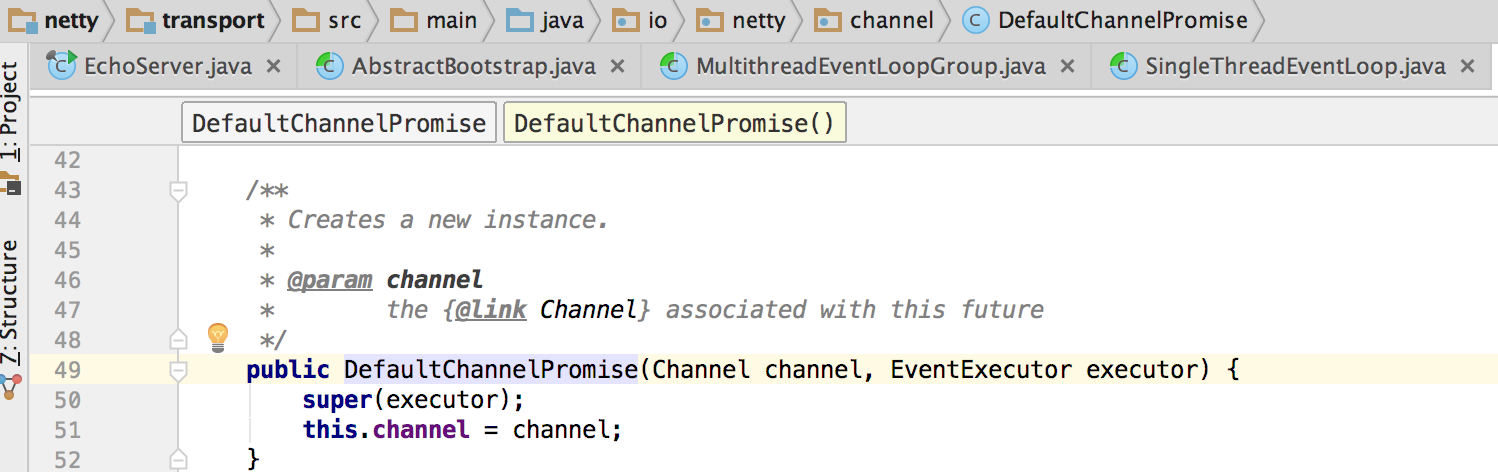

然后进入register(new DefaultChannelPromise(channel, this))方法。

promise.channel()返回的就是我们构造promise时传入的channel。还记得channel是怎么构造的吗:
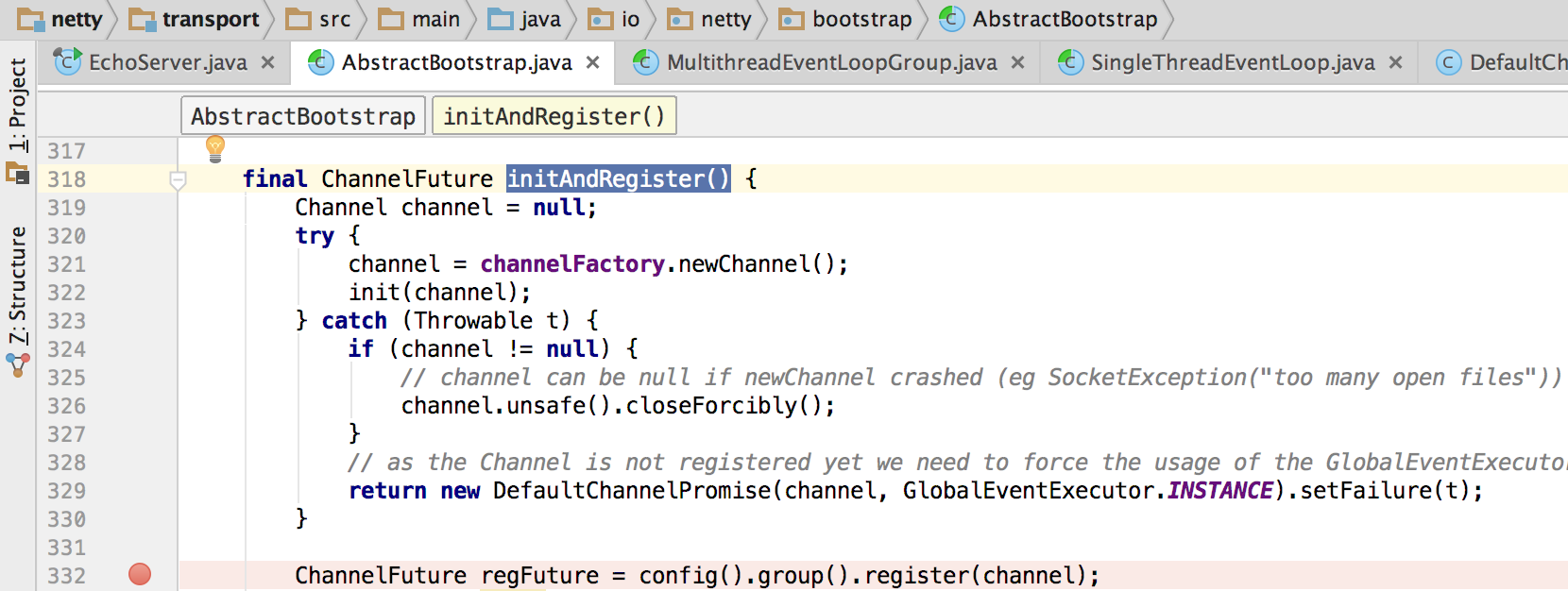
这里的channelFactory.newChannel()返回的是一个我们之前配置的channel类型的channel实例:(这块细节可以参考我的另一篇博客《ChannelFactory初始化》)
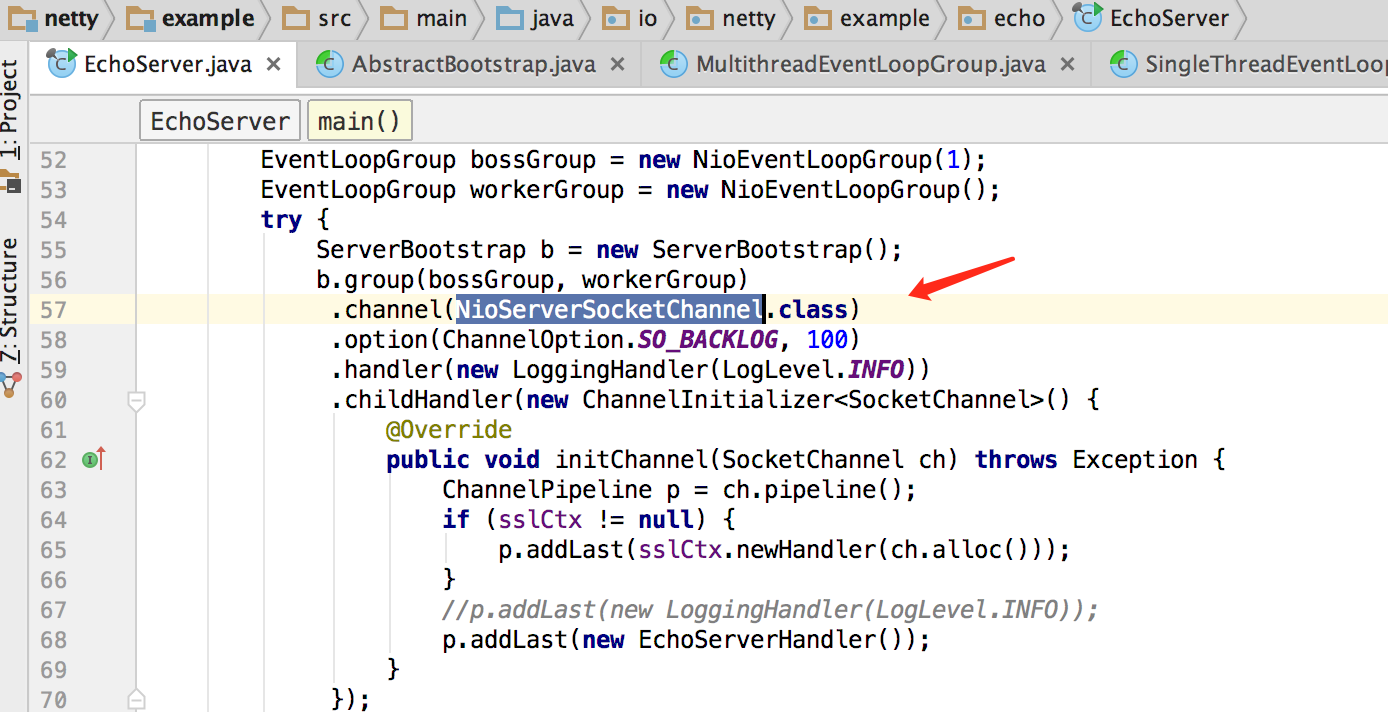
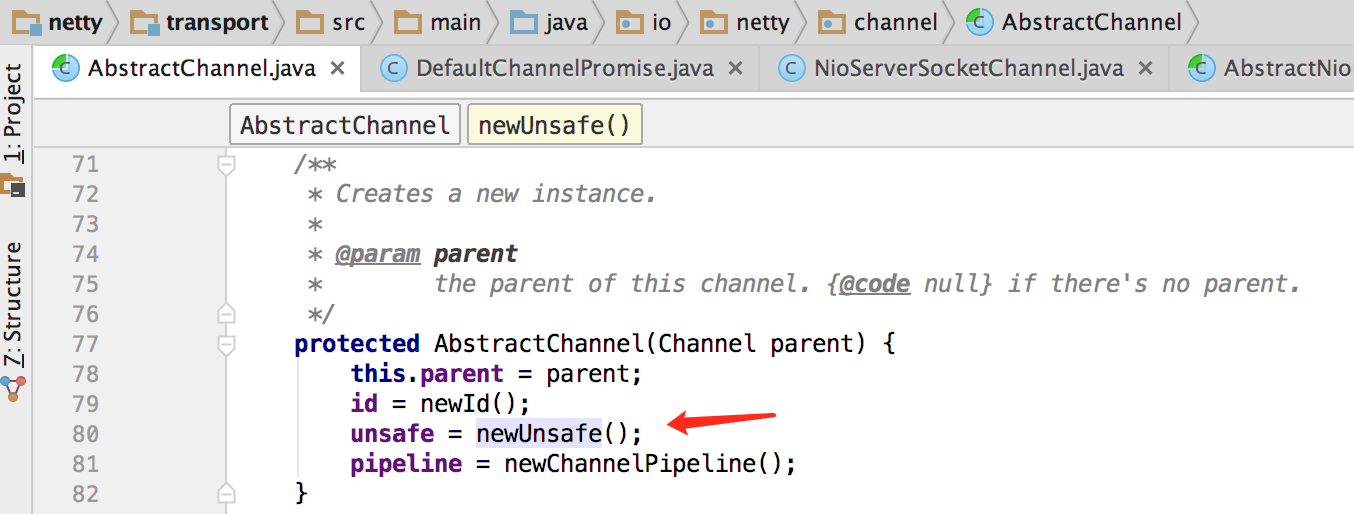
因为NioServerSocketChannel没有定义unsafe()这个方法。所以我们一直找到了它的祖祖父类:

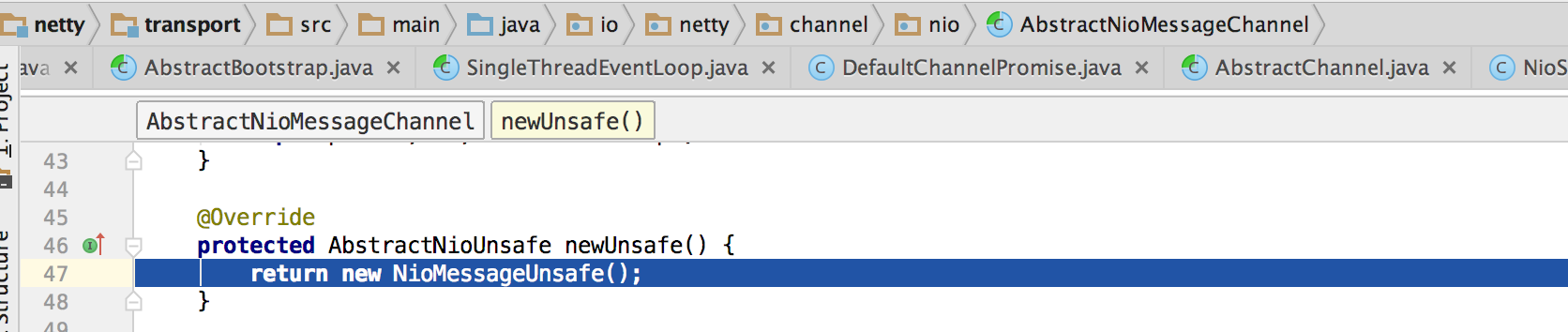
这个NioMessageUnsafe是AbstractNioMessageChannel的内部类。
知道了unsafe的类型后我们继续主流程:promise.channel().unsafe().register(this, promise);
现在进入NioMessageUnsafe.register(this,promise);同样调用的是它的父类中的register方法:
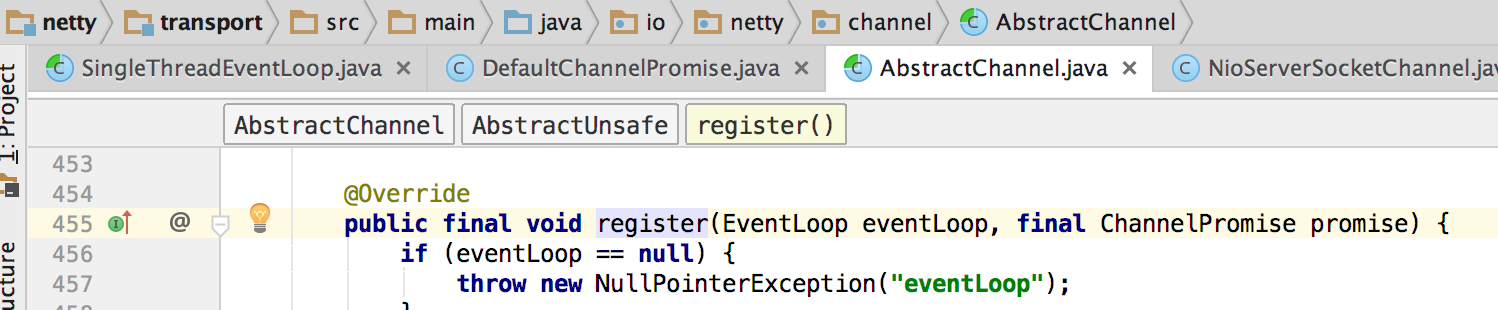
内容比较多我们用代码展示:
下面体现了netty中channel与eventloop的一一对应关系。体现了eventloop线程处理channel工作的逻辑。
        @Override

        public final void register(EventLoop eventLoop, final ChannelPromise promise) {

            if (eventLoop == null) {

                throw new NullPointerException("eventLoop");

            }
       //这里体现了一个channel只能对应一个eventloop

            if (isRegistered()) {

                promise.setFailure(new IllegalStateException("registered to an event loop already"));

                return;

            }

            if (!isCompatible(eventLoop)) {

                promise.setFailure(

                        new IllegalStateException("incompatible event loop type: " + eventLoop.getClass().getName()));

                return;

            }

       //注册到channel

            AbstractChannel.this.eventLoop = eventLoop;

       //判断当前线程是否为此eventloop线程

            if (eventLoop.inEventLoop()) {

                register0(promise);

            } else {
          //如果当前线程不是此eventloop线程

                try {

                    eventLoop.execute(new Runnable() {

                        @Override

                        public void run() {

                            register0(promise);

                        }

                    });

                } catch (Throwable t) {

                    logger.warn(

                            "Force-closing a channel whose registration task was not accepted by an event loop: {}",

                            AbstractChannel.this, t);

                    closeForcibly();

                    closeFuture.setClosed();

                    safeSetFailure(promise, t);

                }

            }

        }
上面就体现了eventloop的在netty中的应用。
我们直接看这个方法好了:register0(promise);这个方法就定义在上面方法的下面:
        private void register0(ChannelPromise promise) {

            try {

                // check if the channel is still open as it could be closed in the mean time when the register

                // call was outside of the eventLoop

                if (!promise.setUncancellable() || !ensureOpen(promise)) {

                    return;

                }

                boolean firstRegistration = neverRegistered;

                doRegister();

                neverRegistered = false;

                registered = true;

                // Ensure we call handlerAdded(...) before we actually notify the promise. This is needed as the

                // user may already fire events through the pipeline in the ChannelFutureListener.

                pipeline.invokeHandlerAddedIfNeeded();

                safeSetSuccess(promise);

                pipeline.fireChannelRegistered();

                // Only fire a channelActive if the channel has never been registered. This prevents firing

                // multiple channel actives if the channel is deregistered and re-registered.

                if (isActive()) {

                    if (firstRegistration) {

                        pipeline.fireChannelActive();

                    } else if (config().isAutoRead()) {

                        // This channel was registered before and autoRead() is set. This means we need to begin read

                        // again so that we process inbound data.

                        //

                        // See https://github.com/netty/netty/issues/4805

                        beginRead();

                    }

                }

            } catch (Throwable t) {

                // Close the channel directly to avoid FD leak.

                closeForcibly();

                closeFuture.setClosed();

                safeSetFailure(promise, t);

            }

        }
下面分析下doRegister()然后回来继续分析
==========我们开个分区分析下doRegister()方法=================================
eventloop中除了定义了一个线程外,它还包含了selector等操作。
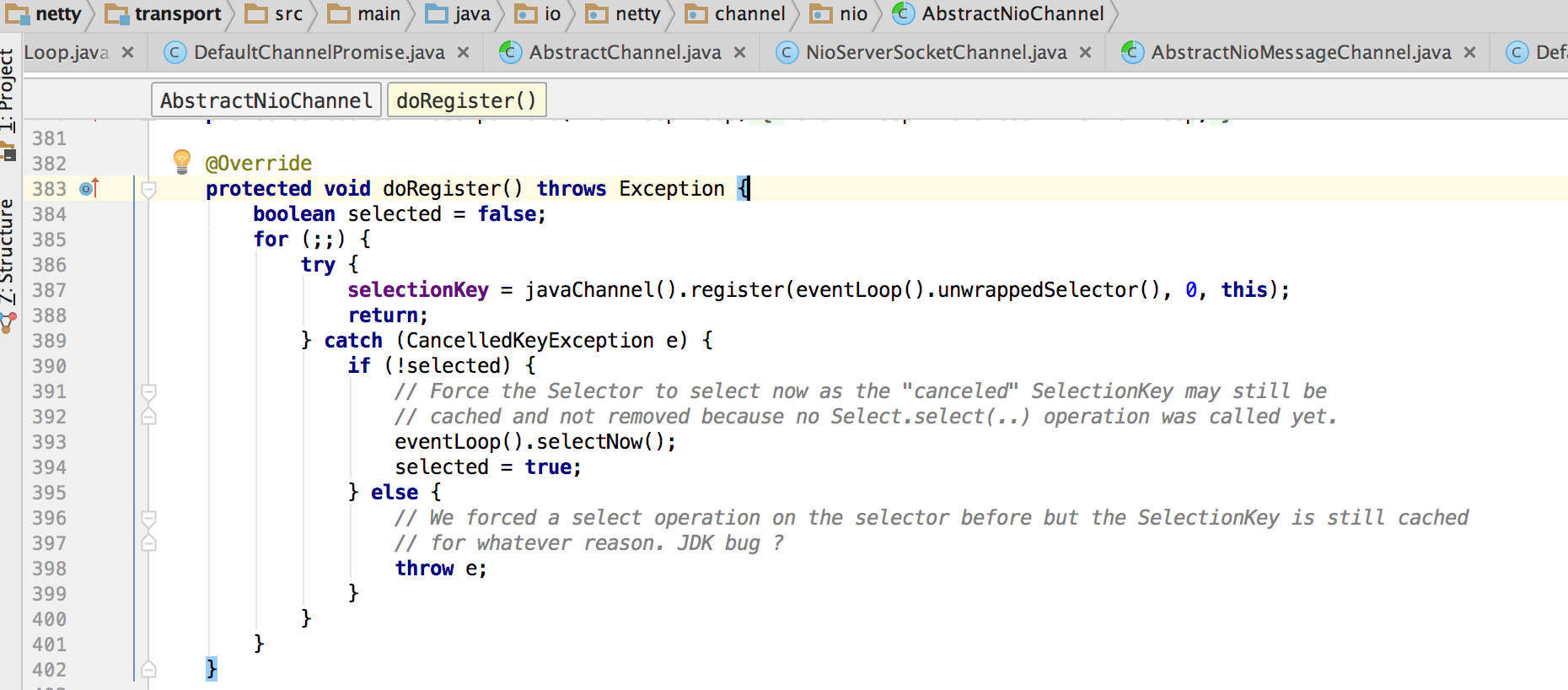
循环执行selectionKey = javaChannel().register(eventLoop().unwrappedSelector(), 0, this);
一直到成功为止。

import java.nio.channels.SelectableChannel;
public abstract SelectionKey register(Selector sel, int ops, Object att);这歌是个抽象方法。

然后这歌ServerSocketChannelImpl中并没有定义register(Selector sel, int ops, Object att)方法,所以我们就在SelectableChannel的子类中找。在AbstractSelectableChannel中找到了这个方法的实现,通过debug的确也定为到了这个方法:
java.nio.channels.spi.AbstractSelectableChannel;
    /**

     * Registers this channel with the given selector, returning a selection key.

     *

     * <p>  This method first verifies that this channel is open and that the

     * given initial interest set is valid.

     *

     * <p> If this channel is already registered with the given selector then

     * the selection key representing that registration is returned after

     * setting its interest set to the given value.

     *

     * <p> Otherwise this channel has not yet been registered with the given

     * selector, so the {@link AbstractSelector#register register} method of

     * the selector is invoked while holding the appropriate locks.  The

     * resulting key is added to this channel's key set before being returned.

     * </p>

     *

     * @throws  ClosedSelectorException {@inheritDoc}

     *

     * @throws  IllegalBlockingModeException {@inheritDoc}

     *

     * @throws  IllegalSelectorException {@inheritDoc}

     *

     * @throws  CancelledKeyException {@inheritDoc}

     *

     * @throws  IllegalArgumentException {@inheritDoc}

     */

    public final SelectionKey register(Selector sel, int ops,

                                       Object att)

        throws ClosedChannelException

    {

        synchronized (regLock) {

            if (!isOpen())

                throw new ClosedChannelException();

            if ((ops & ~validOps()) != 0)

                throw new IllegalArgumentException();

            if (blocking)

                throw new IllegalBlockingModeException();

            SelectionKey k = findKey(sel);

            if (k != null) {

                k.interestOps(ops);

                k.attach(att);

            }

            if (k == null) {

                // New registration

                synchronized (keyLock) {

                    if (!isOpen())

                        throw new ClosedChannelException();

                    k = ((AbstractSelector)sel).register(this, ops, att);

                    addKey(k);

                }

            }

            return k;

        }

    }
该实现是通过spi的机制实现的(关于spi可参考《java中的SPI机制》)
SelectableChannel的register(Selector selector, ...)和Selector的select()方法都会操作Selector对象的共享资源all-keys集合.
根据这个方法的注释我们可以很直观的看到这个方法的作用:Registers this channel with the given selector, returning a selection key
仔细看k = ((AbstractSelector)sel).register(this, ops, att);
这个地方喝我们平时经常写的nio代码是一样的。
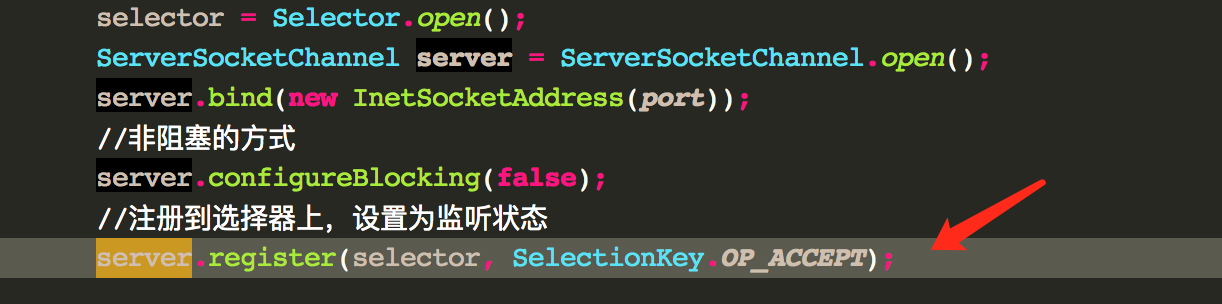
分析完这个方法后我们再来分析下eventLoop().unwrappedSelector();
这个东西我们在上面分析过了,直接返回NioEventLoop 的private Selector unwrappedSelector;属性。
=============================================================
然后我们继续回到register0(ChannelPromise promise)方法中来。上面我们分析完了doRegister();
doRegister()主要完成了channel注册到eventloop中selector的操作。
下面分析isActive()方法,这个方法定义在NioServerSocketChannel中:
  @Override

    public boolean isActive() {

        return javaChannel().socket().isBound();

    }
这个方法Returns the binding state of the ServerSocket.
如果是绑定状态并且是第一次注册则进入:
pipeline.fireChannelActive();

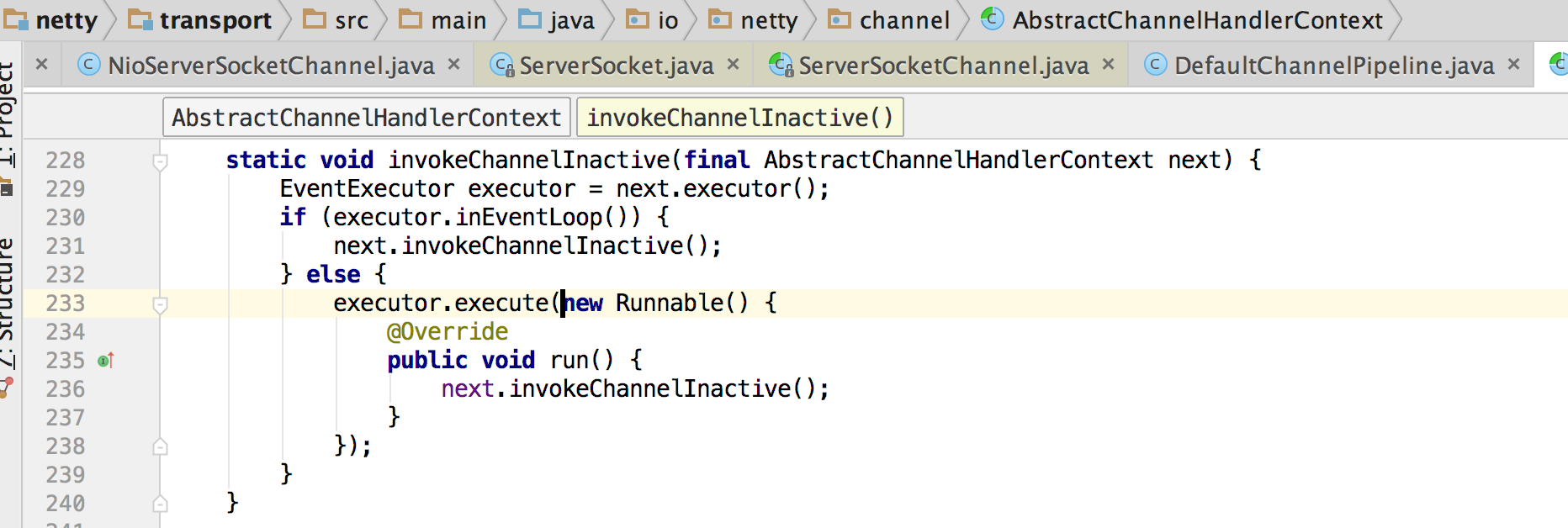

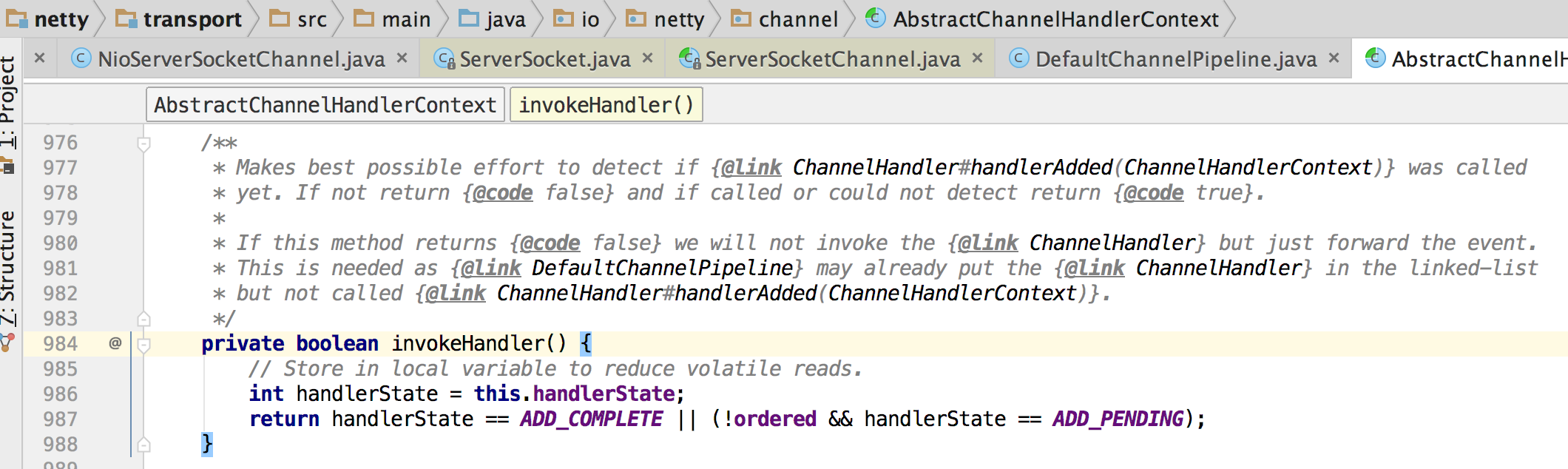
((ChannelInboundHandler) handler()).channelInactive(this);
这里穿进来this(AbstractChannelHandlerContext)。ChannelInboundHandler.channelInactive(this)中完成业务逻辑后还可以返回到这个方法。
正如我所说,默认情况下所有的handler都没有具体的业务都返回到上层方法来。
到此为止我们就分析完了AbstactBootstrap.doBind(..)方法中的initAndRegister()方法,并在这个过程中观察了NioEventLoopGroup的使用。
结下来就到了bind环节。有兴趣的可以参考我的另一篇博客《netty4 ServerBootstrap.bind(port) debug》。
Netty4 initAndRegister 解析的更多相关文章
- netty4 ServerBootstrap.bind(port) debug
代码是netty4自带的例子 我们在bind的行前加个断电,下面是ServerBootstrap.bind(port)方法所经历的一些步骤. 在AbstractBootstrap.initAndReg ...
- Netty4.0源码解析 NioServerSocketChannel
一.引言Netty的Channel在JDK NIO的Channel基础上做了一层封装,提供了更多的功能.Netty的中的Channel实现类主要有:NioServerSocketChannel(用于服 ...
- 基于Netty4的HttpServer和HttpClient的简单实现
Netty的主页:http://netty.io/index.html 使用的Netty的版本:netty-4.0.23.Final.tar.bz2 ‐ 15-Aug-2014 (Stable, Re ...
- 【原创】NIO框架入门(四):Android与MINA2、Netty4的跨平台UDP双向通信实战
概述 本文演示的是一个Android客户端程序,通过UDP协议与两个典型的NIO框架服务端,实现跨平台双向通信的完整Demo. 当前由于NIO框架的流行,使得开发大并发.高性能的互联网服务端成为可能. ...
- 【原创】NIO框架入门(一):服务端基于Netty4的UDP双向通信Demo演示
申明:本文由作者基于日常实践整理,希望对初次接触MINA.Netty的人有所启发.如需与作者交流,见文签名,互相学习. 学习交流 更多学习资料:点此进入 推荐 移动端即时通讯交流: 215891622 ...
- Netty4.x中文教程系列(五)编解码器Codec
Netty4.x中文教程系列(五)编解码器Codec 上一篇文章详细解释了ChannelHandler的相关构架设计,版本和设计逻辑变更等等. 这篇文章主要在于讲述Handler里面的Codec,也就 ...
- Netty 4源码解析:服务端启动
Netty 4源码解析:服务端启动 1.基础知识 1.1 Netty 4示例 因为Netty 5还处于测试版,所以选择了目前比较稳定的Netty 4作为学习对象.而且5.0的变化也不像4.0这么大,好 ...
- Netty5客户端源码解析
Netty5客户端源码解析 今天来分析下netty5的客户端源码,示例代码如下: import io.netty.bootstrap.Bootstrap; import io.netty.channe ...
- Netty5服务端源码解析
Netty5源码解析 今天让我来总结下netty5的服务端代码. 服务端(ServerBootstrap) 示例代码如下: import io.netty.bootstrap.ServerBootst ...
随机推荐
- linux 环境变量设置方法总结(PATH/LD_LIBRARY_PATH)
linux 环境变量设置方法总结(PATH/LD_LIBRARY_PATH) http://blog.csdn.net/wangeen/article/details/8159500 设置 Linux ...
- Selenium IDE安装和检查获取的控件路径技巧
来源:http://www.jianshu.com/p/0ea2dc83549f 从学习Selenium 开始,都是自己写脚本,后来得知有个插件Selenium IDE可以录制脚本,也懒得用了,觉得自 ...
- 虚拟机VMware 安装CentOS6.5
对linux完全小白的情况下,也能依据下面的文章,一步一步安装使用成功! CentOS 6.5 下载http://www.linuxdown.net/CentOS/2014/0928/3371.htm ...
- iOS开发 贝塞尔曲线UIBezierPath(后记)
使用CAShapeLayer与UIBezierPath可以实现不在view的drawRect方法中就画出一些想要的图形 . 1:UIBezierPath: UIBezierPath是在 UIKit 中 ...
- list 迭代器随机范围内移动
Increments an iterator by a specified number of positions. template<class InputIterator, class Di ...
- React Native - 2 控件Flexbox
*强烈建议使用Genymotion模拟器,比AVD速度快,功能强大. 1. flexDirection Flexbox是连续布局,它有主轴(primary axis)和交叉轴(cross axis ...
- 随机数问题--已知有个Random7()的函数,返回1到7随机自然数,让利用这个Random7()构造Random10()随机1~10.
Math.random()随机生成(0,1)之间的float数,Random7随机生成[1,7]之间的整数,利用Random7构造Random10的步骤: 1.生成数a:a是两次Random7的结果, ...
- 51nod 1459 迷宫游戏【最短路拓展】
1459 迷宫游戏 基准时间限制:1 秒 空间限制:131072 KB 你来到一个迷宫前.该迷宫由若干个房间组成,每个房间都有一个得分,第一次进入这个房间,你就可以得到这个分数.还有若干双向道路连 ...
- Codeforces Round #406 (Div. 2) D. Legacy (线段树建图dij)
D. Legacy time limit per test 2 seconds memory limit per test 256 megabytes input standard input out ...
- ASP.NET Core 2.2 基础知识(七) 选项模式
承接上一篇 配置, 选项模式是专门用类来表示相关配置的服务. 基本选项配置 新建一个选项类,该类必须是包含无参数的构造函数的非抽象类. public class MyOptions { public ...