
JS面向对象高级特性
本篇是通过学习视频《一头扎进javascirpt高级篇》整理的一些相关知识,大致包括下面几个方面:
1 对象的创建方法
2 对象的对象属性、私有属性、类属性
3 对象的对象方法、私有方法、类方法
4 javascirpt的继承、封装、与多态
对象的创建方法:
对象的创建可以通过两种方式,第一种通过对象初始化的方法:
            var person={

                name:"xingoo",

                age:26,

                say:function(){

                    console.log("say something");

                },

                action:function(){

                    console.log("do something");

                }

            };

            console.log(person.name);

            console.log(person.age);

            person.say();

            person.action();
第二种方式通过构造函数创建:
            function student(name,age){

                this.name = name;

                this.age = age;

                this.say = function(){

                    console.log("say something");

                }

                this.action = function(){

                    console.log("do something");

                }

            }

            var xingoo = new student("xingoo",27);

            console.log(xingoo.name);

            console.log(xingoo.age);

            xingoo.say();

            xingoo.action();
对象的属性
对象的属性分为对象属性、私有属性和类属性。
对象属性需要创建对象后才能使用;
私有属性在内部可以直接使用,在外部需要通过闭包才能使用。
类属性可以通过对象名称直接使用。
       function func(){

                this.objPro1 = "对象属性";

                func.prototype.objPro2 = "对象属性";

                var privatePro = "私有属性";

            }

            func.classPro = "类属性";

            console.log(func.classPro);

            var f = new func();

            console.log(f.objPro1);

            console.log(f.objPro2);

            <!-- 私有属性可以通过闭包获取 -->
对象的方法
对象方法包括:对象方法,私有方法和类方法,使用类似前面的属性。
            function demoFunc1(){

                var privateFunc = function(){

                    console.log("this is privateFunc");

                };

                privateFunc();

                this.objFunc1 = function(){

                    console.log("this is objFunc1");

                };

                demoFunc1.prototype.objFunc2 = function(){

                    console.log("this is objFunc2");

                };

            }

            demoFunc1.classFunc = function(){

                console.log("this is classFunc");

            };

            demoFunc1.classFunc();

            var f = new demoFunc1();

            f.objFunc1();

            f.objFunc2();
继承、封装与多态
JS要想实现继承,需要通过apply方法或者prototype实现。
如果单纯的使用apply方法,子类的原型是子类;如果使用prototype,那么子类的原型也将继承父类。
例如下面的代码:
            function Animal(name,age){

                this.name = name;

                this.age =age;

                this.say = function(){

                    console.log("animal say something");

                }

            }

            function Cat(name,age){

                Animal.apply(this,[name,age]);

            }

            <!-- Cat.prototype = new Animal();-->

            var cat1 = new Cat("xingoo",3);

            console.log(cat1.name);

            console.log(cat1.age);

            cat1.say();
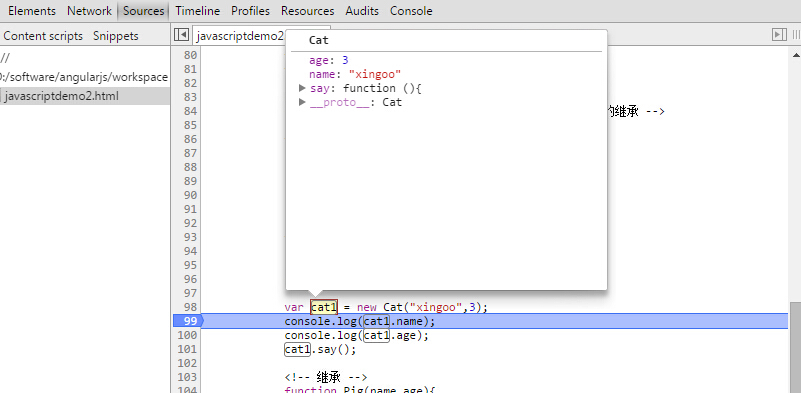
上面代码中,cat的原型是cat;
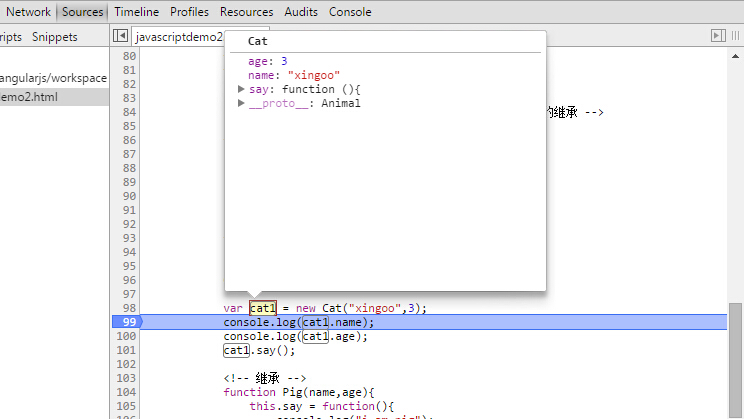
如果开启注释的部分,可以发现,cat类的原型也变成了Animal。
子类的方法会覆盖父类的方法,即表现出多态性:
            function Pig(name,age){

                this.say = function(){

                    console.log("i am pig");

                }

            }

            Pig.prototype = new Animal();

            function Dog(name,age){

                this.say = function(){

                    console.log("i am dog");

                }

            }

            Dog.prototype = new Animal();

            function say(animal){

                if(animal instanceof Animal){

                    animal.say();

                }

            }

            var dog = new Dog();

            var pig = new Pig();

            say(dog);

            say(pig);
使用到的全部代码:
<!doctype html>

<html>

    <head>

         <meta http-equiv="Content-Type" content="text/html; charset=utf-8" />

    </head>

    <body>

        <script type="text/javascript">

            <!-- 对象初始化器方式 -->

            var person={

                name:"xingoo",

                age:26,

                say:function(){

                    console.log("say something");

                },

                action:function(){

                    console.log("do something");

                }

            };

            console.log(person.name);

            console.log(person.age);

            person.say();

            person.action();

            <!-- 构造函数方式 -->

            function student(name,age){

                this.name = name;

                this.age = age;

                this.say = function(){

                    console.log("say something");

                }

                this.action = function(){

                    console.log("do something");

                }

            }

            var xingoo = new student("xingoo",27);

            console.log(xingoo.name);

            console.log(xingoo.age);

            xingoo.say();

            xingoo.action();

            <!-- 对象属性 私有属性,对象属性,类属性 -->

            function func(){

                this.objPro1 = "对象属性";

                func.prototype.objPro2 = "对象属性";

                var privatePro = "私有属性";

            }

            func.classPro = "类属性";

            console.log(func.classPro);

            var f = new func();

            console.log(f.objPro1);

            console.log(f.objPro2);

            <!-- 私有属性可以通过闭包获取 -->

            <!-- 私有方法,对象方法,类方法 -->

            function demoFunc1(){

                var privateFunc = function(){

                    console.log("this is privateFunc");

                };

                privateFunc();

                this.objFunc1 = function(){

                    console.log("this is objFunc1");

                };

                demoFunc1.prototype.objFunc2 = function(){

                    console.log("this is objFunc2");

                };

            }

            demoFunc1.classFunc = function(){

                console.log("this is classFunc");

            };

            demoFunc1.classFunc();

            var f = new demoFunc1();

            f.objFunc1();

            f.objFunc2();

            <!-- 封装性,继承性,多态性 -->

            <!-- apply()实现属性和方法的集成,prototype实现原型的继承 -->

            function Animal(name,age){

                this.name = name;

                this.age =age;

                this.say = function(){

                    console.log("animal say something");

                }

            }

            function Cat(name,age){

                Animal.apply(this,[name,age]);

            }

            <!-- Cat.prototype = new Animal();-->

            var cat1 = new Cat("xingoo",3);

            console.log(cat1.name);

            console.log(cat1.age);

            cat1.say();

            <!-- 继承 -->

            function Pig(name,age){

                this.say = function(){

                    console.log("i am pig");

                }

            }

            Pig.prototype = new Animal();

            function Dog(name,age){

                this.say = function(){

                    console.log("i am dog");

                }

            }

            Dog.prototype = new Animal();

            function say(animal){

                if(animal instanceof Animal){

                    animal.say();

                }

            }

            var dog = new Dog();

            var pig = new Pig();

            say(dog);

            say(pig);

        </script>

    </body>

</html>
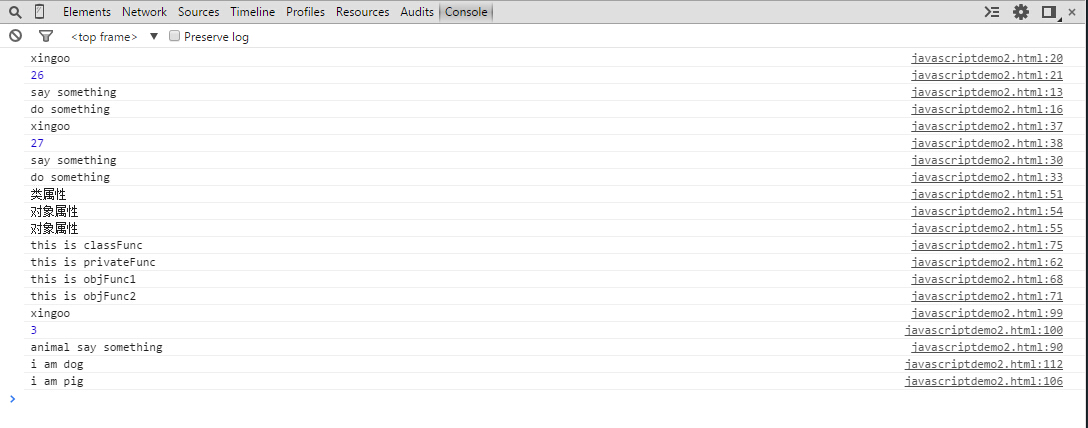
运行结果:
JS面向对象高级特性的更多相关文章
- Java第五次作业--面向对象高级特性(抽象类与接口)
Java第五次作业--面向对象高级特性(抽象类与接口) (一)学习总结 1.在上周完成的思维导图基础上,补充本周的学习内容,对Java面向对象编程的知识点做一个全面的总结. 2.汽车租赁公司,出租汽车 ...
- Java第四次作业——面向对象高级特性(继承和多态)
Java第四次作业--面向对象高级特性(继承和多态) (一)学习总结 1.学习使用思维导图对Java面向对象编程的知识点(封装.继承和多态)进行总结. 2.阅读下面程序,分析是否能编译通过?如果不能, ...
- Java第四次作业,面向对象高级特性(继承和多态)
Java第四次作业-面向对象高级特性(继承和多态) (一)学习总结 1.学习使用思维导图对Java面向对象编程的知识点(封装.继承和多态)进行总结. 2.阅读下面程序,分析是否能编译通过?如果不能,说 ...
- Java第四次作业—面向对象高级特性(继承和多态)
Java第四次作业-面向对象高级特性(继承和多态) (一)学习总结 1.学习使用思维导图对Java面向对象编程的知识点(封装.继承和多态)进行总结. 2.阅读下面程序,分析是否能编译通过?如果不能,说 ...
- js面向对象高级编程
面向对象的组成 <!DOCTYPE html PUBLIC "-//W3C//DTD XHTML 1.0 Transitional//EN" "http://www ...
- Java第五次作业--面向对象高级特性(抽象类和接口)
一.学习要点 认真看书并查阅相关资料,掌握以下内容: 掌握抽象类的设计 掌握接口的设计 理解简单工厂设计模式 理解抽象类和接口的区别 掌握包装类的应用 掌握对象的比较方法和比较器的使用 学习使用日期操 ...
- Java第四次作业--面向对象高级特性(继承和多态)
一.学习要点 认真看书并查阅相关资料,掌握以下内容: 掌握类的继承概念和设计 掌握构造方法的继承原则 掌握方法重写 掌握super键字和final关键字 理解多态的概念,掌握通过方法重写和方法重载机制 ...
- 五. 面向对象高级特性6. Java 泛型
我们知道,使用变量之前要定义,定义一个变量时必须要指明它的数据类型,什么样的数据类型赋给什么样的值. 假如我们现在要定义一个类来表示坐标,要求坐标的数据类型可以是整数.小数和字符串,例如: x = 1 ...
- 五. 面向对象高级特性1. Java内部类及其实例化
在 Java 中,允许在一个类(或方法.语句块)的内部定义另一个类,称为内部类(Inner Class),有时也称为嵌套类(Nested Class). 内部类和外层封装它的类之间存在逻辑上的所属关系 ...
随机推荐
- Same Tree
Given two binary trees, write a function to check if they are equal or not. Two binary trees are con ...
- linux netstat 命令简解
Netstat 简介: Netstat是在内核中访问网络及相关信息的程序,它能提供TCP连接,TCP和UDP监听,进程内存管理的相关报告.常见参数-a (all)显示所有选项,默认不显示LISTEN相 ...
- 如何解决inline-block元素的空白间距
早上在博客中有人提了这样一个问题:“li元素inline-block横向排列,出现了未知间隙”,我相信大家在写页面的时候都遇到过这样的情况吧. 我一般遇到这情况都会把li浮动起来,这样就没有间隙.但是 ...
- 在springmvc中使用hibernate-validate
在springmvc.xml中加入 <!-- 国际化配置 --> <bean id="localeResolver" class="org.spring ...
- AutoIT 实现Firefox上传文件
Firefox浏览器文件上传代码如下: ;upload file Func _UploadFile($file) AutoItSetOption("WinTitleMatchMode&quo ...
- this关键字的使用
一,表示类中属性 1,没有使用this的情况 class Person{ // 定义Person类 private String name ; // 姓名 private int age ; // 年 ...
- 谈谈Git的忽略规则.gitignore
对于经常使用Git的朋友来说,.gitignore配置一定不会陌生. 今天就来说说这个.gitignore的使用. 首先要强调一点,这个文件的完整文件名就是“.gitignore”,注意最前面有个“. ...
- 【转】【SSE】基于SSE指令集的程序设计简介
基于SSE指令集的程序设计简介 作者:Alex Farber 出处:http://www.codeproject.com/cpp/sseintro.asp SSE技术简介 Intel公司的单指令多数据 ...
- Google play billing(Google play 内支付)
准备工作 1. 通过Android SDK Manager下载extras中的Google Play services和Google Play Billing Library两个包. 2. 把下载的. ...
- CentOS 7 安装桌面环境
首先进入要使用root权限: 使用 yum grouplist可以看现在的安装情况以及支持哪些软件包. 使用 yum groupinstall "GNOME Desktop" &q ...