
Material Designer的低版本兼容实现(五)—— ActivityOptionsCompat
extends:http://www.cnblogs.com/tianzhijiexian/p/4087917.html
本文是对API中的方法做了介绍,如果想要看如何让这些方法兼容4.x或2.x可以看这篇文章:
用开源项目ActivityOptionsICS让ActivityOptions的动画实现兼容
新版的V4包中有了这个类—— ActivityOptionsCompat,我们可以通过这个类来启动activity和添加动画。但不幸的是所有的动画都没有给2.x用的,大部分动画也对4.x不兼容。我们就来看看是否让低版本也兼容这些动画效果。
好消息是这个类是兼容2.x的,通过这个类编写的嗲吗,虽然不能给2.x带来动画,但也能确保全版本稳定运行,不会需要我们判断版本。也就是说如果你给5.x平台做了动画,其他平台虽然不会执行动画,但仍旧可以稳定打开activity。下面我们通过远吗进行分析下这个类。
1.文档解释

(1)ActivityOptionsCompat.makeCustomAnimation(context, enterResId, exitResId)
简单做一个定制的动画,这个参数很简单,传入一个进入的动画的id,和移除动画的id即可

        //让新的Activity从一个小的范围扩大到全屏

        ActivityOptionsCompat options =

                ActivityOptionsCompat.makeCustomAnimation(this,

                        R.anim.slide_bottom_in, R.anim.slide_bottom_out);

        startNewAcitivity(options);
    private void startNewAcitivity(ActivityOptionsCompat options) {

        Intent intent = new Intent(this,DetailActivity.class);

        ActivityCompat.startActivity(this, intent, options.toBundle());

    }
这个我感觉没什么用处,类似于
        Intent intent = new Intent(this,DetailActivity.class);

        startActivity(intent);

        overridePendingTransition(R.anim.slide_bottom_in, android.R.anim.fade_out);
还不如直接用这个全版本的overridePendingTransition呢
(2)ActivityOptionsCompat.makeScaleUpAnimation(source, startX, startY, startWidth, startHeight)
这个在4.x上有用,可以实现新的Activity从某个固定的坐标以某个大小扩大至全屏,我觉得效果挺不错的。
 这个新Activity就是从根据那个图片的坐标来拉伸展示的,对于相册是很好的展示效果。
private void scaleUpAnimation(View view) {

        //让新的Activity从一个小的范围扩大到全屏

        ActivityOptionsCompat options =

                ActivityOptionsCompat.makeScaleUpAnimation(view, //The View that the new activity is animating from

                        (int)view.getWidth()/2, (int)view.getHeight()/2, //拉伸开始的坐标

                        0, 0);//拉伸开始的区域大小,这里用(0,0)表示从无到全屏

        startNewAcitivity(options);

    }
    private void startNewAcitivity(ActivityOptionsCompat options) {

        Intent intent = new Intent(this,DetailActivity.class);

        ActivityCompat.startActivity(this, intent, options.toBundle());

    }
(3)ActivityOptionsCompat.makeSceneTransitionAnimation(activity, sharedElement, sharedElementName)
当你需要当前界面中的某个元素和新界面中的元素有关时,你可以使用这个动画。效果很赞~!
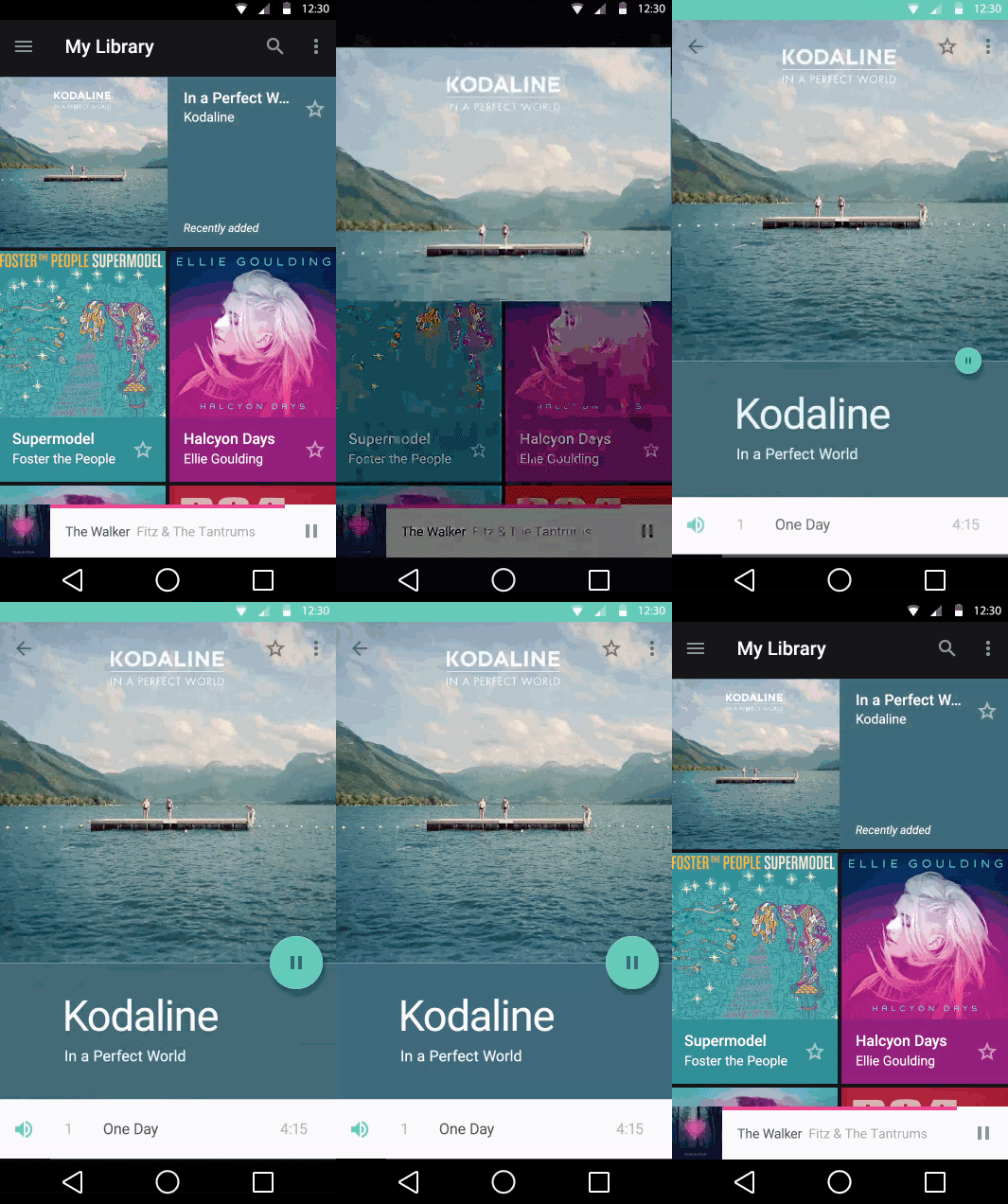 这个图片就是通过动画和上一个界面的图片进行了联系。
要使用这个方法就必须给两个不同Activity的中的布局元素设定同样的一个android:transitionName,然后还需要一个标志来告诉Window执行动画,因为这个只是在5.x上有效,不是本文的讨论范围。详细看官方文档即可。
标志:etWindow().requestFeature(Window.FEATURE_CONTENT_TRANSITIONS);
也可以参考文章:
http://blog.csdn.net/a396901990/article/details/40187203
http://blog.jobbole.com/77015/
(4)ActivityOptionsCompat.makeSceneTransitionAnimation((Activity arg0, Pair<View, String>... arg1)
这个方法用于多个元素和新的Activity相关的情况,注意下第二个参数Pair这个键值对后面有...,标明是可以传入多个Pair对象的。
(5)ActivityOptionsCompat.makeThumbnailScaleUpAnimation(source, thumbnail, startX, startY)
这个方法可以用于4.x上,是将一个小块的Bitmpat进行拉伸的动画。
详细使用方式,参考官方文档:https://developer.android.com/training/material/animations.html
2.源码
看完了文档,心里各种凄凉。很多优秀的动画都不向下兼容,那么我们去源码中看看我们的主流4.x版本能用上什么。
public class ActivityOptionsCompat {

    /**

     * Create an ActivityOptions specifying a custom animation to run when the

     * activity is displayed.

     *

     * @param context Who is defining this. This is the application that the

     * animation resources will be loaded from.

     * @param enterResId A resource ID of the animation resource to use for the

     * incoming activity. Use 0 for no animation.

     * @param exitResId A resource ID of the animation resource to use for the

     * outgoing activity. Use 0 for no animation.

     * @return Returns a new ActivityOptions object that you can use to supply

     * these options as the options Bundle when starting an activity.

     */

    public static ActivityOptionsCompat makeCustomAnimation(Context context,

            int enterResId, int exitResId) {

        if (Build.VERSION.SDK_INT >= 16) {

            return new ActivityOptionsImplJB(

                ActivityOptionsCompatJB.makeCustomAnimation(context, enterResId, exitResId));

        }

        return new ActivityOptionsCompat();

    }

    /**

     * Create an ActivityOptions specifying an animation where the new activity is

     * scaled from a small originating area of the screen to its final full

     * representation.

     * <p/>

     * If the Intent this is being used with has not set its

     * {@link android.content.Intent#setSourceBounds(android.graphics.Rect)},

     * those bounds will be filled in for you based on the initial bounds passed

     * in here.

     *

     * @param source The View that the new activity is animating from. This

     * defines the coordinate space for startX and startY.

     * @param startX The x starting location of the new activity, relative to

     * source.

     * @param startY The y starting location of the activity, relative to source.

     * @param startWidth The initial width of the new activity.

     * @param startHeight The initial height of the new activity.

     * @return Returns a new ActivityOptions object that you can use to supply

     * these options as the options Bundle when starting an activity.

     */

    public static ActivityOptionsCompat makeScaleUpAnimation(View source,

            int startX, int startY, int startWidth, int startHeight) {

        if (Build.VERSION.SDK_INT >= 16) {

            return new ActivityOptionsImplJB(

                ActivityOptionsCompatJB.makeScaleUpAnimation(source, startX, startY,

                        startWidth, startHeight));

        }

        return new ActivityOptionsCompat();

    }

    /**

     * Create an ActivityOptions specifying an animation where a thumbnail is

     * scaled from a given position to the new activity window that is being

     * started.

     * <p/>

     * If the Intent this is being used with has not set its

     * {@link android.content.Intent#setSourceBounds(android.graphics.Rect)},

     * those bounds will be filled in for you based on the initial thumbnail

     * location and size provided here.

     *

     * @param source The View that this thumbnail is animating from. This

     * defines the coordinate space for startX and startY.

     * @param thumbnail The bitmap that will be shown as the initial thumbnail

     * of the animation.

     * @param startX The x starting location of the bitmap, relative to source.

     * @param startY The y starting location of the bitmap, relative to source.

     * @return Returns a new ActivityOptions object that you can use to supply

     * these options as the options Bundle when starting an activity.

     */

    public static ActivityOptionsCompat makeThumbnailScaleUpAnimation(View source,

            Bitmap thumbnail, int startX, int startY) {

        if (Build.VERSION.SDK_INT >= 16) {

            return new ActivityOptionsImplJB(

                ActivityOptionsCompatJB.makeThumbnailScaleUpAnimation(source, thumbnail,

                        startX, startY));

        }

        return new ActivityOptionsCompat();

    }
/*

 * Copyright (C) 2012 The Android Open Source Project

 *

 * Licensed under the Apache License, Version 2.0 (the "License");

 * you may not use this file except in compliance with the License.

 * You may obtain a copy of the License at

 *

 *      http://www.apache.org/licenses/LICENSE-2.0

 *

 * Unless required by applicable law or agreed to in writing, software

 * distributed under the License is distributed on an "AS IS" BASIS,

 * WITHOUT WARRANTIES OR CONDITIONS OF ANY KIND, either express or implied.

 * See the License for the specific language governing permissions and

 * limitations under the License.

 */

package android.support.v4.app;

import android.app.ActivityOptions;

import android.content.Context;

import android.graphics.Bitmap;

import android.os.Bundle;

import android.view.View;

class ActivityOptionsCompatJB {

    public static ActivityOptionsCompatJB makeCustomAnimation(Context context,

            int enterResId, int exitResId) {

        return new ActivityOptionsCompatJB(

            ActivityOptions.makeCustomAnimation(context, enterResId, exitResId));

    }

    public static ActivityOptionsCompatJB makeScaleUpAnimation(View source,

            int startX, int startY, int startWidth, int startHeight) {

        return new ActivityOptionsCompatJB(

            ActivityOptions.makeScaleUpAnimation(source, startX, startY, startWidth, startHeight));

    }

    public static ActivityOptionsCompatJB makeThumbnailScaleUpAnimation(View source,

            Bitmap thumbnail, int startX, int startY) {

        return new ActivityOptionsCompatJB(

            ActivityOptions.makeThumbnailScaleUpAnimation(source, thumbnail, startX, startY));

    }

    private final ActivityOptions mActivityOptions;

    private ActivityOptionsCompatJB(ActivityOptions activityOptions) {

        mActivityOptions = activityOptions;

    }

    public Bundle toBundle() {

        return mActivityOptions.toBundle();

    }

    public void update(ActivityOptionsCompatJB otherOptions) {

        mActivityOptions.update(otherOptions.mActivityOptions);

    }

}
我们可以完全了解到,4.x上能用的就这么三个动画效果,第一个第三我个人认为没啥用处,第二个效果好点,但仅仅适用于照片墙。于是就很悲剧了,这个新的类仅仅带来了低版本兼容不报错的效果,对于新的特性各种不支持。反过来想,反正动画这个东西对用户来说好看和不好看也没差,功能是最主要的。
这个是讲5.0动画效果的文章,如果做5.0开发的话可以看看。但我估计在4.x主流的今天,这些特效还只能自己写兼容包了。
http://blog.csdn.net/a396901990/article/details/40187203
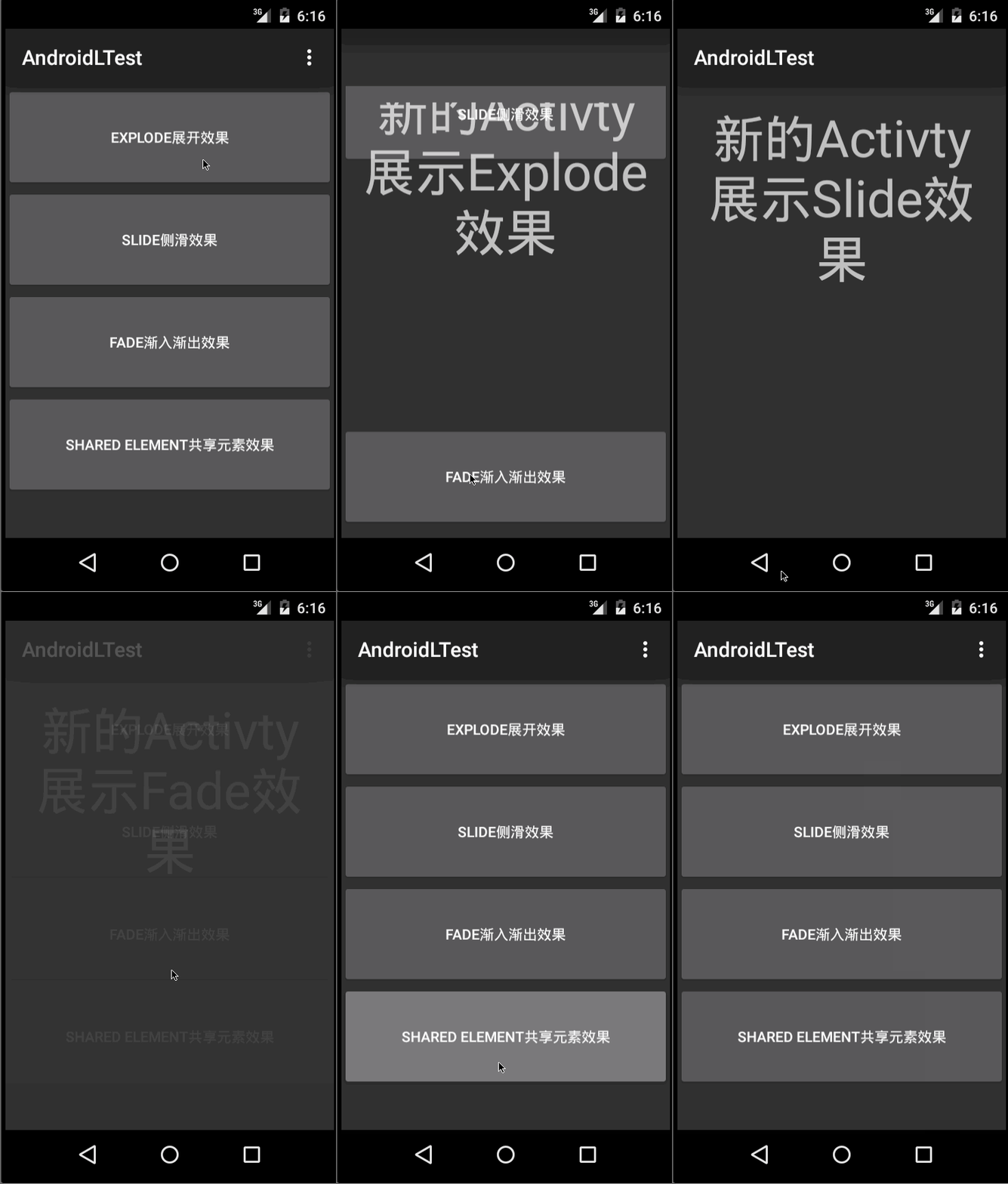
动画
好了,虽然我们不能用这么酷炫的动画,但我们还可以用传统动画嘛。我研究了下图片放大的效果,写了一篇文章,其实还可以继续优化。贴上文章地址和效果图。
地址:http://www.cnblogs.com/tianzhijiexian/p/4095756.html
效果图:

下面分享下使用动画的方法,在启动activity的时候进行设置,然后在开启的activity中的onBackPressed()也进行相应的设置,就能出现流畅的效果啦。
举例:
MainActivity
    private void simpleStartActivity() {

        Intent intent = new Intent(this,DetailActivity.class);

        startActivity(intent);

        //overridePendingTransition(R.anim.slide_left_in, R.anim.slide_right_out);

        overridePendingTransition(R.anim.slide_bottom_in, android.R.anim.fade_out);

    }
DetailActivity
package com.kale.activityoptionstest;

import android.os.Bundle;

import android.support.v7.app.ActionBarActivity;

public class DetailActivity extends ActionBarActivity{

    @Override

    protected void onCreate(Bundle savedInstanceState) {

        super.onCreate(savedInstanceState);

        setContentView(R.layout.item_detail);

    }

    @Override

    public void onBackPressed() {

        super.onBackPressed();

        //overridePendingTransition(R.anim.slide_right_in, R.anim.slide_left_out);

        overridePendingTransition(0, R.anim.slide_bottom_out);

    }

}
这样就可以实现,第二个Activity从屏幕下方出现,按下返回键后会从屏幕下方离开了。
最后给出几个常用的动画效果
slide_bottom_in.xml
<set xmlns:android="http://schemas.android.com/apk/res/android"

    android:interpolator="@android:anim/accelerate_decelerate_interpolator"

    android:shareInterpolator="true">

    <translate

        android:duration="300"

        android:fromYDelta="100%p"

        android:toYDelta="0.0" />

</set>
slide_bottom_out.xml
<?xml version="1.0" encoding="utf-8"?>

<set xmlns:android="http://schemas.android.com/apk/res/android"

    android:interpolator="@android:anim/accelerate_decelerate_interpolator"

    android:shareInterpolator="true">

    <translate

        android:duration="300"

        android:fromYDelta="0.0"

        android:toYDelta="100%p" />

</set>
slide_left_in.xml
<?xml version="1.0" encoding="utf-8"?>

<set xmlns:android="http://schemas.android.com/apk/res/android" >

    <translate

        android:duration="300"

        android:fromXDelta="-100.0%p"

        android:toXDelta="0.0" />

</set>
slide_left_out.xml
<?xml version="1.0" encoding="utf-8"?>

<set xmlns:android="http://schemas.android.com/apk/res/android" >

    <translate

        android:duration="300"

        android:fromXDelta="0.0"

        android:toXDelta="-100.0%p" />

</set>
slide_right_in.xml
<?xml version="1.0" encoding="utf-8"?>

<set xmlns:android="http://schemas.android.com/apk/res/android" >

    <translate

        android:duration="300"

        android:fromXDelta="100.0%p"

        android:toXDelta="0.0" />

</set>
slide_right_out.xml
<?xml version="1.0" encoding="utf-8"?>

<set xmlns:android="http://schemas.android.com/apk/res/android" >

    <translate

        android:duration="300"

        android:fromXDelta="0.0"

        android:toXDelta="100.0%p" />

</set>
slide_top_in.xml
<?xml version="1.0" encoding="utf-8"?>

<set xmlns:android="http://schemas.android.com/apk/res/android"

    android:startOffset="50">

    <translate

        android:fromYDelta="-100%p"

        android:toYDelta="0%p"

        android:duration="300"/>

</set>
slide_top_out.xml
<?xml version="1.0" encoding="utf-8"?>

<set xmlns:android="http://schemas.android.com/apk/res/android"

    android:startOffset="50" >

    <translate

        android:duration="300"

        android:fromYDelta="0%p"

        android:toYDelta="-100%p" />

</set>
Material Designer的低版本兼容实现(五)—— ActivityOptionsCompat的更多相关文章
- Material Designer的低版本兼容实现(一)—— 简介 & 目录
很长一段时间没写东西了,其实是因为最近在研究Material Designer这个东西,熬夜熬的身体也不是很好了.所以就偷懒没写东西,这回开的这个系列文章是讲如何将Material Designer在 ...
- Material Designer的低版本兼容实现(二)—— Theme
Theme material主题可以定义为如下形式: @android:style/Theme.Material @android:style/Theme.Material.Light @androi ...
- Material Designer的低版本兼容实现(三)——Color
在Material Designer中,色彩再一次被摆到了重要的位置上.官方文档中竟然给出了500种配色方案进行选择.就是为了给不同的手机.电视.手表上带来一直的用户体验. 更多用于控制色彩的属性,可 ...
- Material Designer的低版本兼容实现(十)—— CheckBox & RadioButton
ChekBox的用途我们就不必多说了,算是一个很古老的控件了,何其类似的还有RadioButton,这个东西因为我目前还没写出来,所以用了别人的一个lib,这下面会说到.顺便说一句,如果你的app是在 ...
- Material Designer的低版本兼容实现(十二)—— Slider or SeekBar
Slider,我更喜欢叫他SeekBar,其实是一个东西啦,就是拖动条.5.0的拖动条和4.x上的HOLO风格完全不同,平添了一些精致.此外还加入了数值指示器,让用户在滑动的时候就能知道现在到了什么位 ...
- Material Designer的低版本兼容实现(十四)—— CardView
今天说的又是一个5.0中才有的新控件——CardView(卡片视图).这个东东其实我们早就见过了,无论是微博还是人人客户端,它都有出现.通常我们都是通过自定义一个背景图片,然后通过给layout进行设 ...
- Material Designer的低版本兼容实现(十三)—— ProgressBar
进度条我们都很常见了,新的设计规范中提出了各式各样的进度条,本篇就会介绍大部分进度条的实现.实现方式和规范的示例图可能略有差异,还是那句话根据具体需求进行改变吧. PS:本文较长 参考文档:http: ...
- Material Designer的低版本兼容实现(十一)—— Switch
5.0中的switch和之前完全不同了,漂亮不漂亮咱们另说,总之4.x上是没有这样的效果了.实现方式有两种,一种是用这个兼容包来做类似的效果,一种是用传统的checkbox来代替.我感觉兼容包的效果是 ...
- Material Designer的低版本兼容实现(九)—— Float Button & Small Float Button
5.0一个新特性就是出现了这么一个圆形的悬浮指示按钮,这个按钮可以用来体现一个全局的重要功能,比如添加账户什么的.这个按钮有两种大小,一种是正常的按钮大小,一种是小型的按钮.官方文档中介绍的是小心的按 ...
随机推荐
- H5C304
H5C304 1.渐变 1)线性渐变 point,angle可取4个值:如上所示 需要使用background添加 2)径向渐变 position是按照元素右上为原点的 3)重复渐变 同样有重复线性渐 ...
- openstack 之~keystone之网关协议
第一:静态页面和动态页面 上一篇博客介绍了HTTP后,我们知道一个web server的本质就是 浏览器发送一个HTTP请求: 服务器收到请求,生成一个HTML文档: 服务器把HTML文档作为HTTP ...
- Oracle创建Database Link
一菜单方式: 打开plsql,点击[File]-[New]-[Database link],打开如下图所示窗口 填好各项信息后,点击[Apply]即可完成Database Link的创建. 二SQL方 ...
- 【转】http的keep-alive和tcp的keepalive区别
http://blog.csdn.net/oceanperfect/article/details/51064574 1.HTTP Keep-Alive在http早期,每个http请求都要求打开一个t ...
- chmod不起作用的原因分析 - Linux下查看分区文件系统类型
chmod不起作用 可能的原因: chmod对应的是windows下的一个磁盘分区,ntfs不支持linux权限 附:Linux下如何查看分区文件系统类型 1,fdisk -l fdisk -l 只能 ...
- OKDownload 下载框架 断点续传 MD
Markdown版本笔记 我的GitHub首页 我的博客 我的微信 我的邮箱 MyAndroidBlogs baiqiantao baiqiantao bqt20094 baiqiantao@sina ...
- fopen_s遇到的一个问题
今天使用公司代码的日志模块记录程序运行的相关信息,发现日志总是只有两条记录,即程序启动和结束,别的都没有.跟踪了很久,终于发现是日志输出模块被我修改了一个地方:把fopen改成了fopen_s,毕竟报 ...
- [Algorithm] Fibonacci Sequence - Anatomy of recursion and space complexity analysis
For Fibonacci Sequence, the space complexity should be the O(logN), which is the height of tree. Che ...
- Redis具体解释
redis 学习指南 一.介绍 Redis是一个开源的使用ANSI C语言编写.支持网络.可基于内存亦可持久化的日志型.一个高性能的key-value数据库.并提供多种语言的API.说到Key-Val ...
- Android TextView中链接(link)点击事件的截取
布局文件xml <TextView package com.jayce.testlink; import android.net.Uri; import android.os.Bundle; i ...