
SpringMVC源码之Controller查找原理
摘要
- 本文从源码层面简单讲解SpringMVC的处理器映射环节,也就是查找Controller详细过程。
SpringMVC请求流程
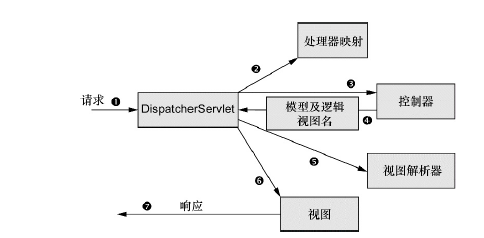
- Controller查找在上图中对应的步骤1至2的过程
SpringMVC初始化过程
理解初始化过程之前,先认识两个类
- RequestMappingInfo类,对RequestMapping注解封装。里面包含http请求头的相关信息。如uri、method、params、header等参数。一个对象对应一个RequestMapping注解
- HandlerMethod类,是对Controller的处理请求方法的封装。里面包含了该方法所属的bean对象、该方法对应的method对象、该方法的参数等。
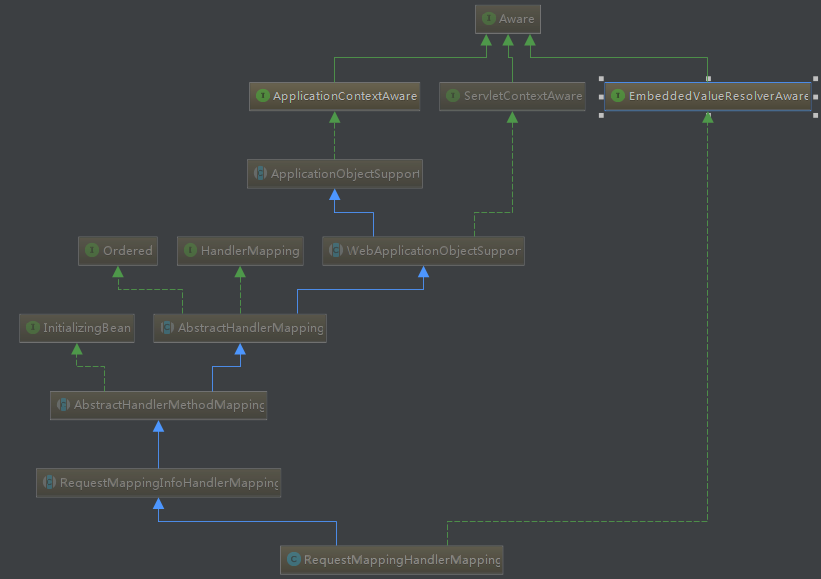
- 上图是RequestMappingHandlerMapping的继承关系。在SpringMVC初始化的时候,首先执行RequestMappingHandlerMapping中的afterPropertiesSet方法,然后会进入AbstractHandlerMethodMapping的afterPropertiesSet方法(line:93),这个方法会进入当前类的initHandlerMethods方法(line:103)。这个方法的职责便是从applicationContext中扫描beans,然后从bean中查找并注册处理器方法,代码如下。
protected void initHandlerMethods() {

  if (logger.isDebugEnabled()) {

      logger.debug("Looking for request mappings in application context: " + getApplicationContext());

  }

  //获取applicationContext中所有的bean name

  String[] beanNames = (this.detectHandlerMethodsInAncestorContexts ?

        BeanFactoryUtils.beanNamesForTypeIncludingAncestors(getApplicationContext(), Object.class) :

        getApplicationContext().getBeanNamesForType(Object.class));

  //遍历beanName数组

  for (String beanName : beanNames) {

      //isHandler会根据bean来判断bean定义中是否带有Controller注解或RequestMapping注解

      if (isHandler(getApplicationContext().getType(beanName))){

        detectHandlerMethods(beanName);

      }

  }

  handlerMethodsInitialized(getHandlerMethods());

}
- isHandler方法其实很简单,如下
@Override

protected boolean isHandler(Class<?> beanType) {

  return ((AnnotationUtils.findAnnotation(beanType, Controller.class) != null) ||

        (AnnotationUtils.findAnnotation(beanType, RequestMapping.class) != null));

}
- 就是判断当前bean定义是否带有Controlller注解或RequestMapping注解,看了这里逻辑可能会想如果只有RequestMapping会生效吗?答案是不会的,因为在这种情况下Spring初始化的时候不会把该类注册为Spring bean,遍历beanNames时不会遍历到这个类,所以这里把Controller换成Compoent注解也是可以,不过一般不会这么做。当确定bean为handlers后,便会从该bean中查找出具体的handler方法(也就是我们通常定义的Controller类下的具体定义的请求处理方法),查找代码如下
protected void detectHandlerMethods(final Object handler) {

  //获取到当前Controller bean的class对象

  Class<?> handlerType = (handler instanceof String) ?

        getApplicationContext().getType((String) handler) : handler.getClass();

  //同上,也是该Controller bean的class对象

  final Class<?> userType = ClassUtils.getUserClass(handlerType);

  //获取当前bean的所有handler method。这里查找的依据便是根据method定义是否带有RequestMapping注解。如果有根据注解创建RequestMappingInfo对象

  Set<Method> methods = HandlerMethodSelector.selectMethods(userType, new MethodFilter() {

      public boolean matches(Method method) {

        return getMappingForMethod(method, userType) != null;

      }

  });

  //遍历并注册当前bean的所有handler method

  for (Method method : methods) {

      T mapping = getMappingForMethod(method, userType);

      //注册handler method,进入以下方法

      registerHandlerMethod(handler, method, mapping);

  }

}
- 以上代码有两个地方有调用了getMappingForMethod方法
protected RequestMappingInfo getMappingForMethod(Method method, Class<?> handlerType) {

  RequestMappingInfo info = null;

   //获取method的@RequestMapping注解

  RequestMapping methodAnnotation = AnnotationUtils.findAnnotation(method, RequestMapping.class);

  if (methodAnnotation != null) {

      RequestCondition<?> methodCondition = getCustomMethodCondition(method);

      info = createRequestMappingInfo(methodAnnotation, methodCondition);

       //获取method所属bean的@RequtestMapping注解

      RequestMapping typeAnnotation = AnnotationUtils.findAnnotation(handlerType, RequestMapping.class);

      if (typeAnnotation != null) {

        RequestCondition<?> typeCondition = getCustomTypeCondition(handlerType);

        //合并两个@RequestMapping注解

        info = createRequestMappingInfo(typeAnnotation, typeCondition).combine(info);

      }

  }

  return info;

}
- 这个方法的作用就是根据handler method方法创建RequestMappingInfo对象。首先判断该mehtod是否含有RequestMpping注解。如果有则直接根据该注解的内容创建RequestMappingInfo对象。创建以后判断当前method所属的bean是否也含有RequestMapping注解。如果含有该注解则会根据该类上的注解创建一个RequestMappingInfo对象。然后在合并method上的RequestMappingInfo对象,最后返回合并后的对象。现在回过去看detectHandlerMethods方法,有两处调用了getMappingForMethod方法,个人觉得这里是可以优化的,在第一处判断method时否为handler时,创建的RequestMappingInfo对象可以保存起来,直接拿来后面使用,就少了一次创建RequestMappingInfo对象的过程。然后紧接着进入registerHandlerMehtod方法,如下
protected void registerHandlerMethod(Object handler, Method method, T mapping) {

  //创建HandlerMethod

  HandlerMethod newHandlerMethod = createHandlerMethod(handler, method);

  HandlerMethod oldHandlerMethod = handlerMethods.get(mapping);

  //检查配置是否存在歧义性

  if (oldHandlerMethod != null && !oldHandlerMethod.equals(newHandlerMethod)) {

      throw new IllegalStateException("Ambiguous mapping found. Cannot map '" + newHandlerMethod.getBean()

            + "' bean method \n" + newHandlerMethod + "\nto " + mapping + ": There is already '"

            + oldHandlerMethod.getBean() + "' bean method\n" + oldHandlerMethod + " mapped.");

  }

  this.handlerMethods.put(mapping, newHandlerMethod);

  if (logger.isInfoEnabled()) {

      logger.info("Mapped \"" + mapping + "\" onto " + newHandlerMethod);

  }

  //获取@RequestMapping注解的value,然后添加value->RequestMappingInfo映射记录至urlMap中

  Set<String> patterns = getMappingPathPatterns(mapping);

  for (String pattern : patterns) {

      if (!getPathMatcher().isPattern(pattern)) {

        this.urlMap.add(pattern, mapping);

      }

  }

}
- 这里T的类型是RequestMappingInfo。这个对象就是封装的具体Controller下的方法的RequestMapping注解的相关信息。一个RequestMapping注解对应一个RequestMappingInfo对象。HandlerMethod和RequestMappingInfo类似,是对Controlelr下具体处理方法的封装。先看方法的第一行,根据handler和mehthod创建HandlerMethod对象。第二行通过handlerMethods map来获取当前mapping对应的HandlerMethod。然后判断是否存在相同的RequestMapping配置。如下这种配置就会导致此处抛
Invocation of init method failed; nested exception is java.lang.IllegalStateException: Ambiguous mapping found. Cannot map...
异常
@Controller

@RequestMapping("/AmbiguousTest")

public class AmbiguousTestController {

    @RequestMapping(value = "/test1")

    @ResponseBody

    public String test1(){

        return "method test1";

    }

    @RequestMapping(value = "/test1")

    @ResponseBody

    public String test2(){

        return "method test2";

    }

}
- 在SpingMVC启动(初始化)阶段检查RequestMapping配置是否有歧义,这是其中一处检查歧义的(后面还会提到一个在运行时检查歧义性的地方)。然后确认配置正常以后会把该RequestMappingInfo和HandlerMethod对象添加至handlerMethods(LinkedHashMap<RequestMappingInfo,HandlerMethod>)中,静接着把RequestMapping注解的value和ReuqestMappingInfo对象添加至urlMap中。
registerHandlerMethod方法简单总结
该方法的主要有3个职责
- 检查RequestMapping注解配置是否有歧义。
- 构建RequestMappingInfo到HandlerMethod的映射map。该map便是AbstractHandlerMethodMapping的成员变量handlerMethods。LinkedHashMap<RequestMappingInfo,HandlerMethod>。
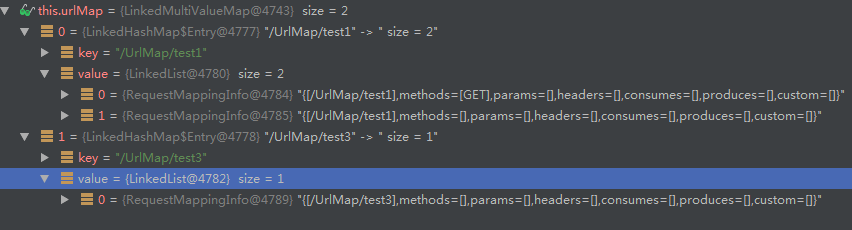
- 构建AbstractHandlerMethodMapping的成员变量urlMap,MultiValueMap<String,RequestMappingInfo>。这个数据结构可以把它理解成Map<String,List>。其中String类型的key存放的是处理方法上RequestMapping注解的value。就是具体的uri
先有如下Controller
@Controller

@RequestMapping("/UrlMap")

public class UrlMapController {

    @RequestMapping(value = "/test1", method = RequestMethod.GET)

    @ResponseBody

    public String test1(){

        return "method test1";

    }

    @RequestMapping(value = "/test1")

    @ResponseBody

    public String test2(){

        return "method test2";

    }

    @RequestMapping(value = "/test3")

    @ResponseBody

    public String test3(){

        return "method test3";

    }

}
- 初始化完成后,对应AbstractHandlerMethodMapping的urlMap的结构如下
- 以上便是SpringMVC初始化的主要过程
查找过程
- 为了理解查找流程,带着一个问题来看,现有如下Controller
@Controller

@RequestMapping("/LookupTest")

public class LookupTestController {

    @RequestMapping(value = "/test1", method = RequestMethod.GET)

    @ResponseBody

    public String test1(){

        return "method test1";

    }

    @RequestMapping(value = "/test1", headers = "Referer=https://www.baidu.com")

    @ResponseBody

    public String test2(){

        return "method test2";

    }

    @RequestMapping(value = "/test1", params = "id=1")

    @ResponseBody

    public String test3(){

        return "method test3";

    }

    @RequestMapping(value = "/*")

    @ResponseBody

    public String test4(){

        return "method test4";

    }

}
- 有如下请求
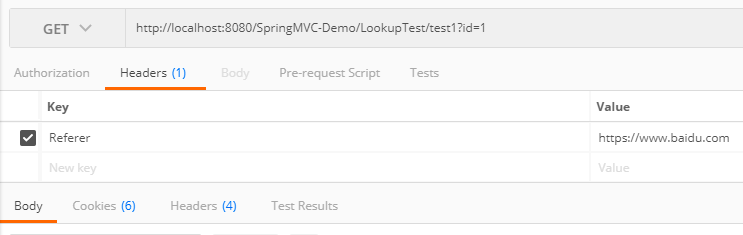
- 这个请求会进入哪一个方法?
- web容器(Tomcat、jetty)接收请求后,交给DispatcherServlet处理。FrameworkServlet调用对应请求方法(eg:get调用doGet),然后调用processRequest方法。进入processRequest方法后,一系列处理后,在line:936进入doService方法。然后在Line856进入doDispatch方法。在line:896获取当前请求的处理器handler。然后进入AbstractHandlerMethodMapping的lookupHandlerMethod方法。代码如下
protected HandlerMethod lookupHandlerMethod(String lookupPath, HttpServletRequest request) throws Exception {

  List<Match> matches = new ArrayList<Match>();

   //根据uri获取直接匹配的RequestMappingInfos

  List<T> directPathMatches = this.urlMap.get(lookupPath);

  if (directPathMatches != null) {

      addMatchingMappings(directPathMatches, matches, request);

  }

  //不存在直接匹配的RequetMappingInfo,遍历所有RequestMappingInfo

  if (matches.isEmpty()) {

      // No choice but to go through all mappings

      addMatchingMappings(this.handlerMethods.keySet(), matches, request);

  }

   //获取最佳匹配的RequestMappingInfo对应的HandlerMethod

  if (!matches.isEmpty()) {

      Comparator<Match> comparator = new MatchComparator(getMappingComparator(request));

      Collections.sort(matches, comparator);

      if (logger.isTraceEnabled()) {

        logger.trace("Found " + matches.size() + " matching mapping(s) for [" + lookupPath + "] : " + matches);

      }

      //再一次检查配置的歧义性

      Match bestMatch = matches.get(0);

      if (matches.size() > 1) {

        Match secondBestMatch = matches.get(1);

        if (comparator.compare(bestMatch, secondBestMatch) == 0) {

            Method m1 = bestMatch.handlerMethod.getMethod();

            Method m2 = secondBestMatch.handlerMethod.getMethod();

            throw new IllegalStateException(

                  "Ambiguous handler methods mapped for HTTP path '" + request.getRequestURL() + "': {" +

                  m1 + ", " + m2 + "}");

        }

      }

      handleMatch(bestMatch.mapping, lookupPath, request);

      return bestMatch.handlerMethod;

  }

  else {

      return handleNoMatch(handlerMethods.keySet(), lookupPath, request);

  }

}
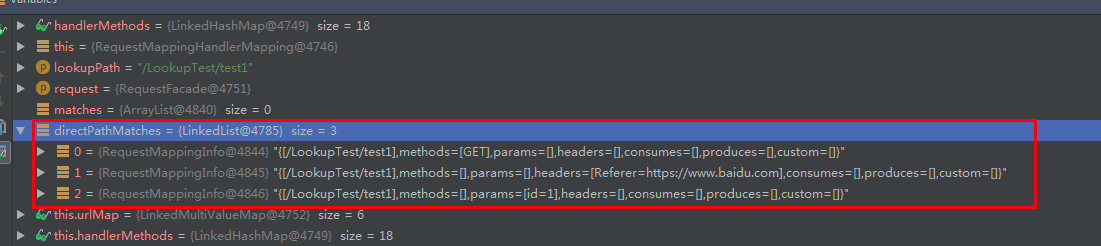
进入lookupHandlerMethod方法,其中lookupPath="/LookupTest/test1",根据lookupPath,也就是请求的uri。直接查找urlMap,获取直接匹配的RequestMappingInfo list。这里会匹配到3个RequestMappingInfo。如下
然后进入addMatchingMappings方法
private void addMatchingMappings(Collection<T> mappings, List<Match> matches, HttpServletRequest request) {

  for (T mapping : mappings) {

      T match = getMatchingMapping(mapping, request);

      if (match != null) {

        matches.add(new Match(match, handlerMethods.get(mapping)));

      }

  }

}
- 这个方法的职责是遍历当前请求的uri和mappings中的RequestMappingInfo能否匹配上,如果能匹配上,创建一个相同的RequestMappingInfo对象。再获取RequestMappingInfo对应的handlerMethod。然后创建一个Match对象添加至matches list中。执行完addMatchingMappings方法,回到lookupHandlerMethod。这时候matches还有3个能匹配上的RequestMappingInfo对象。接下来的处理便是对matchers列表进行排序,然后获取列表的第一个元素作为最佳匹配。返回Match的HandlerMethod。这里进入RequestMappingInfo的compareTo方法,看一下具体的排序逻辑。代码如下
public int compareTo(RequestMappingInfo other, HttpServletRequest request) {

  int result = patternsCondition.compareTo(other.getPatternsCondition(), request);

  if (result != 0) {

      return result;

  }

  result = paramsCondition.compareTo(other.getParamsCondition(), request);

  if (result != 0) {

      return result;

  }

  result = headersCondition.compareTo(other.getHeadersCondition(), request);

  if (result != 0) {

      return result;

  }

  result = consumesCondition.compareTo(other.getConsumesCondition(), request);

  if (result != 0) {

      return result;

  }

  result = producesCondition.compareTo(other.getProducesCondition(), request);

  if (result != 0) {

      return result;

  }

  result = methodsCondition.compareTo(other.getMethodsCondition(), request);

  if (result != 0) {

      return result;

  }

  result = customConditionHolder.compareTo(other.customConditionHolder, request);

  if (result != 0) {

      return result;

  }

  return 0;

}
- 代码里可以看出,匹配的先后顺序是value>params>headers>consumes>produces>methods>custom,看到这里,前面的问题就能轻易得出答案了。在value相同的情况,params更能先匹配。所以那个请求会进入test3()方法。再回到lookupHandlerMethod,在找到HandlerMethod。SpringMVC还会这里再一次检查配置的歧义性,这里检查的原理是通过比较匹配度最高的两个RequestMappingInfo进行比较。此处可能会有疑问在初始化SpringMVC有检查配置的歧义性,这里为什么还会检查一次。假如现在Controller中有如下两个方法,以下配置是能通过初始化歧义性检查的。
@RequestMapping(value = "/test5", method = {RequestMethod.GET, RequestMethod.POST})

@ResponseBody

public String test5(){

    return "method test5";

}

@RequestMapping(value = "/test5", method = {RequestMethod.GET, RequestMethod.DELETE})

@ResponseBody

public String test6(){

    return "method test6";

}
- 现在执行 http://localhost:8080/SpringMVC-Demo/LookupTest/test5 请求,便会在lookupHandlerMethod方法中抛
java.lang.IllegalStateException: Ambiguous handler methods mapped for HTTP path 'http://localhost:8080/SpringMVC-Demo/LookupTest/test5'异常。这里抛该异常是因为RequestMethodsRequestCondition的compareTo方法是比较的method数。代码如下
public int compareTo(RequestMethodsRequestCondition other, HttpServletRequest request) {

  return other.methods.size() - this.methods.size();

}
- 什么时候匹配通配符?当通过urlMap获取不到直接匹配value的RequestMappingInfo时才会走通配符匹配进入addMatchingMappings方法。
总结
- 解析所使用代码已上传至github,https://github.com/wycm/SpringMVC-Demo
- 以上源码是基于SpringMVC 3.2.2.RELEASE版本。以上便是SpringMVC请求查找的主要过程,希望对大家有帮助。本文可能有错误,希望读者能够指出来。
版权声明
作者:wycm
出处:https://www.cnblogs.com/w-y-c-m/p/8416630.html
您的支持是对博主最大的鼓励,感谢您的认真阅读。
本文版权归作者所有,欢迎转载,但未经作者同意必须保留此段声明,且在文章页面明显位置给出原文连接,否则保留追究法律责任的权利。

SpringMVC源码之Controller查找原理的更多相关文章
- SpringMVC源码分析6:SpringMVC的视图解析原理
title: SpringMVC源码分析6:SpringMVC的视图解析原理 date: 2018-06-07 11:03:19 tags: - SpringMVC categories: - 后端 ...
- springMVC源码分析--异常处理机制HandlerExceptionResolver执行原理(二)
上一篇博客springMVC源码分析--异常处理机制HandlerExceptionResolver简单示例(一)中我们简单地实现了一个异常处理实例,接下来我们要介绍一下HandlerExceptio ...
- SpringMVC源码阅读:定位Controller
1.前言 SpringMVC是目前J2EE平台的主流Web框架,不熟悉的园友可以看SpringMVC源码阅读入门,它交代了SpringMVC的基础知识和源码阅读的技巧 本文将通过源码分析,弄清楚Spr ...
- SpringMVC源码阅读:Controller中参数解析
1.前言 SpringMVC是目前J2EE平台的主流Web框架,不熟悉的园友可以看SpringMVC源码阅读入门,它交代了SpringMVC的基础知识和源码阅读的技巧 本文将通过源码(基于Spring ...
- springMVC源码分析--HandlerMapping(一)
HandlerMapping的工作就是为每个请求找到合适的请求找到一个处理器handler,其实现机制简单来说就是维持了一个url到Controller关系的Map结构,其提供的实际功能也是根据req ...
- SpringMVC源码阅读:属性编辑器、数据绑定
1.前言 SpringMVC是目前J2EE平台的主流Web框架,不熟悉的园友可以看SpringMVC源码阅读入门,它交代了SpringMVC的基础知识和源码阅读的技巧 本文将通过源码(基于Spring ...
- 框架-springmvc源码分析(一)
框架-springmvc源码分析(一) 参考: http://www.cnblogs.com/heavenyes/p/3905844.html#a1 https://www.cnblogs.com/B ...
- springmvc源码分析系列-请求处理流程
接上一篇-springmvc源码分析开头片 上一节主要说了一下springmvc与struts2的作为MVC中的C(controller)控制层的一些区别及两者在作为控制层方面的一些优缺点.今天就结合 ...
- springmvc源码学习
1.springmvc运行流程 流程图是直接在百度图片中找的一张 >.前台发送请求,请求会首先通过DispatcherServlet进行url的匹配;如果匹配不到,看是否配置<mvc: ...
随机推荐
- flask_session_源码剖析
开始文件(部分): from flask import Flask,request,session app = Flask(__name__) app.secret_key = 'sdfsdfsd' ...
- Hadoop伪分布式部署
一.Hadoop组件依赖关系: 步骤 1)关闭防火墙和禁用SELinux 切换到root用户 关闭防火墙:service iptables stop Linux下开启/关闭防火墙的两种方法 1.永久性 ...
- vijos 1213:80人环游世界
描述 想必大家都看过成龙大哥的<80天环游世界>,里面的紧张刺激的打斗场面一定给你留下了深刻的印象.现在就有这么一个80人的团伙,也想来一次环游世界. 他们打算兵分多路,游遍每一个国家. ...
- printf不能直接输出string类型
因为string不是c语言的内置数据,所以直接printf输出string类型的是办不到的.要这样输出: printf("%s\n",a.c_str()); 举例: #includ ...
- eclipse中常用提高效率的快捷键
Eclipse快捷键 10个最有用的快捷键 5 4 Eclipse中10个最有用的快捷键组合 一个Eclipse骨灰级开发者总结了他认为最有用但又不太为人所知的快捷键组合.通过这些组合可以更加容易的 ...
- Java中Calendar.DAY_OF_WEEK、DAY_OF_MONTH需要减一的原因
Java中对日期的处理需要用到Calendar类,其中有几个方法在使用时需要新手注意.1. 在获取月份时,Calendar.MONTH + 1 的原因(Java中Calendar.MONTH返回的数值 ...
- 审计日志中的AOP
审计跟踪(也称为审核日志)是一个安全相关的时间顺序记录,记录这些记录的目的是为已经影响在任何时候的详细操作,提供程序运行的证明文件记录.源或事件 MVC 自定义一个过滤器 public class A ...
- fireasy 使用篇 - 简介
一.Fireasy 简介 Fireasy是一套基于.Net Framework应用开发组件,其主旨思想为“让开发变为更简单”,其义为,使用尽可能少的组件,实现你所需的功能.Fireasy几乎覆盖了开发 ...
- PageRank_网页排名_MapReduceJava代码实现思路
PageRank 1. 概念 2. 原理 3. java代码实现思路 1.定义收敛标准 每次算出新的pr-oldpr=差值 ,所有页面的差值累加 ,除以pagecou ...
- C#面试常见题目
1.CTS.CLS.CLR分别作何解释 CTS:Common Type System 通用系统类型.Int32.Int16→int.String→string.Boolean→bool CLS:Com ...