
一致性哈希(附带C++实现)
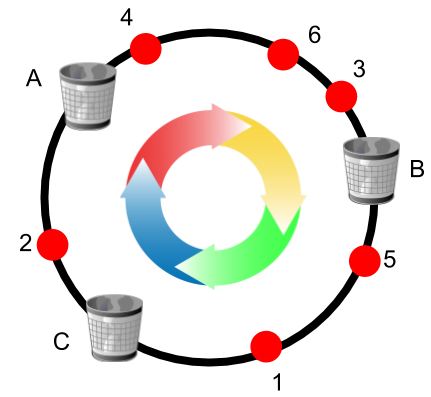
在分布式集群中,对机器的添加删除,或者机器故障后自动脱离集群这些操作是分布式集群管理最基本的功能。如果采用常用的hash(object)%N算 法,那么在有机器添加或者删除后,就需要大范围的移动原有数据,这种大规模的移动数据在大规模的分布式集群中是不可被接受的,因为移动过程中造成的‘抖动’或者可能出现的数据读写问题,都会大大降低集群的可用性。谷歌前一段(17年4月)时间对一致性哈希做了简单改进,即对每个节点最大连接数做限制,新来的请求如果发现目标节点达到最大限制,就会顺时针方向寻找下一个连接数没达到最大的节点,相关论文如下
Consistent Hashing with Bounded Loads



|
|
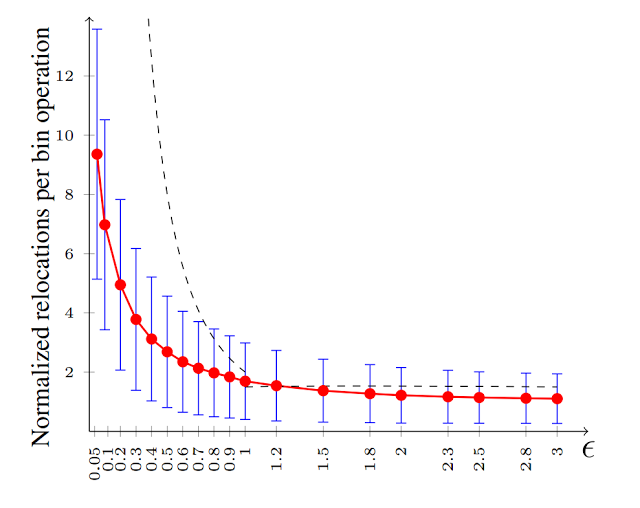
The distribution of loads for several values of ε. The load distribution is nearly uniform covering all ranges of loads from 0 to (1+ε) times average, and many bins with load equal to (1+ε) times average.
|
#include <iostream>

#include <algorithm>

#include <fstream>

#include <vector>

#include <map>

#include <list>

#include <random>

#include <sys/socket.h>

#include <netinet/in.h>

#include <arpa/inet.h>

/*

 * ===  FUNCTION  ======================================================================

 *         Name:  add_key

 *  Description:  找出ip地址对应的node,并存储到node对应的ip列表

 * =====================================================================================

 */

void add_key(const std::map<uint32_t, std::string> &node_info, std::string ip, std::map<uint32_t, std::vector<uint32_t>> &info)

{

	if (ip.empty() || node_info.empty())

		return;

	/* key映射的hash函数(简单的对ip地址取模) */

	auto value = inet_addr(ip.c_str());

	auto hash_value = value % 16384;

	auto it = node_info.begin();

	auto right_value = it->first;

	uint32_t left_value = right_value;

	while (it != node_info.end()) {

		left_value = right_value;

		right_value = it->first;

		/* 如果当前key在最小的node左边或者两个node之间就进行处理 */

		if (hash_value <= left_value || hash_value <= right_value) {

			/* 查看key要访问的node是否存在与映射表中 */

			auto itr = info.find(right_value);

			if (itr == info.end()) {

				std::vector<uint32_t> cli;

				cli.push_back(value);

				info.emplace(right_value, cli);

			}

			else {

				itr->second.push_back(value);

			}

			break;

		}

		it++;

	}

	/* 由于是环形0-16383范围,所以当没有找到比当前key大的node,就需要绕回,将其映射到node值最小的node上 */

	if (it == node_info.end()) {

		auto itr = info.find(node_info.begin()->first);

		if (itr == info.end()) {

			std::vector<uint32_t> cli;

			cli.push_back(value);

			info.emplace(right_value, cli);

		}

		else {

			itr->second.push_back(value);

		}

	}

}

/*

 * ===  FUNCTION  ======================================================================

 *         Name:  del_key

 *  Description:  删除node映射表中的key

 * =====================================================================================

 */

bool del_key(std::map<uint32_t, std::vector<uint32_t>> &info, const std::string &ip)

{

	if (ip.empty() || info.empty())

		return false;

	/* hash函数取值 */

	auto value = inet_addr(ip.c_str());

	uint32_t hash_value = value % 16384;

	auto it = info.begin();

	auto right_value = it->first;

	uint32_t left_value = right_value;

	while (it != info.end()) {

		left_value = right_value;

		right_value = it->first;

		if (hash_value <= left_value || hash_value <= right_value) {

			auto target = std::find(it->second.begin(), it->second.end(), hash_value);

			if (target != it->second.end())

				it->second.erase(target);

			std::cout << "delete " << ip << " from node " << right_value << std::endl;

			break;

		}

		it++;

	}

	if (it == info.end()) {

		it = info.begin();

		auto target = std::find(it->second.begin(), it->second.end(), hash_value);

		if (target != it->second.end())

			it->second.erase(target);

		std::cout << "delete " << ip << " from node " << right_value << std::endl;

	}

}

/*

 * ===  FUNCTION  ======================================================================

 *         Name:  add_node

 *  Description:  node列表中新增一个node,如果原有node映射表中有数据的话需要将新加node

 *  			  之前范围内的key数据从node后面的node映射表中迁移到新加node中

 * =====================================================================================

 */

bool add_node(std::map<uint32_t, std::string> &node_info, std::map<uint32_t, std::vector<uint32_t>> &info, const std::string &node_name)

{

	/* 验证node_name是否已经存在 */

	for (const auto &ele : node_info) {

		if (ele.second == node_name)

			return false;

	}

	/* c++11 provides random class */

	std::random_device rd;

	std::mt19937 gen(rd());

	/* 获取0-16383范围内的随机数 */

	std::uniform_int_distribution<> dis(0, 16383);

	/* 利用随机数来作为hash函数 */

	auto node_key = dis(gen);

	node_info.emplace(node_key, node_name);

	std::vector<uint32_t> cli;

	if (info.empty())

		return true;

	auto it = info.begin();

	auto right_value = it->first;

	uint32_t left_value = right_value;

	while (it != info.end()) {

		left_value = right_value;

		right_value = it->first;

		if (node_key < left_value || node_key < right_value) {

			if (it->second.empty())

				return true;

			/* 如果新node要插入的区间中有数据,需要进行数据迁移 */

			auto ip_arr = it->second;

			for (auto itr = ip_arr.begin(); itr != ip_arr.end(); itr++) {

				if (*itr > node_key && *itr <= right_value)

					continue;

				cli.push_back(*itr);

				itr = ip_arr.erase(itr);

			}

			break;

		}

		it++;

	}

	info.emplace(node_key, cli);

	return true;

}

/*

 * ===  FUNCTION  ======================================================================

 *         Name:  del_node

 *  Description:  将node删除,如果node上有映射数据,需要将数据迁移到顺时针方向上的下一个

 * =====================================================================================

 */

bool del_node(std::map<uint32_t, std::string> &node_info, std::map<uint32_t, std::vector<uint32_t>> &info, const std::string &node_name)

{

	auto key_itr = node_info.begin();

	while (key_itr->second != node_name)

		key_itr++;

	if (key_itr == node_info.end())

		return false;

	if (info.empty()) {

		node_info.erase(key_itr);

		return true;

	}

	auto target = info.find(key_itr->first);

	if (target == info.end()) {

		node_info.erase(key_itr);

		return true;

	}

	/* 如果删除的是最后一个node,则将数据迁移到第一个node上 */

	target++;                                   /* 因为map的迭代器不是随机迭代器,因此只能用++或者--,而不能用+、- */

	if (target == info.end()) {

		target--;

		auto &ip_arr = info.begin()->second;

		ip_arr.insert(ip_arr.end(), target->second.begin(), target->second.end());

	}

	else {

		auto &ip_arr = target->second;

		target--;

		ip_arr.insert(ip_arr.end(), target->second.begin(), target->second.end());

	}

	info.erase(target);

	node_info.erase(key_itr);

	return true;

}

int main(int argc, char *argv[])

{

	std::vector<std::string> addrs = {"192.168.54.1#1", "192.168.54.1#2","192.168.54.1#3","192.168.54.2#1","192.168.54.2#2","192.168.54.2#3","192.168.54.3#1","192.168.54.3#2","192.168.54.3#3"};

	std::cout << "convert 192.168.1.1 to long is " << inet_addr("192.168.1.1") % 16384 << std::endl;

	std::map<uint32_t, std::string> nodes;

	std::map<uint32_t, std::vector<uint32_t>> info;

	for (const auto & ele : addrs) {

		add_node(nodes, info, ele);

	}

	std::string ip;

	std::ifstream ifs;

	ifs.open("conf");

	while (!ifs.eof()) {

		ifs >> ip;

		if (ip.empty())

			break;

		std::cout << "Get ip addr " << ip << std::endl;

		add_key(nodes, ip, info);

		ip.clear();

	}

	del_node(nodes, info, "192.168.54.1#2");

	del_key(info, "100.64.6.225");

	return EXIT_SUCCESS;

}				/* ----------  end of function main  ---------- */
一致性哈希(附带C++实现)的更多相关文章
- .net的一致性哈希实现
最近在项目的微服务架构推进过程中,一个新的服务需要动态伸缩的弹性部署,所有容器化示例组成一个大的工作集群,以分布式处理的方式来完成一项工作,在集群中所有节点的任务分配过程中,由于集群工作节点需要动态增 ...
- 一致性哈希算法与Java实现
原文:http://blog.csdn.net/wuhuan_wp/article/details/7010071 一致性哈希算法是分布式系统中常用的算法.比如,一个分布式的存储系统,要将数据存储到具 ...
- 五分钟理解一致性哈希算法(consistent hashing)
转载请说明出处:http://blog.csdn.net/cywosp/article/details/23397179 一致性哈希算法在1997年由麻省理工学院提出的一种分布式哈希(DHT)实现算法 ...
- 每天进步一点点——五分钟理解一致性哈希算法(consistent hashing)
转载请说明出处:http://blog.csdn.net/cywosp/article/details/23397179 一致性哈希算法在1997年由麻省理工学院提出的一种分布式哈希(DHT) ...
- memcache 的内存管理介绍和 php实现memcache一致性哈希分布式算法
1 网络IO模型 安装memcached需要先安装libevent Memcached是多线程,非阻塞IO复用的网络模型,分为监听主线程和worker子线程,监听线程监听网络连接,接受请求后,将连接描 ...
- 一致性哈希算法以及其PHP实现
在做服务器负载均衡时候可供选择的负载均衡的算法有很多,包括: 轮循算法(Round Robin).哈希算法(HASH).最少连接算法(Least Connection).响应速度算法(Respons ...
- Java_一致性哈希算法与Java实现
摘自:http://blog.csdn.net/wuhuan_wp/article/details/7010071 一致性哈希算法是分布式系统中常用的算法.比如,一个分布式的存储系统,要将数据存储到具 ...
- Memcached 笔记与总结(8)Memcached 的普通哈希分布算法和一致性哈希分布算法命中率对比
准备工作: ① 配置文件 config.php ② 封装 Memcached 类 hash.class.php,包含普通哈希算法(取模)和一致性哈希算法 ③ 初始化 Memcached 节点信息 in ...
- 一致性哈希算法(consistent hashing)【转】
一致性哈希算法 来自:http://blog.csdn.net/cywosp/article/details/23397179 一致性哈希算法在1997年由麻省理工学院提出的一种分布式哈希 ...
随机推荐
- web前端学习(2):开始编写HTML
在第一章中,我们初步了解了上网的过程,同时也明白了所谓网页,其本质就是主要用HTML语言所写的一份文档.相信大多数人在了解HTML文件前,最先接触的是利用"记事本"所写的文档或者是 ...
- spring 事务隔离级别配置
声明式的事务处理中,要配置一个切面,即一组方法,如 其中就用到了propagation,表示打算对这些方法怎么使用事务,是用还是不用,其中propagation有七种配置,REQUIRED.SUPPO ...
- Js DOM 详解
DOM事件类 基本概念 DOM事件的级别 1.DOM0 element.onclick = function(){} 2.DOM2 element.addEventListener("cli ...
- Django_form验证
需求: 当用户向Django后端以post提交数据的时候,无论前端是否进行数据合法验证,后端都需要对客户端提交过来的数据进行数据合法性验证,是否可以利用models中表类字段的约束来实现验证,并且可以 ...
- scrapy_对传到items的值预处理
如何实现对值进行预处理? 对于传递进items的值,首先明白有两个动作,进和出,那就可以分别对这两个动作进行逻辑处理 #!/usr/bin/python3 # -*- coding: utf-8 - ...
- Servlet--继承HttpServlet写自己的Servlet
前面2篇关注的都是Servlet接口,在实际编码中一般不直接实现这个接口,而是继承HttpServlet类.因为j2e的包里面写好了GenericServlet和HttpServlet类来让我们简化编 ...
- java IO(六):额外功能处理流
*/ .hljs { display: block; overflow-x: auto; padding: 0.5em; color: #333; background: #f8f8f8; } .hl ...
- redis info详解
INFO 以一种易于解释(parse)且易于阅读的格式,返回关于 Redis 服务器的各种信息和统计数值. 通过给定可选的参数 section ,可以让命令只返回某一部分的信息: server 部分记 ...
- js中的语句
java语句与js的语句一样.1.判断if else/switch <script type=text/javascript> function fun1(){ var num = 10; ...
- python3操作pymsql模块
pymysql是python中操作mysql的模块. 1.pymysql模块的安装 pip3 install pymysql 也可以使用pycharm这个IDE工具来安装pymysql这个模块. 2. ...