
爬虫--BeautifulSoup
什么是BeautifulSoup?

BeautifulSoup支持的一些解析库
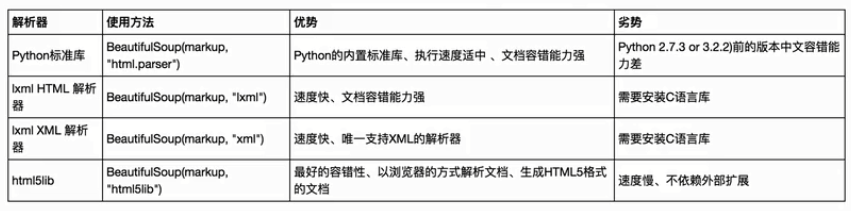
基本使用
from bs4 import BeautifulSoup

html ="""

    <html><head><title> The Dormouse's story</title></head>

    <body>

    <p class="title" name="dromouse"> <b> The Dormouse's story</b></p>

    <p class="story">Once upon a time there were three little sisters;and their names were

    <a href="http://example.com/elsie" class="sister" id="link1"> <!--Elsie--></a>,

    <a href="http://example.com/lacie" class="sister" id="link2">Lacie</a>and

    <a href="http://example.com/tillie" class="sister" id="link3">Tillie</a>;

    and they lived at the bottom of a well.</p>

    <p class="story">..</p>

"""

soup=BeautifulSoup(html,"lxml")

print(soup.prettify())  # .prettify() 格式化代码

print(soup.title.string) # .title.string
<html>

 <head>

  <title>

   The Dormouse's story

  </title>

 </head>

 <body>

  <p class="title" name="dromouse">

   <b>

    The Dormouse's story

   </b>

  </p>

  <p class="story">

   Once upon a time there were three little sisters;and their names were

   <a class="sister" href="http://example.com/elsie" id="link1">

    <!--Elsie-->

   </a>

   ,

   <a class="sister" href="http://example.com/lacie" id="link2">

    Lacie

   </a>

   and

   <a class="sister" href="http://example.com/tillie" id="link3">

    Tillie

   </a>

   ;

    and they lived at the bottom of a well.

  </p>

  <p class="story">

   ..

  </p>

 </body>

</html>

 The Dormouse's story
打印后的结果为:
标签选择器
选择元素
from bs4 import BeautifulSoup

html ="""

    <html><head><title> The Dormouse's story</title></head>

    <body>

    <p class="title" name="dromouse"> <b> The Dormouse's story</b></p>

    <p class="story">Once upon a time there were three little sisters;and their names were

    <a href="http://example.com/elsie" class="sister" id="link1"> <!--Elsie--></a>,

    <a href="http://example.com/lacie" class="sister" id="link2">Lacie</a>and

    <a href="http://example.com/tillie" class="sister" id="link3">Tillie</a>;

    and they lived at the bottom of a well.</p>

    <p class="story">..</p>

"""

soup=BeautifulSoup(html,"lxml")

print(soup.title)

print(type(soup.title))

print(soup.head)

print(soup.p)
<title> The Dormouse's story</title>

<class 'bs4.element.Tag'>

<head><title> The Dormouse's story</title></head>

<p class="title" name="dromouse"> <b> The Dormouse's story</b></p>
打印的结果为:
获取名称
from bs4 import BeautifulSoup

html ="""

    <html><head><title> The Dormouse's story</title></head>

    <body>

    <p class="title" name="dromouse"> <b> The Dormouse's story</b></p>

    <p class="story">Once upon a time there were three little sisters;and their names were

    <a href="http://example.com/elsie" class="sister" id="link1"> <!--Elsie--></a>,

    <a href="http://example.com/lacie" class="sister" id="link2">Lacie</a>and

    <a href="http://example.com/tillie" class="sister" id="link3">Tillie</a>;

    and they lived at the bottom of a well.</p>

    <p class="story">..</p>

"""

soup=BeautifulSoup(html,"lxml")

print(soup.title.name)
title
打印的结果为:
获取属性
from bs4 import BeautifulSoup

html ="""

    <html><head><title> The Dormouse's story</title></head>

    <body>

    <p class="title" name="dromouse"> <b> The Dormouse's story</b></p>

    <p class="story">Once upon a time there were three little sisters;and their names were

    <a href="http://example.com/elsie" class="sister" id="link1"> <!--Elsie--></a>,

    <a href="http://example.com/lacie" class="sister" id="link2">Lacie</a>and

    <a href="http://example.com/tillie" class="sister" id="link3">Tillie</a>;

    and they lived at the bottom of a well.</p>

    <p class="story">..</p>

"""

soup=BeautifulSoup(html,"lxml")

print(soup.p.attrs["name"])

print(soup.p["name"])
dromouse

dromouse
打印的结果为:
获取内容
from bs4 import BeautifulSoup

html ="""

    <html><head><title> The Dormouse's story</title></head>

    <body>

    <p class="title" name="dromouse"> <b> The Dormouse's story</b></p>

    <p class="story">Once upon a time there were three little sisters;and their names were

    <a href="http://example.com/elsie" class="sister" id="link1"> <!--Elsie--></a>,

    <a href="http://example.com/lacie" class="sister" id="link2">Lacie</a>and

    <a href="http://example.com/tillie" class="sister" id="link3">Tillie</a>;

    and they lived at the bottom of a well.</p>

    <p class="story">..</p>

"""

soup=BeautifulSoup(html,"lxml")

print(soup.title.string)
The Dormouse's story
打印后的结果为:
嵌套选择
from bs4 import BeautifulSoup

html ="""

    <html><head><title> The Dormouse's story</title></head>

    <body>

    <p class="title" name="dromouse"> <b> The Dormouse's story</b></p>

    <p class="story">Once upon a time there were three little sisters;and their names were

    <a href="http://example.com/elsie" class="sister" id="link1"> <!--Elsie--></a>,

    <a href="http://example.com/lacie" class="sister" id="link2">Lacie</a>and

    <a href="http://example.com/tillie" class="sister" id="link3">Tillie</a>;

    and they lived at the bottom of a well.</p>

    <p class="story">..</p>

"""

soup=BeautifulSoup(html,"lxml")

print(soup.head.title.string)
The Dormouse's story
打印后的结果为:
子节点和子孙节点
from bs4 import BeautifulSoup

html ="""

    <html>

        <head>

            <title> The Dormouse's story</title>

        </head>

    <body>

    <p class="story">

        Once upon a time there were three little sisters;and their names were

        <a href="http://example.com/elsie" class="sister" id="link1">

            <!--Elsie-->

        </a>,

        <a href="http://example.com/lacie" class="sister" id="link2">

            Lacie

        </a>

        and

        <a href="http://example.com/tillie" class="sister" id="link3">

            Tillie

        </a>;

        and

        they lived at the bottom of a well.

    </p>

    <p class="story">

        ..

    </p>

"""

soup=BeautifulSoup(html,"lxml")

print(soup.p.contents)
['\n        Once upon a time there were three little sisters;and their names were\n        ', <a class="sister" href="http://example.com/elsie" id="link1">

<!--Elsie-->

</a>, ',\n        ', <a class="sister" href="http://example.com/lacie" id="link2">

            Lacie

        </a>, '\n        and\n        ', <a class="sister" href="http://example.com/tillie" id="link3">

            Tillie

        </a>, ';\n        and \n        they lived at the bottom of a well.\n    ']
打印后的结果为:
from bs4 import BeautifulSoup

html ="""

    <html>

        <head>

            <title> The Dormouse's story</title>

        </head>

    <body>

    <p class="story">

        Once upon a time there were three little sisters;and their names were

        <a href="http://example.com/elsie" class="sister" id="link1">

            <!--Elsie-->

        </a>,

        <a href="http://example.com/lacie" class="sister" id="link2">

            Lacie

        </a>

        and

        <a href="http://example.com/tillie" class="sister" id="link3">

            Tillie

        </a>;

        and

        they lived at the bottom of a well.

    </p>

    <p class="story">

        ..

    </p>

"""

soup=BeautifulSoup(html,"lxml")

print(soup.p.children) # .children就相当于迭代器,需要循环的方式才能把内容取走

for i,child in enumerate(soup.p.children):

    print(i,child)
<list_iterator object at 0x00000000012C5E10>

0

        Once upon a time there were three little sisters;and their names were

1 <a class="sister" href="http://example.com/elsie" id="link1">

<!--Elsie-->

</a>

2 ,

3 <a class="sister" href="http://example.com/lacie" id="link2">

            Lacie

        </a>

4

        and

5 <a class="sister" href="http://example.com/tillie" id="link3">

            Tillie

        </a>

6 ;

        and

        they lived at the bottom of a well.
打印后的结果为:
from bs4 import BeautifulSoup

html ="""

    <html>

        <head>

            <title> The Dormouse's story</title>

        </head>

    <body>

    <p class="story">

        Once upon a time there were three little sisters;and their names were

        <a href="http://example.com/elsie" class="sister" id="link1">

            <!--Elsie-->

        </a>,

        <a href="http://example.com/lacie" class="sister" id="link2">

            Lacie

        </a>

        and

        <a href="http://example.com/tillie" class="sister" id="link3">

            Tillie

        </a>;

        and

        they lived at the bottom of a well.

    </p>

    <p class="story">

        ..

    </p>

"""

soup=BeautifulSoup(html,"lxml")

print(soup.p.descendants) # .descendants就相当于迭代器,获取所有的子孙节点,需要循环的方式才能把内容取走

for i,child in enumerate(soup.p.descendants):

    print(i,child)
Once upon a time there were three little sisters;and their names were

1 <a class="sister" href="http://example.com/elsie" id="link1">

<!--Elsie-->

</a>

2

3 Elsie

4

5 ,

6 <a class="sister" href="http://example.com/lacie" id="link2">

            Lacie

        </a>

7

            Lacie

8

        and

9 <a class="sister" href="http://example.com/tillie" id="link3">

            Tillie

        </a>

10

            Tillie

11 ;

        and

        they lived at the bottom of a well.
打印后的结果为:
父节点和祖先节点
from bs4 import BeautifulSoup

html ="""

    <html>

        <head>

            <title> The Dormouse's story</title>

        </head>

    <body>

    <p class="story">

        Once upon a time there were three little sisters;and their names were

        <a href="http://example.com/elsie" class="sister" id="link1">

            <!--Elsie-->

        </a>,

        <a href="http://example.com/lacie" class="sister" id="link2">

            Lacie

        </a>

        and

        <a href="http://example.com/tillie" class="sister" id="link3">

            Tillie

        </a>;

        and

        they lived at the bottom of a well.

    </p>

    <p class="story">

        ..

    </p>

"""

soup=BeautifulSoup(html,"lxml")

print(soup.a.parent) # .descendants就相当于迭代器,获取所有的父节点
<p class="story">

        Once upon a time there were three little sisters;and their names were

        <a class="sister" href="http://example.com/elsie" id="link1">

<!--Elsie-->

</a>,

        <a class="sister" href="http://example.com/lacie" id="link2">

            Lacie

        </a>

        and

        <a class="sister" href="http://example.com/tillie" id="link3">

            Tillie

        </a>;

        and

        they lived at the bottom of a well.

    </p>
打印后的结果为:
from bs4 import BeautifulSoup

html ="""

    <html>

        <head>

            <title> The Dormouse's story</title>

        </head>

    <body>

    <p class="story">

        Once upon a time there were three little sisters;and their names were

        <a href="http://example.com/elsie" class="sister" id="link1">

            <!--Elsie-->

        </a>,

        <a href="http://example.com/lacie" class="sister" id="link2">

            Lacie

        </a>

        and

        <a href="http://example.com/tillie" class="sister" id="link3">

            Tillie

        </a>;

        and

        they lived at the bottom of a well.

    </p>

    <p class="story">

        ..

    </p>

"""

soup=BeautifulSoup(html,"lxml")

print(list(enumerate(soup.a.parents))) # .descendants就相当于迭代器,获取所有的祖先节点)
[(0, <p class="story">

        Once upon a time there were three little sisters;and their names were

        <a class="sister" href="http://example.com/elsie" id="link1">

<!--Elsie-->

</a>,

        <a class="sister" href="http://example.com/lacie" id="link2">

            Lacie

        </a>

        and

        <a class="sister" href="http://example.com/tillie" id="link3">

            Tillie

        </a>;

        and

        they lived at the bottom of a well.

    </p>), (1, <body>

<p class="story">

        Once upon a time there were three little sisters;and their names were

        <a class="sister" href="http://example.com/elsie" id="link1">

<!--Elsie-->

</a>,

        <a class="sister" href="http://example.com/lacie" id="link2">

            Lacie

        </a>

        and

        <a class="sister" href="http://example.com/tillie" id="link3">

            Tillie

        </a>;

        and

        they lived at the bottom of a well.

    </p>

<p class="story">

        ..

    </p>

</body>), (2, <html>

<head>

<title> The Dormouse's story</title>

</head>

<body>

<p class="story">

        Once upon a time there were three little sisters;and their names were

        <a class="sister" href="http://example.com/elsie" id="link1">

<!--Elsie-->

</a>,

        <a class="sister" href="http://example.com/lacie" id="link2">

            Lacie

        </a>

        and

        <a class="sister" href="http://example.com/tillie" id="link3">

            Tillie

        </a>;

        and

        they lived at the bottom of a well.

    </p>

<p class="story">

        ..

    </p>

</body></html>), (3, <html>

<head>

<title> The Dormouse's story</title>

</head>

<body>

<p class="story">

        Once upon a time there were three little sisters;and their names were

        <a class="sister" href="http://example.com/elsie" id="link1">

<!--Elsie-->

</a>,

        <a class="sister" href="http://example.com/lacie" id="link2">

            Lacie

        </a>

        and

        <a class="sister" href="http://example.com/tillie" id="link3">

            Tillie

        </a>;

        and

        they lived at the bottom of a well.

    </p>

<p class="story">

        ..

    </p>

</body></html>)]
打印后的结果为:
兄弟节点
from bs4 import BeautifulSoup

html ="""

    <html>

        <head>

            <title> The Dormouse's story</title>

        </head>

    <body>

    <p class="story">

        Once upon a time there were three little sisters;and their names were

        <a href="http://example.com/elsie" class="sister" id="link1">

            <!--Elsie-->

        </a>,

        <a href="http://example.com/lacie" class="sister" id="link2">

            Lacie

        </a>

        and

        <a href="http://example.com/tillie" class="sister" id="link3">

            Tillie

        </a>;

        and

        they lived at the bottom of a well.

    </p>

    <p class="story">

        ..

    </p>

"""

soup=BeautifulSoup(html,"lxml")

print(list(enumerate(soup.a.next_siblings))) # .descendants就相当于迭代器,获取兄弟节点

print(list(enumerate(soup.a.previous_siblings))) # .descendants就相当于迭代器,获取兄弟节点
[(0, ',\n        '), (1, <a class="sister" href="http://example.com/lacie" id="link2">

            Lacie

        </a>), (2, '\n        and\n        '), (3, <a class="sister" href="http://example.com/tillie" id="link3">

            Tillie

        </a>), (4, ';\n        and \n        they lived at the bottom of a well.\n    ')]

[(0, '\n        Once upon a time there were three little sisters;and their names were\n        ')]
打印后的结果为:
标准选择器
find_all(name,attrs,recursive,text,**kwargs)
可根据标签名、属性、内容查找文档
from bs4 import BeautifulSoup

html="""

    <div class="panel">

        <div class="panel-heading">

            <h4>Hello</h4>

        </div>

        <div class="panel-body">

            <ul class="list" id="list-1>

                <li class="element">Foo</li>

                <li class="element">Bar</li>

                <li class="element">Jay</ll>

            </ul>

            <ul class="list list-small" id="list-2">

                <li class="element">Foo</ll>

                <ll class="element">Bar</l>

            </ul>

        </div>

    </div>

"""

soup=BeautifulSoup(html,"lxml")

print(soup.find_all("ul"))

print(type(soup.find_all("ul")[0]))
[<ul class="list" element="" id="list-1><li class=">Foo
<li class="element">Bar</li>
<li class="element">Jay
</li></ul>,
<ul class="list list-small" id="list-2">
<li class="element">Foo
<ll class="element">Bar
</ll></li></ul>]
<class 'bs4.element.Tag'>
打印后的结果为:
from bs4 import BeautifulSoup

html="""

    <div class="panel">

        <div class="panel-heading">

            <h4>Hello</h4>

        </div>

        <div class="panel-body">

            <ul class="list" id="list-1>

                <li class="element">Foo</li>

                <li class="element">Bar</li>

                <li class="element">Jay</ll>

            </ul>

            <ul class="list list-small" id="list-2">

                <li class="element">Foo</ll>

                <ll class="element">Bar</l>

            </ul>

        </div>

    </div>

"""

soup=BeautifulSoup(html,"lxml")

for UL in soup.find_all("ul"):

    print(UL.find_all("li"))
[<li class="element">Bar</li>, <li class="element">Jay</li>]

[<li class="element">Foo<ll class="element">Bar</ll></li>]
打印后的结果为:
attrs
from bs4 import BeautifulSoup

html="""

    <div class="panel">

        <div class="panel-heading">

            <h4>Hello</h4>

        </div>

        <div class="panel-body">

            <ul class="list" id="list-1 name="elements">

                <li class="element">Foo</li>

                <li class="element">Bar</li>

                <li class="element">Jay</ll>

            </ul>

            <ul class="list list-small" id="list-2">

                <li class="element">Foo</ll>

                <ll class="element">Bar</l>

            </ul>

        </div>

    </div>

"""

soup=BeautifulSoup(html,"lxml")

print(soup.find_all(attrs={"id":"list-1"}))

print(soup.find_all(attrs={"name":"elements"}))
[]

[]
打印后的结果为:
from bs4 import BeautifulSoup

html="""

    <div class="panel">

        <div class="panel-heading">

            <h4>Hello</h4>

        </div>

        <div class="panel-body">

            <ul class="list" id="list-1 name="elements">

                <li class="element">Foo</li>

                <li class="element">Bar</li>

                <li class="element">Jay</ll>

            </ul>

            <ul class="list list-small" id="list-2">

                <li class="element">Foo</ll>

                <ll class="element">Bar</l>

            </ul>

        </div>

    </div>

"""

soup=BeautifulSoup(html,"lxml")

print(soup.find_all(id="list-1"))

print(soup.find_all(class_="element"))
[<ul class="list list-small" id="list-2"><li class="element">Foo<ll class="element">Bar</ll></li></ul>]

[<li class="element">Foo</li>, <li class="element">Bar</li>, <li class="element">Jay</li>, <li class="element">Foo<llclass="element">Bar</ll></li>, <ll class="element">Bar</ll>]
打印后的结果为:
text
from bs4 import BeautifulSoup

html="""

    <div class="panel">

        <div class="panel-heading">

            <h4>Hello</h4>

        </div>

        <div class="panel-body">

            <ul class="list" id="list-1 name="elements">

                <li class="element">Foo</li>

                <li class="element">Bar</li>

                <li class="element">Jay</ll>

            </ul>

            <ul class="list list-small" id="list-2">

                <li class="element">Foo</ll>

                <ll class="element">Bar</l>

            </ul>

        </div>

    </div>

"""

soup=BeautifulSoup(html,"lxml")

print(soup.find_all(text="Foo"))
['Foo']
打印后的结果为:
find(name,attrs,recursive,text,**kwargs)
find返回单个元素,find_all返回所有元素
from bs4 import BeautifulSoup

html="""

    <div class="panel">

        <div class="panel-heading">

            <h4>Hello</h4>

        </div>

        <div class="panel-body">

            <ul class="list" id="list-1 name="elements">

                <li class="element">Foo</li>

                <li class="element">Bar</li>

                <li class="element">Jay</ll>

            </ul>

            <ul class="list list-small" id="list-2">

                <li class="element">Foo</ll>

                <ll class="element">Bar</l>

            </ul>

        </div>

    </div>

"""

soup=BeautifulSoup(html,"lxml")

print(soup.find("ul"))

print(type(soup.find("ul")))

print(soup.find("h4"))
<ul class="list" elements="" id="list-1 name=">

     <li class="element">Foo</li>

     <li class="element">Bar</li>

     <li class="element">Jay</li>

</ul>

<class 'bs4.element.Tag'>

<h4>Hello</h4>
打印后的结果为:
find_parents() , find_parent()
find_parents()返回所有祖先节点,find_parent()返回直接父节点。
find_next_siblings() , find_next_sibling()
find_next_siblings()返回后面所有兄弟节点,findnext_sibling0返回后面第一个兄弟节点。
find_previous_ siblings() , find_previous_sibling()
find_previous_siblings0返回前面所有兄弟节点,find_previous_sibling0返回前面第一个兄弟节点。
find_all_next() , find_next()
find_all_next()返回节点后所有符合条件的节点,find_next()返回第一个符合条件的节点
find_all_previous()和find_previous()
find_all_previous()返回节点后所有符合条件的节点,find_previous()返回第一个符合条件的节点
CSS选择器
通过select()直接传入CSS选择器即可完成选择
from bs4 import BeautifulSoup

html="""

    <div class="panel">

        <div class="panel-heading">

            <h4>Hello</h4>

        </div>

        <div class="panel-body">

            <ul class="list" id="list-1 name="elements">

                <li class="element">Foo</li>

                <li class="element">Bar</li>

                <li class="element">Jay</ll>

            </ul>

            <ul class="list list-small" id="list-2">

                <li class="element">Foo</ll>

                <ll class="element">Bar</l>

            </ul>

        </div>

    </div>

"""

soup=BeautifulSoup(html,"lxml")

print(soup.select(".panel .panel-heading"))

print(soup.select("ul li"))

print(soup.select("#list-2 .element"))

print(type(soup.select("ul")[0]))
[<div class="panel-heading"><h4>Hello</h4></div>]

[<li class="element">Foo</li>, <li class="element">Bar</li>, <li class="element">Jay</li>, <li class="element">Foo<ll class="element">Bar</ll></li>]

[<li class="element">Foo<li class="element">Bar</li></li>, <li class="element">Bar</li>]

<class 'bs4.element.Tag'>
打印后的结果为:
from bs4 import BeautifulSoup

html="""

    <div class="panel">

        <div class="panel-heading">

            <h4>Hello</h4>

        </div>

        <div class="panel-body">

            <ul class="list" id="list-1 name="elements">

                <li class="element">Foo</li>

                <li class="element">Bar</li>

                <li class="element">Jay</ll>

            </ul>

            <ul class="list list-small" id="list-2">

                <li class="element">Foo</ll>

                <ll class="element">Bar</l>

            </ul>

        </div>

    </div>

"""

soup=BeautifulSoup(html,"lxml")

for ul in soup.select("ul"):

    print(ul.select("li"))
[<li class="element">Foo</li>, <li class="element">Bar</li>, <li class="element">Jay </li>]

[<li class="element">Foo<ll class="element">Bar</ll></li>]
打印后的结果为:
获取属性
from bs4 import BeautifulSoup

html="""

    <div class="panel">

        <div class="panel-heading">

            <h4>Hello</h4>

        </div>

        <div class="panel-body">

            <ul class="list" id="list-1" name="elements">

                <li class="element">Foo</li>

                <li class="element">Bar</li>

                <li class="element">Jay</ll>

            </ul>

            <ul class="list list-small" id="list-2">

                <li class="element">Foo</li>

                <li class="element">Bar</li>

            </ul>

        </div>

    </div>

"""

soup=BeautifulSoup(html,"lxml")
for ul in soup.select("ul"):
    print(ul["id"])
    print(ul.attrs["id"])
list-1

list-1

list-2

list-2
打印的结果为:
获取内容
from bs4 import BeautifulSoup

html="""

    <div class="panel">

        <div class="panel-heading">

            <h4>Hello</h4>

        </div>

        <div class="panel-body">

            <ul class="list" id="list-1" name="elements">

                <li class="element">Foo</li>

                <li class="element">Bar</li>

                <li class="element">Jay</ll>

            </ul>

            <ul class="list list-small" id="list-2">

                <li class="element">Foo</li>

                <li class="element">Bar</li>

            </ul>

        </div>

    </div>

"""

soup=BeautifulSoup(html,"lxml")

for ul in soup.select("li"):

    print(ul.get_text())
Foo

Bar

Jay

Foo

Bar
打印后的结果为:
总结:
●推荐使用lxml解析库,必要时使用html.parser
●标签选择筛选功能弱但是速度快
●建议使用find()、find_all()查询匹配单个结果或者多个结果
●如果对CSS选择器熟悉建议使用select()
●记住常用的获取属性和文本值的方法
爬虫--BeautifulSoup的更多相关文章
- 爬虫beautifulsoup实践
爬虫beautifulsoup实践: 目的:在https://unsplash.com/上爬取图片并保存到本地文件夹里. 一.观察response.首先,在Chrome浏览器里观察一下该网页的re ...
- 爬虫——BeautifulSoup和Xpath
爬虫我们大概可以分为三部分:爬取——>解析——>存储 一 Beautiful Soup: Beautiful Soup提供一些简单的.python式的函数用来处理导航.搜索.修改分析树等功 ...
- Python爬虫-- BeautifulSoup库
BeautifulSoup库 beautifulsoup就是一个非常强大的工具,爬虫利器.一个灵活又方便的网页解析库,处理高效,支持多种解析器.利用它就不用编写正则表达式也能方便的实现网页信息的抓取 ...
- Python爬虫 | Beautifulsoup解析html页面
引入 大多数情况下的需求,我们都会指定去使用聚焦爬虫,也就是爬取页面中指定部分的数据值,而不是整个页面的数据.因此,在聚焦爬虫中使用数据解析.所以,我们的数据爬取的流程为: 指定url 基于reque ...
- 网络爬虫BeautifulSoup库的使用
使用BeautifulSoup库提取HTML页面信息 #!/usr/bin/python3 import requests from bs4 import BeautifulSoup url='htt ...
- 爬虫----beautifulsoup的简单使用
beautifulSoup使用: 简单来说,Beautiful Soup是python的一个库,最主要的功能是从网页抓取数据. pip3 install beautifulsoup4 解析器 Beau ...
- 爬虫----BeautifulSoup模块
一.介绍 Beautiful Soup 是一个可以从HTML或XML文件中提取数据的Python库.它能够通过你喜欢的转换器实现惯用的文档导航,查找,修改文档的方式.Beautiful Soup会帮你 ...
- python爬虫---BeautifulSoup的用法
BeautifulSoup是一个灵活的网页解析库,不需要编写正则表达式即可提取有效信息. 推荐使用lxml作为解析器,因为效率更高. 在Python2.7.3之前的版本和Python3中3.2.2之前 ...
- Python 爬虫-BeautifulSoup
2017-07-26 10:10:11 Beautiful Soup可以解析html 和 xml 格式的文件. Beautiful Soup库是解析.遍历.维护“标签树”的功能库.使用Beautifu ...
随机推荐
- <Effective C++>读书摘要--Ctors、Dtors and Assignment Operators<二>
<Item 9> Never call virtual functions during construction or destruction 1.you shouldn't call ...
- QObject类 moc处理后代码
QObject在QT中是所有类的基类,经过MOC处理后代码如下 之所以贴出这段代码,是因为很多流程追踪到最后一些关键性函数都是出自这个类 源码 4.8.6 MOC版本 63 /************ ...
- c++ new 堆 栈
根据32位的Windows系统默认有2GB的用户空间,则不能new超过2GB的,执行下列代码: ***]; 会出现下面的错误 error C2148: 数组的总大小不得超过 0x7fffffff 字节 ...
- MAC锁屏不断网(快捷键启用屏保)
第一步:要设定锁定输入密码的设置,进入'系统偏好设置''安全性与隐私',将选项'进入睡眠或开始屏幕保护程序后'打勾,选'立即'. 第二步:到'launchpad'中的'其他'文件夹打开'Automat ...
- 几种常见web 容器比较
1:产品介绍 WebLogic是美国bea公司出品的一个application server确切的说是一个基于j2ee架构的中间件.BEA WebLogic是用于开发.集成.部署和管理大型分布式We ...
- 【bzoj2699】更新 dp
题目描述 对于一个数列A[1..N],一种寻找最大值的方法是:依次枚举A[2]到A[N],如果A[i]比当前的A[1]值要大,那么就令A[1]=A[i],最后A[1]为所求最大值.假设所有数都在范围[ ...
- Ansible批量部署工具的安装
1.系统安装gcc,以及python2.6以上(2.6.8): 第一种比较简单的安装方法: 1)直接yum install -y ansible; 2)然后更改配置,/etc/ansible/ansi ...
- P2845 [USACO15DEC]Switching on the Lights 开关灯
题目背景 来源:usaco-2015-dec Farm John 最近新建了一批巨大的牛棚.这些牛棚构成了一个N*N的矩形网络.(1<n<100) 然而bessie十分怕黑,他想计算可以把 ...
- JavaScript中:表达式和语句的区别
JavaScript中:表达式和语句的区别 Javascript语言精粹:表达式是由运算符构成,并运算产生结果的语法结构.程序是由语句构成,语句则是由“:(分号)”分隔的句子或命令.如果在表达式后面加 ...
- es6常用基础合集
es6常用基础合集 在实际开发中,ES6已经非常普及了.掌握ES6的知识变成了一种必须.尽管我们在使用时仍然需要经过babel编译. ES6彻底改变了前端的编码风格,可以说对于前端的影响非常巨大.值得 ...