
openerp学习笔记 webkit 打印
1.webkit 打印需要安装的支持模块
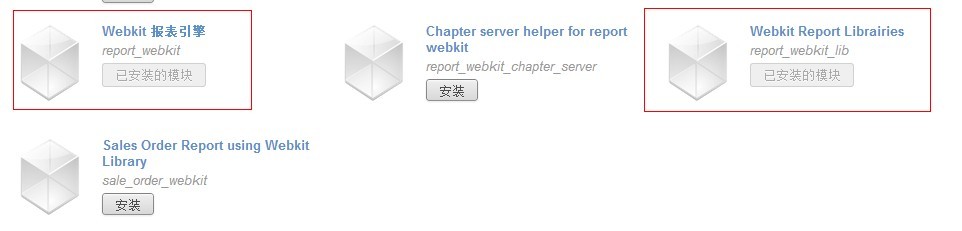
请首先安装 Webkit 报表引擎(report_webkit),再安装 Webkit 报表的支持库(report_webkit_lib),该模块讲自动安装和设置 wkhtml2pdf 的路径。
另外,安装 oecn_base_fonts 模块可解决打印中文乱码问题,安装 web_pdf_preview 模块可以实现在浏览器中直接预览打印 pdf 文件。
2.webkit 打印模块文件结构
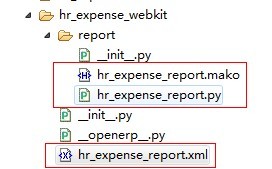
其中:hr_expense_report.xml 定义了报表名称和菜单,hr_expense_report.py 定义了报表解析类,hr_expense_report.mako 定义了报表模版。
3.报表定义文件(hr_expense_report.xml)
<?xml version="1.0" encoding="utf-8"?>

<openerp>

    <data>

        <report id="report_hr_expense_webkit"

                name="hr.expense.webkit"

                model="hr.expense.expense"

                file="hr_expense_webkit\\report\\hr_expense_report.mako"

                string="员工费用申请(html)"

                report_type="webkit"

                menu="True"

                auto="False"

                header="False" />

    </data>

</openerp>
说明:
id: 报表id,任意字符串,不重复即可。
name: 报表名称,为报表解析类(hr_expense_report.py)中 webkit_report.WebKitParser() 函数第一个参数去掉 report. 。
string: 打印菜单中显示的名字。
model: 报表渲染对象,打印菜单创建在该对象上。
file: 报表模版(.mako)文件路径,路径以本模块的路径开始,注意7.0早期版本webkit类型的报表中报表模版的路径必须用\\分割,7.0升级后的版本已经修正该Bug,使用/分割路径即可。
report_type: 报表类型,此处为 webkit 。
menu: True or False,是否在客户端上显示菜单, False 一般用语Wizard 向导时,不需要菜单。
auto: 是否利用缺省方法分析 .RML文件。
4.报表解析类定义文件(hr_expense_report.py)
# -*- coding: utf-8 -*-

import time

from report import report_sxw

from report_webkit import webkit_report

class hr_expense_report_webkit(report_sxw.rml_parse):

    def __init__(self, cr, uid, name, context):

        super(hr_expense_report_webkit, self).__init__(cr, uid, name, context=context)

        self.localcontext.update({

            'time': time,

            'cr':cr,

            'uid': uid,

        })

webkit_report.WebKitParser('report.hr.expense.webkit',

                       'hr.expense.expense',

                       'addons/hr_expense_webkit/report/hr_expense_report.mako',

                       parser=hr_expense_report_webkit, header=False)
说明:
解释器继承自 report_sxw.rml_parse 对象 并且增加了 time、cr、uid 变量,因此在报表中可以调用。
webkit_report.WebKitParser 实例生成之后,需要如下参数:
报表的名字
report关联的 object 名字
mako文件的路径
parser,默认的 mako 解释器(默认为 rml_parse)
header=False,使用报表自己定义的报表头
5.hr_expense_report.mako
<html>

<head>

</head>

% for expense in objects:

<body>

<table width="1369" height="363" border="3" bordercolordark="#000000" frame="border" rules="groups">

  <tr>

    <td height="42" colspan="8"><h2 align="center">员工费用申请单</h2></td>

  </tr>

  <tr>

    <td width="144" height="32">员工:</td>

    <td width="146" height="32">${ expense.employee_id.name or '' }</td>

    <td width="221" height="32">日期:</td>

    <td height="32" colspan="2">${ expense.date or '' }</td>

    <td width="150" height="32">部门:</td>

    <td height="32" colspan="2">${ expense.department_id.name or '' }</td>

  </tr>

  <tbody>

  <tr>

    <td height="32">产品</td>

    <td height="32">费用日期</td>

    <td height="32">费用备注</td>

    <td width="154" height="32">单号</td>

    <td width="137" height="32"><div align="center">计量单位</div></td>

    <td height="32"><div align="right">单价</div></td>

    <td width="159" height="32"><div align="center">数量</div></td>

    <td width="206" height="32"><div align="right">合计</div></td>

  </tr>

  % for line in expense.line_ids:

  <tr>

    <td width="144" height="32">${ line.product_id.name or '' }</td>

    <td width="146" height="32">${ line.date_value or '' }</td>

    <td width="221" height="32">${ line.name or '' }</td>

    <td width="154" height="32">${ line.ref or '' }</td>

    <td width="137" height="32"><div align="center">${ line.uom_id.name or '' }</div></td>

    <td width="150" height="32"><div align="right">${ line.unit_amount or '' }</div></td>

    <td width="159" height="32"><div align="center">${ line.unit_quantity or '' }</div></td>

    <td width="206" height="32"><div align="right">${ line.total_amount or '' }</div></td>

  </tr>

  % endfor

  <tr>

    <td height="32" colspan="7"><div align="right">合计:</div></td>

    <td height="32"><div align="right">${ expense.amount or '' }</div></td>

  </tr>

  </tbody>

  <tr>

    <td height="32">说明:</td>

    <td height="32" colspan="7">${ expense.name or '' }</td>

  </tr>

  <tr>

    <td height="32">备注:</td>

    <td height="32" colspan="7">${ expense.note or '' }</td>

  </tr>

</table>

</body>

 % endfor

</html>
说明,以下关于Mako模版的介绍引用自:http://www.cnblogs.com/alangwansui/archive/2013/02/05/2892839.html
Mako的是用Python编写一个模板库。它提供了一个熟悉的,非XML的语法,编译成Python模块以获得最佳性能.
Mako 模板
语法
Mako模板可以解析 XML, HTML, email text, 等文字流(parsed from a text stream) .
Mako模板含有Mako特有的指令(Mako-specific directives), 包括变量、表达式替换(expression substitution),控制结构(比如条件和循环,conditionals and loops),服务器端命令,完整的Python代码块,这些就像不同功能的标签(tag)一样易用。所有这些指令都解析为Python代码.
这意味着在Mako模板中,你可以最大化发挥Python的优势.
表达式替换
最简单的表达式是变量替换。 Mako模板中使用 ${} 结构,而不是rml中的 [[ ]] .
eg:
this is x: ${x}

    上式被模板输出流解析(template output stream),从本地上下文(localcontext)传递给模板生成函数(template rendering function).

    标签 ${} 中的代码直接被Python解析.
| 控制结构: | |
|---|
在Mako中,控制结构 (i.e. if/else, 循环 (像 while 和 for), 包括 try/except) 都使用 % 标记,之后接上普通的Python控制表达式即可。在控制结构结束时,使用 "end<name>" 标记,"<name>" 是控制结构的关键字:
eg:
% if x==5:

  this is some output

% endif
Python 块
在 <% %> 标记中, 你可以加入普通的Python代码块。虽然之中的代码可以加入任意的空格,但是还是注意下格式比较好。Mako的编译器会根据周围生成的 Python代码结构,调整Python代码块中的格式.
openerp学习笔记 webkit 打印的更多相关文章
- openerp学习笔记 跟踪状态,记录日志,发送消息
跟踪状态基础数据: kl_qingjd/kl_qingjd_data.xml <?xml version="1.0"?><openerp> <d ...
- openerp学习笔记 对象间关系【多对一(一对一)、一对多(主细结构)、多对多关系、自关联关系(树状结构)】
1.多对一(一对一)关系:采购单与供应商之间的关系 'partner_id':fields.many2one('res.partner', 'Supplier', required=True, sta ...
- openerp学习笔记 模块结构分析
以OpenERP7.0中的 hr_expense 模块为例: 如图中代码所示: __init__.py :和普通 Python 模块中的__init__.py 作用相同,主要用于引用模块根目录下的.p ...
- openerp学习笔记 计算字段支持搜索
示例1: # -*- encoding: utf-8 -*-import poolerimport loggingimport netsvcimport toolslogger = netsvc.Lo ...
- openerp学习笔记 domain 增加扩展支持,例如支持 <field name="domain">[('type','=','get_user_ht_type()')]</field>
示例代码1,ir_action_window.read : # -*- coding: utf-8 -*-from openerp.osv import fields,osv class res_us ...
- openerp学习笔记 自定义小数精度(小数位数)
小数位数标识定义: lx_purchase/data/lx_purchase_data.xml <?xml version="1.0" encoding="utf- ...
- openerp学习笔记 视图样式(表格行颜色、按钮,字段只读、隐藏,按钮状态、类型、图标、权限,group边距,聚合[合计、平均],样式)
表格行颜色: <tree string="请假单列表" colors="red:state == 'refuse';blue:state = ...
- openerp学习笔记 domain 的应用
1.在Action中定义,domain用于对象默认的搜索条件: 示例: <record id="action_orders" model="ir.actions.a ...
- openerp学习笔记 日期时间相关操作
日期格式化字符串:DATE_FORMAT = "%Y-%m-%d" 日期时间格式字符串:DATETIME_FORMAT = "%Y-%m-%d %H:%M:%S" ...
随机推荐
- Java Properties类
Properties 是哈希表的一个子类.它是用来维持值列表,其中的键是一个字符串,值也是一个字符串. Properties类被许多其他的Java类使用.例如,它是对象通过System.getProp ...
- Redis缓存、MemCached和.Net内部缓存的切换使用
接口文件:IDataCache.cs using System; using System.Collections.Generic; using System.Linq; using System.T ...
- ASUS K751笔记本电脑使用U盘启动
ASUS K751笔记本电脑缺省是不能使用U盘启动的.即使开机按ESC键出现启动设备选项菜单,选择了U盘也一样会从硬盘启动. 为此需进行如下步骤: 开机按F2进入bios如下设置: Security- ...
- [Android]Handler的消息机制
最经面试中,技术面试中有一个是Handler的消息机制,细细想想,我经常用到的Handler无非是在主线程(或者说Activity)新建一个Handler对象,另外一个Thread是异步加载数据,同时 ...
- Float精度 在JS的解决方法
最近在做一个工资核算的系统,所有的运算全部在前台进行,因此用了的是JS来做. 做完以后,经手工核算,发现一个奇怪的问题.就是JS算出来的结果跟用计算器算出来的结果有差距. 想了很久,也没有想出问题出在 ...
- BZOJ 2879: [Noi2012]美食节 最小费用流 动态添边
2879: [Noi2012]美食节 Time Limit: 10 Sec Memory Limit: 512 MBSubmit: 324 Solved: 179[Submit][Status] ...
- 3D--知识点1
三层架构 1.DAL(数据访问层)-->与数据库进行关联,对数据库进行增删改查操作2.BLL(业务逻辑层)-->负责加减乘除与或非操作,比如:用户注册3.UI/web(表示层) sqlse ...
- django 学习-16 Django会话Cookie
1.django.admin.py startproject cs3 cd cs3 django.admin.py startapp blog 2. vim urls.py url ...
- EL表达式获取数据
EL 全名为Expression Language. EL主要作用 获取数据: •EL表达式主要用于替换JSP页面中的脚本表达式,以从各种类型的web域 中检索java对象.获取数据.(某个web域 ...
- MySQLdb模块安装-win环境
原帖地址:http://blog.csdn.net/wklken/article/details/7253245 使用python访问mysql,需要一系列安装 linux下MySQLdb安装见 P ...