
12.2 linux下的线程
什么是线程:
在一个程序里的一个执行路线就叫做线程(thread),更准确的定义是:线程是“一个进程内部的控制序列”
一切进程至少都有一个执行线程
进程与线程:
进程是资源竞争的基本单位
线程是程序执行的最小单位
线程会使用进程的全局变量
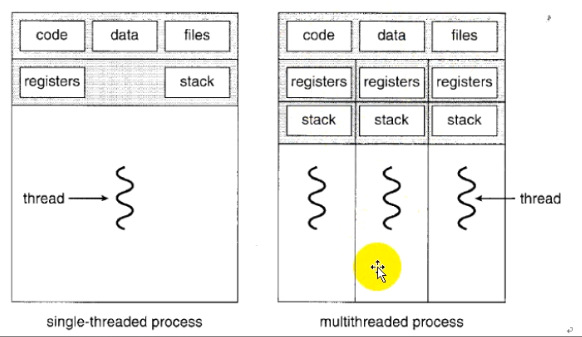
线程共享进程数据,但也拥有自己的一部分数据
线程ID
程序计数器
寄存器组
栈
errno
一个进程内部的线程可以共享资源
代码段
数据段
打开文件和信号
单线程和多线程模型如下:
如何从进程往线程中传数据?又如何从线程中将数据传出来呢?
1、使用全局变量,可以将数据传给线程
2、在进程中分配内存,通过pthread_create的第四个参数传给线程
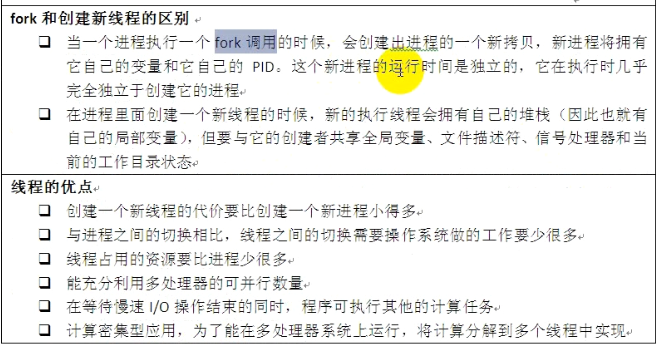
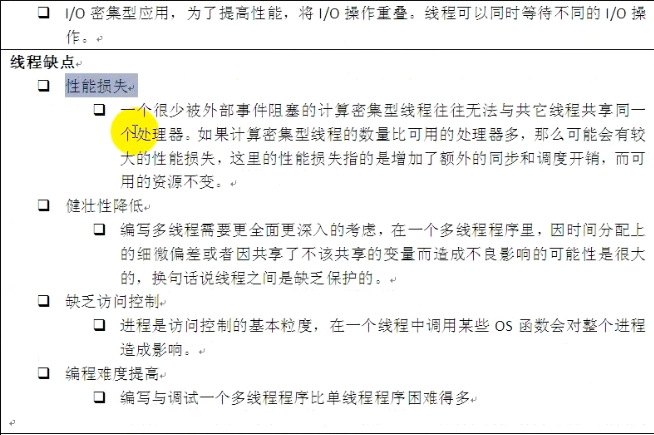
fork和创建新线程的区别:
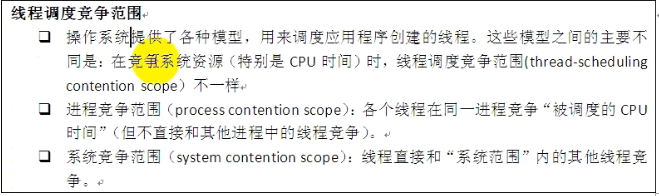
线程的属性是可以修改的。竞争范围可以修改。
POSIX线程库:
与线程有关的函数构成了一个完整的系列,绝大多数函数名字都是以“pthread”开头的。
要使用这些函数库,需要引入头文件<pthread.h>
链接这些线程函数库时要使用编译器命令的“-lpthread”选项
pthread_create函数:
原型:int pthread_create(pthread_t *thread, const pthread_attr_t *attr, void *(*start_routine)(void *), void *arg)
功能:创建一个新的线程
参数:
thread:返回的线程ID
attr:设置线程的属性,attr为NULL表示使用默认属性
start_routine:是一个函数地址,线程启动后要执行的函数
arg:传给线程启动函数的参数
返回值:成功返回0,失败返回错误码
错误检查:
传统的一些函数是成功返回0,失败返回-1,并且对全局变量errno赋值以指示错误
pthreads函数出错时不会设置全局变量errno(而大部分其他POSIX函数会这样做),而是将错误码通过返回值返回
pthread同样也提供了线程内的errno变量,以支持其他使用errno的代码,对于pthreads函数的错误,建议通过返回值来判定,因为读取返回值
要比读取线程内的errno变量的开销更小。
其他线程函数:
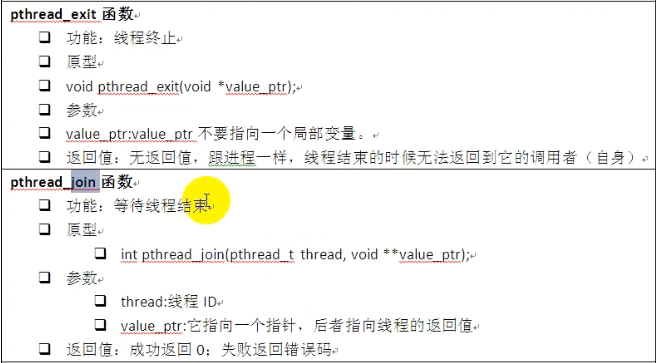
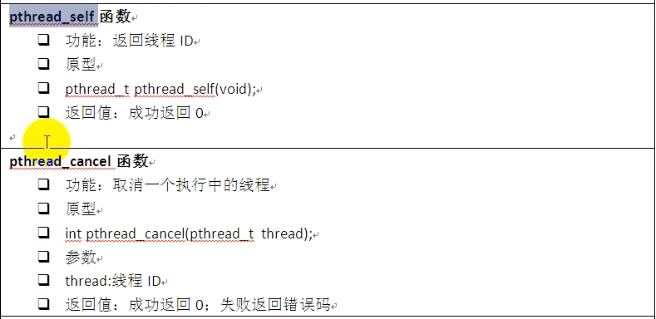
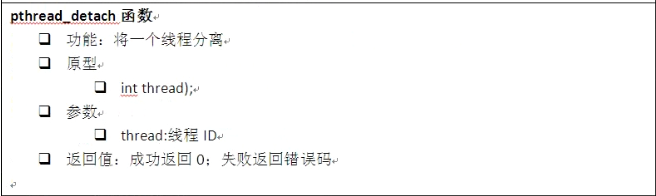
进程和线程对比:
进程:
fork;有pid;有pcb控制块;有僵尸进程;
线程:
pthread_create;有tid;有tcb控制块;有僵尸线程
线程和进程有一个巨大的区别,就是线程依赖进程,如果进程死了,线程也会死掉。而进程是父进程死了,子进程依旧可以运行。因为进程有自己独立的内存空间。总之,线程依赖于进程的生命周期。
线程示例程序如下:
 #include <unistd.h>

 #include <sys/types.h>

 #include <stdlib.h>

 #include <stdio.h>

 #include <errno.h>

 #include <string.h>

 #include <pthread.h>

 /*

 int pthread_create(pthread_t *restrict thread,

            const pthread_attr_t *restrict attr,

            void *(*start_routine)(void*), void *restrict arg);

 */

 void *start_routine(void *arg)

 {

     int i = ;

     printf("I am thread. \n");

     for(i = ; i < ; i++)

     printf("B");

     fflush(stdout);

     return NULL;

 }

 int main()

 {

     pthread_t thread;

     int i = ;

     pthread_create(&thread, NULL, start_routine, NULL);

     for(i = ; i< ; i++)

     {

         printf("A");

         fflush(stdout);

     }

     return ;

 }
执行完32行,线程就去执行线程体函数了,34行开始的for循环已经不再属于线程,也就是说线程执行完线程体就返回了,不会执行到34行。
运行结果如下:
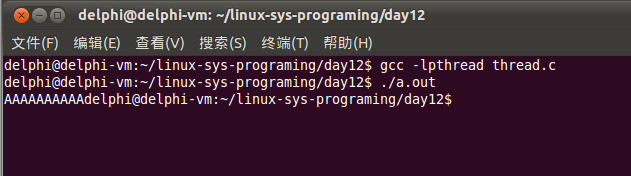
我们看到只打印出了AAAAAAAAA,这是因为,进程(主线程)死了之后,线程也就死了,它还没有来得及执行线程体就死了。我们给进程下面加上sleep,如下:
 #include <unistd.h>

 #include <sys/types.h>

 #include <stdlib.h>

 #include <stdio.h>

 #include <errno.h>

 #include <string.h>

 #include <pthread.h>

 /*

 int pthread_create(pthread_t *restrict thread,

            const pthread_attr_t *restrict attr,

            void *(*start_routine)(void*), void *restrict arg);

 */

 void *start_routine(void *arg)

 {

     int i = ;

     printf("I am thread. \n");

     for(i = ; i < ; i++)

     printf("B");

     fflush(stdout);

     return NULL;

 }

 int main()

 {

     pthread_t thread;

     int i = ;

     pthread_create(&thread, NULL, start_routine, NULL);

     for(i = ; i< ; i++)

     {

         printf("A");

         fflush(stdout);

     }

     sleep();

     return ;

 }
结果如下:
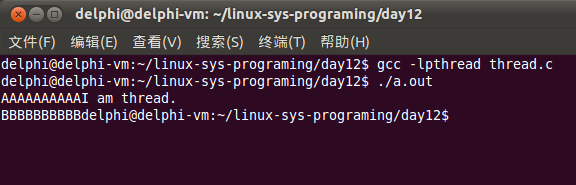
我们看到线程成功打印出了数据。
打印全局变量,程序如下:
 #include <unistd.h>

 #include <sys/types.h>

 #include <stdlib.h>

 #include <stdio.h>

 #include <errno.h>

 #include <string.h>

 #include <pthread.h>

 /*

 int pthread_create(pthread_t *restrict thread,

            const pthread_attr_t *restrict attr,

            void *(*start_routine)(void*), void *restrict arg);

 */

 int g_num = ;

 void *start_routine(void *arg)

 {

     int i = ;

     printf("I am thread. \n");

     printf("g_num = %d\n", g_num);

     for(i = ; i < ; i++)

     {

         printf("B");

         fflush(stdout);

     }

     printf("\n");

     return NULL;

 }

 int main()

 {

     pthread_t thread;

     int i = ;

     g_num = ;

     pthread_create(&thread, NULL, start_routine, NULL);

     for(i = ; i< ; i++)

     {

         printf("A");

         fflush(stdout);

     }

     printf("\n");

     sleep();

     return ;

 }
执行结果如下:
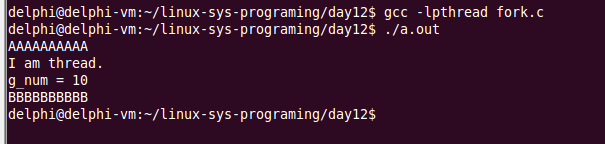
多进程打印全局变量程序如下:
 #include <unistd.h>

 #include <sys/types.h>

 #include <stdlib.h>

 #include <stdio.h>

 #include <errno.h>

 #include <string.h>

 #include <pthread.h>

 /*

 int pthread_create(pthread_t *restrict thread,

            const pthread_attr_t *restrict attr,

            void *(*start_routine)(void*), void *restrict arg);

 */

 int g_num = ;

 void *start_routine(void *arg)

 {

     int i = ;

     printf("I am thread. \n");

     printf("g_num = %d\n", g_num);

     for(i = ; i < ; i++)

     {

         printf("B");

         fflush(stdout);

     }

     printf("\n");

     return NULL;

 }

 int main()

 {

     pid_t pid;

     int i = ;

     g_num = ;

     pid = fork();

     if( pid == )

     {

         printf("I am child \n");

         printf("g_num = %d\n", g_num);

         for(i = ; i< ; i++)

         {

             printf("B");

             fflush(stdout);

         }

         printf("\n");

         exit();

     }

     for(i = ; i< ; i++)

     {

         printf("A");

         fflush(stdout);

     }

     printf("\n");

     sleep();

     return ;

 }
结果如下:
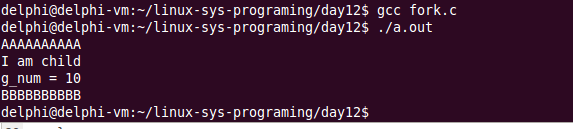
获取线程ID的示例:
 #include <unistd.h>

 #include <sys/types.h>

 #include <stdlib.h>

 #include <stdio.h>

 #include <errno.h>

 #include <string.h>

 #include <pthread.h>

 /*

 int pthread_create(pthread_t *restrict thread,

            const pthread_attr_t *restrict attr,

            void *(*start_routine)(void*), void *restrict arg);

 */

 int g_num = ;

 void *start_routine(void *arg)

 {

     int i = ;

     printf("I am thread. \n");

     printf("g_num = %d\n", g_num);

     printf("thread id = %lu\n", pthread_self());

     for(i = ; i < ; i++)

     {

         printf("B");

         fflush(stdout);

     }

     printf("\n");

     return NULL;

 }

 int main()

 {

     pthread_t thread;

     int i = ;

     g_num = ;

     pthread_create(&thread, NULL, start_routine, NULL);

     for(i = ; i< ; i++)

     {

         printf("A");

         fflush(stdout);

     }

     printf("\n");

     sleep();

     return ;

 }
结果如下:
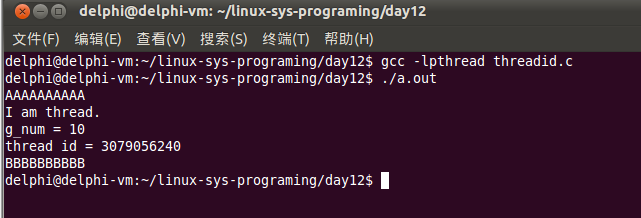
上面的程序中,我们使用sleep等待,让子进程先运行,但是这不是根本的解决办法,我们使用pthread_join等待子线程退出,程序如下:
 #include <unistd.h>

 #include <sys/types.h>

 #include <stdlib.h>

 #include <stdio.h>

 #include <errno.h>

 #include <string.h>

 #include <pthread.h>

 /*

 int pthread_create(pthread_t *restrict thread,

            const pthread_attr_t *restrict attr,

            void *(*start_routine)(void*), void *restrict arg);

 */

 int g_num = ;

 void *start_routine(void *arg)

 {

     int i = ;

     printf("I am thread. \n");

     printf("g_num = %d\n", g_num);

     printf("thread id = %lu\n", pthread_self());

     for(i = ; i < ; i++)

     {

         printf("B");

         fflush(stdout);

     }

     sleep();

     printf("\n");

     return NULL;

 }

 int main()

 {

     pthread_t thread;

     int i = ;

     g_num = ;

     pthread_create(&thread, NULL, start_routine, NULL);

     for(i = ; i< ; i++)

     {

         printf("A");

         fflush(stdout);

     }

     printf("\n");

     pthread_join(thread, NULL);

     return ;

 }
结果如下:
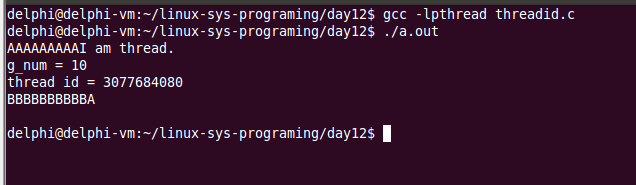
线程有两种死掉的方法,一个是自杀一个是他杀。
我们先用exit使子线程退出,程序如下:
 #include <unistd.h>

 #include <sys/types.h>

 #include <stdlib.h>

 #include <stdio.h>

 #include <errno.h>

 #include <string.h>

 #include <pthread.h>

 /*

 int pthread_create(pthread_t *restrict thread,

            const pthread_attr_t *restrict attr,

            void *(*start_routine)(void*), void *restrict arg);

 */

 int g_num = ;

 void *start_routine(void *arg)

 {

     int i = ;

     printf("I am thread. \n");

     printf("g_num = %d\n", g_num);

     printf("thread id = %lu\n", pthread_self());

     for(i = ; i < ; i++)

     {

         printf("B");

         fflush(stdout);

     }

     sleep();

     printf("\n");

     exit();

 }

 int main()

 {

     pthread_t thread;

     int i = ;

     g_num = ;

     pthread_create(&thread, NULL, start_routine, NULL);

     for(i = ; i< ; i++)

     {

         printf("A");

         fflush(stdout);

     }

     printf("\n");

     pthread_join(thread, NULL);

     printf("child thread die\n");

     return ;

 }
结果如下:
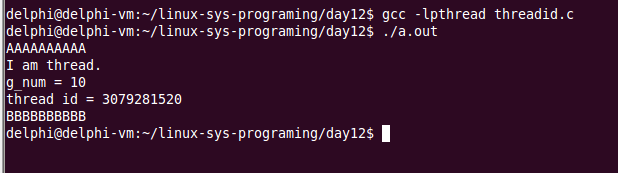
我们发现子线程退出后,父进程没有打印出第54行的数据,说明子线程用exit退出后,父进程也挂了,相当于同归于尽。因此,线程退出千万不能用exit。
我们可以使用pthread_exit让线程死掉,程序如下:
 #include <unistd.h>

 #include <sys/types.h>

 #include <stdlib.h>

 #include <stdio.h>

 #include <errno.h>

 #include <string.h>

 #include <pthread.h>

 /*

 int pthread_create(pthread_t *restrict thread,

            const pthread_attr_t *restrict attr,

            void *(*start_routine)(void*), void *restrict arg);

 */

 int g_num = ;

 void *start_routine(void *arg)

 {

     int i = ;

     printf("I am thread. \n");

     printf("g_num = %d\n", g_num);

     printf("thread id = %lu\n", pthread_self());

     for(i = ; i < ; i++)

     {

         printf("B");

         fflush(stdout);

     }

     sleep();

     printf("\n");

     pthread_exit(NULL);

 }

 int main()

 {

     pthread_t thread;

     int i = ;

     g_num = ;

     pthread_create(&thread, NULL, start_routine, NULL);

     for(i = ; i< ; i++)

     {

         printf("A");

         fflush(stdout);

     }

     printf("\n");

     pthread_join(thread, NULL);

     printf("child thread die\n");

     return ;

 }
执行结果如下:
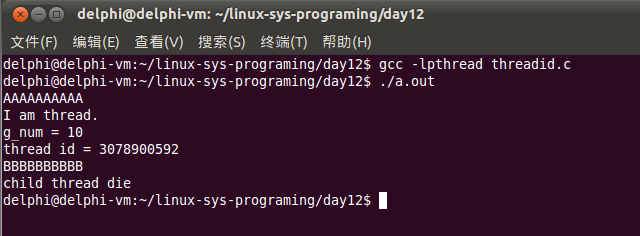
可以看到第54行打印出来了。
线程他杀就是父进程调用pthread_cancel杀掉子线程,这个很少用。
父进程如果不想等待线程结束,可以让线程脱离这个进程运行,使用pthread_detach函数,程序如下:
 #include <unistd.h>

 #include <sys/types.h>

 #include <stdlib.h>

 #include <stdio.h>

 #include <errno.h>

 #include <string.h>

 #include <pthread.h>

 /*

 int pthread_create(pthread_t *restrict thread,

            const pthread_attr_t *restrict attr,

            void *(*start_routine)(void*), void *restrict arg);

 */

 int g_num = ;

 void *start_routine(void *arg)

 {

     int i = ;

     pthread_detach(pthread_self());

     printf("I am thread. \n");

     printf("g_num = %d\n", g_num);

     printf("thread id = %lu\n", pthread_self());

     for(i = ; i < ; i++)

     {

         printf("B");

         fflush(stdout);

     }

     sleep();

     printf("\n");

     pthread_exit(NULL);

 }

 int main()

 {

     pthread_t thread;

     int i = ;

     g_num = ;

     pthread_create(&thread, NULL, start_routine, NULL);

     for(i = ; i< ; i++)

     {

         printf("A");

         fflush(stdout);

     }

     printf("\n");

     pthread_join(thread, NULL);

     printf("child thread die\n");

     return ;

 }
结果如下:
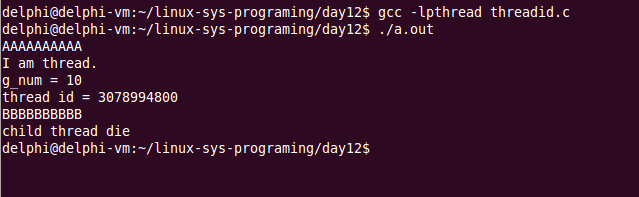
一般在线程体函数中立即调用pthread_detach函数。
我们编译多线程程序时要加上 -lpthread,使用ldd可以查看程序用了哪些动态库,如下所示:

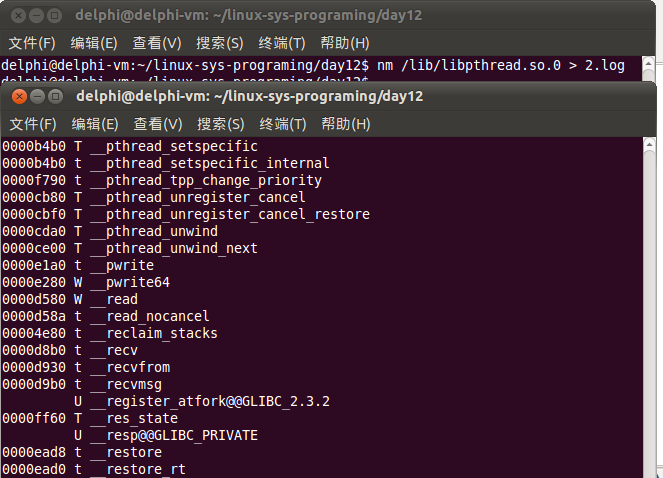
可以使用nm查看一个库中的函数(符号),如下:
12.2 linux下的线程的更多相关文章
- Linux下查看线程数的几种方法汇总
Linux下查看线程数的几种方法汇总 作者:尹正杰 版权声明:原创作品,谢绝转载!否则将追究法律责任. 一.Linux下查看某个进程的线程数量 pstree命令以树状图显示进程间的关系(display ...
- Linux下Java线程具体监控和其dump的分析使用----分析Java性能瓶颈[张振华-Jack]
作者:张振华(Jack) 这里对linux下.sun(oracle) JDK的线程资源占用问题的查找步骤做一个小结: linux环境下,当发现java进程占用CPU资源非常高,且又要想更进一步查出哪一 ...
- Linux下进程线程,Nignx与php-fpm的进程线程方式
1.进程与线程区别 进程是程序执行时的一个实例,即它是程序已经执行到课中程度的数据结构的汇集.从内核的观点看,进程的目的就是担当分配系统资源(CPU时间.内存等)的基本单位. 线程是进程的一个执行流, ...
- Linux下简单线程池的实现
大多数的网络服务器,包括Web服务器都具有一个特点,就是单位时间内必须处理数目巨大的连接请求,但是处理时间却是比较短的.在传统的多线程服务器模型中是这样实现的:一旦有个服务请求到达,就创建一个新的服务 ...
- 一个Linux下C线程池的实现
什么时候需要创建线程池呢?简单的说,如果一个应用需要频繁的创建和销毁线程,而任务执行的时间又非常短,这样线程创建和销毁的带来的开销就不容忽视,这时也是线程池该出场的机会了.如果线程创建和销毁时间相比任 ...
- linux下的线程池
什么时候需要创建线程池呢?简单的说,如果一个应用需要频繁的创建和销毁线程,而任务执行的时间又非常短,这样线程创建和销毁的带来的开销就不容忽视,这时也是线程池该出场的机会了.如果线程创建和销毁时间相比任 ...
- linux下使用线程锁互斥访问资源
linux使用线程锁访问互斥资源: 1.线程锁的创建 pthread_mutex_t g_Mutex; 2.完整代码如下 #include <stdio.h> #include <s ...
- Linux下的线程
一.线程的优点 与传统进程相比,用线程来实现相同的功能有如下优点: (1)系统资源消耗低. (2)速度快. (3)线程间的数据共享比进程间容易的多. 二.多线程编程简单实例 #include < ...
- Linux下获取线程TID的方法——gettid()
(转载)http://blog.csdn.net/delphiwcdj/article/details/8476547 如何获取进程的PID(process ID)? 可以使用: #include & ...
随机推荐
- 在采用vue-cli Post Get
需要依赖插件 vue-resource npm install vue-resource --save https://cn.vuejs.org/v2/cookbook/using-axios-to- ...
- Cocos2d-x学习笔记(一)环境搭建与项目创建
可运行的代码可以说明一切问题. 环境需安装VS201x + Python2.7 + Cocos2d-x-2.2.5.(Linux下参考链接:http://www.cocos2d-x.org/wiki/ ...
- python flask demo
from flask import Flask, jsonify from flask import abort from flask import make_response from flask ...
- ActivityGroup实现tab功能
android.app包中含有一个ActivityGroup类,该类是Activity的容器,可以包含多个嵌套进来的 Activitys,这篇文章就是借助ActivityGroup可以嵌套Activi ...
- JSON自定义排序
var json=[{ Name:'张三', Addr:'重庆', Age:'20' },{ Name:'张三3', Addr:'重庆2', Age:'25' },{ Name:'张三2', Addr ...
- TestNG 101
最近看了点TestNG,做个入门笔记 0.Maven + TestNG 0a. 创建Maven 项目,pom中添加依赖(可能还需要安装TestNG插件 <dependencies> < ...
- spring boot 2.0 + 静态资源被拦截,怎么办?
问题描述:使用springboot 2.0后,按照springboot 1.5版本(以下简称旧版)的方式去配置项目.结果发现静态资源访问不到了,本文对此情况分析.处理 项目结构: 直接上图 如果是在旧 ...
- 增加centos7.3上安装php7的php-soap扩展
代码传到正式服务器上去就:Class 'SoapClient' not found,只能是soap扩展没装! 因为服务器上面的PHP是7.1.11的,所以soap也要装7.1.11的,否则会冲突 ...
- Linux crontab定时执行任务 命令格式与详细例子(转)
基本格式 : * * * * * command 分 时 日 月 周 命令 第1列表示分钟1-59 每分钟用*或者 */1表示 第2列表示小时1-23(0表示0点) 第3列表示日期1-31 第4列表示 ...
- JavaScript的深拷贝和浅拷贝总结
深拷贝和浅拷贝 深拷贝:拷贝实例:浅拷贝:拷贝引用(原对象). 说深拷贝和浅拷贝之前,我先去了解了下高程书上的JavaScript的变量类型: 基本类型:undefined.null.Boolean. ...