
Okhttp3源码解析(4)-拦截器与设计模式
### 前言
回顾:
[Okhttp的基本用法](https://www.jianshu.com/p/8e404d9c160f)
[Okhttp3源码解析(1)-OkHttpClient分析](https://www.jianshu.com/p/bf1d01b79ce7)
[Okhttp3源码解析(2)-Request分析](https://www.jianshu.com/p/5a85345c8ea7)
[Okhttp3源码解析(3)-Call分析(整体流程)](https://www.jianshu.com/p/4ed79472797a)
上节我们讲了okhttp的整体的流程,里面的核心方法之一是`getResponseWithInterceptorChain()` ,这个方法应该知道吧?通过拦截器层层处理返回Response;这个方法中其实应用了责任链设计模式。今天主要讲一下它是如何应用的!
### 责任链设计模式
###### 责任链模式的定义
在责任链模式里,很多对象由每一个对象对其下家的引用而连接起来形成一条链。请求在这个链上传递,直到链上的某一个对象决定处理此请求。发出这个请求的客户端并不知道链上的哪一个对象最终处理这个请求,这使得系统可以在不影响客户端的情况下动态地重新组织和分配责任。
模型:
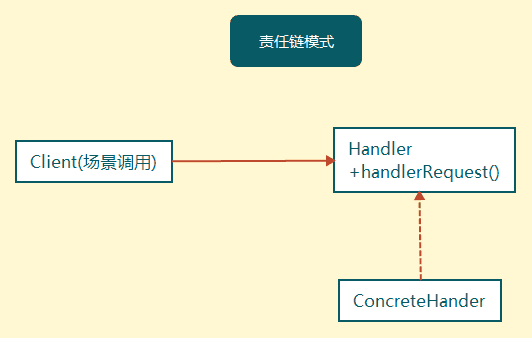
1.优点
耦合度降低,请求和处理是分开的
2.缺点
责任链太长或者每条链判断处理的时间太长会影响性能。特别是递归循环的时候
不一定被处理,每个职责类的职责很明确,这就需要对写默认的处理了
**责任链模式重要的两点:分离职责,动态组合**
对责任链设计模式不明白的可以去网上那个找找实例看看, 这里就不举例子了。
### 源码中的责任链
话不多说,直接上`getResponseWithInterceptorChain()` 源码
```
Response getResponseWithInterceptorChain() throws IOException {
// Build a full stack of interceptors.
List interceptors = new ArrayList();
interceptors.addAll(client.interceptors()); //自定义
interceptors.add(retryAndFollowUpInterceptor); //错误与跟踪拦截器
interceptors.add(new BridgeInterceptor(client.cookieJar())); //桥拦截器
interceptors.add(new CacheInterceptor(client.internalCache())); //缓存拦截器
interceptors.add(new ConnectInterceptor(client)); //连接拦截器
if (!forWebSocket) {
interceptors.addAll(client.networkInterceptors()); //网络拦截器
}
interceptors.add(new CallServerInterceptor(forWebSocket)); //调用服务器拦截器
Interceptor.Chain chain = new RealInterceptorChain(interceptors, null, null, null, 0,
originalRequest, this, eventListener, client.connectTimeoutMillis(),
client.readTimeoutMillis(), client.writeTimeoutMillis());
return chain.proceed(originalRequest);
}
```
方法中大部分上节已经说了,就是 `List`添加自定义、cookie等等的拦截器,今天我们主要看看后半部分:
```
Interceptor.Chain chain = new RealInterceptorChain(interceptors, null, null, null, 0,
originalRequest, this, eventListener, client.connectTimeoutMillis(),
client.readTimeoutMillis(), client.writeTimeoutMillis());
return chain.proceed(originalRequest);
```
首先初始化了 `RealInterceptorChain`,`RealInterceptorChain`是`Interceptor.Chain`的实现类

先看一下`Interceptor.Chain`:
```
public interface Interceptor {
Response intercept(Chain chain) throws IOException;
interface Chain {
Request request();
Response proceed(Request request) throws IOException;
//部分代码省略....
}
}
```
生成了RealInterceptorChain的实例,调用了`proceed()`,返回了最后的Response
我们看下 `RealInterceptorChain`类中的`proceed()`:
```
@Override public Response proceed(Request request) throws IOException {
return proceed(request, streamAllocation, httpCodec, connection);
}
public Response proceed(Request request, StreamAllocation streamAllocation, HttpCodec httpCodec,
RealConnection connection) throws IOException {
if (index >= interceptors.size()) throw new AssertionError();
calls++;
// If we already have a stream, confirm that the incoming request will use it.
if (this.httpCodec != null && !this.connection.supportsUrl(request.url())) {
throw new IllegalStateException("network interceptor " + interceptors.get(index - 1)
+ " must retain the same host and port");
}
// If we already have a stream, confirm that this is the only call to chain.proceed().
if (this.httpCodec != null && calls > 1) {
throw new IllegalStateException("network interceptor " + interceptors.get(index - 1)
+ " must call proceed() exactly once");
}
// Call the next interceptor in the chain.
RealInterceptorChain next = new RealInterceptorChain(interceptors, streamAllocation, httpCodec,
connection, index + 1, request, call, eventListener, connectTimeout, readTimeout,
writeTimeout);
Interceptor interceptor = interceptors.get(index);
Response response = interceptor.intercept(next);
// Confirm that the next interceptor made its required call to chain.proceed().
if (httpCodec != null && index + 1
Okhttp3源码解析(4)-拦截器与设计模式的更多相关文章
- Okhttp3源码解析(5)-拦截器RetryAndFollowUpInterceptor
### 前言 回顾: [Okhttp的基本用法](https://www.jianshu.com/p/8e404d9c160f) [Okhttp3源码解析(1)-OkHttpClient分析](htt ...
- 源码解析Grpc拦截器(C#版本)
前言 其实Grpc拦截器是我以前研究过,但是我看网上相关C#版本的源码解析相对少一点,所以笔者借这篇文章给大家分享下Grpc拦截器的实现,废话不多说,直接开讲(Grpc的源码看着很方便,包自动都能还原 ...
- axios源码解析 - 请求拦截器
axios请求拦截器,也就是在请求发送之前执行自定义的函数. axios源码版本 - ^0.27.2 (源码是精简版) 平时在业务中会这样去写请求拦截器,代码如下: // 创建一个新的实例 var s ...
- axios 源码解析(下) 拦截器的详解
axios的除了初始化配置外,其它有用的应该就是拦截器了,拦截器分为请求拦截器和响应拦截器两种: 请求拦截器 ;在请求发送前进行一些操作,例如在每个请求体里加上token,统一做了处理如果以后要 ...
- Okhttp3源码解析(3)-Call分析(整体流程)
### 前言 前面我们讲了 [Okhttp的基本用法](https://www.jianshu.com/p/8e404d9c160f) [Okhttp3源码解析(1)-OkHttpClient分析]( ...
- springMVC源码分析之拦截器
一个东西用久了,自然就会从仅使用的层面上升到探究其原理的层面,在javaweb中springmvc更是如此,越是优秀的框架,其底层实现代码更是复杂,而在我看来,一个优秀程序猿就相当于一名武林高手,不断 ...
- springMVC源码分析--HandlerInterceptor拦截器调用过程(二)
在上一篇博客springMVC源码分析--HandlerInterceptor拦截器(一)中我们介绍了HandlerInterceptor拦截器相关的内容,了解到了HandlerInterceptor ...
- Okhttp3源码解析(2)-Request分析
### 前言 前面我们讲了 [Okhttp的基本用法](https://www.jianshu.com/p/8e404d9c160f) [Okhttp3源码解析(1)-OkHttpClient分析]( ...
- SpringMVC源码阅读:拦截器
1.前言 SpringMVC是目前J2EE平台的主流Web框架,不熟悉的园友可以看SpringMVC源码阅读入门,它交代了SpringMVC的基础知识和源码阅读的技巧 本文将通过源码(基于Spring ...
随机推荐
- 动手造轮子:实现一个简单的 EventBus
动手造轮子:实现一个简单的 EventBus Intro EventBus 是一种事件发布订阅模式,通过 EventBus 我们可以很方便的实现解耦,将事件的发起和事件的处理的很好的分隔开来,很好的实 ...
- Excel催化剂开源第44波-窗体在Show模式下受Excel操作影响变为最小化解决方式
在Excel催化剂的许多功能中,都会开发窗体用于给用户更友好的交互使用,但有一个问题,困扰许久,在窗体上运行某些代码后,中途弹出下MessageBox对话框给用户做一些简单的提示或交互时,发现程序运行 ...
- Spark学习之RDD
RDD概述 什么是RDD RDD(Resilient Distributed Dataset)叫做弹性分布式数据集,是Spark中最基本的数据抽象,它代表一个不可变.可分区.里面的元素可并行计算的集合 ...
- Codeforces 1144 E. Median String
原题链接:https://codeforces.com/problemset/problem/1144/E tag:字符串模拟,大整数. 题意:给定两个字符串,求字典序中间串. 思路:可以把这个题当做 ...
- rabbitMQ_routing(四)
路由 本次我们将通过路由将信息发送到指定的队列中,将消息发送给指定的队列需要在转发器和队列之间建立一个routeKey 绑定 在以前的例子中,我们已经创建了绑定.你可能会记得如下代码: channel ...
- 解释一下一门语言该有的东东(Javascript)
注释 Js中有两种注释 // 单行注释 /**/ 多行注释 变量 变量就像学校学习的 未知数 如 3 + x = 8 x: 类似变量,在改造一下 x + y = z 当 x=3, y=5, z=8, ...
- IO流与NIO流
JAVA IO流最详解 (转自CSDN) IO流上:概述.字符流.缓冲区(java基础) 一.IO流概述 概述: IO流简单来说就是Input和Output流,IO流主要是用来处理设备之间的数 ...
- Jquery事件和选择器 纠错
1: 试题分析:该题考的是jQuery中事件绑定的知识.绑定事件用bind()方法,选项A是正确的绑定事件语法,因此是正确的答案.选项BCD的语法是错误的. 2: 试题分析:opacity 必需.规定 ...
- C#实现简单爬虫
分享之前写过的一个爬虫,采集数据,存入数据库的简单实现. github地址:https://github.com/CodesCreator/biu-biu-biu-
- 【数据结构学习】关于HashMap的那些事儿
涉及数据结构 红黑树 链表 哈希 从CRUD说起 预热知识: DEFAULT_INITIAL_CAPACITY = 1 << 4, HashMap默认容量为16(n << m意 ...