
poj 2553 The Bottom of a Graph(强连通分量+缩点)
题目地址:http://poj.org/problem?id=2553
| Time Limit: 3000MS | Memory Limit: 65536K | |
| Total Submissions: 7881 | Accepted: 3263 |
Description
Input
Output
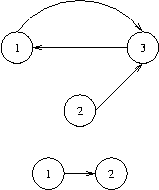
Sample Input
3 3

1 3 2 3 3 1

2 1

1 2

0
Sample Output
1 3

2
Source
 /**

 Judge Status:Accepted      Memory:1488K

 Time:125MS      Language:G++

 Code Length:2443B   Author:cj

 */

 #include<iostream>

 #include<stdio.h>

 #include<string.h>

 #include<stack>

 #include<vector>

 #include<algorithm>

 #define N 10010

 using namespace std;

 vector<int> G[N];

 stack<int> stk;

 int pre[N],lowlink[N],sccno[N],scc_cnt,dfn_clock,out[N],counter[N];

 void DFN(int u)  //tarjan算法

 {

     lowlink[u] = pre[u] = ++dfn_clock;

     stk.push(u);

     int i;

     for(i=;i<G[u].size();i++)

     {

         int v = G[u][i];

         if(!pre[v])

         {

             DFN(v);

             lowlink[u] = min(lowlink[u],lowlink[v]);

         }

         else if(!sccno[v])

         {

             lowlink[u] = min(lowlink[u],pre[v]);

         }

     }

     if(lowlink[u]==pre[u])

     {

         scc_cnt++;  //强连通图的个数标记

         while()

         {

             int x = stk.top();

             stk.pop();

             sccno[x] = scc_cnt;

             if(x==u)    break;

         }

     }

 }

 void findscc(int n)

 {

     int i;

     scc_cnt = dfn_clock = ;

     memset(pre,,sizeof(pre));

     memset(lowlink,,sizeof(lowlink));

     memset(sccno,,sizeof(sccno));

     for(i=;i<=n;i++)

         if(!pre[i])

             DFN(i);

 }

 int main()

 {

     int n,m;

     while(~scanf("%d",&n)&&n)

     {

         scanf("%d",&m);

         int i;

         for(i=;i<=n;i++)

             G[i].clear();

         for(i=;i<m;i++)

         {

             int a,b;

             scanf("%d%d",&a,&b);

             G[a].push_back(b);  // 得到图

         }

         findscc(n);  //查找强连通图

         int j;

         memset(out,,sizeof(out));

         memset(counter,,sizeof(counter));

         for(i=;i<=n;i++)  //遍历一边图,查找统计个点缩点后的出度

         {

             for(j=;j<G[i].size();j++)

             {

                 int v = G[i][j];

                 if(sccno[i]!=sccno[v])

                 {

                     out[sccno[i]]++;  //出度

                 }

             }

         }

         for(i=;i<=scc_cnt;i++)

         {

             if(!out[i])  //出度为0的强连通分量

             {

                 counter[i] = ;  //标记

             }

         }

         int pl = ;

         for(i=;i<=n;i++)

             if(counter[sccno[i]])  //是否被标记,从下到大

             {

                 if(pl)  printf(" %d",i);

                 else printf("%d",i);

                 pl = ;

             }

         putchar();

     }

     return ;

 }
poj 2553 The Bottom of a Graph(强连通分量+缩点)的更多相关文章
- POJ 2553 The Bottom of a Graph (强连通分量)
题目地址:POJ 2553 题目意思不好理解.题意是:G图中从v可达的全部点w,也都能够达到v,这种v称为sink.然后升序输出全部的sink. 对于一个强连通分量来说,全部的点都符合这一条件,可是假 ...
- 【poj2553】The Bottom of a Graph(强连通分量缩点)
题目链接:http://poj.org/problem?id=2553 [题意] 给n个点m条边构成一幅图,求出所有的sink点并按顺序输出.sink点是指该点能到达的点反过来又能回到该点. [思路] ...
- poj - 2186 Popular Cows && poj - 2553 The Bottom of a Graph (强连通)
http://poj.org/problem?id=2186 给定n头牛,m个关系,每个关系a,b表示a认为b是受欢迎的,但是不代表b认为a是受欢迎的,关系之间还有传递性,假如a->b,b-&g ...
- POJ 2553 The Bottom of a Graph(强连通分量)
POJ 2553 The Bottom of a Graph 题目链接 题意:给定一个有向图,求出度为0的强连通分量 思路:缩点搞就可以 代码: #include <cstdio> #in ...
- poj 2553 The Bottom of a Graph
求解的是有向图中满足“自己可达的顶点都能到达自己”的顶点个数如果强连通分量中某个顶点,还能到达分量外的顶点,则该连通分量不满足要求// 因此,本题要求的是将强连通分量缩点后所构造的新图中出度为0的顶点 ...
- poj 2553 The Bottom of a Graph【强连通分量求汇点个数】
The Bottom of a Graph Time Limit: 3000MS Memory Limit: 65536K Total Submissions: 9641 Accepted: ...
- [poj 2553]The Bottom of a Graph[Tarjan强连通分量]
题意: 求出度为0的强连通分量. 思路: 缩点 具体有两种实现: 1.遍历所有边, 边的两端点不在同一强连通分量的话, 将出发点所在强连通分量出度+1. #include <cstdio> ...
- POJ 2553 The Bottom of a Graph(强连通分量的出度)
题意: 求出图中所有汇点 定义:点v是汇点须满足 --- 对图中任意点u,若v可以到达u则必有u到v的路径:若v不可以到达u,则u到v的路径可有可无. 模板:http://www.cnblogs.co ...
- POJ 2553 The Bottom of a Graph (Tarjan)
The Bottom of a Graph Time Limit: 3000MS Memory Limit: 65536K Total Submissions: 11981 Accepted: ...
随机推荐
- java演示facade(外观)模式
实际应用中,原来的代码涉及多个子系统时,重新进行类的设计,将原来分散在源码中的类结构及方法重新组合,形成新的.统一的接口,供上层应用使用. Facade所面对的往往是多个类或其它程序单元,通过重新组合 ...
- Linux 命令 - at: 在指定的时间执行任务
在指定的时间执行任务. 命令格式 at [-V] [-q queue] [-f file] [-mldbv] TIMEat [-V] [-q queue] [-f file] [-mldbv] -t ...
- Networking - ARP 协议
ARP 协议概述 ARP(Address Resolution Protocol),即地址解析协议,用于把 IP 地址映射到物理地址.网段上的每台主机都维护着一个被称为 ARP Table 或 ARP ...
- Linux C编程--fork()详解
以下给出说明: fork函数 #include <sys/types.h> #include <unistd.h> pid_t fork(void); fork调用失败则返回 ...
- fresco的源码学习自我总结
前言 对fresco框架源码的阅读学习,学习优秀的编码方式和较为实用常见设计模式,该篇讲得比较浅,主要是理清三个主要类的之间的关系. 本篇目录 fresco框架的MVC模式 fresco的Drawee ...
- 关于蓝牙设备与ios连接后,自动打开一个app
How to launch an iphone app when an external accessory is either paired over BT or plugged into dock ...
- 和阿文一起学H5——H5工具、素材
字体: 一般的H5工具都会提供一部分字体,如果提供的字体中没有自己想用的字体,可以在PPT或PS中进行加工,然后另存为图片,再导入到H5工具中去. 字全生成器: 1.http://www.diyizi ...
- Agile.Net 组件式开发平台 - 组件开发示例
所谓组件式开发平台,它所有的功能模块都是以组件的形式扩展的,下面我来演示一个简单的组件开发例程. Agile.Net开发管理平台项目,已经托管在开源中国码云平台(http://git.oschina. ...
- 第一章、C#委托和事件(Delegate、Event、EventHandler、EventArgs)
第一章.C#委托和事件(Delegate.Event.EventHandler.EventArgs) 分类: 学习笔记-C#网络编程2012-12-08 14:10 7417人阅读 评论(3) 收藏 ...
- 读<<CLR via C#>> 详谈泛型
1,什么是泛型? 答:泛型是类型的模板,类型是实例(对象)的模板.C#提供了5种泛型:类,接口,委托,结构和方法. 2,使用泛型有什么好处? 答:继承实现的是"代码重用",而泛型实 ...