
一个Work Stealing Pool线程池的实现
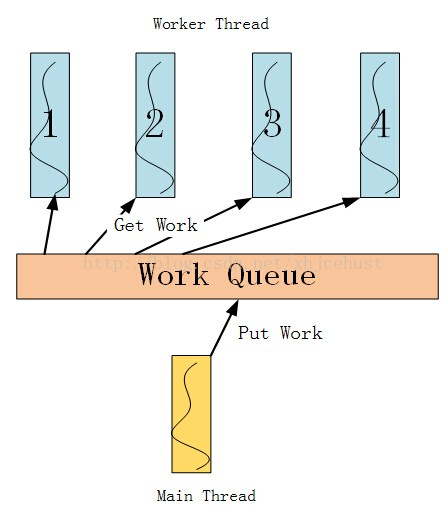
如上图所示,工作队列由主线程和工作者线程共享,主线程将任务放进工作队列,工作者线程从工作队列中取出任务执行。共享工作队列的操作需在互斥量的保护下安全进行,主线程将任务放进工作队列时若检测到当前待执行的工作数目小于工作者线程总数,则需使用条件变量唤醒可能处于等待状态的工作者线程。当然,还有其他地方可能也会使用到互斥量和条件变量,不再赘述。
三、无锁化线程池模型
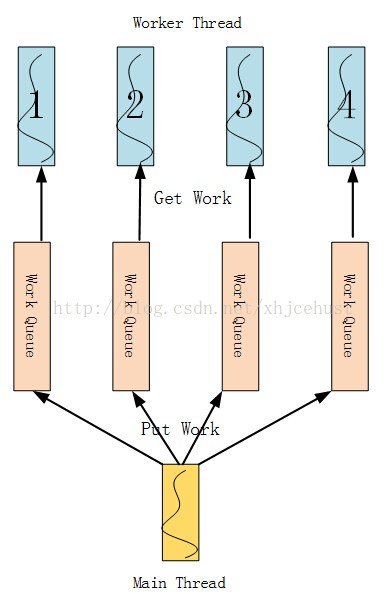
struct thread_pool;

struct future;

/* Create a new thread pool with no more than n threads. */

struct thread_pool * thread_pool_new(int nthreads);

void thread_pool_shutdown_and_destroy(struct thread_pool *);

typedef void * (* fork_join_task_t) (struct thread_pool *pool, void * data);

struct future * thread_pool_submit(

        struct thread_pool *pool,

        fork_join_task_t task,

        void * data);

void * future_get(struct future *);

void future_free(struct future *);
threadpool.c
#include <stdio.h>

#include <stdlib.h>

#include <string.h>

#include <unistd.h>

#include <sys/time.h>

#include <errno.h>

#include <assert.h>

#include <pthread.h>

#include <semaphore.h>

#include <fcntl.h>

#include "threadpool.h"

struct future

{

    fork_join_task_t task;

    void *arg; //parameter

    void *result;

    sem_t *sem;

    int status; //0: not to do, 1: doing, 2: done

    int local; //1: internal task, 0: external task

    struct future *prev;

    struct future *next;

};

struct thread_t

{

    pthread_t id;

    pthread_mutex_t mutex;

    pthread_cond_t cond;

    int idle;    //1: idle, 0: busy

    int index;  //record the current thread index in pool

    int current_task_num; //total task number in current thread

    struct thread_pool *pool; //point to the pool area

    struct future *head;

    struct future *tail;

};

struct thread_pool

{

    int max_threads;

    pthread_mutex_t mutex;

    int shutdown; //1: shutdown, 0: normal

    struct thread_t *threads;

    struct future *head;

    struct future *tail;

};

static void *thread_route(void *arg)

{

    assert(arg != NULL);

    struct thread_t *thread = (struct thread_t *)arg;

    assert(thread != NULL);

    struct thread_pool *pool = thread->pool;

    assert(pool != NULL);

    struct future *future = NULL;

    while()

    {

        pthread_mutex_lock(&thread->mutex);

        if(future != NULL)

        {

            thread->idle = ;

            future->status = ; //doing

            future->result = future->task(pool, future->arg);

            future->status = ;

            sem_post(future->sem);

        }

        while(thread->current_task_num ==  && pool->shutdown == )

        {

            //wait for task assigment

            pthread_cond_wait(&thread->cond, &thread->mutex);

        }

        if(pool->shutdown == )

        {

            //pool is shutdown, destroy the local task list

            struct future *temp = NULL;

            while(thread->head != NULL)

            {

                temp = thread->head;

                thread->head = thread->head->next;

                free(temp);

            }

            pthread_mutex_unlock(&thread->mutex);

            pthread_exit(NULL);

        }

        //Fist, get task from local task list to do

        while(thread->head != NULL)

        {

            thread->idle = ;

            future = thread->head;

            thread->head = thread->head->next;

            if(thread->tail == future)

                thread->tail = NULL;

            else

                thread->head->prev = NULL;

            //call the callback to do work

            thread->current_task_num--;

            future->status = ; //doing

            #if 0

            if(pool->max_threads ==  && future->local == )

            {

                /*

                 * TBD: in case there is only a thread in pool

                 * and the task is local task

                 * we can create a thread to do the task?

                 */

            }

            else

            #else

            {

                future->result = future->task(pool, future->arg);

            }

            #endif

            future->status = ;

            sem_post(future->sem); //Let future_get know, the result is ok

        }

        pthread_mutex_unlock(&thread->mutex);

        thread->idle = ;

        /*

         * The local task work are done, go to global task list to get task

         * or go to other work thread to get task.

         */

        //Step1: Go to globacl task list to get task(From Head)

        pthread_mutex_lock(&pool->mutex);

        future = NULL;

        while(pool->head != NULL && pool->head->status == )

        {

            //printf("Worker %d get task from global task, current_task %d\n", thread->index, thread->current_task_num);

            future = pool->head;

            pool->head = pool->head->next;

            if(pool->tail == future)

                pool->tail = NULL;

            else

                pool->head->prev = NULL;

            //Get the future, then put into the local task list?

            #if 0

            pthread_mutex_lock(&thread->mutex);

            if(thread->head != NULL)

            {

                future->next = thread->head;

                thread->head->prev = future;

            }

            else

            {

                thread->tail = future;

            }

            thread->head = future;

            thread->current_task_num++;

            pthread_mutex_unlock(&thread->mutex);

            if(thread->current_task_num == )

            {

                //Get 10 tasks, ok, get out, give some changes to other work threads

                break;

            }

            #else

            //printf("Worked %d get one task from globack task list.\n", thread->index);

            break; //get one task, break

            #endif

        }

        pthread_mutex_unlock(&pool->mutex);

        //Step2: Go to other work thread task list to get task(From Tail)

        if(future == NULL && thread->current_task_num == )

        {

            //printf("Worker %d can not get task from global task, then try other work threads, current_task %d\n", thread->index, thread->current_task_num);

            future = pool->head;

            int i = ;

            struct thread_t *other_thread = NULL;

            for(i=; i<pool->max_threads; i++)

            {

                if(i == thread->index)

                    continue; //myself

                if(pool->threads[i].current_task_num == )

                    continue; //it has no task

                //lock it?

                pthread_mutex_lock(&pool->threads[i].mutex);

                other_thread = (struct thread_t *)&pool->threads[i];

                while(other_thread->tail != NULL && other_thread->tail->status == )

                {

                    future = other_thread->tail;

                    other_thread->tail = other_thread->tail->prev;

                    if(future == other_thread->head)

                        other_thread->head = NULL;

                    else

                        other_thread->tail->next = NULL;

                    //Get the future, then put into our local task list?

                    #if 0

                    pthread_mutex_lock(&thread->mutex);

                    if(thread->head != NULL)

                    {

                        future->next = thread->head;

                        thread->head->prev = future;

                    }

                    else

                    {

                        thread->tail = future;

                    }

                    thread->head = future;

                    thread->current_task_num++;

                    printf("Worker %d get task from other thread task, current_task %d\n", thread->current_task_num);

                    pthread_mutex_unlock(&thread->mutex);

                    if(thread->current_task_num == )

                    {

                        //Get 4 tasks, ok, get out, give some changes to other work threads

                        break;

                    }

                    #else

                    //printf("Worked %d get one task from other worker %d.\n", thread->index, i);

                    break; //get one task, break

                    #endif

                }

                pthread_mutex_unlock(&pool->threads[i].mutex);

            }

        }

    }

}

struct thread_pool * thread_pool_new(int nthreads)

{

    struct thread_pool *pool = (struct thread_pool *)malloc(sizeof(struct thread_pool));

    assert(pool != NULL);

    pool->max_threads = nthreads;

    pool->head = pool->tail = NULL;

    pthread_mutex_init(&pool->mutex, NULL);

    pool->threads = (struct thread_t *)malloc(nthreads * sizeof(struct thread_t));

    assert(pool->threads != NULL);

    int i = ;

    for(i=; i<pool->max_threads; i++)

    {

        pthread_mutex_init(&pool->threads[i].mutex, NULL);

        pthread_cond_init(&pool->threads[i].cond, NULL);

        pool->threads[i].idle = ; //idle

        pool->threads[i].index = i;

        pool->threads[i].pool = pool; //point to the pool area

        pool->threads[i].current_task_num = ;

        pthread_create(&pool->threads[i].id, NULL, thread_route,(void *)(&pool->threads[i]));

    }

    return pool;

}

struct future * thread_pool_submit(

        struct thread_pool *pool,

        fork_join_task_t task,

        void * data)

{

    assert(pool != NULL);

    struct future *future = (struct future *)malloc(sizeof(struct future));

    assert(future);

    future->task = task;

    future->arg = data;

    future->prev = future->next = NULL;

    future->result = NULL;

    future->status = ;

    future->local = ; //default is external task

    int i = ;

    unsigned long myself_pid = pthread_self();

    for(i=; i<pool->max_threads; i++)

    {

        if(pool->threads[i].id == myself_pid)

        {

            future->local = ; //it is internal task

            break;

        }

    }

    future->sem = (sem_t *)malloc(sizeof(sem_t));

    assert(future->sem != NULL);

    sem_init(future->sem, , );

    //find a idle work thread to put the task

    struct thread_t * thread = NULL;

    for(i = ; i< pool->max_threads; i++)

    {

        thread = &pool->threads[i];

        pthread_mutex_lock(&thread->mutex);

        if(thread->idle == )

        {

            //find it, insert the task from head

            if(thread->head != NULL)

            {

                future->next = thread->head;

                thread->head->prev = future;

            }

            else

            {

                thread->tail = future;

            }

            thread->head = future;

            thread->current_task_num++;

            //Just let work thread know, it has work to do

            if(thread->current_task_num == )

            {

                //printf("%s(): Let worker %d to start to work\n", __FUNCTION__, thread->index);

                pthread_cond_signal(&thread->cond);

            }

            pthread_mutex_unlock(&thread->mutex);

            return future;

        }

        pthread_mutex_unlock(&thread->mutex);

    }

    //can not find idle work thread, just put it into global task list

    //printf("%s(): no find idle work thread, just put into global task list\n", __FUNCTION__);

    pthread_mutex_lock(&pool->mutex);

    if(pool->head != NULL)

    {

        future->next = pool->head;

        pool->head->prev = future;

    }

    else

    {

        pool->tail = future;

    }

    pool->head = future;

    pthread_mutex_unlock(&pool->mutex);

    return future;

}

void * future_get(struct future *future)

{

    assert(future);

    sem_wait(future->sem); //wait for the result ready

    return (void *)future->result;

}
完整的代码,请看我的GitHub:
一个Work Stealing Pool线程池的实现的更多相关文章
- 分享一个自制的 .net线程池
扯淡 由于项目需求,需要开发一些程序去爬取一些网站的信息,算是小爬虫程序吧.爬网页这东西是要经过网络传输,如果程序运行起来串行执行请求爬取,会很慢,我想没人会这样做.为了提高爬取效率,必须使用多线程并 ...
- 一个Linux下C线程池的实现
什么时候需要创建线程池呢?简单的说,如果一个应用需要频繁的创建和销毁线程,而任务执行的时间又非常短,这样线程创建和销毁的带来的开销就不容忽视,这时也是线程池该出场的机会了.如果线程创建和销毁时间相比任 ...
- 一个boost底下的线程池
Boost的thread库中目前并没有提供线程池,我在sorceforge上找了一个用boost编写的线程池.该线程池和boost结合的比较好,并且提供了多种任务执行策略,使用也非常简单. 下载地址: ...
- 一个简单的python线程池框架
初学python,实现了一个简单的线程池框架,线程池中除Wokers(工作线程)外,还单独创建了一个日志线程,用于日志的输出.线程间采用Queue方式进行通信. 代码如下:(不足之处,还请高手指正) ...
- 一个简单的linux线程池(转-wangchenxicool)
线程池:简单地说,线程池 就是预先创建好一批线程,方便.快速地处理收到的业务.比起传统的到来一个任务,即时创建一个线程来处理,节省了线程的创建和回收的开销,响应更快,效率更高. 在linux中,使用的 ...
- 一个Windows C++的线程池的实现
此线程池所依赖的线程类,请参看<一个Windows C++的线程类实现>: http://blog.csdn.net/huyiyang2010/archive/2010/08/10/580 ...
- Windows下一个比较完美的线程池实现(使用线程池实现的Http上传下载实现)
http://blog.csdn.net/fishjam/article/details/8632049 http://download.csdn.net/user/fishjam
- Spring Thread Pool 线程池的应用
Spring and Java Thread example 扫扫关注"茶爸爸"微信公众号 坚持最初的执着,从不曾有半点懈怠,为优秀而努力,为证明自己而活. Download it ...
- ExecutorService 建立一个多线程的线程池的步骤
ExecutorService 建立一个多线程的线程池的步骤: 线程池的作用: 线程池功能是限制在系统中运行的线程数. 依据系统的环境情况,能够自己主动或手动设置线程数量.达到执行的最佳效果:少了浪费 ...
随机推荐
- js获取当前的年月日时分秒周期
function timeNow(){ var date = new Date(); this.year = date.getFullYear(); this.month = date.getMont ...
- Python3+Selenium3+webdriver学习笔记13(js操作应用:弹出框无效如何处理)
#!/usr/bin/env python# -*- coding:utf-8 -*-'''Selenium3+webdriver学习笔记13(js操作应用:弹出框无效如何处理)'''from sel ...
- LR脚本示例之参数_变量介绍
Action(){ char *url = "127.0.0.1:1080"; char arr_url[1024]; //将url变量的值复制给p_url1参数 lr_save_ ...
- 新手第一天学习 C#语言(进制互换)
说起来我们对一些陌生或者未知的东西有一些恐惧感,但是又有一些期待,虽然我不确定自己能不能学会这门语言,但是我会尽自己最大的努力学. 我们第一天学的的内容呢,对大多数的人都知道,计算机的语言是二进制,但 ...
- HDU 5501 The Highest Mark (贪心+DP,经典)
题意: 有n道题目,每道题目的初始分数为Ai,分数每分钟减少Bi,完成此题需要Ci分钟,问在t分钟内最多能获得多少分? 思路: 好题~ 如果没有B的话,就是一道裸的01背包的题目了.每道题目的得分为: ...
- 感觉单链表是实现BCL ICollection 的最佳方式,所有操作都能以最小的时间复杂度完成
public interface ICollection<T> : IEnumerable<T>, IEnumerable { int Count { get; }// ...
- 安装JDK1.8以及配置环境变量的步骤
一. 首先到官网下载jdk1.8,下载的版本分为windows和linux,这里需要安装操作系统进行下载.我的是64位就下载x64,32位系统则下载x86 二. 然后就是安装,双击进行安装,这里不用更 ...
- VueX源码分析(1)
VueX源码分析(1) 文件架构如下 /module /plugins helpers.js index.esm.js index.js store.js util.js util.js 先从最简单的 ...
- 对象、句柄、ID之间的区别
对象是C++的概念,C++的类对象 句柄是Windows SDK的概念,指向某种资源的一种“指针”(有时候底层不一定是指针) 资源ID在MFC里仅仅是一个宏,也就是个整数. 其实,句柄是控件在数据结构 ...
- 【数学 技巧】divisor
没考虑重复lcm处理被卡TLE没A真是可惜 题目大意 $n$为$k-可表达的$当且仅当数$n$能被表示成$n$的$k$个因子之和,其中$k$个因子允许相等. 求$[A,B]$之间$k-可表达$的数的个 ...