
数据结构开发(14):KMP 子串查找算法
0.目录
1.KMP 子串查找算法
2.KMP 算法的应用
3.小结
1.KMP 子串查找算法
问题:
如何在目标字符串S中,查找是否存在子串P?
朴素解法:
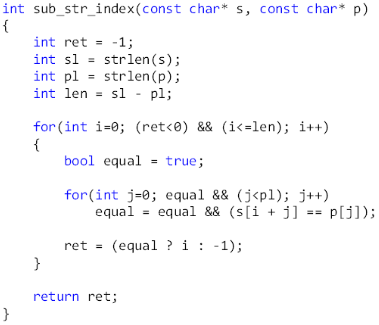
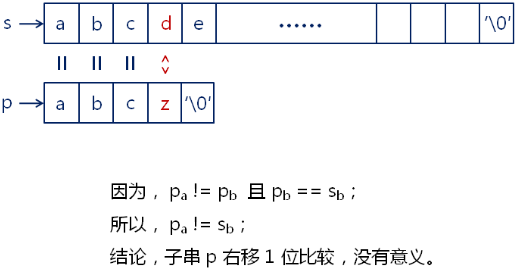
朴素解法的一个优化线索:
示例:
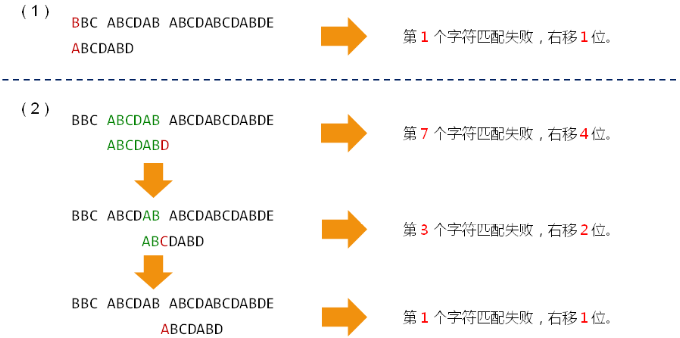
伟大的发现:
- 匹配失败时的右移位数与子串本身相关,与目标串无关
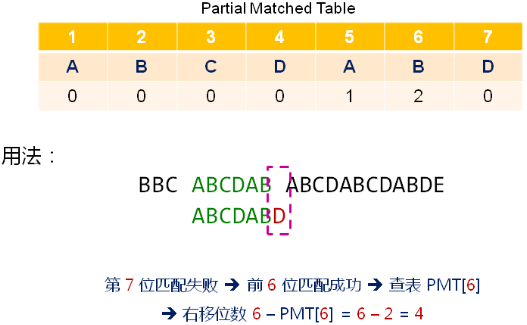
- 移动位数 = 已匹配的字符数 - 对应的部分匹配值
- 任意子串都存在一个唯一的部分匹配表
部分匹配表示例:
问题:
部分匹配表是怎么得到的?
- 前缀
- 除了最后一个字符以外,一个字符串的全部头部组合
- 后缀
- 除了第一个字符以外,一个字符串的全部尾部组合
- 部分匹配值
- 前缀和后缀最长共有元素的长度
示例:ABCDABD
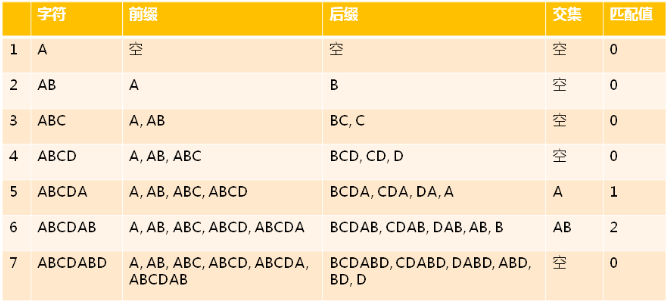
问题:
- 怎么编程产生部分匹配表?
实现关键:
- PMT[1] = 0 ( 下标为0的元素匹配值为0 )
- 从 2 个字符开始递推 ( 从下标为 1 的字符开始递推 )
- 假设 PMT[n] = PMT[n-1] + 1 ( 最长共有元素的长度 )
- 当假设不成立,PMT[n] 在 PMT[n-1] 的基础上减小
编程产生部分匹配表:
(ll代表longest length,即最长共有元素的长度。推导过程遵循下列原则:
(1). 当前欲求的ll值,通过历史ll值推导。
(2). 当可选ll值为0时,直接比对首尾元素。
在求ababax的最后一项ll值时,
前缀为aba b,
后缀为aba x。
重叠部分的长度就是当前的ll值,即:3;PMT(3)的含义是查找3个字符时的ll值,而3个字符时的ll值对应着下标为2的情形;编程实现时注意长度与下标的对应关系。)
#include <iostream>

#include <cstring>

using namespace std;

int* make_pmt(const char* p)

{

    int len = strlen(p);

    int* ret = static_cast<int*>(malloc(sizeof(int) * len));

    if( ret != NULL )

    {

        int ll = 0;

        ret[0] = 0;

        for(int i=1; i<len; i++)

        {

            while( (ll > 0) && (p[ll] != p[i]) )

            {

                ll = ret[ll-1];

            }

            if( p[ll] == p[i] )

            {

                ll++;

            }

            ret[i] = ll;

        }

    }

    return ret;

}

int main()

{

    int* pmt_1 = make_pmt("ababax");

    cout << "ababax:" << endl;

    for(int i=0; i<strlen("ababax"); i++)

    {

        cout << i << " : " << pmt_1[i] << endl;

    }

    cout << endl;

    int* pmt_2 = make_pmt("ABCDABD");

    cout << "ABCDABD:" << endl;

    for(int i=0; i<strlen("ABCDABD"); i++)

    {

        cout << i << " : " << pmt_2[i] << endl;

    }

    return 0;

}
运行结果为:
ababax:

0 : 0

1 : 0

2 : 1

3 : 2

4 : 3

5 : 0

ABCDABD:

0 : 0

1 : 0

2 : 0

3 : 0

4 : 1

5 : 2

6 : 0
部分匹配表的使用 ( KMP 算法 ):
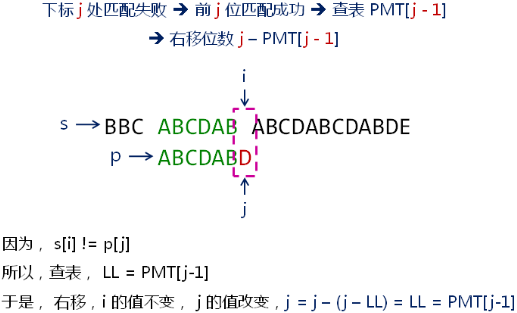
实现KMP算法:
#include <iostream>

#include <cstring>

using namespace std;

int* make_pmt(const char* p)

{

    int len = strlen(p);

    int* ret = static_cast<int*>(malloc(sizeof(int) * len));

    if( (ret != NULL) && (len > 0) )

    {

        int ll = 0;

        ret[0] = 0;

        for(int i=1; i<len; i++)

        {

            while( (ll > 0) && (p[ll] != p[i]) )

            {

                ll = ret[ll-1];

            }

            if( p[ll] == p[i] )

            {

                ll++;

            }

            ret[i] = ll;

        }

    }

    return ret;

}

int kmp(const char* s, const char* p)

{

    int ret = -1;

    int sl = strlen(s);

    int pl = strlen(p);

    int* pmt = make_pmt(p);

    if( (pmt != NULL) && (0 < pl) && (pl <= sl) )

    {

        for(int i=0, j=0; i<sl; i++)

        {

            while( (j > 0) && (s[i] != p[j]) )

            {

                j = pmt[j-1];

            }

            if( s[i] == p[j] )

            {

                j++;

            }

            if( j == pl )

            {

                ret = i + 1 - pl;

                break;

            }

        }

    }

    free(pmt);

    return ret;

}

int main()

{

    cout << kmp("abcde", "cde") << endl;

    cout << kmp("ababax", "ba") << endl;

    cout << kmp("ababax", "ax") << endl;

    cout << kmp("ababax", "") << endl;

    cout << kmp("ababax", "ababaxy") << endl;

    return 0;

}
运行结果为:
2

1

4

-1

-1
2.KMP 算法的应用
思考:
- 如何在目标字符串中查找是否存在指定的子串?
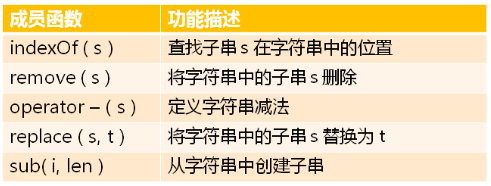
字符串类中的新功能:
将kmp算法的代码集成到自定义字符串类中去:
protected:

    static int* make_pmt(const char* p);

    static int kmp(const char* s, const char* p);
具体实现:
int* String::make_pmt(const char* p)

{

    int len = strlen(p);

    int* ret = static_cast<int*>(malloc(sizeof(int) * len));

    if( (ret != NULL) && (len > 0) )

    {

        int ll = 0;

        ret[0] = 0;

        for(int i=1; i<len; i++)

        {

            while( (ll > 0) && (p[ll] != p[i]) )

            {

                ll = ret[ll-1];

            }

            if( p[ll] == p[i] )

            {

                ll++;

            }

            ret[i] = ll;

        }

    }

    return ret;

}

int String::kmp(const char* s, const char* p)

{

    int ret = -1;

    int sl = strlen(s);

    int pl = strlen(p);

    int* pmt = make_pmt(p);

    if( (pmt != NULL) && (0 < pl) && (pl <= sl) )

    {

        for(int i=0, j=0; i<sl; i++)

        {

            while( (j > 0) && (s[i] != p[j]) )

            {

                j = pmt[j-1];

            }

            if( s[i] == p[j] )

            {

                j++;

            }

            if( j == pl )

            {

                ret = i + 1 - pl;

                break;

            }

        }

    }

    free(pmt);

    return ret;

}
子串查找 ( KMP 算法的直接运用 ):
- int indexOf(const char* s) const
- int indexOf(const String& s) const
子串查找:
public:

    int indexOf(const char* s) const;

    int indexOf(const String& s) const;
具体实现:
int String::indexOf(const char* s) const

{

    return kmp(m_str, s ? s : "");

}

int String::indexOf(const String& s) const

{

    return kmp(m_str, s.m_str);

}
在字符串中将指定的子串删除:
- String& remove(const char* s)
- String& remove(const String& s)

在字符串中将指定的子串删除:
public:

    String& remove(int i, int len);

    String& remove(const char* s);

    String& remove(const String& s);
具体实现:
String& String::remove(int i, int len)

{

    if( (0 <= i) && (i < m_length) )

    {

        int n = i;

        int m = i + len;

        while( (n < m) && (m < m_length) )

        {

            m_str[n++] = m_str[m++];

        }

        m_str[n] = '\0';

        m_length = n;

    }

    return *this;

}

String& String::remove(const char* s)

{

    return remove(indexOf(s), s ? strlen(s) : 0);

}

String& String::remove(const String& s)

{

    return remove(indexOf(s), s.length());

}
字符串的减法操作定义 ( operator - ):
- 使用 remove 实现字符串间的减法操作
- 字符串自身不被修改
- 返回产生的新串

字符串的减法操作定义:
public:

    String operator - (const String& s) const;

    String operator - (const char* s) const;

    String& operator -= (const String& s);

    String& operator -= (const char* s);
具体实现:
String String::operator - (const String& s) const

{

    return String(*this).remove(s);

}

String String::operator - (const char* s) const

{

    return String(*this).remove(s);

}

String& String::operator -= (const String& s)

{

    return remove(s);

}

String& String::operator -= (const char* s)

{

    return remove(s);

}
字符串中的子串替换:
- String& replace(const char* t, const char* s)
- String& replace(const String& t, const char* s)
- String& replace(const char* t, const String& s)
- String& replace(const String& t, const String& s)
字符串中的子串替换:
public:

    String& replace(const char* t, const char* s);

    String& replace(const String& t, const char* s);

    String& replace(const char* t, const String& s);

    String& replace(const String& t, const String& s);
具体实现:
String& String::replace(const char* t, const char* s)

{

    int index = indexOf(t);

    if( index >= 0 )

    {

        remove(t);

        insert(index, s);

    }

    return *this;

}

String& String::replace(const String& t, const char* s)

{

    return replace(t.m_str, s);

}

String& String::replace(const char* t, const String& s)

{

    return replace(t, s.m_str);

}

String& String::replace(const String& t, const String& s)

{

    return replace(t.m_str, s.m_str);

}
从字符串中创建子串:
- String sub(int i, int len) const
- 以 i 为起点提取长度为 len 的子串
- 子串提取不会改变字符串本身的状态
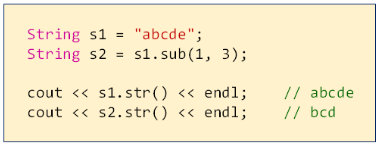
从字符串中创建子串:
public:

    String sub(int i, int len) const;
具体实现:
String String::sub(int i, int len) const

{

    String ret;

    if( (0 <= i) && (i < m_length) )

    {

        if( len < 0 ) len = 0;

        if( len + i > m_length ) len = m_length - i;

        char* str = reinterpret_cast<char*>(malloc(len + 1));

        strncpy(str, m_str + i, len);

        str[len] = '\0';

        ret = str;

    }

    else

    {

        THROW_EXCEPTION(IndexOutOfBoundsException, "Parameter i is invalid ...");

    }

    return ret;

}
3.小结
- 部分匹配表是提高子串查找效率的关键
- 部分匹配值定义为前缀和后缀最长共有元素的长度
- 可以用递推的方法产生部分匹配表
- KMP 利用部分匹配值与子串移动位数的关系提高查找效率
- 字符串类是工程开发中必不可少的组件
- 字符串中应该包含常用字符串操作函数
- 增 : insert , operator + , ...
- 删 : remove , operator - , ...
- 查 : indexOf , ...
- 改 : replace , ...
最终的自定义字符串类代码:
StString.h
#ifndef STSTRING_H

#define STSTRING_H

#include "Object.h"

namespace StLib

{

class String : public Object

{

protected:

    char* m_str;

    int m_length;

    void init(const char* s);

    bool equal(const char* l, const char* r, int len) const;

    static int* make_pmt(const char* p);

    static int kmp(const char* s, const char* p);

public:

    String();

    String(char c);

    String(const char* s);

    String(const String& s);

    int length() const;

    const char* str() const;

    bool startWith(const char* s) const;

    bool startWith(const String& s) const;

    bool endOf(const char* s) const;

    bool endOf(const String& s) const;

    String& insert(int i, const char* s);

    String& insert(int i, const String& s);

    String& trim();

    int indexOf(const char* s) const;

    int indexOf(const String& s) const;

    String& remove(int i, int len);

    String& remove(const char* s);

    String& remove(const String& s);

    String& replace(const char* t, const char* s);

    String& replace(const String& t, const char* s);

    String& replace(const char* t, const String& s);

    String& replace(const String& t, const String& s);

    String sub(int i, int len) const;

    char& operator [] (int i);

    char operator [] (int i) const;

    bool operator == (const String& s) const;

    bool operator == (const char* s) const;

    bool operator != (const String& s) const;

    bool operator != (const char* s) const;

    bool operator > (const String& s) const;

    bool operator > (const char* s) const;

    bool operator < (const String& s) const;

    bool operator < (const char* s) const;

    bool operator >= (const String& s) const;

    bool operator >= (const char* s) const;

    bool operator <= (const String& s) const;

    bool operator <= (const char* s) const;

    String operator + (const String& s) const;

    String operator + (const char* s) const;

    String& operator += (const String& s);

    String& operator += (const char* s);

    String operator - (const String& s) const;

    String operator - (const char* s) const;

    String& operator -= (const String& s);

    String& operator -= (const char* s);

    String& operator = (const String& s);

    String& operator = (const char* s);

    String& operator = (char c);

    ~String();

};

}

#endif // STSTRING_H
StString.cpp
#include <cstring>

#include <cstdlib>

#include "StString.h"

#include "Exception.h"

using namespace std;

namespace StLib

{

int* String::make_pmt(const char* p)

{

    int len = strlen(p);

    int* ret = static_cast<int*>(malloc(sizeof(int) * len));

    if( (ret != NULL) && (len > 0) )

    {

        int ll = 0;

        ret[0] = 0;

        for(int i=1; i<len; i++)

        {

            while( (ll > 0) && (p[ll] != p[i]) )

            {

                ll = ret[ll-1];

            }

            if( p[ll] == p[i] )

            {

                ll++;

            }

            ret[i] = ll;

        }

    }

    return ret;

}

int String::kmp(const char* s, const char* p)

{

    int ret = -1;

    int sl = strlen(s);

    int pl = strlen(p);

    int* pmt = make_pmt(p);

    if( (pmt != NULL) && (0 < pl) && (pl <= sl) )

    {

        for(int i=0, j=0; i<sl; i++)

        {

            while( (j > 0) && (s[i] != p[j]) )

            {

                j = pmt[j-1];

            }

            if( s[i] == p[j] )

            {

                j++;

            }

            if( j == pl )

            {

                ret = i + 1 - pl;

                break;

            }

        }

    }

    free(pmt);

    return ret;

}

void String::init(const char *s)

{

    m_str = strdup(s);

    if( m_str )

    {

        m_length = strlen(m_str);

    }

    else

    {

        THROW_EXCEPTION(NoEnoughMemoryException, "No memory to create String object ...");

    }

}

String::String()

{

    init("");

}

String::String(char c)

{

    char s[] = {c, '\0'};

    init(s);

}

String::String(const char *s)

{

    init(s ? s : "");

}

String::String(const String &s)

{

    init(s.m_str);

}

int String::length() const

{

    return m_length;

}

const char* String::str() const

{

    return m_str;

}

bool String::equal(const char* l, const char* r, int len) const

{

    bool ret = true;

    for(int i=0; i<len && ret; i++)

    {

        ret = ret && (l[i] == r[i]);

    }

    return ret;

}

bool String::startWith(const char* s) const

{

    bool ret = (s != NULL);

    if( ret )

    {

        int len = strlen(s);

        ret = (len < m_length) && equal(m_str, s, len);

    }

    return ret;

}

bool String::startWith(const String& s) const

{

    return startWith(s.m_str);

}

bool String::endOf(const char* s) const

{

    bool ret = (s != NULL);

    if( ret )

    {

        int len = strlen(s);

        char* str = m_str + (m_length - len);

        ret = (len < m_length) && equal(str, s, len);

    }

    return ret;

}

bool String::endOf(const String& s) const

{

    return endOf(s.m_str);

}

String& String::insert(int i, const char* s)

{

    if( (0 <= i) && (i <= m_length) )

    {

        if( (s != NULL) && (s[0] != '\0') )

        {

            int len = strlen(s);

            char* str = reinterpret_cast<char*>(malloc(m_length + len + 1));

            if( str != NULL )

            {

                strncpy(str, m_str, i);

                strncpy(str + i, s, len);

                strncpy(str + i + len, m_str + i, m_length - i);

                str[m_length + len] = '\0';

                free(m_str);

                m_str = str;

                m_length = m_length + len;

            }

            else

            {

                THROW_EXCEPTION(NoEnoughMemoryException, "No memory to insert string value ...");

            }

        }

    }

    else

    {

        THROW_EXCEPTION(IndexOutOfBoundsException, "Parameter i is invalid ...");

    }

    return *this;

}

String& String::insert(int i, const String& s)

{

    return insert(i, s.m_str);

}

String& String::trim()

{

    int b = 0;

    int e = m_length - 1;

    while( m_str[b] == ' ' ) b++;

    while( m_str[e] == ' ' ) e--;

    if( b == 0 )

    {

        m_str[e + 1] = '\0';

        m_length = e + 1;

    }

    else

    {

        for(int i=0, j=b; j<=e; i++, j++)

        {

            m_str[i] = m_str[j];

        }

        m_str[e - b + 1] = '\0';

        m_length = e - b + 1;

    }

    return *this;

}

int String::indexOf(const char* s) const

{

    return kmp(m_str, s ? s : "");

}

int String::indexOf(const String& s) const

{

    return kmp(m_str, s.m_str);

}

String& String::remove(int i, int len)

{

    if( (0 <= i) && (i < m_length) )

    {

        int n = i;

        int m = i + len;

        while( (n < m) && (m < m_length) )

        {

            m_str[n++] = m_str[m++];

        }

        m_str[n] = '\0';

        m_length = n;

    }

    return *this;

}

String& String::remove(const char* s)

{

    return remove(indexOf(s), s ? strlen(s) : 0);

}

String& String::remove(const String& s)

{

    return remove(indexOf(s), s.length());

}

String& String::replace(const char* t, const char* s)

{

    int index = indexOf(t);

    if( index >= 0 )

    {

        remove(t);

        insert(index, s);

    }

    return *this;

}

String& String::replace(const String& t, const char* s)

{

    return replace(t.m_str, s);

}

String& String::replace(const char* t, const String& s)

{

    return replace(t, s.m_str);

}

String& String::replace(const String& t, const String& s)

{

    return replace(t.m_str, s.m_str);

}

String String::sub(int i, int len) const

{

    String ret;

    if( (0 <= i) && (i < m_length) )

    {

        if( len < 0 ) len = 0;

        if( len + i > m_length ) len = m_length - i;

        char* str = reinterpret_cast<char*>(malloc(len + 1));

        strncpy(str, m_str + i, len);

        str[len] = '\0';

        ret = str;

    }

    else

    {

        THROW_EXCEPTION(IndexOutOfBoundsException, "Parameter i is invalid ...");

    }

    return ret;

}

char& String::operator [] (int i)

{

    if( (0 <= i) && (i < m_length) )

    {

        return m_str[i];

    }

    else

    {

        THROW_EXCEPTION(IndexOutOfBoundsException, "Parameter i is invalid ...");

    }

}

char String::operator [] (int i) const

{

    return (const_cast<String&>(*this))[i];

}

bool String::operator == (const String& s) const

{

    return (strcmp(m_str, s.m_str) == 0);

}

bool String::operator == (const char* s) const

{

    return (strcmp(m_str, s ? s : "") == 0);

}

bool String::operator != (const String& s) const

{

    return !(*this == s);

}

bool String::operator != (const char* s) const

{

    return !(*this == s);

}

bool String::operator > (const String& s) const

{

    return (strcmp(m_str, s.m_str) > 0);

}

bool String::operator > (const char* s) const

{

    return (strcmp(m_str, s ? s : "") > 0);

}

bool String::operator < (const String& s) const

{

    return (strcmp(m_str, s.m_str) < 0);

}

bool String::operator < (const char* s) const

{

    return (strcmp(m_str, s ? s : "") < 0);

}

bool String::operator >= (const String& s) const

{

    return (strcmp(m_str, s.m_str) >= 0);

}

bool String::operator >= (const char* s) const

{

    return (strcmp(m_str, s ? s : "") >= 0);

}

bool String::operator <= (const String& s) const

{

    return (strcmp(m_str, s.m_str) <= 0);

}

bool String::operator <= (const char* s) const

{

    return (strcmp(m_str, s ? s : "") <= 0);

}

String String::operator + (const String& s) const

{

    return (*this + s.m_str);

}

String String::operator + (const char* s) const

{

    String ret;

    int len = m_length + strlen(s ? s : "");

    char* str = reinterpret_cast<char*>(malloc(len + 1));

    if( str )

    {

        strcpy(str, m_str);

        strcat(str, s ? s : "");

        free(ret.m_str);

        ret.m_str = str;

        ret.m_length = len;

    }

    else

    {

        THROW_EXCEPTION(NoEnoughMemoryException, "No memory to add String values ...");

    }

    return ret;

}

String& String::operator += (const String& s)

{

    return (*this = *this + s.m_str);

}

String& String::operator += (const char* s)

{

    return (*this = *this + s);

}

String String::operator - (const String& s) const

{

    return String(*this).remove(s);

}

String String::operator - (const char* s) const

{

    return String(*this).remove(s);

}

String& String::operator -= (const String& s)

{

    return remove(s);

}

String& String::operator -= (const char* s)

{

    return remove(s);

}

String& String::operator = (const String& s)

{

    return (*this = s.m_str);

}

String& String::operator = (const char* s)

{

    if( m_str != s )

    {

        char* str = strdup(s ? s : "");

        if( str )

        {

            free(m_str);

            m_str = str;

            m_length = strlen(m_str);

        }

        else

        {

            THROW_EXCEPTION(NoEnoughMemoryException, "No memory to assign new String value ...");

        }

    }

    return *this;

}

String& String::operator = (char c)

{

    char s[] = {c, '\0'};

    return (*this = s);

}

String::~String()

{

    free(m_str);

}

}
数据结构开发(14):KMP 子串查找算法的更多相关文章
- 第四十一课 KMP子串查找算法
问题: 右移的位数和目标串没有多大的关系,和子串有关系. 已匹配的字符数现在已经有了,部分匹配值还没有. 前六位匹配成功就去查找PMT中的第六位. 现在的任务就是求得部分匹配表. 问题:怎么得到部分匹 ...
- 字符串类——KMP子串查找算法
1, 如何在目标字符串 s 中,查找是否存在子串 p(本文代码已集成到字符串类——字符串类的创建(上)中,这里讲述KMP实现原理) ? 1,朴素算法: 2,朴素解法的问题: 1,问题:有时候右移一位是 ...
- 第41课 kmp子串查找算法
1. 朴素算法的改进 (1)朴素算法的优化线索 ①因为 Pa != Pb 且Pb==Sb:所以Pa != Sb:因此在Sd处失配时,子串P右移1位比较没有意义,因为前面的比较己经知道了Pa != Sb ...
- 【数据结构】 字符串&KMP子串匹配算法
字符串 作为人机交互的途径,程序或多或少地肯定要需要处理文字信息.如何在计算机中抽象人类语言的信息就成为一个问题.字符串便是这个问题的答案.虽然从形式上来说,字符串可以算是线性表的一种,其数据储存区存 ...
- KMP字符串查找算法
#include <iostream> #include <windows.h> using namespace std; void get_next(char *str,in ...
- 串、串的模式匹配算法(子串查找)BF算法、KMP算法
串的定长顺序存储#define MAXSTRLEN 255,//超出这个长度则超出部分被舍去,称为截断 串的模式匹配: 串的定义:0个或多个字符组成的有限序列S = 'a1a2a3…….an ' n ...
- 数据结构与算法之PHP查找算法(哈希查找)
一.哈希查找的定义 提起哈希,我第一印象就是PHP里的关联数组,它是由一组key/value的键值对组成的集合,应用了散列技术. 哈希表的定义如下: 哈希表(Hash table,也叫散列表),是根据 ...
- 数据结构和算法(Golang实现)(26)查找算法-哈希表
哈希表:散列查找 一.线性查找 我们要通过一个键key来查找相应的值value.有一种最简单的方式,就是将键值对存放在链表里,然后遍历链表来查找是否存在key,存在则更新键对应的值,不存在则将键值对链 ...
- 数据结构和算法(Golang实现)(27)查找算法-二叉查找树
二叉查找树 二叉查找树,又叫二叉排序树,二叉搜索树,是一种有特定规则的二叉树,定义如下: 它是一颗二叉树,或者是空树. 左子树所有节点的值都小于它的根节点,右子树所有节点的值都大于它的根节点. 左右子 ...
随机推荐
- WebGL实现sprite精灵效果的GUI控件
threejs已经有了sprite插件,这就方便了three的用户,直接可以使用threejs的sprite插件来制作GUI模型.sprite插件是阿里的lasoy老师改造过的,这个很厉害,要学习一哈 ...
- java四种访问权限修饰符
java中四个访问权限修饰符: public(公开的).protected(受保护的).default(默认的).private(私有的). 它们决定了紧跟其后被定义的东西的使用范围. 适用范围< ...
- mysql的安装教程-【linux】
先卸载系统自带的mysql,停止mysql:service mysql stop 1.查找以前是否装有mysql命令:rpm -qa|grep -i mysql可以看到mysql的几个包:qt-mys ...
- Controller - 压力机的设置 - 界面图表分析
一. Controller- 压力机界面的一下设置讲解 2种测试场景的设计和压测策略 二. Controller- 压力机界面的图表分析
- WEB渗透测试基础工具
代理查询网站:hidemyass(隐藏我的屁股) HTTrack:HTTrack是一个免费和易用的离线浏览工具(浏览器),它可以允许你下载整个WWW网站至本地目录,并且通过遍历网站目录获取HTML,图 ...
- 学习python,第二篇
注释 # 单行注释 ''' 多行注释 ''' 或者 """ 多行注释 """ # Author: Itxpl mag ...
- 比较语义分割的几种结构:FCN,UNET,SegNet,PSPNet和Deeplab
简介 语义分割:给图像的每个像素点标注类别.通常认为这个类别与邻近像素类别有关,同时也和这个像素点归属的整体类别有关.利用图像分类的网络结构,可以利用不同层次的特征向量来满足判定需求.现有算法的主要区 ...
- 【异常检测】Isolation forest 的spark 分布式实现
1.算法简介 算法的原始论文 http://cs.nju.edu.cn/zhouzh/zhouzh.files/publication/icdm08b.pdf .python的sklearn中已经实现 ...
- Nginx中server_name 参数详解
Nginx中的server_name指令主要用于配置基于名称的虚拟主机,server_name指令在接到请求后的匹配顺序分别为: 1.准确的server_name匹配,例如: server { lis ...
- Description Resource Path Location Type Cannot change version of project fac
http://www.cnblogs.com/eaysun/p/5661631.html