
cocoaPods打包的静态库
cocoaPods管理自己的静态库供其它人下载使用(直接使用上一篇用cocoaPod打包的静态库)
(1) 创建github仓库
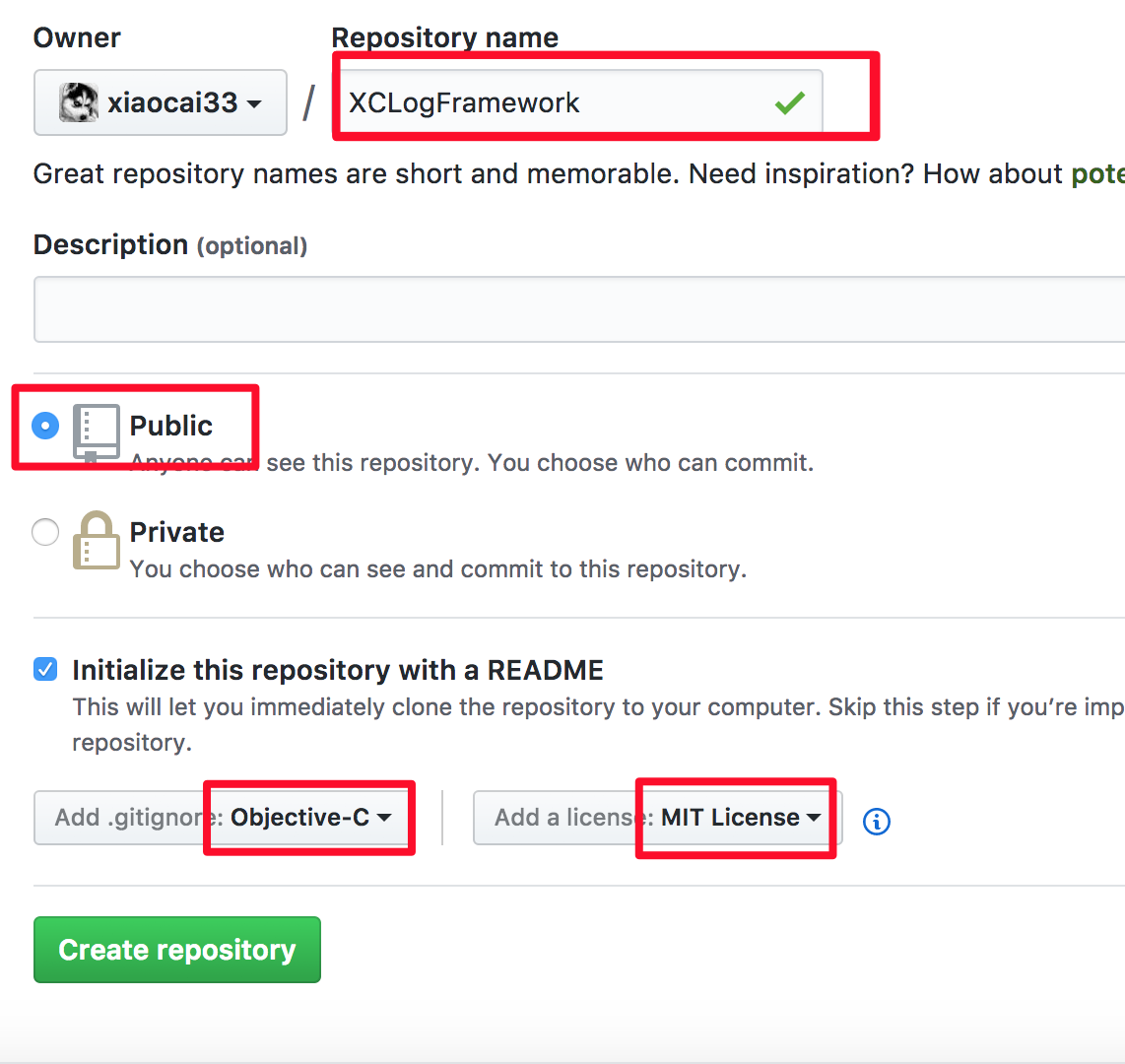
(2) 下载仓库到本地

(3) 将打包好的framework放到项目中
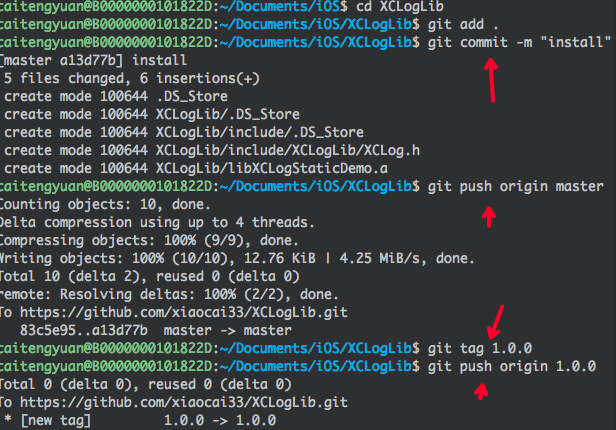
(4) 终端提交到github上
git add .

git commit -m “install”

git push origin master
(5) 打标签, 并提交到github上
git tag 1.0.

git push origin 1.0.
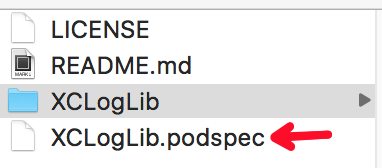
二 (1) 在工程根目录初始化一个Podspec文件, 最好与项目同名

(2) 配置文件
#

# Be sure to run `pod spec lint XCLogLib.podspec' to ensure this is a

# valid spec and to remove all comments including this before submitting the spec.

#

# To learn more about Podspec attributes see http://docs.cocoapods.org/specification.html

# To see working Podspecs in the CocoaPods repo see https://github.com/CocoaPods/Specs/

#

Pod::Spec.new do |s|

# ――― Spec Metadata ―――――――――――――――――――――――――――――――――――――――――――――――――――――――――― #

#

# These will help people to find your library, and whilst it

# can feel like a chore to fill in it's definitely to your advantage. The

# summary should be tweet-length, and the description more in depth.

#

s.name = "XCLogLib"

s.version = "1.0.0"

s.summary = " XCLogLib test demo"

# This description is used to generate tags and improve search results.

# * Think: What does it do? Why did you write it? What is the focus?

# * Try to keep it short, snappy and to the point.

# * Write the description between the DESC delimiters below.

# * Finally, don't worry about the indent, CocoaPods strips it!

s.description = <<-DESC

A Test XCLogLib Demo. where you can put your description.

DESC

s.homepage = "https://github.com/xiaocai33/XCLogLib"

# s.screenshots = "www.example.com/screenshots_1.gif", "www.example.com/screenshots_2.gif"

# ――― Spec License ――――――――――――――――――――――――――――――――――――――――――――――――――――――――――― #

#

# Licensing your code is important. See http://choosealicense.com for more info.

# CocoaPods will detect a license file if there is a named LICENSE*

# Popular ones are 'MIT', 'BSD' and 'Apache License, Version 2.0'.

#

#s.license = "MIT (example)"

s.license = { :type => "MIT"}

# ――― Author Metadata ――――――――――――――――――――――――――――――――――――――――――――――――――――――――― #

#

# Specify the authors of the library, with email addresses. Email addresses

# of the authors are extracted from the SCM log. E.g. $ git log. CocoaPods also

# accepts just a name if you'd rather not provide an email address.

#

# Specify a social_media_url where others can refer to, for example a twitter

# profile URL.

#

s.author = { "Cai Tengyuan" => "tycai1@baidu.com" }

# Or just: s.author = "Cai Tengyuan"

# ――― Platform Specifics ――――――――――――――――――――――――――――――――――――――――――――――――――――――― #

#

# If this Pod runs only on iOS or OS X, then specify the platform and

# the deployment target. You can optionally include the target after the platform.

#

# s.platform = :ios

s.platform = :ios, "8.0"

# When using multiple platforms

# s.ios.deployment_target = "5.0"

# s.osx.deployment_target = "10.7"

# s.watchos.deployment_target = "2.0"

# s.tvos.deployment_target = "9.0"

# ――― Source Location ―――――――――――――――――――――――――――――――――――――――――――――――――――――――――― #

#

# Specify the location from where the source should be retrieved.

# Supports git, hg, bzr, svn and HTTP.

#

s.source = { :git => "https://github.com/xiaocai33/XCLogLib.git", :tag => "#{s.version}" }

# ――― Source Code ―――――――――――――――――――――――――――――――――――――――――――――――――――――――――――――― #

#

# CocoaPods is smart about how it includes source code. For source files

# giving a folder will include any swift, h, m, mm, c & cpp files.

# For header files it will include any header in the folder.

# Not including the public_header_files will make all headers public.

#

s.source_files = "XCLogLib", "XCLogLib/**/*.{h}"

#s.exclude_files = "Classes/Exclude"

s.vendored_libraries = "*/libXCLogStaticDemo.a"

# framework is

#s.vendored_frameworks = '*/XCLogStaticDemo.framework'

# s.public_header_files = "Classes/**/*.h"

# ――― Resources ―――――――――――――――――――――――――――――――――――――――――――――――――――――――――――――――― #

#

# A list of resources included with the Pod. These are copied into the

# target bundle with a build phase script. Anything else will be cleaned.

# You can preserve files from being cleaned, please don't preserve

# non-essential files like tests, examples and documentation.

#

# s.resource = "icon.png"

# s.resources = "Resources/*.png"

# s.preserve_paths = "FilesToSave", "MoreFilesToSave"

# ――― Project Linking ―――――――――――――――――――――――――――――――――――――――――――――――――――――――――― #

#

# Link your library with frameworks, or libraries. Libraries do not include

# the lib prefix of their name.

#

# s.framework = "SomeFramework"

# s.frameworks = "SomeFramework", "AnotherFramework"

# s.library = "iconv"

# s.libraries = "iconv", "xml2"

# ――― Project Settings ――――――――――――――――――――――――――――――――――――――――――――――――――――――――― #

#

# If your library depends on compiler flags you can set them in the xcconfig hash

# where they will only apply to your library. If you depend on other Podspecs

# you can include multiple dependencies to ensure it works.

s.requires_arc = true

# s.xcconfig = { "HEADER_SEARCH_PATHS" => "$(SDKROOT)/usr/include/libxml2" }

# s.dependency "JSONKit", "~> 1.4"

end
(3) 创建账号(如果已经创建过, 省略)
pod trunk register 邮箱 联系人 --description="描述" --verbose
创建成功会收到邮件,进邮箱验证
pod trunk me 可查看trunk信息
(4) trunk push之前要先验证
pod spec lint XCLogLib.podspec
出现 XCLogLib.podspec passed validation表示通过了
如果只是waring通过
pod lib lint --allow-warnings #强制忽略
如何 想看错误详情
pod spec lint XCLogLib.podspec --verbose
如果有错, 看下配置文件哪里错了.

(5) pod trunk push 这个有点耐心, 需要会时间
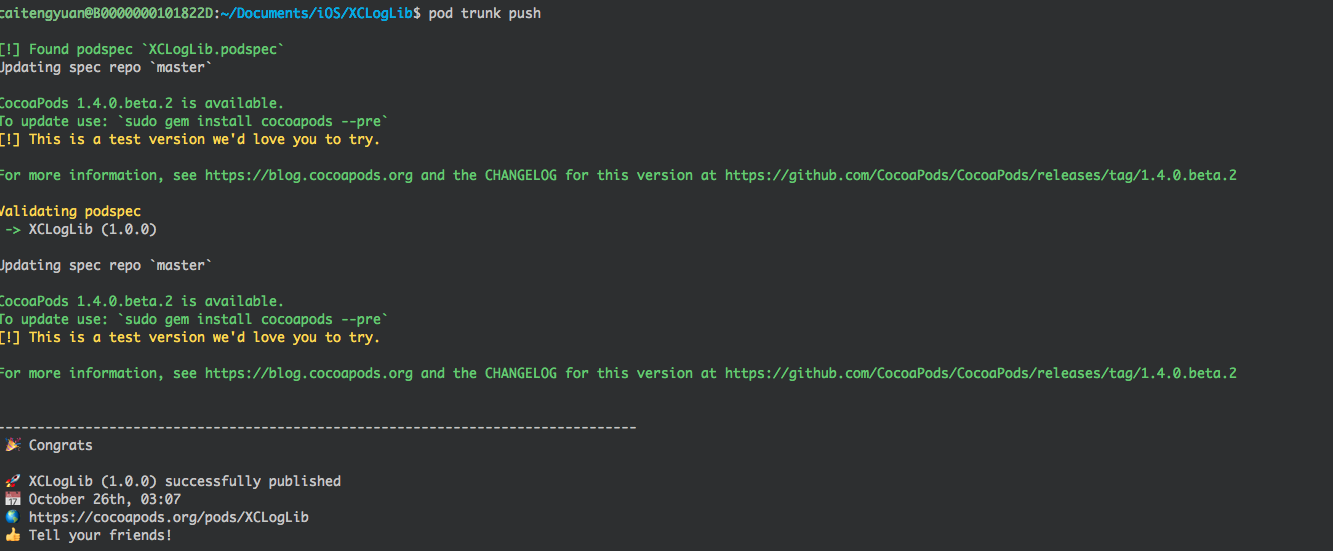
(6) 成功后pod search XCLogLib
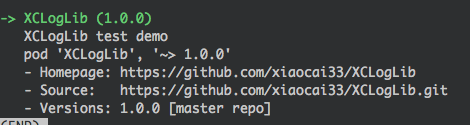
如果搜索不到, 请看上篇博客介绍.
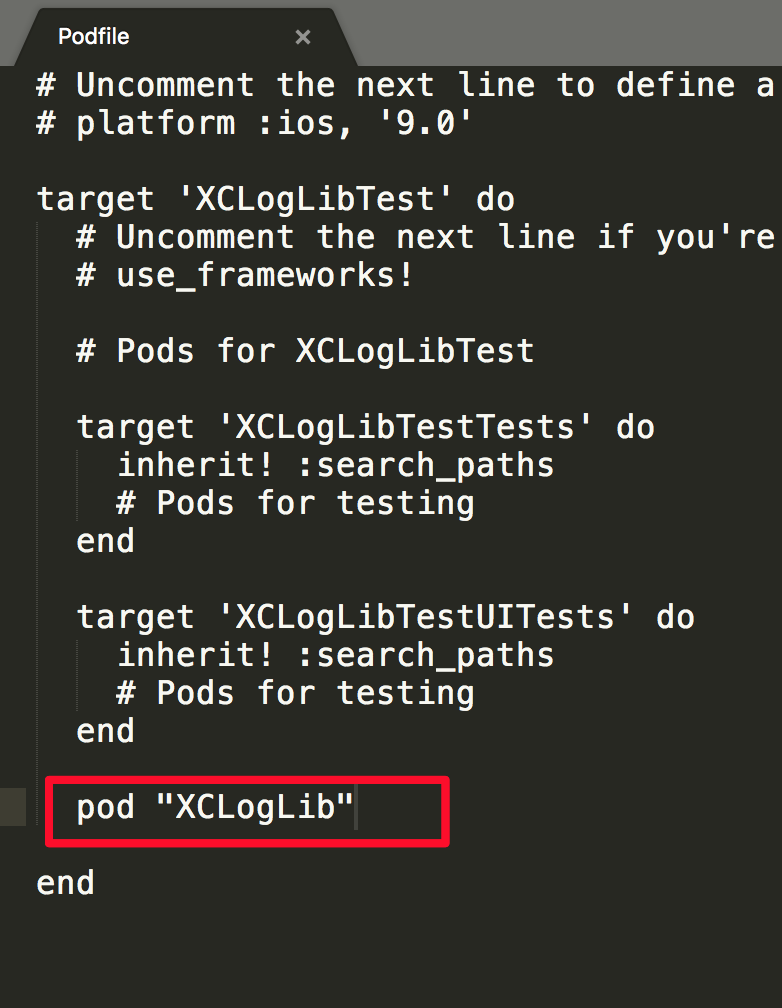
(7) 在其它项目的 Podfile 中引用:
platform :ios, ‘8.0' 注意版本要大于静态库支持的最低版本

pod ‘XCLogLib'

或者 pod ‘XCLogLib’, '~> 1.0.0’
这样就可以在demo中引用头文件
#import “XCLog.h”
然后调用静态库的方法了.
如果是framework的框架, 则需要将配置文件的
s.vendored_libraries = “*/libXCLogStaticDemo.a"
改为 (注意路径)
s.vendored_frameworks = ‘*/XCLogStaticDemo.framework'
即可, 这里不再演示
三 xcode项目支持pod
终端:
cd path #到项目目录

pod init fileName.Podfile #创建 Podfile 文件
打开文件在其中添加需要依赖的库
例:
pod ‘XCLogLib’
例子:
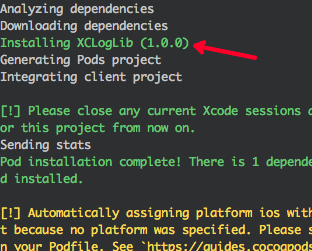
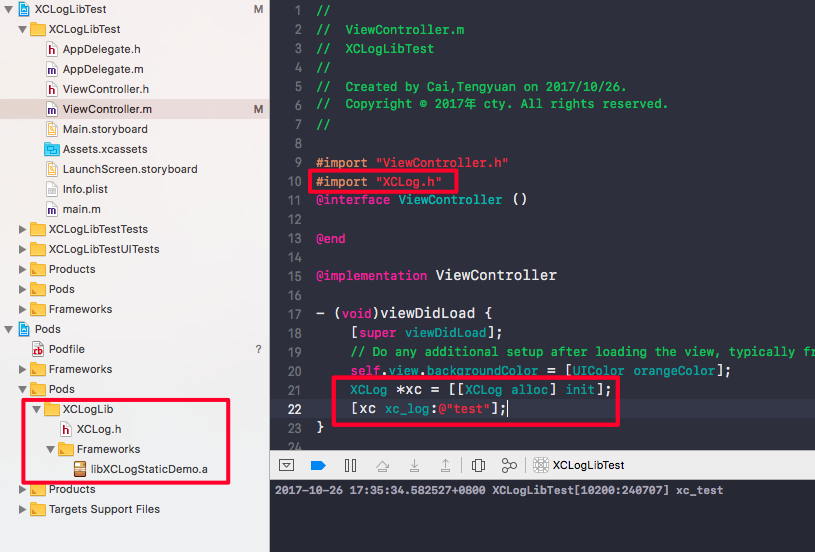
cocoaPods打包的静态库的更多相关文章
- iOS中打包.a静态库
1.新建.a静态库工程 需要选择Static Library静态库工程模板新建工程,如下图: 新建静态库工程 实现需要打包的类,如下图: 实现需要打包的类 2.设置需要暴露的头文件 添加Headers ...
- iOS - .a静态库的打包(包括打包的文件中用到了一些别人的三方库和分类的处理)
一.概念篇 什么是库? 库是程序代码的集合,是共享程序代码的一种方式 根据源代码的公开情况,库可以分为2种类型 开源库 公开源代码,能看到具体实现 比如SDWebImage.AFNetworking ...
- iOS开发——打包静态库与Framework
最近老是需要做接口给别的客户,就顺便把打包的过程也写一下吧! 一.静态库 静态图里面只能是纯文件,里面不能再有第三方打包的静态库,也就是说,静态库不能打包静态库.这个用的比较多,一般自己公司写出来的东 ...
- iOS打包静态库(完整篇)
1. 什么是库? 所谓库就是程序代码的集合,是共享程序代码的一种方式. 2. 库的分类 根据程序代码的开源情况,库可以分为两类 开源库源代码是公开的,你可以看到具体实现.比如GitHub上比较出名的第 ...
- (一〇二)静态库(.a)的打包
库是代码的集合,根据代码公开程度,分为开源库和闭源库. 其中闭源库主要包括静态库和动态库,是经过编译的二进制文件,看不到具体实现. 静态库的拓展名是.a或者.framework,动态库则是.dylib ...
- 李洪强iOS开发之静态库的打包一
李洪强iOS开发之静态库的打包一 //静态库一般做一下几种事情 //1 工具类 算法逻辑 新建工具类LHQTools 定义类方法 + (NSInteger)sumWithNum1: (NSIntege ...
- iOS静态库.a总结(2017.1.24增加脚本打包方法)
修改于:2017.1.24 1.什么是库? 库是程序代码的集合,是共享程序代码的一种方式 2.根据源代码的公开情况,库可以分为2种类型 a.开源库 公开源代码,能看到具体实现 ,比如SDWebImag ...
- ios打包静态库
1. 什么是库? 所谓库就是程序代码的集合,是共享程序代码的一种方式. 2. 库的分类 根据程序代码的开源情况,库可以分为两类 开源库源代码是公开的,你可以看到具体实现.比如GitHub上比较出名的第 ...
- 【转】iOS动态库和静态库的简要介绍
静态库与动态库的区别 首先来看什么是库,库(Library)说白了就是一段编译好的二进制代码,加上头文件就可以供别人使用. 什么时候我们会用到库呢?一种情况是某些代码需要给别人使用,但是我们不希望别人 ...
随机推荐
- spring cloud+dotnet core搭建微服务架构:配置中心(四)
前言 我们项目中有很多需要配置的地方,最常见的就是各种服务URL地址,这些地址针对不同的运行环境还不一样,不管和打包还是部署都麻烦,需要非常的小心.一般配置都是存储到配置文件里面,不管多小的配置变动, ...
- 【转载】基于vw等viewport视区相对单位的响应式排版和布局
文章转载自 张鑫旭-鑫空间-鑫生活 http://www.zhangxinxu.com/wordpress/ 原文链接:http://www.zhangxinxu.com/wordpress/?p=5 ...
- C#枚举中使用Flags特性
如果对一个值可以包含多个,那么可以使用枚举,加上Flags 本文告诉大家如何写一个 Flags. 在写前,需要知道一些基础知识,取反.或.与,如果不知道的话,请去看看基础. 当然,这些太复杂了,我也不 ...
- Django安装以及介绍
安装django说先需要安装python环境,因为他是依赖于python环境运行的 最好再安装pycharm,一款强大的开发工具,里面有各种开发工具的集成 在Windows先安装: 首先进入cmd命令 ...
- HTML之事件处理程序
HTML事件 <body> <input type="button" value="按钮1" id="but1" oncl ...
- 关于keyTyped
蠢了,重写keyTyped方法时候拿keyCode去做比较....记一下....VK_UNDEFiEND.......
- jsp <input type="checkbox" name="fileId"> 是否选中
jsp <input type="checkbox" name="fileId"> 是否选中 var a = document.getElement ...
- IP核之初——FIFO添加以太网MAC头部
本文设计思路源自明德扬至简设计法.在之前的几篇博文中,由于设计比较简单,所有的功能都是用verilogHDL代码编写实现的.我们要学会站在巨人的肩膀上,这时候就该IP核登场了! 说白了,IP核就是别人 ...
- Linux系列教程(六)——Linux文件搜索命令
前一篇博客我们讲解了Linux链接命令和权限管理命令, 通过 ln -s 链接名 表示创建软链接,不加-s表示创建硬链接:还有三个更改权限的命令,chmod命令可以更改文件或目录权限,chown命令 ...
- 从零起步学python计划及感想
从纯传统bi转型过来的技术顾问,比较有优势的是对业务的熟悉,对数据有敏感度,熟悉数据模型.但是长年累月基本都是用sql处理问题.目前还没有经历过sql解决不了的问题,一个sql解决不了就用临时表,几个 ...