
一步步动手实现高并发的Reactor模型 —— Kafka底层如何充分利用多线程优势去处理网络I/O与业务分发
一、从《Apeche Kafka源码剖析》上搬来的概念和图
Kafka网络采用的是Reactor模式,是一种基于事件驱动的模式。熟悉Java编程的读者应该了解Java NIO提供了Reactor模式的API。常见的单线程Java NIO编程模式如图所示。
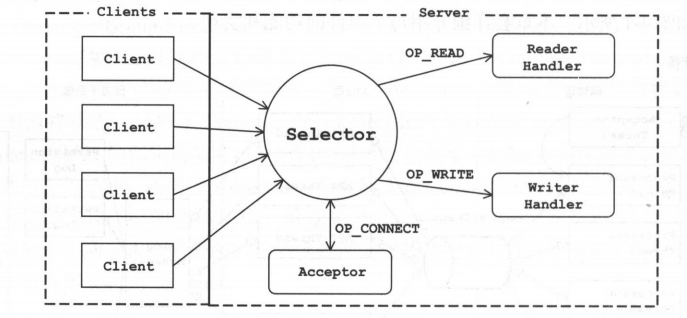
熟悉NIO编程都应该知道这个Selector,我们可以通过轮询它来获取监听事件,然后通过事件来进行不同的处理,比如OP_ACCEPT连接,OP_READ读取数据等等。
这样简单的处理对于客户端是没什么问题,但对于服务端来说就有些缺点了。在服务端,我们要求读取请求、处理请求以及发送响应各个环节必须能迅速完成,并且要尽可能做到互不影响。所以我们就需要对上述简单的模型进行修改。
为了满足高并发的需求,也为了充分利用服务器的资源,我们对上述的架构稍作调整,将网络读写的逻辑与业务处理的逻辑进行拆分,让其由不同的线程池来处理,如图所示。

二、套餐一:直接撸Kafka源码
如果不想看本文下面这个很挫的Reactor模型,可以直接看Kafka的源码 ~ 如果需要稍微借助一点中文注释,我已经标注了十分多的注释~
可以直接看这个版本,基于Kafka0.10.0.1的源码解读
,当然也可以直接去看官方版本。
SocketServer就是它的入口。
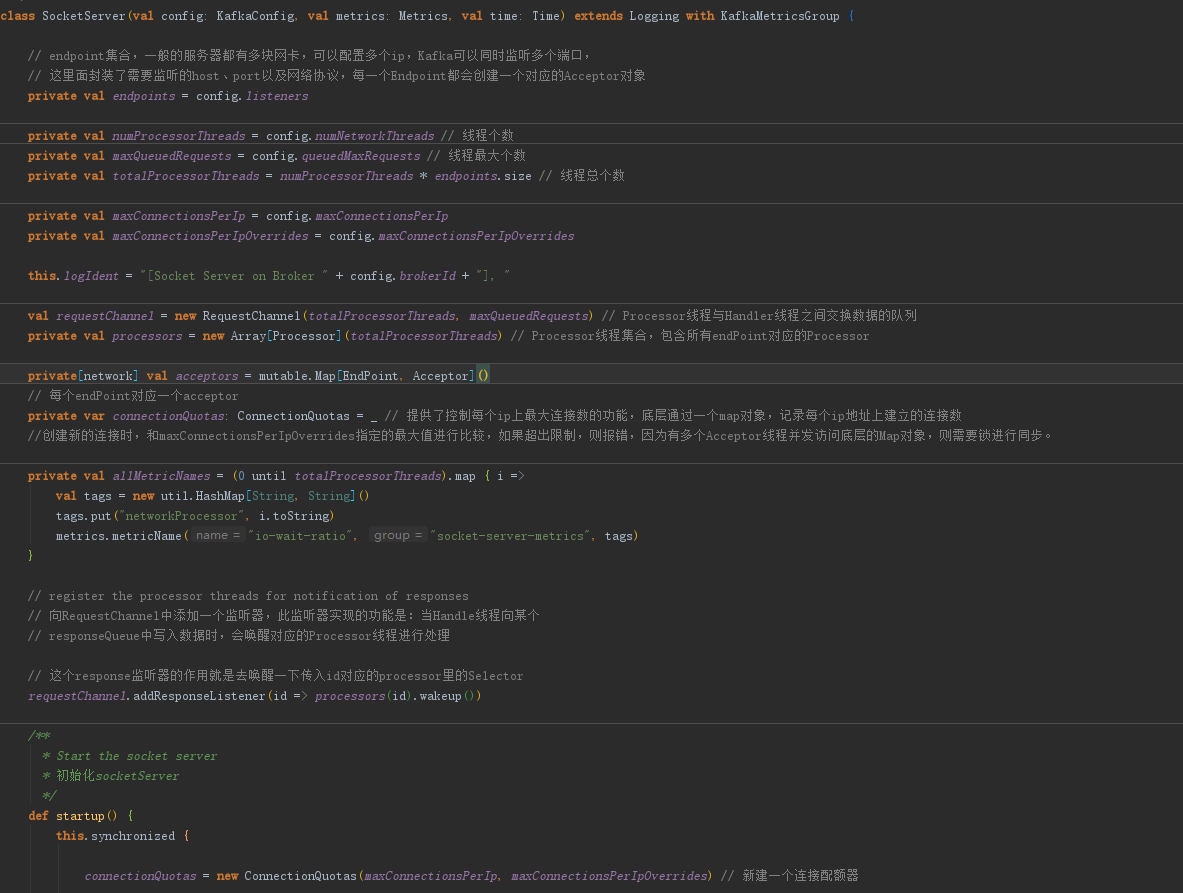
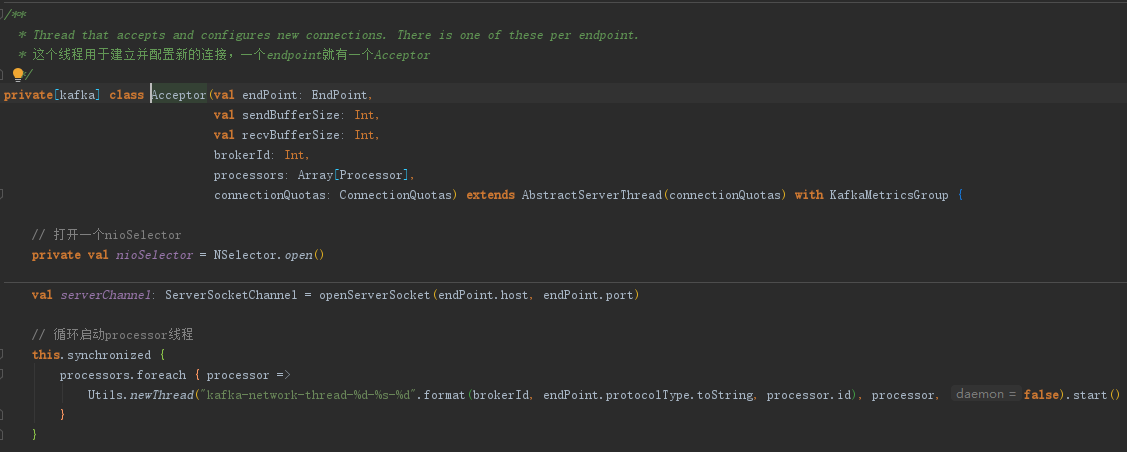
其中,内部类 Acceptor 负责建立并配置新连接
内部类 Processor 负责处理IO事件。

KafkaRequestHandler 这个类负责业务的处理。

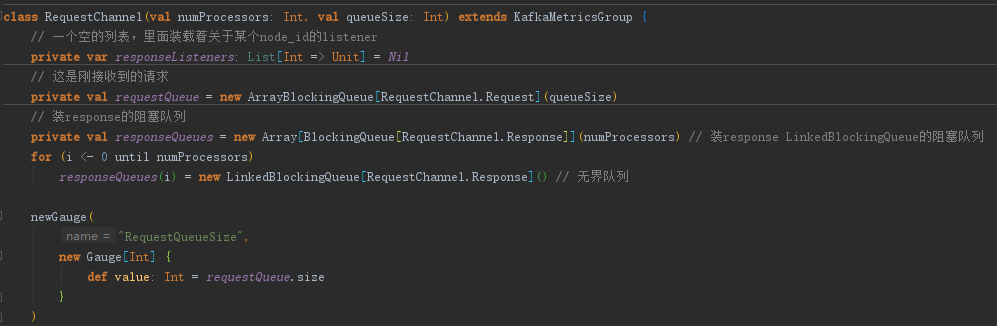
而业务处理和IO之间的桥则是 RequestChannel。
三、套餐二:动手一步步实现Reactor模型
事先声明,以下这个很挫(但也简单)的Reactor模型只是保证它能用,而且思路和Kafka大致一致,并没有去做很多的异常处理!!很多细节地方也做得不是很到位。
3.1 回忆一下selector是怎么用的
        //1. 获取服务端通道

        ServerSocketChannel ssChannel = ServerSocketChannel.open();

        ssChannel.bind(new InetSocketAddress(9898));

        //2. 设置为非阻塞模式

        ssChannel.configureBlocking(false);

        //3. 打开一个监听器

        Selector selector = Selector.open();

        //4. 向监听器注册接收事件

        ssChannel.register(selector, SelectionKey.OP_ACCEPT);

        while (selector.select() > 0) {

            //5. 获取监听器上所有的监听事件值

            Iterator<SelectionKey> it = selector.selectedKeys().iterator();

            //6. 如果有值

            while (it.hasNext()) {

                //7. 取到SelectionKey

                SelectionKey key = it.next();

                //8. 根据key值判断对应的事件

                if (key.isAcceptable()) {

                    //9. 接入处理

                    SocketChannel socketChannel = ssChannel.accept();

                    socketChannel.configureBlocking(false);

                    socketChannel.register(selector, SelectionKey.OP_READ);

                } else if (key.isReadable()) {

                    //10. 可读事件处理

                    SocketChannel channel = (SocketChannel) key.channel();

                    readMsg(channel);

                }

                //11. 移除当前key

                it.remove();

            }

        }
这就是我们上面提到的第一张图的模型,我们发现它的IO操作和业务处理是杂糅在一起的。当然我们简单的做可以使用一个业务处理的线程池负责处理业务。
但是我们这里是要去实现第二个图的模型~
3.2 实现负责建立连接的Acceptor
- 在 Acceptor 中监听端口
    public Acceptor(InetSocketAddress inetSocketAddress, Processor[] processors) throws IOException {

        ServerSocketChannel serverSocketChannel = ServerSocketChannel.open();

        serverSocketChannel.configureBlocking(false);

        serverSocketChannel.socket()

                           .bind(inetSocketAddress);

        this.serverSocketChannel = serverSocketChannel;

        this.selector = Selector.open();

        this.processors = processors;// 先忽略这个东西 = =

    }
- 注册 OP_ACCEPT 事件,并且不断轮询进行连接的建立,kafka在初始化中大量使用了CountdownLaunch来确保初始化的成功,这里偷懒省去这一步骤。
@Override

   public void run() {

       if (init) {

           System.out.println("已可以开始建立连接");

           init = false;

       }

       try {

           serverSocketChannel.register(selector, SelectionKey.OP_ACCEPT);

       } catch (ClosedChannelException e) {

           e.printStackTrace();

       }

       int currentProcessors = 0;

       while (true) {

           try {

               int ready = selector.select(500); // 半秒轮询一次

               if (ready > 0) {

                   Iterator<SelectionKey> selectionKeys = selector.selectedKeys()

                                                                  .iterator();

                   while (selectionKeys.hasNext()) {

                       SelectionKey selectionKey = selectionKeys.next();

                       selectionKeys.remove();

                       if (selectionKey.isAcceptable()) {

                           this.accept(selectionKey, processors[currentProcessors]);

                           currentProcessors = (currentProcessors + 1) % processors.length;

                       } else {

                           throw new RuntimeException("不应该出现的情况,因为只订阅了OP_ACCEPT");

                       }

                   }

               }

           } catch (IOException e) {

               e.printStackTrace();

           }

       }

   }

	// 建立连接,并且使用RoundRobin分配给一个Processor,也就是负责IO的角色

   public void accept(SelectionKey selectionKey, Processor processor) throws IOException {

       SelectableChannel channel = selectionKey.channel();

       SocketChannel socketChannel = ((ServerSocketChannel) channel).accept();

       socketChannel.configureBlocking(false);

       socketChannel.socket()

                    .setTcpNoDelay(true);

       socketChannel.socket()

                    .setKeepAlive(true);

       // 将需要连接的socketChannel转交给processor去处理

       processor.accept(socketChannel);

   }
3.3 实现负责处理IO的Processor
- 新连接进来后的处理:这里只是简单将新建立的连接放在了newConnection中。
    public Processor(String name, RequestChannel requestChannel, ConcurrentHashMap<SelectionKey, ArrayBlockingQueue<ByteBuffer>> inFlightResponse) throws IOException {

        this.name = name;

        this.newConnection = new ConcurrentLinkedQueue<>();

        this.selector = Selector.open();

        this.inFlightResponse = inFlightResponse;

        this.requestChannel = requestChannel;

    }

    protected void accept(SocketChannel socketChannel) {

        try {

            System.out.println(name + "正在与" + socketChannel.getLocalAddress() + "建立连接");

        } catch (IOException e) {

            e.printStackTrace();

        }

        newConnection.add(socketChannel);

        // 还需要wakeUp,如果轮询阻塞了,告诉它可以不阻塞了

        selector.wakeup();

    }
- 处理newConnection,并注册OP_READ,等待客户端传输数据
    @Override

    public void run() {

        while (true) {

            /*

             * 处理新链接

             */

            while (!newConnection.isEmpty()) {

                SocketChannel socketChannel = newConnection.poll();

                try {

                    socketChannel.register(selector, SelectionKey.OP_READ);

                } catch (ClosedChannelException e) {

                    e.printStackTrace();

                }

            }
新接收到的数据,我们会将其丢进 RequestChannel,并取消关注OP_READ,保证不会让多个请求同时进来。
requestChannel.sendRequest(new Request(selectionKey, byteBuffer));// 接受完数据后,把数据丢进队列
而最新处理完的数据,我们则会将其缓存在 inFlightRequest ,并关注OP_WIRTE。这是仿照 Kafka 的 inFlightRequest 做的,当然做得很粗糙。
Kafka 的 inFlightRequest 是将对应每个节点请求/应答的请求和响应放在了队列中,确保在同一时间段内,一个节点只会有一个请求和应答。这也巧妙的避开了拆包粘包问题,首先 Kafka 保证了不会同时对一个节点发送请求,其次,Kafka 使用了自定的协议(其实就是包头上标明了整个包的长度再加上CRC校验)来保证一次请求的完整性。
我们的Selector轮询中,会将刚才在上一步中关注了OP_WRITE的SelectionKey连同要返回的数据一同拿出,并进行处理,处理完成后,取消关注OP_WRITE,并重新关注OP_READ。
- 处理新请求与新应答,我们将READ事件和WRITE事件放在了Processor来进行。
    /*

     * 将新应答放入缓冲队列

     */

    Response response = requestChannel.receiveResponse();

    while (response != null) {

        SelectionKey key = response.getSelectionKey();

        key.interestOps(key.interestOps() | SelectionKey.OP_WRITE);

        ArrayBlockingQueue<ByteBuffer> inFlight = inFlightResponse.getOrDefault(response.getSelectionKey(), new ArrayBlockingQueue<>(100));

        inFlightResponse.put(response.getSelectionKey(), inFlight);

        try {

            inFlight.put(response.getByteBuffer());

        } catch (InterruptedException e) {

            e.printStackTrace();

        }

        response = requestChannel.receiveResponse();

    }

    int ready = selector.select(500);// 半秒轮询一次

    if (ready > 0) {

            Iterator<SelectionKey> selectionKeys = selector.selectedKeys()

                                                                   .iterator();

            while (selectionKeys.hasNext()) {

            SelectionKey selectionKey = selectionKeys.next();

            selectionKeys.remove();

            /*

            * 处理新请求

            */

            if (selectionKey.isReadable()) {

              System.out.println(name + "正在处理新请求");

              SocketChannel socketChannel = (SocketChannel) selectionKey.channel();

              ByteBuffer byteBuffer = ByteBuffer.allocate(1024);// 懒得定协议,就默认取这么多吧 = =

              socketChannel.read(byteBuffer);// TODO 划重点

              byteBuffer.flip();

              requestChannel.sendRequest(new Request(selectionKey, byteBuffer));// 接受完数据后,把数据丢进队列

              selectionKey.interestOps(selectionKey.interestOps() & ~SelectionKey.OP_READ);// 不再关注read

            }

            /*

            * 处理新应答

            */

            if (selectionKey.isWritable()) {

              System.out.println(name + "正在处理新应答");

              ByteBuffer send = inFlightResponse.get(selectionKey)// // TODO 划重点

                                                .poll();

              SocketChannel socketChannel = (SocketChannel) selectionKey.channel();

              socketChannel.write(send);

              selectionKey.interestOps(selectionKey.interestOps() & ~SelectionKey.OP_WRITE);

              selectionKey.interestOps(selectionKey.interestOps() | SelectionKey.OP_READ);

            }

        }

    }
- RequestChannel的实现实际上十分简单..就是两个队列
/**

 * Created by Anur IjuoKaruKas on 2018/12/13

 */

public class RequestChannel {

    private ArrayBlockingQueue<Request> requestQueue;

    private ArrayBlockingQueue<Response> responseQueue;

    public RequestChannel() {

        requestQueue = new ArrayBlockingQueue<>(100);

        responseQueue = new ArrayBlockingQueue<>(100);

    }

	..........

}
3.4 实现负责处理业务的Handler
很容易想到,Handler 实际上就是负责从 RequestChannel 的 requestQueue 中拉取需要处理的数据,并塞回 RequestChannel 的 responseQueue 中。
我们可以根据接收数据的不同,来进行不同的业务处理。甚至如果需要拓展,这里可以像 netty 一样,仅仅把 Handler 当成Boss,具体业务的执行可以创建相应的线程池去进行处理,比如说 Fetch 业务比较耗时,我可以创建一个较大的线程池,去执行Fetch业务,而 Hello 业务,我们只需要 Executors.newSingleThreadExecutor() 即可。
   @Override

    public void run() {

        while (true) {

            Request request = requestChannel.receiveRequest();

            if (request != null) {

                System.out.println("接收的请求将由" + name + "进行处理");

                handler(request.getSelectionKey(), request.getByteBuffer());

            }

        }

    }

    public void handler(SelectionKey selectionKey, ByteBuffer byteBuffer) {

        byte[] bytes = byteBuffer.array();

        String msg = new String(bytes);

        try {

            Thread.sleep(500);        // 模拟业务处理

        } catch (InterruptedException e) {

            e.printStackTrace();

        }

        ByteBuffer response;

        if (msg.startsWith("Fetch")) {

            response = ByteBuffer.allocate(2048);

            response.put("Fetch ~~~~~~~~~~".getBytes());

            response.put(bytes);

            response.flip();

        } else if (msg.startsWith("Hello")) {

            response = ByteBuffer.allocate(2048);

            response.put("Hi ~~~~~~~~~~".getBytes());

            response.put(bytes);

            response.flip();

        } else {

            response = ByteBuffer.allocate(2048);

            response.put("Woww ~~~~~~~~~~".getBytes());

            response.put(bytes);

            response.flip();

        }

        System.out.println(name + "处理完毕,正将处理结果返回给Processor");

        requestChannel.sendResponse(new Response(selectionKey, response));

    }
3.5 运行我们很挫的模型
我们会发现现在这个很挫的 Reactor 模型的拓展性却很好,大头的两个 Processor 和 Handler 都是可以随意拓展数量的。Kafka 也是这么做的,不过 Kafka 是根据服务器核心的数量来创建 processor 和 handler 的:
// processors的创建

    val protocol = endpoint.protocolType

    // 网络协议

    val processorEndIndex = processorBeginIndex + numProcessorThreads

    for (i <- processorBeginIndex until processorEndIndex)

        processors(i) = newProcessor(i, connectionQuotas, protocol) // 创建Processor

    // 在这里面会  // 循环启动processor线程

    val acceptor = new Acceptor(endpoint, sendBufferSize, recvBufferSize, brokerId,

        processors.slice(processorBeginIndex, processorEndIndex), connectionQuotas) // 创建Acceptor

// handlers的创建

 // 保存KafkaRequestHandler的执行线程

  val threads = new Array[Thread](numThreads)

  // KafkaRequestHandler集合

  val runnables = new Array[KafkaRequestHandler](numThreads)

  for (i <- 0 until numThreads) {

    runnables(i) = new KafkaRequestHandler(i, brokerId, aggregateIdleMeter, numThreads, requestChannel, apis)

    threads(i) = Utils.daemonThread("kafka-request-handler-" + i, runnables(i))

    threads(i).start()

  }
这里进行简单处理,我将所有的东西统统扔进一个线程池。
运行一下我们的整个模型,然后我们使用 Hercules 模拟客户端对我们的服务器进行请求。
/**

 * Created by Anur IjuoKaruKas on 2018/12/12

 */

public class Reactor {

    public static final int PORT = 9999;

    public static void main(String[] args) throws IOException {

        RequestChannel requestChannel = new RequestChannel();

        ConcurrentHashMap<SelectionKey, ArrayBlockingQueue<ByteBuffer>> inFlightResponse = new ConcurrentHashMap<>();

        Processor processor1 = new Processor("p1", requestChannel, inFlightResponse);

        Processor processor2 = new Processor("p2", requestChannel, inFlightResponse);

        Acceptor acceptor = new Acceptor(new InetSocketAddress(PORT), new Processor[] {

            processor1,

            processor2

        });

        ExecutorService executorService = Executors.newFixedThreadPool(10);

        executorService.execute(acceptor);

        executorService.execute(processor1);

        executorService.execute(processor2);

        Handler handler1 = new Handler("h1", requestChannel);

        Handler handler2 = new Handler("h2", requestChannel);

        executorService.execute(handler1);

        executorService.execute(handler2);

    }

}
建立连接后,我们模拟两个客户端,依次发送 ‘hello baby’,‘Fetch msg’ 和 ‘感谢gaojingyu_gw发现问题’。
得到如下响应:
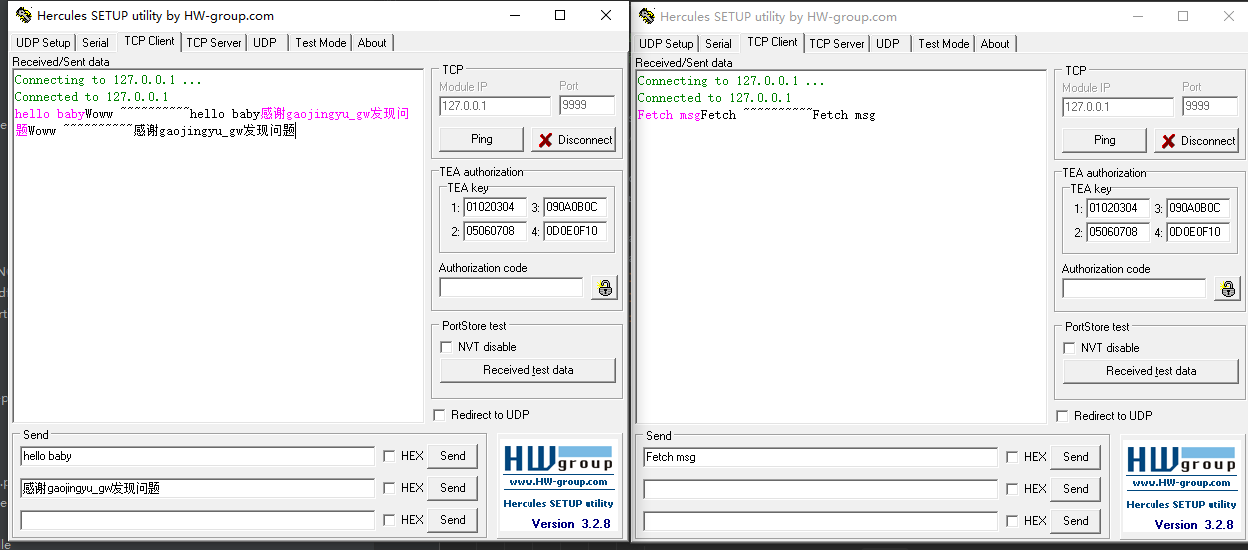
并且服务器日志如下:
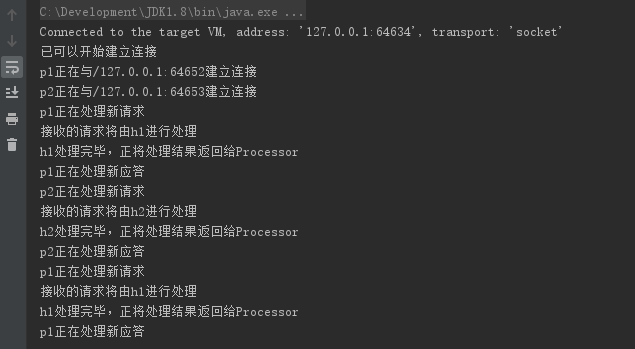
我们发现,p1和p2会交替从Acceptor中获取新的连接。h1和h2也交替会从RequestChannel中获取任务来进行执行~
另外额外感谢gaojingyu_gw发现问题,反馈无法建立更多连接。博主来来回回看了很多个地方,终于发现原版的代码确实无法建立更多的连接,Acceptor、Processor中的轮询代码有误,错误代码如下:
                    Set<SelectionKey> selectionKeys = selector.selectedKeys();

                    for (SelectionKey selectionKey : selectionKeys) {

                        if (selectionKey.isAcceptable()) {

                            this.accept(selectionKey, processors[currentProcessors]);

                            currentProcessors = (currentProcessors + 1) % processors.length;

                        } else {

                            throw new RuntimeException("不应该出现的情况,因为只订阅了OP_ACCEPT");

                        }

                    }
我们在循环selectionKeys的时候,不能直接循环。我们需要获得其迭代器,并在每次获得迭代器的下一个元素时,将这个元素移除。为什么不能直接循环:
Keys are added to the selected-key set by selection operations. A key may be removed directly from the selected-key set by invoking the set's remove method or by invoking the remove method of an iterator obtained from the set. Keys are never removed from the selected-key set in any other way; they are not, in particular, removed as a side effect of selection operations. Keys may not be added directly to the selected-key set.
正确代码如下:
                    Iterator<SelectionKey> selectionKeys = selector.selectedKeys().iterator();

                    while (selectionKeys.hasNext()) {

                        SelectionKey selectionKey = selectionKeys.next();

                        selectionKeys.remove();

                        if (selectionKey.isAcceptable()) {

                            this.accept(selectionKey, processors[currentProcessors]);

                            currentProcessors = (currentProcessors + 1) % processors.length;

                        } else {

                            throw new RuntimeException("不应该出现的情况,因为只订阅了OP_ACCEPT");

                        }

                    }
具体的代码请点击这里,直接拉取下来即可运行,运行的主类是 src/reactor/Reactor
觉得好的话可以顺手为文章点个赞哟~谢谢各位看官老爷!
参考文献:
《Apeche Kafka源码剖析》—— 徐郡明著
Kafka 源码 0.10.0.1
一步步动手实现高并发的Reactor模型 —— Kafka底层如何充分利用多线程优势去处理网络I/O与业务分发的更多相关文章
- [golang]Golang实现高并发的调度模型---MPG模式
Golang实现高并发的调度模型---MPG模式 传统的并发形式:多线程共享内存,这也是Java.C#或者C++等语言中的多线程开发的常规方法,其实golang语言也支持这种传统模式,另外一种是Go语 ...
- Java高并发程序设计学习笔记(二):多线程基础
转自:https://blog.csdn.net/dataiyangu/article/details/86226835# 什么是线程?线程的基本操作线程的基本操作新建线程调用run的一种方式调用ru ...
- Linux高并发机制——epoll模型
epoll是一个特别重要的概念,常常用于处理服务端的并发问题.当服务端的在线人数越来越多,会导致系统资源吃紧,I/O效率越来越慢,这时候就应该考虑epoll了.epoll是Linux内核为处理大批句柄 ...
- Java高并发-Java内存模型和线程安全
一.原子性 原子性是指一个操作是不可中断的.即使在多个线程一起执行的时候,一个操作一旦开始,就不会被其它线程干扰. i++是原子操作吗? 不是,包含3个操作:读i,i=i+1,写i 32位的机子上读取 ...
- 尼恩 Java高并发三部曲 [官方]
高并发 发烧友社群:疯狂创客圈(总入口) 奉上以下珍贵的学习资源: 疯狂创客圈 经典图书 : 极致经典 + 社群大片好评 < Java 高并发 三部曲 > 面试必备 + 大厂必备 + 涨薪 ...
- 用Netty开发中间件:高并发性能优化
用Netty开发中间件:高并发性能优化 最近在写一个后台中间件的原型,主要是做消息的分发和透传.因为要用Java实现,所以网络通信框架的第一选择当然就是Netty了,使用的是Netty 4版本.Net ...
- Web大规模高并发请求和抢购的解决方案
电商的秒杀和抢购,对我们来说,都不是一个陌生的东西.然而,从技术的角度来说,这对于Web系统是一个巨大的考验.当一个Web系统,在一秒钟内收到数以万计甚至更多请求时,系统的优化和稳定至关重要.这次我们 ...
- php解决高并发问题
我们通常衡量一个Web系统的吞吐率的指标是QPS(Query Per Second,每秒处理请求数),解决每秒数万次的高并发场景,这个指标非常关键.举个例子,我们假设处理一个业务请求平均响应时间为10 ...
- java多线程高并发
旭日Follow_24 的CSDN 博客 ,全文地址请点击: https://blog.csdn.net/xuri24/article/details/81293321 “高并发和多线程”总是被一起提 ...
随机推荐
- AcWing 859. Kruskal算法求最小生成树 稠密图
//稠密图 #include <cstring> #include <iostream> #include <algorithm> using namespace ...
- python的datetime库
datetime 库 简介 获取时间 主要提供程序计时器 基本使用
- yum grouplist 安装gnome桌面环境
经常,我们如果需要安装一些比较复杂的软件时,都会在安装操作系统的时候直接勾选,然后进行安装.但是,有的时候,等操作系统安装完了才发现有遗漏的软件没有安装. 这个时候,yum就要出来救场了.使用yu ...
- Centos6.10-FastDFS-Storage.conf配置示例
Centos610系列配置 # is this config file disabled # false for enabled # true for disabled disabled = fals ...
- office自签名证书
在 Office安装目录,找到 SELFCERT 文件,双击打开填写名称,生成
- [HTTP]HTTP/1.1 协议Expect: 100-continue
在追踪请求时发现了这么一个http头 基础知识背景:1)“Expect: 100-continue”的来龙去脉: HTTP/1.1 协议里设计 100 (Continue) HTTP 状态码的的目的是 ...
- 前后端分离之 跨域和JWT
书接上回:https://www.cnblogs.com/yangyuanhu/p/12081525.html 前后端分离案例 现在把自己当成是前端,要开发一个前后分离的简单页面,用于展示学生信息列表 ...
- Python - metaclass元类(图)
个人总结
- android开发基础(ViewModel)
今天学习了ViewModel,其是Jetpack的一个类,它可以将界面中的数据独立出来,这样不会造成页面上信息的丢失. 我跟着视频做了一个简单的实例: 首先创建项目的时候它和以往的项目会有些不一样,因 ...
- 吴裕雄 python 神经网络——TensorFlow 三层简单神经网络的前向传播算法
import tensorflow as tf w1= tf.Variable(tf.random_normal([2, 3], stddev=1, seed=1)) w2= tf.Variable( ...