
Android 中常用的布局
一、线性布局----LinearLayout
horizontal 水平
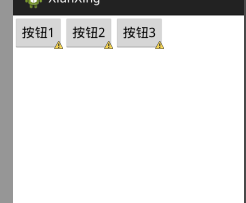
<?xml version="1.0" encoding="utf-8"?>

<LinearLayout xmlns:android="http://schemas.android.com/apk/res/android"

    android:layout_width="match_parent"

    android:layout_height="match_parent"

    android:orientation="horizontal" >

    <Button

        android:layout_height="wrap_content"

        android:layout_width="wrap_content"

        android:text="按钮1"

        />

    <Button

        android:layout_height="wrap_content"

        android:layout_width="wrap_content"

        android:text="按钮2"

        />

    <Button

        android:layout_height="wrap_content"

        android:layout_width="wrap_content"

        android:text="按钮3"

        />

</LinearLayout>
vertical 垂直

<?xml version="1.0" encoding="utf-8"?>

<LinearLayout xmlns:android="http://schemas.android.com/apk/res/android"

    android:layout_width="match_parent"

    android:layout_height="match_parent"

    android:orientation="vertical" >

    <Button

        android:layout_height="wrap_content"

        android:layout_width="wrap_content"

        android:text="按钮1"

        />

    <Button

        android:layout_height="wrap_content"

        android:layout_width="wrap_content"

        android:text="按钮2"

        />

    <Button

        android:layout_height="wrap_content"

        android:layout_width="wrap_content"

        android:text="按钮3"

        />

</LinearLayout>
如果你可以看懂了,那请做一个来练练手

参考答案:http://www.cnblogs.com/896240130Master/p/6090786.html
二、相当布局----RelativeLayout
RelativeLayout是Android五大布局结构中最灵活的一种布局结构,比较适合一些复杂界面的布局。
按照各子元素之间的位置关系完成布局。在此布局中的子元素里与位置相关的属性将生效。例如android:layout_below, android:layout_above, android:layout_centerVertical等。注意在指定位置关系时,引用的ID必须在引用之前,先被定义,否则将出现异常。
默认左上角。所以使用的时候会重叠

我们可以加上你在哪个布局的下面:下图

android:layout_below="@id/xxxx" //在谁的下面
参考属性:
- android:layout_above 将该控件的底部至于给定ID的控件之上
- android:layout_below 将该控件的顶部至于给定ID的控件之下
- android:layout_toLeftOf 将该控件的右边缘和给定ID的控件的左边缘对齐
- android:layout_toRightOf 将该控件的左边缘和给定ID的控件的右边缘对齐
- android:layout_alignBaseline 该控件的baseline和给定ID的控件的baseline对齐
- android:layout_alignBottom 将该控件的底部边缘与给定ID控件的底部边缘
- android:layout_alignLeft 将该控件的左边缘与给定ID控件的左边缘对齐
- android:layout_alignRight 将该控件的右边缘与给定ID控件的右边缘对齐
- android:layout_alignTop 将给定控件的顶部边缘与给定ID控件的顶部对齐
- android:alignParentBottom 如果该值为true,则将该控件的底部和父控件的底部对齐
- android:layout_alignParentLeft 如果该值为true,则将该控件的左边与父控件的左边对齐
- android:layout_alignParentRight 如果该值为true,则将该控件的右边与父控件的右边对齐
- android:layout_alignParentTop 如果该值为true,则将空间的顶部与父控件的顶部对齐
- android:layout_centerHorizontal 如果值为真,该控件将被至于水平方向的中央
- android:layout_centerInParent 如果值为真,该控件将被至于父控件水平方向和垂直方向的中央
- android:layout_centerVertical 如果值为真,该控件将被至于垂直方向的中央
结果图如下:

三、帧布局------FrameLayout
FrameLayout是五大布局中最简单的一个布局,可以说成是层布局方式。在这个布局中,整个界面被当成一块空白备用区域,所有的子元素都不能被指定放置的位置,它们统统放于这块区域的左上角,并且后面的子元素直接覆盖在前面的子元素之上,将前面的子元素部分和全部遮挡。如下,第一个TextView被第二个TextView完全遮挡,第三个TextView遮挡了第二个TextView的部分位置。
待更新。。。。
四、表格布局----TableLayout
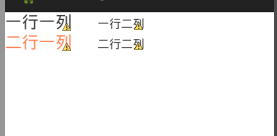
代码如下:
<?xml version="1.0" encoding="utf-8"?>

<TableLayout xmlns:android="http://schemas.android.com/apk/res/android"

    android:layout_width="match_parent"

    android:layout_height="match_parent" >

    <!-- tablerow 代表一行 -->

        <TableRow

             android:layout_width="match_parent"

             android:layout_height="match_parent">

            <TextView

                android:layout_width="match_parent"

                android:layout_height="wrap_content"

                android:text="一行一列"

                android:textSize="20sp"

                />

             <TextView

                android:layout_width="match_parent"

                android:layout_height="wrap_content"

                android:text="一行二列"

                android:layout_marginLeft="30dp"

                />

        </TableRow>

        <!-- tablerow 代表一行 -->

        <TableRow

             android:layout_width="match_parent"

             android:layout_height="match_parent">

            <TextView

                android:layout_width="match_parent"

                android:layout_height="wrap_content"

                android:textColor="#FF7F50"

                android:text="二行一列"

                android:textSize="20sp"

                />

             <TextView

                android:layout_width="match_parent"

                android:layout_height="wrap_content"

                android:text="二行二列"

                android:layout_marginLeft="30dp"

                />

        </TableRow>

</TableLayout>
五、绝对布局---谷歌工程师已经废弃掉了。这里就不多加了解
Android 中常用的布局的更多相关文章
- android中常用的布局管理器
Android中的几种常用的布局,主要介绍内容有: View视图 RelativeLayout 相对布局管理器 LinearLayout 线性布局管理器 FrameLayout ...
- Android中常用的布局
一般分为5大类. Android中所有的空间第一字母都是大写 1.线性布局 LinearLayout 2.相对布局 RelativeLayout 3.帧布局--分层显示 FrameLayout 4. ...
- android中常用的布局管理器(二)
接上篇博客 (3)LinearLayout 线性布局管理器 线性布局管理器是将放入其中的组件按照垂直或水平方向来布局,每一行或每一列只能放一个组件,并且不会换行,当组件排列到窗体的边缘后,后面 ...
- 四种方式写按钮点击事件和Android 中常用的布局
1.匿名内部类的方式 2.创建一个类实现onClickListener,实现onClick方法,设置控件点击时传一个类的对象 3.让当前类实现onClickListener,设置控件点击事件时传递一个 ...
- Android中的五大布局
Android中的五大布局 1.了解布局 一个丰富的界面总是要由很多个控件组成的,那我们如何才能让各个控件都有条不紊地 摆放在界面上,而不是乱糟糟的呢?这就需要借助布局来实现了.布局是一种可用于放置很 ...
- Android中的LinearLayout布局
LinearLayout : 线性布局 在一般情况下,当有很多控件需要在一个界面列出来时,我们就可以使用线性布局(LinearLayout)了, 线性布局是按照垂直方向(vertical)或水平方向 ...
- Android中常用的5大布局详述
Android的界面是有布局和组件协同完成的,布局好比是建筑里的框架,而组件则相当于建筑里的砖瓦.组件按照布局的要求依次排列,就组成了用户所看见的界面. 所有的布局方式都可以归类为ViewGroup的 ...
- Android中常用布局单位
Android在UI布局时经常用到一些单位,对单位混用直接会影响UI的显示,要想正确的在布局中使用每种单位就必须先真正的熟悉它. UI显示效果的影响因素:屏幕尺寸.屏幕密度.分辨率:而android手 ...
- Android中常用控件及属性
在之前的博客为大家带来了很多关于Android和jsp的介绍,本篇将为大家带来,关于Andriod中常用控件及属性的使用方法,目的方便大家遗忘时,及时复习参考.好了废话不多讲,现在开始我们本篇内容的介 ...
随机推荐
- Android Studio新建了一个项目看不到手机界面的效果
我今天新建了一个项目,但是在这里却看不到手机的界面效果,如下图:
- Hibernate双向一对多对象关系模型映射
双向one-to-many 描述部门和岗位:一个部门有多个岗位 将单向的one-to-many 和many-to-one合并. 4.1双向的one-to-many数据库模型 create table ...
- The sandbox is not in sync with the Podfile.lock. Run 'pod install' or update your CocoaPods installation.
出现这样的错误: error: The sandbox is not in sync with the Podfile.lock. Run 'pod install' or update your C ...
- sql server 的cpu使用率过高的分析
有哪些SQL语句会导致CPU过高? 1.编译和重编译 编译是 Sql Server 为指令生成执行计划的过程.Sql Server 要分析指令要做的事情,分析它所要访问的表格结构,也就是生成执行计划的 ...
- sp_who使用
[SQL Server] sp_who, sp_who2和sp_who3 sp_who可以返回如下信息: (可选参数LoginName, 或active代表活动会话数)Spid (系 ...
- Oracle Redo Log
http://blog.itpub.net/27039319/viewspace-2120623/ 11.2和11.2以下的区别:http://blog.itpub.net/27039319/view ...
- Delphi基础语法的学习笔记和注意事项总结
以下是我在自学Delphi的时候,对一些注意点的简单总结,并没有什么系统性可言,只是一个学习时顺手记下的笔记,主要为了当时加深对知识的印象,并没有希望能在以后的复习和使用Delphi中有什么多大的参考 ...
- Linux Shell 高级编程技巧3----运行级别脚本介绍
3.运行级别脚本介绍 3.1.运行级别 运行级别介绍: 0 关机 1 单用户模式 2 多用户模式 ...
- 小鼠迷宫问题【sdut1157】【dfs,bfs综合题目】
小鼠迷宫问题 Time Limit: 1500ms Memory limit: 65536K 有疑问?点这里^_^ 题目描述 小鼠a与小鼠b身处一个m×n的迷宫中,如图所示.每一个方格表示迷宫中 ...
- poj 1002:487-3279(水题,提高题 / hash)
487-3279 Time Limit: 2000MS Memory Limit: 65536K Total Submissions: 236746 Accepted: 41288 Descr ...