
(转)Spring事务配置的五种方式
前段时间对Spring的事务配置做了比较深入的研究,在此之间对Spring的事务配置虽说也配置过,但是一直没有一个清楚的认识。通过这次的学习发觉Spring的事务配置只要把思路理清,还是比较好掌握的。
总结如下:
Spring配置文件中关于事务配置总是由三个组成部分,分别是DataSource、TransactionManager和代理机制这三部分,无论哪种配置方式,一般变化的只是代理机制这部分。
DataSource、TransactionManager这两部分只是会根据数据访问方式有所变化,比如使用Hibernate进行数据访问时,DataSource实际为SessionFactory,TransactionManager的实现为HibernateTransactionManager。
具体如下图:
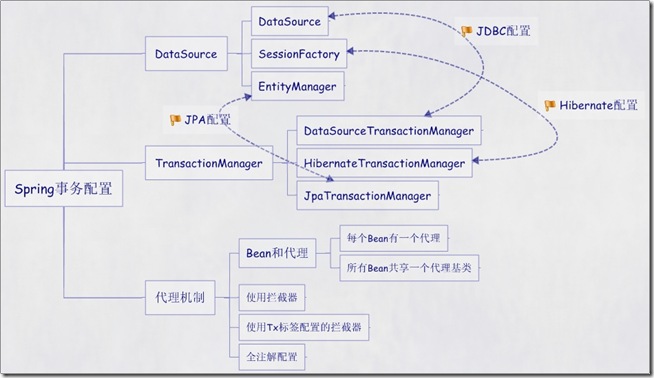
根据代理机制的不同,总结了五种Spring事务的配置方式,配置文件如下:
第一种方式:每个Bean都有一个代理
<beans xmlns="http://www.springframework.org/schema/beans"
xmlns:xsi="http://www.w3.org/2001/XMLSchema-instance"
xmlns:context="http://www.springframework.org/schema/context"
xmlns:aop="http://www.springframework.org/schema/aop"
xsi:schemaLocation="http://www.springframework.org/schema/beans
http://www.springframework.org/schema/beans/spring-beans-2.5.xsd
http://www.springframework.org/schema/context
http://www.springframework.org/schema/context/spring-context-2.5.xsd
http://www.springframework.org/schema/aop http://www.springframework.org/schema/aop/spring-aop-2.5.xsd">
<bean
id="sessionFactory"
class="org.springframework.orm.hibernate3.LocalSessionFactoryBean">
<property
name="configLocation" value="classpath:hibernate.cfg.xml" />
<property
name="configurationClass" value="org.hibernate.cfg.AnnotationConfiguration" />
</bean>
<!-- 定义事务管理器(声明式的事务)
-->
<bean
id="transactionManager"
class="org.springframework.orm.hibernate3.HibernateTransactionManager">
<property
name="sessionFactory" ref="sessionFactory" />
</bean>
<!-- 配置DAO
-->
<bean
id="userDaoTarget" class="com.bluesky.spring.dao.UserDaoImpl">
<property
name="sessionFactory" ref="sessionFactory" />
</bean>
<bean
id="userDao"
class="org.springframework.transaction.interceptor.TransactionProxyFactoryBean">
<!-- 配置事务管理器
-->
<property
name="transactionManager" ref="transactionManager" />
<property
name="target" ref="userDaoTarget" />
<property
name="proxyInterfaces" value="com.bluesky.spring.dao.GeneratorDao" />
<!-- 配置事务属性
-->
<property
name="transactionAttributes">
<props>
<prop
key="*">PROPAGATION_REQUIRED</prop>
</props>
</property>
</bean>
</beans>
第二种方式:所有Bean共享一个代理基类
<beans xmlns="http://www.springframework.org/schema/beans"
xmlns:xsi="http://www.w3.org/2001/XMLSchema-instance"
xmlns:context="http://www.springframework.org/schema/context"
xmlns:aop="http://www.springframework.org/schema/aop"
xsi:schemaLocation="http://www.springframework.org/schema/beans
http://www.springframework.org/schema/beans/spring-beans-2.5.xsd
http://www.springframework.org/schema/context
http://www.springframework.org/schema/context/spring-context-2.5.xsd
http://www.springframework.org/schema/aop http://www.springframework.org/schema/aop/spring-aop-2.5.xsd">
<bean
id="sessionFactory"
class="org.springframework.orm.hibernate3.LocalSessionFactoryBean">
<property
name="configLocation" value="classpath:hibernate.cfg.xml" />
<property
name="configurationClass" value="org.hibernate.cfg.AnnotationConfiguration" />
</bean>
<!-- 定义事务管理器(声明式的事务)
-->
<bean
id="transactionManager"
class="org.springframework.orm.hibernate3.HibernateTransactionManager">
<property
name="sessionFactory" ref="sessionFactory" />
</bean>
<bean
id="transactionBase"
class="org.springframework.transaction.interceptor.TransactionProxyFactoryBean"
lazy-init="true" abstract="true">
<!-- 配置事务管理器
-->
<property
name="transactionManager" ref="transactionManager" />
<!-- 配置事务属性
-->
<property
name="transactionAttributes">
<props>
<prop
key="*">PROPAGATION_REQUIRED</prop>
</props>
</property>
</bean>
<!-- 配置DAO
-->
<bean
id="userDaoTarget" class="com.bluesky.spring.dao.UserDaoImpl">
<property
name="sessionFactory" ref="sessionFactory" />
</bean>
<bean
id="userDao" parent="transactionBase" >
<property
name="target" ref="userDaoTarget" />
</bean>
</beans>
第三种方式:使用拦截器
<beans xmlns="http://www.springframework.org/schema/beans"
xmlns:xsi="http://www.w3.org/2001/XMLSchema-instance"
xmlns:context="http://www.springframework.org/schema/context"
xmlns:aop="http://www.springframework.org/schema/aop"
xsi:schemaLocation="http://www.springframework.org/schema/beans
http://www.springframework.org/schema/beans/spring-beans-2.5.xsd
http://www.springframework.org/schema/context
http://www.springframework.org/schema/context/spring-context-2.5.xsd
http://www.springframework.org/schema/aop http://www.springframework.org/schema/aop/spring-aop-2.5.xsd">
<bean
id="sessionFactory"
class="org.springframework.orm.hibernate3.LocalSessionFactoryBean">
<property
name="configLocation" value="classpath:hibernate.cfg.xml" />
<property
name="configurationClass" value="org.hibernate.cfg.AnnotationConfiguration" />
</bean>
<!-- 定义事务管理器(声明式的事务)
-->
<bean
id="transactionManager"
class="org.springframework.orm.hibernate3.HibernateTransactionManager">
<property
name="sessionFactory" ref="sessionFactory" />
</bean>
<bean
id="transactionInterceptor"
class="org.springframework.transaction.interceptor.TransactionInterceptor">
<property
name="transactionManager" ref="transactionManager" />
<!-- 配置事务属性
-->
<property
name="transactionAttributes">
<props>
<prop
key="*">PROPAGATION_REQUIRED</prop>
</props>
</property>
</bean>
<bean
class="org.springframework.aop.framework.autoproxy.BeanNameAutoProxyCreator">
<property
name="beanNames">
<list>
<value>*Dao</value>
</list>
</property>
<property
name="interceptorNames">
<list>
<value>transactionInterceptor</value>
</list>
</property>
</bean>
<!-- 配置DAO
-->
<bean
id="userDao" class="com.bluesky.spring.dao.UserDaoImpl">
<property
name="sessionFactory" ref="sessionFactory" />
</bean>
</beans>
第四种方式:使用tx标签配置的拦截器
<beans xmlns="http://www.springframework.org/schema/beans"
xmlns:xsi="http://www.w3.org/2001/XMLSchema-instance"
xmlns:context="http://www.springframework.org/schema/context"
xmlns:aop="http://www.springframework.org/schema/aop"
xmlns:tx="http://www.springframework.org/schema/tx"
xsi:schemaLocation="http://www.springframework.org/schema/beans
http://www.springframework.org/schema/beans/spring-beans-2.5.xsd
http://www.springframework.org/schema/context
http://www.springframework.org/schema/context/spring-context-2.5.xsd
http://www.springframework.org/schema/aop http://www.springframework.org/schema/aop/spring-aop-2.5.xsd
http://www.springframework.org/schema/tx http://www.springframework.org/schema/tx/spring-tx-2.5.xsd">
<context:annotation-config
/>
<context:component-scan
base-package="com.bluesky" />
<bean
id="sessionFactory"
class="org.springframework.orm.hibernate3.LocalSessionFactoryBean">
<property
name="configLocation" value="classpath:hibernate.cfg.xml" />
<property
name="configurationClass" value="org.hibernate.cfg.AnnotationConfiguration" />
</bean>
<!-- 定义事务管理器(声明式的事务)
-->
<bean
id="transactionManager"
class="org.springframework.orm.hibernate3.HibernateTransactionManager">
<property
name="sessionFactory" ref="sessionFactory" />
</bean>
<tx:advice
id="txAdvice" transaction-manager="transactionManager">
<tx:attributes>
<tx:method
name="*" propagation="REQUIRED" />
</tx:attributes>
</tx:advice>
<aop:config>
<aop:pointcut
id="interceptorPointCuts"
expression="execution(* com.bluesky.spring.dao.*.*(..))" />
<aop:advisor
advice-ref="txAdvice"
pointcut-ref="interceptorPointCuts" />
</aop:config>
</beans>
第五种方式:全注解
<beans xmlns="http://www.springframework.org/schema/beans"
xmlns:xsi="http://www.w3.org/2001/XMLSchema-instance"
xmlns:context="http://www.springframework.org/schema/context"
xmlns:aop="http://www.springframework.org/schema/aop"
xmlns:tx="http://www.springframework.org/schema/tx"
xsi:schemaLocation="http://www.springframework.org/schema/beans
http://www.springframework.org/schema/beans/spring-beans-2.5.xsd
http://www.springframework.org/schema/context
http://www.springframework.org/schema/context/spring-context-2.5.xsd
http://www.springframework.org/schema/aop http://www.springframework.org/schema/aop/spring-aop-2.5.xsd
http://www.springframework.org/schema/tx http://www.springframework.org/schema/tx/spring-tx-2.5.xsd">
<context:annotation-config
/>
<context:component-scan
base-package="com.bluesky" />
<tx:annotation-driven
transaction-manager="transactionManager"/>
<bean
id="sessionFactory"
class="org.springframework.orm.hibernate3.LocalSessionFactoryBean">
<property
name="configLocation" value="classpath:hibernate.cfg.xml" />
<property
name="configurationClass" value="org.hibernate.cfg.AnnotationConfiguration" />
</bean>
<!-- 定义事务管理器(声明式的事务)
-->
<bean
id="transactionManager"
class="org.springframework.orm.hibernate3.HibernateTransactionManager">
<property
name="sessionFactory" ref="sessionFactory" />
</bean>
</beans>
此时在DAO上需加上@Transactional注解,如下:
import java.util.List;
import org.hibernate.SessionFactory;
import org.springframework.beans.factory.annotation.Autowired;
import org.springframework.orm.hibernate3.support.HibernateDaoSupport;
import org.springframework.stereotype.Component;
import com.bluesky.spring.domain.User;
@Transactional
@Component("userDao")
public class UserDaoImpl
extends HibernateDaoSupport
implements UserDao {
public List<User> listUsers() {
return this.getSession().createQuery("from
User").list();
}

}
(转)Spring事务配置的五种方式的更多相关文章
- Spring事务配置的五种方式(转发)
Spring事务配置的五种方式(原博客地址是http://www.blogjava.net/robbie/archive/2009/04/05/264003.html)挺好的,收藏转发 前段时间对Sp ...
- Spring事务配置的五种方式和spring里面事务的传播属性和事务隔离级别
转: http://blog.csdn.net/it_man/article/details/5074371 Spring事务配置的五种方式 前段时间对Spring的事务配置做了比较深入的研究,在此之 ...
- Spring事务配置的五种方式(转载)
Spring配置文件中关于事务配置总是由三个组成部分,分别是DataSource.TransactionManager和代理机制这三部分,无论哪种配置方式,一般变化的只是代理机制这部分. DataSo ...
- Spring事务配置的五种方式
Spring配置文件中关于事务配置总是由三个组成部分,分别是DataSource.TransactionManager和代理机制这三部分,无论哪种配置方式,一般变化的只是代理机制这部分. DataSo ...
- Spring事务配置的五种方式 -- 越往后需要Spring版本越高
第五种 基本零配置 个人感觉第四种也可以 Spring配置文件中关于事务配置总是由三个组成部分,分别是DataSource.TransactionManager和代理机制这三部分,无论哪种配置方式, ...
- Spring事务配置的五种方式(转)
前段时间对Spring的事务配置做了比较深入的研究,在此之间对Spring的事务配置虽说也配置过,但是一直没有一个清楚的认识.通过这次的学习发觉Spring的事务配置只要把思路理清,还是比较好掌握的. ...
- Spring事务配置的五种方式 巨全!不看后悔,一看必懂!
前段时间对Spring的事务配置做了比较深入的研究,在此之间对Spring的事务配置虽说也配置过,但是一直没有一个清楚的认识.通过这次的学习发觉Spring的事务配置只要把思路理清,还是比较好掌握的. ...
- SSH深度历险(六) 深入浅出----- Spring事务配置的五种方式
这对时间在学习SSH中Spring架构,Spring的事务配置做了详细总结,在此之间对Spring的事务配置只是停留在听说的阶段,总结一下,整体把控,通过这次的学习发觉Spring的事务配置只要把思路 ...
- [JavaEE] Spring事务配置的五种方式
前段时间对Spring的事务配置做了比较深入的研究,在此之间对Spring的事务配置虽说也配置过,但是一直没有一个清楚的认识.通过这次的学习发觉Spring的事务配置只要把思路理清,还是比较好掌握的. ...
随机推荐
- nginx四层负载均衡配置
nginx四层负载均衡配置代理Mysql集群 环境如下: ip 192.168.6.203 Nginx ip 192.168.6.*(多台) Mysql 步骤一 查看Nginx是否安装stream模块 ...
- [codeforces113D]Museum
D. Museum time limit per test: 2 seconds memory limit per test: 256 megabytes input: standard input ...
- Hibernate入门(五)
一 Hibernate继承映射 我们可以将继承层次结构类与数据库的表映射. 1. 每个层次类一张表 这个层次结构有三个类,Employee是Regular_Employee和Contract_Empl ...
- Caused by: java.lang.RuntimeException: by java.lang.OutOfMemoryError: PermGen space(tomcat 启动时提示内存溢出)
设置MaxPermSize大小TOMCAT_HOME/bin/catalina.bat 文件头加set JAVA_OPTS='-Xms512m -Xmx1024m -XX:MaxPermSize=51 ...
- Navicat连接报错:cannot load OCI DLL,126
32位系统下报错:cannot load OCI DLL,126 解决方法:navicat 菜单中 -工具->选项->OCI 选择oracle安装目录下bin里面的oci.dll 在win ...
- PHP判断字符串中是否含有中文
<?php $str = "测试中文"; echo $str; echo "<hr>"; //if (preg_match("/^[ ...
- 一个"Median Maintenance"问题
题目要求: Download the text file here. The goal of this problem is to implement the "Median Mainten ...
- 【Android Developers Training】 89. 最大化的使用谷歌云消息(Google Cloud Messaging)
注:本文翻译自Google官方的Android Developers Training文档,译者技术一般,由于喜爱安卓而产生了翻译的念头,纯属个人兴趣爱好. 原文链接:http://developer ...
- CSS雪碧图自动生成软件
下载地址 http://www.99css.com/1524/ 包含详细的下载地址.下载步骤以及使用教程 亮点:自动合成雪碧图+自动生成雪碧图background-position代码 简单过程 下载 ...
- MAC 相关操作解析
MAC 相关操作解析 OS 显示桌面 f11 F1~F12 fn + F1~F12 撤销重做 command + z command + shift + z 图片预览 选择图片 空格 上下左右 svn ...