
Spring事务配置的五种方式(转发)
前段时间对Spring的事务配置做了比较深入的研究,在此之间对Spring的事务配置虽说也配置过,但是一直没有一个清楚的认识。通过这次的学习发觉Spring的事务配置只要把思路理清,还是比较好掌握的。
总结如下:
Spring配置文件中关于事务配置总是由三个组成部分,分别是DataSource、TransactionManager和代理机制这三部分,无论哪种配置方式,一般变化的只是代理机制这部分。
DataSource、TransactionManager这两部分只是会根据数据访问方式有所变化,比如使用Hibernate进行数据访问 时,DataSource实际为SessionFactory,TransactionManager的实现为 HibernateTransactionManager。
具体如下图:
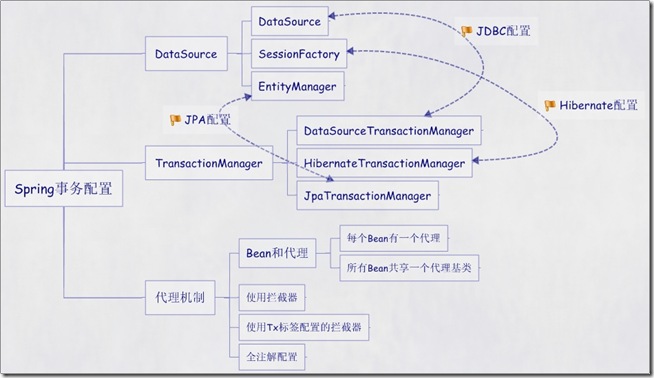
根据代理机制的不同,总结了五种Spring事务的配置方式,配置文件如下:
第一种方式:每个Bean都有一个代理
<beans xmlns="http://www.springframework.org/schema/beans"
xmlns:xsi="http://www.w3.org/2001/XMLSchema-instance"
xmlns:context="http://www.springframework.org/schema/context"
xmlns:aop="http://www.springframework.org/schema/aop"
xsi:schemaLocation="http://www.springframework.org/schema/beans
http://www.springframework.org/schema/beans/spring-beans-2.5.xsd
http://www.springframework.org/schema/context
http://www.springframework.org/schema/context/spring-context-2.5.xsd
http://www.springframework.org/schema/aop http://www.springframework.org/schema/aop/spring-aop-2.5.xsd">
<bean id="sessionFactory"
class="org.springframework.orm.hibernate3.LocalSessionFactoryBean">
<property name="configLocation" value="classpath:hibernate.cfg.xml" />
<property name="configurationClass" value="org.hibernate.cfg.AnnotationConfiguration" />
</bean>
<!-- 定义事务管理器(声明式的事务) -->
<bean id="transactionManager"
class="org.springframework.orm.hibernate3.HibernateTransactionManager">
<property name="sessionFactory" ref="sessionFactory" />
</bean>
<!-- 配置DAO -->
<bean id="userDaoTarget" class="com.bluesky.spring.dao.UserDaoImpl">
<property name="sessionFactory" ref="sessionFactory" />
</bean>
<bean id="userDao"
class="org.springframework.transaction.interceptor.TransactionProxyFactoryBean">
<!-- 配置事务管理器 -->
<property name="transactionManager" ref="transactionManager" />
<property name="target" ref="userDaoTarget" />
<property name="proxyInterfaces" value="com.bluesky.spring.dao.GeneratorDao" />
<!-- 配置事务属性 -->
<property name="transactionAttributes">
<props>
<prop key="*">PROPAGATION_REQUIRED</prop>
</props>
</property>
</bean>
</beans>
第二种方式:所有Bean共享一个代理基类
<beans xmlns="http://www.springframework.org/schema/beans"
xmlns:xsi="http://www.w3.org/2001/XMLSchema-instance"
xmlns:context="http://www.springframework.org/schema/context"
xmlns:aop="http://www.springframework.org/schema/aop"
xsi:schemaLocation="http://www.springframework.org/schema/beans
http://www.springframework.org/schema/beans/spring-beans-2.5.xsd
http://www.springframework.org/schema/context
http://www.springframework.org/schema/context/spring-context-2.5.xsd
http://www.springframework.org/schema/aop http://www.springframework.org/schema/aop/spring-aop-2.5.xsd">
<bean id="sessionFactory"
class="org.springframework.orm.hibernate3.LocalSessionFactoryBean">
<property name="configLocation" value="classpath:hibernate.cfg.xml" />
<property name="configurationClass" value="org.hibernate.cfg.AnnotationConfiguration" />
</bean>
<!-- 定义事务管理器(声明式的事务) -->
<bean id="transactionManager"
class="org.springframework.orm.hibernate3.HibernateTransactionManager">
<property name="sessionFactory" ref="sessionFactory" />
</bean>
<bean id="transactionBase"
class="org.springframework.transaction.interceptor.TransactionProxyFactoryBean"
lazy-init="true" abstract="true">
<!-- 配置事务管理器 -->
<property name="transactionManager" ref="transactionManager" />
<!-- 配置事务属性 -->
<property name="transactionAttributes">
<props>
<prop key="*">PROPAGATION_REQUIRED</prop>
</props>
</property>
</bean>
<!-- 配置DAO -->
<bean id="userDaoTarget" class="com.bluesky.spring.dao.UserDaoImpl">
<property name="sessionFactory" ref="sessionFactory" />
</bean>
<bean id="userDao" parent="transactionBase" >
<property name="target" ref="userDaoTarget" />
</bean>
</beans>
第三种方式:使用拦截器
<beans xmlns="http://www.springframework.org/schema/beans"
xmlns:xsi="http://www.w3.org/2001/XMLSchema-instance"
xmlns:context="http://www.springframework.org/schema/context"
xmlns:aop="http://www.springframework.org/schema/aop"
xsi:schemaLocation="http://www.springframework.org/schema/beans
http://www.springframework.org/schema/beans/spring-beans-2.5.xsd
http://www.springframework.org/schema/context
http://www.springframework.org/schema/context/spring-context-2.5.xsd
http://www.springframework.org/schema/aop http://www.springframework.org/schema/aop/spring-aop-2.5.xsd">
<bean id="sessionFactory"
class="org.springframework.orm.hibernate3.LocalSessionFactoryBean">
<property name="configLocation" value="classpath:hibernate.cfg.xml" />
<property name="configurationClass" value="org.hibernate.cfg.AnnotationConfiguration" />
</bean>
<!-- 定义事务管理器(声明式的事务) -->
<bean id="transactionManager"
class="org.springframework.orm.hibernate3.HibernateTransactionManager">
<property name="sessionFactory" ref="sessionFactory" />
</bean>
<bean id="transactionInterceptor"
class="org.springframework.transaction.interceptor.TransactionInterceptor">
<property name="transactionManager" ref="transactionManager" />
<!-- 配置事务属性 -->
<property name="transactionAttributes">
<props>
<prop key="*">PROPAGATION_REQUIRED</prop>
</props>
</property>
</bean>
<bean class="org.springframework.aop.framework.autoproxy.BeanNameAutoProxyCreator">
<property name="beanNames">
<list>
<value>*Dao</value>
</list>
</property>
<property name="interceptorNames">
<list>
<value>transactionInterceptor</value>
</list>
</property>
</bean>
<!-- 配置DAO -->
<bean id="userDao" class="com.bluesky.spring.dao.UserDaoImpl">
<property name="sessionFactory" ref="sessionFactory" />
</bean>
</beans>
第四种方式:使用tx标签配置的拦截器
<beans xmlns="http://www.springframework.org/schema/beans"
xmlns:xsi="http://www.w3.org/2001/XMLSchema-instance"
xmlns:context="http://www.springframework.org/schema/context"
xmlns:aop="http://www.springframework.org/schema/aop"
xmlns:tx="http://www.springframework.org/schema/tx"
xsi:schemaLocation="http://www.springframework.org/schema/beans
http://www.springframework.org/schema/beans/spring-beans-2.5.xsd
http://www.springframework.org/schema/context
http://www.springframework.org/schema/context/spring-context-2.5.xsd
http://www.springframework.org/schema/aop http://www.springframework.org/schema/aop/spring-aop-2.5.xsd
http://www.springframework.org/schema/tx http://www.springframework.org/schema/tx/spring-tx-2.5.xsd">
<context:annotation-config />
<context:component-scan base-package="com.bluesky" />
<bean id="sessionFactory"
class="org.springframework.orm.hibernate3.LocalSessionFactoryBean">
<property name="configLocation" value="classpath:hibernate.cfg.xml" />
<property name="configurationClass" value="org.hibernate.cfg.AnnotationConfiguration" />
</bean>
<!-- 定义事务管理器(声明式的事务) -->
<bean id="transactionManager"
class="org.springframework.orm.hibernate3.HibernateTransactionManager">
<property name="sessionFactory" ref="sessionFactory" />
</bean>
<tx:advice id="txAdvice" transaction-manager="transactionManager">
<tx:attributes>
<tx:method name="*" propagation="REQUIRED" />
</tx:attributes>
</tx:advice>
<aop:config>
<aop:pointcut id="interceptorPointCuts"
expression="execution(* com.bluesky.spring.dao.*.*(..))" />
<aop:advisor advice-ref="txAdvice"
pointcut-ref="interceptorPointCuts" />
</aop:config>
</beans>
第五种方式:全注解
<beans xmlns="http://www.springframework.org/schema/beans"
xmlns:xsi="http://www.w3.org/2001/XMLSchema-instance"
xmlns:context="http://www.springframework.org/schema/context"
xmlns:aop="http://www.springframework.org/schema/aop"
xmlns:tx="http://www.springframework.org/schema/tx"
xsi:schemaLocation="http://www.springframework.org/schema/beans
http://www.springframework.org/schema/beans/spring-beans-2.5.xsd
http://www.springframework.org/schema/context
http://www.springframework.org/schema/context/spring-context-2.5.xsd
http://www.springframework.org/schema/aop http://www.springframework.org/schema/aop/spring-aop-2.5.xsd
http://www.springframework.org/schema/tx http://www.springframework.org/schema/tx/spring-tx-2.5.xsd">
<context:annotation-config />
<context:component-scan base-package="com.bluesky" />
<tx:annotation-driven transaction-manager="transactionManager"/>
<bean id="sessionFactory"
class="org.springframework.orm.hibernate3.LocalSessionFactoryBean">
<property name="configLocation" value="classpath:hibernate.cfg.xml" />
<property name="configurationClass" value="org.hibernate.cfg.AnnotationConfiguration" />
</bean>
<!-- 定义事务管理器(声明式的事务) -->
<bean id="transactionManager"
class="org.springframework.orm.hibernate3.HibernateTransactionManager">
<property name="sessionFactory" ref="sessionFactory" />
</bean>
</beans>
此时在DAO上需加上@Transactional注解,如下:
import java.util.List;
import org.hibernate.SessionFactory;
import org.springframework.beans.factory.annotation.Autowired;
import org.springframework.orm.hibernate3.support.HibernateDaoSupport;
import org.springframework.stereotype.Component;
import com.bluesky.spring.domain.User;
@Transactional
@Component("userDao")
public class UserDaoImpl extends HibernateDaoSupport implements UserDao {
public List<User> listUsers() {
return this.getSession().createQuery("from User").list();
}

}
Spring事务配置的五种方式(转发)的更多相关文章
- Spring事务配置的五种方式和spring里面事务的传播属性和事务隔离级别
转: http://blog.csdn.net/it_man/article/details/5074371 Spring事务配置的五种方式 前段时间对Spring的事务配置做了比较深入的研究,在此之 ...
- Spring事务配置的五种方式(转载)
Spring配置文件中关于事务配置总是由三个组成部分,分别是DataSource.TransactionManager和代理机制这三部分,无论哪种配置方式,一般变化的只是代理机制这部分. DataSo ...
- Spring事务配置的五种方式
Spring配置文件中关于事务配置总是由三个组成部分,分别是DataSource.TransactionManager和代理机制这三部分,无论哪种配置方式,一般变化的只是代理机制这部分. DataSo ...
- Spring事务配置的五种方式 -- 越往后需要Spring版本越高
第五种 基本零配置 个人感觉第四种也可以 Spring配置文件中关于事务配置总是由三个组成部分,分别是DataSource.TransactionManager和代理机制这三部分,无论哪种配置方式, ...
- Spring事务配置的五种方式(转)
前段时间对Spring的事务配置做了比较深入的研究,在此之间对Spring的事务配置虽说也配置过,但是一直没有一个清楚的认识.通过这次的学习发觉Spring的事务配置只要把思路理清,还是比较好掌握的. ...
- Spring事务配置的五种方式 巨全!不看后悔,一看必懂!
前段时间对Spring的事务配置做了比较深入的研究,在此之间对Spring的事务配置虽说也配置过,但是一直没有一个清楚的认识.通过这次的学习发觉Spring的事务配置只要把思路理清,还是比较好掌握的. ...
- (转)Spring事务配置的五种方式
前段时间对Spring的事务配置做了比较深入的研究,在此之间对Spring的事务配置虽说也配置过,但是一直没有一个清楚的认识.通过这次的学习发觉Spring的事务配置只要把思路理清,还是比较好掌握的. ...
- SSH深度历险(六) 深入浅出----- Spring事务配置的五种方式
这对时间在学习SSH中Spring架构,Spring的事务配置做了详细总结,在此之间对Spring的事务配置只是停留在听说的阶段,总结一下,整体把控,通过这次的学习发觉Spring的事务配置只要把思路 ...
- [JavaEE] Spring事务配置的五种方式
前段时间对Spring的事务配置做了比较深入的研究,在此之间对Spring的事务配置虽说也配置过,但是一直没有一个清楚的认识.通过这次的学习发觉Spring的事务配置只要把思路理清,还是比较好掌握的. ...
随机推荐
- Crystal Reports课程01-连接SQL Sever数据库
选择[OLE DB(ADO)] 选择[microsoft DB provider for SQL Sever],点击[下一步] 填写连接的服务器,数据库,用户名,密码等信息,然后点击[下一步] 选择[ ...
- delphi 在 DragDrop 的时候,滚动 TreeView
在 DragDrop 的时候,滚动 TreeView 当高度不够的时候 procedure TForm1.TreeView1DragOver(Sender, Source: TObject; X, ...
- delphi Caption 垂直显示标签文本
//垂直显示标签文本 Label1.Caption:='垂'+#13+'直'+#13+'显'+#13+'示';//使用相同的方法,我们也可以制作垂直显示的提示(Hint):button1.Hint:= ...
- sharepoint 2013 未能加载类型"Microsoft.AnalysisServices.SharePoint.Integration.ReportGalleryView"
最近在做PowerPivot for sharepoint server 2013的时候,创建PowerPivot库,之后打开,出现了一个问题: 未能加载类型"Microsoft.Analy ...
- iOS小结
一.内存管理情况 1- autorelease,当用户的代码在持续运行时,自动释放池是不会被销毁的,这段时间内用户可以安全地使用自动释放的对象.当用户的代码运行告一段 落,开始等待用户的操作,自动释放 ...
- Java 开源博客——B3log Solo 0.6.6 正式版公布了!
Java 开源博客 -- B3log Solo 0.6.6 正式版公布了!欢迎大家下载. 该版本号引入了数据库连接池:Druid. 另外,欢迎观摩 B3log 团队的新项目:Noty,也很欢迎大家參与 ...
- oc-07-有参方法的调用
// 13-[掌握]有参方法的声明实现和调用 #import <Foundation/Foundation.h> void test(){ } @interface Person : NS ...
- Metadata Lock原理4
http://blog.chinaunix.net/uid-28212952-id-3400571.html Alibaba 今天发生一个故障,MM复制结构(主备库),备库slave del ...
- XtraBackup原理4
MySQL · 答疑解惑 · 物理备份死锁分析 背景 本文对 5.6 主备场景下,在备库做物理备份遇到死锁的case进行分析,希望对大家有所帮助. 这里用的的物理备份工具是 Percona-XtraB ...
- 第2章 数字之魅——斐波那契(Fibonacci)数列
斐波那契(Fibonacci)数列 问题描述 递归算法: package chapter2shuzizhimei.fibonacci; /** * Fibonacci数列递归求解 * @author ...