
[JavaEE] Spring事务配置的五种方式
前段时间对Spring的事务配置做了比较深入的研究,在此之间对Spring的事务配置虽说也配置过,但是一直没有一个清楚的认识。通过这次的学习发觉Spring的事务配置只要把思路理清,还是比较好掌握的。
总结如下:
Spring配置文件中关于事务配置总是由三个组成部分,分别是DataSource、TransactionManager和代理机制这三部分,无论哪种配置方式,一般变化的只是代理机制这部分。
DataSource、TransactionManager这两部分只是会根据数据访问方式有所变化,比如使用Hibernate进行数据访问时,DataSource实际为SessionFactory,TransactionManager的实现为 HibernateTransactionManager。
具体如下图:
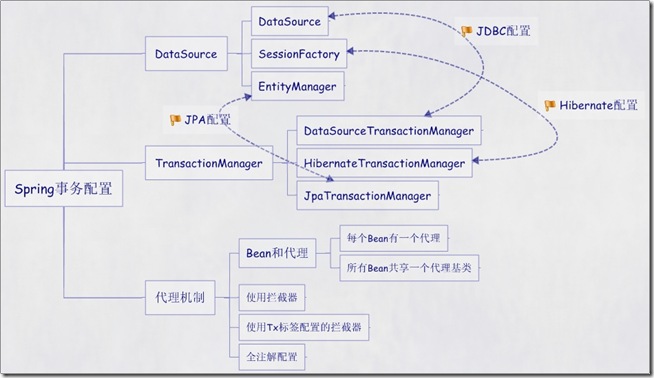
根据代理机制的不同,总结了五种Spring事务的配置方式,配置文件如下:
第一种方式:每个Bean都有一个代理
<?xml version="1.0" encoding="UTF-8"?>

<beans xmlns="http://www.springframework.org/schema/beans"

    xmlns:xsi="http://www.w3.org/2001/XMLSchema-instance"

    xmlns:context="http://www.springframework.org/schema/context"

    xmlns:aop="http://www.springframework.org/schema/aop"

    xsi:schemaLocation="http://www.springframework.org/schema/beans

           http://www.springframework.org/schema/beans/spring-beans-2.5.xsd

           http://www.springframework.org/schema/context

           http://www.springframework.org/schema/context/spring-context-2.5.xsd

           http://www.springframework.org/schema/aop http://www.springframework.org/schema/aop/spring-aop-2.5.xsd">

    <bean id="sessionFactory"

            class="org.springframework.orm.hibernate3.LocalSessionFactoryBean">

        <property name="configLocation" value="classpath:hibernate.cfg.xml" />

        <property name="configurationClass" value="org.hibernate.cfg.AnnotationConfiguration" />

    </bean>

    <!-- 定义事务管理器(声明式的事务) -->

    <bean id="transactionManager"

        class="org.springframework.orm.hibernate3.HibernateTransactionManager">

        <property name="sessionFactory" ref="sessionFactory" />

    </bean>

    <!-- 配置DAO -->

    <bean id="userDaoTarget" class="com.bluesky.spring.dao.UserDaoImpl">

        <property name="sessionFactory" ref="sessionFactory" />

    </bean>

    <bean id="userDao"

        class="org.springframework.transaction.interceptor.TransactionProxyFactoryBean">

           <!-- 配置事务管理器 -->

           <property name="transactionManager" ref="transactionManager" />

        <property name="target" ref="userDaoTarget" />

         <property name="proxyInterfaces" value="com.bluesky.spring.dao.GeneratorDao" />

        <!-- 配置事务属性 -->

        <property name="transactionAttributes">

            <props>

                <prop key="*">PROPAGATION_REQUIRED</prop>

            </props>

        </property>

    </bean>

</beans>
第二种方式:所有Bean共享一个代理基类
<?xml version="1.0" encoding="UTF-8"?>

<beans xmlns="http://www.springframework.org/schema/beans"

    xmlns:xsi="http://www.w3.org/2001/XMLSchema-instance"

    xmlns:context="http://www.springframework.org/schema/context"

    xmlns:aop="http://www.springframework.org/schema/aop"

    xsi:schemaLocation="http://www.springframework.org/schema/beans

           http://www.springframework.org/schema/beans/spring-beans-2.5.xsd

           http://www.springframework.org/schema/context

           http://www.springframework.org/schema/context/spring-context-2.5.xsd

           http://www.springframework.org/schema/aop http://www.springframework.org/schema/aop/spring-aop-2.5.xsd">

    <bean id="sessionFactory"

            class="org.springframework.orm.hibernate3.LocalSessionFactoryBean">

        <property name="configLocation" value="classpath:hibernate.cfg.xml" />

        <property name="configurationClass" value="org.hibernate.cfg.AnnotationConfiguration" />

    </bean>

    <!-- 定义事务管理器(声明式的事务) -->

    <bean id="transactionManager"

        class="org.springframework.orm.hibernate3.HibernateTransactionManager">

        <property name="sessionFactory" ref="sessionFactory" />

    </bean>

    <bean id="transactionBase"

            class="org.springframework.transaction.interceptor.TransactionProxyFactoryBean"

            lazy-init="true" abstract="true">

        <!-- 配置事务管理器 -->

        <property name="transactionManager" ref="transactionManager" />

        <!-- 配置事务属性 -->

        <property name="transactionAttributes">

            <props>

                <prop key="*">PROPAGATION_REQUIRED</prop>

            </props>

        </property>

    </bean>

    <!-- 配置DAO -->

    <bean id="userDaoTarget" class="com.bluesky.spring.dao.UserDaoImpl">

        <property name="sessionFactory" ref="sessionFactory" />

    </bean>

    <bean id="userDao" parent="transactionBase" >

        <property name="target" ref="userDaoTarget" />

    </bean>

</beans>
第三种方式:使用拦截器
<?xml version="1.0" encoding="UTF-8"?>

<beans xmlns="http://www.springframework.org/schema/beans"

    xmlns:xsi="http://www.w3.org/2001/XMLSchema-instance"

    xmlns:context="http://www.springframework.org/schema/context"

    xmlns:aop="http://www.springframework.org/schema/aop"

    xsi:schemaLocation="http://www.springframework.org/schema/beans

           http://www.springframework.org/schema/beans/spring-beans-2.5.xsd

           http://www.springframework.org/schema/context

           http://www.springframework.org/schema/context/spring-context-2.5.xsd

           http://www.springframework.org/schema/aop http://www.springframework.org/schema/aop/spring-aop-2.5.xsd">

    <bean id="sessionFactory"

            class="org.springframework.orm.hibernate3.LocalSessionFactoryBean">

        <property name="configLocation" value="classpath:hibernate.cfg.xml" />

        <property name="configurationClass" value="org.hibernate.cfg.AnnotationConfiguration" />

    </bean>

    <!-- 定义事务管理器(声明式的事务) -->

    <bean id="transactionManager"

        class="org.springframework.orm.hibernate3.HibernateTransactionManager">

        <property name="sessionFactory" ref="sessionFactory" />

    </bean>

    <bean id="transactionInterceptor"

        class="org.springframework.transaction.interceptor.TransactionInterceptor">

        <property name="transactionManager" ref="transactionManager" />

        <!-- 配置事务属性 -->

        <property name="transactionAttributes">

            <props>

                <prop key="*">PROPAGATION_REQUIRED</prop>

            </props>

        </property>

    </bean>

    <bean class="org.springframework.aop.framework.autoproxy.BeanNameAutoProxyCreator">

        <property name="beanNames">

            <list>

                <value>*Dao</value>

            </list>

        </property>

        <property name="interceptorNames">

            <list>

                <value>transactionInterceptor</value>

            </list>

        </property>

    </bean>

    <!-- 配置DAO -->

    <bean id="userDao" class="com.bluesky.spring.dao.UserDaoImpl">

        <property name="sessionFactory" ref="sessionFactory" />

    </bean>

</beans>
第四种方式:使用tx标签配置的拦截器
<?xml version="1.0" encoding="UTF-8"?>

<beans xmlns="http://www.springframework.org/schema/beans"

    xmlns:xsi="http://www.w3.org/2001/XMLSchema-instance"

    xmlns:context="http://www.springframework.org/schema/context"

    xmlns:aop="http://www.springframework.org/schema/aop"

    xmlns:tx="http://www.springframework.org/schema/tx"

    xsi:schemaLocation="http://www.springframework.org/schema/beans

           http://www.springframework.org/schema/beans/spring-beans-2.5.xsd

           http://www.springframework.org/schema/context

           http://www.springframework.org/schema/context/spring-context-2.5.xsd

           http://www.springframework.org/schema/aop http://www.springframework.org/schema/aop/spring-aop-2.5.xsd

           http://www.springframework.org/schema/tx http://www.springframework.org/schema/tx/spring-tx-2.5.xsd">

    <context:annotation-config />

    <context:component-scan base-package="com.bluesky" />

    <bean id="sessionFactory"

            class="org.springframework.orm.hibernate3.LocalSessionFactoryBean">

        <property name="configLocation" value="classpath:hibernate.cfg.xml" />

        <property name="configurationClass" value="org.hibernate.cfg.AnnotationConfiguration" />

    </bean>

    <!-- 定义事务管理器(声明式的事务) -->

    <bean id="transactionManager"

        class="org.springframework.orm.hibernate3.HibernateTransactionManager">

        <property name="sessionFactory" ref="sessionFactory" />

    </bean>

    <tx:advice id="txAdvice" transaction-manager="transactionManager">

        <tx:attributes>

            <tx:method name="*" propagation="REQUIRED" />

        </tx:attributes>

    </tx:advice>

    <aop:config>

        <aop:pointcut id="interceptorPointCuts"

            expression="execution(* com.bluesky.spring.dao.*.*(..))" />

        <aop:advisor advice-ref="txAdvice"

            pointcut-ref="interceptorPointCuts" />

    </aop:config>

</beans>
第五种方式:全注解
<?xml version="1.0" encoding="UTF-8"?>

<beans xmlns="http://www.springframework.org/schema/beans"

    xmlns:xsi="http://www.w3.org/2001/XMLSchema-instance"

    xmlns:context="http://www.springframework.org/schema/context"

    xmlns:aop="http://www.springframework.org/schema/aop"

    xmlns:tx="http://www.springframework.org/schema/tx"

    xsi:schemaLocation="http://www.springframework.org/schema/beans

           http://www.springframework.org/schema/beans/spring-beans-2.5.xsd

           http://www.springframework.org/schema/context

           http://www.springframework.org/schema/context/spring-context-2.5.xsd

           http://www.springframework.org/schema/aop http://www.springframework.org/schema/aop/spring-aop-2.5.xsd

           http://www.springframework.org/schema/tx http://www.springframework.org/schema/tx/spring-tx-2.5.xsd">

    <context:annotation-config />

    <context:component-scan base-package="com.bluesky" />

    <tx:annotation-driven transaction-manager="transactionManager"/>

    <bean id="sessionFactory"

            class="org.springframework.orm.hibernate3.LocalSessionFactoryBean">

        <property name="configLocation" value="classpath:hibernate.cfg.xml" />

        <property name="configurationClass" value="org.hibernate.cfg.AnnotationConfiguration" />

    </bean>

    <!-- 定义事务管理器(声明式的事务) -->

    <bean id="transactionManager"

        class="org.springframework.orm.hibernate3.HibernateTransactionManager">

        <property name="sessionFactory" ref="sessionFactory" />

    </bean>

</beans>
此时在DAO上需加上@Transactional注解,如下:
package com.bluesky.spring.dao;

import java.util.List;

import org.hibernate.SessionFactory;

import org.springframework.beans.factory.annotation.Autowired;

import org.springframework.orm.hibernate3.support.HibernateDaoSupport;

import org.springframework.stereotype.Component;

import com.bluesky.spring.domain.User;

@Transactional

@Component("userDao")

public class UserDaoImpl extends HibernateDaoSupport implements UserDao {

    public List<User> listUsers() {

        return this.getSession().createQuery("from User").list();

    }

}
[JavaEE] Spring事务配置的五种方式的更多相关文章
- Spring事务配置的五种方式(转发)
Spring事务配置的五种方式(原博客地址是http://www.blogjava.net/robbie/archive/2009/04/05/264003.html)挺好的,收藏转发 前段时间对Sp ...
- Spring事务配置的五种方式和spring里面事务的传播属性和事务隔离级别
转: http://blog.csdn.net/it_man/article/details/5074371 Spring事务配置的五种方式 前段时间对Spring的事务配置做了比较深入的研究,在此之 ...
- Spring事务配置的五种方式(转载)
Spring配置文件中关于事务配置总是由三个组成部分,分别是DataSource.TransactionManager和代理机制这三部分,无论哪种配置方式,一般变化的只是代理机制这部分. DataSo ...
- Spring事务配置的五种方式
Spring配置文件中关于事务配置总是由三个组成部分,分别是DataSource.TransactionManager和代理机制这三部分,无论哪种配置方式,一般变化的只是代理机制这部分. DataSo ...
- Spring事务配置的五种方式 -- 越往后需要Spring版本越高
第五种 基本零配置 个人感觉第四种也可以 Spring配置文件中关于事务配置总是由三个组成部分,分别是DataSource.TransactionManager和代理机制这三部分,无论哪种配置方式, ...
- Spring事务配置的五种方式(转)
前段时间对Spring的事务配置做了比较深入的研究,在此之间对Spring的事务配置虽说也配置过,但是一直没有一个清楚的认识.通过这次的学习发觉Spring的事务配置只要把思路理清,还是比较好掌握的. ...
- Spring事务配置的五种方式 巨全!不看后悔,一看必懂!
前段时间对Spring的事务配置做了比较深入的研究,在此之间对Spring的事务配置虽说也配置过,但是一直没有一个清楚的认识.通过这次的学习发觉Spring的事务配置只要把思路理清,还是比较好掌握的. ...
- (转)Spring事务配置的五种方式
前段时间对Spring的事务配置做了比较深入的研究,在此之间对Spring的事务配置虽说也配置过,但是一直没有一个清楚的认识.通过这次的学习发觉Spring的事务配置只要把思路理清,还是比较好掌握的. ...
- SSH深度历险(六) 深入浅出----- Spring事务配置的五种方式
这对时间在学习SSH中Spring架构,Spring的事务配置做了详细总结,在此之间对Spring的事务配置只是停留在听说的阶段,总结一下,整体把控,通过这次的学习发觉Spring的事务配置只要把思路 ...
随机推荐
- 努比亚(nubia) V18 NX612J 解锁BootLoader 并刷入recovery ROOT
recovery制作来自绯色玻璃 努比亚(nubia) V18 NX612J 解锁BootLoader 并刷入recovery ROOT 工具下载链接:https://pan.baidu.com/s/ ...
- py2exe打包遇到的问题
py2exe打包python成.exe文件 打包过程和结果 1.创建setup脚本打包文件,其中设置打包的属性和方法.注意:尽量将被打包文件和此打包脚本放在同目录下(因为在尝试非同目录下时,出现了非可 ...
- 九九乘法表(for循环)
九九乘法表:<br /><script>for(var i=0;i<10;i++){ for(var j=1;j<=i;j++) { var a=j*i docum ...
- 【SQL】字符型函数
1. ASCII ASCII(American Standard Code for Information Interchange,美国信息交换标准代码)是基于拉丁字母的一套电脑编码系统. 1) 返回 ...
- dubbo之多注册中心
Dubbo 支持同一服务向多注册中心同时注册,或者不同服务分别注册到不同的注册中心上去,甚至可以同时引用注册在不同注册中心上的同名服务.另外,注册中心是支持自定义扩展的. 多注册中心注册 比如:中文站 ...
- 分布式机器学习框架:MxNet
MxNet官网: http://mxnet.readthedocs.io/en/latest/ 前言: caffe是很优秀的dl平台.影响了后面很多相关框架. cxxnet借鉴了很多caffe的思想. ...
- C# 聚合数据借口发短信的使用
using System; using System.Collections.Generic; using System.ComponentModel; using System.Data; usin ...
- Python-通过configparser读写配置文件
Python读写配置文件: 1.创建配置文件(文件名以.conf或.ini结束的文件表示配置文件) 2.导入所需模块 OS, configparser >>> import os & ...
- python tips:最内嵌套作用域规则,闭包与装饰器
在作用域与名字空间提到,python是静态作用域,变量定义的位置决定了变量作用的范围.变量沿着local,global,builtins的路径搜索,直觉上就是从里到外搜索变量,这称为最内嵌套作用域规则 ...
- 【转载】intellij idea如何将web项目打成war包
1.点击[File]->[Project Structure]菜单(或使用Shift+Ctrl+Alt+S快捷键),打开[Project Structure]窗口.如下图: 2.在[Projec ...