
Cocos2d-x之定时器
| 版权声明:本文为博主原创文章,未经博主允许不得转载。
每一个游戏程序都有一个循环在不断运行,它是由导演对象来管理与维护。如果需要场景中的精灵运动起来,可以在游戏循环中使用定时器对精灵等对象进行操作。因为Node类封装了Scheduler类,所以也可以直接使用Node中调用函数。
定时器的两种实现方式:
>>.
scheduleUpdate();
是定时器更新函数,如果定时器更新了,就会调用update();来执行update();函数继承自Node类;每个Node对象只要调用该函数,那么这个Node对象就会定时的每帧回调用一次自己的update(float delat)函数
void update(float dt);
dt的默认频率是: 1/60
>>.
schedule(schedule_selector(selector));
void myUpdate(float dt);
schedule_selector(); 这是指定定时器的一个回调方法,这个方法我们可以自己去定义。
实例:
.h files

#ifndef _TIMERTEST_SCENE_H_

#define _TIMERTEST_SCENE_H_

#include "cocos2d.h"

USING_NS_CC;

class timerTest : public cocos2d::Layer

{

private:

public:

	static cocos2d::Scene* createScene();

	virtual bool init();

	virtual void update(float delta);

	void schedule_TwoTips_Test(float delta);

	CREATE_FUNC(timerTest);

};

#endif // _TIMERTEST_SCENE_H_

.cpp files

#include "TimerTest.h"

float timeCount = 0;

Scene* timerTest::createScene()

{

	auto scene = Scene::create();

	auto layer = timerTest::create();

	scene->addChild(layer);

	return scene;

}

bool timerTest::init()

{

	if (!Layer::init())

	{

		return false;

	}

	//启动定时器,调用scheduleUpdate()来执行定时器

	//scheduleUpdate();

	//two tips

	schedule(schedule_selector(timerTest::schedule_TwoTips_Test), 2);

	return true;

}

//delta是刷新的帧频率;在默认的情况下,默认值为: 1/60s刷新一次

void timerTest::update(float delta)

{

	timeCount += delta;

	if (timeCount > 5.0f)

	{

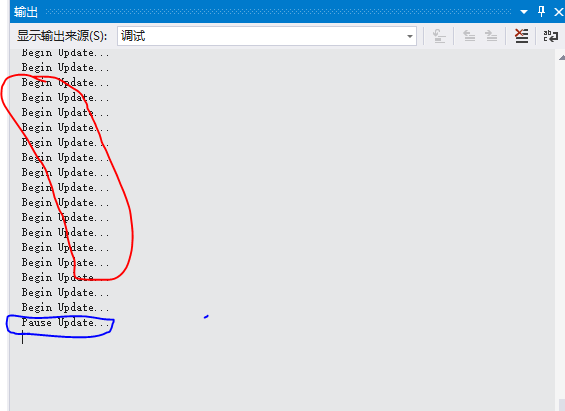
		CCLOG("Pause Update...");

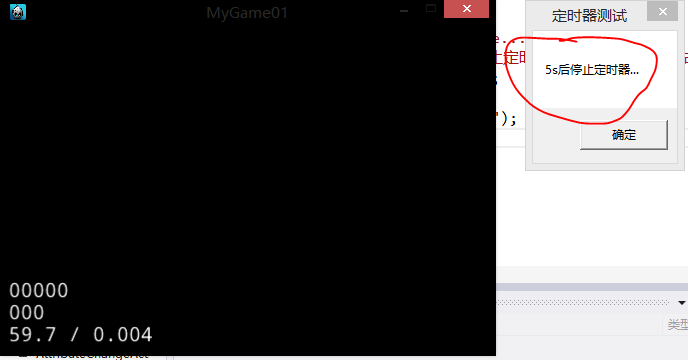
		MessageBox("5s后停止定时器...", "定时器测试");

		unscheduleUpdate();

	}

	CCLOG("Begin Update...");

}

void timerTest::schedule_TwoTips_Test(float delta)

{

	CCLOG("Two tips of Update...");

}

Scheduler类常用函数方法
 void scheduler(

     const ccSchedulerFun& callback,                      //回调方法

     void* target,                                        //目标执行者

     float interval,                                      //间隔时间,如果为0每帧都执行

     unsigned int repeat,                                 //重复执行动作

     float delay,                                         //延迟执行

     bool paused,                                         //如果为true暂停执行

     const std::string& Key                               //键值标识该定时器

 );

 //取消key所对应的定时器

 void unschedule(const std::string& key, void* target)

 //取消selector定时器

 void unschedule(SEL_SCHEDULE selector, Ref* target)

 //取消更新update方法

 void unscheduleUpdate(void* target);

 //取消所有target定时器(可能有多个图层)

 void unscheduleAllForTarget(void* target);

 //取消所有定时器

 void unscheduleAll(void);

 //暂停定时器

 void pauseTarget(void* target);

 //恢复定时器

 void resumeTarget(void* target);
实例:
.h files

#ifndef _SCHEDULERTEST_SCENE_H_

#define _SCHEDULERTEST_SCENE_H_

#include "cocos2d.h"

USING_NS_CC;

//scheduler类的常用函数

class schedulerTest : public cocos2d::Layer

{

private:

	cocos2d::Size visible;

public:

	static cocos2d::Scene* createScene();

	virtual bool init();

	virtual void update(float delta);

	void callBack_1(float delta);

	void callBack_2(float delta);

	void start(Ref* sendef);

	void pause(cocos2d::Ref* sendef);

	void resume(cocos2d::Ref* sendef);

	void stop(cocos2d::Ref* sendef);

	CREATE_FUNC(schedulerTest);

};

#endif //_SCHEDULERTEST_SCENE_H_

.cpp files

#include "Scheduler_Test.h"

Scene* schedulerTest::createScene()

{

	Scene* scene = Scene::create();

	schedulerTest* layer = schedulerTest::create();

	scene->addChild(layer);

	return scene;

}

bool schedulerTest::init()

{

	if (!Layer::init())

	{

		return false;

	}

	visible = Director::getInstance()->getWinSize();

	auto item1 = MenuItemFont::create("Start", CC_CALLBACK_1(schedulerTest::start, this));

	auto item2 = MenuItemFont::create("Pause", CC_CALLBACK_1(schedulerTest::pause, this));

	auto item3 = MenuItemFont::create("Resume", CC_CALLBACK_1(schedulerTest::resume, this));

	auto item4 = MenuItemFont::create("Stop", CC_CALLBACK_1(schedulerTest::stop, this));

	auto menu = Menu::create(item1, item2, item3, item4, NULL);

	menu->setPosition(Vec2(visible.width / 2, visible.height / 2));

	menu->alignItemsVerticallyWithPadding(20.0f);

	this->addChild(menu);

	return true;

}

void schedulerTest::update(float delta)

{

	CCLOG("update...");

}

//自己定义定时器回调的方法

void schedulerTest::callBack_1(float delta)

{

	CCLOG("callback_one..");

}

void schedulerTest::callBack_2(float delta)

{

	CCLOG("callback_two...");

}

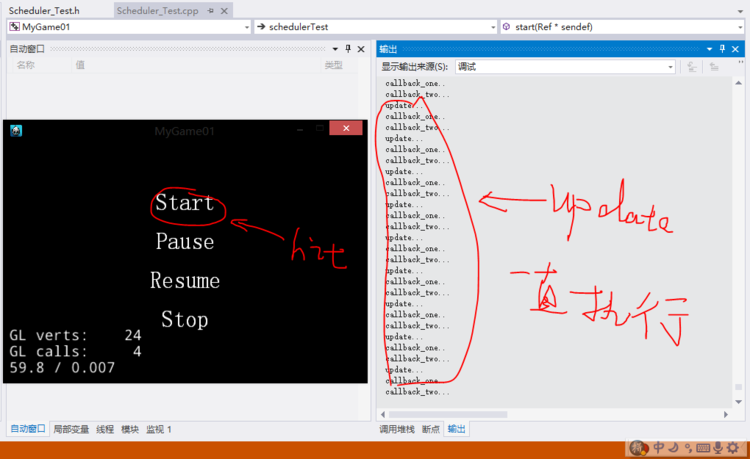
void schedulerTest::start(Ref* sendef)

{

	scheduleUpdate();

	schedule(schedule_selector(schedulerTest::callBack_1));

	schedule(schedule_selector(schedulerTest::callBack_2));

}

void schedulerTest::pause(cocos2d::Ref* sendef)

{

	//要暂停定时器首先要先得到要暂停的对象

	auto schedulerflag = Director::getInstance()->getScheduler();

	//然后让得到的对象暂停,下面这条语句表示暂停当前索取对象所在的那个层

	schedulerflag->pauseTarget(this);

}

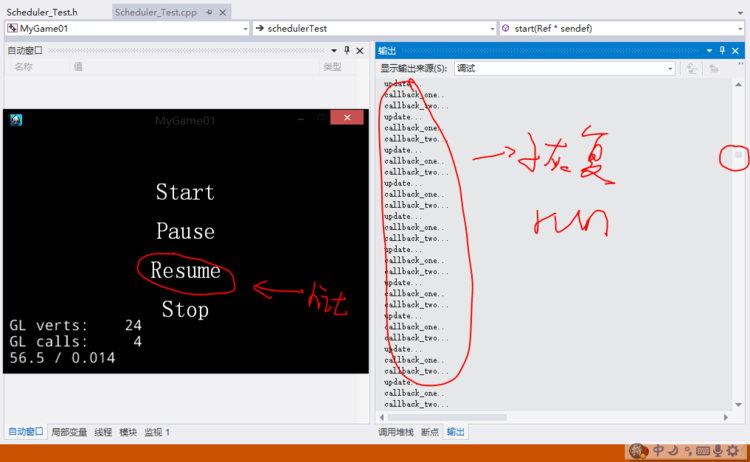
void schedulerTest::resume(cocos2d::Ref* sendef)

{

	//同样要恢复定时器,则要首先指定要恢复哪个对象的定时器,所以我们要先取得,恢复定时器的那个对象

	auto schedulerflag = Director::getInstance()->getScheduler();

	schedulerflag->resumeTarget(this);

}

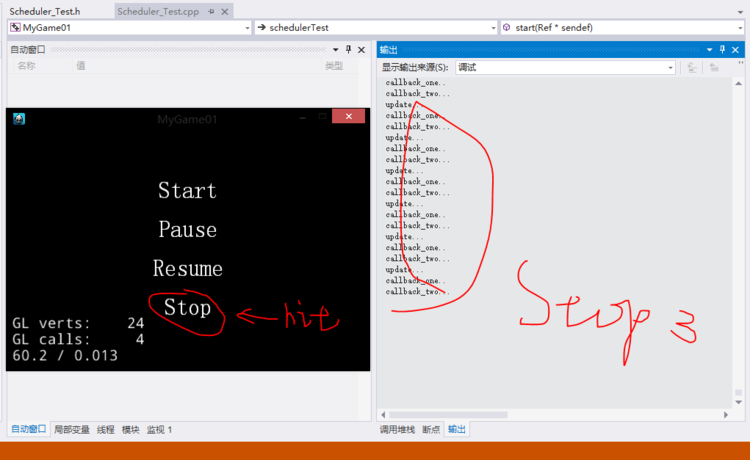
void schedulerTest::stop(cocos2d::Ref* sendef)

{

	auto schedulerflag = Director::getInstance()->getScheduler();

	schedulerflag->unscheduleAll();

}

Cocos2d-x之定时器的更多相关文章
- cocos2d JS 利用定时器实现-倒计时功能
//创建一个定时器 cc.director.getScheduler().schedule(this, this.updates, 1, cc.REPEAT_FOREVER, 0, false, &q ...
- 6.cocos2d设置定时器
T1LayerAnchorPoint.h #pragma once #include "cocos2d.h" USING_NS_CC; class T1LayerAnchorPoi ...
- cocos2d 定时器
//获取当前系统的语言 LanguageType language=CCApplication::sharedApplication()->getCurrentLanguage(); //每一帧 ...
- Cocos2d-x 3.2 学习笔记(十六)保卫萝卜 游戏主循环与定时器
保卫萝卜~想法一直存在于想法,实战才是硬道理!有想法就去实现,眼高手低都是空谈. 一.游戏主循环GameSchedule 主循环是游戏处理逻辑,控制游戏进度的地方,处理好主循环是很重要的 ...
- cocos2dx 3.x(定时器或延时动作自动调用button的点击响应事件)实现自动内测
// // ATTGamePoker.hpp // MalaGame // // Created by work on 2016/11/09. // // #ifndef ATTGamePoker_h ...
- cocos2dx 3.x(一张背景图利用定时器实现循环轮播)
// // MainScene.hpp // helloworld // // Created by apple on 16/9/19. // // #ifndef MainScene_hpp #de ...
- 【转】 实现 Cocos2d-x 全局定时器
转自:http://www.tairan.com/archives/3998 cocos2d-x 中有自己的定时器实现,一般用法是在场景,层等内部实现,定时器的生命周期随着它们的消亡而消亡,就运行周期 ...
- cocos2d 高仿doodle jump 无源代码
1. 游戏视频 主角眼熟吗?没错,上次跑酷游戏中的"30"来Jump了,有三种道具.主角光环,竹蜻蜓.翅膀: 有两种怪物,螃蟹和鸟: 有5种板子.点击屏幕,30会把它的嘴巴3给发射 ...
- cocos2d 游戏开发实战
文章转自:http://uliweb.clkg.org/tutorial/read/40 6 cocos2d 游戏开发实战 6.1 创建cocos2d项目 6.2 cocos2d v3 & ...
- Cocos2d-x 源代码分析 : Scheduler(定时器) 源代码分析
源代码版本号 3.1r,转载请注明 我也最终不out了,開始看3.x的源代码了.此时此刻的心情仅仅能是wtf! !!!!!!! !.只是也最终告别CC时代了. cocos2d-x 源代码分析文件夹 h ...
随机推荐
- 对于nginx配置文件中的fastcgi_param相关参数的理解
今天在ubuntu中搭建LNMP的时候,遇到了一个问题 在浏览器中访问.php文件的时候,nginx不能正常解析,页面只是空白,后来百度了一下,发现了问题 在nginx的配置文件nginx.conf中 ...
- luoguP2123 皇后游戏(贪心)
luoguP2123 皇后游戏(贪心) 题目 洛谷题目chuanso 题解 有一篇好题解,我就懒得推式子了,毕竟打到电脑上还是很难的 牛逼题解传送门 code #include<iostream ...
- Python_pickle
pickle是一个可以将任意一个对象存储在硬盘文件中的工具. 更新:Python3中用法变了: https://www.cnblogs.com/fmgao-technology/p/9078918. ...
- JVM(13)之 阶段回顾
开发十年,就只剩下这套架构体系了! >>> 各位小伙伴,到上一篇博文为止,我们的内存模型相关知识就已经讲完了!讲!完!了!不知道大家吸收了多少,这里我们简单的来回顾一下吧! ...
- WEEX-EROS开发小笔记
本文是作者之前刚接触移动端跨平台开发,使用weex-eros开发项目平日里记下来的一些笔记,分享出来方便为新手解惑,weex-eros是weex的一套解决方法,使用vue语法糖,对于前端开发者来说可以 ...
- quotacheck - 扫描文件系统,创建,检测并修补配额文件
总览(SYNOPSIS) quotacheck [ -agucfinvdFR ] filesystem 描述(DESCRIPTION) quotacheck 察看每一个文件系统,建立当前磁盘使用情况表 ...
- go语言从例子开始之Example33.工作池
在这个例子中,我们将看到如何使用 Go 协程和通道实现一个工作池 . Example: package main import "fmt" import "time&qu ...
- linux ---apache的安装和配置
linux环境下的安装:yum安装和tar包安装 yum安装: 首先安装php环境 yum install php55w yum install php55w-mysql yum install ph ...
- 【LeetCode】几何学 geometry(共2题)
[587]Erect the Fence [892]Surface Area of 3D Shapes
- vue之click事件绑定
1.@click不光可以绑定方法,也可以就地修改data里的数据 代码示例代码如下: 2.@click绑定多个操作的时候用:隔开 代码示例代码如下: <el-table><el-ta ...