
【Winform-自定义控件】 DataGridView多维表头
[datagridview与treeview绑定]
treeview
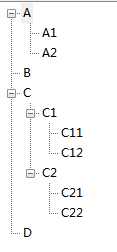

代码:
            DataTable dtable = new DataTable("Rock");

            //添加8列

            dtable.Columns.Add("", typeof(System.String));

            dtable.Columns.Add("", typeof(System.String));

            dtable.Columns.Add("", typeof(System.String));

            dtable.Columns.Add("", typeof(System.String));

            dtable.Columns.Add("", typeof(System.String));

            dtable.Columns.Add("", typeof(System.String));

            dtable.Columns.Add("", typeof(System.String));

            dtable.Columns.Add("", typeof(System.String));

            //添加一行数据

            DataRow drow = dtable.NewRow();

            drow[""] = "";

            drow[""] = "";

            drow[""] = "";

            drow[""] = "";

            drow[""] = "";

            drow[""] = "";

            drow[""] = "";

            drow[""] = "";

            dtable.Rows.Add(drow);

            //绑定数据

            multiColHeaderDgv2.DataSource = dtable;
datagridview多维表头实现效果:

自定义控件全部代码:
using System;

using System.Collections.Generic;

using System.Text;

using System.Windows.Forms;

using System.Drawing;

using System.ComponentModel;

namespace myMultiColHeaderDgv

{

    public  class MultiColHeaderDgv:DataGridView

    {

        #region 字段定義

        /// <summary>多維列標題的樹結構

        ///

        /// </summary>

        private TreeView _ColHeaderTreeView;

        /// <summary>樹的最大層數

        ///

        /// </summary>

        private int iNodeLevels;

        /// <summary>一維列標題的高度

        ///

        /// </summary>

        private int iCellHeight;

        /// <summary>所有葉節點

        ///

        /// </summary>

        private IList<TreeNode> ColLists = new List<TreeNode>();

         #endregion

        #region 屬性定義

        /// <summary>多維列標題的樹結構

        ///

        /// </summary>

        [

          Description("多維列標題的樹結構")

        ]

        public TreeView myColHeaderTreeView

        {

            get { return _ColHeaderTreeView; }

            set { _ColHeaderTreeView = value; }

        }

        #endregion

        #region 方法函數

        /// <summary>遞歸計算樹最大層數,並保存所有葉節點

        ///

        /// </summary>

        /// <param name="tnc"></param>

        /// <returns></returns>

        private int myGetNodeLevels(TreeNodeCollection tnc)

        {

            if (tnc == null) return ;

            foreach (TreeNode tn in tnc)

            {

                if ((tn.Level + ) > iNodeLevels)//tn.Level是從0開始的

                {

                    iNodeLevels = tn.Level+;

                }

                if (tn.Nodes.Count > )

                {

                    myGetNodeLevels(tn.Nodes);

                }

                else

                {

                    ColLists.Add(tn);//葉節點

                }

            }

            return iNodeLevels;

        }

        /// <summary>調用遞歸求最大層數、列頭總高

        ///

        /// </summary>

        public void myNodeLevels()

        {

            iNodeLevels = ;//初始為1

            ColLists.Clear();

            int iNodeDeep = myGetNodeLevels(_ColHeaderTreeView.Nodes);

            iCellHeight = this.ColumnHeadersHeight;

            this.ColumnHeadersHeight = this.ColumnHeadersHeight * iNodeDeep;//列頭總高=一維列高*層數

        }

        /// <summary>获得合并标题字段的宽度

        ///

        /// </summary>

        /// <param name="node">字段节点</param>

        /// <returns>字段宽度</returns>

        private int GetUnitHeaderWidth(TreeNode node)

        {

            int uhWidth = ;

            //获得最底层字段的宽度

            if (node.Nodes == null)

                return this.Columns[GetColumnListNodeIndex(node)].Width;

            if (node.Nodes.Count == )

                return this.Columns[GetColumnListNodeIndex(node)].Width;

            //获得非最底层字段的宽度

            for (int i = ; i <= node.Nodes.Count - ; i++)

            {

                uhWidth = uhWidth + GetUnitHeaderWidth(node.Nodes[i]);

            }

            return uhWidth;

        }

        /// <summary>获得底层字段索引

        ///

        /// </summary>

        ///' <param name="node">底层字段节点</param>

        /// <returns>索引</returns>

        /// <remarks></remarks>

        private int GetColumnListNodeIndex(TreeNode node)

        {

            for (int i = ; i <= ColLists.Count - ; i++)

            {

                if (ColLists[i].Equals(node))

                    return i;

            }

            return -;

        }

        ///<summary>绘制合并表头

        ///

        ///</summary>

        ///<param name="node">合并表头节点</param>

        ///<param name="e">绘图参数集</param>

        ///<param name="level">结点深度</param>

        ///<remarks></remarks>

        public void PaintUnitHeader(

                        TreeNode node,

                        System.Windows.Forms.DataGridViewCellPaintingEventArgs e,

                        int level)

        {

            //根节点时退出递归调用

            if (level == )

                return;

            RectangleF uhRectangle;

            int uhWidth;

            SolidBrush gridBrush = new SolidBrush(this.GridColor);

            SolidBrush backColorBrush = new SolidBrush(e.CellStyle.BackColor);

            Pen gridLinePen = new Pen(gridBrush);

            StringFormat textFormat = new StringFormat();

            textFormat.Alignment = StringAlignment.Center;

            uhWidth = GetUnitHeaderWidth(node);

            //与原贴算法有所区别在这。

            if (node.Nodes.Count == )

            {

                uhRectangle = new Rectangle(e.CellBounds.Left,

                            e.CellBounds.Top + node.Level * iCellHeight,

                            uhWidth - ,

                            iCellHeight * (iNodeLevels  - node.Level) - );

            }

            else

            {

                uhRectangle = new Rectangle(

                            e.CellBounds.Left,

                            e.CellBounds.Top + node.Level * iCellHeight,

                            uhWidth - ,

                            iCellHeight - );

            }

            //画矩形

            e.Graphics.FillRectangle(backColorBrush, uhRectangle);

            //划底线

            e.Graphics.DrawLine(gridLinePen

                                , uhRectangle.Left

                                , uhRectangle.Bottom

                                , uhRectangle.Right

                                , uhRectangle.Bottom);

            //划右端线

            e.Graphics.DrawLine(gridLinePen

                                , uhRectangle.Right

                                , uhRectangle.Top

                                , uhRectangle.Right

                                , uhRectangle.Bottom);

            e.Graphics.DrawString(node.Text, this.ColumnHeadersDefaultCellStyle.Font

                                    , Brushes.Black

                                    , uhRectangle.Left + uhRectangle.Width /  -

                                    e.Graphics.MeasureString(node.Text, this.ColumnHeadersDefaultCellStyle.Font).Width /  -

                                    , uhRectangle.Top +

                                    uhRectangle.Height /  - e.Graphics.MeasureString(node.Text, this.ColumnHeadersDefaultCellStyle.Font).Height / );

            //递归调用()

            if (node.PrevNode == null)

                if (node.Parent != null)

                    PaintUnitHeader(node.Parent, e, level - );

        }

        #endregion

        //重寫表頭

        protected override void OnCellPainting(DataGridViewCellPaintingEventArgs e)

        {

            try

            {

                //行标题不重写

                if (e.ColumnIndex < )

                {

                    base.OnCellPainting(e);

                    return;

                }

                if (iNodeLevels == )

                {

                    base.OnCellPainting(e);

                    return;

                }

                //绘制表头

                if (e.RowIndex == -)

                {

                    if (_ColHeaderTreeView != null)

                    {

                        if (iNodeLevels == )

                        {

                            myNodeLevels();

                        }

                        PaintUnitHeader((TreeNode)this.ColLists[e.ColumnIndex], e, iNodeLevels);

                        e.Handled = true;

                    }

                    else

                    {

                        base.OnCellPainting(e);

                    }

                }

            }

            catch (Exception ex)

            {

                MessageBox.Show(this, ex.Message, "Error");

            }

        }

    }

}
using System;using System.Collections.Generic;using System.Text;using System.Windows.Forms;using System.Drawing;using System.ComponentModel;
namespace myMultiColHeaderDgv{ public class MultiColHeaderDgv:DataGridView {
#region 字段定義
/// <summary>多維列標題的樹結構 /// /// </summary> private TreeView _ColHeaderTreeView; /// <summary>樹的最大層數 /// /// </summary> private int iNodeLevels;
/// <summary>一維列標題的高度 /// /// </summary> private int iCellHeight;
/// <summary>所有葉節點 /// /// </summary> private IList<TreeNode> ColLists = new List<TreeNode>();
#endregion
#region 屬性定義
/// <summary>多維列標題的樹結構 /// /// </summary> [ Description("多維列標題的樹結構") ] public TreeView myColHeaderTreeView { get { return _ColHeaderTreeView; } set { _ColHeaderTreeView = value; } }
#endregion
#region 方法函數
/// <summary>遞歸計算樹最大層數,並保存所有葉節點 /// /// </summary> /// <param name="tnc"></param> /// <returns></returns> private int myGetNodeLevels(TreeNodeCollection tnc) { if (tnc == null) return 0;
foreach (TreeNode tn in tnc) { if ((tn.Level + 1) > iNodeLevels)//tn.Level是從0開始的 { iNodeLevels = tn.Level+1; }
if (tn.Nodes.Count > 0) { myGetNodeLevels(tn.Nodes); } else { ColLists.Add(tn);//葉節點 } }
return iNodeLevels; }
/// <summary>調用遞歸求最大層數、列頭總高 /// /// </summary> public void myNodeLevels() {
iNodeLevels = 1;//初始為1
ColLists.Clear();
int iNodeDeep = myGetNodeLevels(_ColHeaderTreeView.Nodes);
iCellHeight = this.ColumnHeadersHeight;
this.ColumnHeadersHeight = this.ColumnHeadersHeight * iNodeDeep;//列頭總高=一維列高*層數
}
/// <summary>获得合并标题字段的宽度 /// /// </summary> /// <param name="node">字段节点</param> /// <returns>字段宽度</returns> private int GetUnitHeaderWidth(TreeNode node) { int uhWidth = 0; //获得最底层字段的宽度 if (node.Nodes == null) return this.Columns[GetColumnListNodeIndex(node)].Width;
if (node.Nodes.Count == 0) return this.Columns[GetColumnListNodeIndex(node)].Width; //获得非最底层字段的宽度 for (int i = 0; i <= node.Nodes.Count - 1; i++) { uhWidth = uhWidth + GetUnitHeaderWidth(node.Nodes[i]); } return uhWidth; }
/// <summary>获得底层字段索引 /// /// </summary> ///' <param name="node">底层字段节点</param> /// <returns>索引</returns> /// <remarks></remarks> private int GetColumnListNodeIndex(TreeNode node) { for (int i = 0; i <= ColLists.Count - 1; i++) { if (ColLists[i].Equals(node)) return i; } return -1; }
///<summary>绘制合并表头 /// ///</summary> ///<param name="node">合并表头节点</param> ///<param name="e">绘图参数集</param> ///<param name="level">结点深度</param> ///<remarks></remarks> public void PaintUnitHeader( TreeNode node, System.Windows.Forms.DataGridViewCellPaintingEventArgs e, int level) { //根节点时退出递归调用 if (level == 0) return;
RectangleF uhRectangle; int uhWidth; SolidBrush gridBrush = new SolidBrush(this.GridColor); SolidBrush backColorBrush = new SolidBrush(e.CellStyle.BackColor); Pen gridLinePen = new Pen(gridBrush); StringFormat textFormat = new StringFormat();
textFormat.Alignment = StringAlignment.Center;
uhWidth = GetUnitHeaderWidth(node);
//与原贴算法有所区别在这。 if (node.Nodes.Count == 0) { uhRectangle = new Rectangle(e.CellBounds.Left, e.CellBounds.Top + node.Level * iCellHeight, uhWidth - 1, iCellHeight * (iNodeLevels - node.Level) - 1); } else { uhRectangle = new Rectangle( e.CellBounds.Left, e.CellBounds.Top + node.Level * iCellHeight, uhWidth - 1, iCellHeight - 1); }
//画矩形 e.Graphics.FillRectangle(backColorBrush, uhRectangle);
//划底线 e.Graphics.DrawLine(gridLinePen , uhRectangle.Left , uhRectangle.Bottom , uhRectangle.Right , uhRectangle.Bottom); //划右端线 e.Graphics.DrawLine(gridLinePen , uhRectangle.Right , uhRectangle.Top , uhRectangle.Right , uhRectangle.Bottom);
e.Graphics.DrawString(node.Text, this.ColumnHeadersDefaultCellStyle.Font , Brushes.Black , uhRectangle.Left + uhRectangle.Width / 2 - e.Graphics.MeasureString(node.Text, this.ColumnHeadersDefaultCellStyle.Font).Width / 2 - 1 , uhRectangle.Top + uhRectangle.Height / 2 - e.Graphics.MeasureString(node.Text, this.ColumnHeadersDefaultCellStyle.Font).Height / 2);
//递归调用() if (node.PrevNode == null) if (node.Parent != null) PaintUnitHeader(node.Parent, e, level - 1); }
#endregion
//重寫表頭 protected override void OnCellPainting(DataGridViewCellPaintingEventArgs e) { try { //行标题不重写 if (e.ColumnIndex < 0) { base.OnCellPainting(e); return; }
if (iNodeLevels == 1) { base.OnCellPainting(e); return; }
//绘制表头 if (e.RowIndex == -1) { if (_ColHeaderTreeView != null) { if (iNodeLevels == 0) { myNodeLevels(); }
PaintUnitHeader((TreeNode)this.ColLists[e.ColumnIndex], e, iNodeLevels);
e.Handled = true; } else { base.OnCellPainting(e); } } } catch (Exception ex) { MessageBox.Show(this, ex.Message, "Error"); } } }}
【Winform-自定义控件】 DataGridView多维表头的更多相关文章
- (转)DataGridView多维表头及其扩展功能
dataGridView1.RowHeadersVisible = false;把整行选中那一列去掉.如果需要整行选中,新增一按钮列模拟实现.上源码:多维DataGridView 有个简易的方法: 1 ...
- C#中Winform程序中如何实现多维表头【不通过第三方报表程序】
问题:C#中Winform程序中如何实现多维表头. 在网上搜了很多方法,大多数方法对于我这种新手,看的都不是很懂.最后在新浪博客看到了一篇比较易懂的文章:[DataGridView二维表头与合并单元格 ...
- 【Winform-自定义控件】DataGridView 单元格合并和二维表头
DataGridView单元格合并和二维表头应用: //DataGridView绑定数据 DataTable dt = new DataTable(); dt.Columns.Add("); ...
- Datagridview 实现二维表头和行合并【转载】
using System; using System.Collections.Generic; using System.ComponentModel; using System.Drawing; u ...
- 如何通过DataGridView 实现单元格合并和二维表头
先看下实现出来的效果(这里随便写了几组数据,用来测试) 先初始一个DataGridView 设置哪几列 DataGridView 里男女这两列的 AutoSizeMode 可以设置Fill. publ ...
- (八十九)c#Winform自定义控件-自定义滚动条(treeview、panel、datagridview、listbox、listview、textbox)
官网 http://www.hzhcontrols.com/ 前提 入行已经7,8年了,一直想做一套漂亮点的自定义控件,于是就有了本系列文章. GitHub:https://github.com/kw ...
- C#winform自定义控件大全
对C# WinForm开发系列收集的控件使用方面进行整理, 加入了一些文章, 不断补充充实, 完善这方面. 基础 - 常用控件 C# WinForm开发系列 - CheckBox/Button/Lab ...
- 关于Winform下DataGridView中实现checkbox全选反选、同步列表项的处理
近期接手一个winform 项目,虽然之前有.net 的经验,但是对一些控件的用法还不是很熟悉. 这段时间将会记录一些在工作中遇到的坎坷以及对应的解决办法,写出来与大家分享并希望大神提出更好解决方法来 ...
- (三十二)c#Winform自定义控件-表格
前提 入行已经7,8年了,一直想做一套漂亮点的自定义控件,于是就有了本系列文章. 开源地址:https://gitee.com/kwwwvagaa/net_winform_custom_control ...
随机推荐
- SQLYOG如何将数据导出excel格式
方法/步骤 如图,笔者的数据库中有一张student表,想把这张表中的数据导出成excel 在这张表上右击,选择“Export”,再选择“Export Table Data as CSV, ...
- Spring注解Component原理源码解析
在实际开发中,我们经常使用Spring的@Component.@Service.@Repository以及 @Controller等注解来实现bean托管给Spring容器管理.Spring是怎么样实 ...
- Tornado WebSocket简单聊天
Tornado实现了对socket的封装:tornado.web.RequestHandler 工程目录: 1.主程序 manage.py import tornado.web import torn ...
- php栈的定义和出栈、入栈的实现
栈是线性表的一种,他的特点是后入先出,可以这么理解,栈就像一个存东西的盒子,先放进去的在最底层,后放进去的在上层,因为上层的东西把底层的东西压住了,下层的想要出去就必须把上层的先拿开才行. 定义:栈是 ...
- import xxx和from xxx import xx中修改被导入模块里面的变量的坑
现在有如下几个模块: A.py 功能:定义全局变量,供其他模块使用 name = "张三" lists = [1, 2, 3, 4, 5] B.py 功能:打印A.py中的变量 f ...
- Mysql 三大特性详解
Mysql 三大特性详解 Mysql Innodb后台线程 工作方式 首先Mysql进程模型是单进程多线程的.所以我们通过ps查找mysqld进程是只有一个. 体系架构 InnoDB存储引擎的架构如下 ...
- @Autowired注解与@Qualifier注解搭配使用----解决多实现选择注入问题
问题:当一个接口实现由两个实现类时,只使用@Autowired注解,会报错,如下图所示 实现类1 实现类2 controller中注入 然后启动服务报错,如下所示: Exception encount ...
- tomcat日志报Invalid message received with signature的解决办法
这位大神说的是正解,大家可以参考一下这个链接:https://blog.csdn.net/bugdongwenlong/article/details/84261424
- docker_nginx_php_mysql
https://blog.csdn.net/miwumuge/article/details/83386679 问题 1.容器内访问宿主机地址, host.docker.internal
- 数据库HAVING的使用
HAVING语句通常与GROUP BY语句联合使用,用来过滤由GROUP BY语句返回的记录集. HAVING语句的存在弥补了WHERE关键字不能与聚合函数联合使用的不足. 记录一下