
Spring5源码解析4-refresh方法之invokeBeanFactoryPostProcessors
invokeBeanFactoryPostProcessors(beanFactory);方法源码如下:
protected void invokeBeanFactoryPostProcessors(ConfigurableListableBeanFactory beanFactory) {

	// getBeanFactoryPostProcessors 获取的是 this.beanFactoryPostProcessors;

	//this.beanFactoryPostProcessors 只能通过 AbstractApplicationContext.addBeanFactoryPostProcessor 方法添加

	PostProcessorRegistrationDelegate.invokeBeanFactoryPostProcessors(beanFactory, getBeanFactoryPostProcessors());

	// Detect a LoadTimeWeaver and prepare for weaving, if found in the meantime

	// (e.g. through an @Bean method registered by ConfigurationClassPostProcessor)

	if (beanFactory.getTempClassLoader() == null && beanFactory.containsBean(LOAD_TIME_WEAVER_BEAN_NAME)) {

		beanFactory.addBeanPostProcessor(new LoadTimeWeaverAwareProcessor(beanFactory));

		beanFactory.setTempClassLoader(new ContextTypeMatchClassLoader(beanFactory.getBeanClassLoader()));

	}

}
getBeanFactoryPostProcessors()方法获取的是AbstractApplicationContext#beanFactoryPostProcessors这个成员变量。
这个成员变量只能通过代码中手动编码调用AbstractApplicationContext#addBeanFactoryPostProcessor方法来添加新的元素。很明显,我们这里为空。
invokeBeanFactoryPostProcessors(beanFactory)方法的主要的逻辑在PostProcessorRegistrationDelegate.invokeBeanFactoryPostProcessors方法中:
//PostProcessorRegistrationDelegate.invokeBeanFactoryPostProcessors(beanFactory, getBeanFactoryPostProcessors())源码

public static void invokeBeanFactoryPostProcessors(

		ConfigurableListableBeanFactory beanFactory, List<BeanFactoryPostProcessor> beanFactoryPostProcessors) {

	// Invoke BeanDefinitionRegistryPostProcessors first, if any.

	Set<String> processedBeans = new HashSet<>();

	if (beanFactory instanceof BeanDefinitionRegistry) {

		BeanDefinitionRegistry registry = (BeanDefinitionRegistry) beanFactory;

		List<BeanFactoryPostProcessor> regularPostProcessors = new ArrayList<>();

		List<BeanDefinitionRegistryPostProcessor> registryProcessors = new ArrayList<>();

		//beanFactoryPostProcessors是传进来里的对象,把传入的对象分类放入 BeanFactoryPostProcessor 和  BeanDefinitionRegistryPostProcessor

		//BeanDefinitionRegistryPostProcessor extends BeanFactoryPostProcessor ,是一个特殊的 BeanFactoryPostProcessor

		for (BeanFactoryPostProcessor postProcessor : beanFactoryPostProcessors) {

			if (postProcessor instanceof BeanDefinitionRegistryPostProcessor) {

				BeanDefinitionRegistryPostProcessor registryProcessor =

						(BeanDefinitionRegistryPostProcessor) postProcessor;

				//如果传入的beanFactoryPostProcessors是它的子类,即:BeanDefinitionRegistryPostProcessor

				//则执行传入的BeanDefinitionRegistryPostProcessor的postProcessBeanDefinitionRegistry方法

				registryProcessor.postProcessBeanDefinitionRegistry(registry);

				registryProcessors.add(registryProcessor);

			} else {

				regularPostProcessors.add(postProcessor);

			}

		}

		// Do noitialize FactoryBeans here: We need to leave all regular beans

		// uninitialized to let the bean factory post-processors apply to them!

		// Separate between BeanDefinitionRegistryPostProcessors that implement

		// PriorityOrdered, Ordered, and the rest.

		List<BeanDefinitionRegistryPostProcessor> currentRegistryProcessors = new ArrayList<>();

		// First, invoke the BeanDefinitionRegistryPostProcessors that implement PriorityOrdered.

		//这里只能拿到spring内部的BeanDefinitionRegistryPostProcessor,

		//因为到这里spring还没有去扫描Bean,获取不到我们通过@Component标识的自定义BeanDefinitionRegistryPostProcessor

		//一般默认情况下,这里只有一个,BeanName:org.springframework.context.annotation.internalConfigurationAnnotationProcessor

		//对应的BeanClass:ConfigurationClassPostProcessor

		String[] postProcessorNames =

				beanFactory.getBeanNamesForType(BeanDefinitionRegistryPostProcessor.class, true, false);

		for (String ppName : postProcessorNames) {

			if (beanFactory.isTypeMatch(ppName, PriorityOrdered.class)) {

				//beanFactory.getBean, 这里开始创建BeanDefinitionRegistryPostProcessor bean 了

				currentRegistryProcessors.add(beanFactory.getBean(ppName, BeanDefinitionRegistryPostProcessor.class));

				processedBeans.add(ppName);

			}

		}

		//排序

		sortPostProcessors(currentRegistryProcessors, beanFactory);

		// registryProcessors 中放的是 BeanDefinitionRegistryPostProcessor

		// 因为这里只执行eanDefinitionRegistryPostProcessor中独有的方法,而不会执行其父类即BeanFactoryProcessor的方法

		// 所以这里需要把处理器放入一个集合中,后续统一执行父类的方法

		registryProcessors.addAll(currentRegistryProcessors);

		// 执行BeanDefinitionRegistryPostProcessor,currentRegistryProcessors中放的是spring内部的BeanDefinitionRegistryPostProcessor

		// 默认情况下,只有 org.springframework.context.annotation.ConfigurationClassPostProcessor

		// ConfigurationClassPostProcessor 里面就是在执行扫描Bean,并且注册BeanDefinition

		invokeBeanDefinitionRegistryPostProcessors(currentRegistryProcessors, registry);

		// 清空这个临时变量,方便后面再使用

		currentRegistryProcessors.clear();

		// Next, invoke the BeanDefinitionRegistryPostProcessors that implement Ordered.

		// 这里已经可以获取到我们通过注册到Spring容器的 BeanDefinitionRegistryPostProcessor 了

		postProcessorNames = beanFactory.getBeanNamesForType(BeanDefinitionRegistryPostProcessor.class, true, false);

		for (String ppName : postProcessorNames) {

			// 之前优先处理的是实现PriorityOrdered接口的,而PriorityOrdered接口也实现了Ordered接口

			// 所有这里需要把之前已经处理过的给过滤掉

			if (!processedBeans.contains(ppName) && beanFactory.isTypeMatch(ppName, Ordered.class)) {

				//之前这个临时变量已经被清空了,现在又开始放东西了

				currentRegistryProcessors.add(beanFactory.getBean(ppName, BeanDefinitionRegistryPostProcessor.class));

				processedBeans.add(ppName);

			}

		}

		//排序

		sortPostProcessors(currentRegistryProcessors, beanFactory);

		registryProcessors.addAll(currentRegistryProcessors);

		// 执行BeanDefinitionRegistryPostProcessor

		invokeBeanDefinitionRegistryPostProcessors(currentRegistryProcessors, registry);

		//清空临时变量

		currentRegistryProcessors.clear();

		// Finally, invoke all other BeanDefinitionRegistryPostProcessors until no further ones appear.

		boolean reiterate = true;

		while (reiterate) {

			reiterate = false;

			postProcessorNames = beanFactory.getBeanNamesForType(BeanDefinitionRegistryPostProcessor.class, true, false);

			for (String ppName : postProcessorNames) {

				//执行没有实现Ordered接口的BeanDefinitionRegistryPostProcessor

				if (!processedBeans.contains(ppName)) {

					currentRegistryProcessors.add(beanFactory.getBean(ppName, BeanDefinitionRegistryPostProcessor.class));

					processedBeans.add(ppName);

					reiterate = true;

				}

			}

			sortPostProcessors(currentRegistryProcessors, beanFactory);

			registryProcessors.addAll(currentRegistryProcessors);

			invokeBeanDefinitionRegistryPostProcessors(currentRegistryProcessors, registry);

			currentRegistryProcessors.clear();

		}

		// Now, invoke the postProcessBeanFactory callback of all processors handled so far.

		// List<BeanDefinitionRegistryPostProcessor> registryProcessors

		// 之前已经执行过BeanDefinitionRegistryPostProcessor独有方法,现在执行其父类方法

		invokeBeanFactoryPostProcessors(registryProcessors, beanFactory);

		// List<BeanFactoryPostProcessor> regularPostProcessors

		// 执行 BeanFactoryPostProcessor 方法

		invokeBeanFactoryPostProcessors(regularPostProcessors, beanFactory);

	} else {

		// Invoke factory processors registered with the context instance.

		invokeBeanFactoryPostProcessors(beanFactoryPostProcessors, beanFactory);

	}

	// Do not initialize FactoryBeans here: We need to leave all regular beans

	// uninitialized to let the bean factory post-processors apply to them!

	// 获取 BeanFactoryPostProcessor 的 beanName

	String[] postProcessorNames =

			beanFactory.getBeanNamesForType(BeanFactoryPostProcessor.class, true, false);

	// Separate between BeanFactoryPostProcessors that implement PriorityOrdered,

	// Ordered, and the rest.

	List<BeanFactoryPostProcessor> priorityOrderedPostProcessors = new ArrayList<>();

	List<String> orderedPostProcessorNames = new ArrayList<>();

	List<String> nonOrderedPostProcessorNames = new ArrayList<>();

	for (String ppName : postProcessorNames) {

		// 如果已经被执行过了,就不在执行

		// 因为一开始先获取的BeanDefinitionRegistryPostProcessor,而BeanDefinitionRegistryPostProcessor继承了BeanFactoryPostProcessor

		if (processedBeans.contains(ppName)) {

			// skip - already processed in first phase above

		} else if (beanFactory.isTypeMatch(ppName, PriorityOrdered.class)) {

			priorityOrderedPostProcessors.add(beanFactory.getBean(ppName, BeanFactoryPostProcessor.class));

		} else if (beanFactory.isTypeMatch(ppName, Ordered.class)) {

			orderedPostProcessorNames.add(ppName);

		} else {

			nonOrderedPostProcessorNames.add(ppName);

		}

	}

	// First, invoke the BeanFactoryPostProcessors that implement PriorityOrdered.

	// 根据不同的优先级,按序执行 BeanFactoryPostProcessor

	sortPostProcessors(priorityOrderedPostProcessors, beanFactory);

	invokeBeanFactoryPostProcessors(priorityOrderedPostProcessors, beanFactory);

	// Next, invoke the BeanFactoryPostProcessors that implement Ordered.

	List<BeanFactoryPostProcessor> orderedPostProcessors = new ArrayList<>();

	for (String postProcessorName : orderedPostProcessorNames) {

		orderedPostProcessors.add(beanFactory.getBean(postProcessorName, BeanFactoryPostProcessor.class));

	}

	sortPostProcessors(orderedPostProcessors, beanFactory);

	invokeBeanFactoryPostProcessors(orderedPostProcessors, beanFactory);

	// Finally, invoke all other BeanFactoryPostProcessors.

	List<BeanFactoryPostProcessor> nonOrderedPostProcessors = new ArrayList<>();

	for (String postProcessorName : nonOrderedPostProcessorNames) {

		nonOrderedPostProcessors.add(beanFactory.getBean(postProcessorName, BeanFactoryPostProcessor.class));

	}

	invokeBeanFactoryPostProcessors(nonOrderedPostProcessors, beanFactory);

	// Clear cached merged bean definitions since the post-processors might have

	// modified the original metadata, e.g. replacing placeholders in values...

	beanFactory.clearMetadataCache();

}
源码超级长,我们慢慢来看。
Spring容器使用的
BeanFactory是DefaultListableBeanFactory,它实现了BeanDefinitionRegistry接口,if条件成立。优先处理程序传进来的
beanFactoryPostProcessors,也就是我们手动调用AbstractApplicationContext#addBeanFactoryPostProcessor方法来添加的BeanFactoryPostProcessor。BeanFactoryPostProcessor是一个顶级接口,他还有一个子类BeanDefinitionRegistryPostProcessor。在该方法中声明了两个List来存放BeanFactoryPostProcessor和BeanDefinitionRegistryPostProcessor,以便控制这两个接口方法的执行。遍历传入的
List<BeanFactoryPostProcessor> beanFactoryPostProcessors,将其分类放到两个List中。如果传入的是BeanDefinitionRegistryPostProcessor类,则先执行BeanDefinitionRegistryPostProcessor类中独有的方法postProcessBeanDefinitionRegistry方法。当然,我们这里传入的List<BeanFactoryPostProcessor> beanFactoryPostProcessors为空。第一次执行
beanFactory.getBeanNamesForType(BeanDefinitionRegistryPostProcessor.class, true, false);方法,从容器中获取BeanDefinitionRegistryPostProcessor类型的Bean的name(这里只是获取名称,还没有实例化Bean)。注意,程序执行到这里,Spring还没有扫描包,还没有将项目中的Bean注册到容器中。默认情况下,这里返回的数据为如下图所示。回忆一下,这个BeanDefinition是在什么时候被加入到BeanFactory的呢?是在AnnotationConfigApplicationContext的无参构造器中创建reader时注册的BeanDefinition。其中BeanName为org.springframework.context.annotation.internalConfigurationAnnotationProcessor,对应的Class为org.springframework.context.annotation.ConfigurationClassPostProcessor。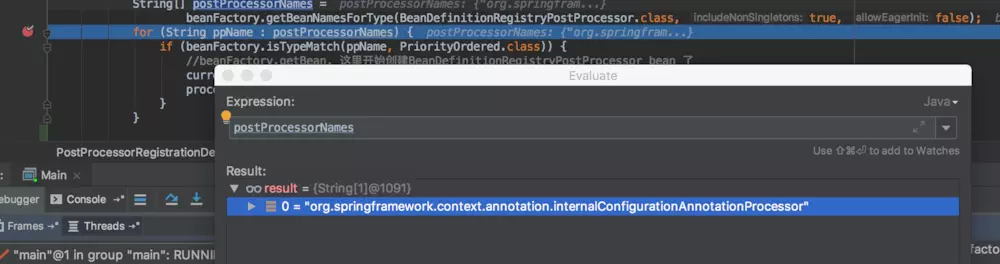
遍历这个获取的
postProcessorNames,如果实现了PriorityOrdered接口,就调用beanFactory.getBean(ppName, BeanDefinitionRegistryPostProcessor.class)方法,从容器中获取这个Bean,将其加入到临时变量List<BeanDefinitionRegistryPostProcessor> currentRegistryProcessors中。对
currentRegistryProcessors中的元素进行排序,然后执行BeanDefinitionRegistryPostProcessor中的特有方法postProcessBeanDefinitionRegistry。注意哦,这里没有执行其父类的方法,而是又将其放到List<BeanDefinitionRegistryPostProcessor> registryProcessors中,到后面再执行其父类方法。默认情况下,此时
currentRegistryProcessors中只有一个Bean即:org.springframework.context.annotation.ConfigurationClassPostProcessor(它实现了PriorityOrdered接口)。ConfigurationClassPostProcessor是一个非常重要的类,我们后面在讲。当程序执行完ConfigurationClassPostProcessor的BeanDefinitionRegistryPostProcessor方法后,我们程序中的Bean就被注册到了Spring容器中了,需要注意的是,这里还只是注册了BeanDefinition,还没有创建Bean对象。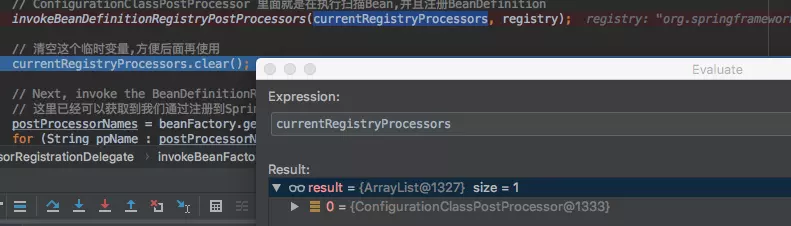
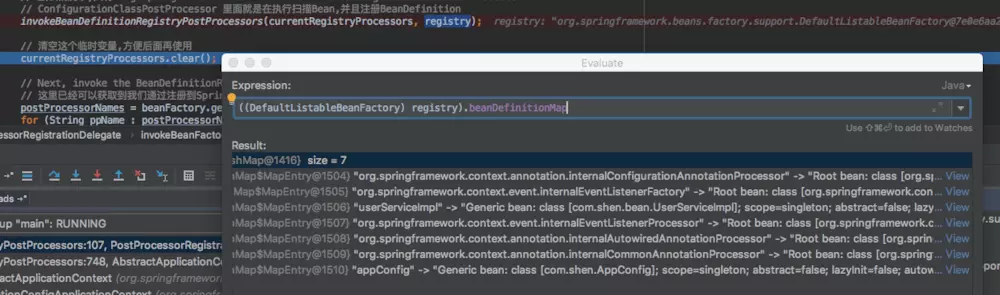
当第二次执行
postProcessorNames = beanFactory.getBeanNamesForType(BeanDefinitionRegistryPostProcessor.class, true, false);方法,此时因为之前已经完成了Bean的扫描,所以如果我们有自定义的BeanDefinitionRegistryPostProcessor就可以在这里被获取了。获取之前,判断其是否实现Ordered接口,并且之前没有被执行过,则调用getBean方法,从容器中获取该Bean,然后进行排序,执行postProcessBeanDefinitionRegistry方法。前面已经按顺序执行了实现
PriorityOrdered和Ordered接口的BeanDefinitionRegistryPostProcessor,最后,执行没有实现Ordered接口的BeanDefinitionRegistryPostProcessor的postProcessBeanDefinitionRegistry方法。执行完之后再BeanDefinitionRegistryPostProcessor的父类方法postProcessBeanFactory。获取容器中还没有被执行过的实现
BeanFactoryPostProcessor接口的Bean,然后按顺序执行的postProcessBeanFactory。默认情况下,这里会获取到:
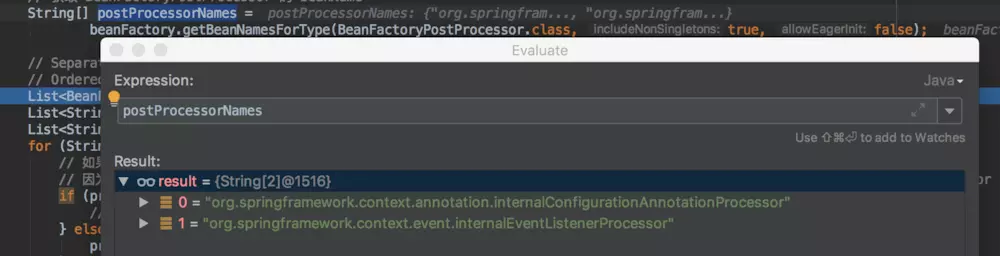
由于Bean org.springframework.context.annotation.internalConfigurationAnnotationProcessor(对应的Class为org.springframework.context.annotation.ConfigurationClassPostProcessor)在之前已经被执行了,这里只会执行Bean org.springframework.context.event.internalEventListenerProcessor(对应的Class为org.springframework.context.event.EventListenerMethodProcessor)的postProcessBeanFactory方法,源码如下:
//org.springframework.context.event.EventListenerMethodProcessor#postProcessBeanFactory 源码

@Override

public void postProcessBeanFactory(ConfigurableListableBeanFactory beanFactory) {

	this.beanFactory = beanFactory;

	Map<String, EventListenerFactory> beans = beanFactory.getBeansOfType(EventListenerFactory.class, false, false);

	List<EventListenerFactory> factories = new ArrayList<>(beans.values());

	AnnotationAwareOrderComparator.sort(factories);

	this.eventListenerFactories = factories;

}
未完待续......
源码学习笔记:https://github.com/shenjianeng/spring-code-study
欢迎关注公众号:

Spring5源码解析4-refresh方法之invokeBeanFactoryPostProcessors的更多相关文章
- Spring5源码解析-Spring框架中的单例和原型bean
Spring5源码解析-Spring框架中的单例和原型bean 最近一直有问我单例和原型bean的一些原理性问题,这里就开一篇来说说的 通过Spring中的依赖注入极大方便了我们的开发.在xml通过& ...
- Spring5源码解析-论Spring DispatcherServlet的生命周期
Spring Web框架架构的主要部分是DispatcherServlet.也就是本文中重点介绍的对象. 在本文的第一部分中,我们将看到基于Spring的DispatcherServlet的主要概念: ...
- Spring源码解析之八finishBeanFactoryInitialization方法即初始化单例bean
Spring源码解析之八finishBeanFactoryInitialization方法即初始化单例bean 七千字长文深刻解读,Spirng中是如何初始化单例bean的,和面试中最常问的Sprin ...
- 多线程爬坑之路-Thread和Runable源码解析之基本方法的运用实例
前面的文章:多线程爬坑之路-学习多线程需要来了解哪些东西?(concurrent并发包的数据结构和线程池,Locks锁,Atomic原子类) 多线程爬坑之路-Thread和Runable源码解析 前面 ...
- [Java多线程]-Thread和Runable源码解析之基本方法的运用实例
前面的文章:多线程爬坑之路-学习多线程需要来了解哪些东西?(concurrent并发包的数据结构和线程池,Locks锁,Atomic原子类) 多线程爬坑之路-Thread和Runable源码解析 前面 ...
- Spring5源码解析_IOC之容器的基本实现
前言: 在分析源码之前,我们简单回顾一下SPring核心功能的简单使用: 容器的基本用法 Bean是Spring最核心的东西,Spring就像是一个大水桶,而Bean就是水桶中的水,水桶脱离了水就没有 ...
- 一文带你解读Spring5源码解析 IOC之开启Bean的加载,以及FactoryBean和BeanFactory的区别。
前言 通过往期的文章我们已经了解了Spring对XML配置文件的解析,将分析的信息组装成BeanDefinition,并将其保存到相应的BeanDefinitionRegistry中,至此Spring ...
- Spring5源码解析2-register方法注册配置类
接上回已经讲完了this()方法,现在来看register(annotatedClasses);方法. // new AnnotationConfigApplicationContext(AppCon ...
- Spring5源码解析3-refresh方法初探
接上回分析完register(annotatedClasses);后,现在来看一下refresh();方法. // new AnnotationConfigApplicationContext(App ...
随机推荐
- sprintf函数 (字符格式化函数)
sprintf函数 字符串格式化命令,主要功能是把格式化的数据写入某个字符串中. sprintf函数原型在<studio.h>中. sprintf( [指向输入格式化后的字符串的缓冲区的指 ...
- Map 集合 和 String 字符串相互转换工具类
package com.skynet.rimp.common.utils.util; import java.util.Arrays; import java.util.HashMap; import ...
- 什么是EAC模型
在20世纪70年代末,一个心理学学生理查德•班德勒和一个语言学学生约翰•格林德提出了一个EAC模型,即眼睛解读线索.这个模型对不同的感官和思维方式之间进行一些有效的研究, 对于大部分的人来说,左边往往 ...
- Selenium(十七):unittest单元测试框架(三) 脚本分析、编写Web用例
1. 带unittest的脚本分析 也许你现在心里还有疑问,unittest框架与我们前面所编写的Web自动化测试之间有什么必然联系吗?当然有,既然unittest可以组织.运行测试用例,那么为什么不 ...
- java基础(4):引用数据类型、流程控制语句
1. 引用数据类型 1.1 Scanner类 我们要学的Scanner类是属于引用数据类型,我们先了解下引用数据类型. 引用数据类型的使用: 与定义基本数据类型变量不同,引用数据类型的变量定义及赋值有 ...
- ES6新语法(一)
1.常量 ES5没有定义声明常量的方式,ES6标准中引入了新的关键字const来定义常量. 常量必须给初始值: 常量不能在同一作用域内重新定义或赋值: <scr ...
- django中使用pandas Django-pandas
在django中使用pandas操作django的ORM查询出来的QuerySet对象,可以使用插件django-pandas. 截止教程书写时间,django-pandas已发布到0.6.1. 依赖 ...
- 怎样使用element-starter快速搭建ElementUI项目
场景 为了能快速搭建起一个ElementUI项目,我们可以使用element-starter这个模板进行快速搭建. element-starter的Github https://github.com/ ...
- golang-结构体与指针
1.结构体 结构体是一系列具有指定数据类型的数据类型 ,就是一个结构体中存储多个不同类型的数据字段 ,用于创建传递复杂数据结构 结构体可以理解为面向对象的模板 ,但是go并非面向对象 ,结构体只是一种 ...
- 使用vue在开发中的一些小问题--利用环境变量做一些常量的定义
1.集中式的环境配置: (1)使用vue-cli基本上不用去处理什么,只需要在config文件夹下的文件中配置写既可: module.exports = merge(prodEnv, { NODE_E ...