
深度增强学习--Deep Q Network
从这里开始换个游戏演示,cartpole游戏
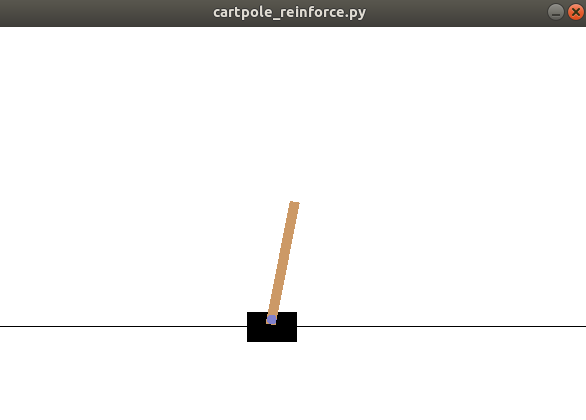

 import sys

 import gym

 import pylab

 import random

 import numpy as np

 from collections import deque

 from keras.layers import Dense

 from keras.optimizers import Adam

 from keras.models import Sequential

 EPISODES = 300

 # DQN Agent for the Cartpole

 # it uses Neural Network to approximate q function,使用神经网络近似q-learning的q函数

 # and experience replay memory & fixed target q network

 class DQNAgent:

     def __init__(self, state_size, action_size):

         # if you want to see Cartpole learning, then change to True

         self.render = True

         self.load_model = False

         # get size of state and action

         self.state_size = state_size

         self.action_size = action_size

         # These are hyper parameters for the DQN

         self.discount_factor = 0.99

         self.learning_rate = 0.001

         self.epsilon = 1.0

         self.epsilon_decay = 0.999

         self.epsilon_min = 0.01

         self.batch_size = 64

         self.train_start = 1000

         # create replay memory using deque

         self.memory = deque(maxlen=2000)

         # create main model and target model

         self.model = self.build_model()

         self.target_model = self.build_model()

         # initialize target model

         self.update_target_model()

         if self.load_model:

             self.model.load_weights("./save_model/cartpole_dqn.h5")

     # approximate Q function using Neural Network

     # state is input and Q Value of each action is output of network

     def build_model(self):

         model = Sequential()

         model.add(Dense(24, input_dim=self.state_size, activation='relu',

                         kernel_initializer='he_uniform'))

         model.add(Dense(24, activation='relu',

                         kernel_initializer='he_uniform'))

         model.add(Dense(self.action_size, activation='linear',

                         kernel_initializer='he_uniform'))

         model.summary()

         model.compile(loss='mse', optimizer=Adam(lr=self.learning_rate))

         return model

     # after some time interval update the target model to be same with model

     def update_target_model(self):

         self.target_model.set_weights(self.model.get_weights())

     # get action from model using epsilon-greedy policy

     def get_action(self, state):

         if np.random.rand() <= self.epsilon:

             return random.randrange(self.action_size)

         else:

             q_value = self.model.predict(state)#2,q(s,a),利用模型预测不同action的q值,选大的作为下一action

             return np.argmax(q_value[0])

     # save sample <s,a,r,s'> to the replay memory

     def append_sample(self, state, action, reward, next_state, done):

         self.memory.append((state, action, reward, next_state, done))

         if self.epsilon > self.epsilon_min:

             self.epsilon *= self.epsilon_decay

     # pick samples randomly from replay memory (with batch_size)

     def train_model(self):

         if len(self.memory) < self.train_start:

             return

         import pdb; pdb.set_trace()

         batch_size = min(self.batch_size, len(self.memory))

         mini_batch = random.sample(self.memory, batch_size)#64list

         #(array([[-0.04263461, -0.00657423,  0.00506589, -0.00200269]]), 0, 1.0, array([[-0.04276609, -0.20176846,  0.00502584,  0.29227427]]), False)

         update_input = np.zeros((batch_size, self.state_size))

         update_target = np.zeros((batch_size, self.state_size))

         action, reward, done = [], [], []

         for i in range(self.batch_size):

             update_input[i] = mini_batch[i][0]

             action.append(mini_batch[i][1])

             reward.append(mini_batch[i][2])

             update_target[i] = mini_batch[i][3]

             done.append(mini_batch[i][4])

         target = self.model.predict(update_input)#(64,2)

         target_val = self.target_model.predict(update_target)#(64, 2)

         for i in range(self.batch_size):

             # Q Learning: get maximum Q value at s' from target model

             if done[i]:

                 target[i][action[i]] = reward[i]

             else:

                 target[i][action[i]] = reward[i] + self.discount_factor * (

                     np.amax(target_val[i]))#off-policy 更新

         # and do the model fit!

         self.model.fit(update_input, target, batch_size=self.batch_size,

                        epochs=1, verbose=0)

 if __name__ == "__main__":

     # In case of CartPole-v1, maximum length of episode is 500

     env = gym.make('CartPole-v1')

     # get size of state and action from environment

     state_size = env.observation_space.shape[0]#

     action_size = env.action_space.n#

     agent = DQNAgent(state_size, action_size)

     scores, episodes = [], []

     for e in range(EPISODES):

         done = False

         score = 0

         state = env.reset()

         state = np.reshape(state, [1, state_size])

         while not done:

             if agent.render:

                 env.render()

             # get action for the current state and go one step in environment

             action = agent.get_action(state)

             next_state, reward, done, info = env.step(action)

             next_state = np.reshape(next_state, [1, state_size])

             # if an action make the episode end, then gives penalty of -100

             reward = reward if not done or score == 499 else -100

             # save the sample <s, a, r, s'> to the replay memory

             agent.append_sample(state, action, reward, next_state, done)

             # every time step do the training

             agent.train_model()

             score += reward

             state = next_state

             if done:

                 # every episode update the target model to be same with model

                 agent.update_target_model()

                 # every episode, plot the play time

                 score = score if score == 500 else score + 100

                 scores.append(score)

                 episodes.append(e)

                 pylab.plot(episodes, scores, 'b')

                 pylab.savefig("./save_graph/cartpole_dqn.png")

                 print("episode:", e, "  score:", score, "  memory length:",

                       len(agent.memory), "  epsilon:", agent.epsilon)

                 # if the mean of scores of last 10 episode is bigger than 490

                 # stop training

                 if np.mean(scores[-min(10, len(scores)):]) > 490:

                     sys.exit()

         # save the model

         if e % 50 == 0:

             agent.model.save_weights("./save_model/cartpole_dqn.h5")
深度增强学习--Deep Q Network的更多相关文章
- AlphaGo的前世今生(一)Deep Q Network and Game Search Tree:Road to AI Revolution
这一个专题将会是有关AlphaGo的前世今生以及其带来的AI革命,总共分成三节.本人水平有限,如有错误还望指正.如需转载,须征得本人同意. Road to AI Revolution(通往AI革命之路 ...
- 强化学习系列之:Deep Q Network (DQN)
文章目录 [隐藏] 1. 强化学习和深度学习结合 2. Deep Q Network (DQN) 算法 3. 后续发展 3.1 Double DQN 3.2 Prioritized Replay 3. ...
- Deep Q Network(DQN)原理解析
1. 前言 在前面的章节中我们介绍了时序差分算法(TD)和Q-Learning,当状态和动作空间是离散且维数不高时可使用Q-Table储存每个状态动作对的Q值,而当状态和动作空间是高维连续时,使用Q- ...
- 【转】【强化学习】Deep Q Network(DQN)算法详解
原文地址:https://blog.csdn.net/qq_30615903/article/details/80744083 DQN(Deep Q-Learning)是将深度学习deeplearni ...
- 深度增强学习--DDPG
DDPG DDPG介绍2 ddpg输出的不是行为的概率, 而是具体的行为, 用于连续动作 (continuous action) 的预测 公式推导 推导 代码实现的gym的pendulum游戏,这个游 ...
- 深度增强学习--A3C
A3C 它会创建多个并行的环境, 让多个拥有副结构的 agent 同时在这些并行环境上更新主结构中的参数. 并行中的 agent 们互不干扰, 而主结构的参数更新受到副结构提交更新的不连续性干扰, 所 ...
- 深度增强学习--Actor Critic
Actor Critic value-based和policy-based的结合 实例代码 import sys import gym import pylab import numpy as np ...
- 深度增强学习--Policy Gradient
前面都是value based的方法,现在看一种直接预测动作的方法 Policy Based Policy Gradient 一个介绍 karpathy的博客 一个推导 下面的例子实现的REINFOR ...
- 深度增强学习--DPPO
PPO DPPO介绍 PPO实现 代码DPPO
随机推荐
- python3 线程_threading模块
'''并发:同一个时间段内运行多个程序的能力 进程就是一个程序在一个数据集上的一次动态执行过程.进程一般由程序.数据集.进程控制块三部分组成 程序:食谱数据集:鸡蛋.牛奶.糖等进程控制块:记下食谱做到 ...
- Symfony2之创建一个简单的web应用 Symfony2——创建bundle
bundle就像插件或者一个功能齐全的应用,我们在应用层上开发的应用的所有代码,包括:PHP文件.配置文件.图片.css文件.js文件等都会包含在bunde系统中. 可以通过两种方法 ...
- PHPExcel 长数字串显示为科学计数 与 其他错误
一.解决 PHPExcel 长数字串显示为科学计数 在excel中如果在一个默认的格中输入或复制超长数字字符串,它会显示为科学计算法,例如身份证号码,解决方法是把表格设置文本格式或在输入前加一个单引号 ...
- 使用echarts展示线状图信息的时候数据部分数据因为x轴的数据显示不全而隐藏的问题
在使用echarts来展示数据时,因为数据很多的原因导致x轴显示不全,然后有些数据也隐藏在图表中,所以这个时候我们要在 series 中设置一个属性,让所有的数据都能够展示出来,这里我们需要添加的属性 ...
- Nessus home与Nexpose community 对比
转载请注明来源:http://www.cnblogs.com/phoenix--/p/3345569.html 更新:Nessus home版限制了,总量:16,Nexpose限制了总量为32,全部没 ...
- RAID磁盘恢复方法之一Winhex镜像硬盘与镜像中恢复数据图文
winhex镜像硬盘和ghost备份是完全不同的,ghost只能克隆或者镜像分区内正常的数据,删除的数据他是不会克隆的,所以在数据恢复应用中,ghost对我们来讲作用就不大了,而使用winhex备份( ...
- (4)三剑客之awk
(1)awk工作原理#awk -F: '{print $1,$3}' /etc/passwd 1)awk使用一行作为输入,并将这一行赋给内部变量$0,每一行也可称为一个记录,已换行符结束 2)然后行被 ...
- Django+ openpyxl 导出文件,设置表头/内容格式
之前使用xlrd.xlrt处理文件的导入导出,这两个主要用于excel2003格式的文件的读写,并且xlrt最多可以写入256行,大于256行会报错 找了新插件openpyxl,对它找到针对某一行设置 ...
- scrapy 工作流程
Scrapy的整个数据处理流程由Scrapy引擎进行控制,其主要的运行方式为: 引擎打开一个域名,蜘蛛处理这个域名,然后获取第一个待爬取的URL. 引擎从蜘蛛那获取第一个需要爬取的URL,然后作为请求 ...
- scrapy 最新版本中文文档地址
http://scrapy-chs.readthedocs.org/zh_CN/latest/