
吴裕雄--天生自然python Google深度学习框架:经典卷积神经网络模型


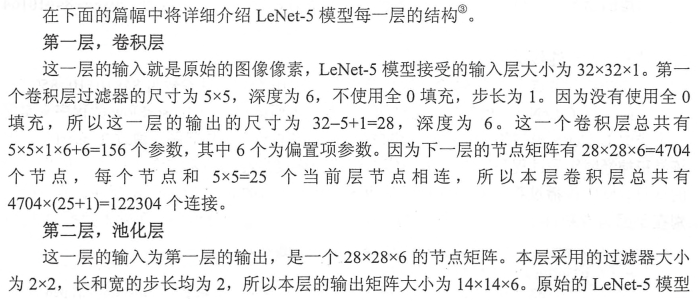
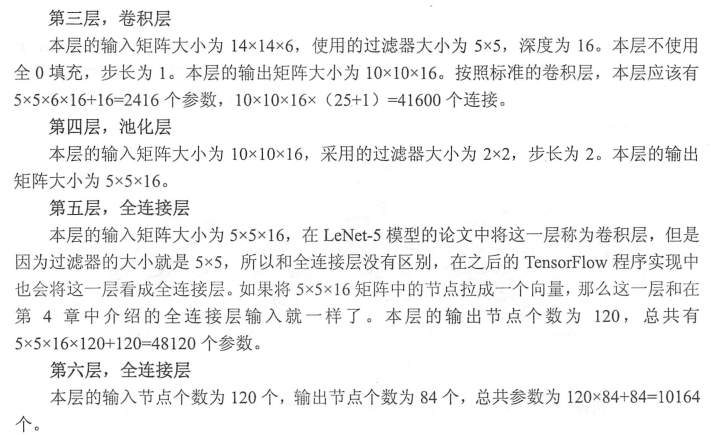
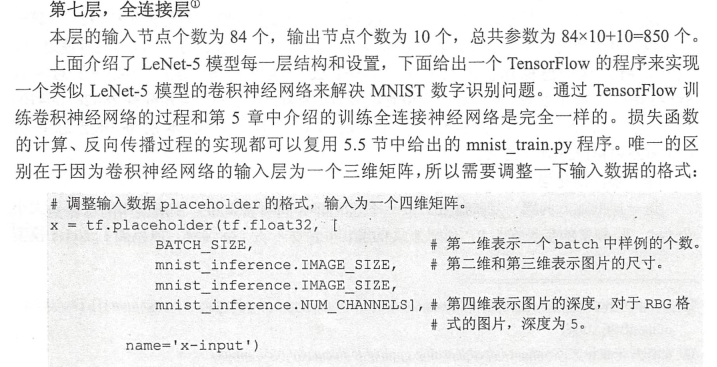

import tensorflow as tf

INPUT_NODE = 784

OUTPUT_NODE = 10

IMAGE_SIZE = 28

NUM_CHANNELS = 1

NUM_LABELS = 10

CONV1_DEEP = 32

CONV1_SIZE = 5

CONV2_DEEP = 64

CONV2_SIZE = 5

FC_SIZE = 512

def inference(input_tensor, train, regularizer):

    with tf.variable_scope('layer1-conv1'):

        conv1_weights = tf.get_variable(

            "weight", [CONV1_SIZE, CONV1_SIZE, NUM_CHANNELS, CONV1_DEEP],

            initializer=tf.truncated_normal_initializer(stddev=0.1))

        conv1_biases = tf.get_variable("bias", [CONV1_DEEP], initializer=tf.constant_initializer(0.0))

        conv1 = tf.nn.conv2d(input_tensor, conv1_weights, strides=[1, 1, 1, 1], padding='SAME')

        relu1 = tf.nn.relu(tf.nn.bias_add(conv1, conv1_biases))

    with tf.name_scope("layer2-pool1"):

        pool1 = tf.nn.max_pool(relu1, ksize = [1,2,2,1],strides=[1,2,2,1],padding="SAME")

    with tf.variable_scope("layer3-conv2"):

        conv2_weights = tf.get_variable(

            "weight", [CONV2_SIZE, CONV2_SIZE, CONV1_DEEP, CONV2_DEEP],

            initializer=tf.truncated_normal_initializer(stddev=0.1))

        conv2_biases = tf.get_variable("bias", [CONV2_DEEP], initializer=tf.constant_initializer(0.0))

        conv2 = tf.nn.conv2d(pool1, conv2_weights, strides=[1, 1, 1, 1], padding='SAME')

        relu2 = tf.nn.relu(tf.nn.bias_add(conv2, conv2_biases))

    with tf.name_scope("layer4-pool2"):

        pool2 = tf.nn.max_pool(relu2, ksize=[1, 2, 2, 1], strides=[1, 2, 2, 1], padding='SAME')

        pool_shape = pool2.get_shape().as_list()

        nodes = pool_shape[1] * pool_shape[2] * pool_shape[3]

        reshaped = tf.reshape(pool2, [pool_shape[0], nodes])

    with tf.variable_scope('layer5-fc1'):

        fc1_weights = tf.get_variable("weight", [nodes, FC_SIZE],

                                      initializer=tf.truncated_normal_initializer(stddev=0.1))

        if regularizer != None: tf.add_to_collection('losses', regularizer(fc1_weights))

        fc1_biases = tf.get_variable("bias", [FC_SIZE], initializer=tf.constant_initializer(0.1))

        fc1 = tf.nn.relu(tf.matmul(reshaped, fc1_weights) + fc1_biases)

        if train: fc1 = tf.nn.dropout(fc1, 0.5)

    with tf.variable_scope('layer6-fc2'):

        fc2_weights = tf.get_variable("weight", [FC_SIZE, NUM_LABELS],

                                      initializer=tf.truncated_normal_initializer(stddev=0.1))

        if regularizer != None: tf.add_to_collection('losses', regularizer(fc2_weights))

        fc2_biases = tf.get_variable("bias", [NUM_LABELS], initializer=tf.constant_initializer(0.1))

        logit = tf.matmul(fc1, fc2_weights) + fc2_biases

    return logit
import tensorflow as tf

from tensorflow.examples.tutorials.mnist import input_data

import LeNet5_infernece

import os

import numpy as np

BATCH_SIZE = 100

LEARNING_RATE_BASE = 0.01

LEARNING_RATE_DECAY = 0.99

REGULARIZATION_RATE = 0.0001

TRAINING_STEPS = 6000

MOVING_AVERAGE_DECAY = 0.99

def train(mnist):

    # 定义输出为4维矩阵的placeholder

    x = tf.placeholder(tf.float32, [

            BATCH_SIZE,

            LeNet5_infernece.IMAGE_SIZE,

            LeNet5_infernece.IMAGE_SIZE,

            LeNet5_infernece.NUM_CHANNELS],

        name='x-input')

    y_ = tf.placeholder(tf.float32, [None, LeNet5_infernece.OUTPUT_NODE], name='y-input')

    regularizer = tf.contrib.layers.l2_regularizer(REGULARIZATION_RATE)

    y = LeNet5_infernece.inference(x,False,regularizer)

    global_step = tf.Variable(0, trainable=False)

    # 定义损失函数、学习率、滑动平均操作以及训练过程。

    variable_averages = tf.train.ExponentialMovingAverage(MOVING_AVERAGE_DECAY, global_step)

    variables_averages_op = variable_averages.apply(tf.trainable_variables())

    cross_entropy = tf.nn.sparse_softmax_cross_entropy_with_logits(logits=y, labels=tf.argmax(y_, 1))

    cross_entropy_mean = tf.reduce_mean(cross_entropy)

    loss = cross_entropy_mean + tf.add_n(tf.get_collection('losses'))

    learning_rate = tf.train.exponential_decay(

        LEARNING_RATE_BASE,

        global_step,

        mnist.train.num_examples / BATCH_SIZE, LEARNING_RATE_DECAY,

        staircase=True)

    train_step = tf.train.GradientDescentOptimizer(learning_rate).minimize(loss, global_step=global_step)

    with tf.control_dependencies([train_step, variables_averages_op]):

        train_op = tf.no_op(name='train')

    # 初始化TensorFlow持久化类。

    saver = tf.train.Saver()

    with tf.Session() as sess:

        tf.global_variables_initializer().run()

        for i in range(TRAINING_STEPS):

            xs, ys = mnist.train.next_batch(BATCH_SIZE)

            reshaped_xs = np.reshape(xs, (

                BATCH_SIZE,

                LeNet5_infernece.IMAGE_SIZE,

                LeNet5_infernece.IMAGE_SIZE,

                LeNet5_infernece.NUM_CHANNELS))

            _, loss_value, step = sess.run([train_op, loss, global_step], feed_dict={x: reshaped_xs, y_: ys})

            if i % 1000 == 0:

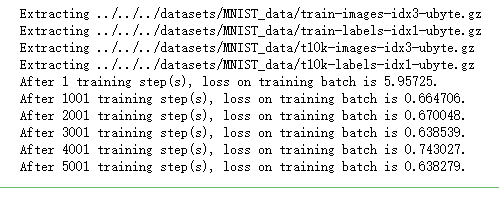
                print("After %d training step(s), loss on training batch is %g." % (step, loss_value))

def main(argv=None):

    mnist = input_data.read_data_sets("../../../datasets/MNIST_data", one_hot=True)

    train(mnist)

if __name__ == '__main__':

    main()

吴裕雄--天生自然python Google深度学习框架:经典卷积神经网络模型的更多相关文章
- 吴裕雄--天生自然python Google深度学习框架:Tensorflow实现迁移学习
import glob import os.path import numpy as np import tensorflow as tf from tensorflow.python.platfor ...
- 吴裕雄--天生自然python Google深度学习框架:图像识别与卷积神经网络
- 吴裕雄--天生自然python Google深度学习框架:MNIST数字识别问题
import tensorflow as tf from tensorflow.examples.tutorials.mnist import input_data INPUT_NODE = 784 ...
- 吴裕雄--天生自然python Google深度学习框架:深度学习与深层神经网络
- 吴裕雄--天生自然python Google深度学习框架:TensorFlow实现神经网络
http://playground.tensorflow.org/
- 吴裕雄--天生自然python Google深度学习框架:Tensorflow基础应用
import tensorflow as tf a = tf.constant([1.0, 2.0], name="a") b = tf.constant([2.0, 3.0], ...
- 吴裕雄--天生自然python Google深度学习框架:人工智能、深度学习与机器学习相互关系介绍
- 吴裕雄--天生自然神经网络与深度学习实战Python+Keras+TensorFlow:Bellman函数、贪心算法与增强性学习网络开发实践
!pip install gym import random import numpy as np import matplotlib.pyplot as plt from keras.layers ...
- 吴裕雄--天生自然神经网络与深度学习实战Python+Keras+TensorFlow:使用TensorFlow和Keras开发高级自然语言处理系统——LSTM网络原理以及使用LSTM实现人机问答系统
!mkdir '/content/gdrive/My Drive/conversation' ''' 将文本句子分解成单词,并构建词库 ''' path = '/content/gdrive/My D ...
随机推荐
- Java算法练习——罗马数字转整数
题目链接 题目描述 罗马数字包含以下七种字符: I, V, X, L,C,D 和 M. 字符 数值 I 1 V 5 X 10 L 50 C 100 D 500 M 1000 例如, 罗马数字 2 写做 ...
- 三、CI框架之一个最简单的页面
一.在CI框架里面的controllers <?php defined('BASEPATH') OR exit('No direct script access allowed'); class ...
- java内存模型一
Java平台自动集成了线程以及多处理器技术,这种集成程度比Java以前诞生的计算机语言要厉害很多,该语言针对多种异构平台的平台独立性而使用的多线程技术支持也是具有开拓性的一面,有时候在开发Java同步 ...
- POJ 2014:Flow Layout 模拟水题
Flow Layout Time Limit: 1000MS Memory Limit: 30000K Total Submissions: 3091 Accepted: 2148 Descr ...
- [CQOI2016]K远点对(KD-Tree)
暴力的做法应该是这样的,维护大小为k的堆,每次插入两点间距离并弹出堆顶. 然后这个做法显然是可以KD-Tree优化的,建立KD-Tree,然后如果该平面内最远点小于堆顶,则直接退出.就当做是复习很久没 ...
- c#中的Task异步编程
https://docs.microsoft.com/en-us/dotnet/csharp/programming-guide/concepts/async/index翻译 1. 引入 Task异步 ...
- Iterator迭代器,获取集合元素
* Object next() :返回下一个元素 * boolean hasNext():判断时是否有元素可以获取 public static void main(String[] args ...
- 吴裕雄--天生自然 JAVASCRIPT开发学习:Window - 浏览器对象模型
<!DOCTYPE html> <html> <head> <meta charset="utf-8"> <title> ...
- Django2.0——Form组件简单总结
Django提供了一个Form组件来配和前端的表单进行使用,Form有两个强大的功能,分别是生成HTML代码和验证数据的合法性.通常我们不会用其第一个功能,因为前端的设计可以做出更加精美且多样的表单页 ...
- Python笔记_第一篇_面向过程_第一部分_4.格式化输入和输出
开始Python编程首先要学习两类最常用(经常出现和使用)输入和输出.学习编程最重要的状态就是“人机交互”,所以这两类函数显得尤其重要. 第一部分 格式化输入 1.1 函:input 语:inpu ...