
从源码看java中Integer的缓存问题
在开始详细的说明问题之前,我们先看一段代码
 public static void compare1(){

         Integer i1 = 127, i2 = 127, i3 = 128, i4 = 128;

         System.out.println(i1  == i2);

         System.out.println(i1.equals(i2));

         System.out.println(i3  == i4);

         System.out.println(i3.equals(i4));

     }
这段代码输出的结果是什么呢?
答案是:
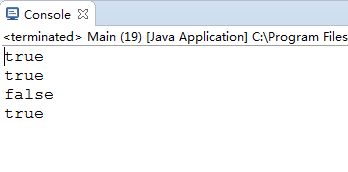
是不是感到奇怪呢?为什么127的时候==是true,128的时候就变成了false?其实要回答这个问题不难。
Integer在赋值的时候会发生自动装箱操作,调用Integer的valueOf方法,那么我们看一下java的源码(1.8):
 /**

      * Returns an {@code Integer} instance representing the specified

      * {@code int} value.  If a new {@code Integer} instance is not

      * required, this method should generally be used in preference to

      * the constructor {@link #Integer(int)}, as this method is likely

      * to yield significantly better space and time performance by

      * caching frequently requested values.

      *

      * This method will always cache values in the range -128 to 127,

      * inclusive, and may cache other values outside of this range.

      *

      * @param  i an {@code int} value.

      * @return an {@code Integer} instance representing {@code i}.

      * @since  1.5

      */

     public static Integer valueOf(int i) {

         if (i >= IntegerCache.low && i <= IntegerCache.high)

             return IntegerCache.cache[i + (-IntegerCache.low)];

         return new Integer(i);

     }
这里根据源码可以看出,在传入的i值在IntegerCache.low和IntegerCache.high之间的时候,会返回IntegerCache.cache数组里面的数,不在这个范围才会new一个Integer对象。接下来我们看一下IntegerCache数组的初始化情况:
 /**

      * Cache to support the object identity semantics of autoboxing for values between

      * -128 and 127 (inclusive) as required by JLS.

      *

      * The cache is initialized on first usage.  The size of the cache

      * may be controlled by the {@code -XX:AutoBoxCacheMax=<size>} option.

      * During VM initialization, java.lang.Integer.IntegerCache.high property

      * may be set and saved in the private system properties in the

      * sun.misc.VM class.

      */

     private static class IntegerCache {

         static final int low = -128;

         static final int high;

         static final Integer cache[];

         static {

             // high value may be configured by property

             int h = 127;

             String integerCacheHighPropValue =

                 sun.misc.VM.getSavedProperty("java.lang.Integer.IntegerCache.high");

             if (integerCacheHighPropValue != null) {

                 try {

                     int i = parseInt(integerCacheHighPropValue);

                     i = Math.max(i, 127);

                     // Maximum array size is Integer.MAX_VALUE

                     h = Math.min(i, Integer.MAX_VALUE - (-low) -1);

                 } catch( NumberFormatException nfe) {

                     // If the property cannot be parsed into an int, ignore it.

                 }

             }

             high = h;

             cache = new Integer[(high - low) + 1];

             int j = low;

             for(int k = 0; k < cache.length; k++)

                 cache[k] = new Integer(j++);

             // range [-128, 127] must be interned (JLS7 5.1.7)

             assert IntegerCache.high >= 127;

         }

         private IntegerCache() {}

     }
我们看到IntegerCache的low定义为-128,high默认定义为127.但是high是可以配置的,如果没有配置才是127.我们不去看配置的情况,因为java默认是没有配置的。看一下cache数组,长度为high-low+1,从-128开始到127,存在cache数组内。
从上面的代码中可以看出,java在申请一个大于-128小于127的数时,其实是从cache中直接取出来用的,如果不在这个范围则是new了一个Integer对象。
对于==,他比较的是地址。对于int来说比较的是值。
对于equals,比较的是内容(要看equals的具体实现)。看一下Integer里面的实现:
 /**

      * Compares this object to the specified object.  The result is

      * {@code true} if and only if the argument is not

      * {@code null} and is an {@code Integer} object that

      * contains the same {@code int} value as this object.

      *

      * @param   obj   the object to compare with.

      * @return  {@code true} if the objects are the same;

      *          {@code false} otherwise.

      */

     public boolean equals(Object obj) {

         if (obj instanceof Integer) {

             return value == ((Integer)obj).intValue();

         }

         return false;

     }
它比较的确实是值的大小。
因此i1==i2和i1.equals(i2)都是true
i3==i4为false
i3.equals(i4)为true。
从源码看java中Integer的缓存问题的更多相关文章
- 从字节码看java中 this 的隐式传参
从字节码看java中 this 隐式传参具体体现(和python中的self如出一辙,但是比python中藏得更深),也发现了 static 与 非 static 方法的区别所在! static与非s ...
- JDK1.8源码(二)——java.lang.Integer 类
上一篇博客我们介绍了 java.lang 包下的 Object 类,那么本篇博客接着介绍该包下的另一个类 Integer.在前面 浅谈 Integer 类 博客中我们主要介绍了 Integer 类 和 ...
- 从源码看Android中sqlite是怎么通过cursorwindow读DB的
更多内容在这里查看 https://ahangchen.gitbooks.io/windy-afternoon/content/ 执行query 执行SQLiteDatabase类中query系列函数 ...
- 从源码看Android中sqlite是怎么读DB的(转)
执行query 执行SQLiteDatabase类中query系列函数时,只会构造查询信息,不会执行查询. (query的源码追踪路径) 执行move(里面的fillwindow是真正打开文件句柄并分 ...
- 从源码浅析Java中的Lock和AbstractQueuedSynchronizer
在之前的文章中我也曾经介绍过Lock,像ReentrantLock(可重入锁)和ReentrantReadWriteLock(可重入读写锁),这些所我们在说的时候并没有详细的说明它们的原理,仅仅说明了 ...
- 从源码看Java集合之ArrayList
Java集合之ArrayList - 吃透增删查改 从源码看初始化以及增删查改,学习ArrayList. 先来看下ArrayList定义的几个属性: private static final int ...
- JDK1.8源码(二)——java.lang.Integer类
一.初识 1.介绍 int 是Java八大基本数据类型之一,占据 4 个字节,范围是 -2^31~2^31 - 1,即 -2147483648~2147483647.而 Integer 是 int 包 ...
- 从源码看java线程状态
关于java线程状态,网上查资料很混乱,有的说5种状态,有的说6种状态,初学者搞不清楚这个线程状态到底是怎么样的,今天我讲一下如何看源码去解决这个疑惑. 直接上代码: public class Thr ...
- 从源码看 Vue 中的 Mixin
最近在做项目的时候碰到了一个奇怪的问题,通过 Vue.mixin 方法注入到 Vue 实例的一个方法不起作用了,后来经过仔细排查发现这个实例自己实现了一个同名方法,导致了 Vue.mixin 注入方法 ...
随机推荐
- 开始研究Ray tracing
几个月前面试时Boss问过我一个问题--"除了scanline渲染方法,你还知道什么其他渲染方式?",我没答出来,至今记忆犹新. 前段时间摆弄Intel VTune时看了它的示例代 ...
- Oracle中关于清除数据和释放表空间
一.表的重命名 flashback table test2 to before drop rename to test3;--[to test3]将表重命名 drop table test3 purg ...
- HTTP Referer二三事---转
授权方式:署名,非商业用途,保持一致,转载时请务必以超链接(http://www.fwolf.com/blog/post/320)的形式标明文章原始出处和作者信息及本声明. 什么是HTTP Refer ...
- 编译器失败,错误代码为xxx
问题:出现编译器失败,等一会儿出现csc.exe无响应,错误代码不一定是255,是其他的也可以试试 解决办法: 查看是否类似360之类的杀毒软件运行着,如果运行着,关掉然后重新试一下,应该就没有问题了 ...
- jQuery layer[页面弹出框]
常见接口如下: 方法名 描述 $.layer({}) 核心接口,参数是一个对象,对象属性参见上述列表.诸如layer.alert()之类的为$.layer()的包装方法. layer.v 获取版本号. ...
- apply和call的区别在哪里
apply:方法能劫持另外一个对象的方法,继承另外一个对象的属性. Function.apply(obj,args)方法能接收两个参数obj:这个对象将代替Function类里this对象args:这 ...
- HTML超出文本显示省略号...[text-overflow]
需要对div或者span同时应用Css: text-overflow:ellipsis; white-space:nowrap; overflow:hidden; 即可实现所想要得到的溢出文本显示省略 ...
- [转]15 个顶级 HTML5 游戏引擎
本文转自:http://www.open-open.com/news/view/13874db 1) HTML5 Game Engine Construct 2 is a leading high q ...
- Maven错误Failed to read artifact descriptor for xxx:jar 和 missing artifact maven dependency
可参考:http://stackoverflow.com/questions/6111408/maven2-missing-artifact-but-jars-are-in-place http:// ...
- uva 12549 最大流
思路:这题的原型题是比较经典的网络流.原型题模型就是把所有的障碍去掉. 有障碍做法还是一样的,只用将每个列和行重新划分,求最大流就行了. #include <cstring> #inclu ...