
Android布局中的空格以及占一个汉字宽度的空格,实现不同汉字字数对齐
前言
在Android布局中进行使用到空格,以便实现文字的对齐。那么在Android中如何表示一个空格呢?
- 空格: (普通的英文半角空格但不换行)
- 窄空格:
- (中文全角空格 (一个中文宽度))
- (半个中文宽度,但两个空格比一个中文略大)
- (一个中文宽度,但用起来会比中文字宽一点点)
- \u3000\u3000(首行缩进)
- \u3000(全角空格(中文符号))
- \u0020(半角空格(英文符号))
- …(省略号)
所以如果想要实现文字对齐,那么可以考虑下面的方案:
方案一:一个汉字宽度的空格:
方案二:一个汉字宽度的空格: 【用两个空格( )占一个汉字的宽度时,两个空格比一个汉字略窄,三个空格( )比一个汉字略宽】;使用 ‒时候部分机型转译后不是空格,而是“-”;而且在不同机型有不同表现。
方案三:一个汉字宽度的空格: 【比一个中文略大】
方案四:一个汉字宽度的空格: 【比一个中文略大】
注意:以上方案是直接写在布局文件中,如果是写在strings.xml文件中,则需要使用\u3000、\u0020这一类的,比如:
<string name="info_pwd">\u3000\u3000密码:</string>
然后在布局文件中通过下面的方式引用
android:text="@string/info_pwd"
至于,为什么在strings.xml文件中使用\u3000代替 ,则是因为Android Studio3.2 + Gradle Plugn 3.2.0 + Gradle4.6环境下, 、 都不起作用了。
效果图
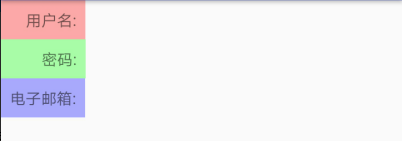
效果0:未作处理的效果
<?xml version="1.0" encoding="utf-8"?>

<LinearLayout

    xmlns:android="http://schemas.android.com/apk/res/android"

    android:layout_width="match_parent"

    android:layout_height="match_parent"

    android:orientation="vertical">

    <TextView

        android:layout_width="wrap_content"

        android:layout_height="wrap_content"

        android:text="用户名:"

        android:background="#54ff0000"

        android:padding="8dp"/>

    <TextView

        android:layout_width="wrap_content"

        android:layout_height="wrap_content"

        android:text="密码:"

        android:background="#5400ff00"

        android:padding="8dp"/>

    <TextView

        android:layout_width="wrap_content"

        android:layout_height="wrap_content"

        android:text="电子邮箱:"

        android:background="#540000ff"

        android:padding="8dp"/>

</LinearLayout>
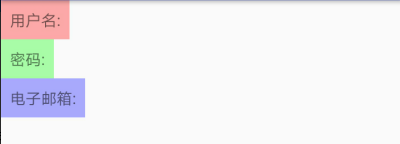
效果一、使用
<?xml version="1.0" encoding="utf-8"?>

<LinearLayout

    xmlns:android="http://schemas.android.com/apk/res/android"

    android:layout_width="match_parent"

    android:layout_height="match_parent"

    android:orientation="vertical">

    <TextView

        android:layout_width="wrap_content"

        android:layout_height="wrap_content"

        android:text=" 用户名:"

        android:background="#54ff0000"

        android:padding="8dp"/>

    <TextView

        android:layout_width="wrap_content"

        android:layout_height="wrap_content"

        android:text="  密码:"

        android:background="#5400ff00"

        android:padding="8dp"/>

    <TextView

        android:layout_width="wrap_content"

        android:layout_height="wrap_content"

        android:text="电子邮箱:"

        android:background="#540000ff"

        android:padding="8dp"/>

</LinearLayout>
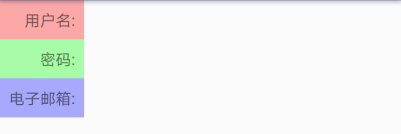
效果二、使用
<?xml version="1.0" encoding="utf-8"?>

<LinearLayout

    xmlns:android="http://schemas.android.com/apk/res/android"

    android:layout_width="match_parent"

    android:layout_height="match_parent"

    android:orientation="vertical">

    <TextView

        android:layout_width="wrap_content"

        android:layout_height="wrap_content"

        android:text="   用户名:"

        android:background="#54ff0000"

        android:padding="8dp"/>

    <TextView

        android:layout_width="wrap_content"

        android:layout_height="wrap_content"

        android:text="      密码:"

        android:background="#5400ff00"

        android:padding="8dp"/>

    <TextView

        android:layout_width="wrap_content"

        android:layout_height="wrap_content"

        android:text="电子邮箱:"

        android:background="#540000ff"

        android:padding="8dp"/>

</LinearLayout>
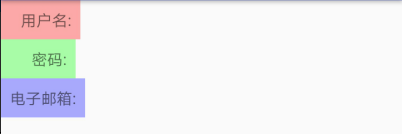
效果三、使用
<?xml version="1.0" encoding="utf-8"?>

<LinearLayout

    xmlns:android="http://schemas.android.com/apk/res/android"

    android:layout_width="match_parent"

    android:layout_height="match_parent"

    android:orientation="vertical">

    <TextView

        android:layout_width="wrap_content"

        android:layout_height="wrap_content"

        android:text="  用户名:"

        android:background="#54ff0000"

        android:padding="8dp"/>

    <TextView

        android:layout_width="wrap_content"

        android:layout_height="wrap_content"

        android:text="    密码:"

        android:background="#5400ff00"

        android:padding="8dp"/>

    <TextView

        android:layout_width="wrap_content"

        android:layout_height="wrap_content"

        android:text="电子邮箱:"

        android:background="#540000ff"

        android:padding="8dp"/>

</LinearLayout>
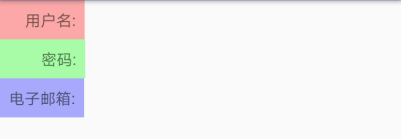
效果四、使用
<?xml version="1.0" encoding="utf-8"?>

<LinearLayout

    xmlns:android="http://schemas.android.com/apk/res/android"

    android:layout_width="match_parent"

    android:layout_height="match_parent"

    android:orientation="vertical">

    <TextView

        android:layout_width="wrap_content"

        android:layout_height="wrap_content"

        android:text=" 用户名:"

        android:background="#54ff0000"

        android:padding="8dp"/>

    <TextView

        android:layout_width="wrap_content"

        android:layout_height="wrap_content"

        android:text="  密码:"

        android:background="#5400ff00"

        android:padding="8dp"/>

    <TextView

        android:layout_width="wrap_content"

        android:layout_height="wrap_content"

        android:text="电子邮箱:"

        android:background="#540000ff"

        android:padding="8dp"/>

</LinearLayout>
参考资料:
Android开发中Html.fromHtml(String source)方法过时的替代方法
三种空格unicode(\u00A0,\u0020,\u3000)表示的区别
Android布局中的空格以及占一个汉字宽度的空格,实现不同汉字字数对齐的更多相关文章
- Android布局中的空格以及占一个汉字宽度的空格的实现
在Android布局中进行使用到空格,以便实现文字的对齐.那么在Android中如何表示一个空格呢? 空格: 窄空格: 一个汉字宽度的空格: [用两个空格( )占一个汉字的宽度时,两个空格比 ...
- android布局中使用include及需注意点
在android布局中,使用include,将另一个xml文件引入,可作为布局的一部分,但在使用include时,需注意以下问题: 一.使用include引入 如现有标题栏布局block_header ...
- android 布局中 layout_gravity、gravity、orientation、layout_weight
线性布局中,有 4 个及其重要的参数,直接决定元素的布局和位置,这四个参数是 android:layout_gravity ( 是本元素相对于父元素的重力方向 ) android:gravity (是 ...
- Android布局中的layout_weight和weightSum属性的详解及使用
由于Android设备的尺寸大小不一,种类繁多,当我们在开发应用的时候就要考虑屏幕的适配型了,尽可能让我们的应用适用于主流机型的尺寸,这样我们的应用不会因为尺寸不同而不美观,解决屏幕适配问题的方法有很 ...
- android: android 布局中的weight 属性
android: weight是线性布局的特有属性,控件的宽度和高度的不同,也会存在差异. 示例1:将宽度设置为包裹类型wrap_content或0dp <?xml version=" ...
- 【转】在Android布局中使用include和merge标签
内容转自:http://fengweipeng1208.blog.163.com/blog/static/21277318020138229754135/ 在我们开发android布局时,经常会有很多 ...
- Android布局中涉及的一些属性
Android:gravity属性 线性布局常见的就是利用LinearLayout进行布局,其中有个比较重要的属性就是android:gravity,在官方文档中是这么描述这个属性的:指定一个元素怎么 ...
- Android布局中match_parent和fill_parent的差别
今天在做项目的一个新功能的时候,从网上查找资源,发现android2.2中出现的MATCH_PARENT感到不明确.过去仅仅有FILL_PARENT和WRAP_CONTENT那么match_paren ...
- android布局中显示隐藏动画
android 在布局中提供属性,能简单的加入动画效果,例如以下: <LinearLayout ... animateLayoutChanges="true" ... /&g ...
随机推荐
- 《Miracle_House》团队项目系统设计改进
一.团队项目系统设计改进: 1.分析项目系统设计说明书初稿的不足,特别是软件系统结构模型建模不完善内容: 对于原文档中,设计图中存在的错误以及文字描述不准确的地方进行了修改. 2. 团队项目Githu ...
- C#将结构体和指针互转的方法
. 功能及位置 将数据从托管对象封送到非托管内存块,属于.NET Framework 类库 命名空间:System.Runtime.InteropServices 程序集:mscorlib(在 msc ...
- Python Day 11
阅读目录 内容回顾 函数的参数 函数的嵌套调用 ##内容回顾 # 什么是函数:具体特定功能的代码块 - 特定功能代码块作为一个整体,并给该整体命名,就是函数 # 函数的优点: # 1.减少代码的冗余 ...
- 编程感悟-建立好代码sop
1.最近学django和python,发现很多的函数记不住,这时候我百度了一下,发现记不住是程序员的正常情况, 这下心安理得多了,记好笔记和咱的sop吧,会很快. 社会是不是也这样,好多东西也记不住, ...
- UE4杂记
一些学习UE4时的笔记,转载请注明出处. ☆ UE4逻辑 Actor 是由 AActor 类派生而来的类实例:能被放入游戏世界场景的所有游戏性对象的基础类.对象是继承自 UObject 类的类实例:虚 ...
- CentOS 7 rpm安装jdk
RPM 安装jdk1.8.0_111 ,查询系统自带的jdk rpm -qa | grep java 查询结果如下: [root@bogon ~]# rpm -qa | grep java javap ...
- Day09 (黑客成长日记) 爬虫入门
爬虫的基本流程: 发起请求通过HTTP库向目标站点发起请求,也就是发送一个Request,请求可以包含额外的header等信息,等待服务器响应 获取响应内容如果服务器能正常响应,会得到一个Respon ...
- MySql技术内幕之MySQL入门(1)
目录 MySql技术内幕之MySQL入门(1) 安装 关于注释 执行SQL语句 关于命令大小写 创建数据库 查看表的信息 查看更加详细的信息 查看与给定模式相匹配的列 插入数据 利用insert添加行 ...
- gitlab 之 cicd
1.使用 docker 安装 gitlab docker run -d --hostname gitlab \ --env GITLAB_OMNIBUS_CONFIG="ex ...
- 两台Linux机器传送文件
https://www.cnblogs.com/lianrenjujishou/p/5458206.html