
[JavaEE] Spring事务配置的五种方式
前段时间对Spring的事务配置做了比较深入的研究,在此之间对Spring的事务配置虽说也配置过,但是一直没有一个清楚的认识。通过这次的学习发觉Spring的事务配置只要把思路理清,还是比较好掌握的。
总结如下:
Spring配置文件中关于事务配置总是由三个组成部分,分别是DataSource、TransactionManager和代理机制这三部分,无论哪种配置方式,一般变化的只是代理机制这部分。
DataSource、TransactionManager这两部分只是会根据数据访问方式有所变化,比如使用Hibernate进行数据访问时,DataSource实际为SessionFactory,TransactionManager的实现为 HibernateTransactionManager。
具体如下图:
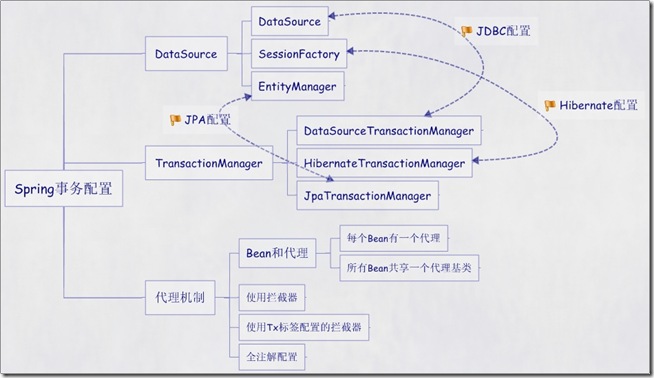
根据代理机制的不同,总结了五种Spring事务的配置方式,配置文件如下:
第一种方式:每个Bean都有一个代理
<?xml version="1.0" encoding="UTF-8"?>

<beans xmlns="http://www.springframework.org/schema/beans"

    xmlns:xsi="http://www.w3.org/2001/XMLSchema-instance"

    xmlns:context="http://www.springframework.org/schema/context"

    xmlns:aop="http://www.springframework.org/schema/aop"

    xsi:schemaLocation="http://www.springframework.org/schema/beans

           http://www.springframework.org/schema/beans/spring-beans-2.5.xsd

           http://www.springframework.org/schema/context

           http://www.springframework.org/schema/context/spring-context-2.5.xsd

           http://www.springframework.org/schema/aop http://www.springframework.org/schema/aop/spring-aop-2.5.xsd">

    <bean id="sessionFactory"

            class="org.springframework.orm.hibernate3.LocalSessionFactoryBean">

        <property name="configLocation" value="classpath:hibernate.cfg.xml" />

        <property name="configurationClass" value="org.hibernate.cfg.AnnotationConfiguration" />

    </bean>

    <!-- 定义事务管理器(声明式的事务) -->

    <bean id="transactionManager"

        class="org.springframework.orm.hibernate3.HibernateTransactionManager">

        <property name="sessionFactory" ref="sessionFactory" />

    </bean>

    <!-- 配置DAO -->

    <bean id="userDaoTarget" class="com.bluesky.spring.dao.UserDaoImpl">

        <property name="sessionFactory" ref="sessionFactory" />

    </bean>

    <bean id="userDao"

        class="org.springframework.transaction.interceptor.TransactionProxyFactoryBean">

           <!-- 配置事务管理器 -->

           <property name="transactionManager" ref="transactionManager" />

        <property name="target" ref="userDaoTarget" />

         <property name="proxyInterfaces" value="com.bluesky.spring.dao.GeneratorDao" />

        <!-- 配置事务属性 -->

        <property name="transactionAttributes">

            <props>

                <prop key="*">PROPAGATION_REQUIRED</prop>

            </props>

        </property>

    </bean>

</beans>
第二种方式:所有Bean共享一个代理基类
<?xml version="1.0" encoding="UTF-8"?>

<beans xmlns="http://www.springframework.org/schema/beans"

    xmlns:xsi="http://www.w3.org/2001/XMLSchema-instance"

    xmlns:context="http://www.springframework.org/schema/context"

    xmlns:aop="http://www.springframework.org/schema/aop"

    xsi:schemaLocation="http://www.springframework.org/schema/beans

           http://www.springframework.org/schema/beans/spring-beans-2.5.xsd

           http://www.springframework.org/schema/context

           http://www.springframework.org/schema/context/spring-context-2.5.xsd

           http://www.springframework.org/schema/aop http://www.springframework.org/schema/aop/spring-aop-2.5.xsd">

    <bean id="sessionFactory"

            class="org.springframework.orm.hibernate3.LocalSessionFactoryBean">

        <property name="configLocation" value="classpath:hibernate.cfg.xml" />

        <property name="configurationClass" value="org.hibernate.cfg.AnnotationConfiguration" />

    </bean>

    <!-- 定义事务管理器(声明式的事务) -->

    <bean id="transactionManager"

        class="org.springframework.orm.hibernate3.HibernateTransactionManager">

        <property name="sessionFactory" ref="sessionFactory" />

    </bean>

    <bean id="transactionBase"

            class="org.springframework.transaction.interceptor.TransactionProxyFactoryBean"

            lazy-init="true" abstract="true">

        <!-- 配置事务管理器 -->

        <property name="transactionManager" ref="transactionManager" />

        <!-- 配置事务属性 -->

        <property name="transactionAttributes">

            <props>

                <prop key="*">PROPAGATION_REQUIRED</prop>

            </props>

        </property>

    </bean>

    <!-- 配置DAO -->

    <bean id="userDaoTarget" class="com.bluesky.spring.dao.UserDaoImpl">

        <property name="sessionFactory" ref="sessionFactory" />

    </bean>

    <bean id="userDao" parent="transactionBase" >

        <property name="target" ref="userDaoTarget" />

    </bean>

</beans>
第三种方式:使用拦截器
<?xml version="1.0" encoding="UTF-8"?>

<beans xmlns="http://www.springframework.org/schema/beans"

    xmlns:xsi="http://www.w3.org/2001/XMLSchema-instance"

    xmlns:context="http://www.springframework.org/schema/context"

    xmlns:aop="http://www.springframework.org/schema/aop"

    xsi:schemaLocation="http://www.springframework.org/schema/beans

           http://www.springframework.org/schema/beans/spring-beans-2.5.xsd

           http://www.springframework.org/schema/context

           http://www.springframework.org/schema/context/spring-context-2.5.xsd

           http://www.springframework.org/schema/aop http://www.springframework.org/schema/aop/spring-aop-2.5.xsd">

    <bean id="sessionFactory"

            class="org.springframework.orm.hibernate3.LocalSessionFactoryBean">

        <property name="configLocation" value="classpath:hibernate.cfg.xml" />

        <property name="configurationClass" value="org.hibernate.cfg.AnnotationConfiguration" />

    </bean>

    <!-- 定义事务管理器(声明式的事务) -->

    <bean id="transactionManager"

        class="org.springframework.orm.hibernate3.HibernateTransactionManager">

        <property name="sessionFactory" ref="sessionFactory" />

    </bean>

    <bean id="transactionInterceptor"

        class="org.springframework.transaction.interceptor.TransactionInterceptor">

        <property name="transactionManager" ref="transactionManager" />

        <!-- 配置事务属性 -->

        <property name="transactionAttributes">

            <props>

                <prop key="*">PROPAGATION_REQUIRED</prop>

            </props>

        </property>

    </bean>

    <bean class="org.springframework.aop.framework.autoproxy.BeanNameAutoProxyCreator">

        <property name="beanNames">

            <list>

                <value>*Dao</value>

            </list>

        </property>

        <property name="interceptorNames">

            <list>

                <value>transactionInterceptor</value>

            </list>

        </property>

    </bean>

    <!-- 配置DAO -->

    <bean id="userDao" class="com.bluesky.spring.dao.UserDaoImpl">

        <property name="sessionFactory" ref="sessionFactory" />

    </bean>

</beans>
第四种方式:使用tx标签配置的拦截器
<?xml version="1.0" encoding="UTF-8"?>

<beans xmlns="http://www.springframework.org/schema/beans"

    xmlns:xsi="http://www.w3.org/2001/XMLSchema-instance"

    xmlns:context="http://www.springframework.org/schema/context"

    xmlns:aop="http://www.springframework.org/schema/aop"

    xmlns:tx="http://www.springframework.org/schema/tx"

    xsi:schemaLocation="http://www.springframework.org/schema/beans

           http://www.springframework.org/schema/beans/spring-beans-2.5.xsd

           http://www.springframework.org/schema/context

           http://www.springframework.org/schema/context/spring-context-2.5.xsd

           http://www.springframework.org/schema/aop http://www.springframework.org/schema/aop/spring-aop-2.5.xsd

           http://www.springframework.org/schema/tx http://www.springframework.org/schema/tx/spring-tx-2.5.xsd">

    <context:annotation-config />

    <context:component-scan base-package="com.bluesky" />

    <bean id="sessionFactory"

            class="org.springframework.orm.hibernate3.LocalSessionFactoryBean">

        <property name="configLocation" value="classpath:hibernate.cfg.xml" />

        <property name="configurationClass" value="org.hibernate.cfg.AnnotationConfiguration" />

    </bean>

    <!-- 定义事务管理器(声明式的事务) -->

    <bean id="transactionManager"

        class="org.springframework.orm.hibernate3.HibernateTransactionManager">

        <property name="sessionFactory" ref="sessionFactory" />

    </bean>

    <tx:advice id="txAdvice" transaction-manager="transactionManager">

        <tx:attributes>

            <tx:method name="*" propagation="REQUIRED" />

        </tx:attributes>

    </tx:advice>

    <aop:config>

        <aop:pointcut id="interceptorPointCuts"

            expression="execution(* com.bluesky.spring.dao.*.*(..))" />

        <aop:advisor advice-ref="txAdvice"

            pointcut-ref="interceptorPointCuts" />

    </aop:config>

</beans>
第五种方式:全注解
<?xml version="1.0" encoding="UTF-8"?>

<beans xmlns="http://www.springframework.org/schema/beans"

    xmlns:xsi="http://www.w3.org/2001/XMLSchema-instance"

    xmlns:context="http://www.springframework.org/schema/context"

    xmlns:aop="http://www.springframework.org/schema/aop"

    xmlns:tx="http://www.springframework.org/schema/tx"

    xsi:schemaLocation="http://www.springframework.org/schema/beans

           http://www.springframework.org/schema/beans/spring-beans-2.5.xsd

           http://www.springframework.org/schema/context

           http://www.springframework.org/schema/context/spring-context-2.5.xsd

           http://www.springframework.org/schema/aop http://www.springframework.org/schema/aop/spring-aop-2.5.xsd

           http://www.springframework.org/schema/tx http://www.springframework.org/schema/tx/spring-tx-2.5.xsd">

    <context:annotation-config />

    <context:component-scan base-package="com.bluesky" />

    <tx:annotation-driven transaction-manager="transactionManager"/>

    <bean id="sessionFactory"

            class="org.springframework.orm.hibernate3.LocalSessionFactoryBean">

        <property name="configLocation" value="classpath:hibernate.cfg.xml" />

        <property name="configurationClass" value="org.hibernate.cfg.AnnotationConfiguration" />

    </bean>

    <!-- 定义事务管理器(声明式的事务) -->

    <bean id="transactionManager"

        class="org.springframework.orm.hibernate3.HibernateTransactionManager">

        <property name="sessionFactory" ref="sessionFactory" />

    </bean>

</beans>
此时在DAO上需加上@Transactional注解,如下:
package com.bluesky.spring.dao;

import java.util.List;

import org.hibernate.SessionFactory;

import org.springframework.beans.factory.annotation.Autowired;

import org.springframework.orm.hibernate3.support.HibernateDaoSupport;

import org.springframework.stereotype.Component;

import com.bluesky.spring.domain.User;

@Transactional

@Component("userDao")

public class UserDaoImpl extends HibernateDaoSupport implements UserDao {

    public List<User> listUsers() {

        return this.getSession().createQuery("from User").list();

    }

}
[JavaEE] Spring事务配置的五种方式的更多相关文章
- Spring事务配置的五种方式(转发)
Spring事务配置的五种方式(原博客地址是http://www.blogjava.net/robbie/archive/2009/04/05/264003.html)挺好的,收藏转发 前段时间对Sp ...
- Spring事务配置的五种方式和spring里面事务的传播属性和事务隔离级别
转: http://blog.csdn.net/it_man/article/details/5074371 Spring事务配置的五种方式 前段时间对Spring的事务配置做了比较深入的研究,在此之 ...
- Spring事务配置的五种方式(转载)
Spring配置文件中关于事务配置总是由三个组成部分,分别是DataSource.TransactionManager和代理机制这三部分,无论哪种配置方式,一般变化的只是代理机制这部分. DataSo ...
- Spring事务配置的五种方式
Spring配置文件中关于事务配置总是由三个组成部分,分别是DataSource.TransactionManager和代理机制这三部分,无论哪种配置方式,一般变化的只是代理机制这部分. DataSo ...
- Spring事务配置的五种方式 -- 越往后需要Spring版本越高
第五种 基本零配置 个人感觉第四种也可以 Spring配置文件中关于事务配置总是由三个组成部分,分别是DataSource.TransactionManager和代理机制这三部分,无论哪种配置方式, ...
- Spring事务配置的五种方式(转)
前段时间对Spring的事务配置做了比较深入的研究,在此之间对Spring的事务配置虽说也配置过,但是一直没有一个清楚的认识.通过这次的学习发觉Spring的事务配置只要把思路理清,还是比较好掌握的. ...
- Spring事务配置的五种方式 巨全!不看后悔,一看必懂!
前段时间对Spring的事务配置做了比较深入的研究,在此之间对Spring的事务配置虽说也配置过,但是一直没有一个清楚的认识.通过这次的学习发觉Spring的事务配置只要把思路理清,还是比较好掌握的. ...
- (转)Spring事务配置的五种方式
前段时间对Spring的事务配置做了比较深入的研究,在此之间对Spring的事务配置虽说也配置过,但是一直没有一个清楚的认识.通过这次的学习发觉Spring的事务配置只要把思路理清,还是比较好掌握的. ...
- SSH深度历险(六) 深入浅出----- Spring事务配置的五种方式
这对时间在学习SSH中Spring架构,Spring的事务配置做了详细总结,在此之间对Spring的事务配置只是停留在听说的阶段,总结一下,整体把控,通过这次的学习发觉Spring的事务配置只要把思路 ...
随机推荐
- VMWare虚拟机移动
1. 背景: 虚拟机:VM3 原安装路径:C:\Users\Administrator\Documents\Virtual Machines 移动到目标路径:D:\Virtual Machines ...
- R 连接mysql数据库
一.配置RODBC 1.R下载RODBC包,安装好.2.在http://dev.mysql.com/downloads/connector/odbc下载mySQL ODBC,安装好.3.windows ...
- 各个数据库中,查询前n条记录的方法
SQL查询前10条的方法为: 1.select top X * from table_name --查询前X条记录,可以改成需要的数字,比如前10条. 2.select top X * from ...
- MyEclipse加入jquery.js文件missing semicolon的错误
今天打开项目,发现有一个小红叉,虽然不影响项目的编译和运行,但是看着非常影响心情.原因是jquery-1.8.2.min.js报了一堆missing semicolon的错误.之所以会这样,其实是My ...
- Python之function
1 Function a function is a device that groups a set of statements so they can be run more than once ...
- layui 下拉框取值
layui.use('form', function () { var form = layui.form; form.on('select(Status)', function (data) { c ...
- Leetcode 动态规划 - 简单
1. 最大子序和 (53) 给定一个整数数组 nums ,找到一个具有最大和的连续子数组(子数组最少包含一个元素),返回其最大和. 示例: 输入: [-2,1,-3,4,-1,2,1,-5,4], 输 ...
- 洛谷P1192 台阶问题【dp递归】
有NN级的台阶,你一开始在底部,每次可以向上迈最多KK级台阶(最少11级),问到达第NN级台阶有多少种不同方式. 输入输出格式 输入格式: 两个正整数N,K. 输出格式: 一个正整数,为不同方式数,由 ...
- 当svn检出项目检出一半时停止,如何继续检出
1.当svn检出项目时,发现中断,又不想重新检出可以在已检出的项目目录下右键 2.然后点击 之后直接update你的项目就可以了
- 继续聊WPF——自定义CheckBox控件外观
上一篇文章中谈到了BulletDecorator控件,就是为自定义CheckBox控件的模板做准备,因为CheckBox需要比较严格的布局,正好,BulletDecorator控件就合适了,该控件的布 ...