
HDU 1890 - Robotic Sort - [splay][区间反转+删除根节点]
题目链接:http://acm.hdu.edu.cn/showproblem.php?pid=1890
Time Limit: 6000/2000 MS (Java/Others) Memory Limit: 32768/32768 K (Java/Others)
In this task, you are to write software for a robot that handles samples in such a laboratory. Imagine there are material samples lined up on a running belt. The samples have different heights, which may cause troubles to the next processing unit. To eliminate such troubles, we need to sort the samples by their height into the ascending order.
Reordering is done by a mechanical robot arm, which is able to pick up any number of consecutive samples and turn them round, such that their mutual order is reversed. In other words, one robot operation can reverse the order of samples on positions between A and B.
A possible way to sort the samples is to find the position of the smallest one (P1) and reverse the order between positions 1 and P1, which causes the smallest sample to become first. Then we find the second one on position P and reverse the order between 2 and P2. Then the third sample is located etc.
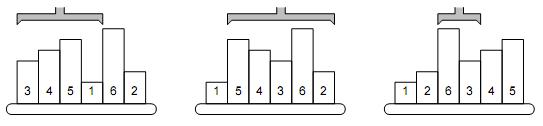
The picture shows a simple example of 6 samples. The smallest one is on the 4th position, therefore, the robot arm reverses the first 4 samples. The second smallest sample is the last one, so the next robot operation will reverse the order of five samples on positions 2–6. The third step will be to reverse the samples 3–4, etc.
Your task is to find the correct sequence of reversal operations that will sort the samples using the above algorithm. If there are more samples with the same height, their mutual order must be preserved: the one that was given first in the initial order must be placed before the others in the final order too.
The last scenario is followed by a line containing zero.
Each Pi must be an integer (1 ≤ Pi ≤ N ) giving the position of the i-th sample just before the i-th reversal operation.
Note that if a sample is already on its correct position Pi , you should output the number Pi anyway, indicating that the “interval between Pi and Pi ” (a single sample) should be reversed.
题意:
给出一个n,给出n个样品的高度,
给出一种根据高度排序的算法,其第 i 次操作:找到第 i 小的那个数的位置为Pi,将整个区间[i,Pi]反转,这样一来第 i 小的数就在位置 i 上;从 i 等于 1 到 n 循环这样的操作。
现在要求你给出每次操作的Pi。
题解:
伸展树1~n建树,把每个节点key值等于节点的编号(即key[x] = x),同时使得中序遍历伸展树得到的序列为1~n,
以题目中两个样例为例,建成的树应为如下图:
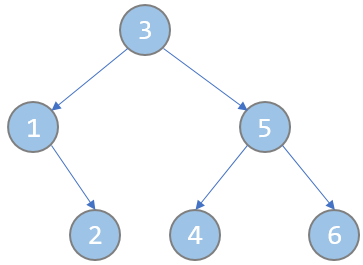
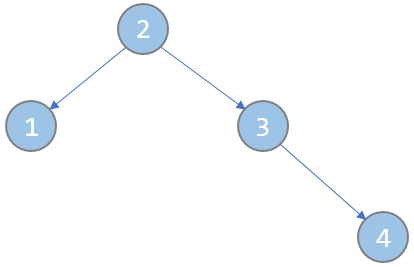 (注意,图中节点内的数字,既是节点编号,也是key值,即key[3] = 3,key[1] = 1,key[5] = 5……)
我们此时的伸展树维护的是n个样品的编号(编号为1~n);
将n个样品按输入顺序编号,再按照first高度second编号进行升序排序,那么新的顺序,就是题目中所描述的排序算法中的每次操作的顺序,
这样,按新的顺序依次枚举n个样品,对于第 i 个样品,其编号为sample[i].id,
我们此时就要去伸展树中寻找某个节点x,其key[x] = sample[i].id;而我们要求的Pi,就是比这个节点小的节点个数加1;
根据上面反复提到的,key[x] = x,所以我们其实就是把节点x = sample[i].id伸展到根,然后求其左子树内节点个数,再加1,
同时,因为需要区间翻转,所以我们可以翻转左子树,并且删除根节点,相当于翻转了[i,Pi],
由于我们不断的删除节点,因此实际答案就应该是左子树内节点个数 + 1 + (i - 1)。
AC代码:
#include<bits/stdc++.h>

#define Key_value ch[ch[root][1]][0]

using namespace std;

const int maxn=1e5+;

int n;

struct Sample

{

    int h;

    int id;

}sample[maxn];

bool cmp(Sample a,Sample b)

{

    if(a.h==b.h) return a.id<b.id;

    else return a.h<b.h;

}

/******************************** splay - st ********************************/

int root,nodecnt;

int par[maxn],ch[maxn][];

int key[maxn],size[maxn];

bool rev[maxn];

void NewNode(int &x,int p,int k)

{

    x=k;

    par[x]=p;

    ch[x][]=ch[x][]=;

    key[x]=k;

    size[x]=;

    rev[x]=;

}

void Update_Rev(int x)

{

    if(x==) return;

    rev[x]^=1;

}

void Pushup(int x)

{

    size[x]=size[ch[x][]]+size[ch[x][]]+;

}

void Pushdown(int x)

{

    if(rev[x])

    {

        swap(ch[x][],ch[x][]);

        Update_Rev(ch[x][0]);

        Update_Rev(ch[x][1]);

        rev[x]=;

    }

}

void Rotate(int x,int type) //旋转,0为左旋zag,1为右旋zig

{

    int y=par[x];

    Pushdown(y); Pushdown(x); //先把y的标记向下传递,再把x的标记往下传递

    ch[y][!type]=ch[x][type]; par[ch[x][type]]=y;

    if(par[y]) ch[par[y]][(ch[par[y]][]==y)]=x;

    par[x]=par[y];

    ch[x][type]=y; par[y]=x;

    Pushup(y); Pushup(x);

}

void Splay(int x,int goal)

{

    Pushdown(x);

    while(par[x]!=goal)

    {

        if(par[par[x]]==goal)

        {

            Pushdown(par[x]); Pushdown(x);

            Rotate(x,ch[par[x]][]==x); //左孩子zig,有孩子zag

        }

        else

        {

            Pushdown(par[par[x]]); Pushdown(par[x]); Pushdown(x);

            int y=par[x];

            int type=(ch[par[y]][]==y); //type=0,y是右孩子;type=1,y是左孩子

            if(ch[y][type]==x)

            {

                Rotate(x,!type);

                Rotate(x,type);

            }

            else

            {

                Rotate(y,type);

                Rotate(x,type);

            }

        }

    }

    if(goal==) root=x;

}

int Get_Kth(int x,int k) //得到第k个节点

{

    Pushdown(x);

    int t=size[ch[x][]]+;

    if(t==k) return x;

    if(t>k) return Get_Kth(ch[x][],k);

    else return Get_Kth(ch[x][],k-t);

}

int Get_Min(int x)

{

    Pushdown(x);

    while(ch[x][])

    {

        x=ch[x][];

        Pushdown(x);

    }

    return x;

}

int Get_Max(int x)

{

    Pushdown(x);

    while(ch[x][])

    {

        x=ch[x][];

        Pushdown(x);

    }

    return x;

}

void Build(int &x,int l,int r,int par)

{

    if(l>r) return;

    int mid=(l+r)/;

    NewNode(x,par,mid);

    Build(ch[x][],l,mid-,x);

    Build(ch[x][],mid+,r,x);

    Pushup(x);

}

void Init()

{

    root=nodecnt=;

    ch[root][]=ch[root][]=size[root]=key[root]=par[root]=rev[root]=;

    Build(root,,n,);

}

void Del()

{

    if(ch[root][]== && ch[root][]==) root=;

    else if(ch[root][]==)

    {

        par[ch[root][]]=;

        root=ch[root][];

    }

    else if(ch[root][]==)

    {

        par[ch[root][]]=;

        root=ch[root][];

    }

    else

    {

        int pre=Get_Max(ch[root][]);

        int nxt=Get_Min(ch[root][]);

        Splay(pre,); Splay(nxt,root);

        par[Key_value]=;

        Key_value=;

        Pushup(ch[root][]);

        Pushup(root);

    }

}

/******************************** splay - ed ********************************/

int main()

{

    while(scanf("%d",&n) && n!=)

    {

        Init();

        for(int i=;i<=n;i++)

        {

            scanf("%d",&sample[i].h);

            sample[i].id=i;

        }

        sort(sample+,sample+n+,cmp);

        for(int i=;i<n;i++)

        {

            Splay(sample[i].id,);

            printf("%d ",i+size[ch[root][]]);

            Update_Rev(ch[root][]);

            Del();

        }

        printf("%d\n",n);

    }

}
HDU 1890 - Robotic Sort - [splay][区间反转+删除根节点]的更多相关文章
- hdu 1890 Robotic Sort(splay 区间反转+删点)
题目链接:hdu 1890 Robotic Sort 题意: 给你n个数,每次找到第i小的数的位置,然后输出这个位置,然后将这个位置前面的数翻转一下,然后删除这个数,这样执行n次. 题解: 典型的sp ...
- HDU1890 Robotic Sort Splay tree反转,删除
题目链接:http://acm.hdu.edu.cn/showproblem.php?pid=1890 题目中涉及数的反转和删除操作,需要用Splay tree来实现.首先对数列排序,得到每个数在数列 ...
- HDU 1890 Robotic Sort | Splay
Robotic Sort Time Limit: 6000/2000 MS (Java/Others) Memory Limit: 32768/32768 K (Java/Others) [Pr ...
- HDU 1890 Robotic Sort (splay tree)
Robotic Sort Time Limit: 6000/2000 MS (Java/Others) Memory Limit: 32768/32768 K (Java/Others)Tota ...
- 数据结构(Splay平衡树):HDU 1890 Robotic Sort
Robotic Sort Time Limit: 6000/2000 MS (Java/Others) Memory Limit: 32768/32768 K (Java/Others)Tota ...
- hdu1890 Robotic Sort (splay+区间翻转单点更新)
Problem Description Somewhere deep in the Czech Technical University buildings, there are laboratori ...
- HDU 1890 Robotic Sort(splay)
[题目链接] http://acm.hdu.edu.cn/showproblem.php?pid=1890 [题意] 给定一个序列,每次将i..P[i]反转,然后输出P[i],P[i]定义为当前数字i ...
- hdu 1890 Robotic Sort
原题链接:http://acm.hdu.edu.cn/showproblem.php?pid=1890 如下: #include<cstdio> #include<cstdlib&g ...
- 算法模板——splay区间反转 2
实现功能:同splay区间反转 1(基于BZOJ3223 文艺平衡树) 这次改用了一个全新的模板(HansBug:琢磨了我大半天啊有木有),大大简化了程序,同时对于splay的功能也有所完善 这里面没 ...
随机推荐
- C# winform开发嵌套Chrome内核浏览器(WebKit.net)开发(一)
https://www.cnblogs.com/Maxq/p/6566558.html WebKit.net是对WebKit的.Net封装, 使用它.net程序可以非常方便的集成和使用webkit作为 ...
- 【代码审计】iZhanCMS_v2.1 后台任意文件删除漏洞分析
0x00 环境准备 iZhanCMS官网:http://www.izhancms.com 网站源码版本:爱站CMS(zend6.0) V2.1 程序源码下载:http://www.izhancms ...
- 【代码审计】Cscms_v4.1 任意文件删除漏洞实例
环境搭建: CSCMS :http://www.chshcms.com/ 网站源码版本:Cscms_v4.1正式版(发布日期:2017-06-05) 程序源码下载:https://github.com ...
- 文件完整性hash验证demo(python脚本)
一个简单的文件完整性hash验证脚本 #!/usr/bin/env python # -*- coding: utf- -*- import os import hashlib import json ...
- Android开发-- 使用ADT23 的一些问题
在使用最新版ADT 23进行android学习时发现一些问题: 1.通过设置intent的action来启动另外一个activity时,会出现No Activity found to handle I ...
- 使用java连接数据库以后显示“ Establishing SSL connection without server's identity verification is not recommended”的警告如何解决
今天写了一段查询数据库的操作,如下 package MySQL; import java.sql.*; public class MySQL { //JDBC驱动名以及数据库URL static fi ...
- x64免签名驱动程序
DSEFix GitHub https://github.com/hfiref0x/DSEFix
- WP8.1学习系列(第十八章)——Windows Phone 交互和可用性
本主题讨论了布局会对应用的可用性产生怎样的影响.在应用的可用性上下文中还讨论了其他常用 UI,例如搜索和设置. 在继续使用控件和交互之前,请执行以下操作: 有关概念化应用的策略,请参阅尽你所能,设计最 ...
- 浅谈CSS盒子模型
[摘要]盒子模型是CSS中的一个重要概念,虽然CSS中没有盒子这个单独的属性对象,但它却是CSS中无处不在的一个重要组成部分.掌握盒子模型的原理和使用方法可以极大地丰富HTML元素的表现效果,同时对于 ...
- 一些有用的java 框架
jwt 用于生成web toke的类库 http://jwt.io/ jasypt java加密类库 http://www.jasypt.org/