
《DSP using MATLAB》Problem 3.20
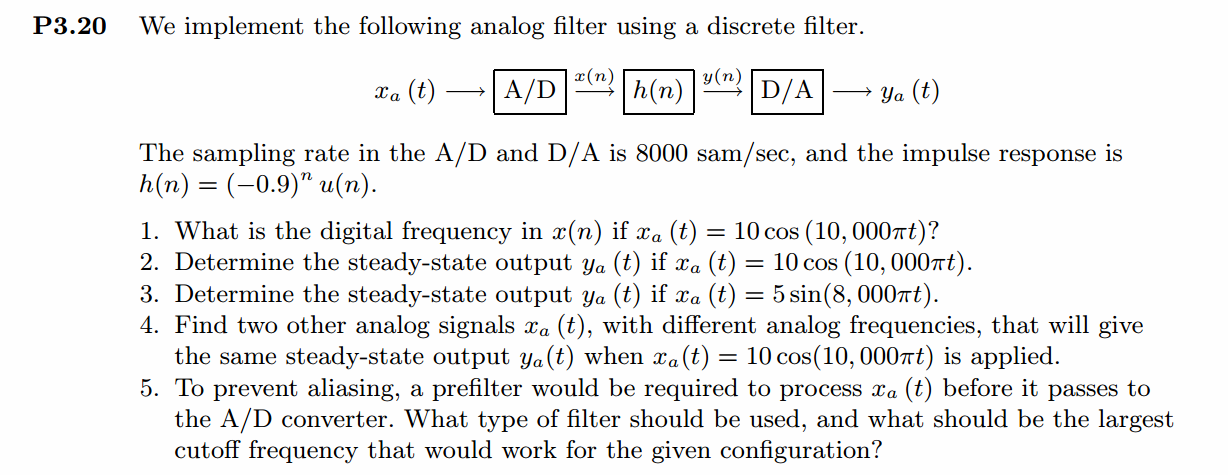
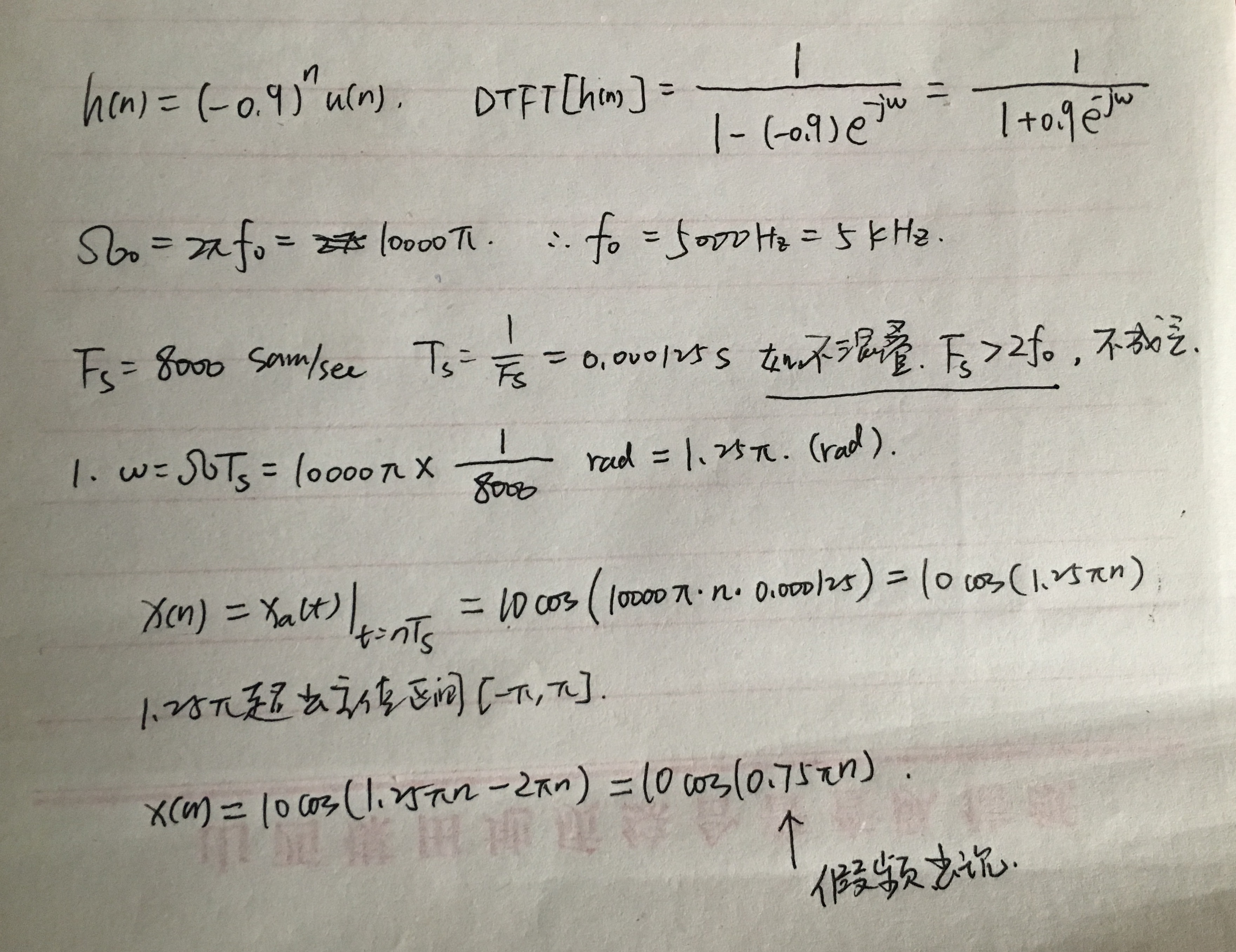
代码:
%% ------------------------------------------------------------------------

%%            Output Info about this m-file

fprintf('\n***********************************************************\n');

fprintf('        <DSP using MATLAB> Problem 3.20 \n\n');

banner();

%% ------------------------------------------------------------------------

%% -------------------------------------------------------------------

%%                     xa(t)=10cos(10000πt)  through A/D

%% -------------------------------------------------------------------

Fs = 8000;                       % sample/sec

Ts = 1/Fs;                       % sample interval, 0.125ms=0.000125s

n1_start = -80; n1_end = 80;

      n1 = [n1_start:1:n1_end];

     nTs = n1 * Ts;              % [-10,10]ms    [-0.01,0.01]s

x1 = 10*cos(10000*pi*nTs);       % Digital signal

M = 500;

[X1, w] = dtft1(x1, n1, M);

magX1  = abs(X1);  angX1  = angle(X1);  realX1  = real(X1);  imagX1  = imag(X1);

%% --------------------------------------------------------------------

%%              START X(w)'s  mag ang real imag

%% --------------------------------------------------------------------

figure('NumberTitle', 'off', 'Name', 'Problem 3.20 X1');

set(gcf,'Color','white');

subplot(2,1,1); plot(w/pi,magX1); grid on;  %axis([-1,1,0,1.05]);

title('Magnitude Response');

xlabel('frequency in \pi units'); ylabel('Magnitude  |H|');

subplot(2,1,2); plot(w/pi, angX1/pi); grid on;  %axis([-1,1,-1.05,1.05]);

title('Phase Response');

xlabel('frequency in \pi units'); ylabel('Radians/\pi');

figure('NumberTitle', 'off', 'Name', 'Problem 3.20 X1');

set(gcf,'Color','white');

subplot(2,1,1); plot(w/pi, realX1); grid on;

title('Real Part');

xlabel('frequency in \pi units'); ylabel('Real');

subplot(2,1,2); plot(w/pi, imagX1); grid on;

title('Imaginary Part');

xlabel('frequency in \pi units'); ylabel('Imaginary');

%% -------------------------------------------------------------------

%%             END X's  mag ang real imag

%% -------------------------------------------------------------------

%% --------------------------------------------------------

%%                    h(n) = (-0.9)^n[u(n)]

%% --------------------------------------------------------

n2 = n1;

h = (-0.9) .^ (n2) .* stepseq(0, n1_start, n1_end);

figure('NumberTitle', 'off', 'Name', 'Problem 3.20 h(n)');

set(gcf,'Color','white');

%subplot(2,1,1);

stem(n2, h); grid on;  %axis([-1,1,0,1.05]);

title('Impulse Response: (-0.9)^n[u(n)]');

xlabel('n'); ylabel('h');

[H, w] = dtft1(h, n2, M);

magH  = abs(H);  angH  = angle(H);  realH  = real(H);  imagH  = imag(H);

%% --------------------------------------------------------------------

%%              START H(w)'s  mag ang real imag

%% --------------------------------------------------------------------

figure('NumberTitle', 'off', 'Name', 'Problem 3.20 H');

set(gcf,'Color','white');

subplot(2,1,1); plot(w/pi,magH); grid on;  %axis([-1,1,0,1.05]);

title('Magnitude Response');

xlabel('frequency in \pi units'); ylabel('Magnitude  |H|');

subplot(2,1,2); plot(w/pi, angH/pi); grid on;  %axis([-1,1,-1.05,1.05]);

title('Phase Response');

xlabel('frequency in \pi units'); ylabel('Radians/\pi');

figure('NumberTitle', 'off', 'Name', 'Problem 3.20 H');

set(gcf,'Color','white');

subplot(2,1,1); plot(w/pi, realH); grid on;

title('Real Part');

xlabel('frequency in \pi units'); ylabel('Real');

subplot(2,1,2); plot(w/pi, imagH); grid on;

title('Imaginary Part');

xlabel('frequency in \pi units'); ylabel('Imaginary');

%% -------------------------------------------------------------------

%%             END X's  mag ang real imag

%% -------------------------------------------------------------------

%% ----------------------------------------------

%%                 y(n)=x(n)*h(n)

%% ----------------------------------------------

[y, ny] = conv_m(x1, n1, h, n1);

figure('NumberTitle', 'off', 'Name', 'Problem 3.20 y(n)');

set(gcf,'Color','white');

%subplot(2,1,1);

stem(ny, y); grid on;  %axis([-1,1,0,1.05]);

title('x(n)*h(n)');

xlabel('n'); ylabel('y');

[Y, w] = dtft1(y, ny, M);

magY  = abs(Y);  angY  = angle(Y);  realY  = real(Y);  imagY  = imag(Y);

%% --------------------------------------------------------------------

%%              START Y(w)'s  mag ang real imag

%% --------------------------------------------------------------------

figure('NumberTitle', 'off', 'Name', 'Problem 3.20 Y');

set(gcf,'Color','white');

subplot(2,1,1); plot(w/pi,magY); grid on;  %axis([-1,1,0,1.05]);

title('Magnitude Response');

xlabel('frequency in \pi units'); ylabel('Magnitude  |H|');

subplot(2,1,2); plot(w/pi, angY/pi); grid on;  %axis([-1,1,-1.05,1.05]);

title('Phase Response');

xlabel('frequency in \pi units'); ylabel('Radians/\pi');

figure('NumberTitle', 'off', 'Name', 'Problem 3.20 Y');

set(gcf,'Color','white');

subplot(2,1,1); plot(w/pi, realY); grid on;

title('Real Part');

xlabel('frequency in \pi units'); ylabel('Real');

subplot(2,1,2); plot(w/pi, imagY); grid on;

title('Imaginary Part');

xlabel('frequency in \pi units'); ylabel('Imaginary');

%% -------------------------------------------------------------------

%%             END X's  mag ang real imag

%% -------------------------------------------------------------------

%% ----------------------------------------------------------

%%                  xa(t) reconstruction from x1(n)

%% ----------------------------------------------------------

Dt = 0.00005; t = -0.01:Dt:0.01;

xa = x1 * sinc(Fs*(ones(length(n1),1)*t - nTs'*ones(1,length(t)))) ;

figure('NumberTitle', 'off', 'Name', 'Problem 3.20 Reconstructed From x1(n)');

set(gcf,'Color','white');

%subplot(2,1,1);

stairs(nTs*1000,x1); grid on;  %axis([0,1,0,1.5]);       % Zero-Order-Hold

title('Reconstructed Signal from x1(n) using zero-order-hold');

xlabel('t in msec.'); ylabel('xa(t)'); hold on;

stem(nTs*1000, x1); gtext('ZOH'); hold off;

figure('NumberTitle', 'off', 'Name', 'Problem 3.20 Reconstructed From x1(n)');

set(gcf,'Color','white');

%subplot(2,1,2);

plot(nTs*1000,x1); grid on;  %axis([0,1,0,1.5]);       % first-Order-Hold

title('Reconstructed Signal from x1(n) using first-Order-Hold');

xlabel('t in msec.'); ylabel('xa(t)'); hold on;

stem(nTs*1000,x1); gtext('FOH'); hold off;

xa = spline(nTs, x1, t);

figure('NumberTitle', 'off', 'Name', sprintf('Problem 3.20 Ts = %.6fs', Ts));

set(gcf,'Color','white');

%subplot(2,1,1);

plot(1000*t, xa);

xlabel('t in ms units'); ylabel('x');

title(sprintf('Reconstructed Signal from x1(n) using spline function')); grid on; hold on;

stem(1000*nTs, x1); gtext('spline');

%% ----------------------------------------------------------------

%%                     y(n) through D/A, reconstruction

%% ----------------------------------------------------------------

Dt = 0.00005; t = -0.02:Dt:0.02;

ya = y * sinc(Fs*(ones(length(ny),1)*t - (ny*Ts)'*ones(1,length(t)))) ;

figure('NumberTitle', 'off', 'Name', 'Problem 3.20 Reconstructed From y(n)');

set(gcf,'Color','white');

%subplot(2,1,1);

stairs(ny*Ts*1000,y); grid on;  %axis([0,1,0,1.5]);       % Zero-Order-Hold

title('Reconstructed Signal from y(n) using zero-order-hold');

xlabel('t in msec.'); ylabel('ya(t)'); hold on;

stem(ny*Ts*1000, y); gtext('ZOH'); hold off;

figure('NumberTitle', 'off', 'Name', 'Problem 3.20 Reconstructed From y(n)');

set(gcf,'Color','white');

%subplot(2,1,2);

plot(ny*Ts*1000,y); grid on;  %axis([0,1,0,1.5]);       % first-Order-Hold

title('Reconstructed Signal from y(n) using first-Order-Hold');

xlabel('t in msec.'); ylabel('ya(t)'); hold on;

stem(ny*Ts*1000,y); gtext('FOH'); hold off;

ya = spline(ny*Ts, y, t);

figure('NumberTitle', 'off', 'Name', sprintf('Problem 3.20 Ts = %.6fs', Ts));

set(gcf,'Color','white');

%subplot(2,1,1);

plot(1000*t, ya);

xlabel('t in ms units'); ylabel('y');

title(sprintf('Reconstructed Signal from y(n) using spline function')); grid on; hold on;

stem(1000*ny*Ts, y); gtext('spline');
运行结果:
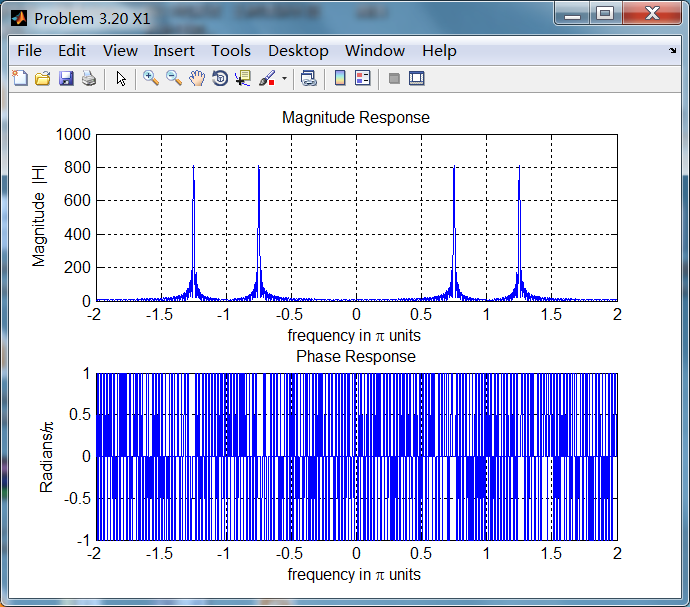
2、模拟信号经过Fs=8000sample/sec采样后,得采样信号的谱,如下图,0.75π处为假频。
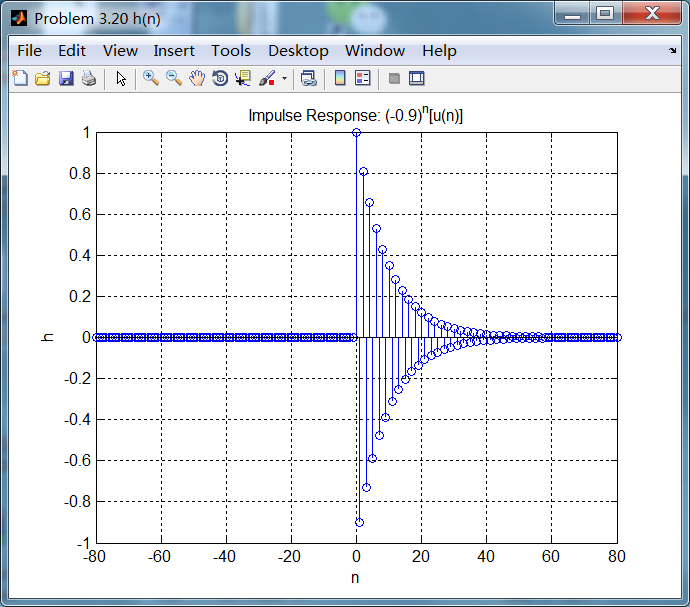
脉冲响应序列如下:
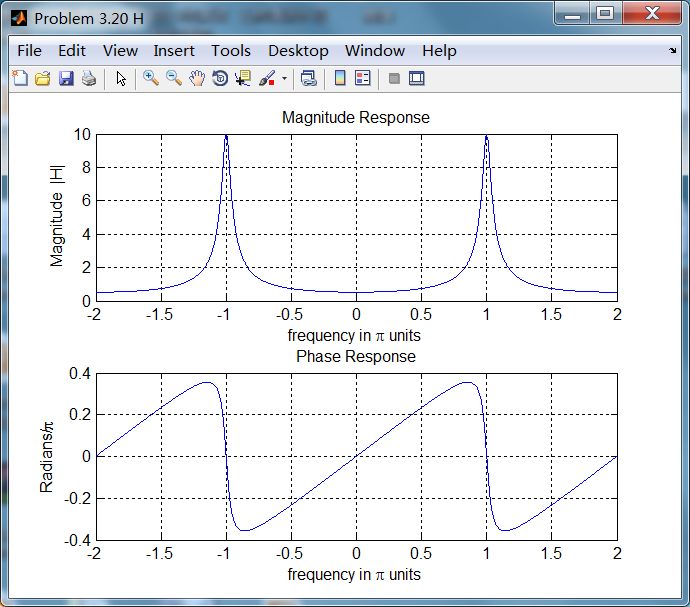
系统的频率响应,即脉冲响应序列的DTFT:
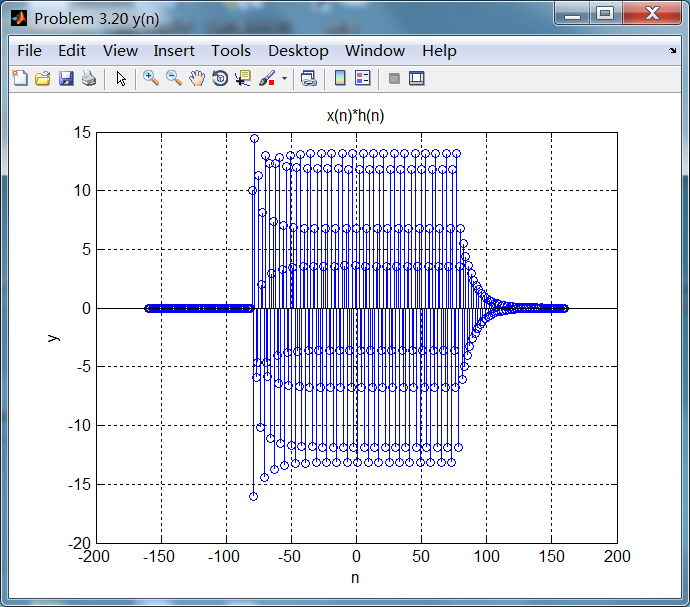
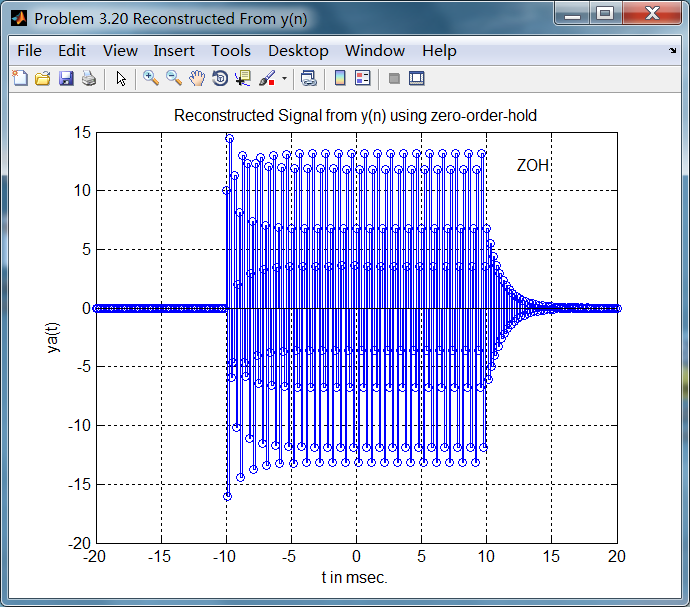
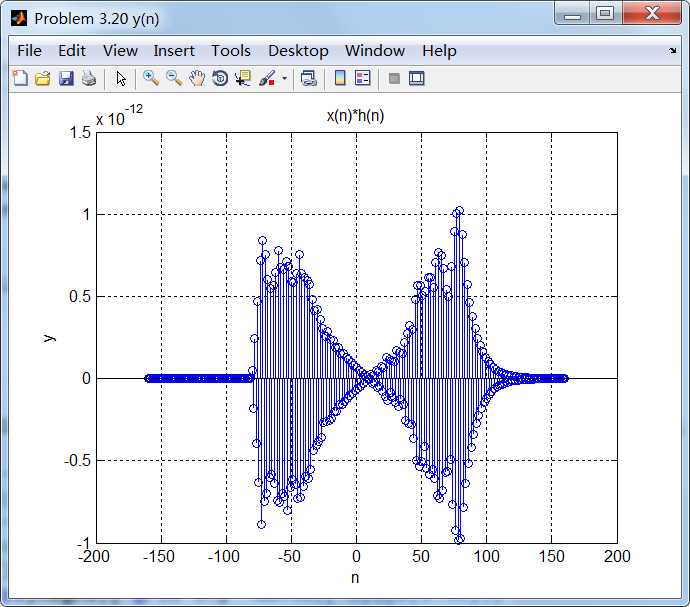
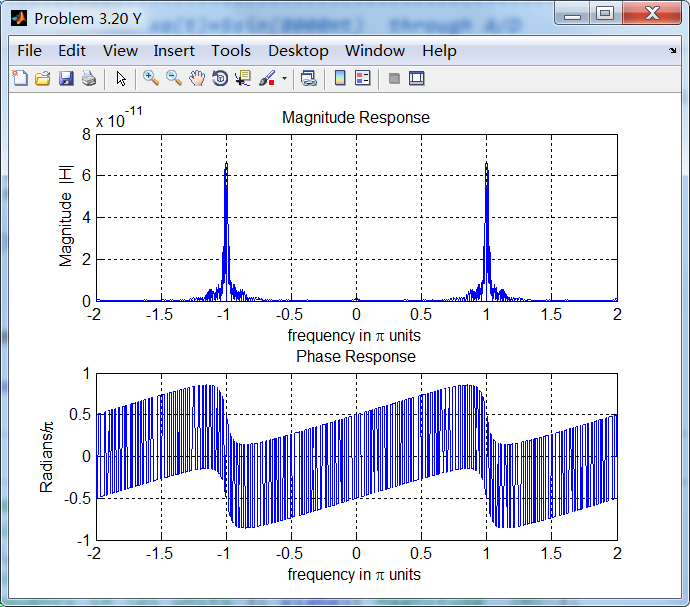
输出信号及其DTFT:
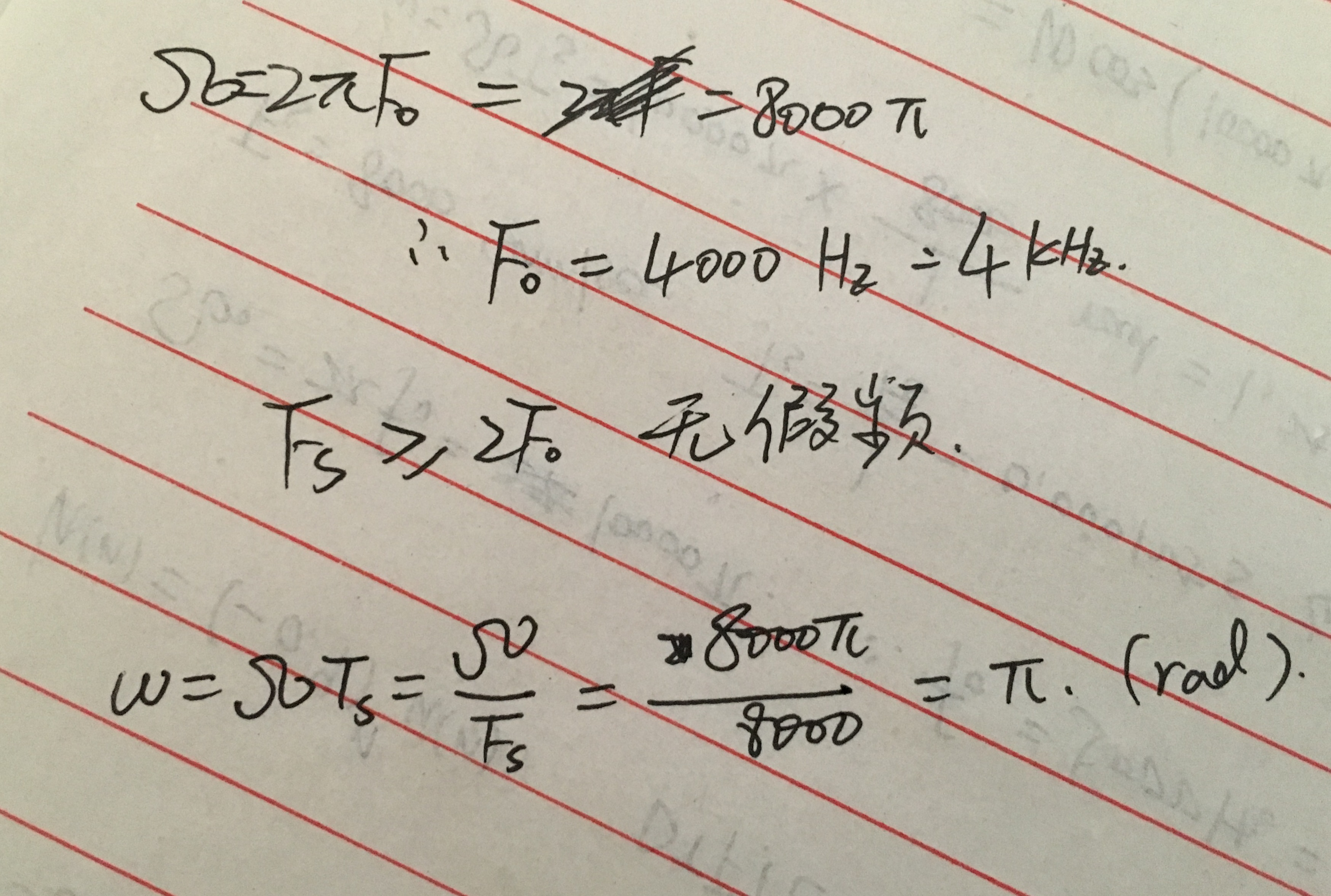
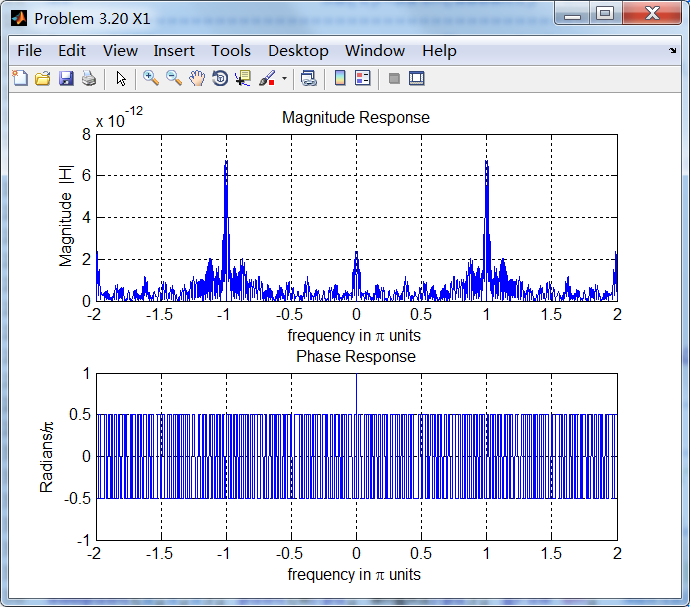
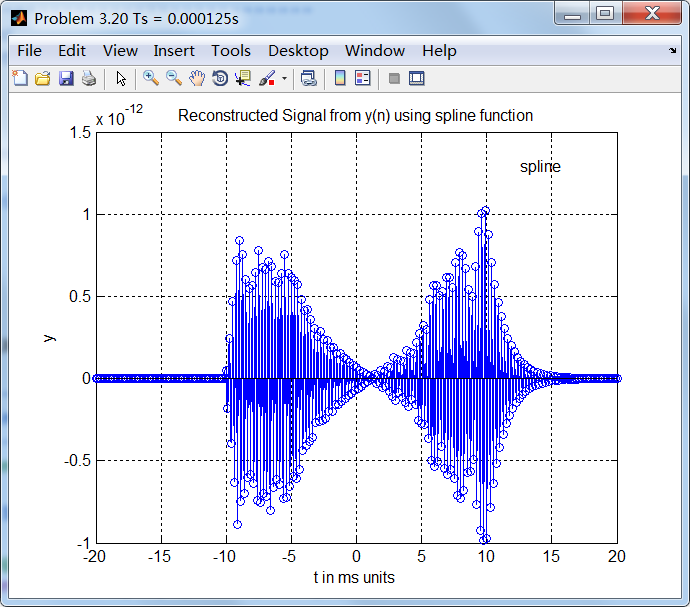
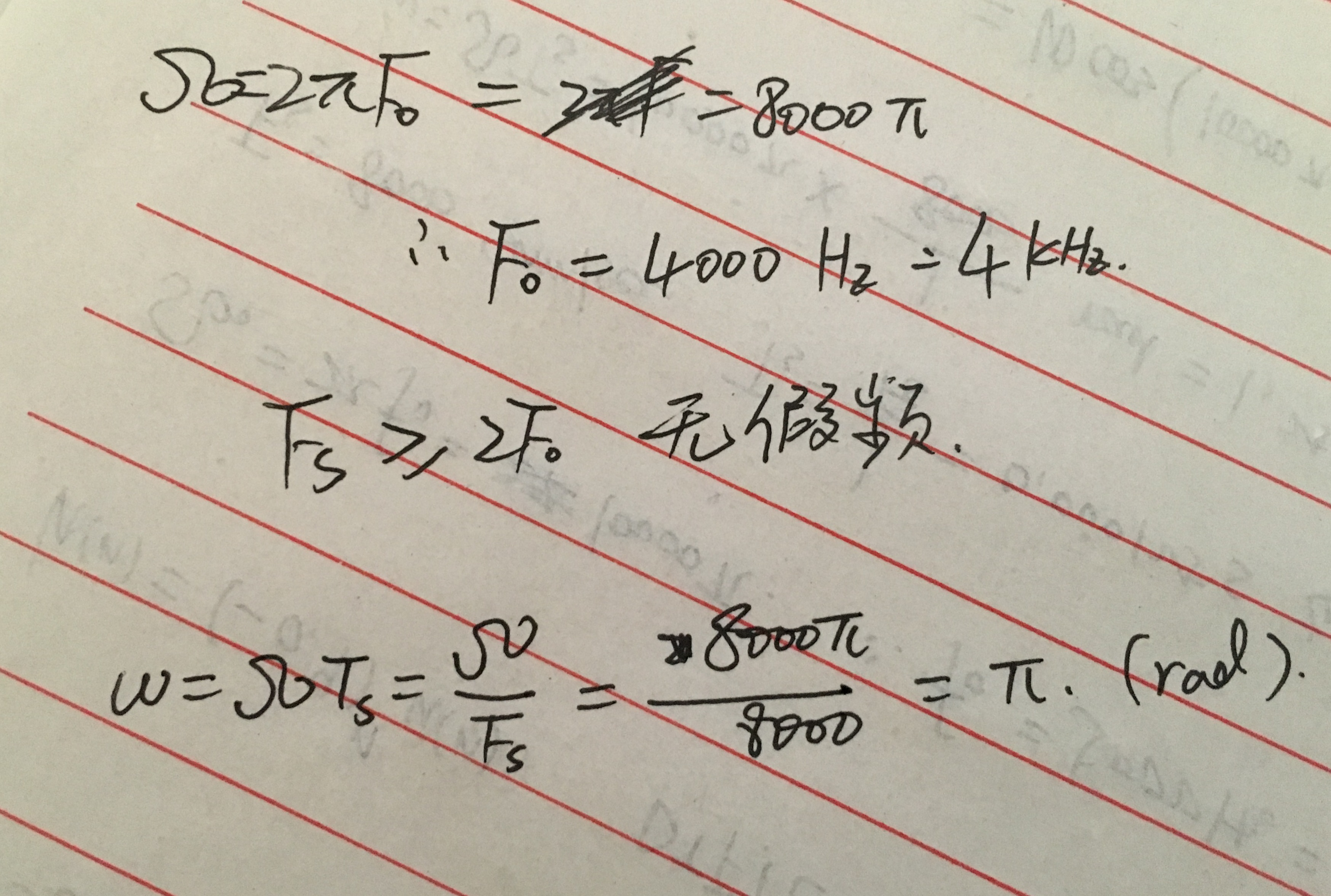
3、第3小题中的模拟信号经Fs=8000采样后,数字角频率为π,
采样后信号的谱:
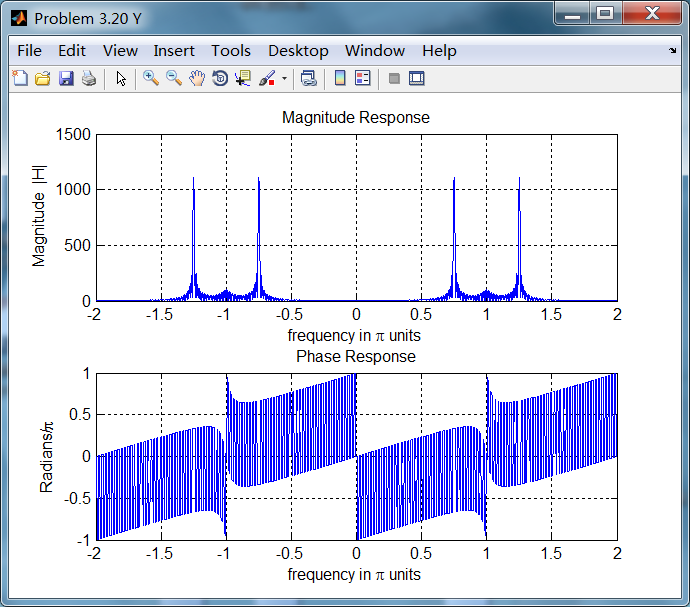
采样后信号经过滤波器,输出信号的谱,
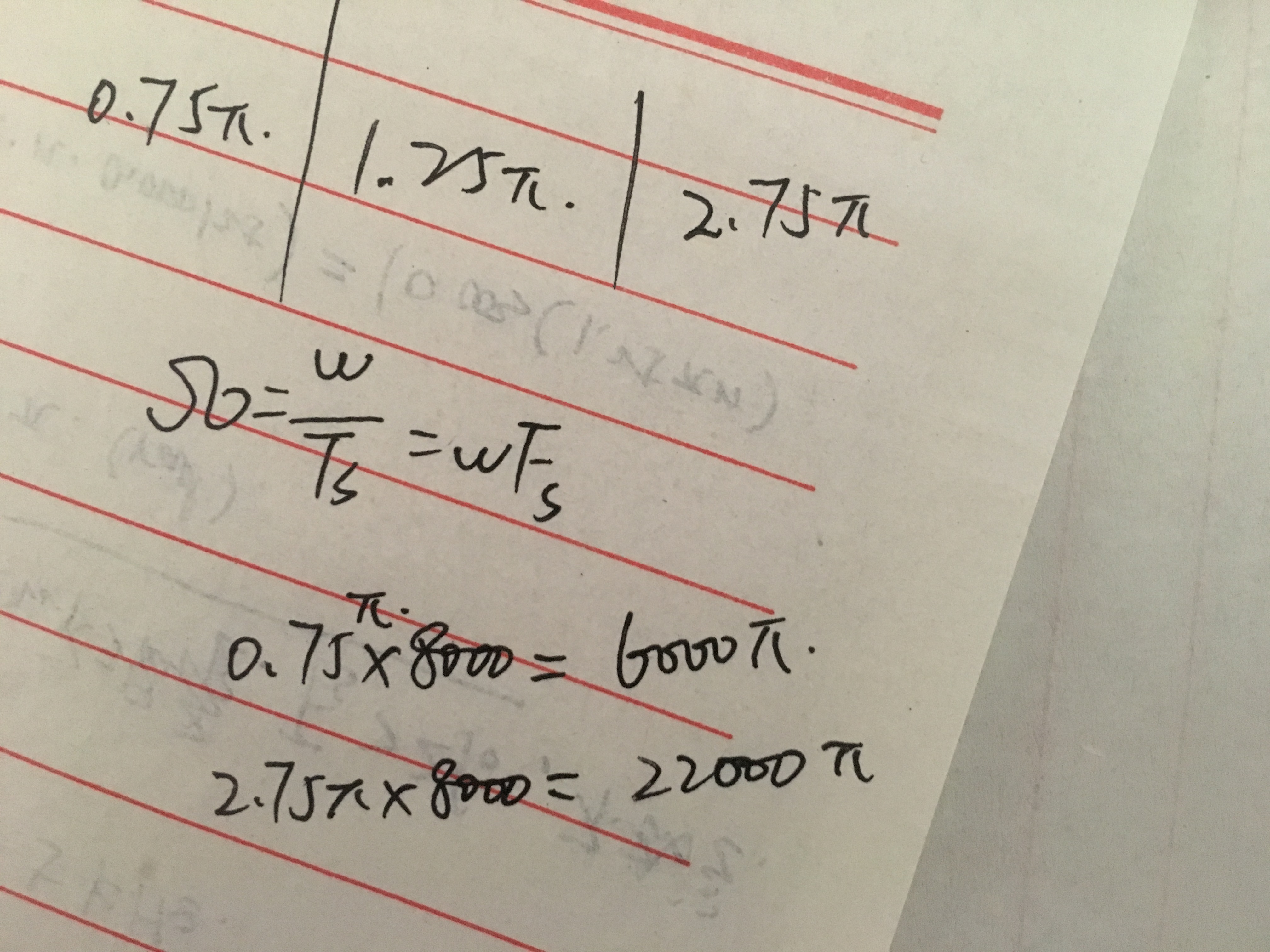
4、找到另外两个不同的模拟角频率的模拟信号,使得采样后和第1小题模拟信号采样后稳态输出相同。
想求的数字角频率和第1题的数字角频率0.75π+2π,对应的模拟频率如下计算:
5、根据抽样定理,采用截止频率F0=4kHz,低通滤波器。
《DSP using MATLAB》Problem 3.20的更多相关文章
- 《DSP using MATLAB》Problem 6.20
先放子函数: function [C, B, A, rM] = dir2fs_r(h, r); % DIRECT-form to Frequency Sampling form conversion ...
- 《DSP using MATLAB》Problem 5.20
窗外的知了叽叽喳喳叫个不停,屋里温度应该有30°,伏天的日子难过啊! 频率域的方法来计算圆周移位 代码: 子函数的 function y = cirshftf(x, m, N) %% -------- ...
- 《DSP using MATLAB》Problem 4.20
代码: %% ------------------------------------------------------------------------ %% Output Info about ...
- 《DSP using MATLAB》Problem 2.20
代码: %% ------------------------------------------------------------------------ %% Output Info about ...
- 《DSP using MATLAB》Problem 7.24
又到清明时节,…… 注意:带阻滤波器不能用第2类线性相位滤波器实现,我们采用第1类,长度为基数,选M=61 代码: %% +++++++++++++++++++++++++++++++++++++++ ...
- 《DSP using MATLAB》Problem 7.23
%% ++++++++++++++++++++++++++++++++++++++++++++++++++++++++++++++++++++++++++++++++ %% Output Info a ...
- 《DSP using MATLAB》Problem 6.15
代码: %% ++++++++++++++++++++++++++++++++++++++++++++++++++++++++++++++++++++++++++++++++ %% Output In ...
- 《DSP using MATLAB》Problem 6.12
代码: %% ++++++++++++++++++++++++++++++++++++++++++++++++++++++++++++++++++++++++++++++++ %% Output In ...
- 《DSP using MATLAB》Problem 6.10
代码: %% ++++++++++++++++++++++++++++++++++++++++++++++++++++++++++++++++++++++++++++++++ %% Output In ...
随机推荐
- ArcGIS API for Silverlight 的重要内容******重要
ArcGIS Silverlight API:是构建在微软Silverlight平台之上,通过ArcGIS Server Rest API消费ArcGIS Server 服务,同时支持直接消费Bing ...
- English trip -- VC(情景课)2 B Classroom objects
Vocabulary focus 核心词汇 Listen and repeat. 听并跟读 1. a dictionary 2. paper 3. a pen 4. a ruler 5. a stap ...
- IntelliJ IDEA 进行多线程调试
idea的断点有不同的模式,只有当Thread模式下才能调试多线程 断点设置步骤: 1.在断点上右键 2.选择Thread,然后点Done(建议选择Thread后点击make default把 ...
- 20170728xlVba SSC_LastTwoDays
Public Sub SSCLastTwoDays() Dim strText As String Dim Reg As Object, Mh As Object, OneMh As Object D ...
- poj2686 状压dp入门
状压dp第一题:很多东西没看懂,慢慢来,状压dp主要运用了位运算,二进制处理 集合{0,1,2,3,....,n-1}的子集可以用下面的方法编码成整数 像这样,一些集合运算就可以用如下的方法来操作: ...
- python-day43--单表查询之关键字执行优先级(重点)
一.关键字的执行优先级(重点) 1.关键字执行优先级 from where #约束条件(在数据产生之前执行) group by #分组 没有分组则默认一组 按照select后的字段取得一张新的虚拟表, ...
- linux进程原语之fork()
一.用法解析: fork()这个函数,可以说是名如其人了,众所周知fork这个单词本意为叉子,老外取学术名字的时候总会有一些象形的想法,于是就有了下图~ fork()函数是计算机程序设计中的分叉函数. ...
- iosFQ教程
https://www.youtube.com/watch?v=B8Vu3Xrivsc + https://sobaigu.com/how-to-use-shadowrocket-ios.html
- HTTP使用 multipart/form-data 上传多个字段(包括文件字节流 octet-stream)
自己用到的一个向服务器上传多个字段的实例,代码不全,仅做参考. 用的是WinINet,上传的字段中包括文件字节流 /* PHttpRequest中自行组装body之后,HttpSendRequest中 ...
- POJ 1847 Floyd_wshall算法
前面用dijstra写过了.但是捏.数据很小.也可以用Floyd来写. 注意题目里给出的是有向的权值. 附代码:#include<stdio.h>#include<string.h& ...