
Spring事务配置的五种方式(转载)
Spring配置文件中关于事务配置总是由三个组成部分,分别是DataSource、TransactionManager和代理机制这三部分,无论哪种配置方式,一般变化的只是代理机制这部分。
DataSource、TransactionManager这两部分只是会根据数据访问方式有所变化,比如使用Hibernate进行数据访问 时,DataSource实际为SessionFactory,TransactionManager的实现为 HibernateTransactionManager。
具体如下图:
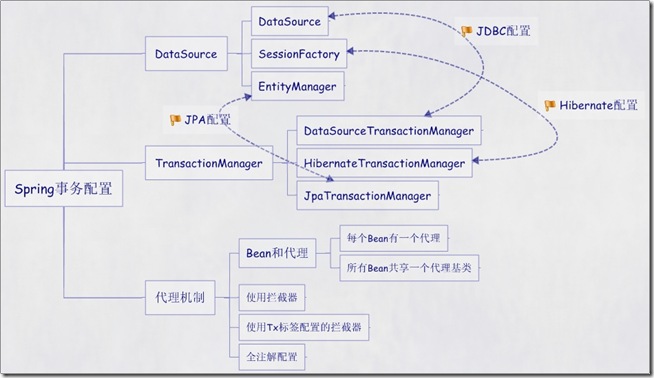
根据代理机制的不同,总结了五种Spring事务的配置方式,配置文件如下:
第一种方式:每个Bean都有一个代理
<beans xmlns="http://www.springframework.org/schema/beans"
xmlns:xsi="http://www.w3.org/2001/XMLSchema-instance"
xmlns:context="http://www.springframework.org/schema/context"
xmlns:aop="http://www.springframework.org/schema/aop"
xsi:schemaLocation="http://www.springframework.org/schema/beans
http://www.springframework.org/schema/beans/spring-beans-2.5.xsd
http://www.springframework.org/schema/context
http://www.springframework.org/schema/context/spring-context-2.5.xsd
http://www.springframework.org/schema/aop http://www.springframework.org/schema/aop/spring-aop-2.5.xsd">
<bean id="sessionFactory"
class="org.springframework.orm.hibernate3.LocalSessionFactoryBean">
<property name="configLocation" value="classpath:hibernate.cfg.xml" />
<property name="configurationClass" value="org.hibernate.cfg.AnnotationConfiguration" />
</bean>
<!-- 定义事务管理器(声明式的事务) -->
<bean id="transactionManager"
class="org.springframework.orm.hibernate3.HibernateTransactionManager">
<property name="sessionFactory" ref="sessionFactory" />
</bean>
<!-- 配置DAO -->
<bean id="userDaoTarget" class="com.bluesky.spring.dao.UserDaoImpl">
<property name="sessionFactory" ref="sessionFactory" />
</bean>
<bean id="userDao"
class="org.springframework.transaction.interceptor.TransactionProxyFactoryBean">
<!-- 配置事务管理器 -->
<property name="transactionManager" ref="transactionManager" />
<property name="target" ref="userDaoTarget" />
<property name="proxyInterfaces" value="com.bluesky.spring.dao.GeneratorDao" />
<!-- 配置事务属性 -->
<property name="transactionAttributes">
<props>
<prop key="*">PROPAGATION_REQUIRED</prop>
</props>
</property>
</bean>
</beans>
第二种方式:所有Bean共享一个代理基类
<beans xmlns="http://www.springframework.org/schema/beans"
xmlns:xsi="http://www.w3.org/2001/XMLSchema-instance"
xmlns:context="http://www.springframework.org/schema/context"
xmlns:aop="http://www.springframework.org/schema/aop"
xsi:schemaLocation="http://www.springframework.org/schema/beans
http://www.springframework.org/schema/beans/spring-beans-2.5.xsd
http://www.springframework.org/schema/context
http://www.springframework.org/schema/context/spring-context-2.5.xsd
http://www.springframework.org/schema/aop http://www.springframework.org/schema/aop/spring-aop-2.5.xsd">
<bean id="sessionFactory"
class="org.springframework.orm.hibernate3.LocalSessionFactoryBean">
<property name="configLocation" value="classpath:hibernate.cfg.xml" />
<property name="configurationClass" value="org.hibernate.cfg.AnnotationConfiguration" />
</bean>
<!-- 定义事务管理器(声明式的事务) -->
<bean id="transactionManager"
class="org.springframework.orm.hibernate3.HibernateTransactionManager">
<property name="sessionFactory" ref="sessionFactory" />
</bean>
<bean id="transactionBase"
class="org.springframework.transaction.interceptor.TransactionProxyFactoryBean"
lazy-init="true" abstract="true">
<!-- 配置事务管理器 -->
<property name="transactionManager" ref="transactionManager" />
<!-- 配置事务属性 -->
<property name="transactionAttributes">
<props>
<prop key="*">PROPAGATION_REQUIRED</prop>
</props>
</property>
</bean>
<!-- 配置DAO -->
<bean id="userDaoTarget" class="com.bluesky.spring.dao.UserDaoImpl">
<property name="sessionFactory" ref="sessionFactory" />
</bean>
<bean id="userDao" parent="transactionBase" >
<property name="target" ref="userDaoTarget" />
</bean>
</beans>
第三种方式:使用拦截器
<beans xmlns="http://www.springframework.org/schema/beans"
xmlns:xsi="http://www.w3.org/2001/XMLSchema-instance"
xmlns:context="http://www.springframework.org/schema/context"
xmlns:aop="http://www.springframework.org/schema/aop"
xsi:schemaLocation="http://www.springframework.org/schema/beans
http://www.springframework.org/schema/beans/spring-beans-2.5.xsd
http://www.springframework.org/schema/context
http://www.springframework.org/schema/context/spring-context-2.5.xsd
http://www.springframework.org/schema/aop http://www.springframework.org/schema/aop/spring-aop-2.5.xsd">
<bean id="sessionFactory"
class="org.springframework.orm.hibernate3.LocalSessionFactoryBean">
<property name="configLocation" value="classpath:hibernate.cfg.xml" />
<property name="configurationClass" value="org.hibernate.cfg.AnnotationConfiguration" />
</bean>
<!-- 定义事务管理器(声明式的事务) -->
<bean id="transactionManager"
class="org.springframework.orm.hibernate3.HibernateTransactionManager">
<property name="sessionFactory" ref="sessionFactory" />
</bean>
<bean id="transactionInterceptor"
class="org.springframework.transaction.interceptor.TransactionInterceptor">
<property name="transactionManager" ref="transactionManager" />
<!-- 配置事务属性 -->
<property name="transactionAttributes">
<props>
<prop key="*">PROPAGATION_REQUIRED</prop>
</props>
</property>
</bean>
<bean class="org.springframework.aop.framework.autoproxy.BeanNameAutoProxyCreator">
<property name="beanNames">
<list>
<value>*Dao</value>
</list>
</property>
<property name="interceptorNames">
<list>
<value>transactionInterceptor</value>
</list>
</property>
</bean>
<!-- 配置DAO -->
<bean id="userDao" class="com.bluesky.spring.dao.UserDaoImpl">
<property name="sessionFactory" ref="sessionFactory" />
</bean>
</beans>
第四种方式:使用tx标签配置的拦截器
<beans xmlns="http://www.springframework.org/schema/beans"
xmlns:xsi="http://www.w3.org/2001/XMLSchema-instance"
xmlns:context="http://www.springframework.org/schema/context"
xmlns:aop="http://www.springframework.org/schema/aop"
xmlns:tx="http://www.springframework.org/schema/tx"
xsi:schemaLocation="http://www.springframework.org/schema/beans
http://www.springframework.org/schema/beans/spring-beans-2.5.xsd
http://www.springframework.org/schema/context
http://www.springframework.org/schema/context/spring-context-2.5.xsd
http://www.springframework.org/schema/aop http://www.springframework.org/schema/aop/spring-aop-2.5.xsd
http://www.springframework.org/schema/tx http://www.springframework.org/schema/tx/spring-tx-2.5.xsd">
<context:annotation-config />
<context:component-scan base-package="com.bluesky" />
<bean id="sessionFactory"
class="org.springframework.orm.hibernate3.LocalSessionFactoryBean">
<property name="configLocation" value="classpath:hibernate.cfg.xml" />
<property name="configurationClass" value="org.hibernate.cfg.AnnotationConfiguration" />
</bean>
<!-- 定义事务管理器(声明式的事务) -->
<bean id="transactionManager"
class="org.springframework.orm.hibernate3.HibernateTransactionManager">
<property name="sessionFactory" ref="sessionFactory" />
</bean>
<tx:advice id="txAdvice" transaction-manager="transactionManager">
<tx:attributes>
<tx:method name="*" propagation="REQUIRED" />
</tx:attributes>
</tx:advice>
<aop:config>
<aop:pointcut id="interceptorPointCuts"
expression="execution(* com.bluesky.spring.dao.*.*(..))" />
<aop:advisor advice-ref="txAdvice"
pointcut-ref="interceptorPointCuts" />
</aop:config>
</beans>
第五种方式:全注解
<beans xmlns="http://www.springframework.org/schema/beans"
xmlns:xsi="http://www.w3.org/2001/XMLSchema-instance"
xmlns:context="http://www.springframework.org/schema/context"
xmlns:aop="http://www.springframework.org/schema/aop"
xmlns:tx="http://www.springframework.org/schema/tx"
xsi:schemaLocation="http://www.springframework.org/schema/beans
http://www.springframework.org/schema/beans/spring-beans-2.5.xsd
http://www.springframework.org/schema/context
http://www.springframework.org/schema/context/spring-context-2.5.xsd
http://www.springframework.org/schema/aop http://www.springframework.org/schema/aop/spring-aop-2.5.xsd
http://www.springframework.org/schema/tx http://www.springframework.org/schema/tx/spring-tx-2.5.xsd">
<context:annotation-config />
<context:component-scan base-package="com.bluesky" />
<!-- enables scanning for @Transactional annotations -->
<tx:annotation-driven transaction-manager="transactionManager"/>
<bean id="sessionFactory"
class="org.springframework.orm.hibernate3.LocalSessionFactoryBean">
<property name="configLocation" value="classpath:hibernate.cfg.xml" />
<property name="configurationClass" value="org.hibernate.cfg.AnnotationConfiguration" />
</bean>
<!-- 定义事务管理器(声明式的事务) -->
<bean id="transactionManager"
class="org.springframework.orm.hibernate3.HibernateTransactionManager">
<property name="sessionFactory" ref="sessionFactory" />
</bean>
</beans>
此时在DAO上需加上@Transactional注解,如下:
import java.util.List;
import org.hibernate.SessionFactory;
import org.springframework.beans.factory.annotation.Autowired;
import org.springframework.orm.hibernate3.support.HibernateDaoSupport;
import org.springframework.stereotype.Component;
import com.bluesky.spring.domain.User;
@Transactional
@Component("userDao")
public class UserDaoImpl extends HibernateDaoSupport implements UserDao {
public List<User> listUsers() {
return this.getSession().createQuery("from User").list();
}

}
Spring事务配置的五种方式(转载)的更多相关文章
- Spring事务配置的五种方式(转发)
Spring事务配置的五种方式(原博客地址是http://www.blogjava.net/robbie/archive/2009/04/05/264003.html)挺好的,收藏转发 前段时间对Sp ...
- Spring事务配置的五种方式和spring里面事务的传播属性和事务隔离级别
转: http://blog.csdn.net/it_man/article/details/5074371 Spring事务配置的五种方式 前段时间对Spring的事务配置做了比较深入的研究,在此之 ...
- Spring事务配置的五种方式
Spring配置文件中关于事务配置总是由三个组成部分,分别是DataSource.TransactionManager和代理机制这三部分,无论哪种配置方式,一般变化的只是代理机制这部分. DataSo ...
- Spring事务配置的五种方式 -- 越往后需要Spring版本越高
第五种 基本零配置 个人感觉第四种也可以 Spring配置文件中关于事务配置总是由三个组成部分,分别是DataSource.TransactionManager和代理机制这三部分,无论哪种配置方式, ...
- Spring事务配置的五种方式(转)
前段时间对Spring的事务配置做了比较深入的研究,在此之间对Spring的事务配置虽说也配置过,但是一直没有一个清楚的认识.通过这次的学习发觉Spring的事务配置只要把思路理清,还是比较好掌握的. ...
- Spring事务配置的五种方式 巨全!不看后悔,一看必懂!
前段时间对Spring的事务配置做了比较深入的研究,在此之间对Spring的事务配置虽说也配置过,但是一直没有一个清楚的认识.通过这次的学习发觉Spring的事务配置只要把思路理清,还是比较好掌握的. ...
- (转)Spring事务配置的五种方式
前段时间对Spring的事务配置做了比较深入的研究,在此之间对Spring的事务配置虽说也配置过,但是一直没有一个清楚的认识.通过这次的学习发觉Spring的事务配置只要把思路理清,还是比较好掌握的. ...
- SSH深度历险(六) 深入浅出----- Spring事务配置的五种方式
这对时间在学习SSH中Spring架构,Spring的事务配置做了详细总结,在此之间对Spring的事务配置只是停留在听说的阶段,总结一下,整体把控,通过这次的学习发觉Spring的事务配置只要把思路 ...
- [JavaEE] Spring事务配置的五种方式
前段时间对Spring的事务配置做了比较深入的研究,在此之间对Spring的事务配置虽说也配置过,但是一直没有一个清楚的认识.通过这次的学习发觉Spring的事务配置只要把思路理清,还是比较好掌握的. ...
随机推荐
- R语言实战(二)数据管理
本文对应<R语言实战>第4章:基本数据管理:第5章:高级数据管理 创建新变量 #建议采用transform()函数 mydata <- transform(mydata, sumx ...
- pm2.5检测统计
SELECT AVG(pm25_h),AVG(pm10_h),AVG(temp_h),AVG(humi_h),AVG(co2_h),AVG(tvoc_h),perf_time FROM( SELECT ...
- 前台jquery+ajax+json传值,后台处理完后返回json字符串,如何取里面的属性值?(不用springmvc注解)
一.取属性值 前台页面: function select(id){ alert("hfdfhdfh"+id); $.ajax({ url:"selectByid.jsp& ...
- C指针的大小
应该说这是一个非常基础的问题,教科书上说指针大小和机器字长相同,即32位机指针长度为4字节!但是对不对呢?为什么是这样? 搜了一下相关资料...居然发现回答不统一,很多人也同样是糊里糊涂. 下面对这个 ...
- MySQL exists的用法介绍
有一个查询如下: 1 SELECT c.CustomerId, CompanyName 2 FROM Customers c 3 WHERE EXISTS( 4 SELECT Or ...
- gulp教程之gulp-less
简介: 使用gulp-less插件将less文件编译成css,当有less文件发生改变自动编译less,并保证less语法错误或出现异常时能正常工作并提示错误信息. 1.安装nodejs/全局安装gu ...
- input框只能输入整数和浮点数非数字就不输入
<input type="text" onInput="clearNoNum(this)" > //需引入jquery <script> ...
- Sublime Text 3 使用问题答疑
命令面板/命令模式:ctrl+shift+pctrl+cctrl+v → ctrl+shift+v粘贴时会保持原格式(缩进)ctrl+sctrl+z撤销ctrl+y恢复撤销在当前行下面添加一行:ctr ...
- Centos 7.0添加yum本地安装源
[arci@localhost yum.repos.d]$ cat CentOS-7.0-1406-x86_64-Everything.repo[CentOS-7.0-1406-x86_64-Ever ...
- Atom使用到的插件
atom-beautify atom-css-class-checker atom-css-comb atom-css-unit-converter atom-csscomb atom-csslint ...