
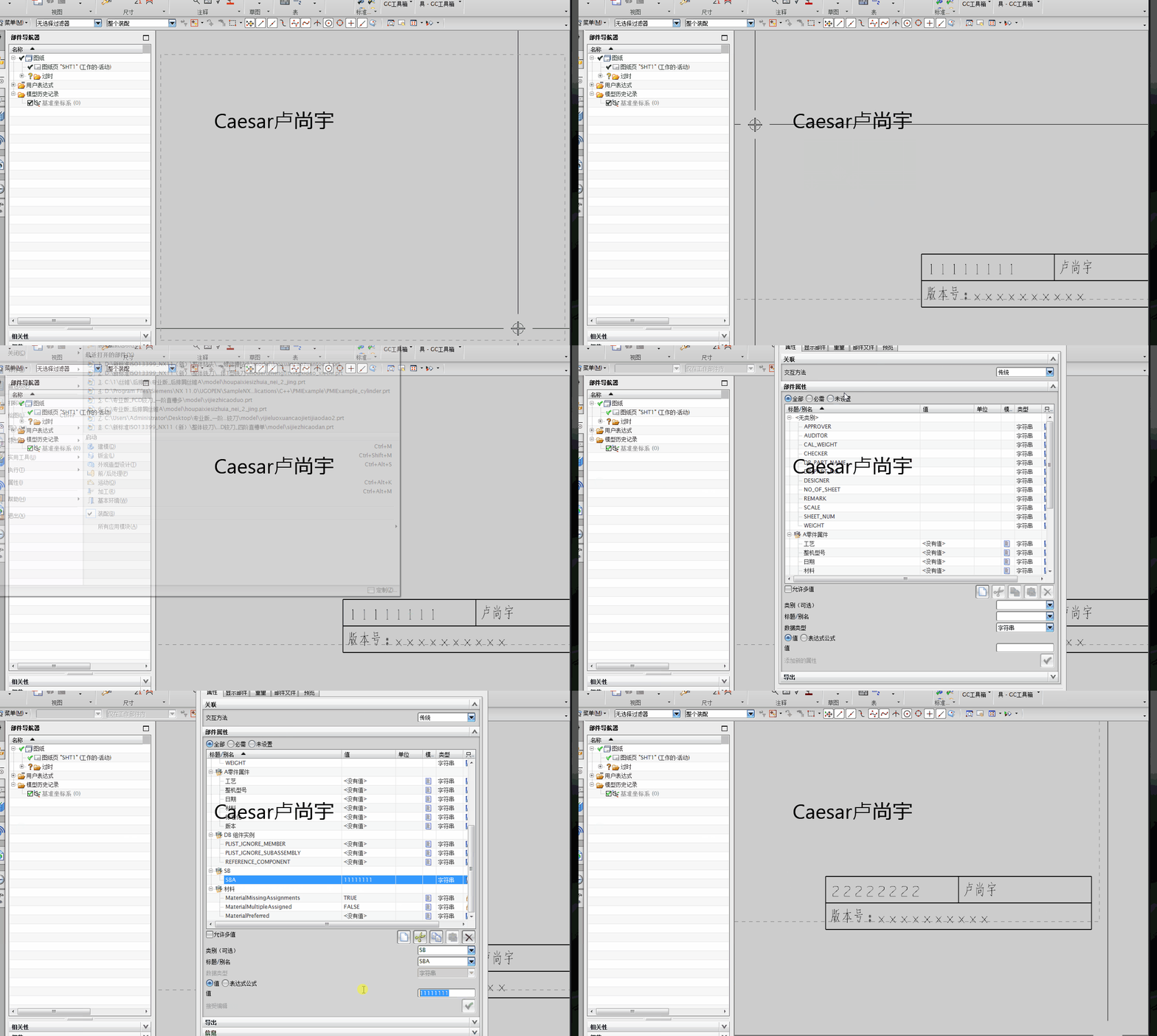
NX二次开发-读取图纸表格注释与部件属性关联的名字
 NX11+VS2013

 #include <uf.h>

 #include <uf_ui.h>

 #include <uf_tabnot.h>

 #include <NXOpen/Part.hxx>

 #include <NXOpen/PartCollection.hxx>

 #include <NXOpen/Session.hxx>

 #include <NXOpen/Annotations_TableSectionCollection.hxx>

 #include <NXOpen/Annotations_AnnotationManager.hxx>

 #include <NXOpen/FontCollection.hxx>

 UF_initialize();

 //创建表格注释

 Annotations::TableSection *nullAnnotations_TableSection(NULL);

 Annotations::TableSectionBuilder *tableSectionBuilder1;

 tableSectionBuilder1 = workPart->Annotations()->TableSections()->CreateTableSectionBuilder(nullAnnotations_TableSection);

 NXOpen::Point3d TablePoint(194.0, 17.0, 0.0);

 tableSectionBuilder1->Origin()->SetOriginPoint(TablePoint);

 tableSectionBuilder1->SetNumberOfColumns();

 tableSectionBuilder1->SetNumberOfRows();

 tableSectionBuilder1->SetRowHeight(20.0);

 tableSectionBuilder1->SetColumnWidth();

 tableSectionBuilder1->Commit();

 NXObject *nXObject1;

 nXObject1 = tableSectionBuilder1->Commit();

 tableSectionBuilder1->Destroy();

 //section转tag

 tag_t TabularNote = NULL_TAG;

 UF_TABNOT_ask_tabular_note_of_section(nXObject1->Tag(), &TabularNote);

 //获取第一行的Tag

 tag_t Row0Tag = NULL_TAG;

 UF_TABNOT_ask_nth_row(TabularNote, , &Row0Tag);

 //获取第二行的Tag

 tag_t Row1Tag = NULL_TAG;

 UF_TABNOT_ask_nth_row(TabularNote, , &Row1Tag);

 //获取第一列的Tag

 tag_t Column0Tag = NULL_TAG;

 UF_TABNOT_ask_nth_column(TabularNote, , &Column0Tag);

 //获取第二列的Tag

 tag_t Column1Tag = NULL_TAG;

 UF_TABNOT_ask_nth_column(TabularNote, , &Column1Tag);

 //得到第一行第一列单元格的Tag

 tag_t Cell0Tag = NULL_TAG;

 UF_TABNOT_ask_cell_at_row_col(Row0Tag, Column0Tag, &Cell0Tag);

 //得到第一行第二列单元格的Tag

 tag_t Cell1Tag = NULL_TAG;

 UF_TABNOT_ask_cell_at_row_col(Row0Tag, Column1Tag, &Cell1Tag);

 //得到第二行第一列单元格的Tag

 tag_t Cell2Tag = NULL_TAG;

 UF_TABNOT_ask_cell_at_row_col(Row1Tag, Column0Tag, &Cell2Tag);

 //得到第二行第二列单元格的Tag

 tag_t Cell3Tag = NULL_TAG;

 UF_TABNOT_ask_cell_at_row_col(Row1Tag, Column1Tag, &Cell3Tag);

 //写文本

 UF_TABNOT_set_cell_text(Cell0Tag, "<WRef2*0@SBA>");

 UF_TABNOT_set_cell_text(Cell1Tag, "卢尚宇");

 //合并最底下的单元格

 UF_TABNOT_merge_cells(Cell2Tag, Cell3Tag);

 //获取合并单元格的行Tag

 tag_t MergeRowTag = NULL_TAG;

 UF_TABNOT_ask_nth_row(TabularNote, , &MergeRowTag);

 //获取合并单元格的列Tag

 tag_t MergeColumnTag = NULL_TAG;

 UF_TABNOT_ask_nth_column(TabularNote, , &MergeColumnTag);

 tag_t MergeCellTag = NULL_TAG;

 UF_TABNOT_ask_cell_at_row_col(MergeRowTag, MergeColumnTag, &MergeCellTag);

 //写文本

 UF_TABNOT_set_cell_text(MergeCellTag, "版本号:xxxxxxxxxx");

 //检索默认单元格首选项

 UF_TABNOT_cell_prefs_t  cell_prefs;

 UF_TABNOT_ask_default_cell_prefs(&cell_prefs);

 //设置单元格首选项

 int fontIndex1 = workPart->Fonts()->AddFont("chinesef_fs", NXOpen::FontCollection::TypeNx);//更改字体

 cell_prefs.text_font = fontIndex1; //字体

 UF_TABNOT_set_cell_prefs(Cell0Tag, &cell_prefs);

 UF_TABNOT_set_cell_prefs(Cell1Tag, &cell_prefs);

 UF_TABNOT_set_cell_prefs(MergeCellTag, &cell_prefs);

 //读取单元格内容

 char* cell_text;

 UF_TABNOT_ask_cell_text(Cell0Tag, &cell_text);

 //分割字符串

 string strCellText = cell_text;

 string strRight = (strCellText.substr(strCellText.find("@") + , strCellText.find(" ")));//提取右值

 string strLift = (strRight.substr(, strRight.find(">")));//提取左值

 //打印

 char msg[];

 sprintf_s(msg, "此单元格关联的部件属性为:%s", strLift);

 uc1601(msg, );

 UF_terminate();

 Caesar卢尚宇

 2019年12月15日
NX二次开发-读取图纸表格注释与部件属性关联的名字的更多相关文章
- NX二次开发-UFUN工程图表格注释section转tag函数UF_TABNOT_ask_tabular_note_of_section
NX9+VS2012 #include <uf.h> #include <uf_tabnot.h> #include <NXOpen/Part.hxx> #incl ...
- NX二次开发-UFUN工程图表格注释获取某一行的tag函数UF_TABNOT_ask_nth_row
NX9+VS2012 #include <uf.h> #include <uf_tabnot.h> #include <NXOpen/Part.hxx> #incl ...
- NX二次开发-UFUN工程图表格注释获取某一列的tag函数UF_TABNOT_ask_nth_column
NX9+VS2012 #include <uf.h> #include <uf_tabnot.h> #include <NXOpen/Part.hxx> #incl ...
- NX二次开发-UFUN工程图表格注释获取某一行某一列的tag函数UF_TABNOT_ask_cell_at_row_col
NX9+VS2012 #include <uf.h> #include <uf_tabnot.h> #include <NXOpen/Part.hxx> #incl ...
- NX二次开发-UFUN工程图表格注释写入文本内容UF_TABNOT_set_cell_text
NX9+VS2012 #include <uf.h> #include <uf_tabnot.h> #include <NXOpen/Part.hxx> #incl ...
- NX二次开发-UFUN工程图表格注释检索默认单元格首选项UF_TABNOT_ask_default_cell_prefs
NX9+VS2012 #include <uf.h> #include <uf_tabnot.h> #include <NXOpen/Part.hxx> #incl ...
- NX二次开发-UFUN工程图表格注释设置单元格首选项UF_TABNOT_set_cell_prefs
NX9+VS2012 #include <uf.h> #include <uf_tabnot.h> #include <NXOpen/Part.hxx> #incl ...
- 【NX二次开发】按层查找工作部件中的对象 UF_LAYER_cycle_by_layer
第一次调用 :返回第一个启用层中的第一个对象. 第二次调用 :返回下一个已启用层中的下一个对象. 最后一次调用:当所有对象都被耗尽时,将返回object_tag = NULL_TAG. 在循环数据库时 ...
- NX二次开发-UFUN创建工程图注释UF_DRF_create_note
NX9+VS2012 #include <uf.h> #include <uf_drf.h> #include <NXOpen/Annotations_Note.hxx& ...
随机推荐
- throws/throw Exception 异常应用
throws通常用于方法的声明,当方法中发生异常的时候,却不想在方法中对异常进行处理的时候,就可以在声明方法时, 使用throws声明抛出的异常,然后再调用该方法的其他方法中对异常进行处理(如使用tr ...
- Vue学习笔记【21】——Vue中的动画(v-for 的列表过渡)
定义过渡样式: <style> .list-enter, .list-leave-to { opacity: 0; transform: translat ...
- Yii2查询语句
Yii2常用的查询: Yii2原生查询: $request = Yii::$app->request; $shopid = $request->post('shopid'); $gps = ...
- 2-Harris角点检测
1. 何为角点? 下面有两幅不同视角的图像,通过找出对应的角点进行匹配. 再看下图所示,放大图像的两处角点区域: 我们可以直观的概括下角点所具有的特征: >轮廓之间的交点: >对于同一场景 ...
- PHP反序列化漏洞研究
序列化 序列化说通俗点就是把一个对象变成可以传输的字符串 php serialize()函数 用于序列化对象或数组,并返回一个字符串.序列化对象后,可以很方便的将它传递给其他需要它的地方,且其类型和结 ...
- API应用实例
API声明透明 {API声明} type TSetLayeredWindowAttributes = function(wnd: HWND; crKey: DWORD; bAlpha: BYTE; d ...
- CSS:CSS 布局 - 水平 & 垂直对齐
ylbtech-CSS:CSS 布局 - 水平 & 垂直对齐 1.返回顶部 1. CSS 布局 - 水平 & 垂直对齐 水平 & 垂直居中对齐 元素居中对齐 要水平居中对齐一个 ...
- Java.util.ArrayDeque类
java.util.ArrayDeque 类提供了可调整大小的阵列,并实现了Deque接口.以下是关于阵列双端队列的要点: 数组双端队列没有容量限制,使他们增长为必要支持使用. 它们不是线程安全的;如 ...
- 问题:Error running 'lugia-web': Address loaclhost:1099 is already in use
解决方法:cmd输入下面命令: 第一步: netstat -ano|findstr 1099 找到对应的pid 为3576.(每次不一样). 第二步:taskkill -f -pid 3576
- ajax中的onload和readychange区别
先补个知识点: readyState 状态码: 0:请求未初始化 1:服务器连接已建立 2:请求已接受 3:请求处理中 4:请求已完成,且响应已就绪 HTTP 状态码: 200 - 服务器成功返回网页 ...